
Sierra Stonecrop (Sedum obtusatum)
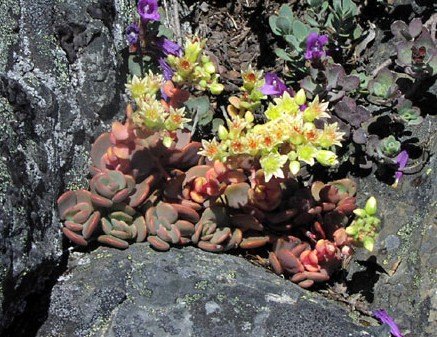
Sedum obtusatum, known as Sierra Stonecrop, is a small succulent of granite outcrops and rocky slopes in the mountains of California, western Nevada and southern Oregon. It forms tight rosettes of round-tipped, fleshy, blue-green leaves that blush red, coppery or purplish in sun and drought, and in summer it sends up short stems topped with flat clusters of starry yellow flowers that fade to cream, buff or pink.
It belongs to the stonecrop family (Crassulaceae). The species name obtusatum means “blunt,” for its rounded leaf tips. It is one of the characteristic plants of the Sierra Nevada’s granite landscape, filling cracks in boulders and cliffs from the mixed-conifer forest up to above treeline, and it also grows in the southern Cascades and Klamath Mountains.
For gardeners, Sierra stonecrop is a choice, colorful succulent for rock gardens, troughs and crevice gardens in climates with cold winters and dry summers. This guide covers how to identify Sierra stonecrop, where it grows, how to grow it, and its value for pollinators.
Identification
Look for Sierra stonecrop in summer in rock cracks and on gravelly ledges, where its rosettes of rounded, fleshy leaves and clusters of pale yellow flowers stand out against granite.
Growth Habit
It is a low, perennial succulent that forms clusters of basal rosettes, each about 1 to 2½ inches across, from a short, branched base. Flowering stems are usually 2 to 8 inches tall. Over time a plant can form a small mat of rosettes in a rock crevice.
Leaves
The rosette leaves are thick, flat to slightly rounded, spoon-shaped to oblong with a blunt or notched tip, about ½ to 1¼ inches long. They are smooth and blue-green to gray-green with a waxy bloom, often turning red, copper or purplish in strong sun, cold or drought. Smaller leaves are scattered along the flowering stems and often drop as the flowers open.
Flowers
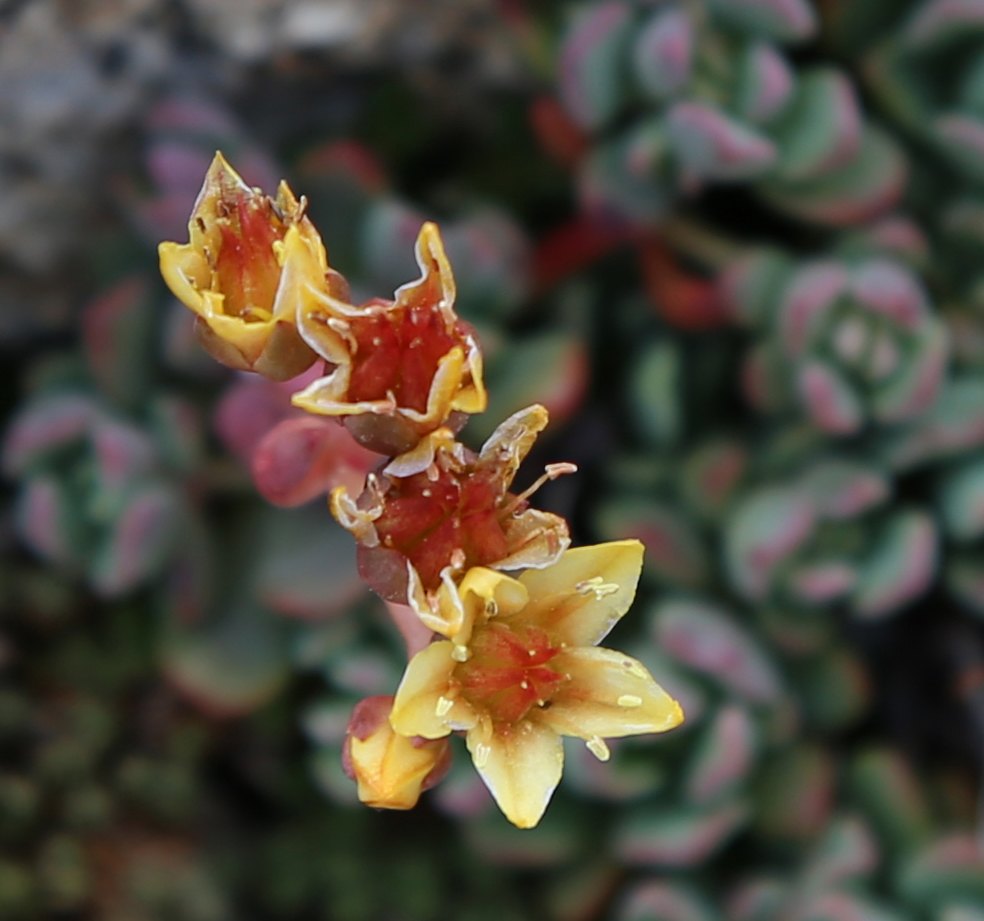
The flowers are borne in a flat-topped, branched cluster at the top of each stem. Each flower has five pointed petals, about ¼ to ⅜ inch long, joined at the base and spreading into a star. They open pale yellow to cream, then age to buff, orange or pinkish, so a cluster often shows several colors. Bloom runs from about June to August, depending on elevation.
Fruit & Look-alikes
The fruit is a group of five small, erect follicles that split to release tiny seeds. Broadleaf stonecrop (Sedum spathulifolium) has similar spoon-shaped leaves but bright yellow, fully separate petals and grows mainly at lower, coastal and foothill elevations. Lanceleaf stonecrop (S. lanceolatum) has narrow, pointed leaves.
Quick Facts
| Scientific Name | Sedum obtusatum A. Gray |
| Family | Crassulaceae (stonecrop family) |
| Plant Type | Succulent herbaceous perennial |
| Mature Height | 2–8 in in flower |
| Mature Spread | 4–12 in |
| Growth Rate | Slow |
| Sun Exposure | Full sun to part shade |
| Water Needs | Very low; summer-dry |
| Soil Type | Rock crevices, gravel and thin, sharply drained granitic soils |
| Soil pH | About 5.5–7.5 |
| Bloom Time | June–August |
| Flower Color | Pale yellow to cream, aging buff, orange or pink |
| Fall Color | Rosettes turn red, copper or purplish |
| Fruit | Five small follicles with tiny seeds |
| Deer Resistant | Mostly; rarely browsed in its rocky habitat |
| USDA Hardiness Zones | 4–8 |
Native Range
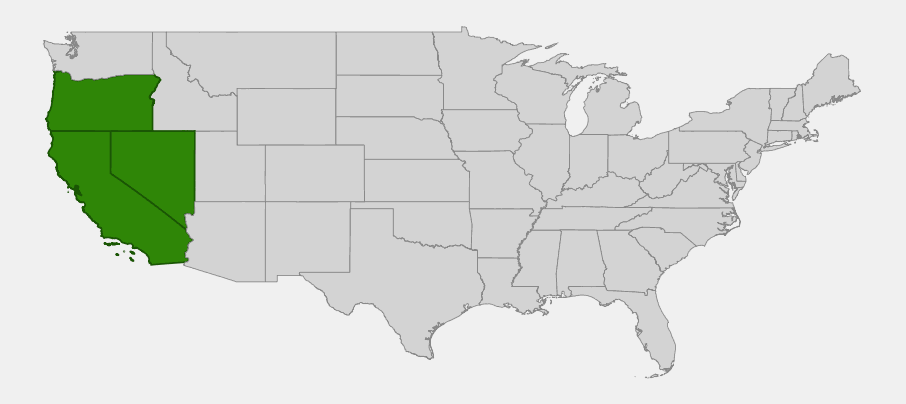
Sierra stonecrop is native to the western United States. USDA PLANTS lists it from California, Nevada and Oregon. Its main range is the Sierra Nevada of California, where it is common on granite from the mixed-conifer forest to the alpine zone, with extensions north through the southern Cascades and Klamath Mountains into southwestern Oregon.
In Nevada it grows along the eastern edge of the Sierra Nevada, including the Carson Range near Lake Tahoe. In Oregon it reaches the Siskiyou region and the southern Cascades. Botanists recognize several subspecies across this range that differ in leaf shape and flower color.
It grows on granite outcrops, cliff faces and boulder cracks, on talus and rocky ledges, and on gravelly, thin-soiled slopes and ridges, often in full sun. Its rocky habitat protects it from competition, and snow cover protects it through the long mountain winter.
📋 Regional plant lists featuring Sierra Stonecrop: California & Nevada · Western Oregon & Western Washington
Growing & Care Guide
Sierra stonecrop is a good plant for rock gardens, crevice gardens, troughs and green roofs in climates with cold winters and dry summers. Specialty native and alpine nurseries offer it from time to time. Use nursery-grown plants or cuttings from garden plants rather than collecting from the wild.
Light
Full sun brings out the best red and copper leaf color and the most flowers. In hot, low-elevation gardens it appreciates light afternoon shade.
Soil & Water
It needs very sharp drainage: plant it in a crevice, gravel scree, trough or pot of gritty mix. Water occasionally while establishing, then keep it on the dry side in summer. Its main enemy in gardens is wet soil, especially in warm weather. It tolerates cold and snow well.
Planting Tips
Wedge young plants into vertical or sloping crevices between rocks, or set them among stones in a gravel garden, so water drains away from the rosettes. It combines well with buckwheats, penstemons and other small, drought-tolerant alpines.
Pruning & Maintenance
Remove spent flower stems after bloom if you prefer a tidy look. Do not fertilize. Watch for slugs on young rosettes, and keep leaf litter from settling into the plants.
Propagation
Pull off individual rosettes or leaves and let them callus for a few days, then set them on gritty, barely moist soil to root. Seed can be sown on the surface of a gritty mix in fall or winter for natural cold stratification, though it is slow.
Landscape Uses
- Rock and crevice gardens: a colorful succulent for cracks and ledges
- Troughs and containers: compact rosettes suit small, gritty plantings
- Green roofs: tolerates thin, dry, sunny media in cold-winter climates
- Pollinator gardens: summer nectar for small bees, flies and butterflies
- Mountain native gardens: pairs with buckwheats, penstemons and phlox
Wildlife & Ecological Value
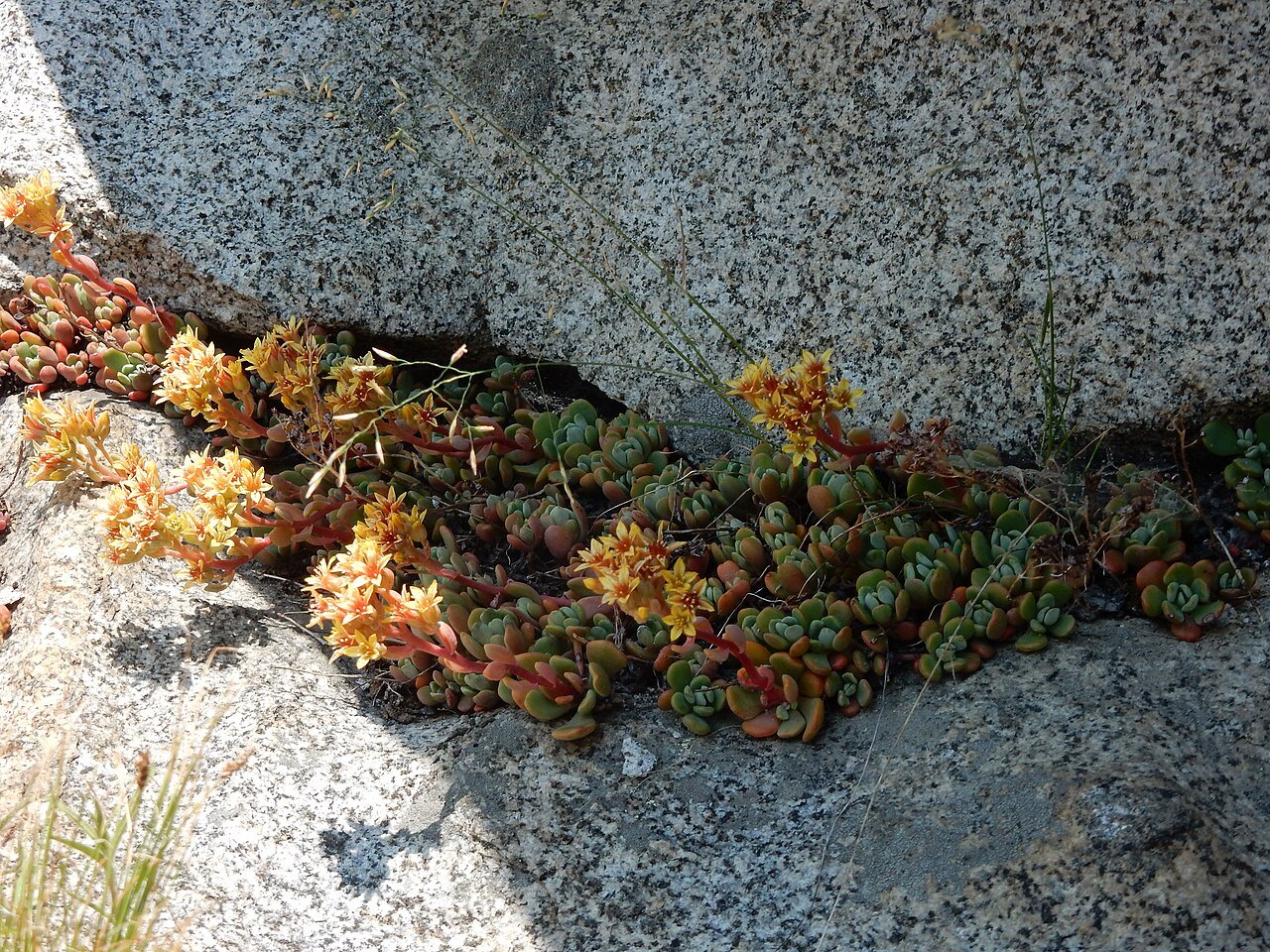
Sierra stonecrop provides summer nectar in the high, rocky country of the Sierra Nevada, where flowering plants are scattered among the granite.
For Pollinators
Its open, star-shaped flowers are visited by small native bees, flies, beetles and butterflies. Stonecrops are host plants for some parnassian butterflies; in the Sierra Nevada, the Sierra Nevada parnassian is known to use Sedum species as caterpillar food plants.
For Birds
It is not a significant food plant for birds, but rosy-finches and other alpine birds may forage for insects and seeds around rock outcrops where it grows.
For Mammals
Pikas, marmots and other rock-dwelling mammals may nibble its succulent leaves, though its rocky crevice habitat limits grazing.
Ecosystem Role
As a pioneer of cracks and ledges in granite, it helps trap dust and organic matter and slowly builds tiny pockets of soil in which other plants can grow. Its succulent leaves store water to survive the long summer drought typical of the Sierra.
Cultural & Historical Uses
Asa Gray, the leading American botanist of the nineteenth century, described Sierra stonecrop in the nineteenth century, one of the many western plants he named from specimens sent east by collectors working in California and the Far West.
Sierra stonecrop is part of the iconic flora of the “Range of Light,” as John Muir called the Sierra Nevada. Hikers in Yosemite, Sequoia and Kings Canyon and around Lake Tahoe often see its colorful rosettes in granite cracks along the trail.
Rock gardeners value it for its compact rosettes and changing leaf colors, and it is among the western stonecrops grown by alpine plant enthusiasts in troughs and crevice gardens.
Frequently Asked Questions
Where does Sierra stonecrop grow?
In granite cracks, rocky ledges and gravelly slopes in the Sierra Nevada of California and western Nevada, and north through the southern Cascades and Klamath Mountains into southern Oregon, mostly at middle to high elevations.
Can I grow Sierra stonecrop in my garden?
Yes, in a sunny rock, crevice or gravel garden with very sharp drainage. It is easiest in climates with cold winters and dry summers, and it rots in wet, heavy soils.
Why does Sierra stonecrop turn red?
Its leaves produce red and purple pigments in strong sun, cold and drought, which help protect them from light and temperature stress. The colors are strongest in full sun.
When does Sierra stonecrop bloom?
From about June to August, depending on elevation and snowmelt. The flowers open pale yellow and age to cream, buff, orange or pink.
How do I propagate Sierra stonecrop?
Root single rosettes or leaves after letting them callus for a few days, or sow seed on the surface of a gritty mix in fall for natural cold stratification.

Looking for a nursery that carries Sierra Stonecrop?
Browse our native plant nursery directory: California · Nevada · Oregon

