
Purple Pleatleaf (Alophia drummondii)
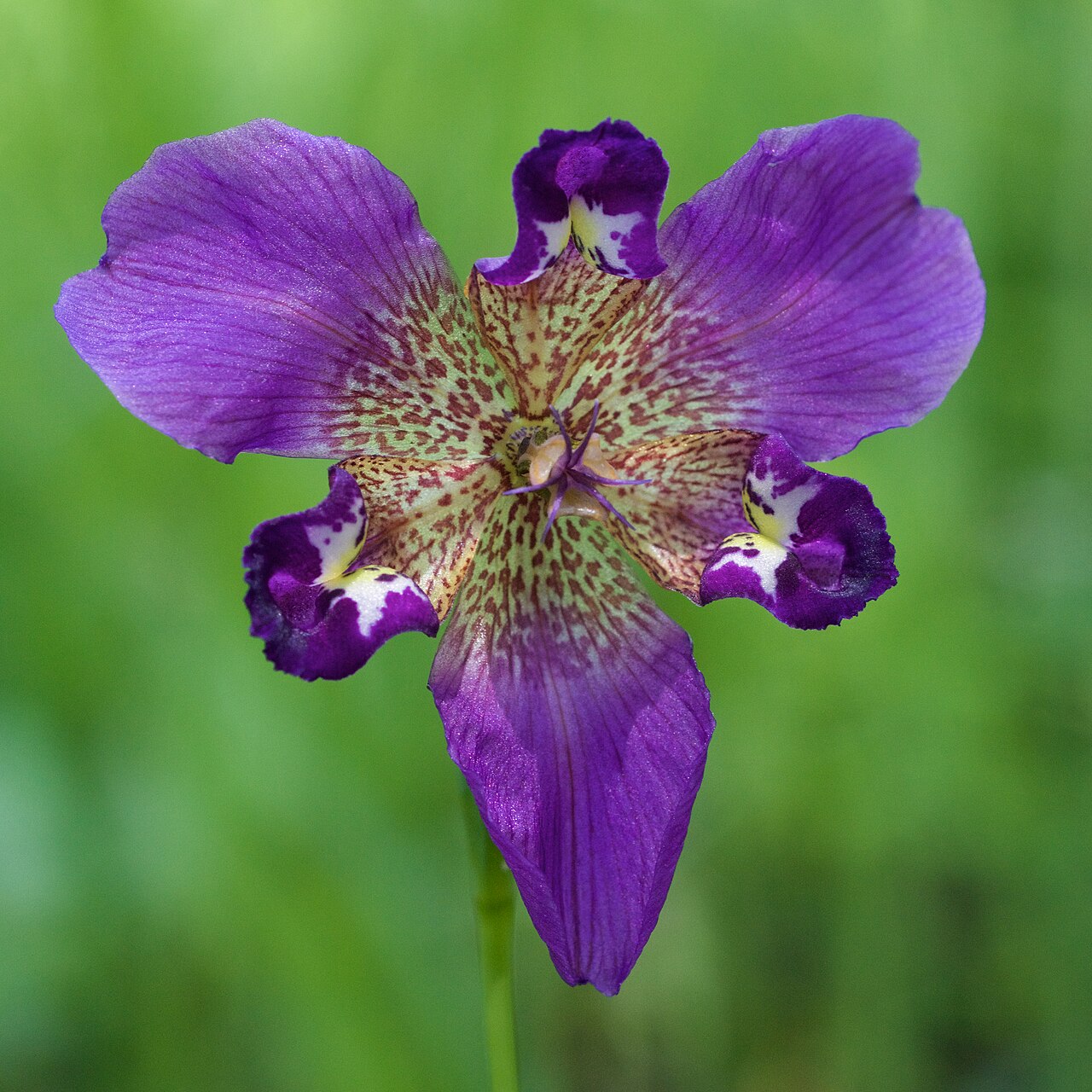
Alophia drummondii, known as Purple Pleatleaf (also pinewoods lily and propeller flower, the name used by USDA PLANTS), is a striking native member of the iris family (Iridaceae) from the western Gulf Coastal Plain. From a small bulb it produces a narrow, pleated leaf and a slender stalk, usually 1 to 2 feet tall, that opens a succession of deep violet to purple flowers about 2 to 3 inches across. Each flower opens in the morning and fades by afternoon, but a plant keeps producing new ones for several weeks in late spring and early summer.
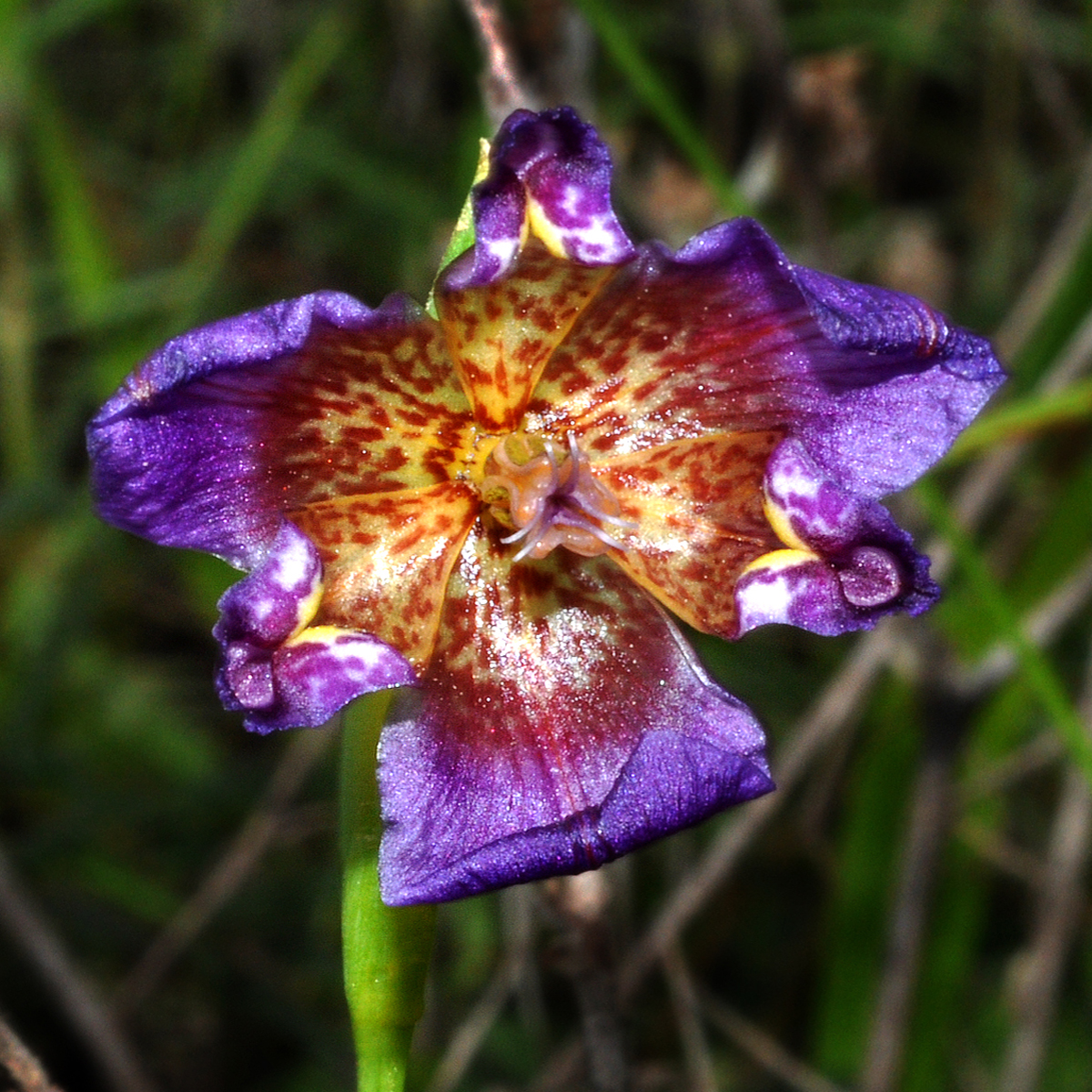
The flowers are unusual and beautiful at close range. Three broad, spreading outer tepals form the “propeller,” and between them sit three much smaller inner tepals, dark purple and curled, often marked with white or yellow. The cupped center is pale yellow to cream, densely spotted and streaked with reddish-brown. The common name pleatleaf refers to the leaves, which are folded lengthwise into many parallel pleats, a trait shared with several tropical relatives of the iris family.
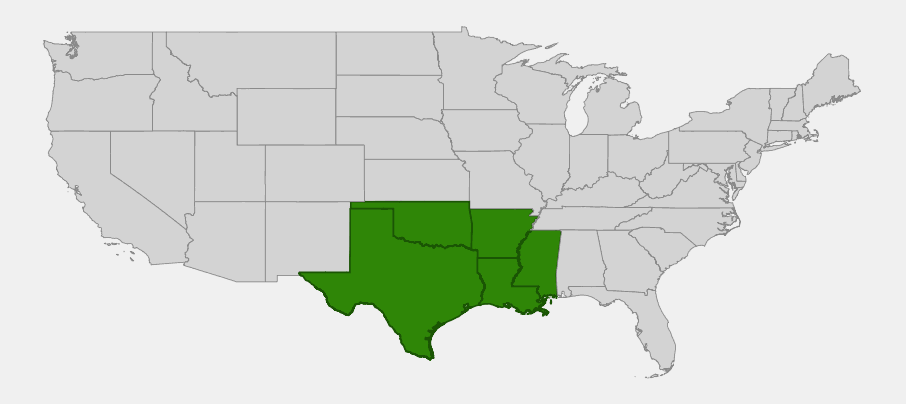
Purple pleatleaf grows in sandy prairies, open pine and oak woodlands, woodland edges and roadsides from southeastern Oklahoma and southwestern Arkansas south through Louisiana and eastern and coastal Texas to Mexico, with scattered records in Mississippi. It is not often grown, but it is a rewarding plant for sandy native gardens in its range. This guide covers how to identify it, where it grows, how to grow it from seed or bulbs, and its place in Gulf Coast plant communities.
Identification
Several small, purple-flowered members of the iris family grow in Texas and the South Central states. Purple pleatleaf is recognized by its larger flowers with three broad outer tepals and three tiny, curled inner tepals, its spotted, cup-shaped center, and its distinctly pleated leaves. The similar prairie celestial lily has smooth, unspotted, nearly equal tepals.
Bulb & Stems
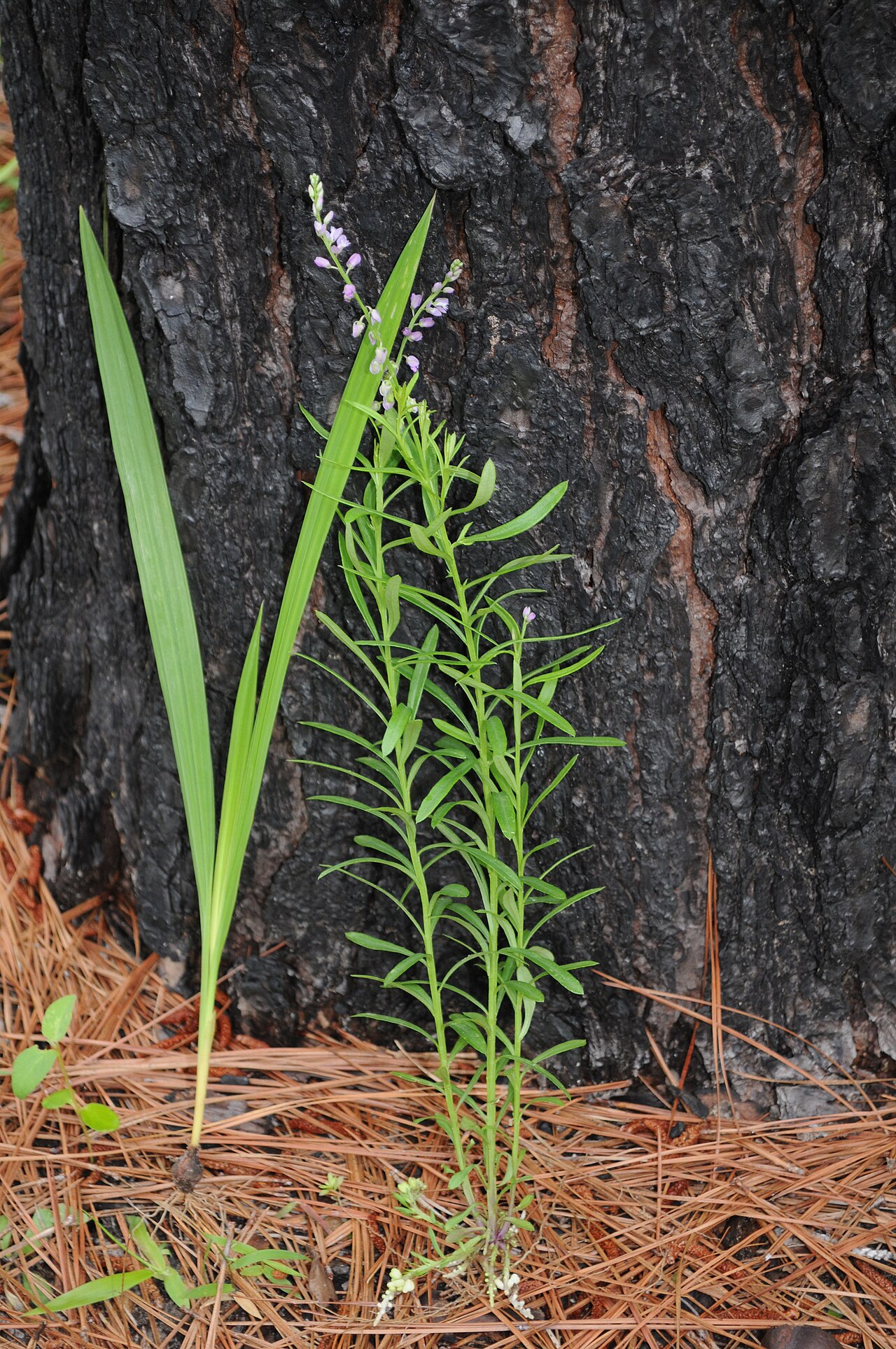
Each plant grows from a small, rounded bulb covered with brown, papery tunics, buried a few inches deep in sandy soil. In spring it sends up a slender, upright flowering stem, usually 1 to 2 feet tall, sometimes branched near the top. The plant dies back to the bulb after flowering and seed set, and it is dormant through late summer and winter.
Leaves
There are usually one to a few long, narrow, sword-shaped basal leaves, about ½ to 1 inch wide and often as long as the flowering stem, plus smaller leaves on the stem. The leaves are folded lengthwise into many parallel pleats, which makes them look ribbed or corrugated. Without flowers, plants look a bit like a coarse grass or a young palm seedling.
Flowers
The flowers emerge one at a time from a pair of green, pointed bracts (spathes) at the top of the stem and its branches. Each flower is about 2 to 3 inches across. The three outer tepals are broad, spreading and violet to deep purple. The three inner tepals are much smaller, dark purple, curled and folded, usually with white or yellow markings. The center of the flower forms a shallow cup that is yellowish to cream, heavily spotted and streaked with red-brown or purple. Flowers open in the morning and close by mid-afternoon on the same day. LBJ and Texas sources give a bloom period of about March to July, with most flowers in May and June.
Fruit & Seeds
After flowering, the plant forms an oblong, three-chambered capsule, about ¾ to 1 inch long, which splits at the top in summer to release many small, angular brown seeds. Seeds scatter near the parent plant, and small colonies can develop over time in undisturbed sites.
Quick Facts
| Scientific Name | Alophia drummondii (syn. Eustylis purpurea) |
| Family | Iridaceae (iris family) |
| Plant Type | Bulbous herbaceous perennial |
| Mature Height | 1–2 ft |
| Mature Spread | 3–6 in |
| Growth Rate | Moderate |
| Sun Exposure | Full sun to partial shade |
| Water Needs | Low; prefers dry to moderately moist, well-drained soil |
| Soil Type | Sandy, sandy loam or loam; tolerates clay loam |
| Soil pH | About 5.0–7.0 |
| Bloom Time | March–July (mostly May–June) |
| Flower Color | Violet to deep purple with a yellowish, red-brown spotted center |
| Fall Color | None; plant is dormant after seed set |
| Fruit | Oblong three-chambered capsule with many small seeds |
| Deer Resistant | Unknown; probably browsed occasionally |
| USDA Hardiness Zones | 7–10 |
Native Range
Purple pleatleaf is a plant of the south-central United States and Mexico. USDA PLANTS and the Lady Bird Johnson Wildflower Center record it as native in Arkansas, Louisiana, Mississippi, Oklahoma and Texas. Its range extends south through eastern Mexico, and there are separate, disjunct populations in northern South America, recorded from Guyana and Bolivia.
In the United States it is most common in eastern and coastal Texas, especially the Pineywoods, Post Oak Savannah and Gulf Coast Prairies, and in western and central Louisiana. It reaches its northern limits in the sandy uplands of southwestern Arkansas and southeastern Oklahoma, and it is known from only a few sites in southwestern Mississippi, at the eastern edge of its range. In Texas it also extends into the South Texas Plains and the coastal sand sheet.
Within its range it favors sandy soils in open or partly shaded places: sandy prairies and savannas, openings and edges of longleaf, shortleaf and loblolly pine forests and post oak woodlands, sandhills, pastures, fencerows and roadsides. The Lady Bird Johnson Wildflower Center notes that it often grows in “verge” habitats at the partly shaded edges where trees meet grassland.
📋 Regional plant lists featuring Purple Pleatleaf: Arkansas, Louisiana, Eastern Oklahoma & Eastern Texas · South & West Texas · Alabama, Georgia & Mississippi
Growing & Care Guide
Purple pleatleaf is rarely sold, but it is easy to keep in a sandy, sunny native garden within its range once you have plants or seed. It is a small bulb, so plant it where it will not be smothered by vigorous neighbors, and mark its location, since it disappears completely after blooming. Never dig bulbs from the wild; obtain seed or plants from native plant sales and nurseries.
Light
Give it full sun to partial shade. It does well at the edge of a woodland or among open pines, where it gets several hours of sun and some afternoon shade, which mirrors the verge habitats where it is most common.
Soil & Water
Plant it in well-drained sandy or sandy loam soil. It tolerates loam and clay loam if drainage is good, but it does not do well in soggy soil. Water during dry spells in spring while it is growing and flowering, then let it go dormant and stay on the dry side in late summer. No fertilizer is needed.
Planting Tips
Plant bulbs in fall about 2 to 3 inches deep and 4 to 6 inches apart in groups of five or more, or sow seed in fall. Good companions include low grasses such as little bluestem and broom sedge and other spring wildflowers that will not overgrow it. Avoid heavy mulch over the bulbs, which can keep the soil too wet.
Pruning & Maintenance
Leave the foliage in place until it yellows so the bulb can store energy for the next year. Let the seed capsules ripen and split if you want the planting to spread, then cut the stems. Bulbs can be lifted and divided while dormant if a clump becomes crowded.
Propagation
Grow it from seed or from offset bulbs. Sow fresh seed in fall in a sandy seed mix or directly in the garden; seedlings usually take two or three years to reach flowering size. Established bulbs slowly produce offsets that can be separated while dormant.
Landscape Uses
- Sandy native gardens: an eye-catching late-spring bulb for well-drained sandy soils
- Woodland edges: thrives in the partly shaded transition between trees and grassland
- Prairie and savanna restoration: within its range in east Texas, Louisiana and neighboring states
- Rock gardens and containers: a compact plant whose flowers are best seen up close
- Pollinator gardens: its flowers attract native bees
Wildlife & Ecological Value
Purple pleatleaf is a modest plant in the landscape, but it adds diversity to the sandy prairies and pine woodlands of the Gulf Coastal Plain, and its short-lived flowers are an important resource for bees in late spring.
For Pollinators
The flowers are visited by native bees, which crawl into the spotted, cup-shaped center to gather pollen. The dark, contrasting markings likely serve as nectar guides. Because each flower lasts only a morning, pollinators must find them quickly, and a single plant may produce flowers over several weeks.
For Birds
Purple pleatleaf has little direct value for birds, but it is part of the diverse groundcover of open pine woodlands and sandy prairies, which support birds such as Bachman’s sparrow, northern bobwhite and eastern meadowlark.
For Mammals
Small mammals may dig and eat the bulbs, and deer and rabbits may nibble the foliage. It is otherwise of little importance to mammals.
Ecosystem Role
As a dormant bulb for much of the year, purple pleatleaf is well adapted to the fire-maintained pine savannas and prairies of the Gulf Coastal Plain. It benefits from fire, mowing or grazing that keeps these habitats open, and it declines where woody plants and dense shade take over.
Cultural & Historical Uses
The species is named for Thomas Drummond, the Scottish naturalist who collected plants in Texas in the 1830s and sent many new species to Britain. It was first described by Robert Graham from cultivated plants grown from Drummond’s seed, and it has since been known under several names, including Eustylis purpurea, which appears in many older Texas references. Today most botanists place it in the genus Alophia.
Its many common names reflect its appearance and its homeland: pinewoods lily and pineywoods lily for its frequent home in the East Texas Pineywoods, propeller flower for its three broad, spreading outer tepals, and purple pleatleaf for its folded leaves. Like other members of the iris family it is not a true lily.
Purple pleatleaf is still fairly common in suitable habitat in Texas and Louisiana, but sandy prairies and open pine woodlands have declined through development, conversion to pine plantations and fire suppression. Native plant societies in Texas and Louisiana encourage gardeners to grow it from seed rather than digging wild bulbs, which helps keep wild populations intact.
Frequently Asked Questions
How long does a purple pleatleaf flower last?
Each flower lasts only a few hours. It opens in the morning and closes by mid-afternoon of the same day. New flowers open from the same stalk over several weeks, so plants stay in bloom much longer than any single flower.
Is purple pleatleaf a lily?
No. It belongs to the iris family (Iridaceae), not the lily family, despite the common name pinewoods lily. Its relatives include irises, blue-eyed grasses and the prairie celestial lily.
Why is it called pleatleaf?
Its long, narrow leaves are folded lengthwise into many parallel pleats, so they look ribbed or corrugated, much like a palm seedling.
How is purple pleatleaf different from prairie celestial lily?
Prairie Celestial Lily has six nearly equal, smooth, pale blue tepals and no spotted cup. Purple pleatleaf has three large outer tepals, three tiny curled inner tepals, and a cup-shaped center heavily spotted with red-brown.
Can I grow purple pleatleaf in my garden?
Yes, in sandy, well-drained soil in sun to part shade within its native range. Start with seed or nursery-grown bulbs, and never dig plants from the wild.

Looking for a nursery that carries Purple Pleatleaf?
Browse our native plant nursery directory: Arkansas · Louisiana & Mississippi · Oklahoma · Texas

