
Carolina Wicky (Kalmia carolina)
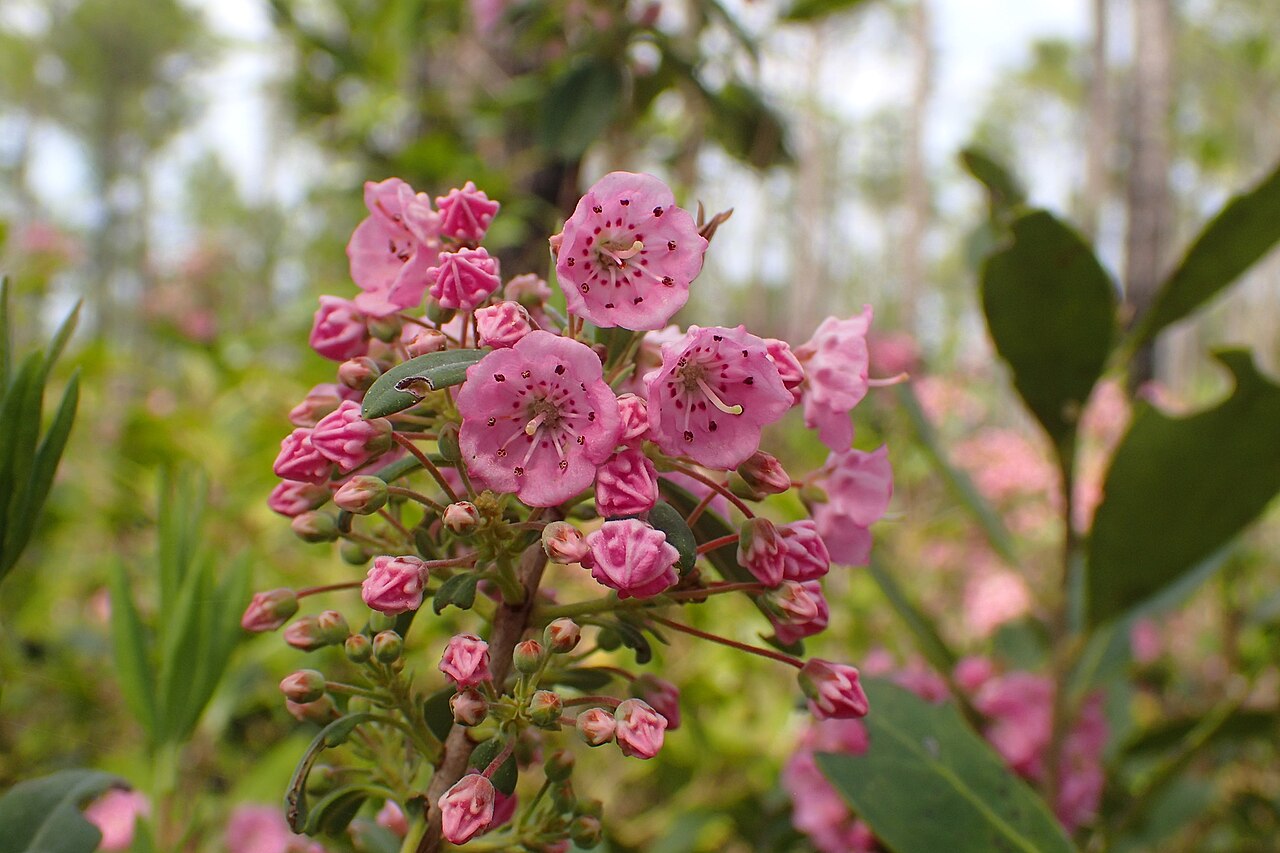
Kalmia carolina, known as Carolina Wicky, Carolina laurel or southern sheep laurel, is a low evergreen shrub of the southeastern Coastal Plain and a few southern Appalachian bogs. It grows 1 to 3 feet tall (occasionally to about 5 feet), spreads by underground runners into loose colonies, and in April and May carries rounded clusters of bright pink, saucer-shaped flowers around the stems just below the new leaves. It belongs to the heath family (Ericaceae), alongside mountain laurel, blueberries and azaleas.
Carolina wicky is a close southern relative of Lambkill (Kalmia angustifolia), the sheep laurel of the Northeast and Canada, and some botanists treat it as a variety or subspecies of that species. The easiest difference is the leaf underside: Carolina wicky leaves are coated beneath with fine gray hairs, while sheep laurel leaves are smooth or nearly so. Its native home is pocosins, wet pine flatwoods and savannas, Carolina bays and sandy seepage bogs from southeastern Virginia to Georgia.
Safety note: like all Kalmia species, Carolina wicky is poisonous. Its leaves, twigs, flowers and nectar contain grayanotoxins, which can cause serious illness in people, pets and especially grazing livestock. It is a fine ornamental for wet, acid, sunny gardens, but it should never be eaten or made into tea, and it should not be planted where sheep, goats, cattle or horses browse. This guide covers how to identify it, where it grows, how to grow it, and its role in fire-maintained southern wetlands.
Identification
Out of flower, Carolina wicky is a modest, narrow-leaved shrub that blends into the evergreen thickets of pocosins and savannas. In spring its pink flower clusters make it easy to spot, and two features separate it from its relatives: the flowers sit in clusters along the stem below the new growth, and the leaves are gray-downy underneath.
Stems & Growth Habit
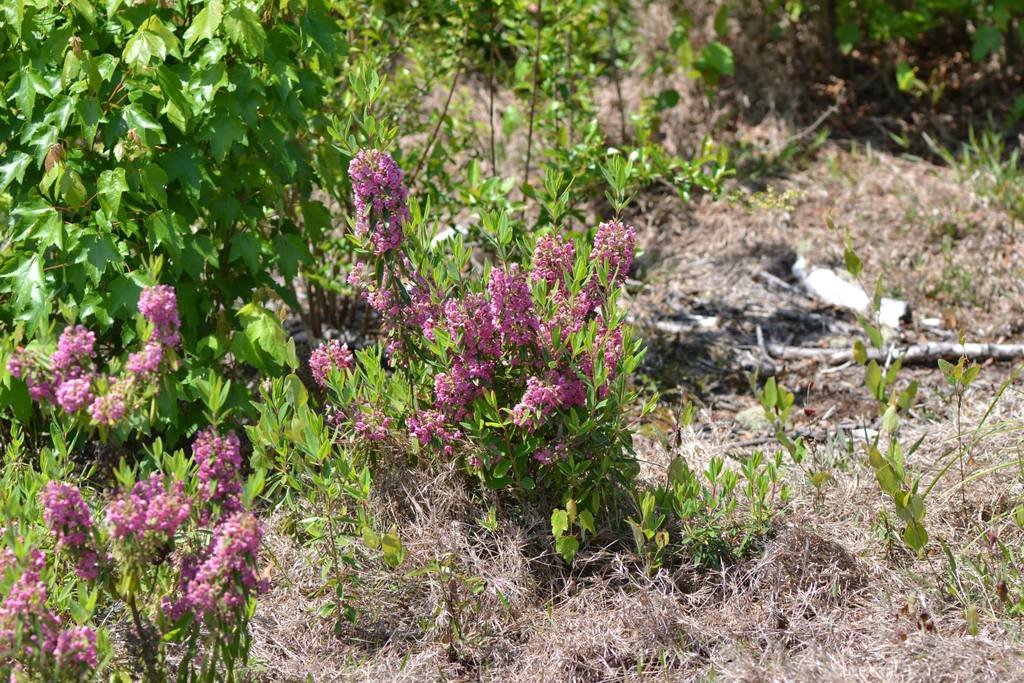
Carolina wicky is a low, sparsely branched shrub, usually 1 to 3 feet tall, with upright stems rising from creeping underground rhizomes. A single plant can form a loose colony several feet across, and after fire it resprouts quickly from those rhizomes. Young twigs are finely hairy; older stems are reddish-brown to gray.
Leaves
The leaves are evergreen, leathery, elliptic to oblong, about ¾ to 2 inches long, and arranged in pairs or in whorls of three along the stem. The upper surface is dull green; the lower surface is paler and covered with a fine gray to whitish down, which is the most reliable way to tell it from northern sheep laurel. The leaves often droop slightly and may turn bronze or purplish in winter sun.
Flowers
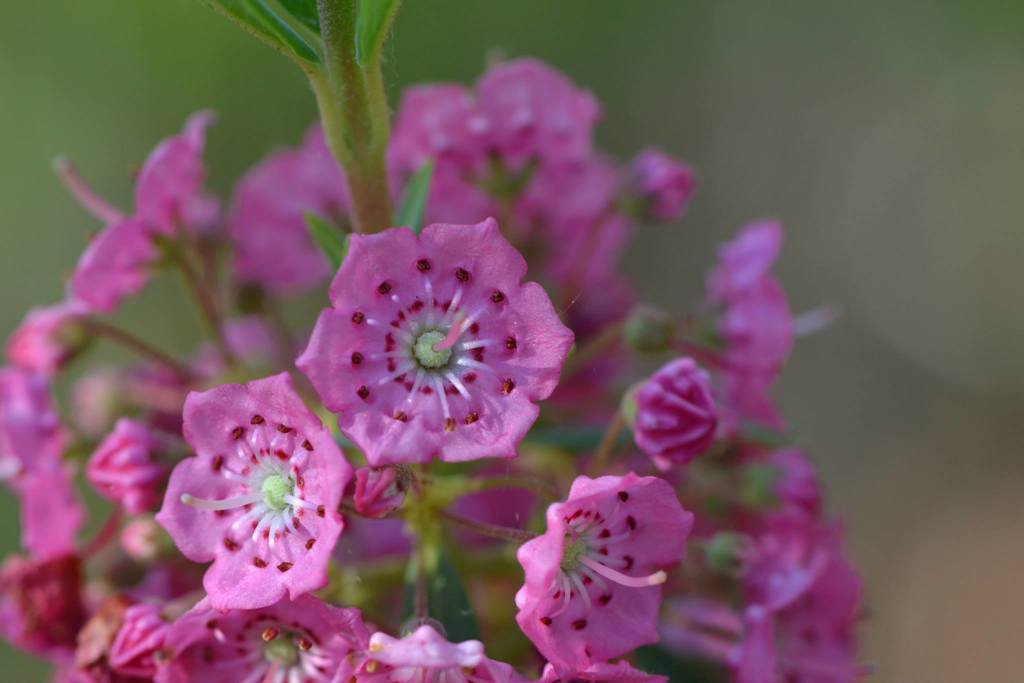
Flowers appear from April into May (into June in mountain bogs) in rounded clusters that ring the stem at the leaf axils of the previous year’s growth, with the new leafy shoot continuing above them. Each flower is a five-lobed, saucer-shaped corolla about ⅜ to ½ inch wide, deep pink to rose-purple, rarely white. Like other Kalmia, each corolla has ten small pouches holding the anthers, with the stamens bent back under tension like little springs.
Fruit & Seeds
Pollinated flowers become small, rounded, five-parted capsules on slender stalks, which turn brown and split in fall to release many tiny seeds. The dry capsules often stay on the plant through winter, which helps with identification after flowering.
Quick Facts
| Scientific Name | Kalmia carolina (syn. K. angustifolia var. caroliniana) |
| Family | Ericaceae (heath family) |
| Plant Type | Low evergreen shrub; spreads by rhizomes |
| Mature Height | 1–3 ft (occasionally to about 5 ft) |
| Mature Spread | 2–4 ft; forms loose colonies over time |
| Growth Rate | Slow to moderate |
| Sun Exposure | Full sun to part shade |
| Water Needs | Moist to wet; tolerates seasonal saturation |
| Soil Type | Acidic sand, peaty sand or organic muck |
| Soil pH | About 4.0–5.5 (strongly acidic) |
| Bloom Time | April–May (into June at higher elevations) |
| Flower Color | Pink to rose-purple; rarely white |
| Fall Color | Evergreen; leaves may bronze in winter |
| Fruit | Small, rounded five-parted capsule |
| Deer Resistant | Yes; foliage is toxic and rarely browsed |
| USDA Hardiness Zones | 6–9 |
Native Range
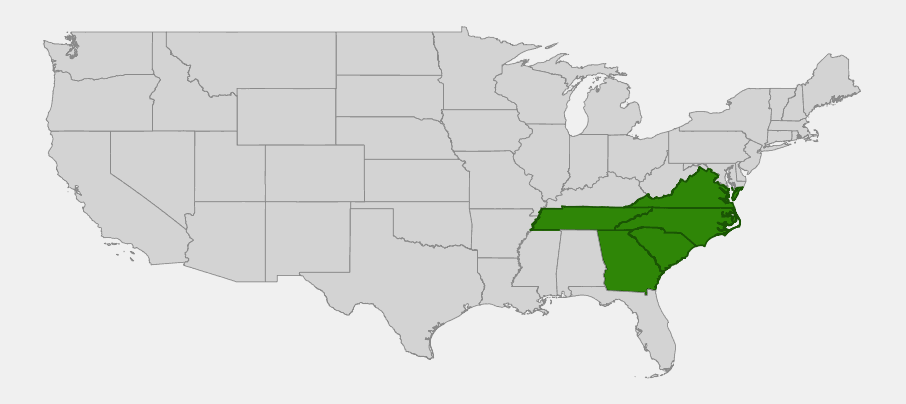
Carolina wicky is a southeastern endemic. USDA PLANTS records it from five states: Virginia, North Carolina, South Carolina, Georgia and Tennessee. Its heartland is the outer Coastal Plain of the Carolinas, where it is common in pocosins, Carolina bays and wet longleaf pine savannas, and it reaches northward into southeastern Virginia around the Great Dismal Swamp region and southward into eastern Georgia.
A second, smaller set of populations grows inland in the southern Appalachians, in mountain bogs and wet, open acidic sites in western North Carolina, and USDA also records it from Tennessee. These mountain plants bloom later than those on the coast, often into June. Across its range it is a plant of sunny, nutrient-poor, acidic and at least seasonally wet ground.
Taxonomists disagree on its rank. Many southeastern floras, including Weakley’s Flora of the Southeastern United States and USDA PLANTS, treat it as the full species Kalmia carolina. Others treat it as Kalmia angustifolia var. caroliniana, a southern variety of sheep laurel. Either way, the gray-hairy leaf undersides and southern range separate it from northern sheep laurel.
📋 Regional plant lists featuring Carolina Wicky: Alabama, Georgia & Mississippi · North & South Carolina · Maryland, Virginia & West Virginia · Kentucky & Tennessee
Growing & Care Guide
Carolina wicky is not a common nursery plant, but it is grown by native plant specialists and is worth seeking out for wet, acidic, sunny gardens in the Southeast. Treat it like a small blueberry or a bog plant: give it acid soil, steady moisture and plenty of light, and avoid fertilizer and lime.
Light
Full sun produces the densest plants and the heaviest bloom. It tolerates part shade, such as the edge of a pine stand, but in deep shade it becomes leggy and flowers sparsely. In the wild it thrives after fires open up the canopy.
Soil & Water
Plant in strongly acidic, low-nutrient soil: sand, peaty sand or sandy loam amended with pine bark or peat. It wants moist to wet soil and tolerates periods of standing water in winter and spring, but it also handles short dry spells once established, as savanna plants must. Avoid alkaline soils, limestone gravel and heavy clay, which cause yellow, stunted growth.
Planting Tips
Plant container-grown stock in fall or early spring at the same depth it grew in the pot. Loosen circling roots, water in well and mulch lightly with pine straw. Group three or more plants to imitate the colonies it forms in the wild. Because it is toxic, keep it away from pastures, goat yards and children’s play areas where leaves might be chewed.
Pruning & Maintenance
Little pruning is needed. Remove dead stems in late winter, and if a planting becomes leggy, cut a few of the oldest stems to the ground to encourage new shoots from the rhizomes. Do not fertilize: heath-family shrubs are adapted to poor soils and depend on root fungi for nutrients. Wear gloves if you handle large amounts of trimmings, and do not compost them where livestock could reach them.
Propagation
Propagate by digging and dividing rooted suckers from the edge of an established garden colony in late winter, by layering low stems, or by semi-hardwood cuttings in summer treated with rooting hormone. The fine seed can be surface-sown on moist, acidic peat-based mix under light, as with mountain laurel, but seedlings grow slowly. Never dig plants from wild savannas or pocosins.
Landscape Uses
- Rain gardens and wet borders: in acidic, sunny sites in the Coastal Plain and Piedmont
- Bog garden edges: as a low evergreen backdrop for pitcher plants and other bog plants
- Pine savanna and pocosin restoration: in fire-maintained wetlands within its native range
- Native heath gardens: with blueberries, inkberry, fetterbush and native azaleas
- Deer-prone landscapes: its toxic foliage is rarely browsed (but keep it away from livestock)
Wildlife & Ecological Value
Carolina wicky is part of the dense, evergreen shrub layer that defines pocosins and wet savannas. It is a modest food plant, but it provides spring nectar and year-round cover in habitats that hold a remarkable diversity of carnivorous plants, orchids and rare wildlife.
For Pollinators
The flowers are pollinated mainly by bumblebees and other medium to large bees. When a bee lands and pushes into the flower, it knocks the bent stamens loose from their pockets, and they spring up to dust the bee with pollen, the same catapult mechanism that makes mountain laurel famous. Grayanotoxins also occur in the nectar, and honey made mainly from Kalmia or related heaths can be toxic, though bees mix many nectar sources and such cases are rare.
For Birds
Its seed capsules are of little food value, but the low, evergreen thickets give nesting and escape cover to ground- and shrub-nesting birds of pine savannas and pocosin edges, such as common yellowthroats and towhees.
For Mammals
Deer, rabbits and livestock generally avoid it because of its toxicity. Poisoning of sheep, goats and cattle by sheep laurel and its relatives is well documented, typically when animals are hungry and better forage is scarce.
Ecosystem Role
Carolina wicky is a fire-adapted shrub. Periodic fires burn off its stems, and it resprouts vigorously from underground rhizomes, keeping the shrub layer low and open. Without fire, pocosin shrubs grow tall and dense and shade out the herbs of savannas. Like other heaths, it depends on ericoid mycorrhizal fungi to extract nutrients from acidic, nutrient-poor soils.
Cultural & Historical Uses
John Kunkel Small described Carolina wicky as Kalmia carolina in 1903 from plants of the Carolinas. The genus name honors Pehr Kalm, a student of Linnaeus who traveled in eastern North America in the 1740s and brought back specimens of mountain laurel and sheep laurel. “Wicky” is an old regional name for sheep laurel and its relatives, and it survives in several southern common names.
Names such as “lambkill” and “sheepkill” used for the related sheep laurel record a long rural experience with livestock losses, and farmers in the Southeast were similarly wary of Carolina wicky in grazed pinelands. Historical herbal literature mentions external uses of related Kalmia species, but the plants are too toxic for any home remedy.
Today Carolina wicky is mostly valued by native plant enthusiasts and restoration ecologists. It is a characteristic plant of the Green Swamp, Croatan National Forest and the Carolina bays, and its spring bloom is one of the signature sights of a recently burned longleaf pine savanna.
Frequently Asked Questions
Is Carolina wicky poisonous?
Yes. All parts contain grayanotoxins, which can cause vomiting, drooling, weakness, low blood pressure and slow heart rate in people and animals. Livestock are most at risk. Never eat any part of the plant or brew it as tea, and keep pets and grazing animals away from it. Call a poison control center or a veterinarian if ingestion is suspected.
How is Carolina wicky different from sheep laurel?
Turn a leaf over. Carolina wicky leaves are covered underneath with fine gray hairs, while sheep laurel (lambkill) leaves are smooth or nearly smooth below. Carolina wicky also grows only in the Southeast, from Virginia to Georgia, while sheep laurel is a northern plant.
Is Carolina wicky the same as mountain laurel?
No. Mountain laurel (Kalmia latifolia) is a much larger shrub or small tree with broad leaves and large terminal flower clusters. Carolina wicky is a low shrub with narrow leaves and smaller clusters ringing the stem below the new growth. Both share the spring-loaded stamens and are toxic.
Where can I see Carolina wicky in the wild?
Good places include the Green Swamp Preserve and Croatan National Forest in eastern North Carolina, Carolina bays in the Carolinas, and wet pine savannas in southeastern Virginia and coastal Georgia. Look in April and May, especially in areas burned the previous year.
Can I grow Carolina wicky in my garden?
Yes, if you have acidic, moist to wet soil and good sun. It is hardy to about zone 6 and suits rain gardens, bog garden margins and native heath plantings in the Southeast. Buy nursery-propagated plants from native plant specialists, and keep it out of reach of livestock.

Looking for a nursery that carries Carolina Wicky?
Browse our native plant nursery directory: Georgia · North Carolina · South Carolina, Tennessee & Virginia

