
Sand Dollar Cactus (Astrophytum asterias)
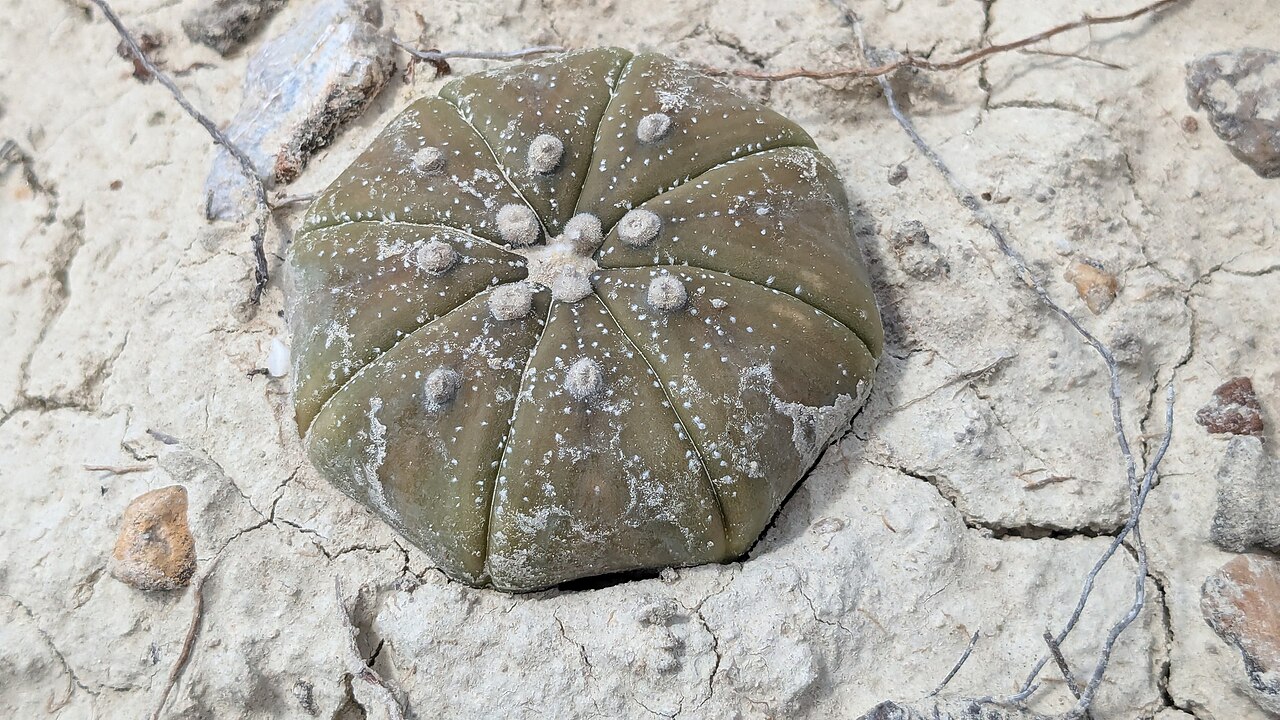
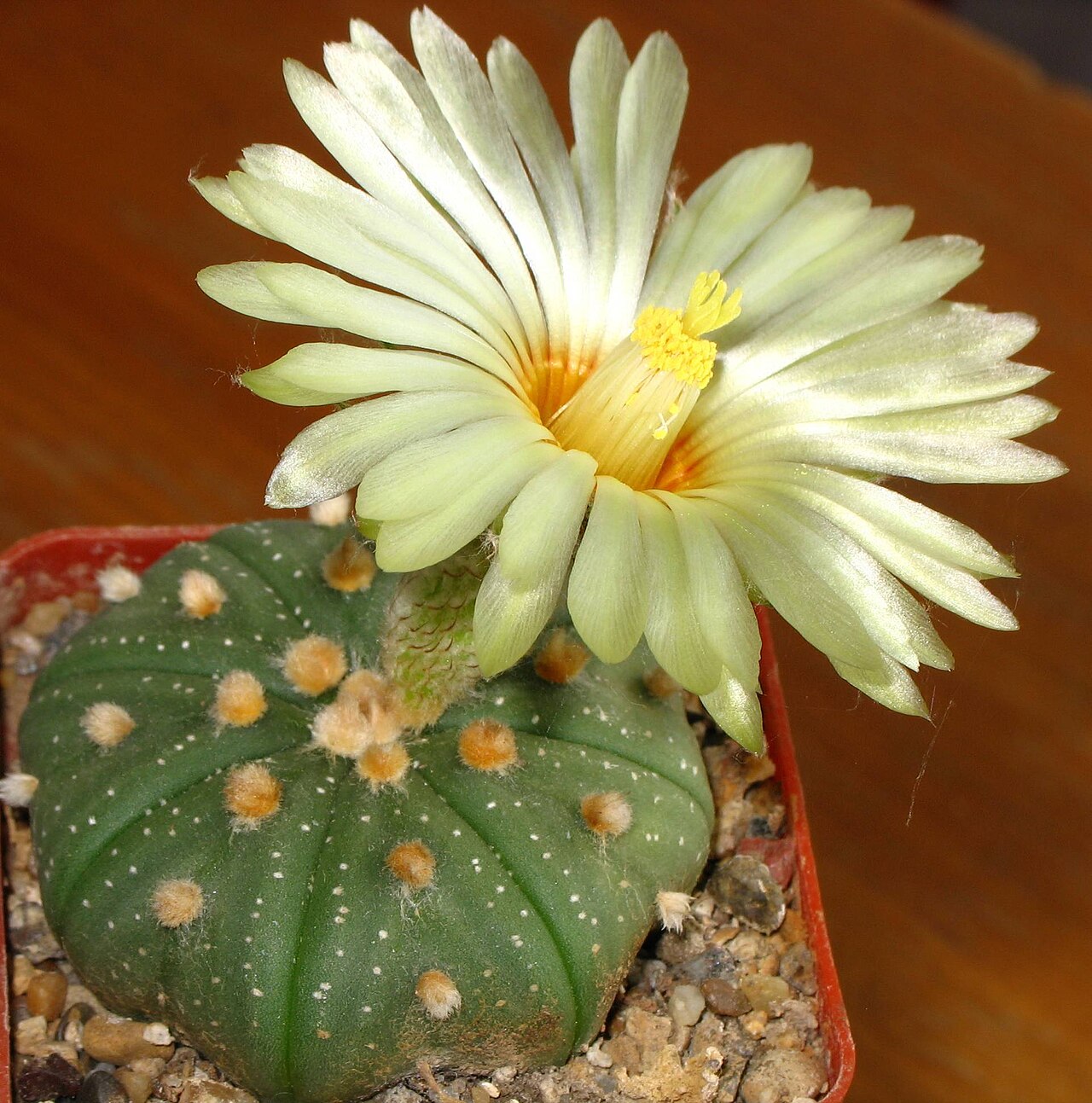
Astrophytum asterias, the Sand Dollar Cactus, also called star cactus, sea urchin cactus or star peyote, is a small, spineless cactus shaped like a flattened dome. It is only 1 to 2 inches tall and 2 to 6 inches across, with usually eight shallow ribs, each marked by a line of white woolly tufts, so from above it looks remarkably like a sand dollar or sea urchin. In spring it opens silky yellow flowers with a red-orange center that are often wider than the cactus.
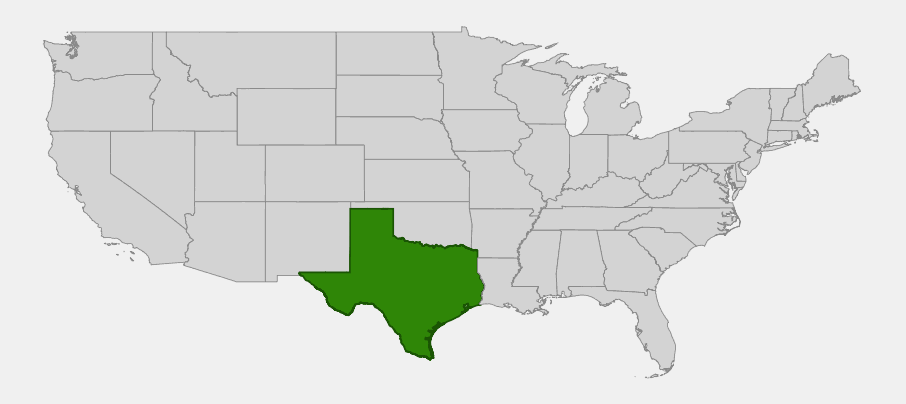
It is one of the rarest plants in the United States. Its native range is a small area of the lower Rio Grande Valley of South Texas and adjacent Tamaulipas and Nuevo León in Mexico, and the only known U.S. populations today are in Starr County, Texas. The U.S. Fish and Wildlife Service lists it as federally endangered, it is protected by Texas state law, and it is listed on Appendix I of CITES, the international treaty that bans commercial trade in wild-collected specimens.
At the same time, it is a beloved houseplant. Collectors have grown it since the 1840s, and seed-grown plants, including showy cultivars such as ‘Super Kabuto’, are widely sold. This guide explains how to identify it, why it is endangered, and how to grow nursery-propagated plants on a sunny windowsill or in a frost-free garden. Never dig a sand dollar cactus from the wild; buy only seed-grown plants from reputable nurseries.
Identification
There is nothing else quite like a sand dollar cactus in the U.S. flora, but in the wild it is easily overlooked, and in its South Texas range it can be confused with peyote (Lophophora williamsii), another small, spineless, flattened cactus. Peyote is blue-green, has tufts of hair but lacks the fine white scales, and has fewer, less regular ribs.
Body & Ribs
The stem is a single flattened dome, usually about 1 to 2 inches tall and 2 to 6 inches across, gray-green to brownish green. It is divided into 7 to 10 broad, shallow ribs, most often 8, separated by narrow grooves. The skin is speckled with tiny white scales made of tufts of hairs (trichomes), which may be sparse or dense; cultivated selections have been bred for heavy white spotting. In drought the plant shrinks and pulls itself down to soil level.
Areoles
Down the center of each rib runs a row of round, cream to white woolly areoles, the cushions from which other cacti produce their spines. In the sand dollar cactus the areoles carry wool but no spines at all, which makes the plant smooth to the touch and gives it its star-like pattern.
Flowers
The flowers appear from the woolly crown at the top of the plant, mostly from March to June in the wild. They are funnel-shaped, about 1½ to 2½ inches across, with many narrow, glossy, pale to bright yellow petals and a red to orange center. The flower bud and tube are covered in brown wool and small bristly scales. Flowers open in sunshine for a few days.
Fruit & Seeds
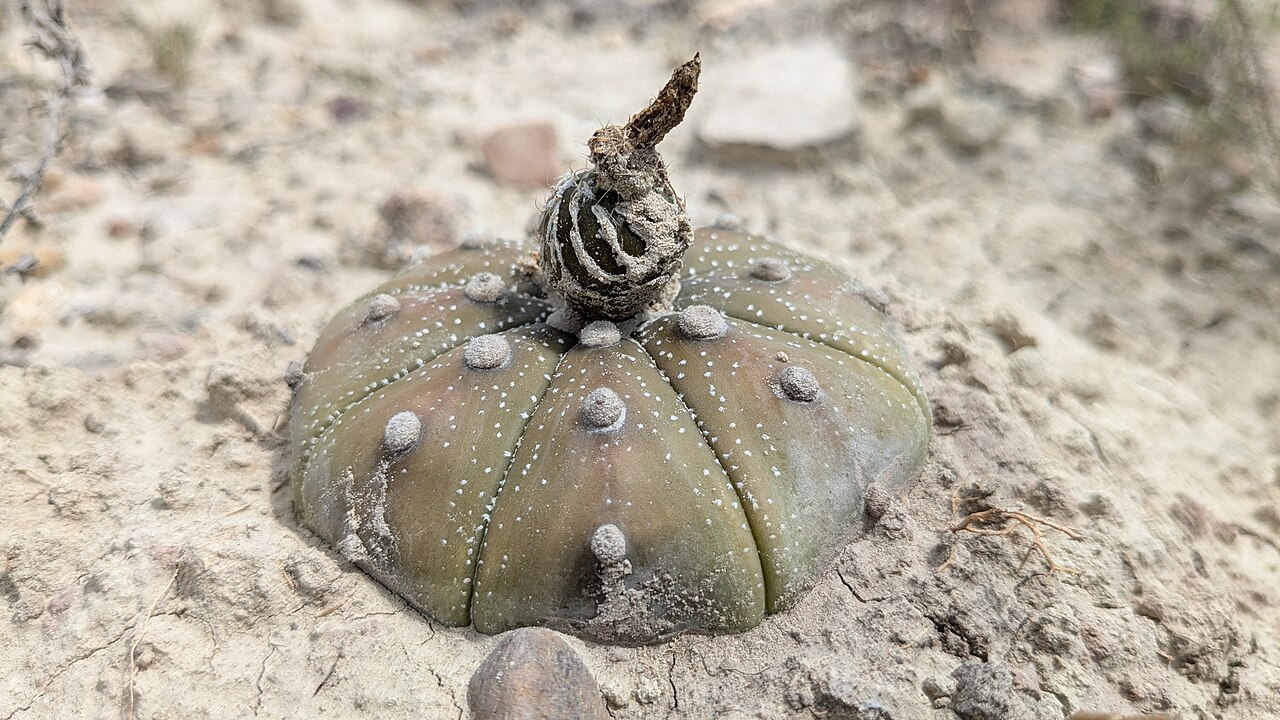
The fruits are small, oval, green to pinkish and covered in wool, about ½ inch long. They ripen in late spring and early summer and split at the base to release shiny, dark brown, helmet-shaped seeds. Plants are self-sterile and need cross-pollination from another individual to set seed.
Quick Facts
| Scientific Name | Astrophytum asterias (Zucc.) Lem. |
| Family | Cactaceae (cactus family) |
| Plant Type | Small, spineless, globular cactus |
| Mature Height | 1–2 in |
| Mature Spread | 2–6 in |
| Growth Rate | Slow |
| Sun Exposure | Full sun to bright light with light afternoon shade |
| Water Needs | Low; dry winter rest |
| Soil Type | Very well-drained, gritty mineral soil; in the wild, gravelly clay over caliche |
| Soil pH | About 7.0–8.5 |
| Bloom Time | March–June (also summer in cultivation) |
| Flower Color | Yellow with a red to orange center |
| Fall Color | None |
| Fruit | Small woolly green to pinkish berry |
| Deer Resistant | Not reliably; wild plants are eaten by rodents and other animals |
| USDA Hardiness Zones | 9b–11 outdoors with dry winters; houseplant elsewhere |
Native Range
Sand dollar cactus is a plant of the Tamaulipan thornscrub of the lower Rio Grande Valley. Historically it was more widespread in the lower Rio Grande Valley of Texas and in the Mexican states of Tamaulipas and Nuevo León east of the Sierra Madre Oriental. Today the only known U.S. populations are on private and protected lands in Starr County, and in Mexico it survives at a few sites in Tamaulipas; it has probably disappeared from Nuevo León.
In the wild it grows on gently sloping, gravelly or saline clay soils, often with a hard caliche layer, in open patches of thornscrub and grassland. Young plants usually start in the partial shade of shrubs or grass clumps, and adults sit nearly flush with the soil surface. Because it is so small and inconspicuous, botanists searching for it have to cover the ground on foot during the flowering season.
Its decline has several causes: conversion of native brush to cropland and pasture, root-plowing and herbicide treatments of rangeland, invasive pasture grasses such as buffelgrass that crowd out small plants, road building and development, and illegal collection, sometimes by people looking for peyote. The U.S. Fish and Wildlife Service listed it as endangered in 1993 and has a recovery plan that calls for protecting existing populations and searching for new ones.
📋 Regional plant lists featuring Sand Dollar Cactus: South & West Texas
Growing & Care Guide
Nursery-grown sand dollar cacti are easy to keep alive if you remember two rules: give them lots of light, and keep them almost completely dry in winter. They are slow growers that fit on a windowsill for years. Always buy seed-grown plants from a reputable nursery; never collect wild plants or seed, which is illegal and harms an endangered species.
Light
Give it bright light: a south- or west-facing window, a sunny greenhouse bench, or a grow light. Seedlings and plants moved from a nursery should be introduced to strong sun gradually, because the soft skin can scorch and turn yellow or brown. In hot climates outdoors, light afternoon shade in summer is helpful. Too little light causes the body to stretch, lose its flat shape and stop flowering.
Soil & Water
Use a very open, mostly mineral mix, for example a cactus mix with an equal part of pumice, perlite, coarse sand or crushed lava, and a pot with drainage holes. In spring and summer, water thoroughly only when the mix has dried out completely, which may be every one to three weeks depending on heat and pot size. From late fall through winter keep it dry, giving at most a light sip every month or so to keep it from shriveling. Cool, bright, dry winters (about 45 to 60°F) encourage spring flowers. Overwatering, especially in cool weather, is the main cause of rot.
Planting Tips
Plant at the same level it grew in the nursery pot, with the base sitting on gritty mix and a top dressing of fine gravel around the neck to keep it dry. A shallow, wide pot suits its root system, which is a fleshy taproot plus fine roots. Outdoors in zones 9b to 11, it can grow in a raised, gravelly rock garden bed or a protected spot under the edge of a shrub, but it must be kept dry in winter and protected from hard frost and heavy rain. Most growers keep it in a container.
Pruning & Maintenance
No pruning is needed. Repot every two or three years in spring, handling the plant gently by the sides. Watch for mealybugs in the woolly crown and on the roots, and for rot at the base if the soil stays wet. A balanced, low-nitrogen cactus fertilizer at quarter strength once or twice during the growing season is plenty.
Propagation
Sand dollar cactus is grown from seed, which is how nearly all plants in the trade are produced. Seed from cultivated plants germinates in a few days to weeks on the surface of a sterile, gritty mix kept warm and humid. Because flowers are self-sterile, you need two genetically different plants and a small brush to cross-pollinate them. Seed is best sown fresh, and seedlings take several years to reach flowering size. Plants rarely produce offsets.
Landscape Uses
- Windowsill and houseplant collections: a compact, spineless cactus that is safe to handle
- Collector greenhouses: many cultivars, from nearly bare ‘Nudum’ forms to heavily spotted ‘Super Kabuto’
- Container rock gardens: combines with other small cacti and succulents in a shallow gritty dish
- Conservation education: an example of a horticulturally common plant that is endangered in the wild
- Frost-free rock gardens: in dry, warm climates, a raised, gravelly bed with winter rain protection
Wildlife & Ecological Value
In its thornscrub habitat, the sand dollar cactus is one small part of a complex community of shrubs, cacti, grasses and pollinators.
For Pollinators
Its flowers are pollinated by medium to large native bees. Studies in Starr County found the cactus bee Diadasia rinconis, a specialist on cactus flowers, to be its most effective pollinator. Because plants cannot pollinate themselves, they depend on bees moving between neighboring plants.
For Birds
The small woolly fruits are low to the ground and are more likely eaten by rodents and insects than birds. The surrounding thornscrub, though, is important habitat for many South Texas birds.
For Mammals
Rodents and rabbits eat fruits and sometimes chew the plants, and in drought small mammals may dig them up. In the wild, many plants are lost to these animals and to trampling by livestock.
Ecosystem Role
Like many small desert cacti, it relies on “nurse plants,” shrubs or grass clumps whose shade protects seedlings from heat and drying. Its survival depends on intact thornscrub with open patches, native shrubs, and the bees that move pollen between scattered plants.
Cultural & Historical Uses
The Bavarian botanist Joseph Gerhard Zuccarini first described the species in 1845 as Echinocactus asterias, and the French botanist Charles Lemaire later placed it in Astrophytum, a name meaning “star plant.” Living plants reached European collections in the 1840s, and since then the species has been a favorite of cactus growers, especially in Japan, where breeders developed many cultivars with dense white spotting, including ‘Super Kabuto’.
In the wild, however, it was lost from much of its Texas range as thornscrub was cleared, and for many years very few U.S. plants were known. It was listed as federally endangered in 1993, and today conservation work includes surveys on private land with landowner cooperation, seed banking, and research on its pollinators.
Protected species: it is illegal to remove sand dollar cacti from the wild, and wild-collected plants cannot be legally traded internationally under CITES Appendix I. If you want one, buy a seed-grown plant from a reputable nursery. Its resemblance to peyote has led to collection mistakes; the plant has no legitimate use as a drug, and you should never eat any wild cactus.
Frequently Asked Questions
Is the sand dollar cactus endangered?
Yes. It is federally endangered in the United States, protected in Texas, and listed on CITES Appendix I. The only known U.S. populations are in Starr County, Texas.
Is it legal to own a sand dollar cactus?
Yes, if it is a nursery-propagated, seed-grown plant. Collecting plants or seeds from the wild is illegal and harms the species. Buy from a reputable nursery that propagates its own plants.
How often should I water a sand dollar cactus?
Water thoroughly only when the soil is completely dry during spring and summer, often every one to three weeks. Keep it nearly dry in winter. Too much water, especially in cool weather, causes rot.
Is a sand dollar cactus the same as peyote?
No. Both are small, spineless cacti from South Texas, but they belong to different genera. Sand dollar cactus has fine white scales, regular ribs and yellow flowers with a red center, while peyote is blue-green with pink flowers.
Why is my sand dollar cactus turning brown or yellow?
A sudden move into strong sun can scorch it, and soft, brown, mushy tissue usually means rot from overwatering. Introduce sun gradually and use a fast-draining mineral mix.

Looking for a nursery that carries Sand Dollar Cactus?
Browse our native plant nursery directory: Texas

