
Ceylon Spinach (Talinum triangulare)
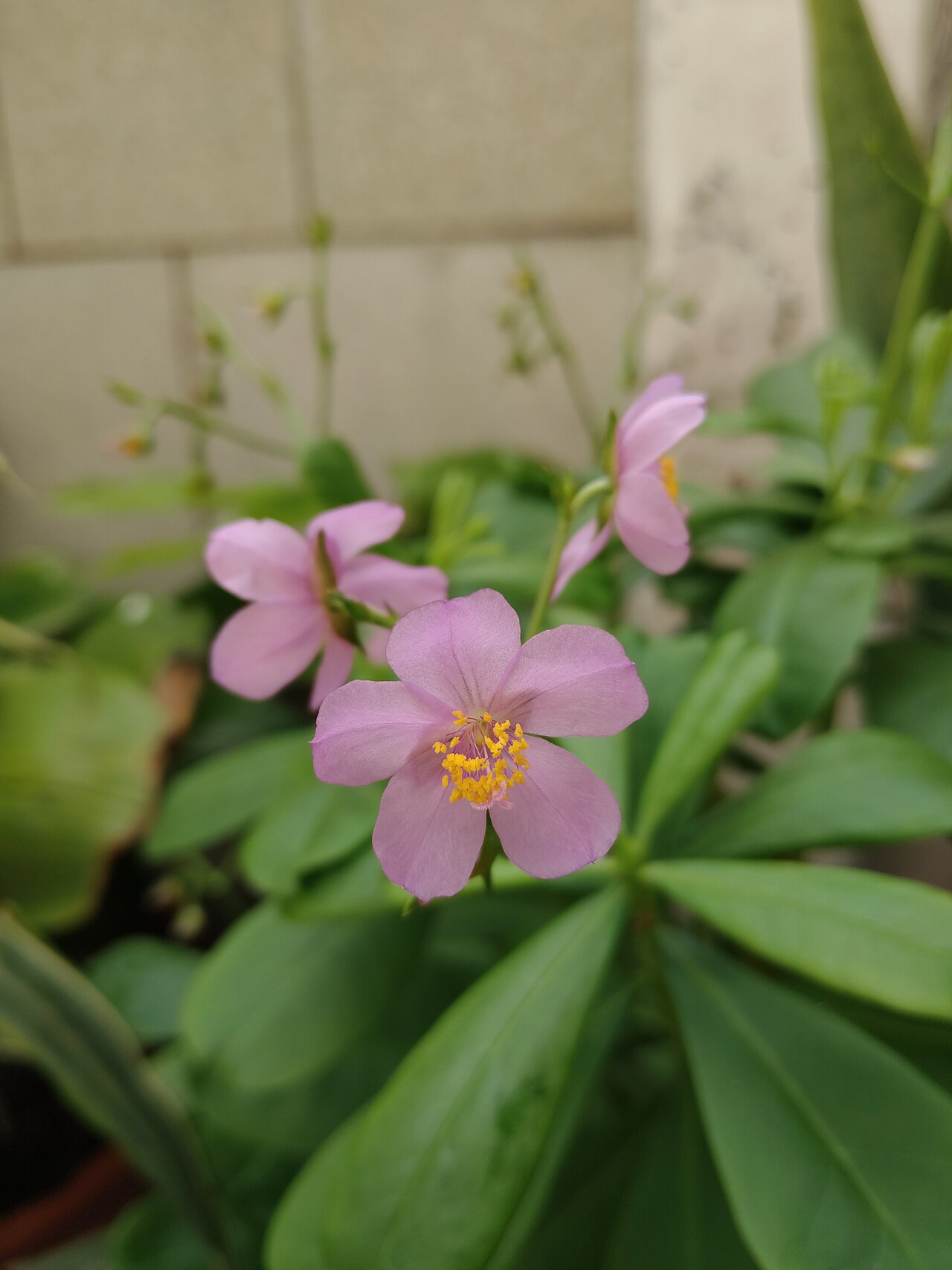
Talinum triangulare, known as Ceylon Spinach, Philippine spinach, waterleaf or Surinam purslane, is a fleshy perennial herb in the fameflower family (Talinaceae). It grows 1 to 3 feet tall, with upright, succulent stems, glossy, paddle-shaped leaves crowded toward the stem tips, and small pink flowers on stiff, three-angled stalks. Many botanists now call it Talinum fruticosum.
USDA PLANTS lists it as native to Puerto Rico and the U.S. Virgin Islands. Its wider native range covers the Caribbean, Mexico, Central America and much of South America. In Florida and Hawaii it is introduced. It grows wild in Puerto Rico in sunny, rocky and sandy places near the coast, in dry thickets and along roads and fields.
It is best known as a leafy vegetable. People in West Africa (especially Nigeria, where it is called waterleaf), Brazil and South and Southeast Asia grow it for its tender, mild leaves, cooked like spinach. It is easy to grow in warm gardens and containers, outdoors year-round in zones 10 to 13 and as a summer crop elsewhere.
Identification
Look for an upright, hairless, fleshy herb with glossy, spoon- or paddle-shaped leaves clustered near the top of the stems, and pink, five-petaled flowers held above the leaves on stiff, triangular stalks.
Growth Habit
Ceylon spinach is a herbaceous perennial with a thick, fleshy root and one to several upright, succulent stems, usually 1 to 3 feet tall. The stems are smooth and may become slightly woody at the base in older plants. It is often grown as an annual in cooler places.
Leaves
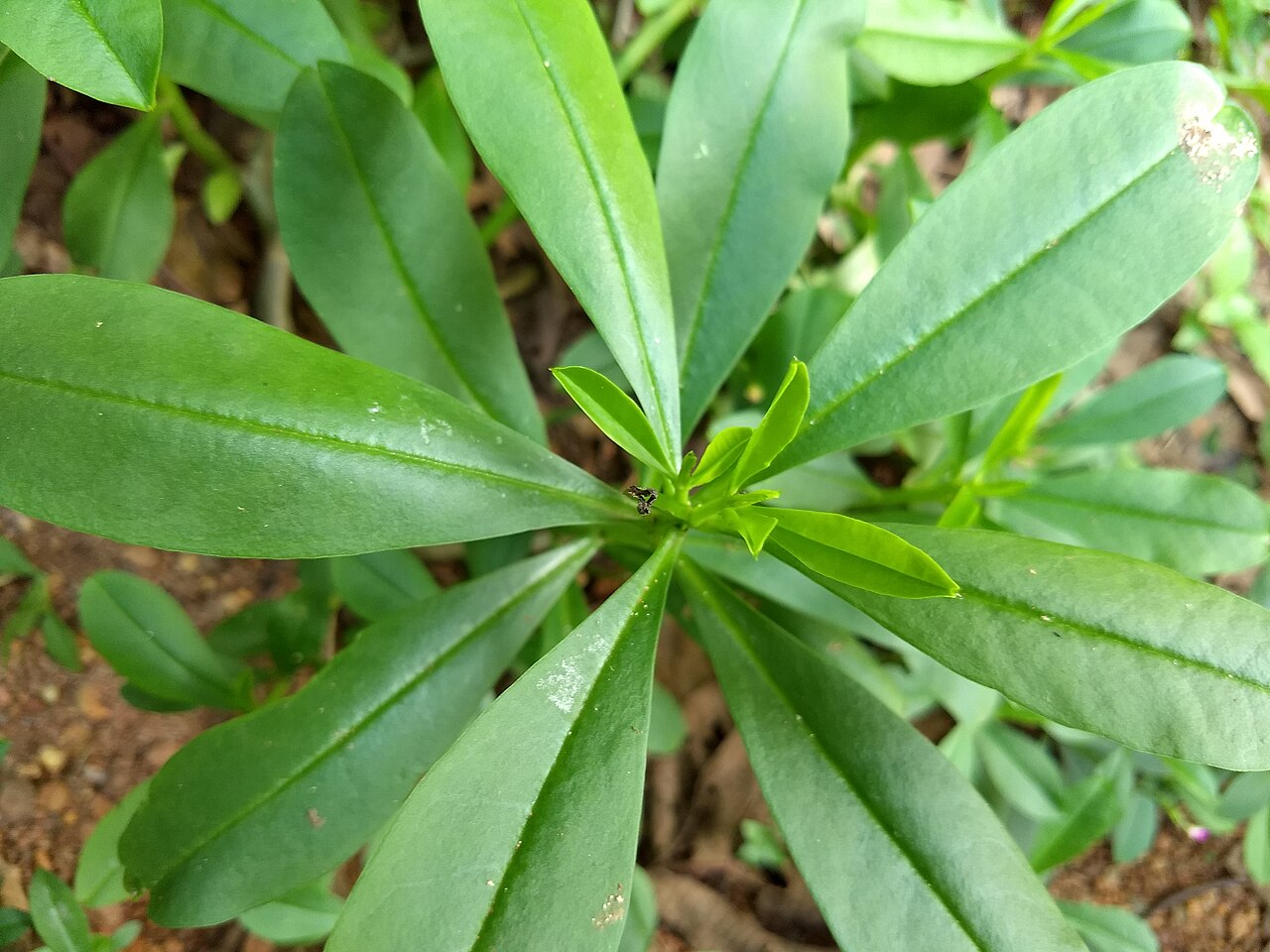
The leaves are alternate but crowded toward the tips of the stems, so they look almost like rosettes. They are fleshy, smooth and glossy green, 1 1/2 to 5 inches long, broadest near the tip and narrowed to a short stalk (spoon- or paddle-shaped), with smooth edges and a rounded or slightly notched tip. They are mild and slightly juicy when eaten.
Flowers
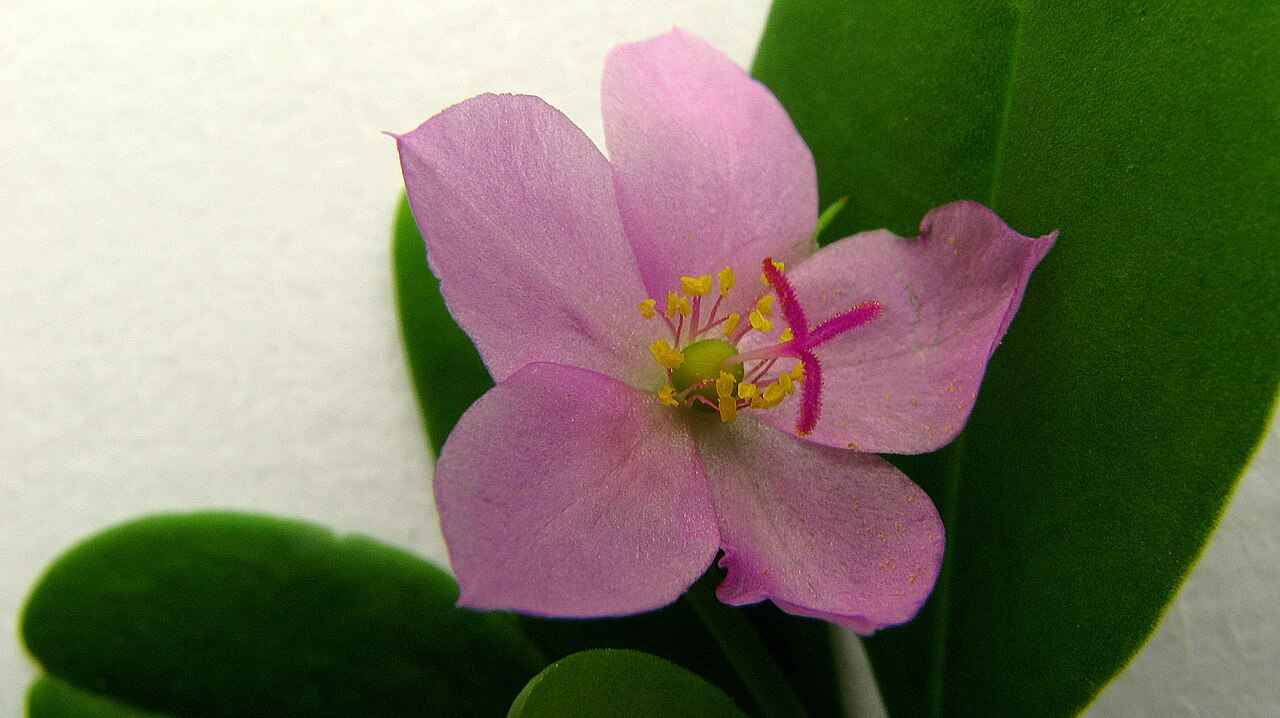
The flowers grow in small clusters at the tips of stiff stalks that rise above the leaves. The main stalk is three-angled or triangular in cross-section, which gives the plant the species name triangulare. Each flower is about 3/4 to 1 inch across, with five rounded pink to pinkish-purple petals, many yellow stamens and a pink, three-branched style. The flowers open for only a few hours each day, usually around midday, and appear over much of the year in warm climates.
Fruit & Seeds
The fruit is a small, round, yellowish capsule about 1/4 inch across that splits into three parts to release many tiny, shiny black seeds. Plants reseed easily.
Look-alikes
Jewels of Opar (Talinum paniculatum) is a close relative with much smaller pink flowers in large, airy branching clusters and red-orange fruits. Purslanes (Portulaca), such as shaggy portulaca, are lower, sprawling plants with small, thick leaves. Malabar spinach (Basella alba), also sold as Ceylon spinach, is a different plant: a climbing vine with thick, rounded, heart-shaped leaves.
Quick Facts
| Scientific Name | Talinum triangulare (syn. Talinum fruticosum) |
| Family | Talinaceae (fameflower family) |
| Plant Type | Fleshy herbaceous perennial |
| Mature Height | 1–3 ft |
| Mature Spread | 1–2 ft |
| Growth Rate | Fast |
| Sun Exposure | Full sun to part shade |
| Water Needs | Moderate; tolerates short dry spells |
| Soil Type | Well-drained sandy, rocky or loamy soil |
| Soil pH | Slightly acidic to alkaline (about 6.0–8.0) |
| Bloom Time | Much of the year in the tropics; summer elsewhere |
| Flower Color | Pink to pinkish-purple |
| Fall Color | None; evergreen in frost-free areas |
| Fruit | Small round capsule with tiny black seeds |
| Deer Resistant | Not reliably |
| USDA Hardiness Zones | 10–13 (grown as an annual elsewhere) |
Native Range
Within the United States, USDA PLANTS lists Ceylon spinach as native to Puerto Rico and the U.S. Virgin Islands. In Puerto Rico it grows wild in sunny, open places, especially near the coast: rocky and sandy ground, limestone outcrops, dry thickets, field edges, roadsides and gardens. USDA lists it as introduced in Florida, where it has escaped from gardens in a few counties, and in Hawaii.
Its native range extends through the West Indies, Mexico, Central America and much of tropical South America. As a vegetable, it has been carried around the tropics and is now grown and naturalized in West Africa, South and Southeast Asia and many Pacific islands.
It is a plant of warm, sunny, open ground. It tolerates poor, shallow and rocky soils and short dry spells thanks to its fleshy leaves and roots, but grows lushest with regular moisture.
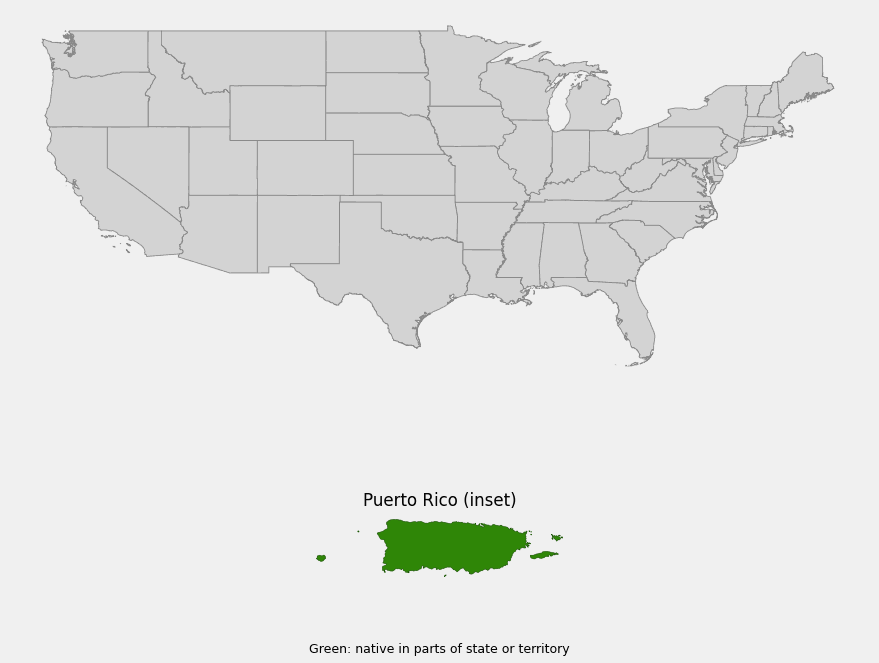
📋 Regional plant lists featuring Ceylon Spinach: Puerto Rico
Growing & Care Guide
Ceylon spinach is one of the easiest leafy greens for hot, humid summers, when true spinach and lettuce bolt. It is sold as seeds and cuttings by tropical vegetable suppliers, and many gardeners share cuttings.
Light
Full sun to part shade. In full sun, plants are compact and flower freely; in light shade, the leaves are larger and more tender, which many cooks prefer.
Soil & Water
Grow it in well-drained soil with some organic matter. It tolerates sandy and rocky soils but grows best with steady moisture; water when the top inch of soil is dry. It does not like soggy soil. In containers, use a regular potting mix in a pot with drainage holes.
Planting Tips
In frost-free gardens (zones 10 to 13: Puerto Rico, Hawaii, South Florida), it grows year-round as a perennial. Elsewhere, plant it outdoors after the last frost, when nights stay above about 50°F, and treat it as a summer annual; it is killed by frost. Space plants about 12 inches apart. It also grows well in pots on a sunny patio or windowsill. Because it reseeds freely, outside its native range keep it in vegetable beds or containers and remove seed capsules if seedlings become a nuisance.
Pruning & Maintenance
Harvest by pinching or cutting the top few inches of the stems, which keeps plants bushy and leafy. Pinch off flower stalks if you want more leaves and fewer seedlings. Feed lightly with compost or a balanced fertilizer during heavy harvesting.
Propagation
Stem cuttings root very easily in moist soil or water within a week or two, which is how most gardeners grow it. It also grows readily from its tiny seeds, sown on the surface of warm, moist soil.
Landscape Uses
- Vegetable gardens: a heat-loving leafy green for hot, humid summers
- Containers: easy to grow and harvest in pots
- Puerto Rico native gardens: a fleshy, pink-flowered native for sunny, rocky spots
- Pollinator gardens: small bees visit the pink flowers
- Edible landscapes: glossy foliage and pink flowers in an ornamental bed
Wildlife & Ecological Value
In its native habitat, Ceylon spinach is a small, quick-growing plant of open, disturbed and rocky ground.
For Pollinators
The flowers open for only a few hours each day and are visited by small bees and other insects for pollen. They can also pollinate themselves, which helps the plant set plenty of seed.
For Birds
Seed-eating birds, such as ground doves and grassquits, may eat the tiny seeds.
For Mammals
Its leaves are browsed by livestock and small mammals in some areas.
Ecosystem Role
It is a pioneer plant that quickly covers bare, sunny ground after disturbance, helping hold thin soils on rocky coastal sites. Its fleshy leaves and roots let it survive dry seasons.
Cultural & Historical Uses
Ceylon spinach is a major vegetable in parts of West Africa. In Nigeria, waterleaf is a key ingredient in soups such as edikang ikong and is grown in home gardens and sold in markets. It is also popular in Brazil, where it is called cariru, and in India, Sri Lanka and Southeast Asia.
The leaves are rich in vitamins A and C, iron and calcium, but like spinach and purslane they are high in oxalic acid. Cooking reduces it. People with kidney stones, gout or kidney problems should eat it only in moderation and ask their doctor.
The genus Talinum is thought to come from an African plant name. The species has many synonyms, including Portulaca triangularis, Talinum fruticosum and Talinum crassifolium, which is why it is sold under several names.
Frequently Asked Questions
Is Ceylon spinach native to the United States?
Yes, in Puerto Rico and the U.S. Virgin Islands, according to USDA PLANTS. It is introduced in Florida and Hawaii.
Is Ceylon spinach the same as Malabar spinach?
No. Malabar spinach (Basella alba) is a climbing vine. Ceylon spinach (Talinum triangulare), also called waterleaf, is an upright, fleshy herb. The names are sometimes mixed up in seed catalogs.
How do you eat Ceylon spinach?
Cook the leaves and tender tips like spinach in soups, stews and stir-fries, or add a few young leaves raw to salads. It is the waterleaf used in Nigerian soups.
Can I grow Ceylon spinach in a pot?
Yes. It grows well in a pot in a sunny spot. Bring it indoors or take cuttings before frost if you want to keep it over winter.
Is Ceylon spinach safe to eat?
Yes, it is widely eaten, but it is high in oxalates. Cooking reduces them, and people with kidney stones or gout should eat it sparingly.

Looking for a nursery that carries Ceylon Spinach?
Our nursery directory does not yet include Puerto Rico. Browse the native plant nursery directory by state: Alabama–Arkansas · California · Colorado–Hawaii · Idaho–Kansas · Kentucky–Montana · Nebraska–Oklahoma · Oregon · Pennsylvania–Virginia · Washington · West Virginia–Wyoming

