
Bushy Lippia (Lippia alba)
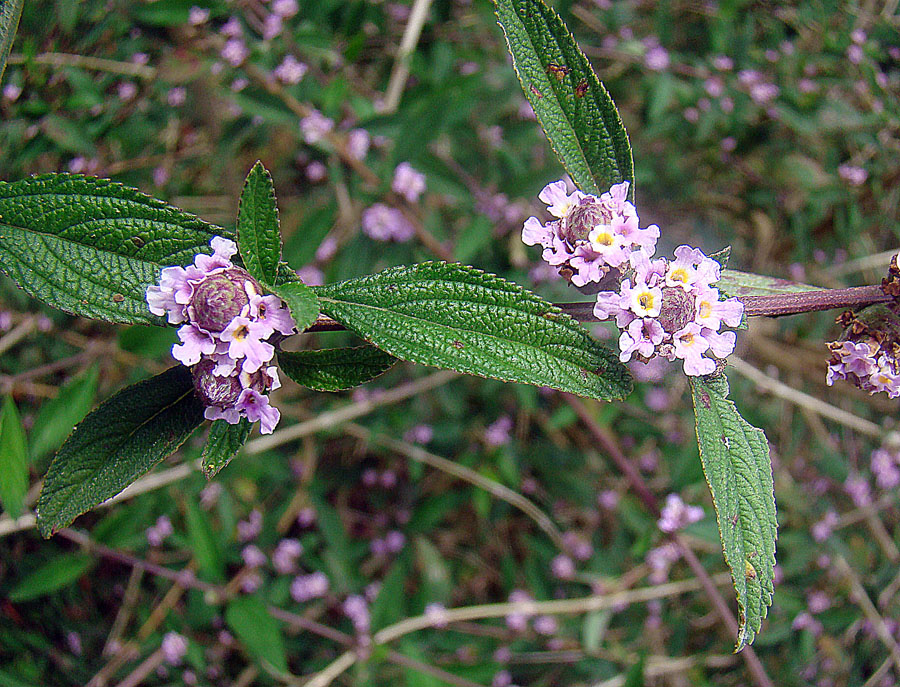
Lippia alba, called Bushy Lippia, bushy matgrass, hierba negra, juanilama, pamporegano or prontoalivio, is a fragrant, fast-growing shrub in the verbena family (Verbenaceae). It forms a loose mound of arching stems 3 to 5 feet tall, clothed in rough, wrinkled, toothed leaves that release a strong scent of lemon, lemon balm or oregano when brushed. Through most of the warm season it bears small rounded heads of lilac-pink to white flowers with yellow eyes, which are very popular with butterflies.
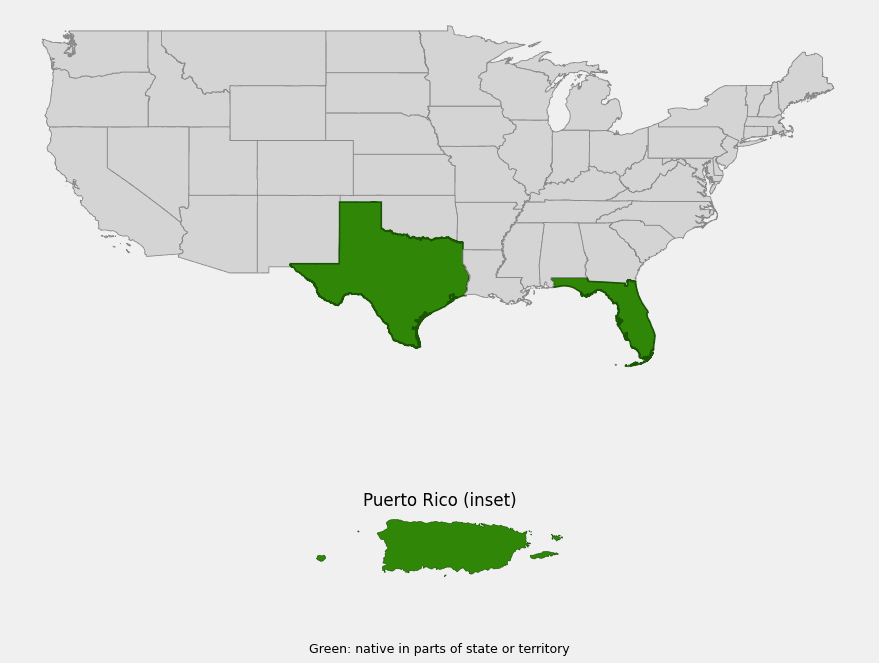
It is native to the American tropics and subtropics, from southern Texas and Mexico through the Caribbean and Central America to South America. USDA PLANTS lists it as native in the lower 48 states and in Puerto Rico, and it is recorded from Texas and Florida. In Texas it grows wild in the lower Rio Grande Valley, along resacas, streams and brushy woodland edges.
Across Latin America, bushy lippia is a household herb. Its leaves are brewed into calming teas, used to flavor food, and grown in dooryard gardens for traditional remedies. This guide covers how to identify it, where it is native, how to grow it in frost-free gardens (zones 9 to 11) or in containers elsewhere, and its value for pollinators.
Identification
Bushy lippia resembles its relatives, the lantanas and frogfruits, in its small flowers packed into dense heads. Its aromatic, roughly textured leaves, lack of prickles, and lilac flowers whose head lengthens over time help separate it from lantanas.
Stems & Growth Habit
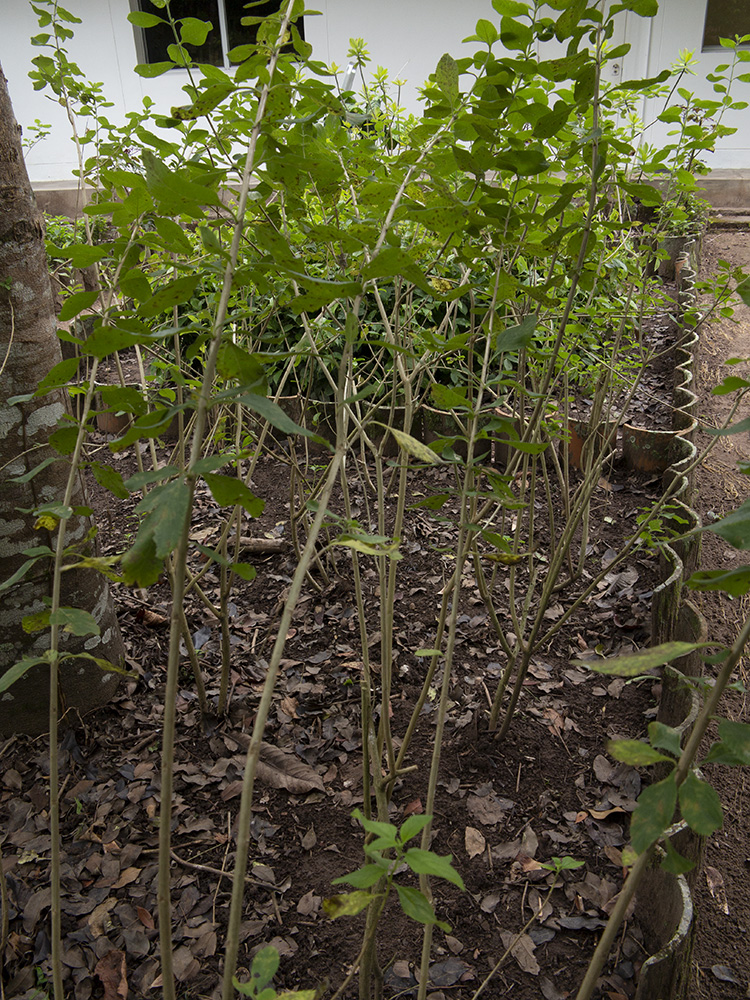
It is a woody-based, multi-stemmed shrub usually 3 to 5 feet tall, rarely taller, and often wider than tall. The stems are slender, finely hairy and long, arching outward and down so that tips touching the ground often root and start new plants. Older stems become brown and woody near the base.
Leaves
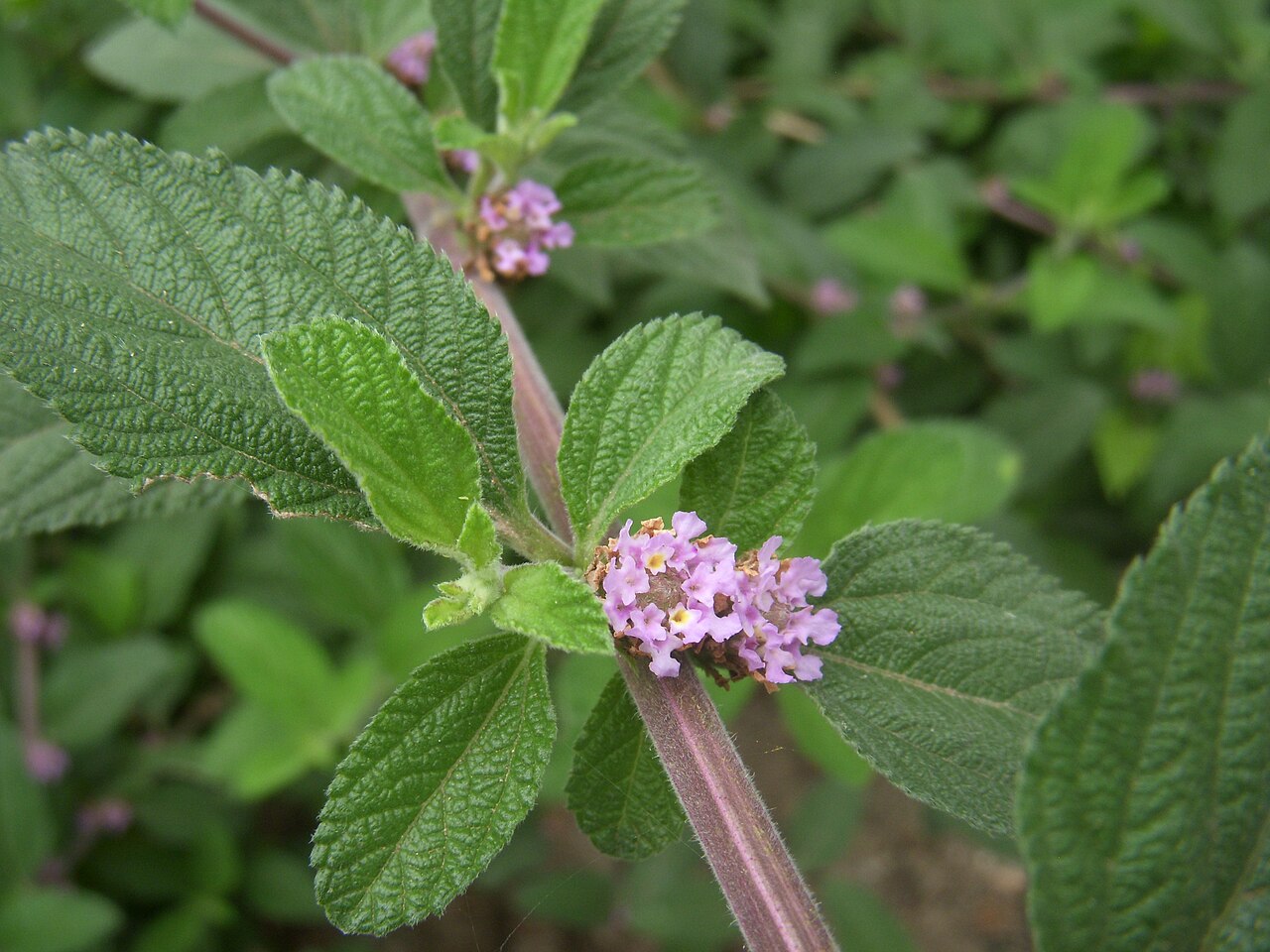
Leaves are opposite or in whorls of three, short-stalked, ovate to elliptic, roughly 1 to 2½ inches long, with neatly toothed (crenate-serrate) margins. The upper surface is dark green, wrinkled and rough to the touch because of short stiff hairs, while the underside is paler and softer with prominent veins. Crushed leaves are strongly aromatic, and the scent varies between plants. Some smell lemony (rich in citral), others like oregano or mint, depending on the chemical type of the plant.
Flowers
Flowers are borne in small, dense, rounded heads about ½ inch wide on short stalks from the leaf axils. Each tiny flower is tubular with a flared, slightly two-lipped mouth, lilac, pink-purple or almost white, with a yellow throat. The flowers open in a ring from the bottom of the head upward, so the head gradually lengthens into a short spike. In frost-free climates it flowers nearly year-round, with a peak from spring to fall.
Fruit & Seeds
After flowering, each flower produces a tiny dry fruit that splits into two nutlets, hidden among the dry bracts of the flower head. Seed set is variable, and in gardens most plants are propagated from cuttings or rooted stem tips.
Quick Facts
| Scientific Name | Lippia alba (Mill.) N.E. Br. ex Britton & P. Wilson |
| Family | Verbenaceae (verbena family) |
| Plant Type | Aromatic evergreen to semi-evergreen shrub |
| Mature Height | 3–5 ft |
| Mature Spread | 3–6 ft |
| Growth Rate | Fast |
| Sun Exposure | Full sun to part shade |
| Water Needs | Moderate; tolerates short dry spells once established |
| Soil Type | Sandy, loamy or clay soils; moist but well-drained |
| Soil pH | About 6.0–8.0 |
| Bloom Time | Spring to fall; nearly year-round in frost-free areas |
| Flower Color | Lilac to pink-purple or white, with a yellow throat |
| Fall Color | None; may drop leaves in cold or drought |
| Fruit | Tiny dry fruit splitting into two nutlets |
| Deer Resistant | Fairly; the strongly scented leaves are seldom browsed |
| USDA Hardiness Zones | 9–11 (root-hardy in protected zone 8b sites) |
Native Range
Bushy lippia has a huge native range in the Americas, from southern Texas and northern Mexico through Central America and the Caribbean to Argentina. USDA PLANTS lists it as native to the lower 48 states and to Puerto Rico, and the Lady Bird Johnson Wildflower Center records it from Texas and Florida.
In Texas it is a plant of the lower Rio Grande Valley and the coastal bend, where it grows along resacas (old river channels), stream banks, ditches, and moist brushy edges of thornscrub and riparian woodland. Florida records are few and scattered in the southern part of the state; it is also cultivated there as a butterfly and herb plant. In Puerto Rico it occurs in moist, open areas, pastures and roadsides, and it is commonly grown in home gardens as a medicinal herb.
Because it is so widely cultivated and roots easily from stem tips, bushy lippia has also been introduced to India, Australia, Africa and the Canary Islands. In its native range in the U.S., it is uncommon enough that gardeners in South Texas value it as a native butterfly shrub.
📋 Regional plant lists featuring Bushy Lippia: South & West Texas · North & South Florida · Puerto Rico
Growing & Care Guide
Bushy lippia is an easy, fast-growing shrub for warm gardens. It tolerates heat, humidity, a range of soils and some drought, and it rewards you with months of flowers and fragrant leaves. In zones 9 to 11 it grows outdoors all year. In cooler areas, grow it in a large container and bring it into a bright, cool room or greenhouse for winter.
Light
Full sun produces the most flowers and the densest growth. It tolerates part shade, especially afternoon shade in hot climates, but plants in heavy shade become leggy. Indoors in winter, place containers in the brightest window available; expect some leaf drop and little flowering until spring.
Soil & Water
It grows in sandy, loamy or clay soils, from slightly acidic to alkaline, as long as they drain reasonably well. In nature it often grows near water, so it does best with moderate, regular moisture, but established plants handle dry spells and simply drop some leaves. Water weekly during establishment and in hot, dry weather. In containers use a rich, well-drained potting mix and water when the top inch dries.
Planting Tips
Give each plant 4 to 6 feet of space, or plant in a row as an informal hedge. Its arching stems suit the back of a butterfly border, a wildlife garden edge, or a spot near a path where brushing against it releases its scent. Plant in spring after frost in marginal climates, so roots establish before winter. In zone 8b, mulch the base heavily; the top may freeze but plants often resprout from the roots.
Pruning & Maintenance
Bushy lippia can get rangy, so cut it back by one-third to one-half in late winter or early spring, and pinch or shear lightly after flushes of bloom to keep it compact. Remove stems that root where you do not want them. Fertilizer is rarely needed; a light application of compost in spring is enough. It has few pest problems, though whiteflies and spider mites can appear on indoor plants.
Propagation
Softwood or semi-hardwood cuttings 4 to 6 inches long root quickly in moist potting mix or even a glass of water. Stems that touch the ground often root on their own, and these layered pieces can be cut and replanted. Seed is less reliable. Because leaf fragrance varies between plants, propagate cuttings from a plant whose scent you like.
Landscape Uses
- Butterfly and pollinator gardens: long-blooming nectar source for butterflies, bees and other insects
- Herb and kitchen gardens: aromatic leaves for tea and seasoning, especially lemon-scented types
- Informal hedges and screens: fast, bushy growth in frost-free gardens
- Rain gardens and pond edges: tolerates moist soil and occasional short flooding
- Containers: patio pots that can be overwintered indoors in cold climates
Wildlife & Ecological Value
Like its relatives the lantanas and frogfruits, bushy lippia is a magnet for small pollinators, and in South Texas it is part of the riparian thickets that support the region’s rich wildlife.
For Pollinators
The small tubular flowers are visited by many butterflies, including skippers, hairstreaks, sulphurs and swallowtails, as well as bees and wasps. Its long bloom season makes it a reliable nectar source in South Texas and Florida gardens when other plants have finished flowering.
For Birds
The dense, arching stems provide cover for small birds, and songbirds hunt for insects on the foliage. Seeds are tiny and of minor food value to birds.
For Mammals
The strongly aromatic leaves are seldom eaten by deer or livestock. Rabbits and small mammals use the dense shrub as shelter.
Ecosystem Role
Along stream banks and resacas, its rooting stems help hold soil, and its flowers support a wide range of insects, which in turn feed birds, lizards and other predators. Its essential oils help protect it from browsing and some insects.
Cultural & Historical Uses
The Scottish botanist Philip Miller described this plant in 1768 as Lantana alba, and it was later moved to Lippia, a genus named for the French physician and naturalist Augustin Lippi. The species name alba, meaning white, refers to the pale-flowered plants Miller saw; many plants have lilac or pink flowers.
Bushy lippia is one of the most widely used herbal plants in Latin America. In Mexico, Central America and Brazil its leaves are steeped as a calming tea for upset stomachs, colds, anxiety and sleeplessness, and in Oaxaca they flavor some mole sauces. Its essential oil is highly variable, with lemony (citral), oregano-like (carvone or linalool) and other chemical types, which has made it a subject of agricultural and pharmaceutical research.
Safety note: bushy lippia is used in tea in many countries, but its essential oils are concentrated and vary from plant to plant. Use it as an occasional herbal tea only, never take the essential oil internally, and ask a health professional before using it during pregnancy, while nursing, or with sedative medications.
Frequently Asked Questions
Is bushy lippia native to the United States?
Yes. USDA PLANTS lists it as native to the lower 48 states and Puerto Rico. It grows wild in South Texas and has scattered records in Florida.
What does bushy lippia smell like?
It depends on the plant. Some have a strong lemon or lemon-balm scent, others smell like oregano, mint or camphor. Propagate from a plant whose scent you like.
Can I make tea from bushy lippia?
Its leaves are widely used for tea in Latin America. Use fresh or dried leaves from a known, unsprayed plant, drink it in moderation, and avoid the essential oil.
Is bushy lippia related to lantana?
Yes. Both are in the verbena family and have small flowers in dense heads. Bushy lippia has no prickles, smells more strongly, and its flower heads lengthen as they bloom.
Can I grow bushy lippia in a cold climate?
Yes, in a container. Grow it outdoors in summer and bring it into a bright, frost-free spot for winter, or take cuttings in late summer and overwinter them on a sunny windowsill.


