
Coralbells (Heuchera sanguinea)
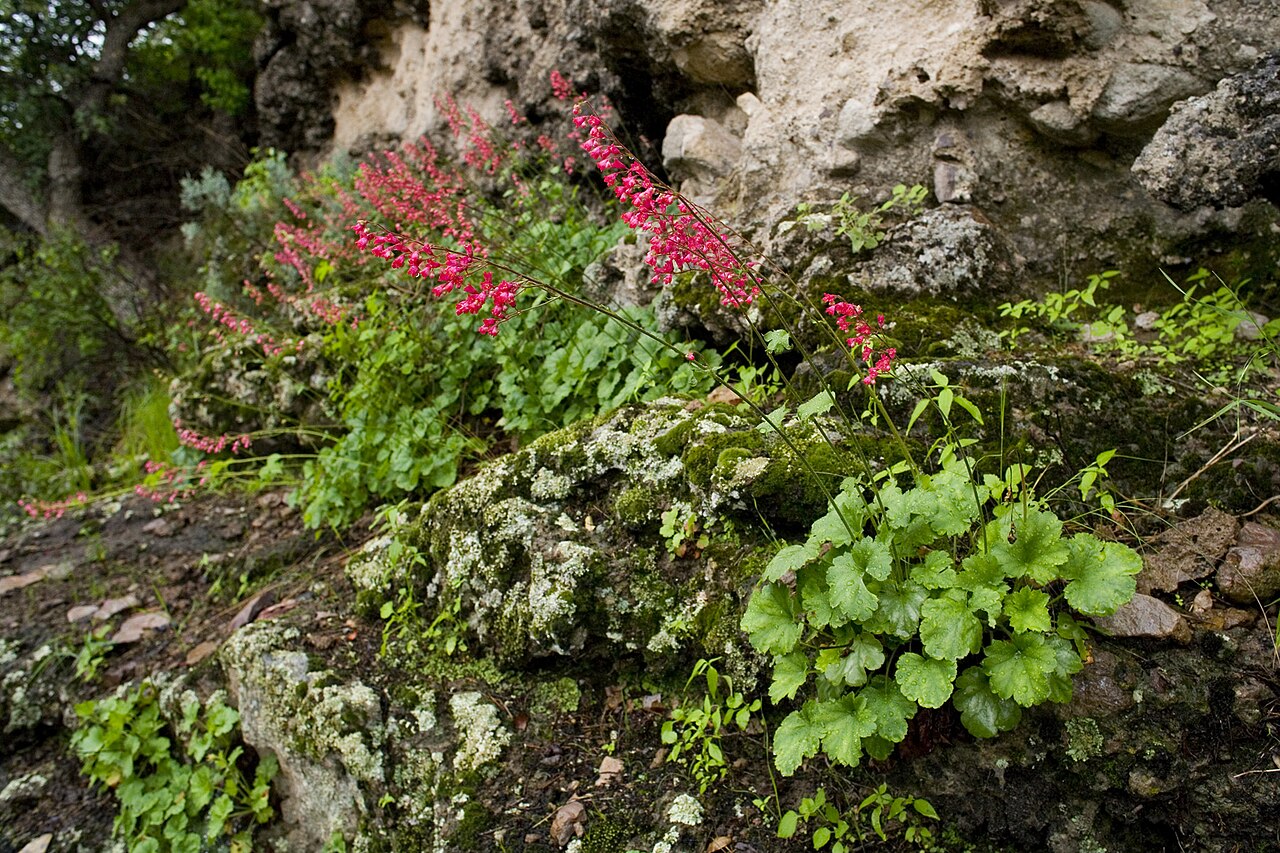
Heuchera sanguinea, the Coralbells (also written coral bells), is the original red-flowered coral bell that started the whole garden Heuchera craze. From a low mound of rounded, scalloped leaves it sends up slender, wiry stalks 12 to 20 inches tall, topped with airy sprays of small, bright coral-red to scarlet bells that bloom for weeks and draw hummingbirds from far away.
It is native to a surprisingly small area: shaded, rocky canyons in the mountains of southern Arizona and southwestern New Mexico, and the adjoining mountains of northern Mexico. From there it went into European gardens in the late 1800s, where breeders crossed it with other species to create the many coral bell hybrids sold today. Most red-flowered garden “coral bells” still carry its genes.
This guide covers how to tell coralbells from its relatives, where it grows wild, how to grow it in gardens (it is much hardier than its southern home suggests), and its value to hummingbirds and bees. For an overview of the whole genus, see our guide to native coral bells (Heuchera).
Identification
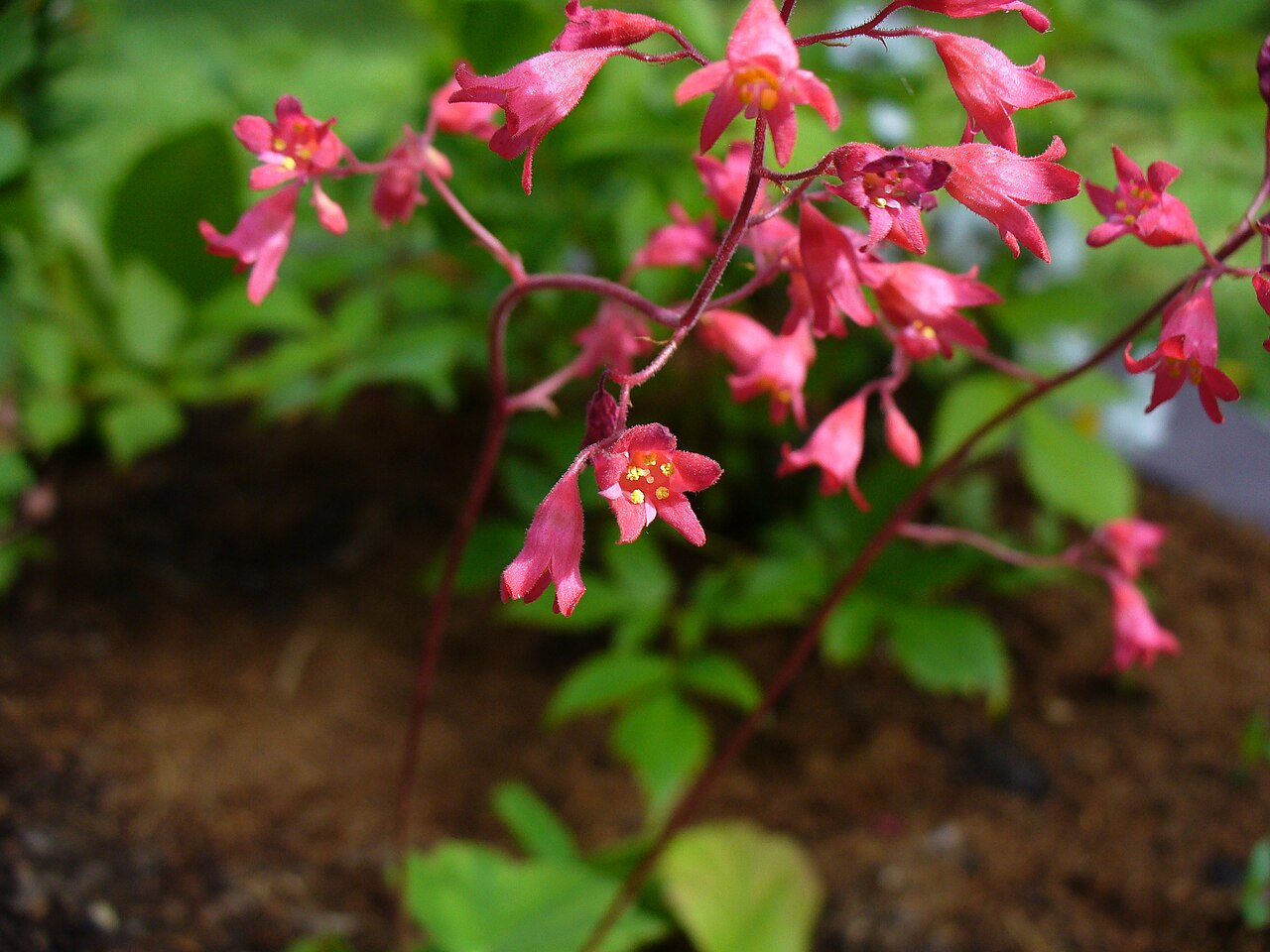
Most native alumroots have small greenish, cream or pale pink flowers. Coralbells stands out with its brilliant red, bell-shaped flowers that are larger than those of most other species.
Leaves
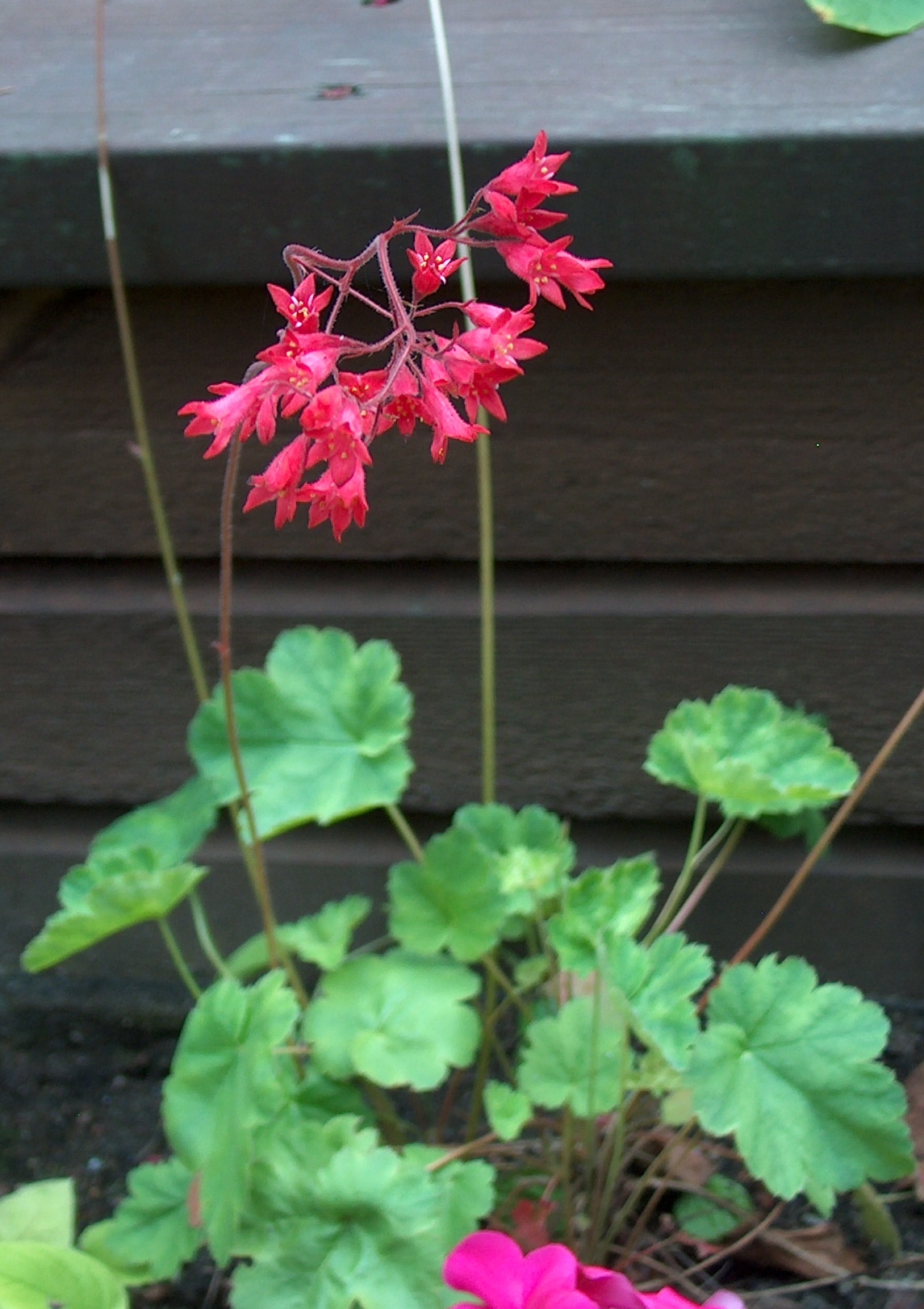
The leaves are all basal, forming an evergreen to semi-evergreen mound about 6 to 12 inches tall. Each leaf is kidney-shaped to rounded, 1 to 2.5 inches wide, with five to nine shallow lobes and scalloped, toothed edges, on a long stalk. The surface is bright to dark green, sometimes faintly mottled, and covered with short, stiff hairs, and the stalks are often hairy.
Flowering Stalks
In late spring and summer the plant sends up several leafless, slender, hairy and often reddish stalks, usually 12 to 20 inches tall. The flowers are held in a loose, open panicle on the upper part of the stalk.
Flowers
The flowers are about a quarter to half an inch long, bell-shaped and nodding, and the color comes mostly from the calyx (the outer cup), which is coral-red, scarlet or deep pink. The small petals and stamens are tucked inside and barely show. In the wild it blooms from spring into late summer, often in flushes after rain; in gardens the main bloom is late spring to midsummer.
Fruit & Similar Species
The fruit is a small capsule full of tiny dark seeds. Crevice Alumroot and American Alumroot have much smaller, greenish to whitish flowers. Rock alumroot (Heuchera rubescens) of the Southwest has pink to whitish flowers. Many garden plants labeled Heuchera sanguinea are actually hybrids (Heuchera × brizoides and others).
Quick Facts
| Scientific Name | Heuchera sanguinea Engelm. |
| Family | Saxifragaceae (saxifrage family) |
| Plant Type | Evergreen to semi-evergreen herbaceous perennial |
| Mature Height | Foliage 6–12 in; flower stalks 12–20 in |
| Mature Spread | 12–18 in |
| Growth Rate | Moderate |
| Sun Exposure | Part shade; full sun in cool, moist climates |
| Water Needs | Moderate; even moisture with good drainage |
| Soil Type | Humus-rich, well-drained loam or gravelly soil; rock crevices |
| Soil pH | About 6.0–7.5 |
| Bloom Time | Late spring to summer (about May–August) |
| Flower Color | Coral red, scarlet or deep pink |
| Fall Color | Evergreen; leaves may bronze in cold |
| Fruit | Small capsule with tiny dark seeds |
| Deer Resistant | Moderately; deer and rabbits seldom eat it |
| USDA Hardiness Zones | 4–8 |
Native Range
Coralbells has one of the smallest natural ranges of any popular garden perennial. It grows in the mountains of southeastern Arizona and southwestern New Mexico and south into the Sierra Madre Occidental of Sonora and Chihuahua, Mexico. In Arizona it is a plant of the “sky island” ranges, the isolated mountains that rise from the desert grasslands, and in New Mexico it reaches into the southwestern corner of the state, including the Peloncillo Mountains.
In these mountains it grows on shaded, moist rocks: cliff faces, boulders and crevices in canyons, often near seeps or streams in oak, pine-oak and mixed conifer woodlands. The north-facing rocks and canyon shade keep it cool and moist through the hot, dry early summer before the monsoon rains arrive.
USDA PLANTS also has a record of Heuchera sanguinea from Pennsylvania. That is far outside its natural range and represents an escape from gardens, not a native population, so this page maps only Arizona and New Mexico as native.
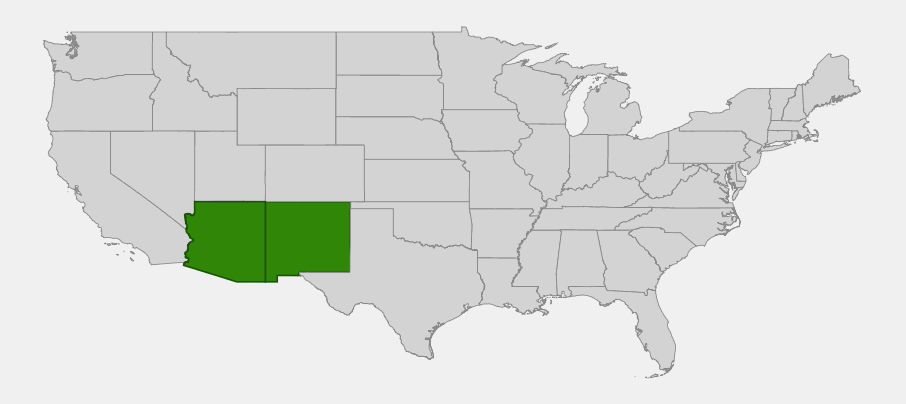
📋 Regional plant lists featuring Coralbells: Arizona & New Mexico
Growing & Care Guide
Coralbells is easy and long-lived in the right spot. Think of its home: cool, shaded rock with good drainage and some moisture. Avoid soggy soil, deep planting and hot afternoon sun in warm climates.
Light
In the Southwest and other hot-summer regions, give it morning sun and afternoon shade or bright, dappled shade. In cool, moist climates such as the Pacific Northwest, the northern states and Canada, it tolerates and flowers best in fuller sun. Deep shade reduces flowering.
Soil & Water
Plant in well-drained, humus-rich soil; gravelly loam, rock gardens and raised beds are ideal. Keep the soil evenly moist but never waterlogged, especially in summer. Wet, heavy soil in winter is the main cause of crown rot. In the desert Southwest, water regularly and mulch to keep roots cool.
Planting Tips
Set plants with the crown exactly at soil level; buried crowns rot. Space them 12 to 18 inches apart. Spring or early fall is the best planting time. Over the years the woody crowns tend to rise above the soil; in spring, lift and replant them deeper or add a little soil and mulch around them. It is hardy to about zone 4, far colder than its native mountains, as long as drainage is good.
Pruning & Maintenance
Cut spent flower stalks at the base to encourage more blooms and keep the plant tidy. Remove tattered leaves in early spring. Divide clumps every three to four years in spring or fall, when the center becomes woody and flowering declines. Watch for black vine weevil larvae, which feed on the roots; plants that wilt or lift easily may be affected.
Propagation
Division is the easiest method: cut the clump into pieces that each have a crown and roots. The tiny seeds are sown on the surface of moist mix, without covering, in cool conditions; seedlings may vary from the parent, especially if hybrid coral bells grow nearby. Leafy cuttings with a piece of the woody crown can also be rooted.
Landscape Uses
- Hummingbird gardens: one of the best red-flowered perennials for hummingbirds in partial shade
- Rock gardens and walls: grows naturally in rock crevices and suits stone walls and boulder plantings
- Woodland edges: for dappled shade under open trees, with ferns and columbines
- Containers: a compact mound with long-lasting flowers on patios
- Cut flowers: the airy red sprays last well in small arrangements
Wildlife & Ecological Value
In the sky islands of Arizona and New Mexico, coralbells is a classic hummingbird flower, blooming on shaded rocks when many hummingbirds are moving through the mountains.
For Pollinators
Hummingbirds are the main pollinators of the red, tubular flowers, and in Arizona the mountains host many species, including broad-tailed, black-chinned, Rivoli’s and blue-throated hummingbirds. Bumblebees and other bees also visit for nectar and pollen.
For Birds
Besides hummingbirds, small birds use the shaded, rocky canyon habitat for cover. The seeds are too tiny to be an important bird food.
For Mammals
Deer and rabbits seldom eat it, which makes it useful in gardens where browsing is a problem.
Ecosystem Role
Coralbells is part of the specialized community of plants that live on moist, shaded rock faces in canyons, together with ferns, mosses and other crevice plants. These small habitats are cool refuges in a hot, dry landscape.
Cultural & Historical Uses
George Engelmann named Heuchera sanguinea in 1848 from specimens collected in northern Mexico. The genus honors Johann Heinrich von Heucher, an eighteenth-century German professor of medicine and botanist. Sanguinea means “blood-red,” for the flowers.
Coralbells reached European gardens in the late 1800s and was soon crossed with other species, especially in France and England, to produce the hybrid Heuchera × brizoides. Varieties such as ‘Splendens’, ‘Firefly’ and the Bressingham hybrids followed. In the late twentieth century, breeders in Oregon and elsewhere began combining several North American species to create the colorful foliage heucheras now sold everywhere, and many of the red-flowered ones still trace back to this species.
Other native heucheras are called alumroot because their astringent roots were used by Native peoples and settlers as a wash for wounds and sores. It is not considered a food plant, and the roots should not be used as medicine without professional advice.
Frequently Asked Questions
Is coralbells native to the United States?
Yes. Heuchera sanguinea is native to the mountains of southeastern Arizona and southwestern New Mexico, and nearby northern Mexico. A USDA record from Pennsylvania is a garden escape.
Do hummingbirds like coral bells?
Yes. The red, tubular flowers of Heuchera sanguinea are a favorite of hummingbirds, which are its main pollinators in the wild.
Can coral bells take full sun?
In cool, moist climates, yes. In hot-summer regions, give it afternoon shade, or the leaves scorch and the plant declines.
Why are my coral bells pushing out of the ground?
The woody crown grows upward over time. In spring, lift and replant the clump at the right depth, or add a little soil and mulch around the crown. Dividing every few years keeps plants vigorous.
Are coral bells and heuchera the same thing?
Coral bells is the common name for Heuchera, especially red-flowered types. Heuchera sanguinea is the original coralbells species; most nursery heucheras are hybrids that include it and other native species.

Looking for a nursery that carries Coralbells?
Browse our native plant nursery directory: Arizona · New Mexico

