
Arctic Dock (Rumex arcticus)
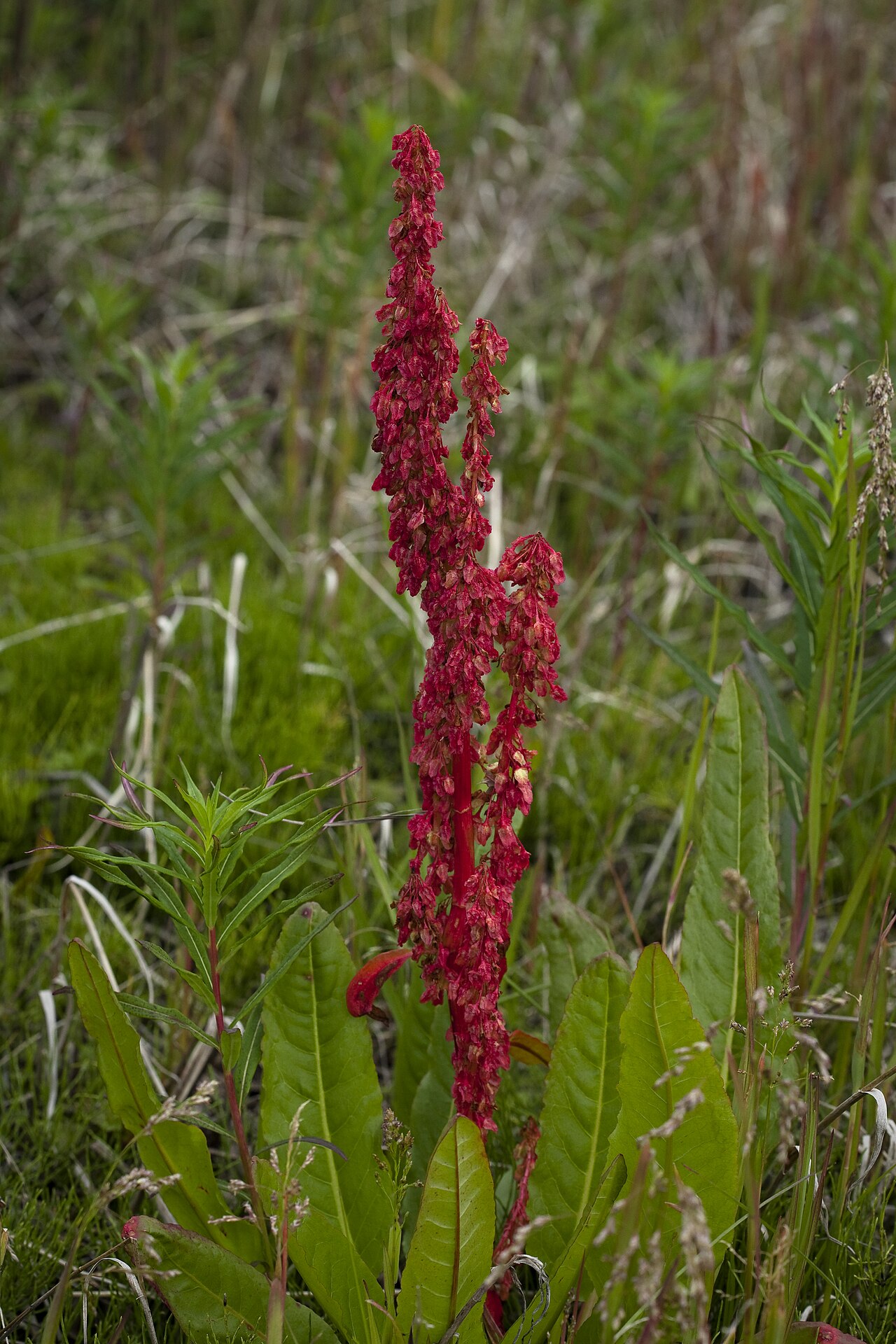
Rumex arcticus, known as Arctic Dock or sourdock, is a hardy perennial of the buckwheat family that grows across the tundra and wet meadows of Alaska and northern Canada. In early summer it forms a rosette of smooth, lance-shaped leaves with a pleasantly sour, lemony taste, and by midsummer it sends up reddish stems topped with dense, branching spikes of tiny red flowers that ripen into rusty-red seed heads.
Within the United States, arctic dock is native only to Alaska, where it is common from the Arctic Slope and the Bering Sea coast to the Interior. It grows on wet tundra, lakeshores, stream banks, marsh edges, beaches and moist meadows, often in large patches. Beyond Alaska it ranges across northern Canada and the Arctic of Siberia.
Few wild plants are as important in Alaska Native kitchens. Yup’ik, Iñupiat and other Alaska Native families gather the young leaves in large quantities, cook and store them, and eat them with seal oil or mixed into akutaq. This page covers how to identify arctic dock, where it grows, how to grow it in a cold-climate garden, a safety note about its oxalic acid, and its wildlife and cultural value.
Identification
Arctic dock is a sturdy, upright dock with mostly basal leaves and a dense, reddish flower cluster. Within its range it is most likely to be confused with other docks and with sorrels.
Leaves
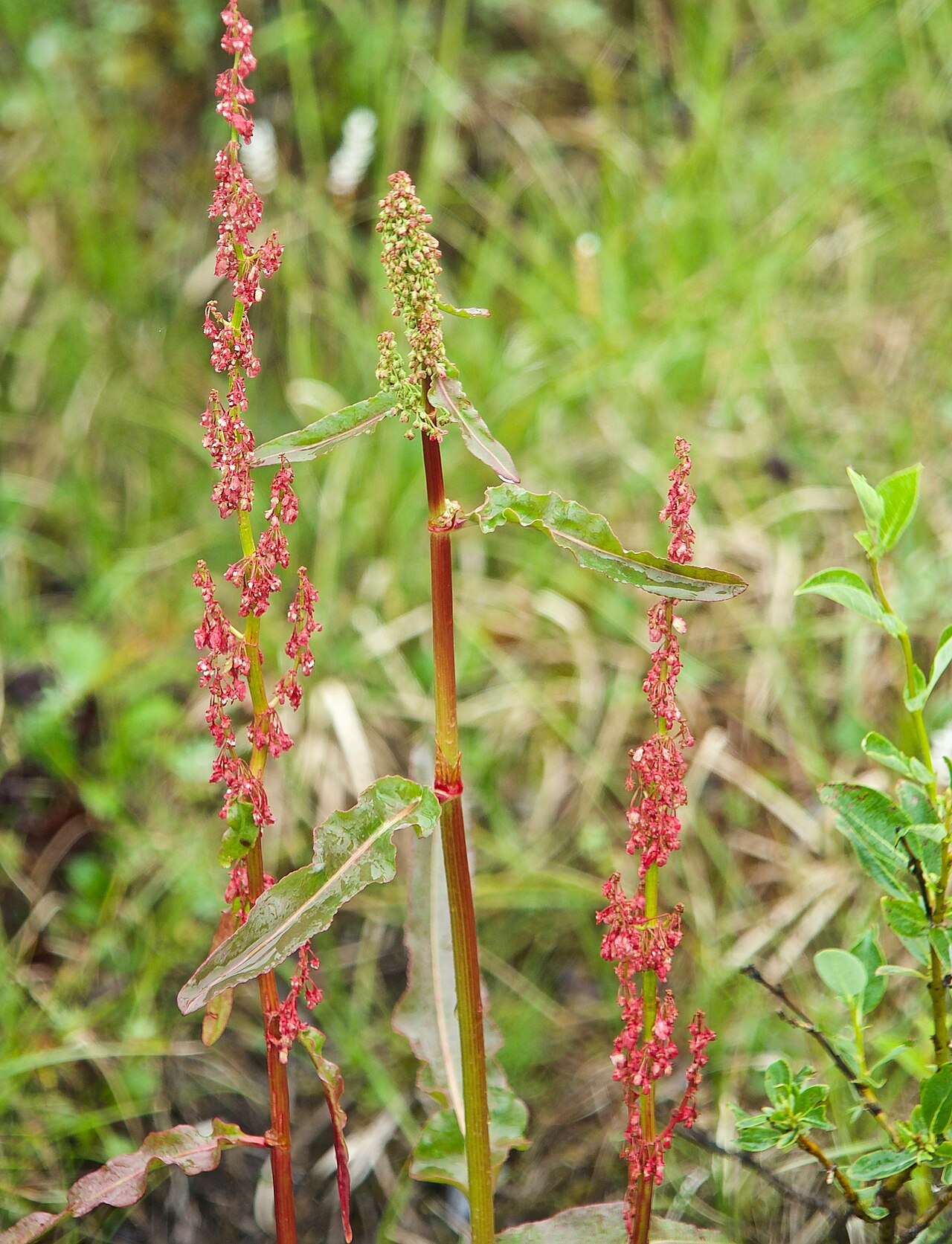
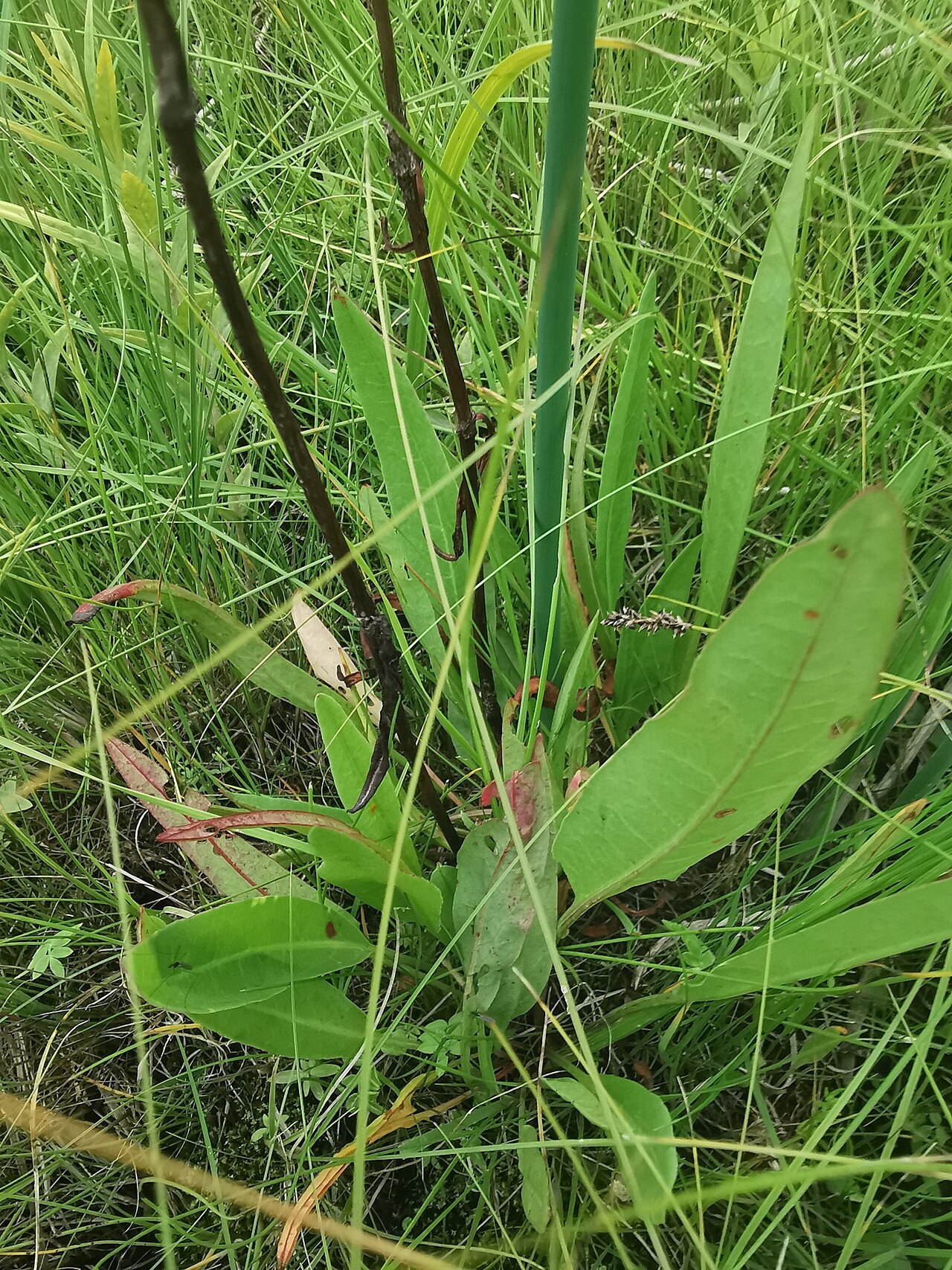
Most of the leaves grow in a basal rosette. They are smooth and hairless, oblong to lance-shaped, with a pointed tip and a narrowed or rounded base, and they are bright green, often tinged with red. The leaves on the flowering stem are smaller and short-stalked. Like other docks, each leaf base has a papery, brown sheath (ocrea) wrapped around the stem.
Stems & Size
The flowering stems are stout, erect, usually red to purplish, and grow from a thick taproot and short crown. Plants are typically 6 inches to 2 feet tall and occasionally reach about 3 feet in rich, wet sites.
Flowers
The flowers are tiny, without petals, and crowded in a dense panicle of spike-like clusters at the top of the stem, from about June to August. The sepals are red to deep purple, giving the whole cluster a dark red color. The flowers are wind-pollinated.
Fruit
After flowering, the three inner sepals enlarge into papery wings about a quarter-inch long that enclose a single, flattened brown seed (achene). The fruiting spikes turn rusty red to brown and lengthen as they mature, often standing through late summer.
Similar Species
Western dock (Rumex occidentalis, now often treated as R. aquaticus var. fenestratus) is taller, with broader, heart-shaped leaf bases. Introduced curly dock (R. crispus) has wavy-edged leaves and grows mostly on disturbed ground near towns. Mountain sorrel (Oxyria digyna), another sour-leaved tundra plant, has kidney-shaped leaves and round, winged fruits.
Quick Facts
| Scientific Name | Rumex arcticus Trautv. |
| Family | Polygonaceae (buckwheat family) |
| Plant Type | Herbaceous perennial |
| Mature Height | 6 in–2 ft (occasionally to 3 ft) |
| Mature Spread | 6–12 in |
| Growth Rate | Moderate |
| Sun Exposure | Full sun to part shade |
| Water Needs | High; moist to wet soil |
| Soil Type | Moist sand, gravel, silt or peaty soils; tolerates wet ground |
| Soil pH | About 5.5–7.5 |
| Bloom Time | June–August |
| Flower Color | Red to purplish (wind-pollinated, no petals) |
| Fall Color | Leaves and seed heads turn red to rusty brown |
| Fruit | Small brown achene enclosed in enlarged papery sepals |
| Deer Resistant | Moderate |
| USDA Hardiness Zones | 1–5 |
Native Range
USDA PLANTS lists arctic dock as native in Alaska, its only U.S. state, and in Alberta, British Columbia, Manitoba, the Northwest Territories, Nunavut and Yukon. In Alaska it is widespread from the Arctic Slope and Seward Peninsula south through the Yukon-Kuskokwim Delta, Bristol Bay and the Interior, and it reaches the coastal regions of south-central Alaska.
It is a plant of wet and moist open ground: wet tundra and sedge meadows, marshes, the margins of lakes and ponds, stream banks, river bars, sandy and gravelly beaches, and moist disturbed soil around villages. The national wetland plant list rates it facultative (FAC) in Alaska, meaning it grows in wetlands and uplands about equally.
Outside North America, arctic dock grows across arctic and subarctic Siberia and the Russian Far East, including Kamchatka. Plants in different parts of its range vary in size and in chromosome number, and some botanists have separated Pacific plants as Rumex kamtschadalus, a name now generally treated as a synonym.
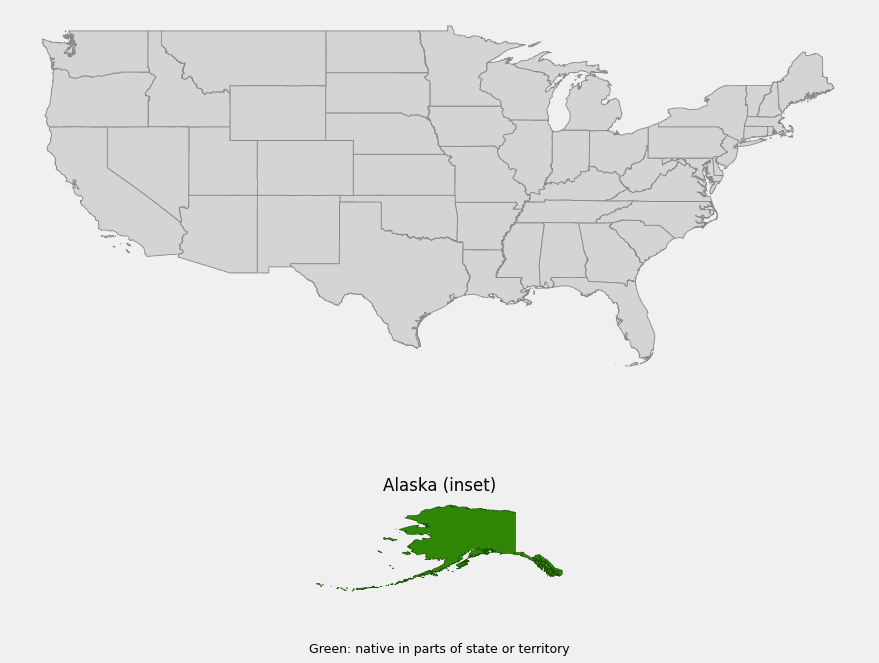
📋 Regional plant lists featuring Arctic Dock: Alaska
Growing & Care Guide
Arctic dock is rarely sold by nurseries, but it is easy to grow from seed in cold climates and makes a useful edible perennial for northern gardens. It is best suited to Alaska, Canada and other places with cool summers; it tends to struggle in hot, humid summers.
Light
Grow it in full sun for the most compact plants and best flowering. It tolerates part shade, especially where summers are warm.
Soil & Water
Give it moist to wet soil that does not dry out in summer. It handles sand, gravel, silt and organic soils, and it does well at the edge of a pond, in a rain garden or in a low, damp bed. Avoid dry, sandy spots in full sun.
Planting Tips
Sow seed outdoors in fall or early spring, pressing it onto the soil surface or covering it lightly; winter cold helps germination. Seedlings form a taproot, so transplant them while young. Space plants about a foot apart. If you harvest seed from wild plants, take only a small share and never dig up wild plants.
Pruning & Maintenance
Little care is needed. Cut flowering stems after the seed ripens if you don’t want seedlings, or leave some for birds. For a longer leaf harvest, remove flower stalks as they appear. Old leaves can be cleared away in spring.
Propagation
Grow it from seed, which ripens in late summer. Mature crowns can be divided carefully in early spring, keeping a good piece of taproot with each division.
Landscape Uses
- Northern edible gardens: a perennial source of tart, spinach-like greens in cold climates
- Pond and stream edges: tolerates wet, sometimes flooded soil along water
- Rain gardens: grows well in low, damp beds in cool regions
- Native meadow plantings: adds red flower and seed spikes to wet meadow restorations in Alaska
- Revegetation: helps cover moist, disturbed ground around northern communities
Wildlife & Ecological Value
Arctic dock is a common, productive plant of the northern wetlands, and its seeds and leaves are used by a range of tundra animals.
For Pollinators
Arctic dock is wind-pollinated, so it does not rely on bees or other pollinators. Small flies and other insects sometimes visit the flower spikes and shelter in the foliage.
For Birds
The abundant seeds ripen in late summer and are eaten by sparrows, redpolls and other seed-eating birds, and the plants provide some cover around nesting areas in wet tundra.
For Mammals
Voles, lemmings and other small mammals eat the leaves and seeds, and larger grazing animals may also feed on the foliage.
Ecosystem Role
Large patches of arctic dock help stabilize wet, silty and sandy ground along shorelines and stream banks, and the deep taproot draws nutrients up from below. As a common plant around villages and fish camps, it also links natural and human-used landscapes across the North.
Cultural & Historical Uses
Arctic dock, usually called sourdock in Alaska, is one of the most widely gathered wild greens in the state. In western and northern Alaska, Yup’ik and Iñupiat families pick the young leaves in early summer, often in large quantities. The leaves are chopped and boiled, then stored in containers, traditionally in a cool place or in seal oil, to eat through the year. They are served with seal oil and fish, and mixed with berries, sugar and fat in akutaq, sometimes called “Eskimo ice cream.”
In the Canadian Arctic, Inuit have eaten the young leaves raw or cooked like spinach. In Pangnirtung, Nunavut, the red stems are called naka; the stems and the leaves were boiled separately to make red or green drinks with a refreshing sour flavor.
Safety note: like rhubarb and garden sorrel, arctic dock gets its sour taste from oxalic acid. Eaten in normal amounts, especially when cooked, the leaves are a traditional and nutritious food, but large quantities of raw leaves can be irritating, and people with kidney stones or kidney disease are often advised to limit high-oxalate greens. Learn identification from an experienced local harvester, and gather only from clean sites away from roads and contaminated ground.
Frequently Asked Questions
Is arctic dock edible?
Yes. The young leaves are a traditional food in Alaska and northern Canada, eaten cooked or raw and often stored for winter. They are high in oxalic acid, which gives them their sour taste, so eat them in moderation; people with kidney stones should be cautious.
Where does arctic dock grow?
In the United States it is native only to Alaska. It also grows across northern Canada and arctic Siberia, in wet tundra, marshes, lakeshores, stream banks and beaches.
What is sourdock?
In Alaska, sourdock is the common name for arctic dock (Rumex arcticus), the leafy green gathered by many Alaska Native families. The name refers to the tart flavor of its leaves.
Can I grow arctic dock in my garden?
Yes, in cold climates. Sow seed outdoors in fall or early spring in moist to wet soil and full sun. It is very cold-hardy but generally does poorly where summers are long and hot.
Is arctic dock the same as curly dock?
No. Curly dock (Rumex crispus) is a European species that is introduced in Alaska and much of North America. It has wavy-edged leaves and grows mainly on disturbed ground. Arctic dock is a native plant of northern wetlands and tundra.

Looking for a nursery that carries Arctic Dock?
Browse our native plant nursery directory: Alaska

