
Sierra Madre Lobelia (Lobelia laxiflora)
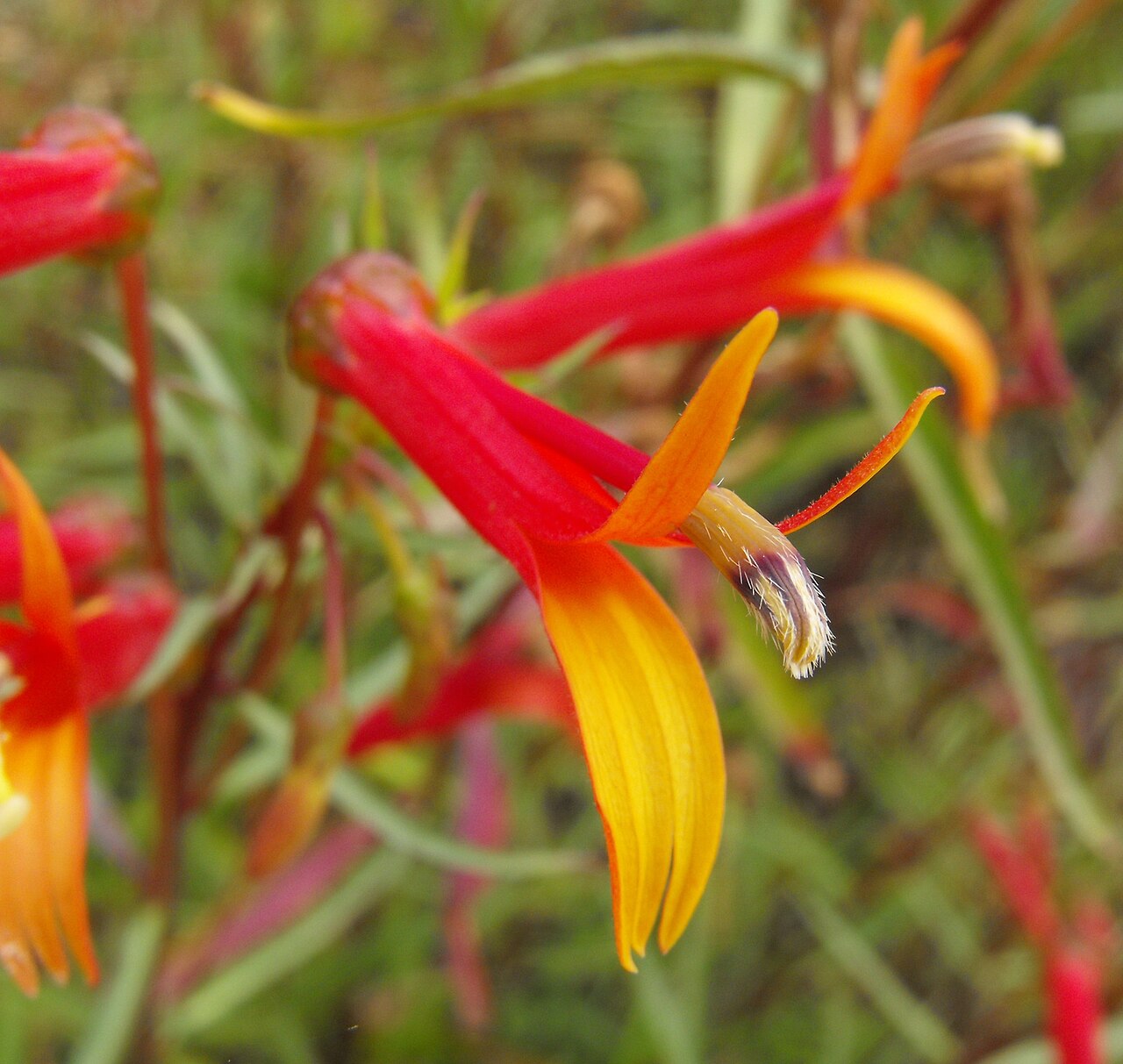
Lobelia laxiflora, Sierra Madre Lobelia, also sold as Mexican lobelia, Mexican bush lobelia or Mexican cardinal flower, is a bushy, spreading perennial with long, tubular red-and-yellow flowers built for hummingbirds. It grows 2 to 3 feet tall (occasionally much taller in the tropics) and spreads by underground runners into dense patches of narrow, willow-like leaves. From spring into late summer, and nearly year round in mild climates, the stems carry loose sprays of 2-inch flowers that look like small firecrackers.
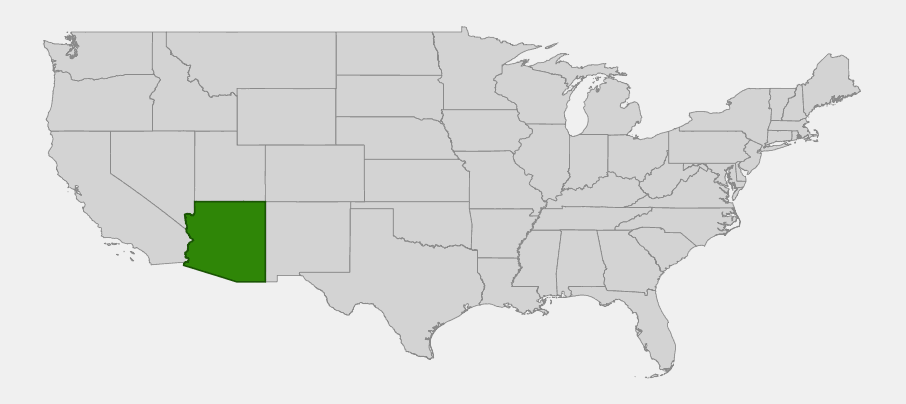
Most of its range lies south of the border. It grows from the Sierra Madre of Mexico through Central America to Colombia, mainly in pine-oak forest, canyon bottoms and moist slopes in the mountains. In the United States it reaches only the far south of Arizona, where herbarium collections going back to the 1930s come almost entirely from Sycamore Canyon in the Pajarito and Atascosa Mountains of Santa Cruz County, a few miles from the Mexican border. That makes it one of the many Madrean plants that just cross into the U.S. in the Sky Islands.
Gardeners know it far better than botanists do. It is widely grown in the Southwest, California and the Gulf states, and in Britain it has received the Royal Horticultural Society’s Award of Garden Merit. This guide covers how to identify it, where it grows wild, how to grow it (and keep its runners in check), and why hummingbirds love it.
Identification
Sierra Madre lobelia does not look much like the familiar eastern lobelias. Its flowers are long, narrow and two-toned rather than broadly lipped, and it is woody at the base. The plants in Arizona and most garden plants belong to the narrow-leaved form, var. angustifolia.
Growth Habit
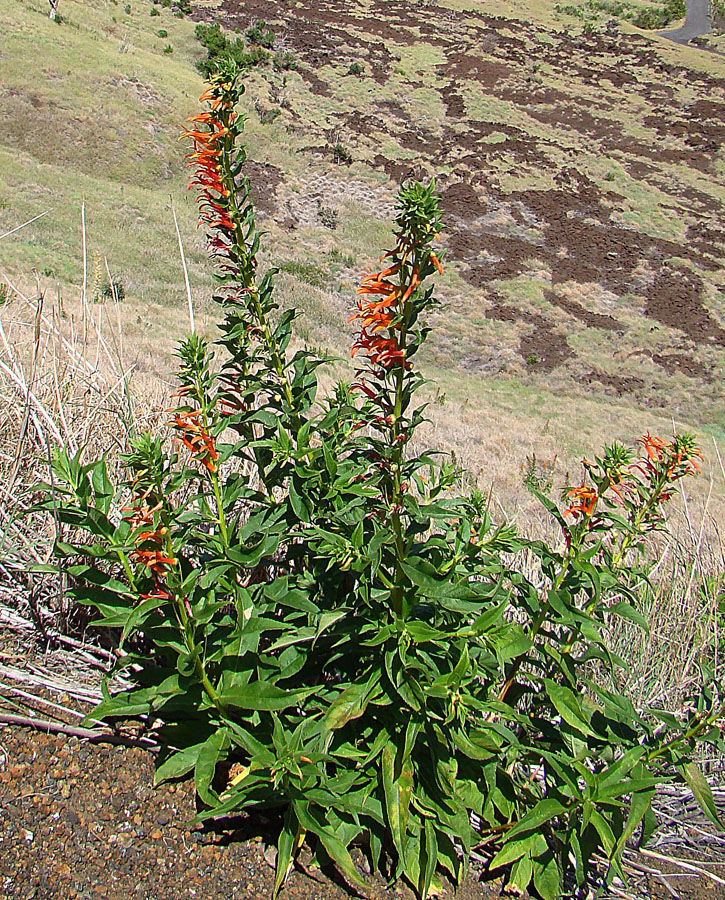
A clumping to colonial perennial or subshrub, usually 2 to 3 feet tall, with many upright to arching, leafy stems from a woody base. Underground runners send up new shoots, so a single plant becomes a patch several feet across over a few years. In frost-free tropical sites it can become shrubby and much taller.
Leaves
Leaves are alternate, lance-shaped to linear, about 2 to 5 inches long, with finely toothed margins. In var. angustifolia they are very narrow and grass-like, giving the plant a fine, willowy texture. They are bright to medium green and slightly rough.
Flowers
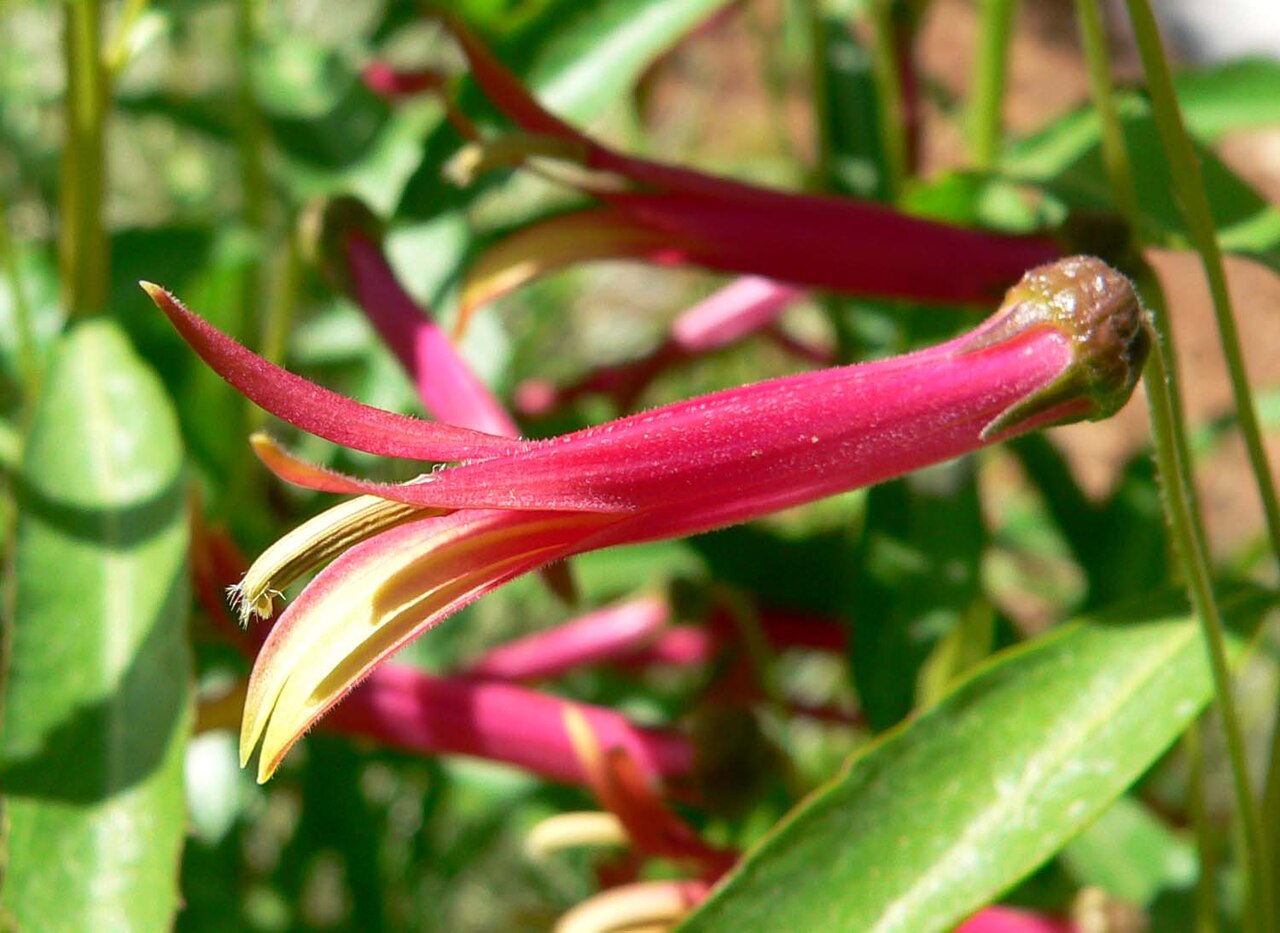
The flowers hang on slender stalks from the upper leaf axils in loose, open sprays (the name laxiflora means “loose-flowered”). Each is about 1½ to 2½ inches long: a narrow, curved tube that is red to orange-red outside, opening into five slender lobes that are yellow on the inside and at the tips. The fused anthers form a dark tube that projects beyond the corolla, so they dust the forehead of a feeding hummingbird. Each flower lasts about a week.
Fruit
The fruit is a small, rounded capsule that splits to release many tiny seeds. In gardens, most new plants come from the runners rather than seed.
Quick Facts
| Scientific Name | Lobelia laxiflora |
| Family | Campanulaceae (bellflower family) |
| Plant Type | Herbaceous perennial or subshrub, spreading by runners |
| Mature Height | 2–3 ft |
| Mature Spread | 3 ft or more; spreads into patches |
| Growth Rate | Fast |
| Sun Exposure | Full sun to part shade |
| Water Needs | Medium; tolerates some dryness once established |
| Soil Type | Well-drained loam or sandy soil; tolerates clay |
| Soil pH | About 6.0–8.0 |
| Bloom Time | Spring to late summer (March–August in Arizona) |
| Flower Color | Red to orange-red with yellow lobes |
| Fall Color | None; evergreen in mild winters |
| Fruit | Small capsule with many tiny seeds |
| Deer Resistant | Usually; lobelias contain bitter alkaloids |
| USDA Hardiness Zones | 8–11 (root-hardy to zone 7 with mulch) |
Native Range
In the United States, Sierra Madre lobelia is native only to Arizona, the single state in which USDA PLANTS records it. Wild Arizona populations are known from canyon bottoms in Santa Cruz County, above all Sycamore Canyon near Ruby in the Pajarito and Atascosa Mountains, where it grows in riparian woodland at about 3,500 to 5,000 feet. Specimens from Phoenix and other low-desert cities come from cultivated plants. The species is rare and very local in Arizona, so treat any wild colony with respect.
South of the border its range is broad. It grows through the Sierra Madre Occidental and Oriental and the mountains of central and southern Mexico, then through Guatemala, Honduras, El Salvador, Nicaragua, Costa Rica and Panama to Colombia, usually in pine-oak forest, cloud-forest edges, roadside banks and stream valleys at middle elevations. In Central America it is common enough to have many local names, such as caragallo, and in Mexico it has Spanish and Nahuatl names including aretitos (“little earrings”) and chilpanxóchitl.
In its wild habitat it favors places with moisture in the soil for at least part of the year, such as stream banks, shaded canyon floors and seepy slopes, often under sycamores, walnuts and oaks.
📋 Regional plant lists featuring Sierra Madre Lobelia: Arizona & New Mexico
Growing & Care Guide
Sierra Madre lobelia is an easy, fast, long-blooming perennial for warm climates, and one of the best hummingbird plants for the Southwest and California. Buy nursery plants, which are widely available. Wild Arizona colonies are few and should never be dug. Its one drawback is that it spreads: give it room, or plant it where a path, wall or container can contain it.
Light
Full sun to part shade. In the low desert it does best with afternoon shade or filtered light. In milder coastal and higher-elevation gardens it flowers most heavily in full sun.
Soil & Water
It grows in most well-drained soils, from sandy to loamy, and tolerates some clay. Moderate, regular water gives the longest bloom; once established it survives dry spells but looks ragged and stops flowering. In the desert, water deeply once or twice a week in summer.
Planting Tips
Plant in spring or early fall, about 3 feet apart. Its runners spread readily in loose, irrigated soil and can travel several feet a year, so keep it away from delicate neighbors or use a root barrier. It also does well in large containers.
Pruning & Maintenance
Cut the stems back hard in late winter, or after frost blackens them, to renew the clump. A light trim in midsummer can bring a second flush of flowers. Pull or dig unwanted shoots at the edge of the patch. It has few pests and diseases.
Propagation
The easiest method is dividing the clump or digging rooted runners in spring. Stem cuttings root quickly in summer. Seed is tiny; surface-sow it on moist mix without covering it, since it needs light to germinate.
Landscape Uses
- Hummingbird gardens: a long-blooming nectar source from spring through summer
- Shady patios and courtyards: thrives in the filtered light of desert courtyards and under trees
- Slopes and banks: its runners knit loose soil together
- Large containers: keeps its spread in check and puts the flowers at eye level
- Water-wise borders: pair it with salvias, penstemons and agaves in Southwest gardens
Wildlife & Ecological Value
Sierra Madre lobelia’s flower shape and color are a classic case of a plant designed for bird pollination.
For Pollinators
The long red tubes hold nectar deep inside, out of reach of most insects, and are visited mainly by hummingbirds. Resident and migrating hummingbirds in Southwest gardens return to the same patch day after day while it is in bloom.
For Birds
Besides hummingbirds, small birds use the dense patches for cover. Its seeds are too small to be an important food.
For Mammals
Like other lobelias, it contains bitter alkaloids and is seldom browsed by deer or rabbits.
Ecosystem Role
Its flowers host tiny hummingbird flower mites (Tropicoseius), which live and breed inside the blossoms, feed on nectar and pollen, and travel between flowers by riding in the nostrils of hummingbirds. Each flower stays open about a week, long enough for the mites to complete a generation. In riparian canyons, its runners help hold stream-bank soil.
Cultural & Historical Uses
The German botanist Carl Sigismund Kunth described the species in the early 19th century from plants collected by Alexander von Humboldt and Aimé Bonpland on their expedition through Spanish America. Nahuatl and Spanish names such as acaxóchitl and aretitos (“little earrings,” for the dangling flowers) show it has long been a familiar plant in Mexico.
Like other members of the genus, it contains lobeline-type piperidine alkaloids, and it has been the subject of several chemical studies that found new compounds. Lobelias can be toxic if eaten, so it should not be used as a home remedy.
Today it is grown in mild climates around the world, from California and the Gulf Coast to Britain, South Africa and New Zealand, and its Award of Garden Merit from the Royal Horticultural Society reflects how reliable it is in gardens. In the American Southwest it has become a staple of hummingbird and water-wise plantings, often sold under the name Mexican bush lobelia.
Frequently Asked Questions
Is Sierra Madre lobelia native to the United States?
Yes, but only barely. USDA PLANTS lists it as native in Arizona, where wild populations grow in canyons of Santa Cruz County near the Mexican border. Most of its range is in Mexico and Central America.
Is Mexican lobelia the same plant?
Yes. Mexican lobelia, Mexican bush lobelia, Mexican cardinal flower and Sierra Madre lobelia are all common names for Lobelia laxiflora.
Is Sierra Madre lobelia invasive?
It is not considered invasive in the U.S., but it spreads aggressively by runners in irrigated gardens. Plant it where you can contain it, or in a large pot.
Is Sierra Madre lobelia poisonous?
Lobelias contain alkaloids that can be toxic if eaten, so keep it away from children and pets that chew plants. Handling it is not a problem for most people.
How cold-hardy is Sierra Madre lobelia?
The tops are killed by hard frost, but established plants usually regrow from the roots after winters down to the low teens °F, roughly USDA zone 8, and sometimes zone 7 with a thick mulch.

Looking for a nursery that carries Sierra Madre Lobelia?
Browse our native plant nursery directory: Arizona

