
Parrotweed (Bocconia frutescens)
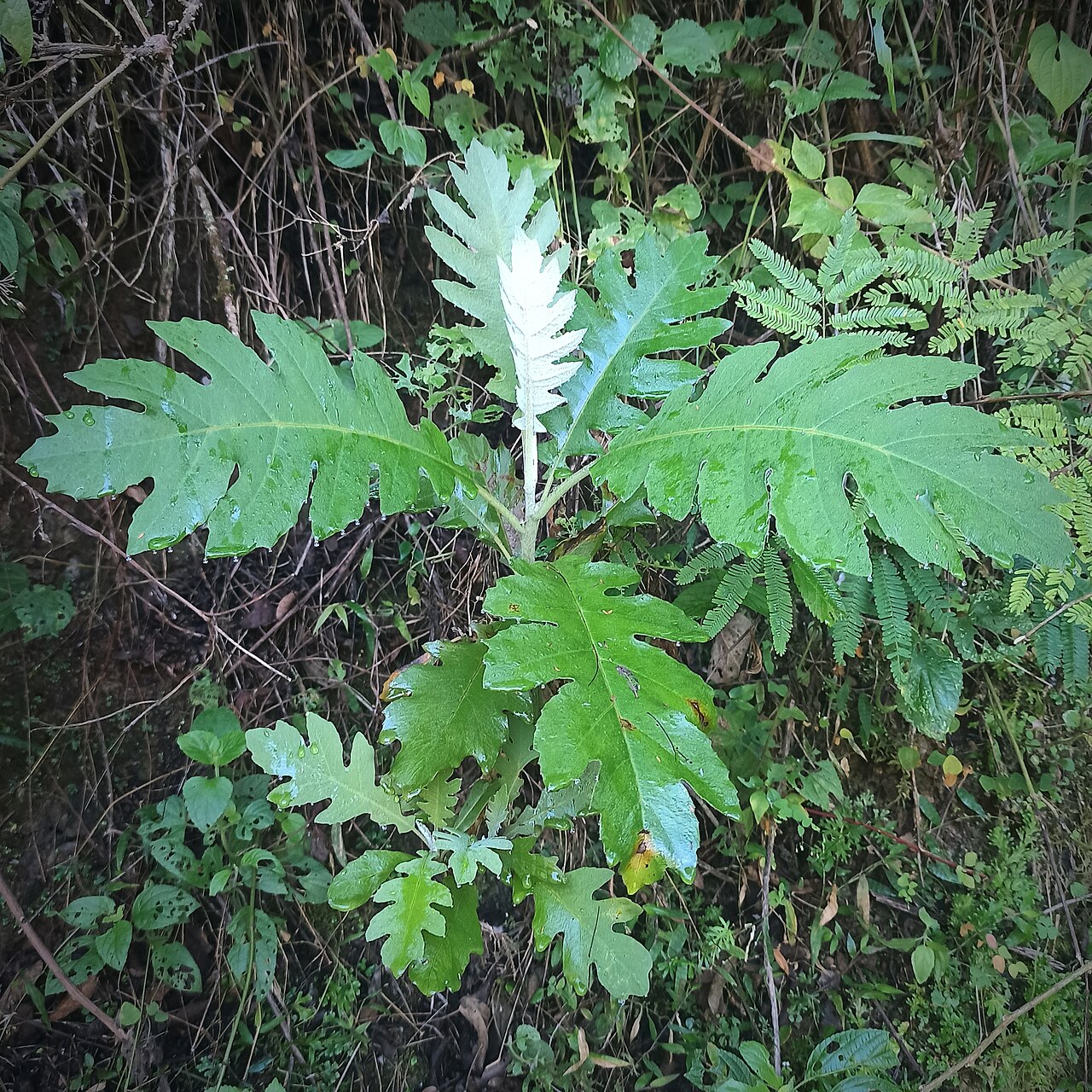
Bocconia frutescens, known as Parrotweed, tree poppy, plume poppy or, in Spanish, palo de pan cimarrón and llora sangre, is a fast-growing shrub or small tree of the poppy family. It has huge, deeply lobed leaves that are green above and chalky white beneath, large drooping sprays of tiny flowers, and a thick yellow-orange sap that oozes from any cut stem or leaf. Its bold foliage makes it look tropical and almost architectural.
Within the United States and its territories, parrotweed is native only to Puerto Rico, where it grows in mountain forests, forest edges, landslides and roadsides. Its wider native range covers the Caribbean islands, Mexico, Central America and northwestern South America.
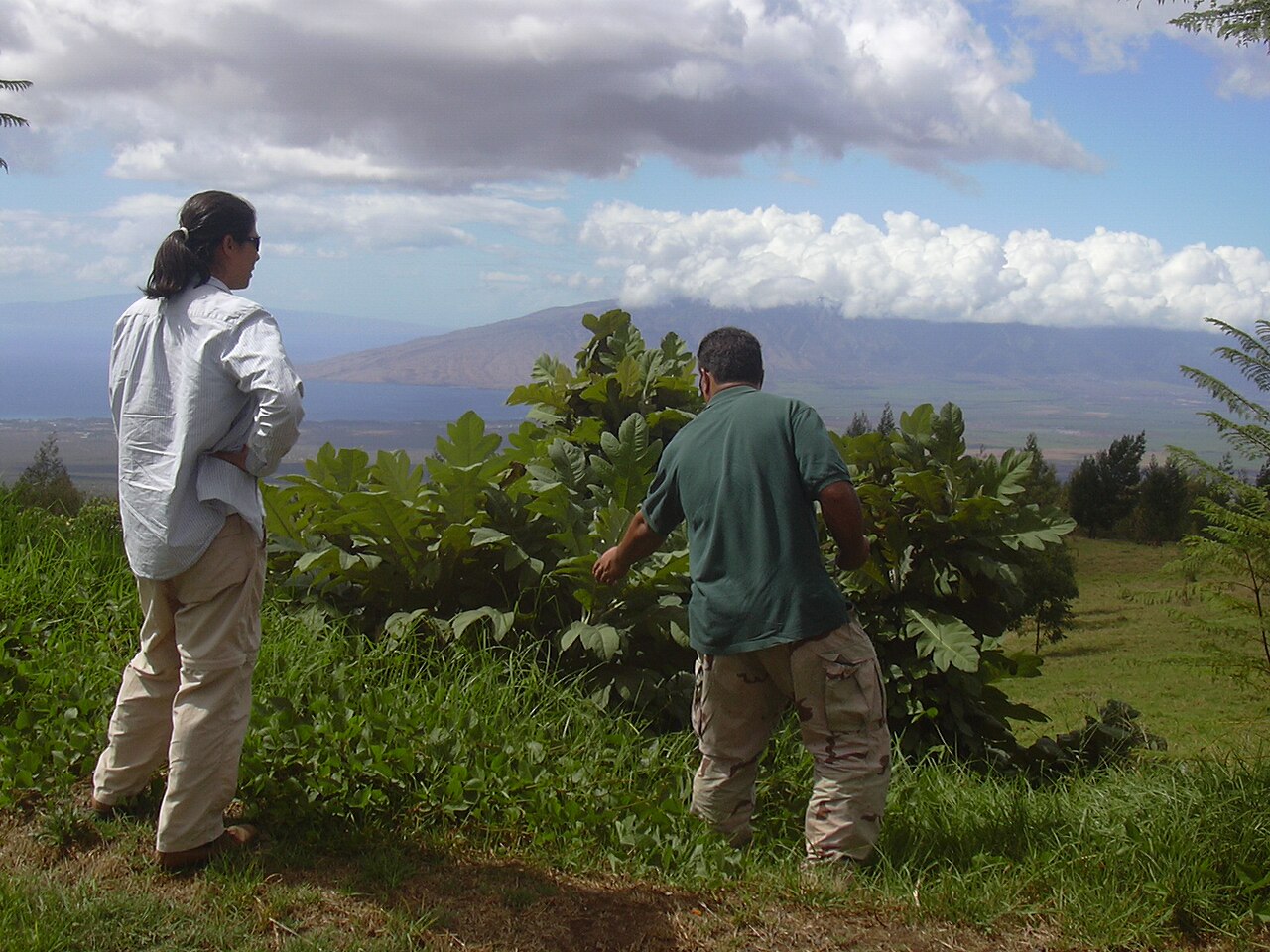
In Hawaii, parrotweed is not native. It was brought in as an ornamental and has become one of the most damaging invasive shrubs on Maui and Hawaii Island, and it is listed as a Hawaii state noxious weed. This guide covers how to identify parrotweed, its native range, how it is grown in Puerto Rico, a safety note on its sap, and why Hawaii gardeners should never plant it.
Identification
Parrotweed is easy to recognize: a soft-wooded shrub or small tree with very large, oak-like, deeply lobed leaves, whitish undersides, and orange sap when a leaf or twig is broken.
Growth Habit
Parrotweed is a multi-stemmed shrub or small tree, usually 6 to 20 feet tall, occasionally taller. It grows fast and branches sparingly, with thick, pithy, soft-wooded stems that carry the leaves in large clusters toward the branch tips. The bark is smooth and grayish, and the young stems are often tinged reddish.
Leaves
The leaves are very large, often 1 to 1 1/2 feet long or more, and deeply cut into many pointed lobes, a little like a giant oak or papaya leaf. They are green and slightly glossy above and pale gray to chalky white beneath, often with fine hairs. Cut or torn leaves and stems release a thick yellow to orange latex.
Flowers
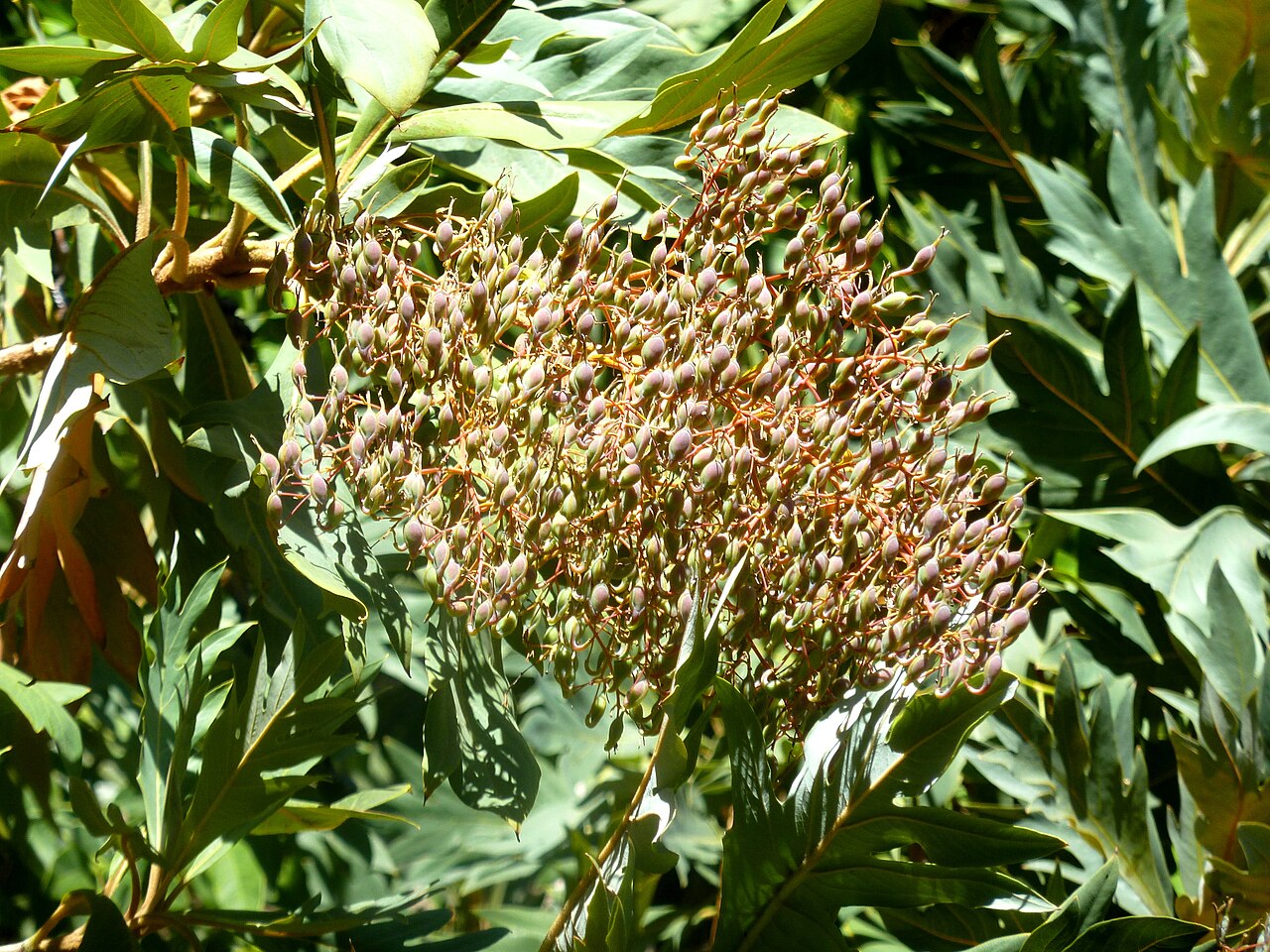
The flowers are borne in large, loose, branched clusters (panicles) up to 1 to 2 feet long at the branch tips. Each flower is tiny, without petals, with two sepals that soon fall and a tuft of stamens, greenish to purplish in color. The plant is wind-pollinated and can flower much of the year in the tropics.
Fruit & Seeds
The flowers become small, oval capsules hanging in great numbers from the drooping clusters. When ripe, each capsule splits to expose a single shiny black seed partly wrapped in a fleshy red to orange aril. Birds eat the arils and spread the seeds widely. One plant can produce many thousands of seeds a year.
Similar Plants
In Puerto Rico, young plants can be confused at a glance with Trumpet Tree (Cecropia schreberiana), another fast-growing pioneer of forest gaps with large leaves pale beneath, but trumpet tree has round, umbrella-like leaves divided into finger-like lobes from a central point, and it has hollow stems instead of orange sap. Papaya has similar-looking lobed leaves but a single unbranched trunk and milky white sap. The orange sap and the whitish leaf undersides identify parrotweed.
Quick Facts
| Scientific Name | Bocconia frutescens L. |
| Family | Papaveraceae (poppy family) |
| Plant Type | Fast-growing evergreen shrub or small tree |
| Mature Height | 6–20 ft (occasionally taller) |
| Mature Spread | 5–12 ft |
| Growth Rate | Fast |
| Sun Exposure | Full sun to part shade |
| Water Needs | Moderate; tolerates dry spells once established |
| Soil Type | Most well-drained soils, including disturbed and rocky soils |
| Soil pH | About 5.5–7.5 |
| Bloom Time | Much of the year in the tropics |
| Flower Color | Greenish to purplish (tiny, without petals) |
| Fall Color | None (evergreen) |
| Fruit | Small capsules; black seeds with red-orange arils |
| Deer Resistant | Yes; bitter, toxic sap |
| USDA Hardiness Zones | 10–12 |
Native Range
USDA PLANTS lists parrotweed as native in Puerto Rico and introduced in Hawaii. In Puerto Rico it grows mostly in the mountainous interior, in moist forests and their edges, in clearings, on landslides and along roadsides and streams. As a pioneer plant, it is quick to fill gaps and disturbed ground, where it grows with other fast-growing native trees and shrubs.
Beyond Puerto Rico, its native range includes other Caribbean islands, such as Cuba, Hispaniola and Jamaica, as well as Mexico, Central America and the Andes of northwestern South America. In Colombia it is known as trompeto and is valued as a pioneer that colonizes degraded soils.
Hawaii: parrotweed was introduced to Hawaii as an ornamental in the early 1900s. It has escaped into pastures, dry and mesic forests and gulches, especially on the slopes of Haleakalā on Maui and in Kona on Hawaii Island, where it crowds out native plants. It is on the Hawaii state noxious weed list, so this page’s map shows Puerto Rico only. It has also become invasive in parts of Africa and other tropical regions.
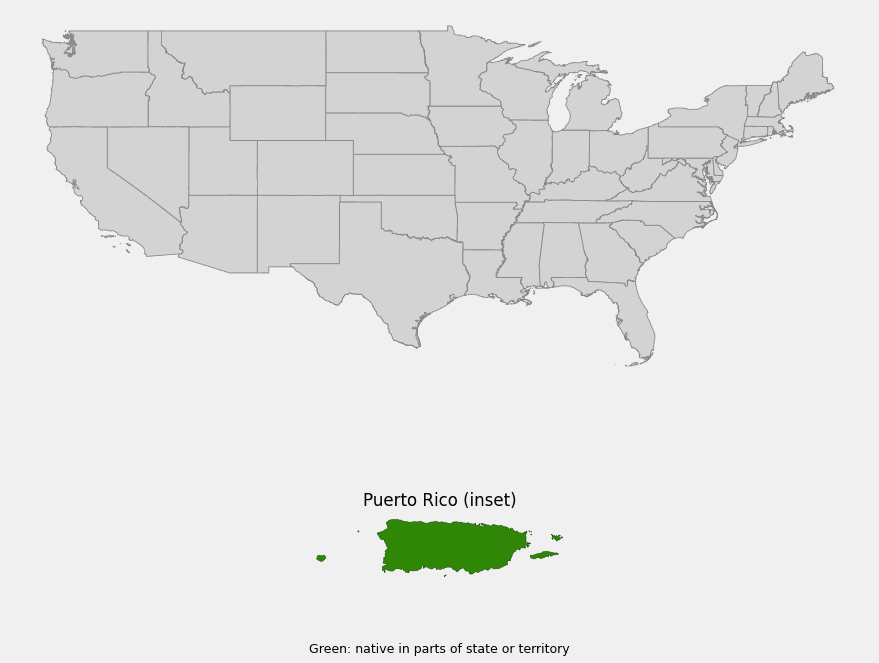
📋 Regional plant lists featuring Parrotweed: Puerto Rico
Growing & Care Guide
In Puerto Rico and its native tropical range, parrotweed is an easy, fast-growing shrub with bold foliage for large tropical gardens and for planting on bare, disturbed slopes. It is rarely sold, but it grows readily from seed. Do not plant it in Hawaii or anywhere outside its native range, and think twice even in Puerto Rico about planting it near natural areas, because birds spread its seeds widely.
Light
It grows best in full sun or bright part shade. In deep shade it becomes leggy and flowers poorly.
Soil & Water
It tolerates a wide range of well-drained soils, including poor, rocky and disturbed ground, and it grows fastest with regular rain or watering. Once established it handles short dry spells. It does not tolerate waterlogged soil or frost.
Planting Tips
Plant it where its large size and bold leaves have room, at least 6 to 8 feet from paths and buildings. Wear gloves when planting or handling it, because of the sap. It is fast but often short-lived, and it works best as a quick screen or pioneer while slower native trees grow up.
Pruning & Maintenance
Cut back leggy stems to keep it bushy. Removing the flower clusters before seeds ripen reduces seedlings. Always wear gloves and eye protection when pruning, and keep the sap off your skin.
Propagation
It grows easily from fresh seed, which germinates well in light. Stem cuttings can also root. Do not share seeds or plants with gardeners in Hawaii or other places where it is invasive.
Safety Note
Parrotweed’s yellow-orange latex contains bitter alkaloids related to those in bloodroot and celandine, other members of the poppy family. The sap can irritate skin and eyes, and the plant should be treated as poisonous if eaten. Wear gloves when handling it, wash skin after contact, and keep children and pets from chewing the leaves, stems or seeds. Its traditional medicinal uses should not be tried at home.
Hawaii Readers: Don’t Plant It
Parrotweed is a Hawaii state noxious weed and one of the islands’ worst invasive shrubs. Birds spread its seeds from gardens into native forests. If you find it on your property in Hawaii, contact your island’s invasive species committee for advice on removal, and choose native Hawaiian shrubs instead.
Landscape Uses
- Puerto Rico tropical gardens: a bold foliage shrub with huge lobed leaves, for large gardens in its native range only
- Erosion control and pioneer planting: quickly covers bare, disturbed slopes in its native range
- Quick screens: a fast, temporary screen while slower native trees establish
- Bird gardens: its red-orange arils attract fruit-eating birds in Puerto Rico
- Not for Hawaii: do not plant it in Hawaii, where it is an invasive noxious weed
Wildlife & Ecological Value
In its native forests, parrotweed is a pioneer that feeds birds and helps cover disturbed ground.
For Pollinators
Its tiny, petal-less flowers are mostly wind-pollinated, though some insects visit them for pollen.
For Birds
Many fruit-eating birds eat the bright red-orange arils around the seeds and disperse them. This is why it spreads so effectively, and why it has become invasive in Hawaii.
For Mammals
Its bitter, toxic sap makes it unpalatable to most grazing animals, which is one reason it spreads into pastures where livestock avoid it.
Ecosystem Role
In Puerto Rico and its native range, parrotweed is one of the first plants to colonize landslides, roadsides and forest clearings, helping hold soil and shading the ground until longer-lived trees take over. Outside its range, the same traits let it invade and displace native vegetation.
Cultural & Historical Uses
The genus Bocconia honors Paolo Boccone, a 17th-century Sicilian botanist and monk. Linnaeus named Bocconia frutescens in 1753, and frutescens means “shrubby,” unusual for the mostly herbaceous poppy family.
Common names in Latin America often refer to its sap: llora sangre (“weeps blood”) and similar names describe the orange latex that flows from cut stems. The latex and leaves have been used in traditional medicine and as a yellow-orange dye.
Its Hawaiian story is a cautionary tale for gardeners: a handsome ornamental introduced in the early 20th century has spread across thousands of acres of Maui and Hawaii Island, and conservation groups spend significant effort removing it from native forests and pastures.
Frequently Asked Questions
Is parrotweed native to the United States?
Yes, but only in Puerto Rico. It is native to Puerto Rico, the Caribbean, Mexico, Central America and northwestern South America. In Hawaii it is introduced and invasive.
Can I plant parrotweed in Hawaii?
No. It is a Hawaii state noxious weed that has invaded forests and pastures on Maui and Hawaii Island. Birds carry its seeds from gardens into natural areas. Choose native Hawaiian shrubs instead.
Is parrotweed poisonous?
Treat it as poisonous. Its yellow-orange sap contains bitter alkaloids like those of other poppy-family plants and can irritate skin and eyes. Wear gloves when handling it and keep children and pets from chewing it.
Why is it called tree poppy?
It is a member of the poppy family (Papaveraceae) but grows as a woody shrub or small tree, unlike most poppies.
How fast does parrotweed grow?
Very fast. Seedlings can reach shrub size in a year or two, and plants flower and set seed young, which helps make it a successful pioneer and an aggressive invader outside its native range.

Looking for a nursery that carries Parrotweed?
Our nursery directory does not yet include Puerto Rico. Browse the native plant nursery directory by state: Alabama–Arkansas · California · Colorado–Hawaii · Idaho–Kansas · Kentucky–Montana · Nebraska–Oklahoma · Oregon · Pennsylvania–Virginia · Washington · West Virginia–Wyoming

