
Spiny Rush (Juncus acutus)
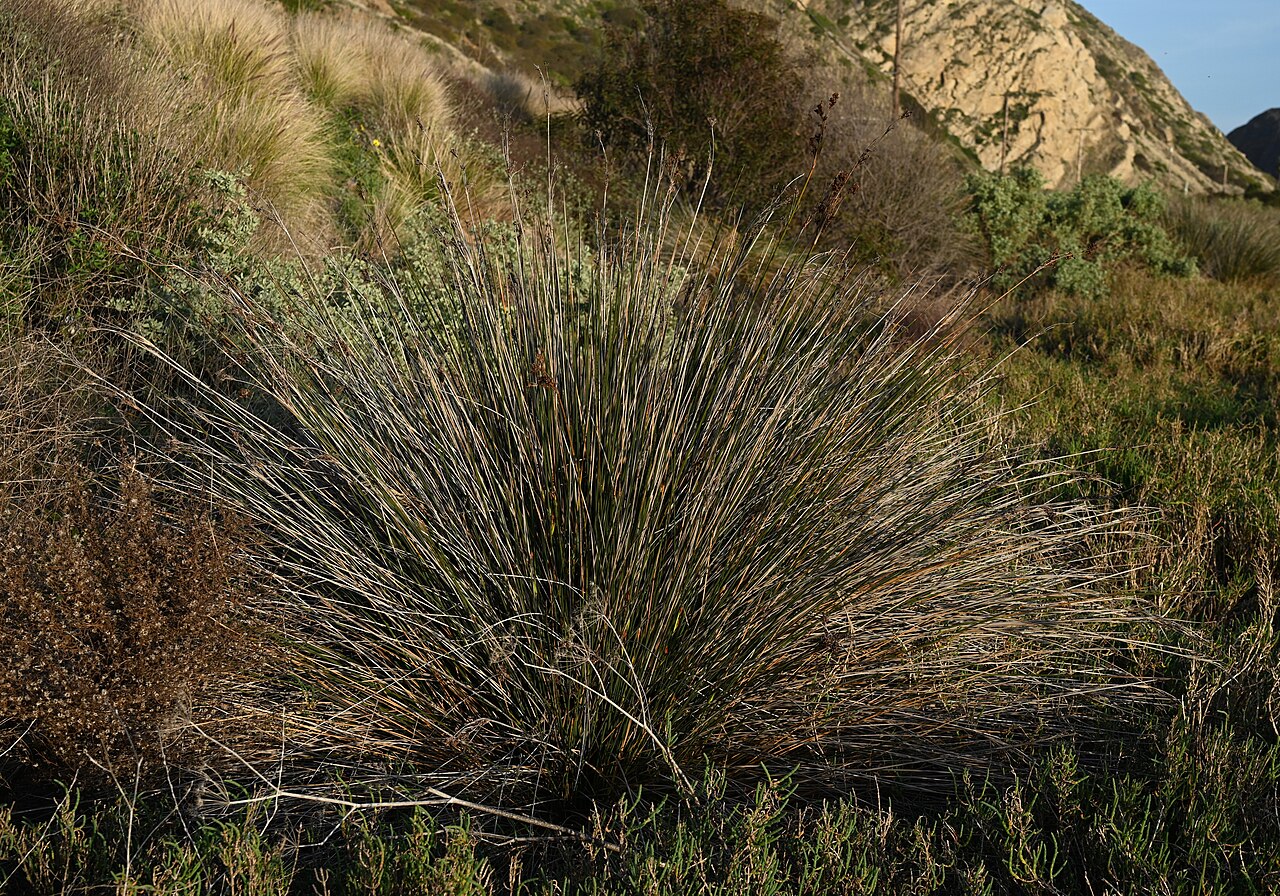
Juncus acutus, known as Spiny Rush, is a large, clumping rush that forms dense, rounded mounds of stiff, gray-green stems, each ending in a needle-sharp point. In the United States the native plant is the southwestern spiny rush, Juncus acutus subsp. leopoldii, also called Leopold’s rush. It grows in the upper edges of coastal salt marshes, around alkaline springs and seeps, and along streams in the deserts of the Southwest.
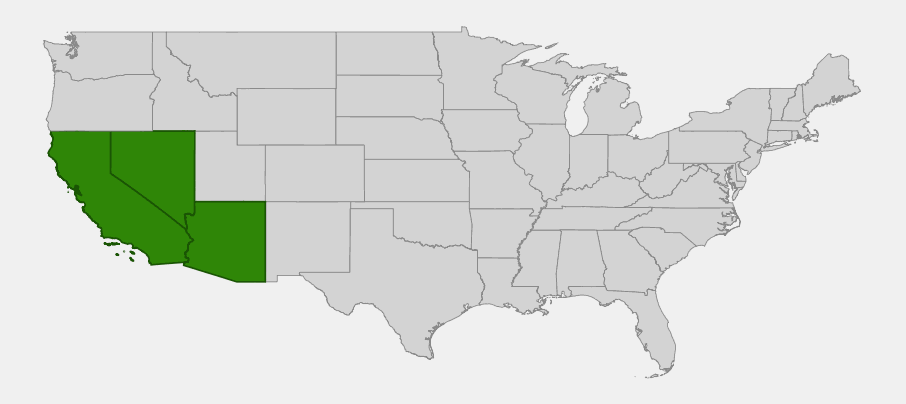
Spiny rush is native in California, Nevada and Arizona, and south into Baja California and mainland Mexico. Along the California coast it is a characteristic plant of lagoons and estuaries from about Santa Barbara County south, and inland it is scattered at desert oases and alkaline wetlands. The typical subspecies, subsp. acutus, is native to the Mediterranean region and western Europe; it has been introduced in a few places, including Australia, where it is an invasive weed.
Its sculptural form and toughness have made southwestern spiny rush a popular native plant for bioswales, rain gardens, coastal restoration and modern landscapes in Southern California. This guide covers how to identify it, where it grows, how to grow it, its wildlife value, and safety tips for handling a plant whose stems can puncture skin.
Identification
With its bold, spherical clumps of spine-tipped stems, spiny rush is one of the easiest rushes to recognize. Few other plants in its habitat are so stiff or so sharp.
Growth Habit
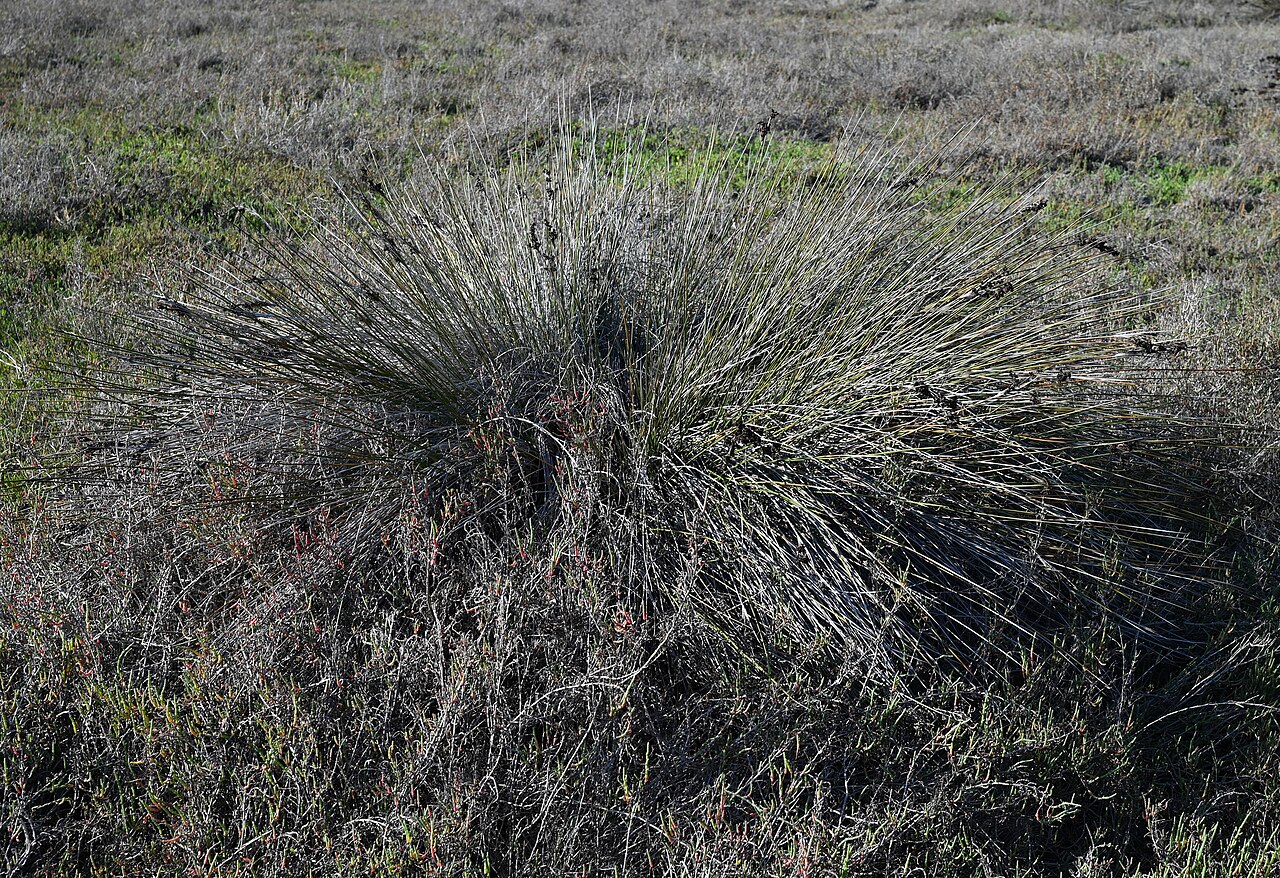
Spiny rush grows as a dense, round clump or tussock, usually 2 to 5 feet tall and as wide or wider, from a short, thick rhizome. Old clumps can be several feet across. The stems are tough and fibrous, and dead stems persist at the base of the clump.
Stems & Leaves
The stems are round, stiff, gray-green to dark green, about an eighth to a quarter inch thick, and end in a very sharp, hard point. The leaves look almost the same as the stems: round, rigid and spine-tipped, arising from the base of the clump with brown sheaths. Stems and leaves are filled with pith rather than hollow.
Flowers
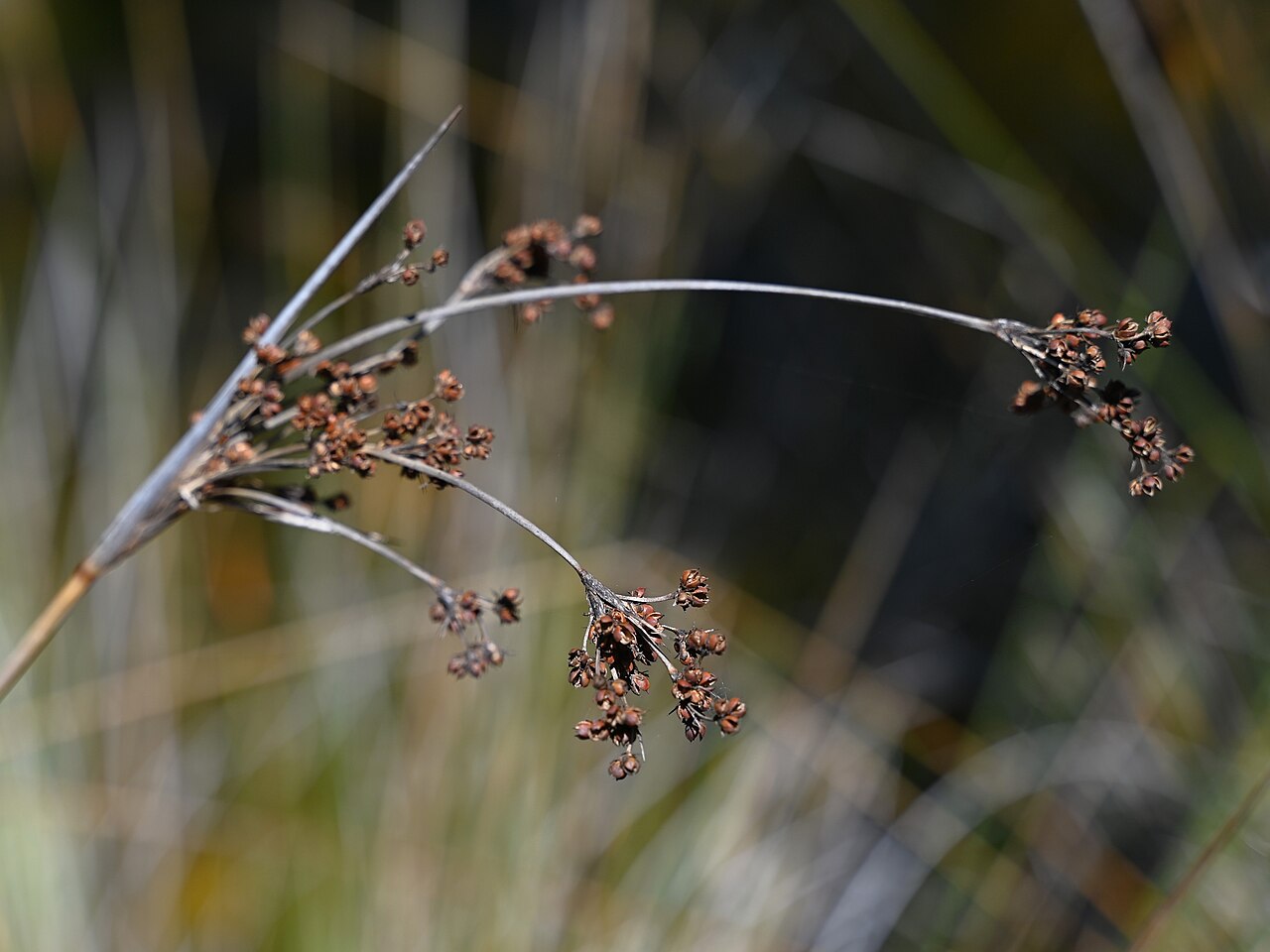
In spring, each flowering stem bears a branched, compact to open cluster of small flowers a few inches below its tip. The cluster sits just below a long, sharp bract that looks like a continuation of the stem. Each flower is small and inconspicuous, with six straw-colored to reddish brown tepals, typical of rushes.
Fruit
The fruits are glossy, egg-shaped to round capsules, reddish to dark brown and much longer than the tepals, about a quarter inch long. They split to release many tiny seeds with short tails at each end. The brown seed clusters remain on the plant into summer and fall.
Similar Species
Black Needlerush (Juncus roemerianus) of Atlantic and Gulf Coast salt marshes is similarly spine-tipped, but it spreads by rhizomes into dense, uniform stands rather than separate round clumps, and its capsules are smaller. Baltic Rush and other western rushes have soft-tipped stems. Mexican rush (Juncus mexicanus) and wire rush grow in similar places but are much smaller and not sharp.
Quick Facts
| Scientific Name | Juncus acutus L. (native U.S. plants are subsp. leopoldii (Parl.) Snogerup) |
| Family | Juncaceae (rush family) |
| Plant Type | Evergreen clumping perennial rush |
| Mature Height | 2–5 ft |
| Mature Spread | 2–6 ft |
| Growth Rate | Moderate |
| Sun Exposure | Full sun to light shade |
| Water Needs | Medium to high; moist to wet soil; tolerates seasonal drying once established |
| Soil Type | Sand, silt or clay; tolerates saline and alkaline soils |
| Soil pH | About 6.5–9.0 |
| Bloom Time | March–July |
| Flower Color | Straw-brown to reddish brown |
| Fall Color | Evergreen; seed heads brown |
| Fruit | Glossy brown capsules with tiny tailed seeds |
| Deer Resistant | Yes; stems are spine-tipped and tough |
| USDA Hardiness Zones | 8–11 |
Native Range
USDA PLANTS lists spiny rush as native in the lower 48 states, with records in Arizona, California, Nevada and Georgia. The native western plants are subsp. leopoldii. The Georgia record lies far outside the native western range and is generally treated as an introduction, so Georgia is not included in the native range on this page. NatureServe likewise tracks spiny rush only in California, Nevada and Arizona, where it is ranked imperiled in Nevada.
In California, spiny rush grows mainly along the southern coast, at the upper edges of salt marshes, lagoons and estuaries and in coastal seeps and dune swales, as well as at scattered desert springs and alkaline wetlands in the Mojave and Colorado deserts. In Nevada and Arizona it is rare, limited to a few alkaline springs, seeps and streamsides in the southern parts of those states.
Outside the United States, subsp. leopoldii grows in Baja California and mainland Mexico and in parts of South America and southern Africa. The typical subspecies is native around the Mediterranean and on the Atlantic coasts of Europe and North Africa, and has been introduced in Australia, where it is a serious invasive weed of coastal wetlands.
📋 Regional plant lists featuring Spiny Rush: California & Nevada · Arizona & New Mexico
Growing & Care Guide
Southwestern spiny rush is a tough, low-maintenance native for sunny wet or seasonally wet places in mild-winter climates. It is widely sold by native plant nurseries in Southern California, often as Juncus acutus subsp. leopoldii. Make sure you are buying the native subspecies, since the European plant is invasive in some parts of the world. Place it away from paths, play areas and doors, because its sharp tips can easily poke skin and eyes.
Light
Full sun is best and keeps the clumps dense and upright. It tolerates light shade but becomes looser.
Soil & Water
It grows in sand, loam or heavy clay and tolerates salty and alkaline soil. It does best with regular moisture or a high water table, but established plants tolerate dry summers in coastal gardens, especially in heavier soils. Water deeply every week or two in summer heat inland.
Planting Tips
Plant from containers in fall or winter, spacing plants 3 to 5 feet apart. It is ideal for the bottom and sides of bioswales and rain gardens, for pond edges and for slopes in coastal restoration. Wear thick gloves and eye protection when planting, and keep it well back from walkways.
Pruning & Maintenance
Little care is needed. Every few years, cut out dead stems at the base, using long-handled loppers and protective gear. Avoid shearing the clump, which leaves stiff, cut stubs and spoils its natural form.
Propagation
Divide large clumps in late fall or winter with a sharp spade, keeping a good root mass on each section. Seed is fine and easy to start: sow it on the surface of a moist, sandy mix in spring and keep it constantly wet.
Safety Note
Spiny rush is not poisonous, but its stems end in hard, sharp points that can puncture skin and injure eyes, especially for children and pets. Plant it where people will not brush against it, wear gloves, long sleeves and eye protection when working near it, and bend down carefully around clumps.
Landscape Uses
- Bioswales and rain gardens: a sculptural, evergreen plant that tolerates both flooding and drought and filters runoff
- Coastal restoration: upper salt marsh edges, lagoon margins and dune swales on the Southern California coast
- Barrier planting: its sharp stems discourage people and animals from crossing an area
- Modern and xeric landscapes: a bold, architectural accent with a strong rounded form, contrasting with soft grasses and succulents
- Ponds and water features: sunny pond banks and wet corners in mild-winter climates
Wildlife & Ecological Value
Spiny rush clumps are small fortresses for wildlife in coastal marshes and desert wetlands.
For Pollinators
Like other rushes, spiny rush is wind-pollinated and offers no nectar. Its value to insects is mainly as shelter and as habitat for the many small invertebrates that live in and under the clumps.
For Birds
The dense, spiny clumps give safe nesting and roosting cover to marsh birds and songbirds, such as song sparrows and common yellowthroats, and protect them from predators. Seed-eating birds feed on the tiny seeds.
For Mammals
Small mammals shelter in and under the clumps. The stiff, spiny stems are seldom eaten by deer or livestock.
Ecosystem Role
Spiny rush stabilizes soils at the edge of tidal marshes, in dune hollows and along desert springs, and it tolerates the salty, alkaline soils of these transition zones. Its clumps trap sediment and organic matter and create the varied structure that many marsh animals depend on. In southern Nevada and Arizona, it is part of the rare desert spring wetlands that support endemic fish, snails and insects.
Cultural & Historical Uses
The name acutus is Latin for “sharp” or “pointed,” a reference to the stiff, spine-tipped stems. Juncus comes from the Latin jungere, “to join” or “to bind,” because rush stems were used to tie and weave things.
Spiny rush and its relatives have long been used for baskets and mats. In California, some Native American basket weavers used rush stems such as Basket Rush (Juncus textilis) for the patterned coils of their baskets; the tough, fibrous stems of spiny rush have been used for coarse weaving and matting in the Mediterranean.
The native subspecies was first described as a separate species, Juncus leopoldii, by the Italian botanist Filippo Parlatore in the 1800s. Today most botanists treat it as a subspecies of Juncus acutus, but some references still use the older name, and it is also sold as Leopold’s rush.
Frequently Asked Questions
Is spiny rush native to the United States?
Yes. The southwestern spiny rush, Juncus acutus subsp. leopoldii, is native to California, Nevada and Arizona. The European subspecies, subsp. acutus, is not native to North America and has been introduced in a few places.
Is spiny rush dangerous?
It is not poisonous, but its sharp stem tips can puncture skin and injure eyes. Plant it away from paths and play areas, and wear gloves and eye protection when handling it.
Is spiny rush invasive?
The native southwestern subspecies is not invasive in the United States. The European subspecies is a serious invasive weed in coastal wetlands of Australia, so buy the native subsp. leopoldii from a reputable native plant nursery.
Does spiny rush need a lot of water?
It grows best in moist to wet soil, but established plants tolerate dry summers in coastal California, especially in clay soils or with occasional deep watering.
How is spiny rush used in landscaping?
It is popular for bioswales, rain gardens, pond edges and coastal restoration, and as a bold architectural accent or barrier planting in Southern California gardens.

Looking for a nursery that carries Spiny Rush?
Browse our native plant nursery directory: Arizona · California · Nevada

