
Catclaw Mimosa (Mimosa aculeaticarpa)
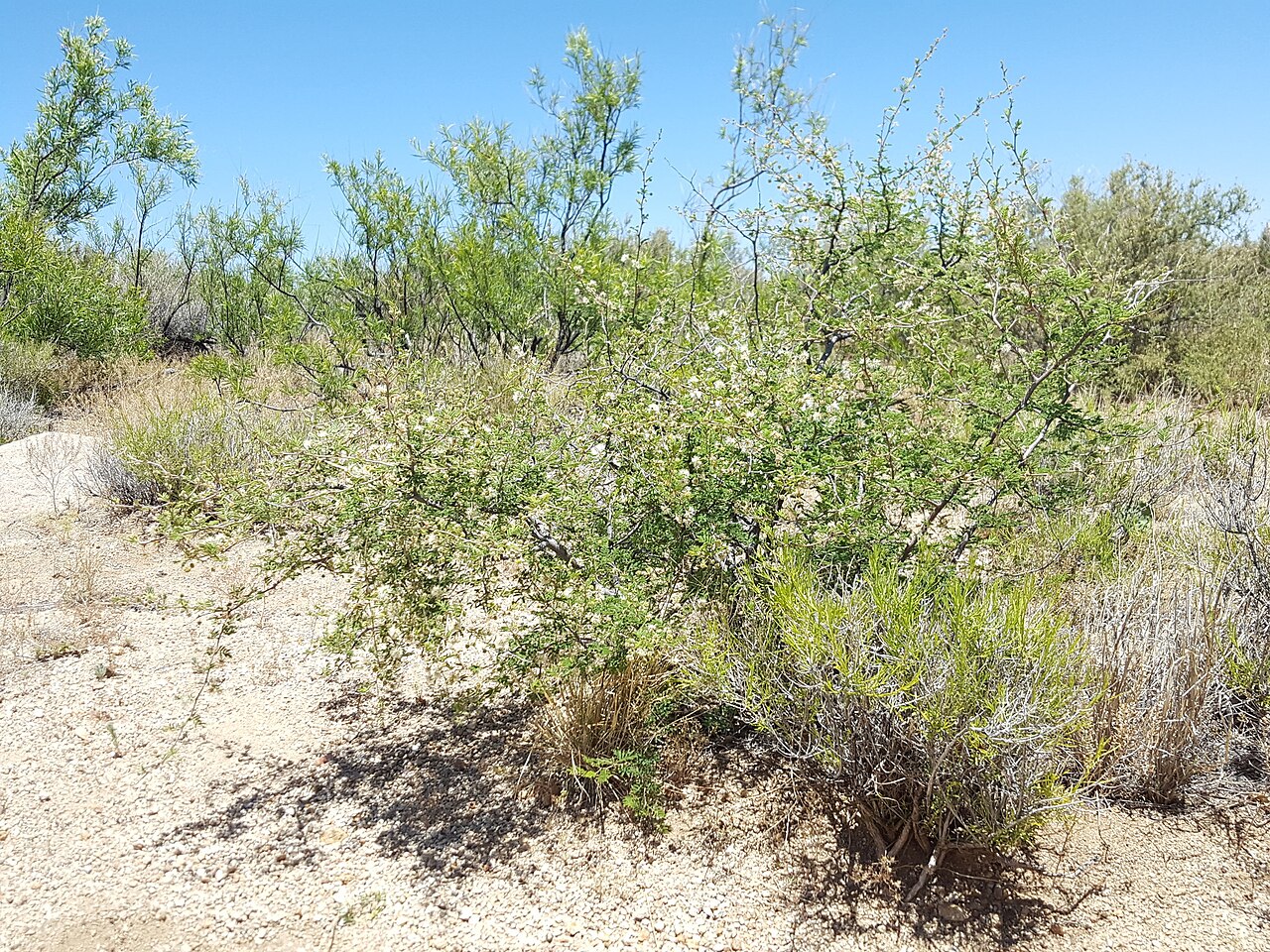
Mimosa aculeaticarpa, known as Catclaw Mimosa (USDA: catclaw mimosa; also called wait-a-minute bush), is a thorny, deciduous native shrub in the pea family (Fabaceae). It forms dense, rounded, tangled thickets 3 to 6 feet tall (occasionally 8 feet) with fine, fern-like bipinnate leaves, curved claw-shaped prickles, and fragrant, fluffy, white to pale pink flower heads from spring through the summer rains.
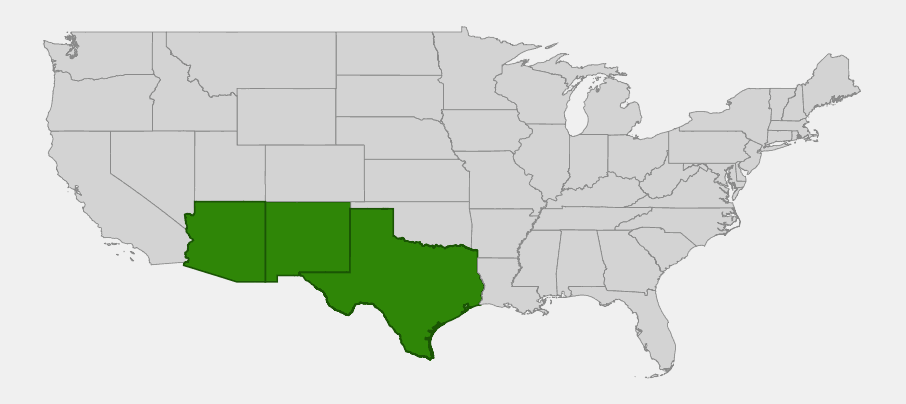
In the United States it is native to the desert grasslands, oak woodlands and rocky canyons of central and southeastern Arizona, southern New Mexico and western Texas, and it ranges far south into Mexico. U.S. plants belong to variety biuncifera, long known as Mimosa biuncifera, and many older references still use that name.
Catclaw mimosa is a tough, drought-tolerant shrub for wildlife habitat, erosion control and barrier hedges in arid gardens. Its prickles catch clothing and skin easily, which is the reason for the name “wait-a-minute bush”: plant it well away from paths and play areas.
Identification
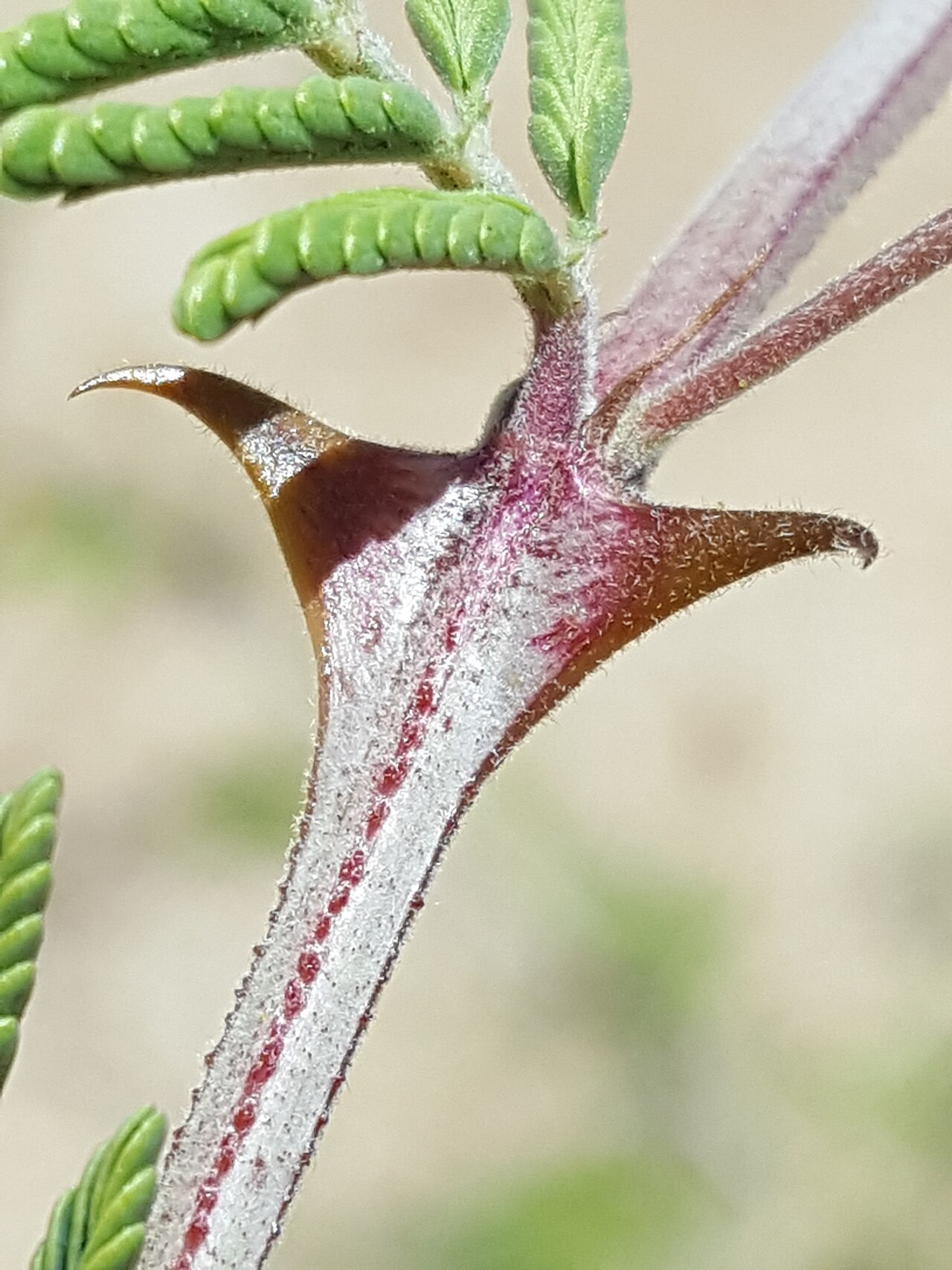
Catclaw mimosa is one of several thorny, fine-leaved shrubs in the desert Southwest. Its small, round, pinkish-white puffball flower heads and stout, curved prickles at the leaf nodes are the best field marks.
Growth Habit & Stems
A many-branched, deciduous shrub, usually 3 to 6 feet tall and as wide, forming dense, rounded or spreading thickets. The zigzag branches are gray to reddish brown and armed with stout, hooked prickles, typically in pairs just below the leaf nodes, sometimes with scattered prickles between nodes. Young twigs are often finely hairy.
Leaves
The leaves are alternate and bipinnately compound, 1 to 3 inches long, with several pairs of side branches (pinnae), each carrying many pairs of tiny, oblong leaflets only about 1/8 inch long. They give the shrub a soft, feathery look. The shrub drops its leaves in drought and in winter.
Flowers
Flowers appear mainly from spring into late summer, often with a flush after the summer monsoon rains. They are packed into small, round, fluffy heads about 1/2 inch across, white to pale pink, made up mostly of long stamens. The flowers are sweetly fragrant.
Fruit
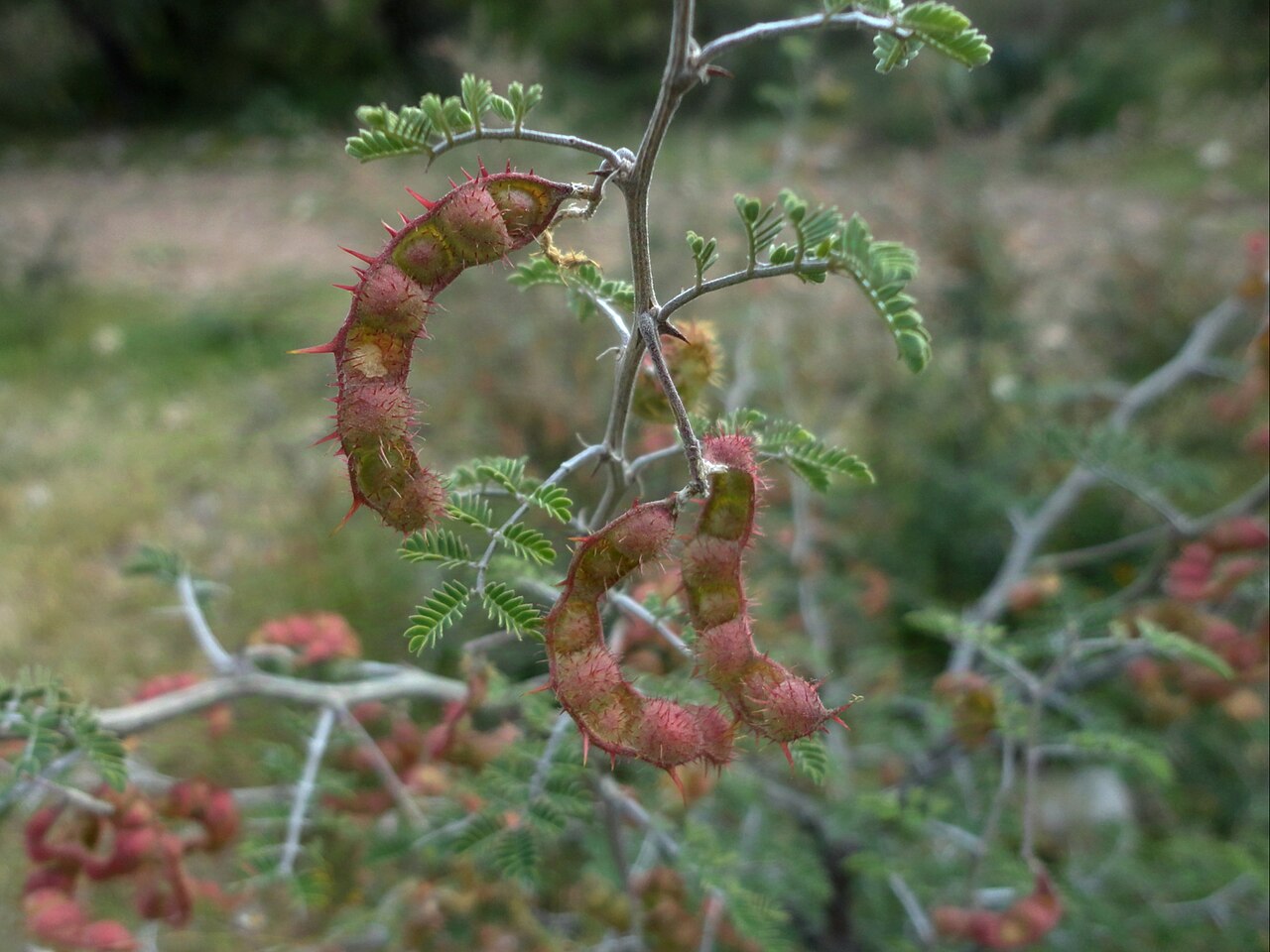
The fruit is a flat, curved pod 1 to 2 inches long that turns reddish brown when ripe. Its margins carry small prickles, and the pod breaks into one-seeded segments that fall away from the persistent rim, a feature typical of the genus.
Look-alikes
Catclaw Acacia (Senegalia greggii, formerly Acacia greggii) has similar hooked prickles but cream-yellow, bottlebrush-like flower spikes and twisted pods. Velvetpod Mimosa (Mimosa dysocarpa) has pink to rose-purple flowers in elongated spikes and velvety pods. Fairy Duster (Calliandra eriophylla) has showy pink powder-puff flowers but no prickles.
Safety
Catclaw mimosa is not known to be poisonous to people, but its hooked prickles easily snag clothing and scratch skin. Wear long sleeves and gloves when pruning or working near it, and keep it away from walkways, children’s play areas and places where pets run.
Quick Facts
| Scientific Name | Mimosa aculeaticarpa Ortega (U.S. plants: var. biuncifera) |
| Family | Fabaceae (pea or legume family) |
| Plant Type | Thorny deciduous shrub |
| Mature Height | 3–6 ft (occasionally to 8 ft) |
| Mature Spread | 3–8 ft; forms thickets |
| Growth Rate | Moderate |
| Sun Exposure | Full sun |
| Water Needs | Low; very drought tolerant once established |
| Soil Type | Rocky, gravelly or sandy, well-drained soil |
| Soil pH | About 6.5–8.5 |
| Bloom Time | April–September (mainly after spring and summer rains) |
| Flower Color | White to pale pink |
| Fall Color | Not significant; leaves drop in drought or cold |
| Fruit | Flat, curved, reddish-brown pod with prickly margins |
| Deer Resistant | Partly; deer browse the leaves and pods, but the prickles limit damage |
| USDA Hardiness Zones | 7–10 |
Native Range
Catclaw mimosa is a plant of the Chihuahuan and Sonoran desert borderlands. USDA PLANTS lists it as native in Arizona, New Mexico and Texas. In Arizona it grows mainly in the central and southeastern parts of the state; in New Mexico across the southern counties; and in Texas in the Trans-Pecos region of far western Texas.
The species as a whole ranges far south into Mexico, where the typical variety (with pink flowers and slightly different pods) is a common thorny shrub of central Mexican scrublands. Plants north of the border belong to variety biuncifera, which many references still treat as the separate species Mimosa biuncifera.
It grows in desert grasslands, on rocky hillsides and mesas, along washes and canyon bottoms, and in the lower edge of oak and juniper woodlands, roughly 3,000 to 6,500 feet in elevation. It often increases on overgrazed rangeland, where it can form dense thickets.
📋 Regional plant lists featuring Catclaw Mimosa: Arizona & New Mexico · South & West Texas
Growing & Care Guide
Catclaw mimosa is an easy, nearly maintenance-free native for hot, dry gardens in the Southwest. Its fine foliage and fragrant flowers are attractive, but the prickles make it best for the back of a habitat garden, slope plantings or a wildlife hedge rather than a spot near paths.
Light
Plant in full sun. It tolerates reflected heat and becomes sparse and leggy in shade.
Soil & Water
It grows in rocky, gravelly or sandy soils with good drainage, including alkaline and limestone soils. Water young plants every week or two through their first summer; after that it survives on rainfall in most of its native range, with an occasional deep soak in extreme drought to keep it leafy.
Planting Tips
Plant in fall or early spring from containers. Space plants 4 to 6 feet apart for a hedge or barrier planting. Keep it at least several feet from walkways, patios and driveways, and wear heavy gloves and long sleeves when handling it.
Pruning & Maintenance
Little pruning is needed. Remove dead wood or overreaching branches in late winter with long-handled loppers. It may sucker and spread into a thicket over time; remove unwanted shoots if you want to keep it as a single shrub. It is seldom bothered by pests or diseases.
Propagation
Grow from seed. The hard seed coat needs scarification (nicking or a brief soak in hot water) before sowing. Sow in warm soil in late spring or early summer; seedlings grow quickly with summer warmth. Like other legumes, it forms root nodules with nitrogen-fixing bacteria.
Landscape Uses
- Wildlife hedges and habitat gardens: dense, thorny cover for quail, songbirds and small mammals
- Erosion control: holds rocky slopes and wash banks in arid sites
- Barrier and boundary plantings: an effective natural fence where foot traffic should be discouraged
- Pollinator gardens: fragrant flowers attract native bees and butterflies
- Desert grassland restoration: a native shrub component in Sky Island and desert grassland plantings
Wildlife & Ecological Value
In the desert grasslands of the Southwest, catclaw mimosa thickets are important shelter and food for wildlife, from bees and butterflies to quail and deer.
For Pollinators
The fragrant flower heads are visited by many native bees, along with butterflies and other insects, especially after the summer rains when much of the shrub is in bloom.
For Birds
Gambel’s, scaled and Montezuma quail shelter under the thorny thickets, and many songbirds nest or roost in them, protected from predators. Birds and quail also eat the seeds.
For Mammals
Mule deer and white-tailed deer browse the leaves, twigs and pods, and javelinas, rabbits and rodents eat the pods and seeds. The thickets give cover to small mammals.
Ecosystem Role
As a legume, catclaw mimosa adds nitrogen to poor desert soils. Its thickets trap blowing soil and organic matter and create shaded “islands” where other plants can establish. On heavily grazed land it can increase sharply, which range managers watch as a sign of grassland change.
Cultural & Historical Uses
The common name “catclaw” comes from the curved prickles, which grip like a cat’s claws, and “wait-a-minute bush” from the way they hold anyone who brushes past. In Mexico it is known by names such as gatuño, uña de gato and garabatillo.
The species name aculeaticarpa means “prickly fruit,” describing the prickles along the pod. The variety name biuncifera means “bearing two hooks,” for the paired prickles at the nodes.
The species was described by the Spanish botanist Casimiro Gómez Ortega, director of the Royal Botanical Garden of Madrid, in the late 1790s, from Mexican material. The genus name Mimosa comes from the Greek for “mimic,” a nod to the leaf movements of the sensitive plant, the best-known member of the genus.
Frequently Asked Questions
Why is catclaw mimosa called wait-a-minute bush?
Its curved prickles hook into clothing and skin, so anyone walking through it has to stop and carefully unhook themselves.
Is catclaw mimosa the same as catclaw acacia?
No. Both have hooked prickles, but catclaw acacia (Senegalia greggii) has yellowish bottlebrush flower spikes, while catclaw mimosa has round, white to pale pink puffball flowers and smaller, finer leaves.
Is Mimosa biuncifera the same plant?
Yes. U.S. plants long known as Mimosa biuncifera are now treated by USDA as Mimosa aculeaticarpa var. biuncifera.
Is catclaw mimosa poisonous?
It is not known to be toxic to people, but the prickles can cause painful scratches. Wear gloves and long sleeves when handling it.
Does catclaw mimosa need water?
Very little once established. Water young plants through their first summer; after that it lives on rainfall in most of the desert Southwest.

Looking for a nursery that carries Catclaw Mimosa?
Browse our native plant nursery directory: Arizona · New Mexico · Texas

