
Arizona Beggarticks (Bidens aurea)
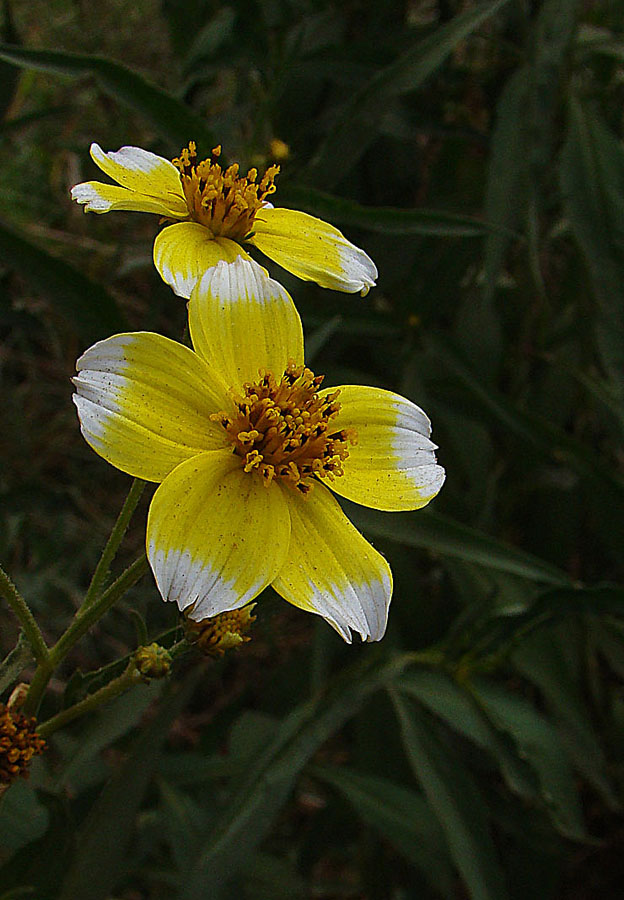
Bidens aurea, known as Arizona Beggarticks, is a perennial wildflower of the daisy family that lights up streambanks, springs and marshes with golden flower heads from late summer into fall. Its five or six broad rays are usually bright yellow, but some plants carry rays that fade to white at the tips, and pale forms are popular in gardens. The species name aurea means “golden.”
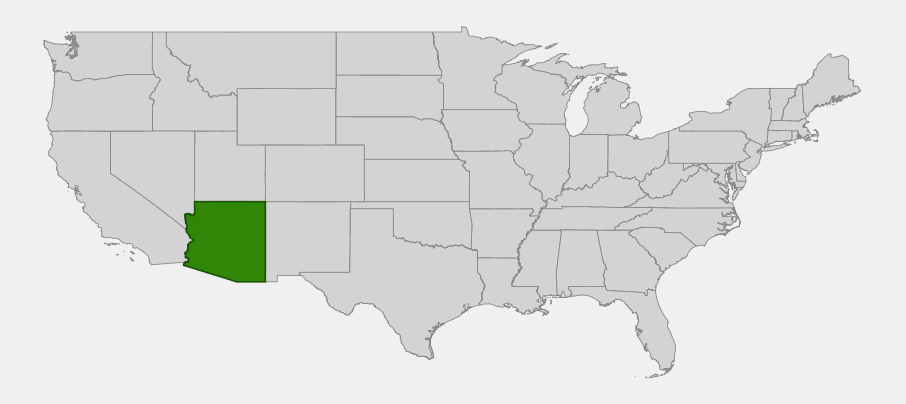
In the United States, Arizona beggarticks is native only to southern Arizona, where it grows in wet places at middle elevations, mainly south of Tucson. From there its range extends south through much of Mexico to Guatemala. Unlike many of its weedy cousins, it is a long-lived perennial that spreads by creeping underground stems, and its seeds often lack the barbed awns that give beggarticks their name.
Outside its native range it has become a popular garden plant and, in parts of Europe, an invasive weed of wet ground. This page covers how to identify Arizona beggarticks, where it grows wild, how to grow it in a sunny, moist spot, its value to pollinators, and its long history as an herbal tea plant.
Identification
Arizona beggarticks looks like a loose, airy coreopsis. Look for opposite, very variable leaves, four-angled stems and flower heads with a ring of narrow green bracts below them.
Size & Form
It is an upright, branching perennial usually 1 1/2 to 3 1/2 feet tall, sometimes taller in rich, wet soil. Plants spread by rhizomes into loose colonies. The stems are four-angled and usually hairless.
Leaves
The leaves are opposite and stalked, 2 to 5 inches long, and remarkably variable. Some are simple and narrowly lance-shaped; others are divided once or twice into narrow, lance-shaped lobes. The edges may be smooth or sharply toothed, and several leaf shapes can appear on one plant.
Flowers
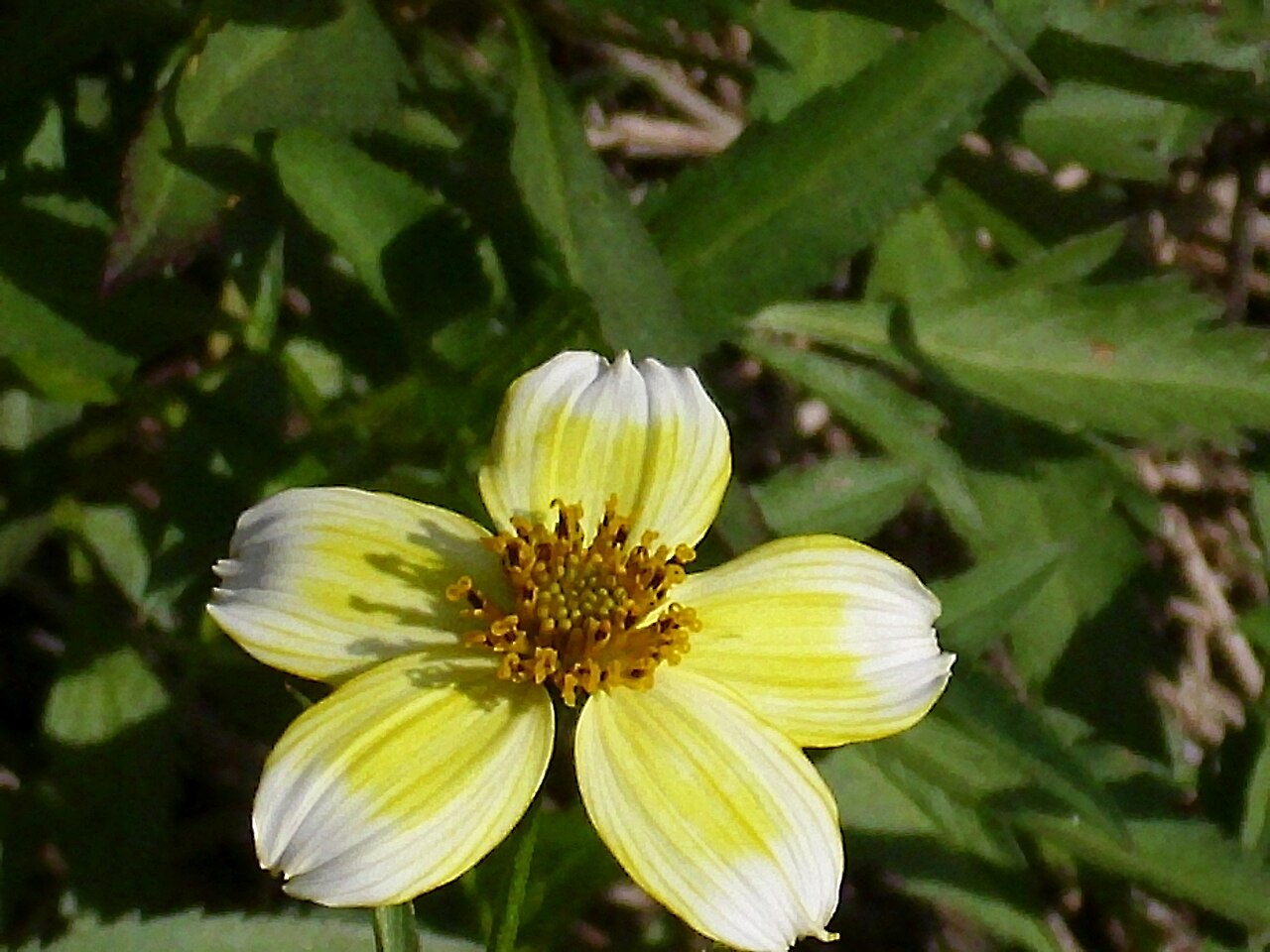
The flower heads, about 1 1/2 to 2 1/2 inches across, are held in loose, flat-topped clusters on long, slender stalks. Each has 5 or 6 broad rays, 1/2 to just over 1 inch long, around 12 to 20 small yellow disc florets. Rays are usually golden yellow; some plants have rays tipped or largely washed with white. Below each head is a ring of 8 to 17 narrow, green outer bracts and a cup of brownish inner bracts with yellow edges.
Seeds
The seeds (achenes) are dark brown to black and slightly four-sided. Some carry two backward-barbed awns that cling to fur and clothing, the “beggar’s ticks” of the common name, but many lack awns entirely, an unusual trait in this genus.
Similar Species
Arizona beggarticks is easily confused with the garden plant Bidens ferulifolia (Apache beggarticks), which has finely divided, ferny leaves and is usually grown as an annual; the two have been crossed in some garden selections. Weedy annual beggarticks such as nodding beggarticks have smaller rays, and Spanish needles has white rays and barbed seeds. Coreopsis species have alternate or basal leaves in many cases and lack the barbed-awn seeds.
Quick Facts
| Scientific Name | Bidens aurea (Aiton) Sherff (syn. Coreopsis aurea, Bidens heterophylla) |
| Family | Asteraceae (aster family) |
| Plant Type | Rhizomatous herbaceous perennial |
| Mature Height | 1.5–3.5 ft, occasionally taller |
| Mature Spread | 1.5–3 ft, spreading by rhizomes |
| Growth Rate | Fast |
| Sun Exposure | Full sun to light shade |
| Water Needs | Medium to high; moist to wet soil |
| Soil Type | Moist loam, clay or sandy streamside soils |
| Soil pH | About 6.0–8.0 |
| Bloom Time | July–October (into November in mild areas) |
| Flower Color | Golden yellow, sometimes white-tipped or pale yellow |
| Fall Color | None notable; foliage dies back after frost |
| Fruit | Dark achene, with or without 2 barbed awns |
| Deer Resistant | Unknown |
| USDA Hardiness Zones | 7–10 |
Native Range
USDA PLANTS lists Arizona beggarticks as native in the lower 48 states only in Arizona. Floras describe it from southern Arizona, where it grows in marshes, along streams and at seeps and springs between about 3,000 and 6,000 feet, mostly in the mountains and valleys south of Tucson.
South of the border it is widespread through much of Mexico and reaches Guatemala in Central America. Arizona is the northern edge of this range, and in the state it is restricted to the scattered wetlands and riparian corridors of the southeastern deserts and sky island foothills.
The plant has been introduced well beyond its native range. It is naturalized in parts of South America and in southern Europe, including Spain, Portugal, France and Italy, where it spreads along rivers and in wet meadows and is treated as an invasive weed in some regions.
📋 Regional plant lists featuring Arizona Beggarticks: Arizona & New Mexico
Growing & Care Guide
Arizona beggarticks is an easy, fast-growing perennial for sunny, moist ground. It is sold under its own name and in pale selections, and native plant growers in the Southwest sometimes offer seed. Give it room or a contained bed, because it spreads.
Light
Grow it in full sun for the most flowers and sturdiest stems. It tolerates light shade, especially in hot desert gardens, but flowers less and leans toward the light.
Soil & Water
In the wild it grows with its roots in moist to wet soil, so it is ideal for rain gardens, pond margins and low spots. In ordinary garden beds, water regularly, especially in summer heat in the Southwest. It is not fussy about soil type and tolerates clay. It does not do well in dry, sandy soil without irrigation.
Planting Tips
Plant divisions or nursery plants in spring, 2 to 3 feet apart. Because it spreads by rhizomes, use it where a loose, colonizing patch is welcome, or plant it inside a root barrier or large container. It is root-hardy to roughly zone 7 with winter mulch.
Pruning & Maintenance
Pinch or cut stems back by a third in early summer for bushier, less floppy plants. Cut the dead stems to the ground in late winter. Deadheading extends flowering and reduces seeding; outside the Southwest, remove seed heads to keep it from spreading into wild wetlands.
Propagation
Divide clumps in spring, or root stem cuttings in early summer. Seed sown in spring in warm soil germinates readily; cover it lightly and keep it moist.
Landscape Uses
- Rain gardens and pond edges: a vigorous, late-blooming perennial for wet, sunny ground
- Pollinator gardens: late-season nectar and pollen when many flowers have finished
- Riparian restoration: native to southern Arizona streams, springs and ciénegas
- Containers: pale selections make long-flowering container and patio plants
- Herb gardens: a traditional herbal tea plant in Mexico and Spain
Wildlife & Ecological Value
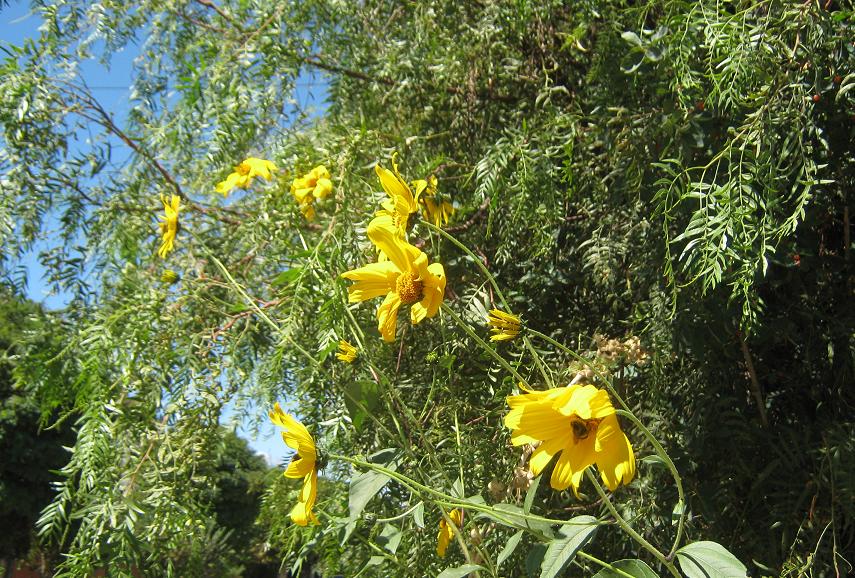
As a late-summer bloomer in Arizona’s wetlands, Arizona beggarticks offers food for insects when the monsoon season brings most local wildflowers into bloom and keeps going into fall.
For Pollinators
The open, flat flower heads are visited by native bees, honey bees, hoverflies and butterflies, which can reach the nectar and pollen easily. Its long bloom season makes it valuable into autumn.
For Birds
Seed-eating birds such as finches and sparrows eat Bidens seeds, and the dense stems give cover to small birds at the water’s edge.
For Mammals
The awned seeds hitch rides on the fur of mammals, which helps spread the plant along streams. Little is documented about browsing on this species.
Ecosystem Role
In southern Arizona, it is one of the native wildflowers of ciénegas and spring-fed wetlands, scarce and threatened habitats in the desert Southwest. Its rhizomes help bind wet streambank soil.
Cultural & Historical Uses
In Spain, where the plant was introduced and has naturalized, dried stems and leaves are widely used to make an herbal tea known as “té de huerta” or “té moruno,” and it is also used in folk medicine in Mexico. These traditional uses are not a sign that it is safe in all amounts; ask a qualified professional before using any plant medicinally.
The species was first described in 1789 as Coreopsis aurea from plants grown at Kew Gardens in England, a reminder of how long it has been in cultivation. It was later moved to Bidens, the beggarticks, a genus named from the Latin bis (twice) and dens (tooth) for the two barbed teeth on many of its seeds.
Because it spreads by rhizomes and seed and has become invasive along rivers in parts of Europe, gardeners outside its native range should keep it from escaping into wetlands. In southern Arizona, it is a fine choice for restoring native streamside and spring vegetation.
Frequently Asked Questions
Is Arizona beggarticks native to the United States?
Yes. USDA lists it as native to Arizona, where it grows in wetlands and along streams in the southern part of the state. Its range continues south through Mexico to Guatemala.
Is Arizona beggarticks a perennial or an annual?
It is a perennial that spreads by underground rhizomes, unlike many weedy beggarticks, which are annuals. In cold climates it is often grown as an annual, but it is root-hardy to about zone 7.
Does Arizona beggarticks have sticky seeds?
Some of its seeds carry two backward-barbed awns that cling to clothing and fur, but many lack awns entirely. It is much less of a nuisance in this respect than annual beggarticks and Spanish needles.
How do I grow Arizona beggarticks?
Plant it in full sun in moist to wet soil, such as a rain garden or pond edge, and water it in dry weather. Pinch it in early summer for bushier plants and cut it back in late winter. Give it room, because it spreads.
Can you make tea from Bidens aurea?
Yes, it is traditionally used as an herbal tea in Spain and Mexico. Use only plants you have identified with certainty, and talk to a healthcare professional before using it medicinally.

Looking for a nursery that carries Arizona Beggarticks?
Browse our native plant nursery directory: Arizona

