
Common Carpetgrass (Axonopus fissifolius)
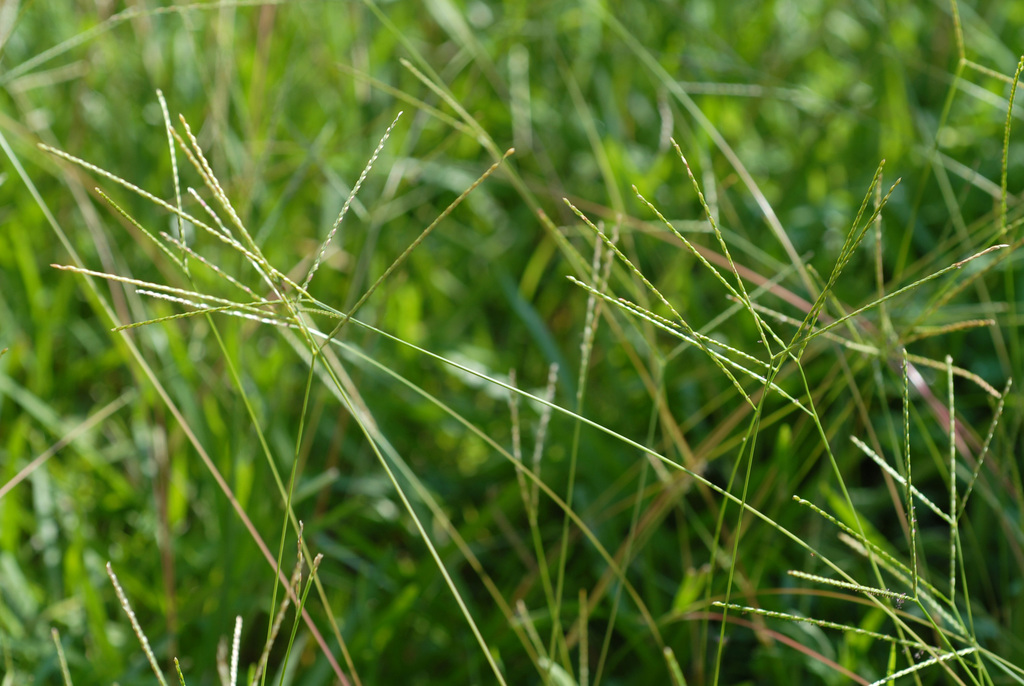
Axonopus fissifolius, known as Common Carpetgrass, narrow-leaved carpetgrass or Louisiana grass, is a low, creeping, warm-season grass native to the southeastern United States, Puerto Rico and much of tropical America. It spreads by flat runners that root at the nodes and knit into a dense, light green mat, and in summer it sends up thin, wiry seed stalks with two to five finger-like spikes at the tip.
In the wild it grows in wet pine flatwoods, savannas, pond margins and moist, sandy openings across the Coastal Plain from Virginia to Texas. It is also one of the oldest lawn and pasture grasses of the South: it has been sold for low-maintenance lawns, roadsides and pastures on wet, acidic, infertile soils, where it often outperforms more demanding turfgrasses. Some older references call it Axonopus affinis.
This page covers how to identify common carpetgrass and tell it from tropical carpetgrass and other lawn grasses, where it is native, how to grow it as a low-input lawn in the Southeast, and its role in native grasslands.
Identification
Carpetgrass is easiest to recognize in midsummer, when the lawn is dotted with tall, thin seed stalks. Up close, look for blunt-tipped leaves and flat, creeping runners.
Size & Form
It is a mat-forming perennial grass. Unmowed, the leafy mat is about 4 to 12 inches tall, and flowering stems rise 8 to 24 inches. It spreads by flattened stolons that root at each node, forming dense patches.
Leaves
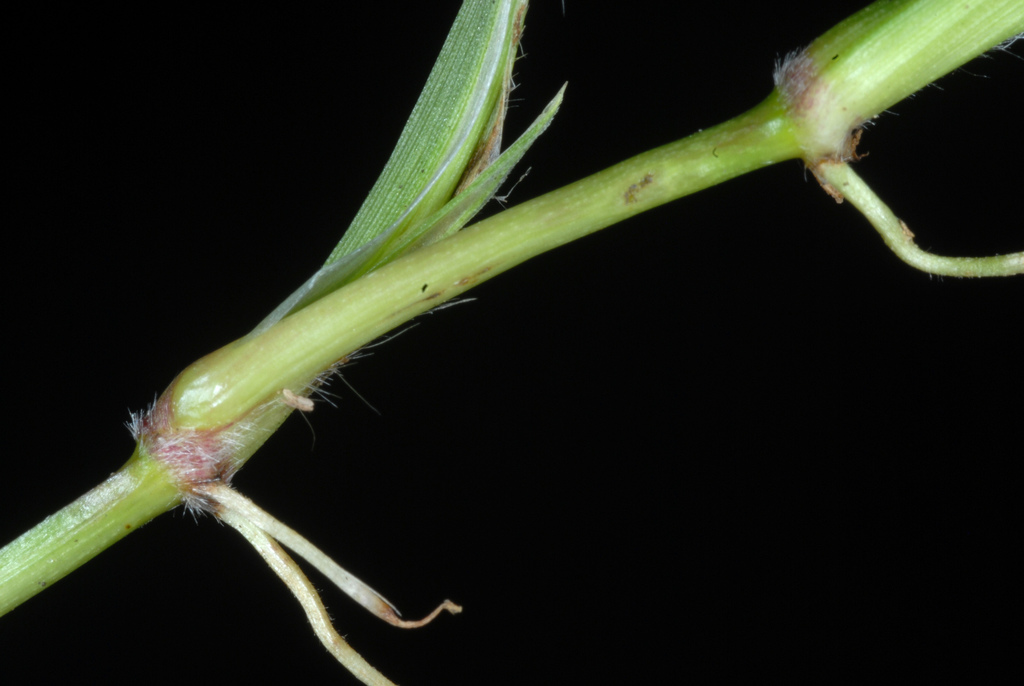
The leaf blades are light to medium green, flat or folded, about 1/12 to 1/4 inch wide and 2 to 6 inches long, with blunt, rounded tips. Fine hairs often fringe the margins near the base, and older leaves may turn purplish or reddish. The leaf sheaths are flattened and keeled.
Seed Heads
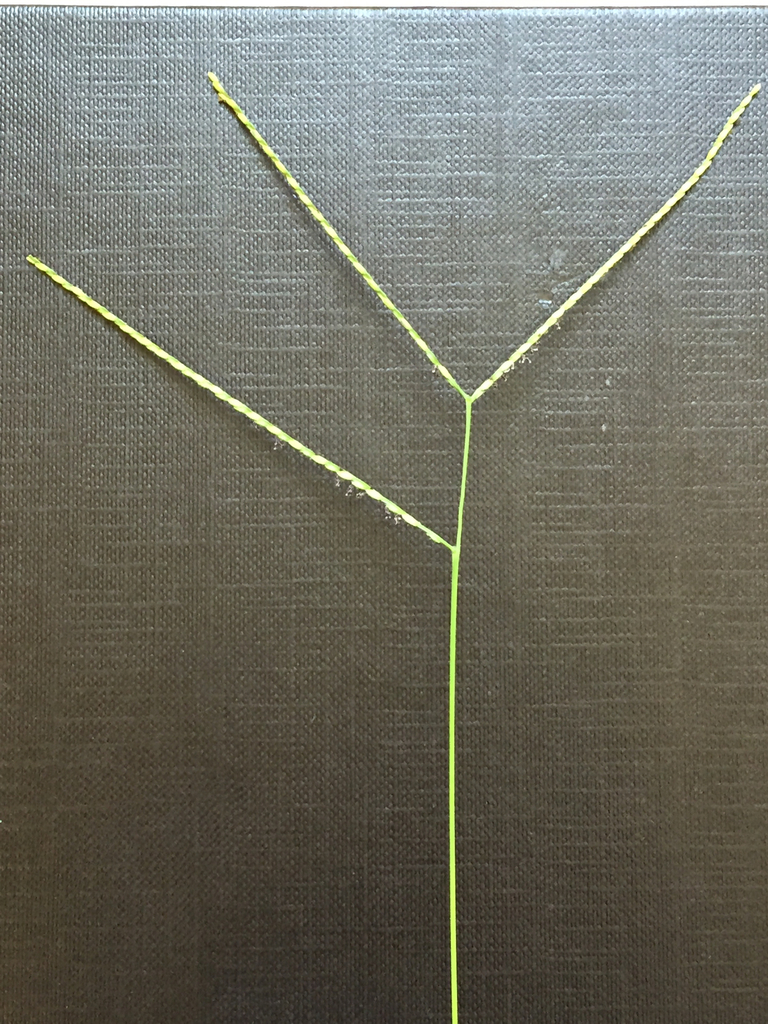
From late spring to fall, slender stalks carry two to five thin spikes (racemes), each about 1 to 3 inches long, clustered near the tip in a finger-like arrangement, with the upper two often paired. Tiny, flattened, oval spikelets about 1/12 inch long sit in two rows along one side of each spike.
Roots & Runners
The stolons are flat, smooth and often purplish, rooting and sending up leaf tufts at the nodes. Roots are fibrous and fairly shallow, which is why carpetgrass prefers moist soil.
Similar Species
Tropical carpetgrass (Axonopus compressus), grown in south Florida and the tropics, has wider leaf blades, usually over 1/4 inch, hairier nodes and less cold tolerance. Centipedegrass (Eremochloa ophiuroides), an Asian lawn grass, has a single, unbranched spike-like seed head. St. Augustinegrass has much coarser, wider leaves. Crabgrasses (Digitaria) have similar finger-like seed heads but are annual clump-formers with pointed leaves.
Quick Facts
| Scientific Name | Axonopus fissifolius (Raddi) Kuhlm. (syn. Axonopus affinis) |
| Family | Poaceae (grass family) |
| Plant Type | Warm-season perennial grass, stoloniferous |
| Mature Height | 4–12 in (leaves); seed stalks 8–24 in |
| Mature Spread | Spreading mat |
| Growth Rate | Moderate |
| Sun Exposure | Full sun to part shade |
| Water Needs | Medium to high; moist to wet soil |
| Soil Type | Sandy or loamy, low-fertility soils; tolerates poorly drained ground |
| Soil pH | About 4.5–6.0 (acidic) |
| Bloom Time | June–October |
| Flower Color | Greenish; inconspicuous spikelets |
| Fall Color | Turns brown after frost |
| Fruit | Tiny grain in a flattened spikelet |
| Deer Resistant | Unknown; grazed by livestock |
| USDA Hardiness Zones | 7b–11 |
Native Range
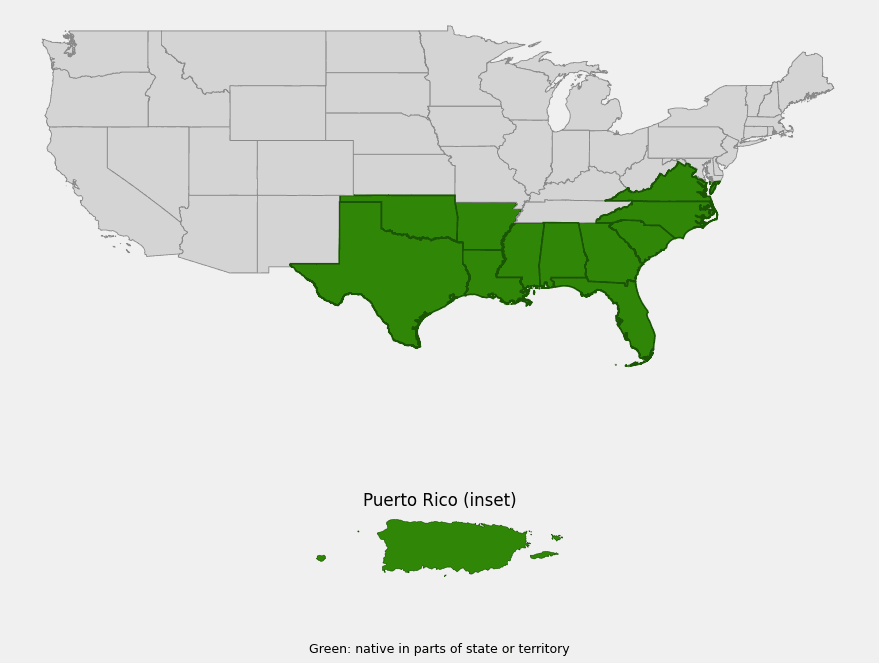
USDA PLANTS lists common carpetgrass as native in Alabama, Arkansas, Florida, Georgia, Louisiana, Mississippi, North Carolina, Oklahoma, South Carolina, Texas, Virginia and Puerto Rico. In the mainland United States it is a plant of the Atlantic and Gulf Coastal Plain, from southeastern Virginia to eastern Texas, extending inland into southern Arkansas and southeastern Oklahoma. Its wider native range extends through the Caribbean, Mexico, Central America and South America.
USDA also lists Hawaii and California. In Hawaii it is introduced, and the California record is outside its natural range and represents introduced plants, so the map shows neither. Carpetgrass has also been introduced as a pasture grass in Australia, Africa, Asia and the Pacific islands, where it is sometimes a weed.
In the wild it grows in moist to wet, acidic, sandy soils: wet pine flatwoods and savannas, the edges of ponds, bogs and ditches, low pastures and moist, sunny openings. It thrives where soils are too wet and infertile for most lawn grasses.
📋 Regional plant lists featuring Common Carpetgrass: Alabama, Georgia & Mississippi · Arkansas, Louisiana, Eastern Oklahoma & Eastern Texas · North & South Florida · Maryland, Virginia & West Virginia · North & South Carolina · Puerto Rico · South & West Texas
Growing & Care Guide
Common carpetgrass is a native, low-input lawn grass for the southern Coastal Plain. It does not make the finest lawn, but on wet, sandy, acidic soils where centipedegrass and St. Augustinegrass struggle, it forms a dense, low-maintenance turf with little fertilizer. Seed is widely sold, and sod is available in some areas.
Light
Grow it in full sun to part shade. It tolerates more shade than bermudagrass but thins out under dense trees.
Soil & Water
It is at its best in moist, sandy, acidic soils, including low spots that stay damp. It does poorly on dry, droughty sands and on alkaline soils, and turns brown quickly in drought unless watered. Water deeply during long dry spells.
Planting Tips
Sow seed in late spring or early summer, once soil temperatures are above about 65°F, at about 1 1/2 to 2 pounds per 1,000 square feet, and keep the seedbed moist until it is established. It can also be planted from sod or sprigs. It is not suited to areas north of its native range, where winters thin it out.
Pruning & Maintenance
Mow at about 1 to 2 inches. It needs little fertilizer: about 1 pound of nitrogen per 1,000 square feet per year is plenty, and too much encourages weeds and disease. The main drawback is its abundant summer seed stalks, which grow quickly and look untidy; mowing every 5 to 7 days in midsummer keeps them down. It tolerates only light foot traffic.
Propagation
It reseeds readily and spreads by stolons. Patch bare areas with plugs or sprigs, or overseed in early summer.
Landscape Uses
- Low-input lawns: a native turf for wet, acidic, sandy soils in the Coastal Plain
- Roadsides and ditches: stabilizes moist banks and swales with little care
- Pastures: a long-used grazing grass on wet, infertile soils
- Erosion control: its stolons knit soil on damp slopes and drainage ways
- Native grassland restoration: part of the groundcover of wet pine flatwoods and savannas
Wildlife & Ecological Value
In its native habitats, carpetgrass is a small part of the diverse groundcover of wet pine savannas and flatwoods.
For Pollinators
It is wind-pollinated and offers little to bees. Its leaves, like those of many southern grasses, may be eaten by the caterpillars of grass-feeding skippers and other insects.
For Birds
Sparrows, doves, quail and other seed-eating birds eat the small seeds, and turkeys forage in carpetgrass openings for seeds and insects.
For Mammals
Cattle, deer, rabbits and other grazers eat the leaves, which are most nutritious when young.
Ecosystem Role
Its dense mats protect wet, sandy soils from erosion, and it recovers quickly after the frequent fires that maintain southern pine savannas.
Cultural & Historical Uses
Carpetgrass was one of the most widely planted pasture and lawn grasses in the Gulf South in the early 1900s, especially in Louisiana, which is the origin of its name “Louisiana grass.” It was valued because it spread on its own over cutover pine lands and wet pastures.
Botanists long recognized two common carpetgrasses in the United States: common carpetgrass, long called Axonopus affinis and now included in Axonopus fissifolius, and the more tropical Axonopus compressus. The name Axonopus means “axis foot,” and fissifolius means “split-leaved.”
Outside the Americas, where it was introduced for pasture, carpetgrass can spread into natural grasslands and is regarded as a weed in parts of Australia and the Pacific, including Hawaii. Plant it only within its native range.
Frequently Asked Questions
Is carpetgrass a good lawn grass?
In the right place, yes. On wet, acidic, sandy soils in the southern Coastal Plain it makes a dense, low-maintenance lawn with little fertilizer. It does poorly in drought, alkaline soil, heavy traffic and cold winters, and its summer seed stalks need frequent mowing.
Is common carpetgrass native?
Yes. It is native to the southeastern United States from Virginia to Texas, to Puerto Rico and to tropical America. It is introduced in Hawaii and in other parts of the world.
What is the difference between common and tropical carpetgrass?
Common carpetgrass (Axonopus fissifolius) has narrower leaves and is more cold tolerant. Tropical carpetgrass (Axonopus compressus) has wider leaves and is limited to frost-free areas such as south Florida.
How do I get rid of carpetgrass seed heads?
Mow every 5 to 7 days during summer at 1 to 2 inches, before the stalks lengthen. Avoid heavy nitrogen fertilizer, which encourages fast growth without reducing seed heads.
Carpetgrass vs. centipedegrass: which should I plant?
Centipedegrass (from Asia) gives a finer lawn on well-drained acidic soils. Carpetgrass is the native choice for wetter, poorly drained or infertile sites where centipedegrass declines.

Looking for a nursery that carries Common Carpetgrass?
Browse our native plant nursery directory: Alabama & Arkansas · Florida & Georgia · Louisiana & Mississippi · North Carolina & Oklahoma · South Carolina, Texas & Virginia

