
Acorn Peperomia (Peperomia tetraphylla)
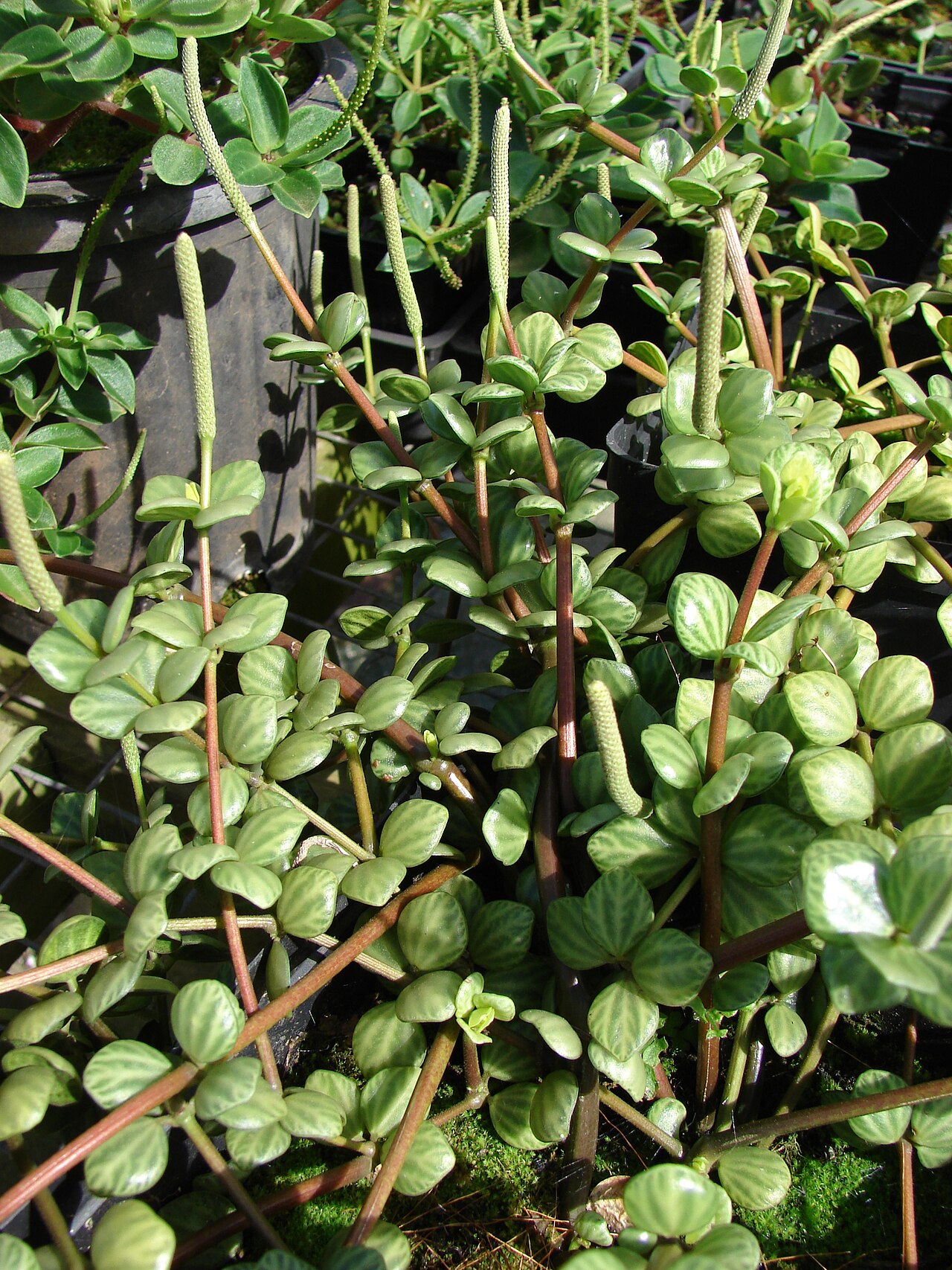
Peperomia tetraphylla, known as Acorn Peperomia, four-leaved peperomia or, in Hawaiian, ʻalaʻala wai nui, is a small, creeping succulent herb of the pepper family. Its thick, rounded leaves grow in neat whorls of three or four along trailing stems, and slender, tail-like flower spikes rise above them. The species name tetraphylla means “four leaves.”
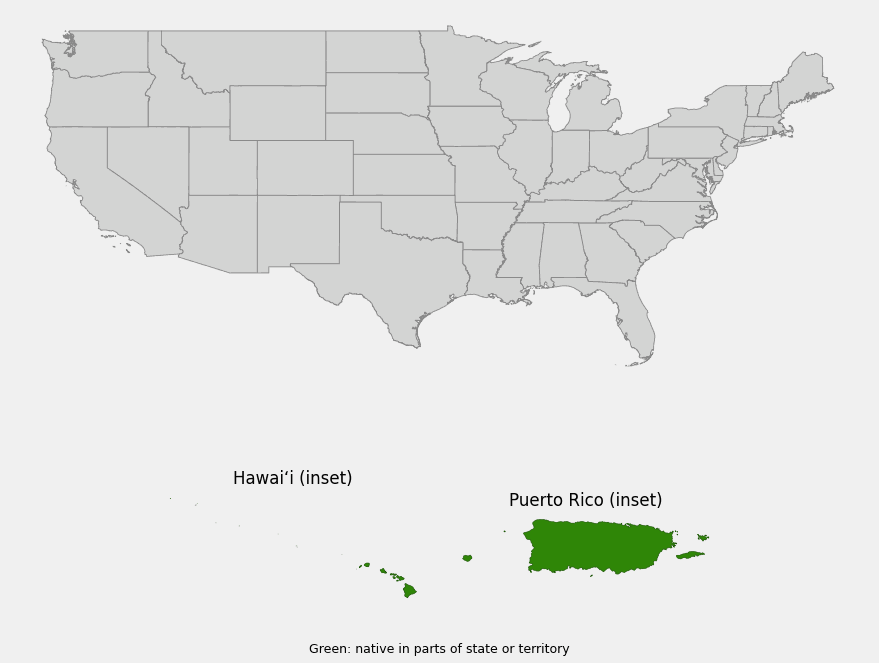
In the United States it is native to both Hawaiʻi and Puerto Rico, where it grows on mossy logs, tree trunks, rocks and forest floors in moist and wet forests. It is indigenous rather than endemic: its natural range is one of the widest of any peperomia, spanning tropical and subtropical regions of the Americas, Africa, Asia, Australia and the Pacific islands.
Peperomias are among the most popular houseplants, and this small, trailing species is grown for terrariums, hanging baskets and windowsills. This page covers how to identify acorn peperomia, its native range, how to grow it outdoors in zones 10 to 12 or as a houseplant, and its place in Hawaiian culture.
Identification
Acorn peperomia is a small, low plant easily recognized by its tiny, fleshy leaves in whorls and its upright, tail-like flower spikes.
Size & Form
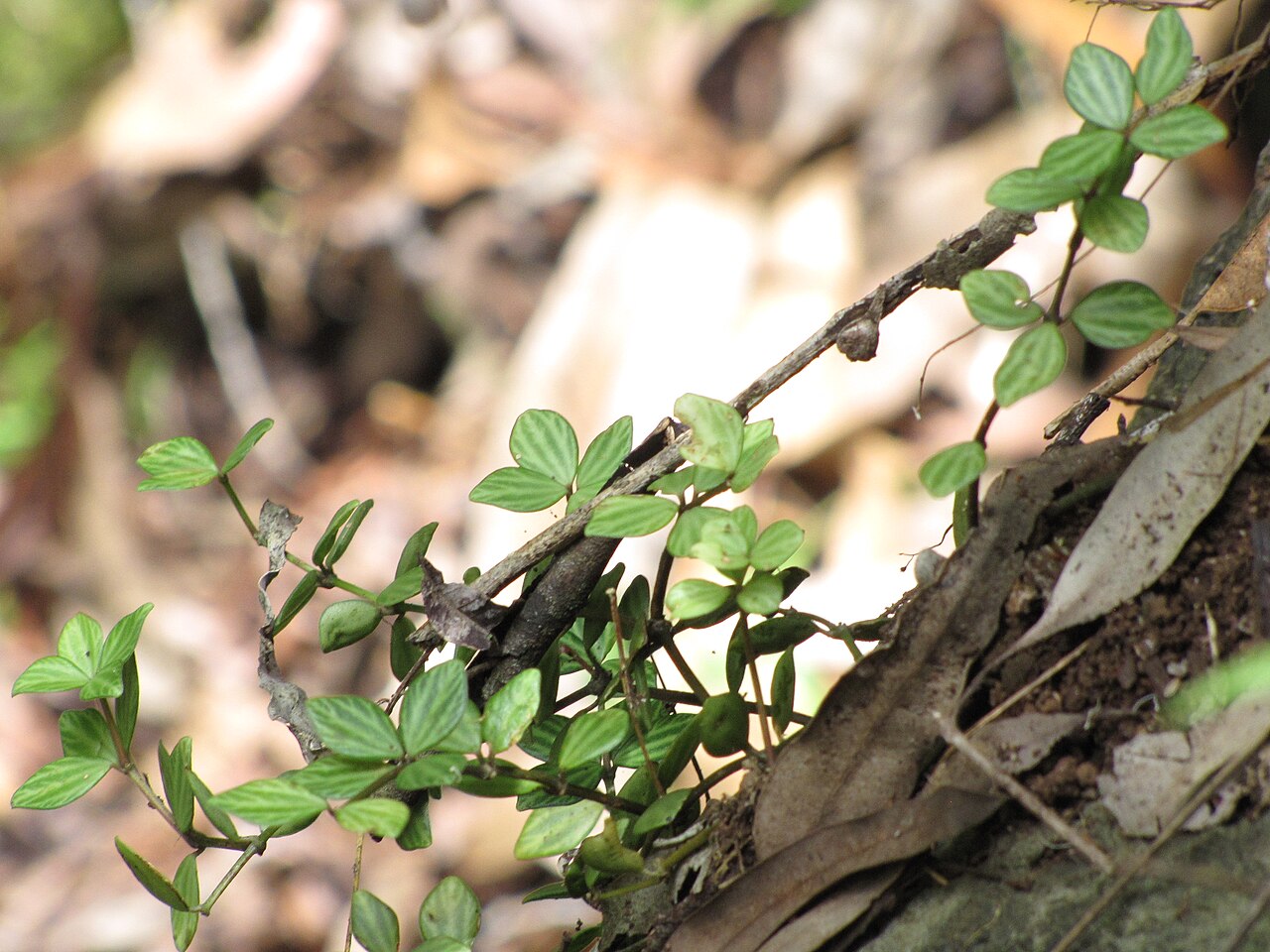
It is a small, succulent perennial herb, usually 2 to 8 inches tall, with creeping or trailing stems that root at the nodes and can form mats. It often grows as an epiphyte on trees and logs, or on rocks and banks.
Leaves
The leaves are borne in whorls of three or four, or sometimes opposite near the stem tips. They are small, about 1/4 to 3/4 inch long, thick and fleshy, elliptic to nearly round, dark to medium green on top and sometimes reddish beneath, with three faint, slightly sunken veins visible on the upper surface. They are usually somewhat hairy along the edges and tips.
Flowers
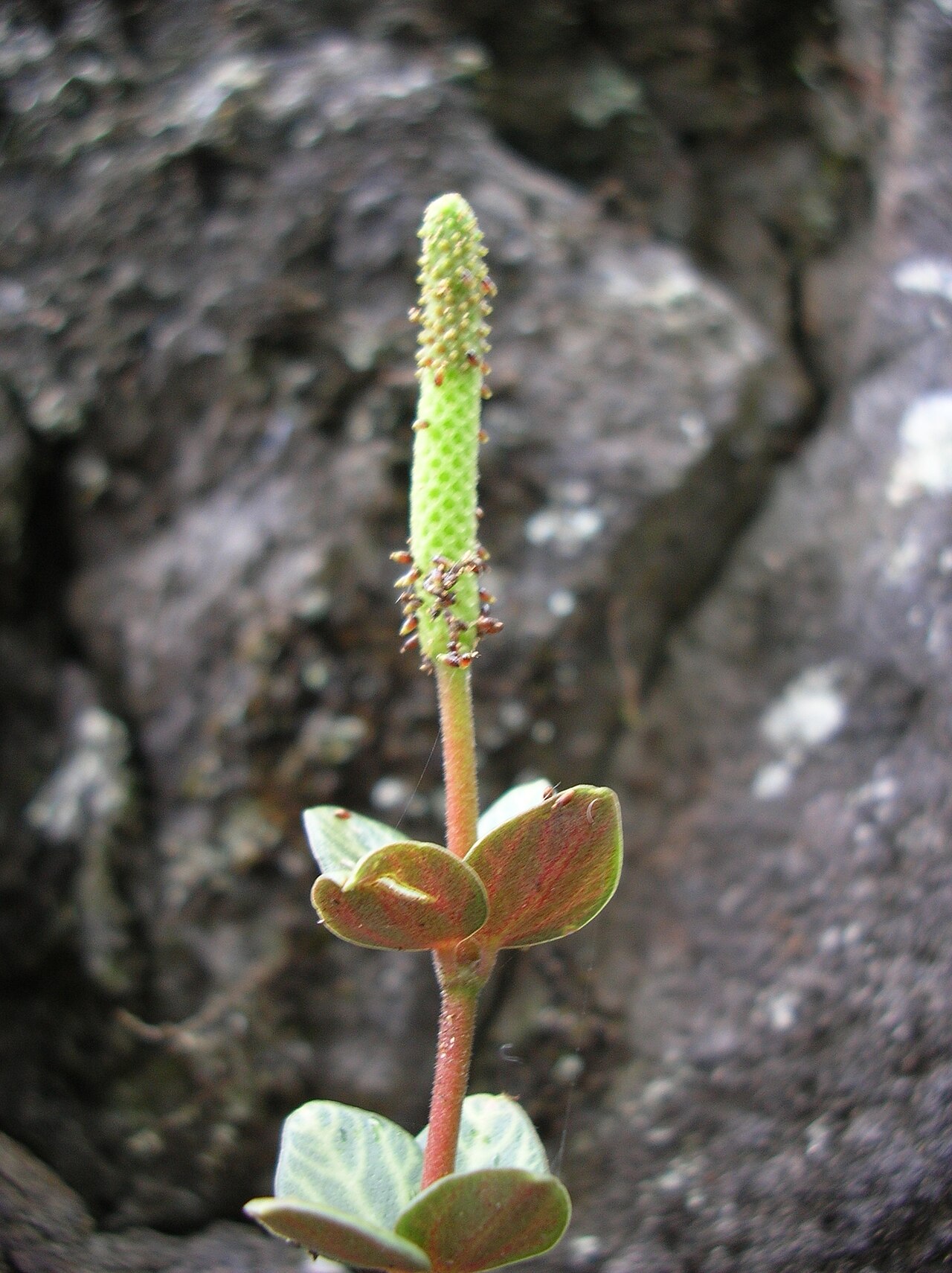
The flowers are tiny and lack petals. They are packed tightly along slender, green to reddish spikes about 1 to 3 inches long, held upright at the tips of the stems on short stalks. They resemble small green tails or candles more than flowers.
Fruit
The minute, round to egg-shaped fruits form along the spike and are sticky, so they cling to birds’ feathers and feet, which helps the plant spread to new trees and islands.
Similar Species
Hawaiʻi has many native peperomias, most of them endemic and many with larger, flatter leaves; telling them apart can require a close look at the leaf shape, hairiness and fruit. In Puerto Rico, trailing jade peperomia has round, flat, coin-like leaves in pairs, and spoonleaf peperomia and Florida peperomia are larger plants with big, glossy leaves. The weedy pepper elder is an annual with soft, translucent stems and heart-shaped leaves.
Quick Facts
| Scientific Name | Peperomia tetraphylla (G. Forst.) Hook. & Arn. |
| Family | Piperaceae (pepper family) |
| Plant Type | Small, creeping succulent perennial herb, often epiphytic |
| Mature Height | 2–8 in |
| Mature Spread | 6–12 in, trailing |
| Growth Rate | Slow to moderate |
| Sun Exposure | Part shade to shade; bright indirect light indoors |
| Water Needs | Low to medium; let soil dry slightly between waterings |
| Soil Type | Very well-drained, airy mix; moss, bark or rocky soil |
| Soil pH | About 6.0–7.0 |
| Bloom Time | Mostly spring–summer; spikes can appear year-round |
| Flower Color | Greenish to reddish spikes |
| Fall Color | None; evergreen |
| Fruit | Tiny sticky fruits on the spike |
| Deer Resistant | Unknown; usually grown out of reach indoors |
| USDA Hardiness Zones | 10–12 (houseplant elsewhere) |
Native Range
USDA PLANTS lists acorn peperomia as native in Hawaiʻi and Puerto Rico. In Hawaiʻi it is an indigenous species found on all the main islands, mostly in mesic to wet forests and on mossy trees and rocks at middle to upper elevations. In Puerto Rico it grows in humid montane forests, on tree trunks, rocks and mossy banks.
Its native range is exceptionally wide. It occurs from Mexico, Central America and the Caribbean through tropical South America, and in tropical Africa, Madagascar, India, Sri Lanka, Southeast Asia, China, eastern Australia, New Zealand and many Pacific islands. It is considered introduced on Easter Island.
Its sticky fruits, which cling to birds, are thought to explain how a small forest herb spread across so many oceans and islands.
📋 Regional plant lists featuring Acorn Peperomia: Hawaii · Puerto Rico
Growing & Care Guide
Acorn peperomia is an easy, compact plant for shady, frost-free gardens and for indoor growing. Native plant growers in Hawaiʻi sometimes offer it, and it is sold by houseplant specialists. Note that the popular hybrid peperomia sold as ‘Hope’ is often labeled with this name but is generally considered a hybrid of other species.
Light
Outdoors in zones 10 to 12, give it part shade or bright shade, such as under trees or on a shaded rock wall. Indoors, place it in bright, indirect light, such as near an east window. Strong direct afternoon sun scorches the leaves, while very low light makes stems stretch.
Soil & Water
Like many peperomias, it stores water in its fleshy leaves and rots if kept soggy. Use a very well-drained, airy mix, such as potting soil with plenty of bark, perlite or orchid mix. Water when the top inch of soil is dry, and less in winter. It enjoys moderate to high humidity, which is why it does well in terrariums.
Planting Tips
Grow it in a shallow pot, hanging basket or terrarium, or outdoors on mossy logs, rocks or tree fern trunks in shady Hawaiian gardens. Protect it from temperatures below about 50°F (10°C). Fertilize lightly during the growing season.
Pruning & Maintenance
Pinch back long stems to keep it bushy and use the cuttings to fill out the pot. Repot only when the roots fill the container; it prefers being slightly root-bound.
Propagation
It roots very easily from stem cuttings with a few nodes, set in moist potting mix or sphagnum moss. Single leaves with a bit of stalk can also root. Seeds are tiny and rarely used.
Landscape Uses
- Houseplant: a compact, trailing plant for bright windowsills and shelves
- Terrariums: its small size and love of humidity suit closed and open terrariums
- Hanging baskets: trailing stems spill over the edges of small baskets
- Hawaiian native gardens: a groundcover for shady rocks, logs and tree fern trunks
- Puerto Rico gardens: a small native epiphyte for shaded, humid garden corners
Wildlife & Ecological Value
Acorn peperomia is a small but widespread member of the forest floor and epiphyte community in Hawaiʻi and Puerto Rico.
For Pollinators
The tiny, petal-less flowers are visited by small insects, but peperomias are thought to be largely self-pollinating.
For Birds
Birds pick up the sticky fruits on their feathers and feet as they move through the forest, carrying them to new trees, logs and even other islands.
For Mammals
It has little documented value to mammals.
Ecosystem Role
As an epiphyte and groundcover, it helps form the mossy, moisture-holding layer on trees, logs and rocks in wet forests, which shelters insects, snails and other small animals.
Cultural & Historical Uses
In Hawaiʻi, native peperomias are known as ʻalaʻala wai nui, and this species is one of them. They are recorded among the plants used in traditional Hawaiian medicine. They are part of the native forest understory that Hawaiian cultural practitioners and restoration groups work to protect.
The species was first described as Piper tetraphyllum by Georg Forster, a naturalist on Captain James Cook’s second voyage, and moved to Peperomia in 1832 by William Hooker and George Arnott. Several varieties are recognized across its wide range.
Safety note: peperomias are generally considered non-toxic to people, cats and dogs, which makes them popular choices for homes with pets. Still, discourage pets and children from chewing on any houseplant.
Frequently Asked Questions
Is acorn peperomia native to the United States?
Yes. It is native to Hawaiʻi, where it grows on all the main islands, and to Puerto Rico. It is indigenous to both, meaning it arrived naturally and also grows wild across much of the tropics.
How do I care for acorn peperomia as a houseplant?
Give it bright, indirect light, a very well-drained, airy potting mix, and water when the top inch of soil is dry. It likes humidity and warm temperatures and does well in terrariums. Avoid overwatering, which causes rot.
Is Peperomia tetraphylla the same as Peperomia ‘Hope’?
Not exactly. Peperomia ‘Hope’ is often sold under this name, but it is generally considered a hybrid of other peperomia species. True Peperomia tetraphylla is a smaller plant with leaves in whorls of three or four.
Is acorn peperomia safe for cats and dogs?
Peperomias are generally considered non-toxic to cats, dogs and people. Discourage pets from chewing on it anyway, since any plant can cause mild stomach upset.
How do I propagate acorn peperomia?
Take stem cuttings with a few nodes and set them in moist potting mix or sphagnum moss in a warm, bright spot. They usually root within a few weeks. Leaf cuttings also work.

Looking for a nursery that carries Acorn Peperomia?
Browse our native plant nursery directory: Hawaii

