
Meadow Evening Primrose (Oenothera pilosella)
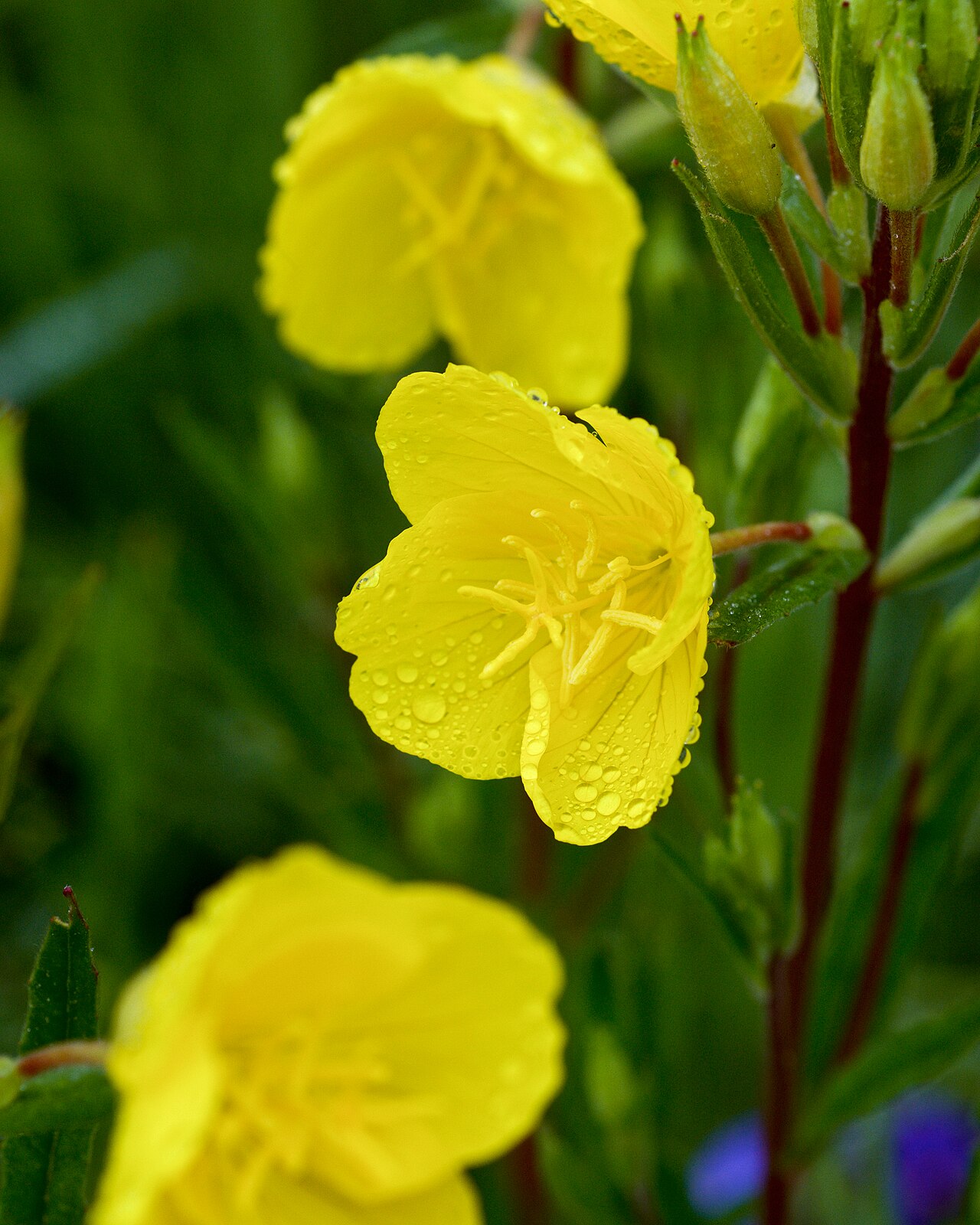
Oenothera pilosella, the Meadow Evening Primrose (also called meadow sundrops or prairie sundrops), is a hairy, colony-forming perennial wildflower of wet prairies, meadows and moist open ground in the central United States. In late spring and early summer it opens big, clear yellow, four-petaled flowers, 1½ to 2½ inches across, that glow in sunny meadows and ditches.
Despite its name, it is a day-flowering plant. It belongs to the “sundrops” group of evening primroses, which open their flowers in the morning, unlike the night-blooming, pale yellow flowers of common Evening Primrose (O. biennis). The species name pilosella means “a little hairy,” for the soft, spreading hairs on the stems and leaves.
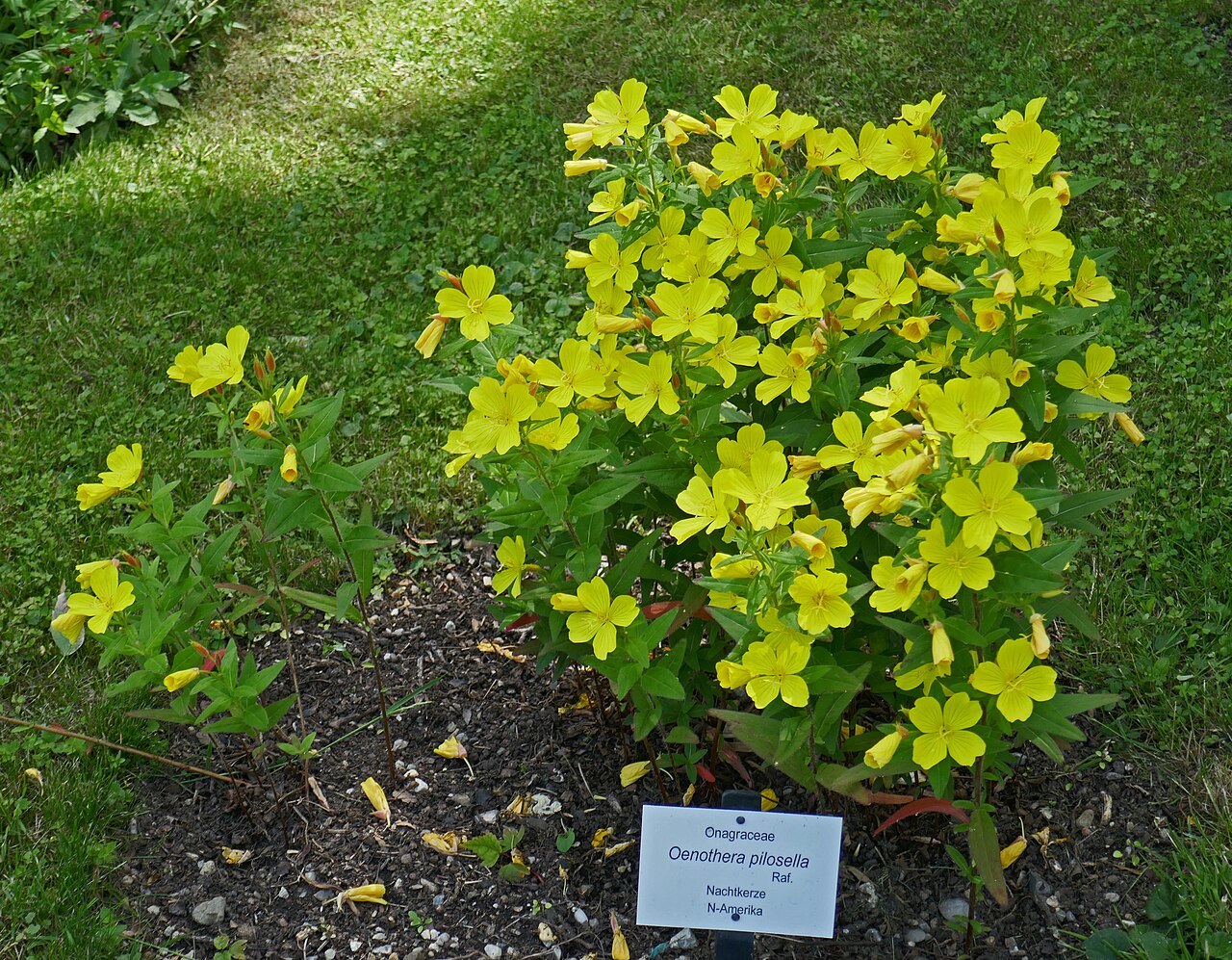
Meadow evening primrose spreads by underground runners to form patches, which makes it a cheerful, low-maintenance choice for rain gardens, moist meadows and pond edges. This guide covers how to identify it, where it is native (and where it has only escaped from gardens), how to grow it and its value to pollinators.
Identification
Meadow evening primrose is an upright perennial 1 to 2½ feet tall with hairy stems, narrow, hairy leaves and large, bright yellow, day-opening flowers in the upper leaf axils. Its club-shaped, four-angled seed capsules help separate it from other sundrops.
Stems & Leaves
In fall and winter, plants form flat rosettes of small, oval leaves that often turn reddish. In spring they send up one to several unbranched or sparingly branched stems, 1 to 2½ feet tall, covered with long, soft, spreading hairs and often tinged red. Stem leaves are alternate, lance-shaped to narrowly oval, 1½ to 4 inches long, softly hairy, with smooth or slightly wavy-toothed edges. Plants spread by slender underground runners and new rosettes.
Flowers
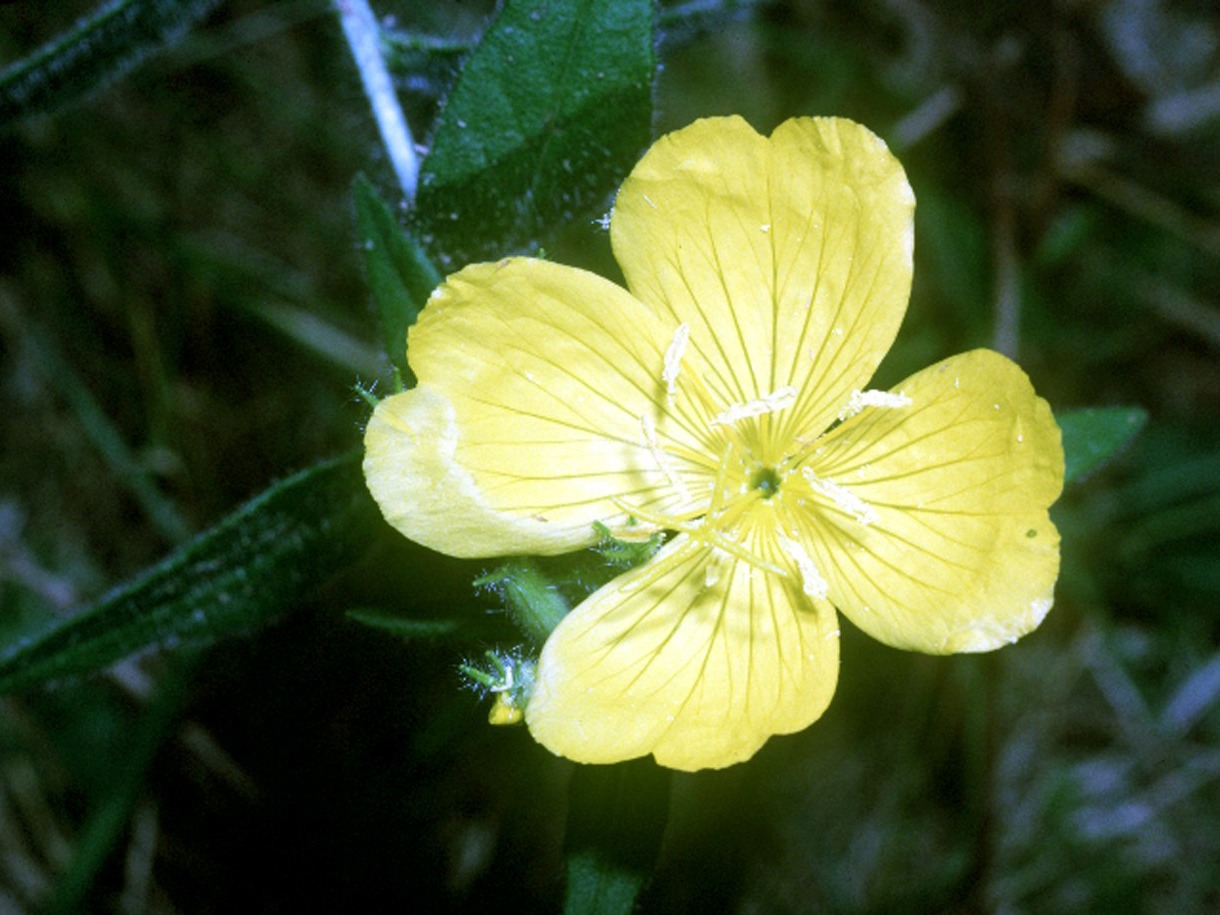
Flowers open in the morning from late May through July, singly in the axils of the upper leaves. They are 1½ to 2½ inches across, with four broad, shallowly notched, bright yellow petals with fine darker veins, eight stamens and a cross-shaped (four-lobed) stigma. The four sepals bend back together to one side. The floral tube and buds are hairy.
Fruit
The fruit is a club-shaped capsule ½ to ¾ inch long, with four narrow wings or ridges, a slender stalk-like base and long hairs. It splits from the top in late summer to release many tiny seeds.
Look-alikes
Sundrops (O. fruticosa) is very similar but usually grows in drier, often shadier sites, and its hairs are shorter, finer and often curled or glandular rather than long and spreading. Little sundrops (O. perennis) has much smaller flowers, under 1 inch across, in a nodding cluster. Common evening primrose is a taller biennial whose pale yellow flowers open in the evening.
Quick Facts
| Scientific Name | Oenothera pilosella Raf. |
| Family | Onagraceae (evening primrose family) |
| Plant Type | Herbaceous perennial wildflower, spreading by runners |
| Mature Height | 1–2½ ft |
| Mature Spread | 1–2 ft; forms colonies |
| Growth Rate | Moderate to fast |
| Sun Exposure | Full sun to partial shade |
| Water Needs | Medium to high; moist to wet soil |
| Soil Type | Loam, clay or silt; tolerates poorly drained soil |
| Soil pH | About 5.5–7.5 |
| Bloom Time | Late May–July |
| Flower Color | Bright yellow |
| Fall Color | Basal rosettes turn reddish |
| Fruit | Club-shaped, four-winged hairy capsule |
| Deer Resistant | Moderate |
| USDA Hardiness Zones | 4–8 |
Native Range
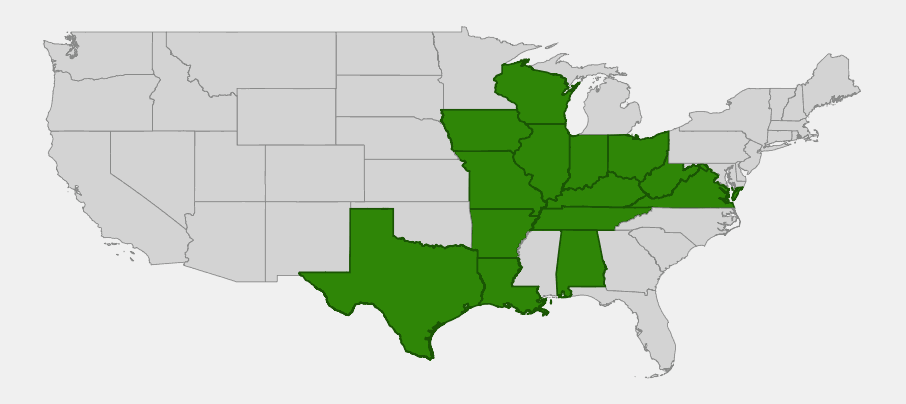
Meadow evening primrose is native to the central and east-central United States and adjacent southern Ontario and Quebec. Within the U.S. its native range runs from Wisconsin, Iowa, Illinois, Indiana and Ohio south through Missouri, Kentucky, Tennessee and West Virginia to Arkansas and Louisiana, with scattered populations in Alabama and Virginia and a single outlying record in Texas (Galveston County). Plants of the Grand Prairie of eastern Arkansas, with stalkless flowers, are sometimes recognized as a separate, rare subspecies, O. pilosella subsp. sessilis.
Because it was a popular garden plant in the 1800s, it has escaped from cultivation far beyond its native range. Go Botany (Native Plant Trust) treats it as introduced in New England, and NatureServe lists it as exotic in states including New York, Pennsylvania, New Jersey (for the typical subspecies), Michigan and Mississippi. USDA PLANTS includes several of these states in its map, but this page shows only the states where it is considered native: Connecticut, Massachusetts, Maine, New Hampshire, Vermont, New York, Pennsylvania, New Jersey, Michigan and Mississippi have been left out.
In its native range it grows in wet and mesic prairies, wet meadows, low fields, the edges of marshes and bottomland woods, ditches and roadsides. It is uncommon to rare at the edges of its range: West Virginia and the Canadian provinces consider it rare, and the Arkansas Grand Prairie populations are of conservation concern as most of that prairie has been converted to farmland.
📋 Regional plant lists featuring Meadow Evening Primrose: Illinois, Iowa & Missouri · Ohio & Indiana · Michigan, Wisconsin & Eastern Minnesota · Kentucky & Tennessee · Maryland, Virginia & West Virginia · Alabama, Georgia & Mississippi · Arkansas, Louisiana, Eastern Oklahoma & Eastern Texas
Growing & Care Guide
Meadow evening primrose is an easy, adaptable perennial for sun and moist soil. It spreads by runners into loose colonies, so give it room in a meadow, rain garden or pond edge, or pair it with sturdy neighbors in a mixed border. Inside its native range, it is a great choice for wet spots where many perennials fail. Outside its native range, especially in New England, plant native sundrops instead.
Light
Full sun gives the most flowers. It tolerates partial shade, but flowers less there.
Soil & Water
It thrives in moist to wet, fertile loam or clay, and tolerates poorly drained soil and short flooding. Once established it handles average garden moisture, but it does not like long, hot droughts in sandy soil.
Planting Tips
Set plants 12 to 18 inches apart in spring or fall. In a border, give it neighbors that can hold their own, such as bee balm, mountain mint and coneflowers, or plant it where its spread is welcome.
Pruning & Maintenance
Deadhead after the first flush to tidy plants and encourage a few more flowers, or leave the capsules for their winter interest. Pull or dig unwanted runners in spring to keep colonies in bounds. Basal rosettes remain over winter; don’t smother them with heavy mulch.
Propagation
Divide clumps or separate rooted rosettes in early spring or fall, which is the easiest method. Seed can be sown outdoors in fall or after a cold, moist stratification of about 60 days.
Landscape Uses
- Rain gardens: tolerates wet soil and short flooding
- Wet meadows and prairie restorations: bright early-summer color among grasses and sedges
- Pond and stream edges: spreads into loose, soil-holding colonies
- Pollinator gardens: large yellow flowers for bees in June
- Cottage borders: a colorful, easy perennial for moist beds
Wildlife & Ecological Value
Like other sundrops, meadow evening primrose supports a range of insects, from bees visiting its flowers to moths whose caterpillars feed on its leaves.
For Pollinators
Its flowers open in the morning and are visited by bumble bees, sweat bees and other native bees for pollen and nectar, as well as by butterflies and syrphid flies. The leaves host caterpillars of moths such as primrose moths (Schinia), which feed on evening primroses.
For Birds
Seed-eating birds such as goldfinches pick seeds from the opened capsules in late summer and fall, and the insects drawn to the flowers feed songbirds.
For Mammals
Rabbits and deer browse the foliage occasionally. Its colonies provide low cover for small mammals in wet meadows.
Ecosystem Role
As a colony-forming perennial of wet prairies and meadows, it helps cover and hold soil and adds early-summer floral resources between spring wildflowers and the late-summer prairie bloom.
Cultural & Historical Uses
The naturalist Constantine Rafinesque described Oenothera pilosella in the early 1800s. The genus name Oenothera is an ancient Greek plant name, and pilosella, “a little hairy,” refers to its hairy stems and leaves. Some older manuals placed the day-flowering sundrops, including this species, in a separate genus, Kneiffia.
Meadow evening primrose was popular in 19th-century gardens on both sides of the Atlantic, prized for its large, bright flowers and easy nature. That popularity is the reason it now grows wild in New England and other places outside its native range, where it persists along roadsides and in old fields near former gardens.
Several Native American groups used evening primroses for food and medicine, mostly the roots and seeds of the common evening primrose. Today meadow evening primrose is valued mainly as a native wildflower for wet prairie restorations and gardens in the central U.S.
Frequently Asked Questions
Does meadow evening primrose bloom at night?
No. Despite the name, it opens its flowers in the morning and is in bloom during the day. It belongs to the “sundrops” group of evening primroses.
Is meadow evening primrose native to New England?
No. It is native to the central and east-central U.S. Go Botany (Native Plant Trust) considers it introduced in New England, where it escaped from 19th-century gardens.
How is it different from sundrops (Oenothera fruticosa)?
The two are very similar. Meadow evening primrose usually grows in wetter sites and has long, soft, spreading hairs, while sundrops has shorter, finer, often curled or glandular hairs and often grows in drier soil.
Does meadow evening primrose spread?
Yes. It spreads by underground runners and new rosettes into loose colonies. It is easy to pull or divide to keep in bounds.
Is it good for wet soil?
Yes. It is one of the better flowering perennials for moist to wet soil, rain gardens and pond edges in full sun to partial shade.

Looking for a nursery that carries Meadow Evening Primrose?
Browse our native plant nursery directory: Alabama & Arkansas · Illinois, Indiana & Iowa · Kentucky, Louisiana & Missouri · Ohio · Tennessee, Texas & Virginia · West Virginia & Wisconsin

