
Vine-like Moonlight Cactus (Selenicereus spinulosus)
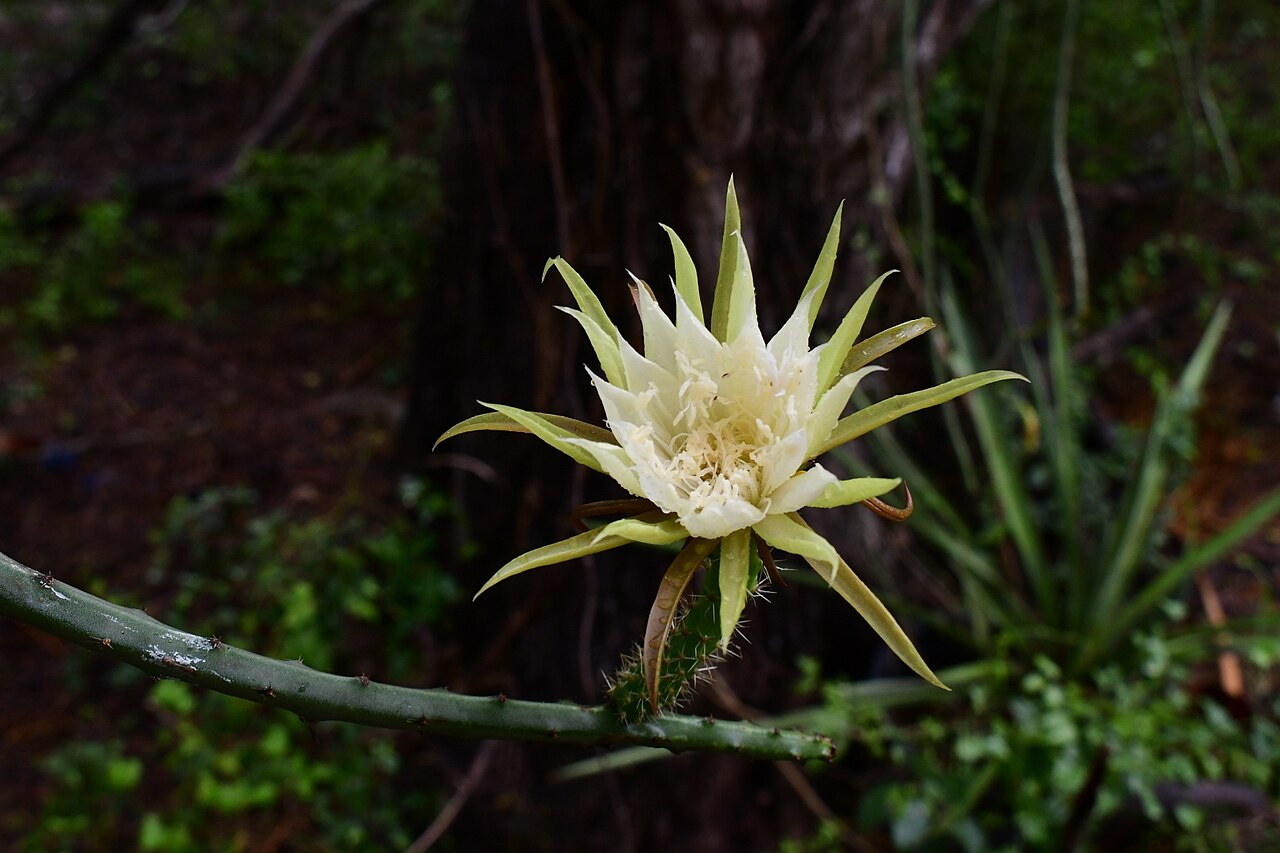
Selenicereus spinulosus, the Vine-like Moonlight Cactus (also called spiny moon cereus), is a climbing, night-blooming cactus of eastern Mexico that reaches the very southern tip of Texas. Its thin, ribbed green stems scramble over shrubs and up tree trunks, holding on with aerial roots, and in late spring and summer it produces large, fragrant white flowers that open at night.
It belongs to the same genus as the famous “queen of the night” (Selenicereus grandiflorus) and is a close relative of the dragon fruit cacti. In the United States it is one of the rarest native cacti. It has been recorded from the Lower Rio Grande Valley and other parts of South Texas, where it grows in dense thornscrub, and Texas populations are so scarce that some botanists considered it possibly extirpated in the wild. Naturalists have reported plants in South Texas brush in recent years, although some of these were grown from cuttings.
Because it is so rare in Texas, never collect wild plants or cuttings. It is easy to grow from cuttings of cultivated plants, which are widely shared among cactus growers. This guide covers how to identify it, where it grows, how to grow it from legally propagated stock and what it offers night-flying pollinators.
Identification
Vine-like moonlight cactus is a sprawling, climbing cactus with long, slender stems and large white night-blooming flowers. Look for thin stems with a few low ribs, tiny short spines and aerial roots, and spiny, hairless flower tubes.
Stems
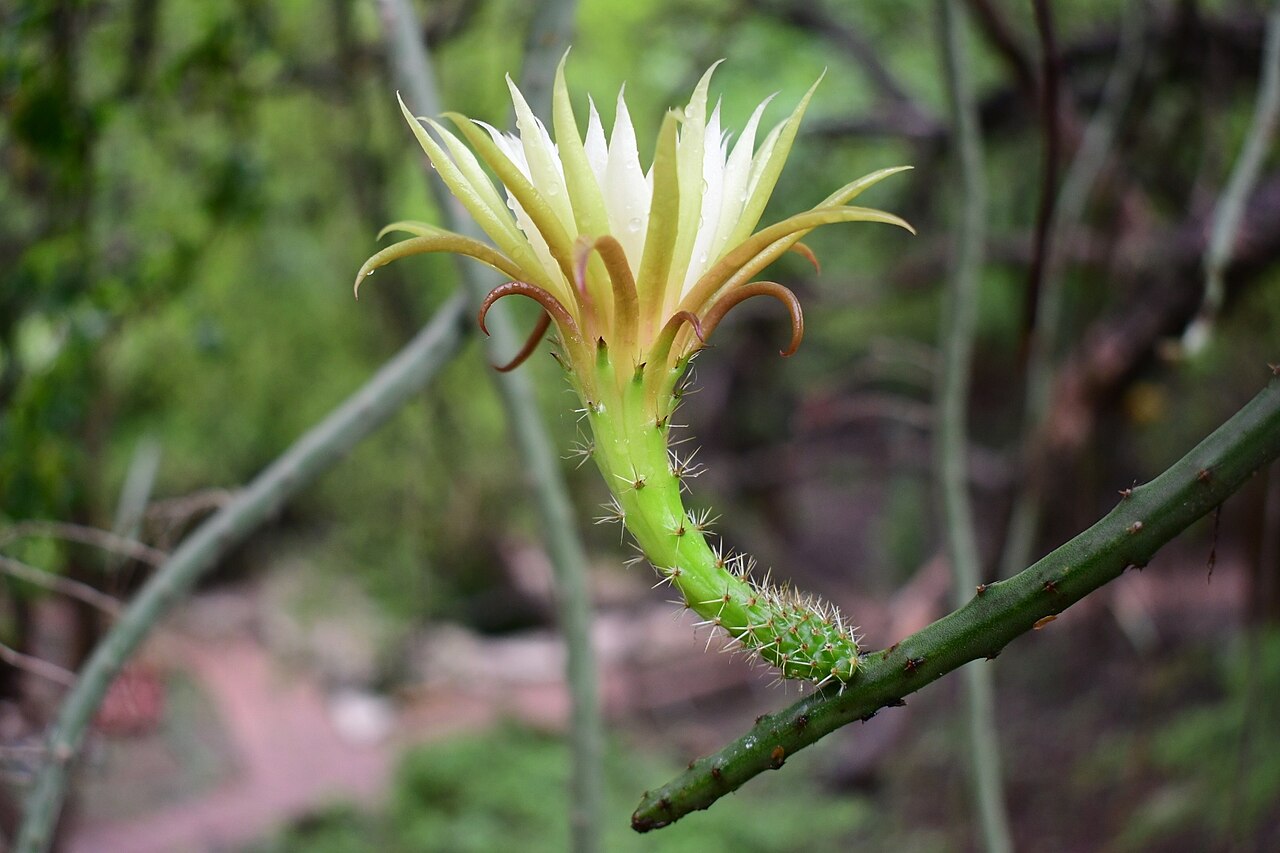
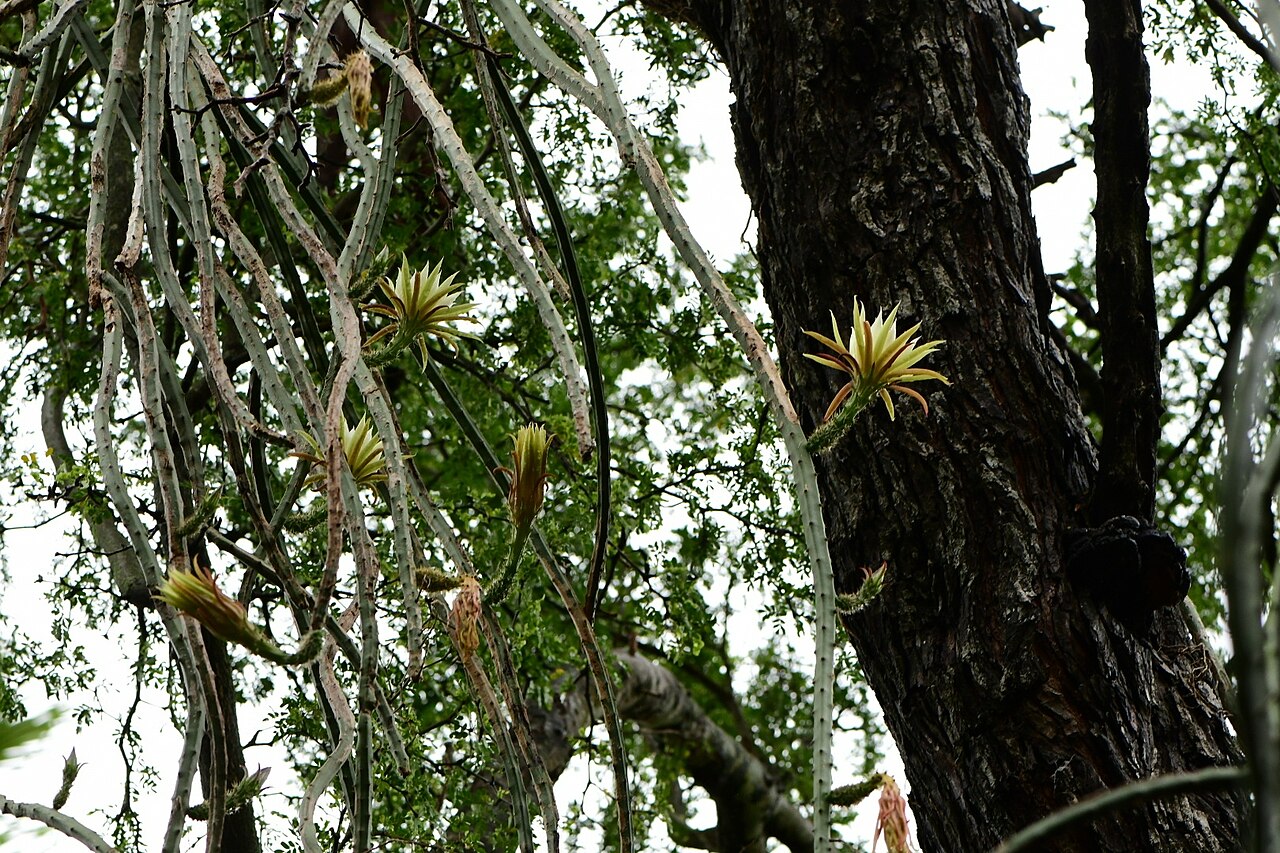
Stems are slender, about ¾ to 1¼ inches thick, light green and somewhat glossy, branching and clambering 3 to 16 feet through shrubs and trees or sprawling over rocks. Young stems have 4 to 6 (sometimes more) narrow ribs; older stems become nearly round. They put out aerial roots that cling to bark and rock.
Spines
The spine clusters (areoles) are small and spaced about ¾ inch apart along the ribs. Each carries 6 to 8 very short, needle-like spines only about 1/25 inch long, white or yellowish at first and turning dark. They are so small that the stems look almost spineless from a distance.
Flowers
Flowers form near the stem tips, mostly from late spring into summer. They are 3 to 5½ inches long and about 3 inches across. Inner petals are white, sometimes pinkish, and the narrow outer tepals are greenish to brownish. The long floral tube and ovary are covered with clusters of small brownish spines but no hairs. Flowers open in the evening and may stay open for a day or two.
Fruit
The fruit is a round, spiny, yellowish to reddish berry about 1 inch across, containing many small black seeds in juicy pulp.
Look-alikes
Triangle Cactus (Acanthocereus tetragonus) of the Texas coast has thicker stems with three or four broad, wing-like ribs and stout spines. Night-blooming Cereus (Peniocereus greggii) of West Texas and the desert Southwest has short, stiff, grayish stems that grow from a large tuberous root and do not climb. The cultivated queen of the night (S. grandiflorus) has much larger flowers with hairy flower tubes.
Quick Facts
| Scientific Name | Selenicereus spinulosus (DC.) Britton & Rose; syn. Cereus spinulosus DC. |
| Family | Cactaceae (cactus family) |
| Plant Type | Climbing or sprawling perennial cactus |
| Mature Height | Stems 3–16 ft long, climbing or trailing |
| Mature Spread | 3–10 ft |
| Growth Rate | Fast for a cactus |
| Sun Exposure | Partial shade to filtered sun |
| Water Needs | Low to moderate; drought tolerant |
| Soil Type | Well-drained sandy, rocky or limestone soil |
| Soil pH | About 6.5–8.5 |
| Bloom Time | Late spring–summer (mainly May–July), at night |
| Flower Color | White, sometimes pinkish; greenish-brown outer tepals |
| Fall Color | Evergreen stems |
| Fruit | Round, spiny yellowish to red berry, about 1 in |
| Deer Resistant | Fairly resistant; spiny stems |
| USDA Hardiness Zones | 9–11 |
Native Range
Vine-like moonlight cactus is native mainly to eastern Mexico, in Tamaulipas, Nuevo León, San Luis Potosí, Querétaro, Hidalgo and Veracruz, where it grows on limestone outcrops and in submontane scrub and dry forest of the Sierra Madre Oriental foothills, often climbing through trees and shrubs.
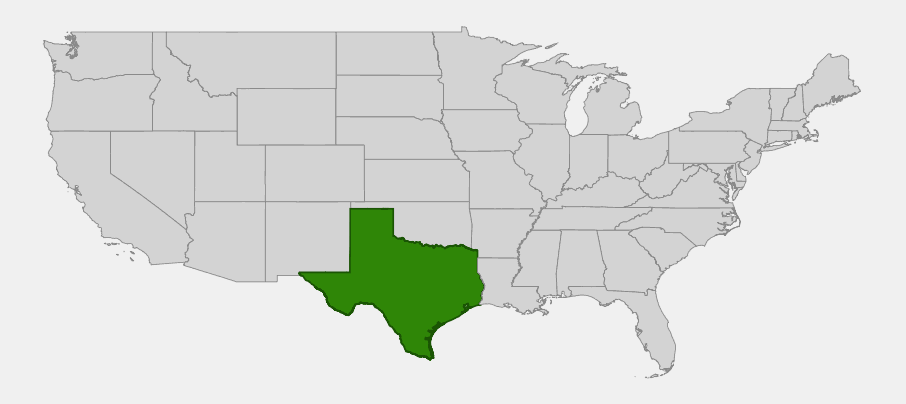
In the United States it is known only from South Texas. USDA PLANTS lists it as native in Texas. Historical collections came from the Lower Rio Grande Valley around Brownsville, and recent observations have been reported from scattered places in the Rio Grande Valley and the South Texas brush country. It grows in dense Tamaulipan thornscrub, climbing through Texas ebony, mesquite, hackberry and other shrubs and small trees.
Because so much of the native thornscrub of the Lower Rio Grande Valley has been cleared for agriculture and development, its Texas habitat is greatly reduced, and it is among the rarest cacti in the state. Some Texas plants seen today are cultivated or grown from cuttings, so wild status in Texas should be confirmed by experts. It is not found in East Texas.
📋 Regional plant lists featuring Vine-like Moonlight Cactus: South & West Texas
Growing & Care Guide
Vine-like moonlight cactus is an easy, fast-growing cactus for warm, nearly frost-free gardens and for containers anywhere. It is one of the easiest night-blooming cacti to bring into flower. Grow it only from cuttings or plants of cultivated origin. Never collect wild plants or cuttings in Texas, where it is extremely rare, or in Mexico, where collecting wild cacti is regulated.
Light
Partial shade or filtered sun suits it best, like the dappled light of the thornscrub where it climbs. It tolerates morning sun, but harsh afternoon sun in summer can yellow the stems.
Soil & Water
Use a fast-draining, gritty mix or sandy loam. Water regularly in spring and summer while it is growing and flowering, letting the soil dry between waterings, and keep it nearly dry in winter. It tolerates short dry periods well.
Planting Tips
Outdoors in zones 9b to 11, plant it at the base of a tree, fence or trellis it can climb, or let it spill over a wall. In colder areas, grow it in a hanging basket or pot with a support and bring it indoors or into a greenhouse when nights fall below about 40°F. Kept dry, it tolerates brief chills near freezing, but hard frost damages the stems.
Pruning & Maintenance
Trim long or straggly stems after flowering to keep it tidy; the cuttings root easily. Feed lightly with a cactus fertilizer during the growing season to encourage flowers.
Propagation
Take stem cuttings 6 to 12 inches long in spring or summer, let the cut ends dry for a week, then set them in barely moist, gritty soil. They root quickly, and plants about 3 feet long can flower. It can also be grown from seed.
Landscape Uses
- Moon and night gardens: large white, fragrant flowers that open after dark
- Trellis, fence or tree climber: in frost-free South Texas gardens
- Hanging baskets and containers: for patios and greenhouses elsewhere
- Native South Texas landscapes: with Texas ebony and other thornscrub plants
Wildlife & Ecological Value
Like other night-blooming cacti, vine-like moonlight cactus is adapted to pollination by nocturnal animals.
For Pollinators
Its large, pale, fragrant flowers open at night, a pattern typical of flowers pollinated by hawkmoths (sphinx moths), which hover in front of the flowers to sip nectar from the long floral tube. Bees may visit flowers that stay open into the morning.
For Birds
Birds such as mockingbirds, thrashers and other fruit-eating birds of the thornscrub eat the pulpy fruits and spread the seeds.
For Mammals
Small mammals and possibly coyotes and other animals eat fallen fruits, also helping to disperse seeds.
Ecosystem Role
As a climbing cactus in Tamaulipan thornscrub, it is part of the rich, layered vegetation of the Lower Rio Grande Valley, one of the most biodiverse and most heavily cleared habitats in Texas.
Cultural & Historical Uses
This cactus was first collected in Mexico by the Irish botanist Thomas Coulter in the late 1820s, without an exact locality. Augustin Pyramus de Candolle described it as Cereus spinulosus before he had seen its flowers; spinulosus means “with small spines.” It first flowered in cultivation in Europe in 1842. Nathaniel Lord Britton and Joseph Nelson Rose later placed it in their new genus Selenicereus, from the Greek selene, “moon,” for the night-blooming flowers.
Night-blooming cacti have long fascinated gardeners. Selenicereus species were grown in European conservatories in the 1800s, and people would gather in the evening to watch the flowers open. Vine-like moonlight cactus is among the easiest of the group to grow and flower, which keeps it popular among cactus collectors.
In South Texas, it is a reminder of how much of the Lower Rio Grande Valley’s native thornscrub has been lost. Protecting and restoring remaining brushland, as in the region’s wildlife refuges and preserves, helps rare plants like this one.
Frequently Asked Questions
Is vine-like moonlight cactus native to Texas?
Yes. It is native to eastern Mexico and South Texas, including the Lower Rio Grande Valley. It is very rare in Texas, and Texas populations have been considered possibly extirpated in the wild, though plants have been reported in South Texas in recent years.
When does vine-like moonlight cactus bloom?
Mainly in late spring and summer. The large white flowers open in the evening and are best seen at night or early in the morning.
Can I collect a cutting from a wild plant?
No. Wild plants in Texas are extremely rare and should never be cut or collected. Get cuttings or plants from cultivated stock, such as cactus societies and nurseries that propagate it.
How is it different from triangle cactus?
Vine-like moonlight cactus has thin stems with several low ribs and tiny spines. Triangle cactus has thicker, three- or four-winged stems with stout spines.
Can I grow it as a houseplant?
Yes. Grow it in a hanging basket or pot with a trellis, in bright indirect light or partial sun, and keep it drier and cool in winter. It flowers readily once stems are about 3 feet long.

Looking for a nursery that carries Vine-like Moonlight Cactus?
Browse our native plant nursery directory: Texas

