
Hairystem Spiderwort (Tradescantia hirsuticaulis)
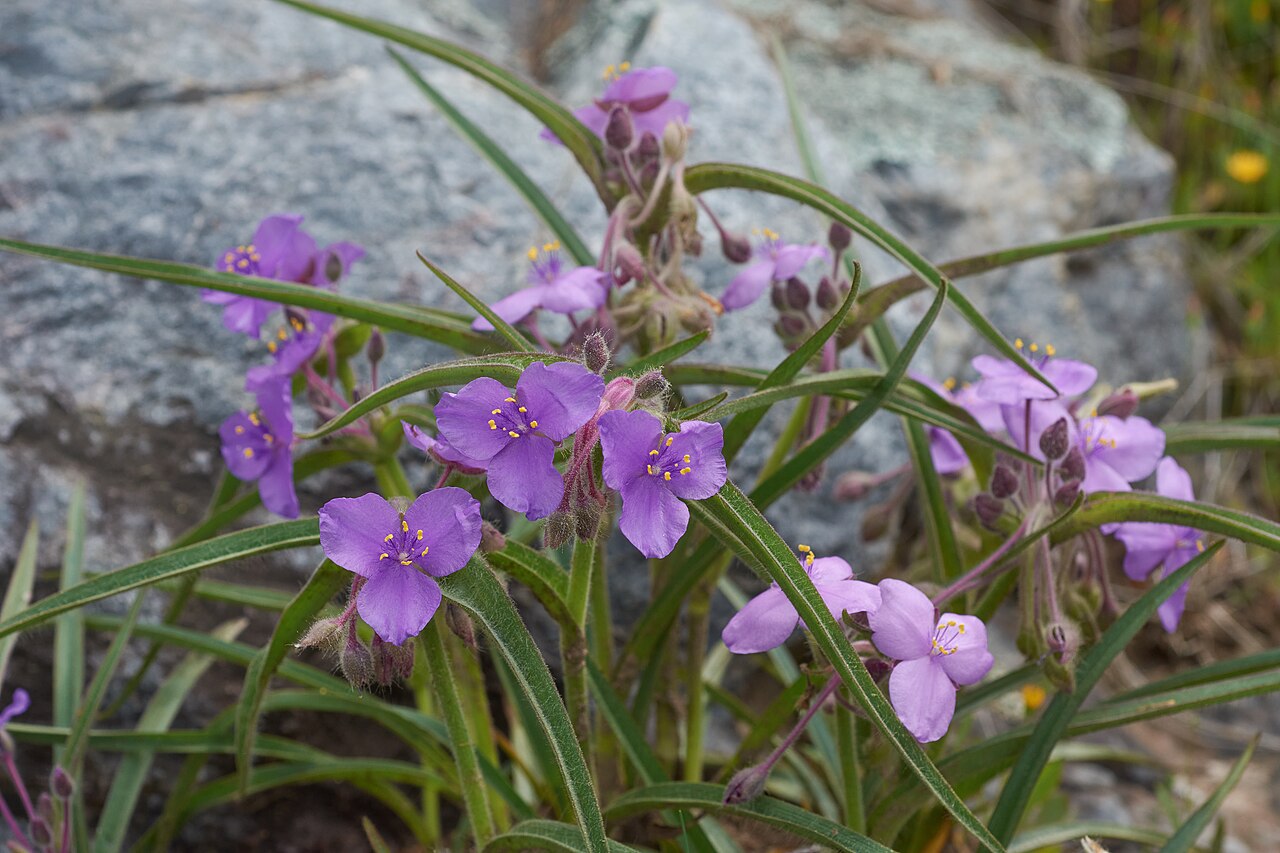
Tradescantia hirsuticaulis, the Hairystem Spiderwort (also called hairy-stemmed spiderwort), is a compact, early-blooming spiderwort of dry, rocky woods and outcrops in the southeastern United States. In spring it produces clusters of three-petaled flowers in shades of violet, blue-purple or lilac pink above clumps of narrow, fuzzy leaves, usually no more than a foot tall.
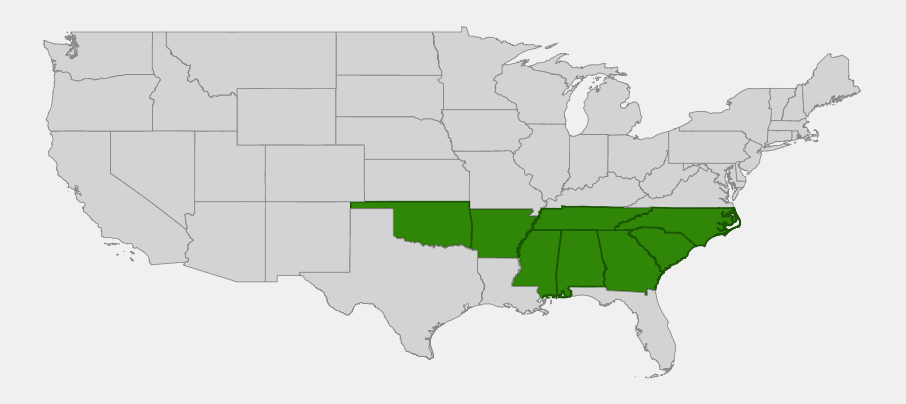
USDA PLANTS lists it from North Carolina and South Carolina west through Georgia, Alabama, Mississippi and Tennessee to Arkansas and Oklahoma. It is most at home on thin soils over granite, sandstone and other rock, in the Piedmont, the southern Appalachian foothills, the Ozarks and the Ouachita Mountains, where it tolerates heat and drought that would wilt most wildflowers.
For gardeners, it is a tough, small spiderwort for dry shade, rock gardens and woodland edges. Lady Bird Johnson Wildflower Center describes it as very drought tolerant, forming robust clumps even in harsh, dry conditions; it may go dormant in summer heat and return lush and green in fall and winter. This guide covers identification, range, growing tips and its value to bees.
Identification
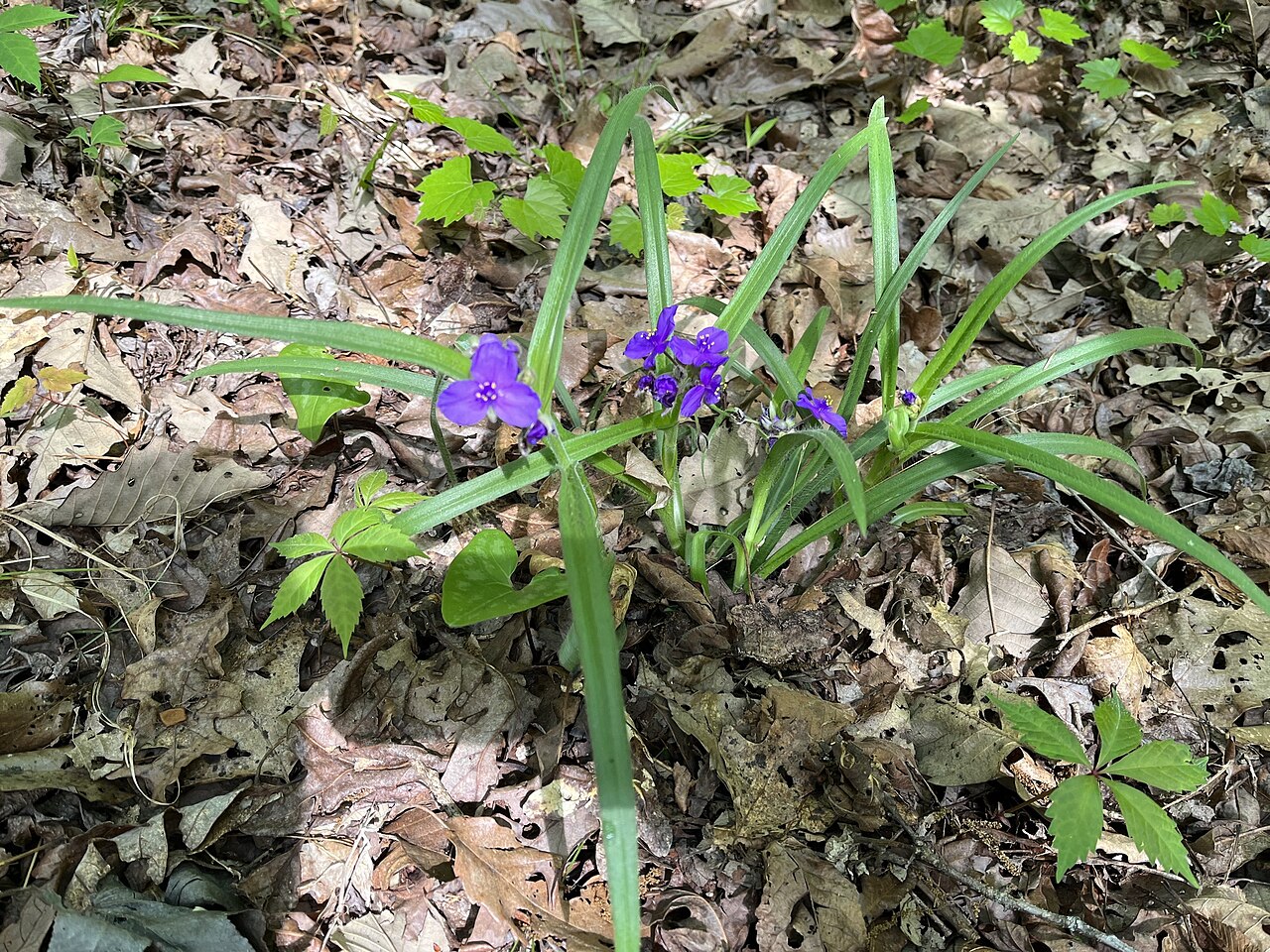
Hairystem spiderwort is a low, clump-forming perennial. As the name says, its stems are covered in spreading hairs, which, along with its small size and dry, rocky habitat, separates it from the more common spiderworts.
Stems & Leaves
Plants form clumps 6 to 15 inches tall with several erect to arching stems that are noticeably hairy. The leaves are long, narrow and grass-like, folded lengthwise along the midrib, about ¼ to ½ inch wide and up to about a foot long, and are softly hairy as well. In mild winters the leaves often stay green, and in hot, dry summers the plants may die back to the ground.
Flowers
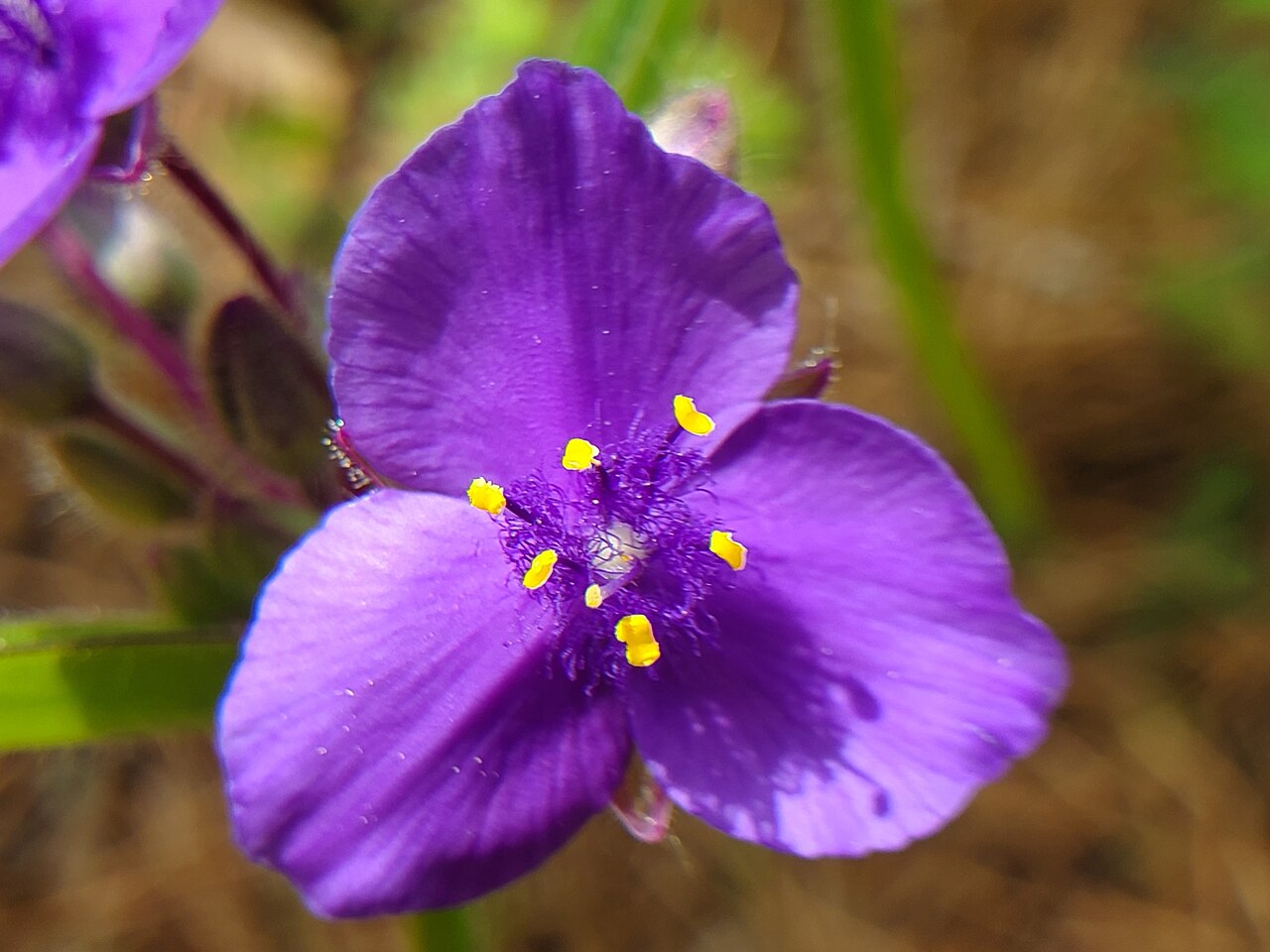
From about March to May, each stem ends in a cluster of flower buds above a pair of leaf-like bracts. The flowers open one or a few at a time in the morning and close by afternoon. Each is about 1 inch across, with three rounded petals in violet, blue-purple, lilac or rosy pink, three hairy green sepals, and six stamens with feathery purple hairs and bright yellow anthers.
Fruit
The fruit is a small three-parted capsule held inside the persistent sepals. It ripens in late spring and splits open to release a few grayish seeds.
Look-alikes
Virginia Spiderwort (T. virginiana) is similar in size and season but has smooth or nearly smooth stems and usually grows in richer, moister soils. Ohio Spiderwort is taller and smooth, with a waxy blue-green coating. Hairyflower spiderwort (T. hirsutiflora), found farther west and south, has hairy sepals with a mix of glandular and plain hairs, and Zigzag Spiderwort is a taller woodland plant with broader leaves and a zigzag stem. Spiderworts hybridize readily, so some plants have intermediate features.
Quick Facts
| Scientific Name | Tradescantia hirsuticaulis Small |
| Family | Commelinaceae (spiderwort family) |
| Plant Type | Clump-forming herbaceous perennial |
| Mature Height | 6–15 in |
| Mature Spread | 8–12 in |
| Growth Rate | Moderate |
| Sun Exposure | Part shade to full sun |
| Water Needs | Low; dry, well-drained soil |
| Soil Type | Thin, rocky, sandy or gravelly soil; poor to average |
| Soil pH | About 5.0–7.0 |
| Bloom Time | March–May |
| Flower Color | Violet, blue-purple, lilac or rosy pink |
| Fall Color | None; may be evergreen in winter after summer dormancy |
| Fruit | Small three-parted capsule |
| Deer Resistant | Low; deer and rabbits may browse spiderworts |
| USDA Hardiness Zones | 6–9 |
Native Range
Hairystem spiderwort is a southeastern species. USDA PLANTS lists it in North Carolina, South Carolina, Georgia, Alabama, Mississippi, Tennessee, Arkansas and Oklahoma. It is centered in the Piedmont and the foothills of the southern Appalachians in the east, and in the Ozark and Ouachita highlands of Arkansas and eastern Oklahoma in the west. Some references extend its range into eastern Texas.
It grows in dry, open oak and oak-pine woods, on rocky slopes and bluffs, along woodland edges and roadbanks, and especially on and around rock outcrops: granite flatrocks and domes in the Carolinas and Georgia, and sandstone and novaculite glades in Arkansas. These sites have thin soil that dries out quickly in summer, and the plant copes by growing and flowering in the cool, moist spring.
It is not considered globally threatened, but it is local and uncommon in many areas because its rocky habitats are patchy. Development, fire suppression that lets outcrops and open woods fill in with shade, and rock quarrying have reduced some habitats.
📋 Regional plant lists featuring Hairystem Spiderwort: Kentucky & Tennessee · Alabama, Georgia & Mississippi · North & South Carolina · Arkansas, Louisiana, Eastern Oklahoma & Eastern Texas
Growing & Care Guide
Hairystem spiderwort is offered by some southeastern native plant nurseries and is easy to grow if you give it good drainage. Buy nursery-propagated plants rather than digging from the wild. It is a good choice for dry, partly shaded sites where many perennials struggle, and its small size suits rock gardens and the front of woodland borders.
Light
Part shade to full sun. In its natural habitat it grows in light shade of open oak woods and in full sun on outcrops. In hot southern gardens, afternoon shade keeps the foliage looking better longer.
Soil & Water
Poor to average, well-drained soil: sandy, gravelly or rocky. It does not like heavy, wet soil, especially in winter. Water new plants during their first spring and summer; once established, it is very drought tolerant and needs little or no supplemental water. Rich soil and frequent watering make it floppy.
Planting Tips
Plant in fall or early spring, about 12 inches apart, in small groups for a better show of color. It works well among rocks, on dry slopes, along woodland paths and with other small spring wildflowers and native grasses that can fill in when it goes dormant in summer.
Pruning & Maintenance
If the foliage turns yellow and ragged in summer heat, cut it back to the ground; new leaves usually return in fall. Divide crowded clumps every few years in early spring or fall. Spiderworts can self-sow in open soil; remove seedlings if you want to prevent hybrids with other spiderworts.
Propagation
By division of the clumps in early spring or fall, or from seed. Sow fresh seed outdoors in fall, or give it about 60 days of cold, moist stratification before sowing in spring. Seedlings usually bloom in their second or third year. Stem cuttings taken in spring will also root.
Landscape Uses
- Rock gardens: a compact spiderwort for outcrop-style plantings
- Dry shade: one of few spring bloomers for dry, rocky woodland soils
- Woodland edges: pairs with phlox, pussytoes and native grasses
- Pollinator gardens: early-season pollen for native bees
Wildlife & Ecological Value
Like other spiderworts, hairystem spiderwort offers early-season pollen to bees in dry woods and outcrops when few other plants are in bloom.
For Pollinators
Spiderwort flowers produce little or no nectar, but they offer abundant pollen. Bumble bees, small carpenter bees, sweat bees and other native bees visit the flowers in the morning to collect it. The Xerces Society lists this species as having special value to native bees. Syrphid flies also feed on the pollen.
For Birds
Ground-feeding birds such as sparrows and quail may eat the small seeds, and birds forage for insects among the clumps.
For Mammals
Spiderworts are browsed by deer and rabbits, and box turtles and small mammals may nibble the leaves.
Ecosystem Role
On granite and sandstone outcrops, it is part of the specialized plant communities that colonize thin soil mats over rock, helping hold those soils in place. Its spring growth and summer dormancy are an adaptation to the extreme summer heat and drought of these sites.
Cultural & Historical Uses
The genus Tradescantia honors John Tradescant the elder and his son John Tradescant the younger, English gardeners and plant collectors of the 1600s who introduced North American spiderworts to European gardens. The younger Tradescant served as gardener to King Charles I. The species name hirsuticaulis means “hairy stem.”
John Kunkel Small, the botanist who described many plants of the southeastern U.S. in the early 20th century, named this species. Spiderworts are named for the sticky, thread-like sap that strings out when a stem or leaf is broken, like a spider’s web.
The stamen hairs of spiderworts are a classic subject for biology students, because each hair is a single row of cells in which cytoplasm can be seen streaming under a microscope. Spiderwort stamens have also been used in research as indicators of mutations caused by radiation and pollution, since cells change color when damaged.
Frequently Asked Questions
How do I recognize hairystem spiderwort?
Look for a small spiderwort, under about 15 inches tall, with hairy stems, narrow fuzzy leaves and violet to lilac three-petaled flowers in spring, growing in dry, rocky woods or on rock outcrops in the Southeast.
Does hairystem spiderwort spread aggressively?
No. It forms slowly expanding clumps and can self-sow in bare soil, but it is much less aggressive than taller garden spiderworts.
Why does my hairystem spiderwort disappear in summer?
It often goes dormant in hot, dry weather. Cut back the yellowed leaves, and new foliage usually appears in fall when temperatures cool.
Where does hairystem spiderwort grow?
In the southeastern U.S., from the Carolinas and Georgia west through Alabama, Mississippi and Tennessee to Arkansas and Oklahoma, in dry rocky woods, bluffs and outcrops.
Can hairystem spiderwort grow in shade?
Yes, in light to part shade, especially in dry woodland soil. It blooms best with some sun, and in full shade it flowers less.

Looking for a nursery that carries Hairystem Spiderwort?
Browse our native plant nursery directory: Alabama & Arkansas · Georgia · Mississippi · North Carolina & Oklahoma · South Carolina & Tennessee

