
Entireleaf Mountain-Avens (Dryas integrifolia)
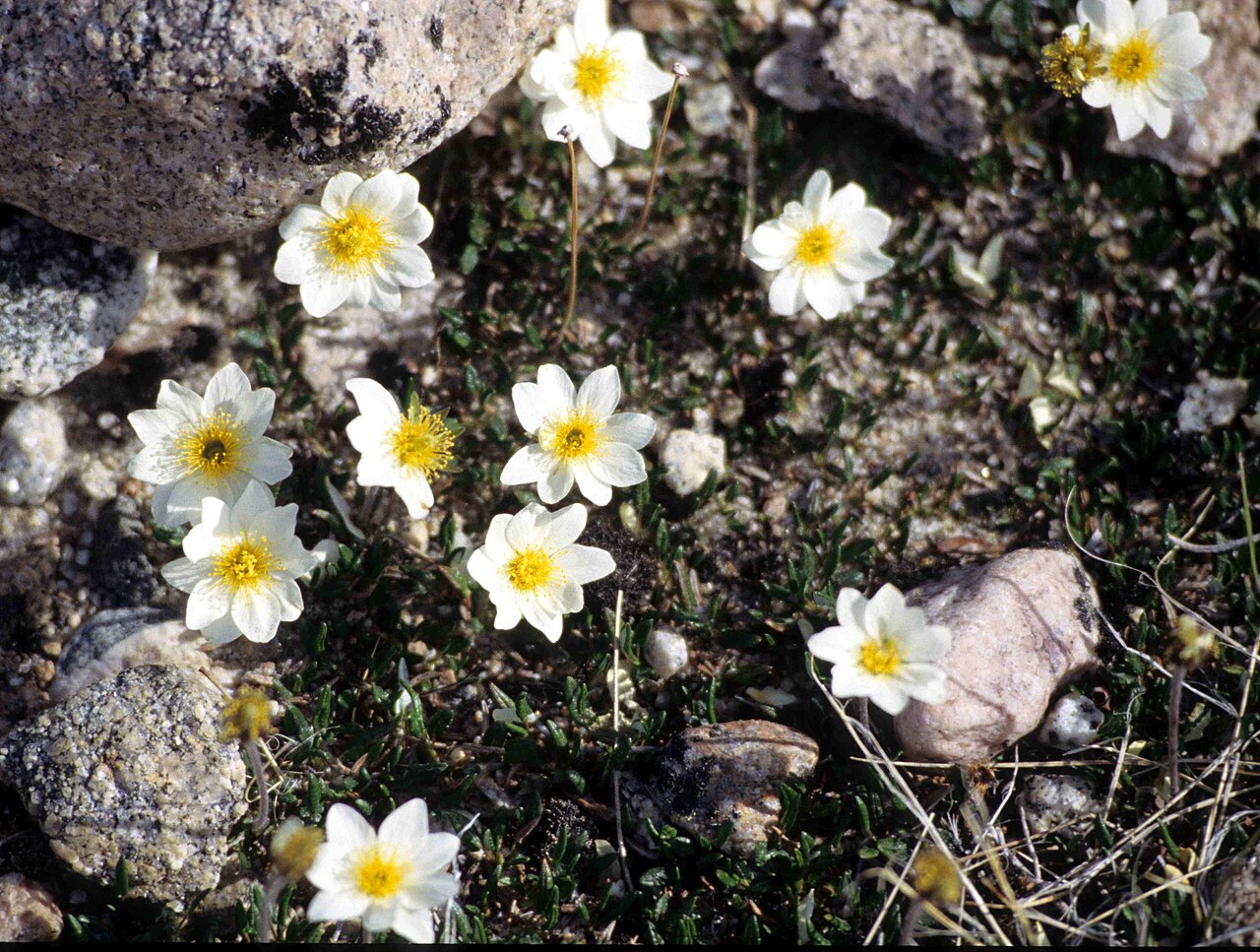
Dryas integrifolia, the Entireleaf Mountain-Avens (also called arctic avens or northern white mountain-avens), is a creeping, mat-forming dwarf shrub of the Arctic and northern mountains. It is one of the most common and recognizable flowering plants of the North American Arctic, carpeting gravel ridges, river bars and tundra from Alaska across Canada to Greenland. In summer the mats are covered with white, cup-shaped flowers with golden centers, followed by silky, twisting seed plumes.
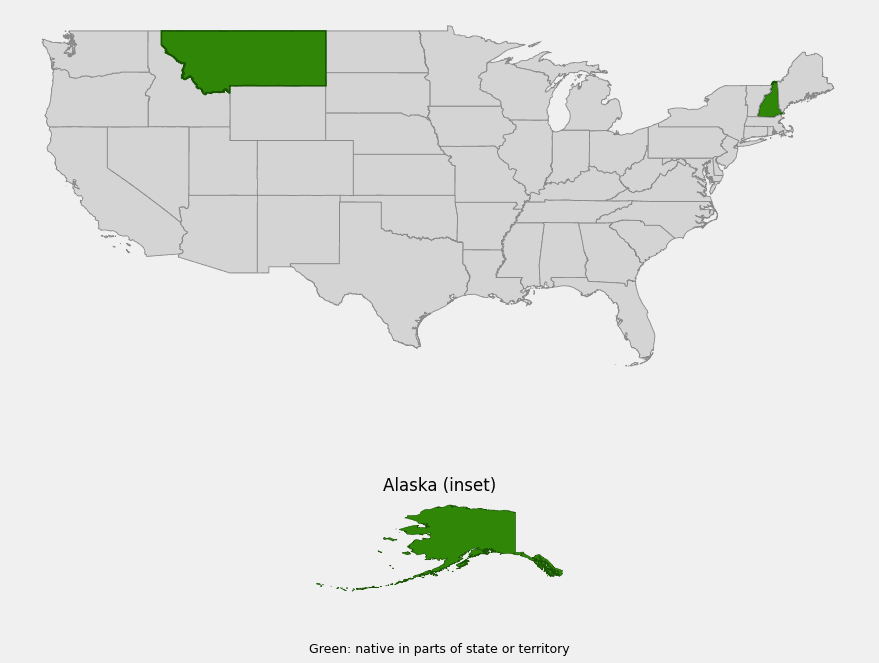
Its name refers to its leaves, which have smooth (“entire”) edges, unlike the toothed leaves of its close relative, eight-petal mountain-avens (Dryas octopetala). In the United States, USDA PLANTS lists it in Alaska, where it is widespread, in Montana, where it reaches the northern Rocky Mountains near the Canadian border, and in New Hampshire, an outlying record. The flowers track the sun across the sky, warming their centers and attracting insects in the cold Arctic summer.
This guide covers how to identify it, where it grows, how to grow it in a cold-climate rock garden, and its importance as a pioneer plant of Arctic gravel and tundra. It is a native plant for northern gardens, but it should be grown only from nursery-propagated plants or seed; never dig mats from the tundra.
Identification
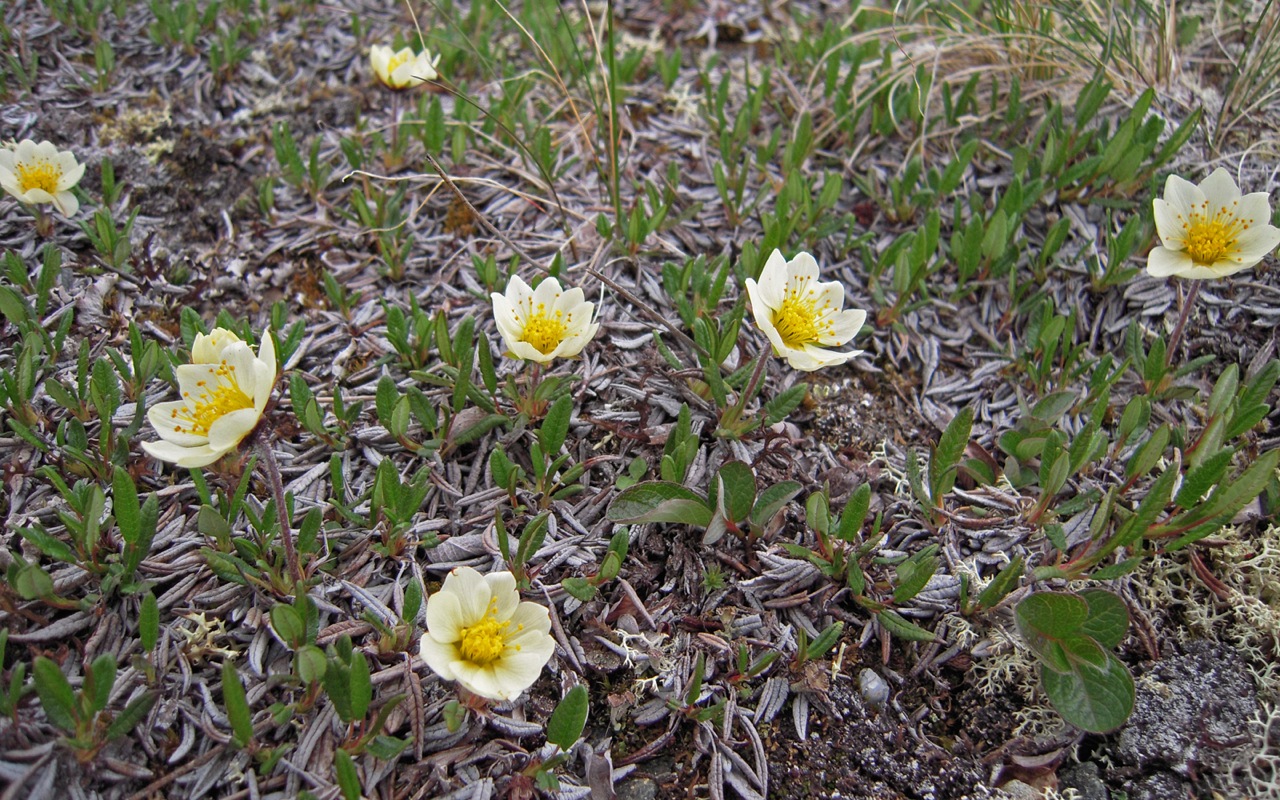
Entireleaf mountain-avens is a low, woody, evergreen mat with small, leathery leaves and single white flowers on leafless stalks. Its narrow, smooth-edged leaves set it apart from other mountain-avens.
Stems & Leaves
It forms a prostrate mat, usually only 2 to 6 inches tall but often several feet across, with woody stems branching along the ground and rooting as they go. The leaves are narrowly lance-shaped to linear, about ¼ to 1 inch long, leathery and evergreen, with smooth or only slightly toothed edges that roll under. The upper surface is shiny dark green, and the underside is covered with dense white wool. Old leaves stay attached for years.
Flowers
From June to July, single flowers rise on leafless, woolly stalks 1 to 6 inches tall. Each flower is about 1 to 1½ inches across, with usually 8 (up to 11) white to cream petals and a dense center of yellow stamens. The sepals and stalks are covered in dark, glandular and woolly hairs. The flowers face the sun and follow it across the sky.
Fruit
After flowering, the styles lengthen into feathery, silvery plumes up to about 1 inch long that twist together in a spiral. In late summer they open into a fluffy seed head, and the seeds (achenes) blow away on the wind.
Look-alikes
Eight-petal mountain-avens (Dryas octopetala, including D. ajanensis) has broader, oblong leaves with clearly scalloped or toothed edges and grows in Alaska and the western mountains. Yellow mountain-avens (D. drummondii) has nodding yellow flowers that never fully open. Its relatives in the genus Geum, such as Ross’ Avens, have yellow flowers and divided leaves. Entireleaf mountain-avens can hybridize with eight-petal mountain-avens where they meet, producing plants with intermediate leaves.
Quick Facts
| Scientific Name | Dryas integrifolia Vahl |
| Family | Rosaceae (rose family) |
| Plant Type | Evergreen mat-forming dwarf shrub |
| Mature Height | 2–6 in |
| Mature Spread | 1–3 ft or more |
| Growth Rate | Slow |
| Sun Exposure | Full sun |
| Water Needs | Moderate; moist in spring, well drained |
| Soil Type | Gravel, scree, sand or rocky, low-organic soil |
| Soil pH | Neutral to alkaline (about 6.5–8.5); thrives on limestone |
| Bloom Time | June–July |
| Flower Color | White to cream with yellow stamens |
| Fall Color | Evergreen; some leaves bronze in fall |
| Fruit | Achenes with feathery, twisted silvery plumes |
| Deer Resistant | Moderate; caribou and muskoxen graze it |
| USDA Hardiness Zones | 1–5 |
Native Range
Entireleaf mountain-avens is a plant of the North American Arctic and subarctic. USDA PLANTS lists it as native in Alaska, Montana and New Hampshire, in Alberta, British Columbia, Manitoba, Ontario, Quebec, New Brunswick, Newfoundland and Labrador, the Yukon, the Northwest Territories and Nunavut, and in Greenland. In Alaska it is common on the North Slope and in the Brooks Range, Interior and Alaska Range, and it reaches southeastern Alaska.
In Montana it is a rare plant of the northern Rocky Mountains near the Canadian border, on calcareous alpine and subalpine gravel. The New Hampshire record is an outlying, eastern record for the United States; the species is not part of the current New England flora treated by Native Plant Trust’s Go Botany, so it is either historical or very rare there. In eastern Canada it grows on limestone barrens and coastal cliffs of Newfoundland, the Gulf of St. Lawrence and the Hudson Bay coast.
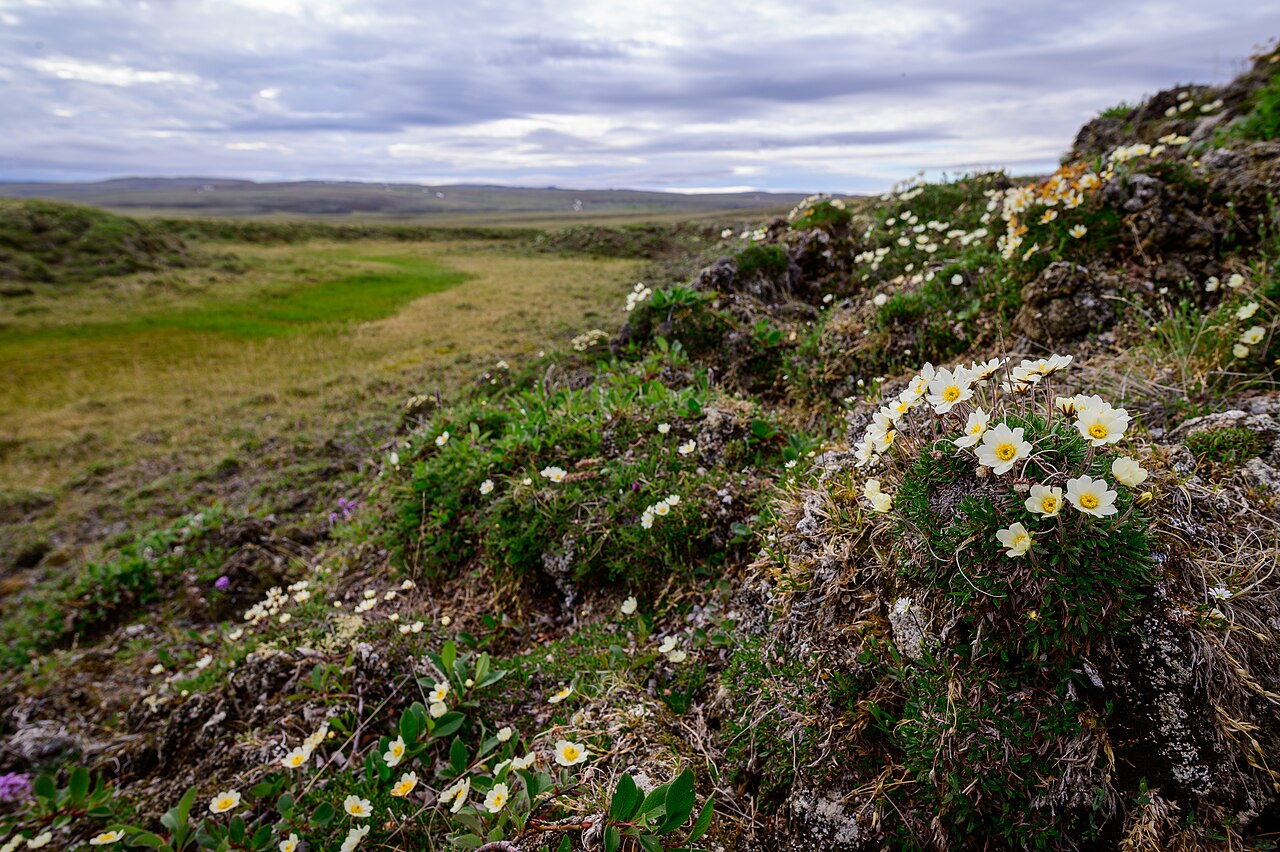
It thrives on cold, open, gravelly and rocky sites with little organic matter, often on limestone: tundra ridges, river gravel bars, glacial moraines, scree slopes and dry heath. It is a pioneer that colonizes bare gravel after glaciers retreat, and on some western Arctic islands it is one of the most common flowering plants.
📋 Regional plant lists featuring Entireleaf Mountain-Avens: Alaska · Montana & Wyoming
Growing & Care Guide
Entireleaf mountain-avens is a choice plant for rock gardens in cold climates and is occasionally sold by alpine-plant nurseries. It needs sharp drainage, full sun and cool summers. Grow it only from nursery-propagated plants or seed, and never dig mats from the wild; old mats may be decades old and rarely survive transplanting.
Light
Full sun. In shade it grows sparsely and flowers poorly.
Soil & Water
Plant in very well-drained, gritty soil such as scree, gravel or a sand and limestone chip mix. It tolerates and even prefers alkaline soil. Keep it evenly moist in spring and early summer, then let it dry between waterings. It dislikes rich soil, standing water and hot, humid summers.
Planting Tips
Plant in spring in a rock garden, crevice garden, trough or gravel bed, or spill it over a rock wall. Top-dress with gravel to keep the crown dry. It is best suited to Alaska, the northern Rockies and other cold-winter, cool-summer regions.
Pruning & Maintenance
Pruning is rarely needed. Remove weeds by hand and trim any dead patches in spring. Do not fertilize. Mats spread slowly and can live for many years.
Propagation
Sow fresh seed in fall and leave pots outdoors for winter cold. Cuttings of side shoots taken in summer root in a sandy mix, and rooted layers along the edge of a mat can be separated and potted in spring.
Landscape Uses
- Rock and crevice gardens: an evergreen mat with white flowers and silky seed heads
- Alpine troughs: slow-growing and compact in cold climates
- Gravel and green roofs: in cold northern regions
- Revegetation: a pioneer for gravel pads, mine sites and roadsides in the Arctic
Wildlife & Ecological Value
Across the Arctic, mountain-avens mats are among the most important plants for insects and soil stability.
For Pollinators
The sun-tracking flowers act like small solar ovens, a few degrees warmer than the air, and flies, bumble bees, butterflies and other insects bask and feed in them. Flies are especially important pollinators in the far north.
For Birds
Ptarmigan eat the buds, leaves and seeds, and the mats offer nesting cover for ground-nesting shorebirds and songbirds on the tundra.
For Mammals
Caribou, muskoxen, Dall sheep and Arctic ground squirrels browse the leaves and flowers, especially in early summer.
Ecosystem Role
As a pioneer on bare gravel, it stabilizes soil, traps windblown sand and organic matter, and helps start plant communities on moraines and river bars. Like some other Dryas, it has been reported to form nitrogen-fixing root nodules, and it partners with mycorrhizal fungi.
Cultural & Historical Uses
The Danish-Norwegian botanist Martin Vahl described Dryas integrifolia in the late 1700s, from plants collected in Greenland. Dryas comes from the Greek dryads, wood nymphs associated with oaks, because the leaves of eight-petal mountain-avens look like tiny oak leaves. Integrifolia means “entire-leaved,” with smooth edges.
Mountain-avens is the floral emblem of the Northwest Territories in Canada, chosen because it is one of the most widespread and recognizable wildflowers of the North. Its early bloom and its twisting, silky seed heads are familiar seasonal signs across the Arctic.
Fossil leaves of Dryas are so common in Ice Age deposits in Europe that cold periods at the end of the last ice age, the Oldest, Older and Younger Dryas, were named after the plant. Mountain-avens is a symbol of the hardy, sun-loving plants that recolonized northern lands after the glaciers retreated.
Frequently Asked Questions
Why is it called entireleaf mountain-avens?
“Entire” is a botanical term for a leaf with a smooth, untoothed edge. Its narrow leaves have smooth, rolled edges, unlike the toothed leaves of eight-petal mountain-avens.
Where does entireleaf mountain-avens grow in the United States?
It is widespread in Alaska. Montana has rare populations in the northern Rocky Mountains, and USDA PLANTS also lists New Hampshire as an outlying, likely historical record.
Why do mountain-avens flowers follow the sun?
The cup-shaped flowers focus sunlight, keeping their centers warmer than the air. This helps seeds develop and attracts insects that warm up inside the flowers.
Can I grow entireleaf mountain-avens?
Yes, in cold-winter, cool-summer climates with full sun and sharply drained, gravelly, preferably limestone-rich soil. It does well in rock gardens and troughs. Use nursery-propagated plants or seed.
Is mountain-avens edible or used medicinally?
It is not a food plant. Some northern peoples made tea from the leaves, but it is mainly valued as a wildflower and as food for caribou, muskoxen and ptarmigan.

Looking for a nursery that carries Entireleaf Mountain-Avens?
Browse our native plant nursery directory: Alaska · Montana · New Hampshire

