
Indian Rushpea (Hoffmannseggia glauca)
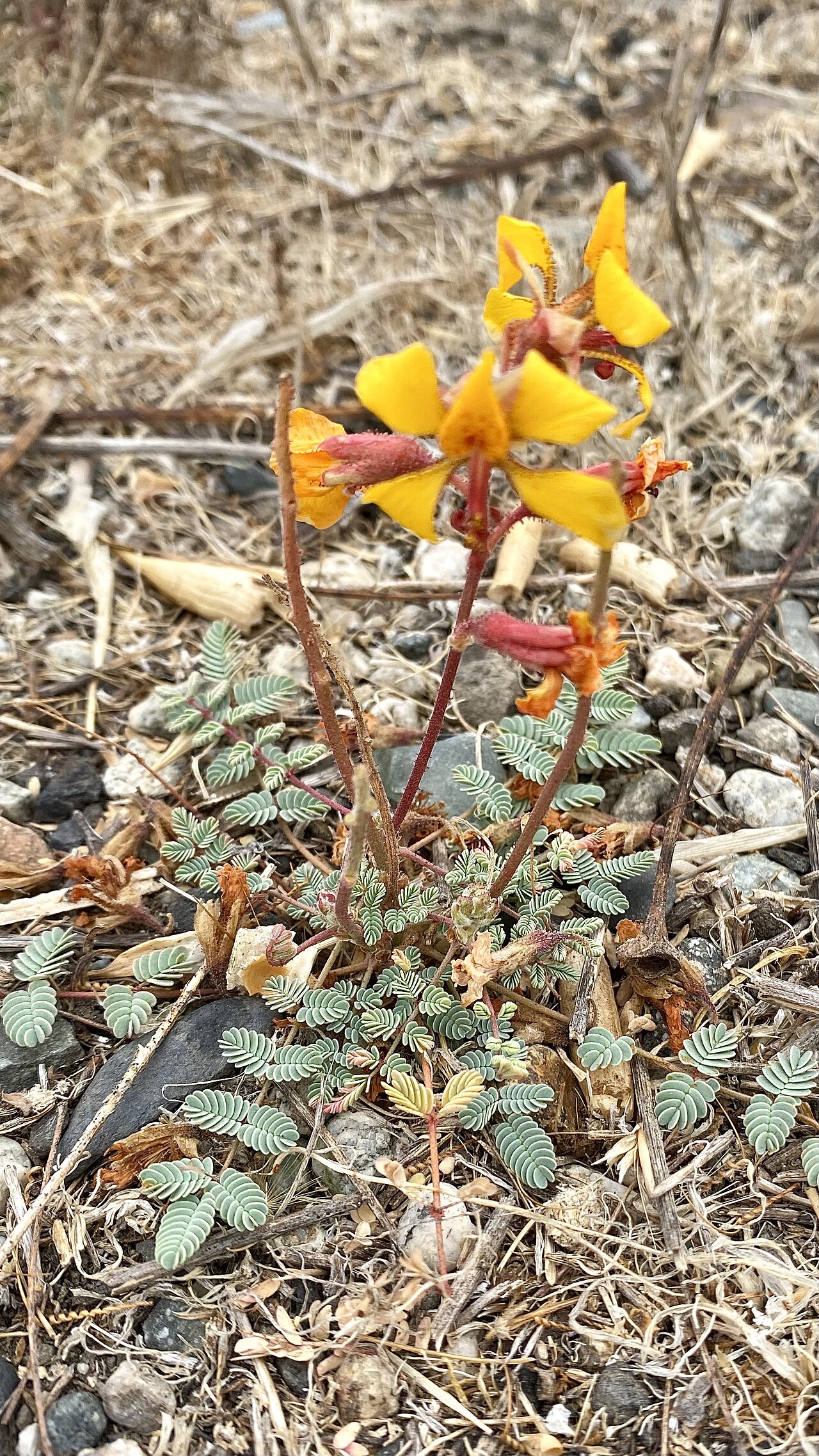
Hoffmannseggia glauca, the Indian Rushpea, also known as hog potato, pig-nut and camote de ratón (“mouse’s sweet potato”), is a low, sprawling perennial in the pea family native to the deserts, grasslands and plains of the American Southwest. From spring to fall it carries short spikes of yellow flowers with a red-streaked upper petal and red stamens above soft, feathery, twice-divided leaves. It is also listed under the older name Hoffmannseggia densiflora.
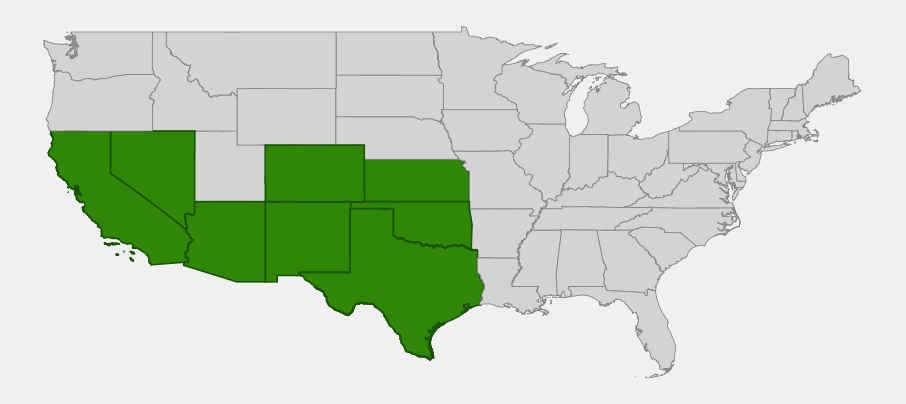
USDA PLANTS lists it as native in California, Nevada, Arizona, New Mexico, Colorado, Kansas, Oklahoma and Texas, and it extends south into Mexico. Below ground, its long, deep rhizomes bear small, starchy tubers. Native peoples of the Southwest roasted and ate them, and pigs, rodents and other animals dig for them, which explains names such as hog potato.
Indian rushpea is famously tough. It thrives in heat, drought and alkaline or salty soil, and it spreads into roadsides, vacant lots and fields, where farmers often regard it as a weed that is hard to eradicate. In a native garden, it can be a useful, long-blooming groundcover for hot, dry spots where little else will grow, if you give it room. This guide covers identification, range, growing tips and wildlife value.
Identification
Indian rushpea is a low perennial, usually 4 to 12 inches tall, that spreads by rhizomes into loose patches. Its gland-dotted stems, feathery leaves and yellow, red-marked flowers are distinctive.
Stems & Leaves
Stems are short and mostly come from the base, often spreading or leaning. The leaves are mostly basal and bipinnately compound, 2 to 6 inches long, with 2 to 5 pairs of side branches, each carrying 5 to 11 pairs of tiny oblong leaflets. They are grayish green and often covered with small, stalked glands, which make the plant feel slightly sticky.
Flowers
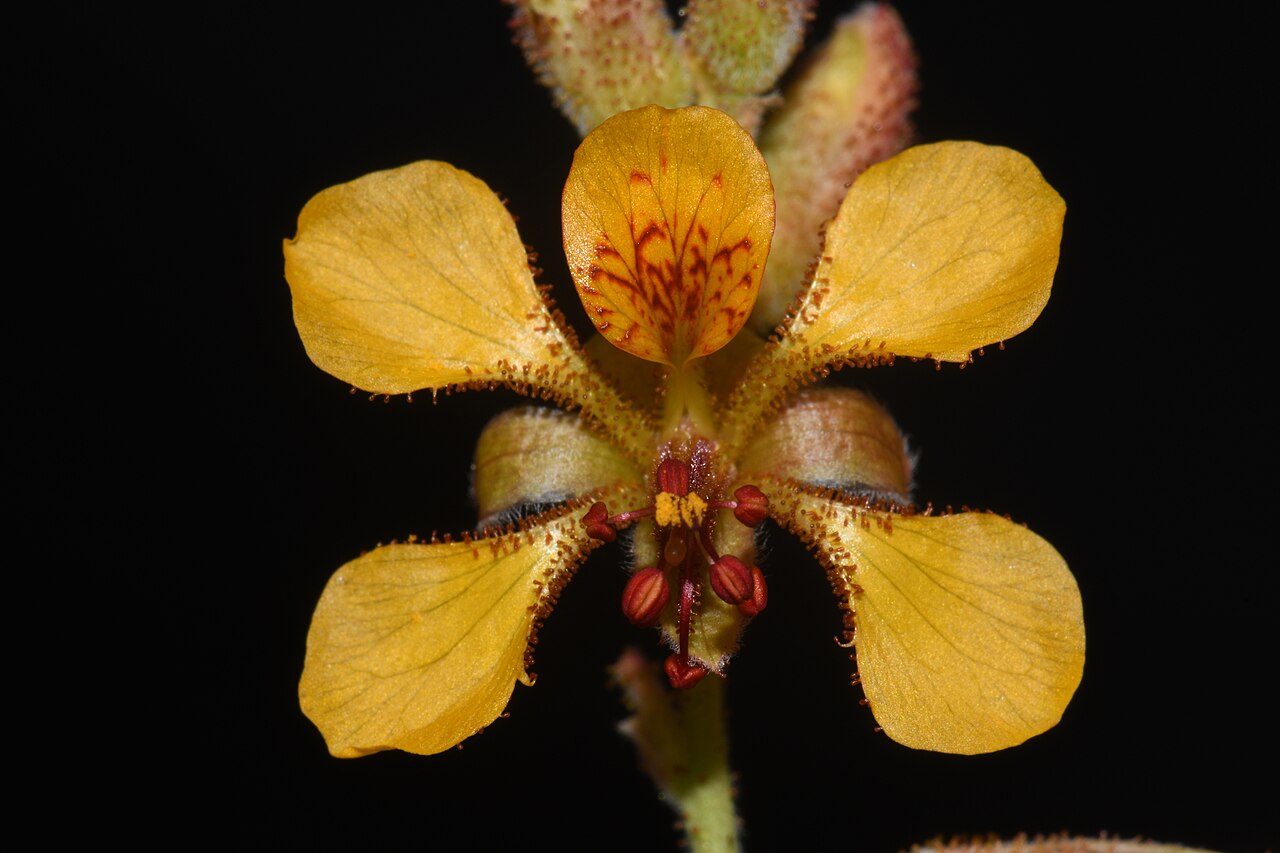
From about March to September, and after rains in the desert, upright flower stalks rise above the leaves in loose spikes of 5 to 15 flowers. Each flower is about ½ to ¾ inch wide, with five yellow to orange-yellow petals; the upper petal is streaked or blotched with red and orange. Ten orange-red stamens arch from the center. The stalks and sepals are covered in glandular hairs.
Fruit & Roots
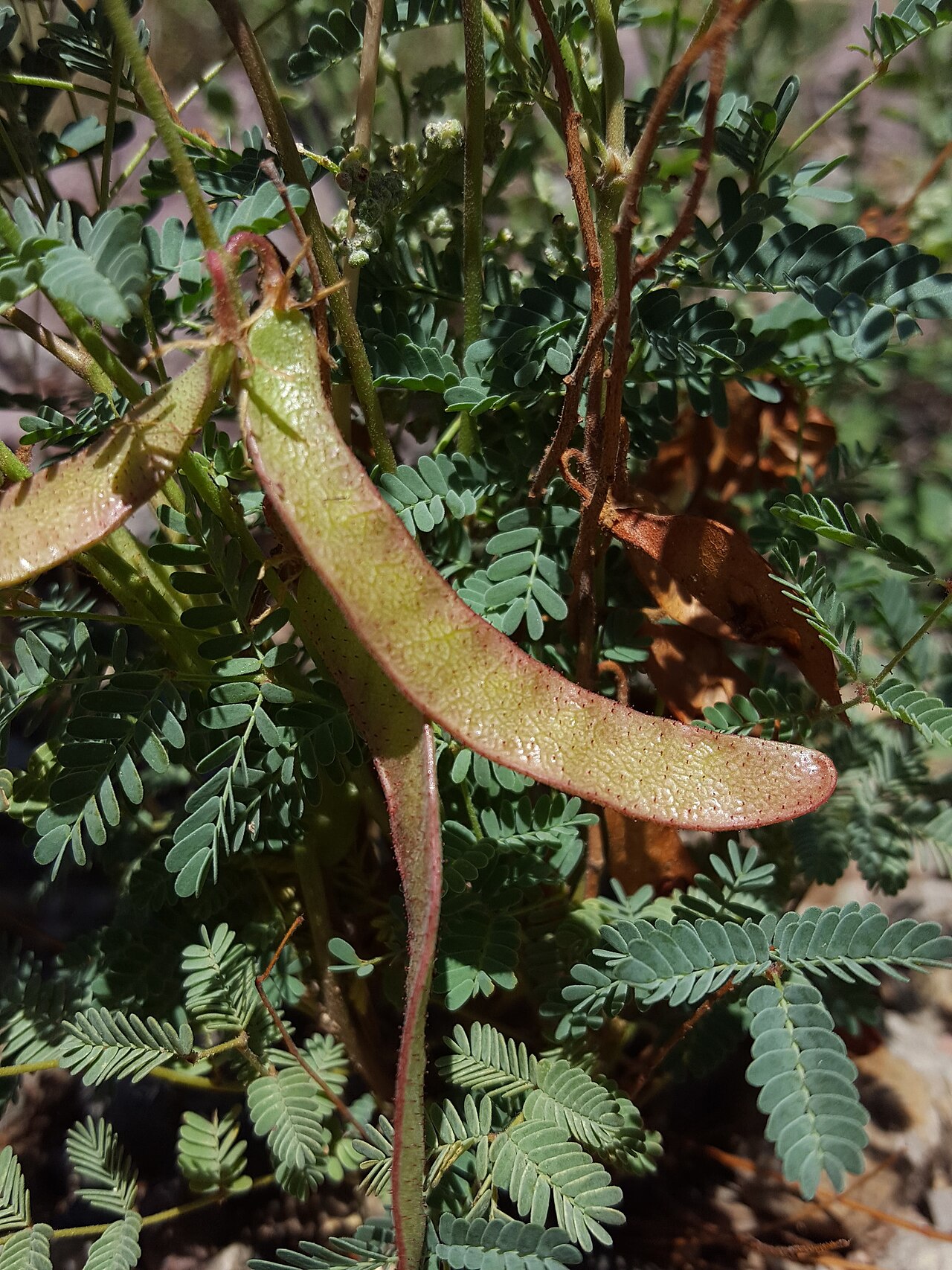
The fruit is a flattened, crescent-shaped pod about 1 to 1½ inches long, often glandular, holding a few small seeds. Underground, deep rhizomes spread widely and bear small, round, edible tubers. The deep roots let the plant survive drought and resprout after mowing, plowing or grazing.
Look-alikes
Wand Holdback (H. microphylla) of the Sonoran and Mojave deserts is a taller, rush-like shrub with green, nearly leafless stems and very small leaves. James’ holdback (Pomaria jamesii, formerly Hoffmannseggia jamesii) of the southern Plains has similar yellow flowers and divided leaves, but it is a taller, more upright plant; check its leaflets and pods with a regional flora. Sennas such as Two-leaved Senna have once-divided leaves and more open, cup-shaped flowers without the red streaks.
Quick Facts
| Scientific Name | Hoffmannseggia glauca (Ortega) Eifert (syn. H. densiflora) |
| Family | Fabaceae (pea family) |
| Plant Type | Low, rhizomatous herbaceous perennial |
| Mature Height | 4–12 in |
| Mature Spread | 1–3 ft; spreads by rhizomes |
| Growth Rate | Fast |
| Sun Exposure | Full sun |
| Water Needs | Low; very drought tolerant |
| Soil Type | Sandy, gravelly, clay or caliche; tolerates alkaline and salty soils |
| Soil pH | About 7.0–8.5 (alkaline) |
| Bloom Time | March–September |
| Flower Color | Yellow to orange-yellow with red streaks |
| Fall Color | None; dies back in cold winters |
| Fruit | Flat, crescent-shaped pod; edible root tubers |
| Deer Resistant | Moderate |
| USDA Hardiness Zones | 6–10 |
Native Range
Indian rushpea is native across the southwestern United States and the southern Great Plains. USDA PLANTS lists it in California, Nevada, Arizona, New Mexico, Colorado, Kansas, Oklahoma and Texas, and it continues south into northern Mexico. Similar plants also grow in the dry regions of South America. In the U.S., it is most common in the Chihuahuan Desert, the Rio Grande plains, west Texas and southern New Mexico, and reaches its northern limits in southeastern Colorado and southwestern Kansas.
It grows in open, often alkaline places: desert flats and grasslands, playa edges and floodplains, mesquite brushland, roadsides, ditch banks, vacant lots and fields. It is especially common on disturbed ground and in irrigated farmland, where its deep, spreading rhizomes let it survive cultivation. In California it grows mostly in the Central Valley, the deserts and the southern coastal valleys.
Because it spreads into crops, especially cotton and alfalfa, Indian rushpea is often treated as a troublesome agricultural weed, and it is regulated or controlled as a weed in some farming areas even though it is native. In wild habitats it is a normal part of desert and grassland plant communities.
📋 Regional plant lists featuring Indian Rushpea: Nebraska, Kansas & Eastern Colorado · Arizona & New Mexico · South & West Texas · California & Nevada
Growing & Care Guide
Indian rushpea is rarely sold, but it is easy to grow from seed and will thrive with almost no care in hot, dry, sunny sites. Its spreading rhizomes are both its strength and its drawback: it makes a tough, flowering groundcover for difficult spots, but it can be hard to remove once established. Keep it away from vegetable beds and irrigated lawns, and plant it where its spread is welcome or contained.
Light
Full sun. It tolerates intense desert heat and reflected heat from pavement.
Soil & Water
Almost any well-drained soil: sandy, gravelly, clay or caliche, including alkaline and moderately salty soils. Water to establish, then rely on rainfall. Extra summer water makes it spread faster and bloom longer, which may or may not be what you want.
Planting Tips
Use it as a low groundcover in hellstrip plantings, along driveways, on dry slopes or in xeric meadows with native grasses and wildflowers. A root barrier or a bed bordered by pavement helps contain it. Avoid planting it next to agricultural fields.
Pruning & Maintenance
No pruning is needed. Mow or cut back old stems in late winter to tidy the patch. To limit spread, pull runners where they aren’t wanted, though fragments of rhizome left in the soil can resprout.
Propagation
Sow seed in spring or early summer in warm soil. The hard seed coat benefits from scarification (nicking or sanding) or a soak in hot water before sowing. It can also be propagated from rhizome or tuber divisions in spring.
Landscape Uses
- Xeriscapes: a flowering groundcover for hot, dry, alkaline sites
- Hellstrips and roadsides: tolerates heat, drought and poor soil
- Erosion control: deep, spreading rhizomes hold dry soils
- Wildlife gardens: nectar for bees; tubers feed small mammals
Wildlife & Ecological Value
Indian rushpea’s long bloom season and underground tubers make it a useful food plant in dry country.
For Pollinators
The flowers are pollinated mainly by bees, including native solitary bees and bumble bees, which are guided to the nectar by the red markings on the upper petal. The plant blooms for months, so it offers forage when other desert flowers have finished.
For Birds
Quail and other ground-feeding birds eat the seeds, and the low patches give cover to small ground-dwelling birds and lizards.
For Mammals
The starchy tubers are eaten by rodents, pocket gophers, javelina and feral pigs, which dig them out of the soil. Livestock graze the foliage lightly.
Ecosystem Role
Its deep rhizomes stabilize soil on disturbed ground and recolonize sites after floods or grading.
Cultural & Historical Uses
The genus Hoffmannseggia honors Johann Centurius von Hoffmannsegg, a German botanist and entomologist of the late 1700s and early 1800s. The species name glauca means blue-gray, describing the leaves. The common name “rushpea” refers to its relatives in the genus, some of which have rush-like stems.
The tubers were an important food for Native peoples of the Southwest and northern Mexico. They were dug, roasted or boiled and eaten like small potatoes, and the Spanish names camote de ratón and camotillo (“little sweet potato”) refer to this use. Wild food enthusiasts sometimes still harvest them today.
Ranchers and farmers know it less fondly, because its deep rhizomes allow it to persist in cultivated fields and spread with tillage. Its ability to survive drought, heat, salt and repeated disturbance is exactly why it can be valuable in water-wise landscaping.
Frequently Asked Questions
Is Indian rushpea edible?
The tubers on its roots were eaten by Native peoples, roasted or boiled like small potatoes. If you try them, be certain of identification and harvest only from your own plants, not from roadsides or sprayed fields.
Is Indian rushpea invasive?
It is a native plant, not an invasive species, but its deep, spreading rhizomes make it aggressive in irrigated gardens and farm fields, where it is often treated as a weed. Plant it only where its spread is welcome.
What is the difference between Indian rushpea and Hoffmannseggia densiflora?
They are the same plant. Hoffmannseggia densiflora is an older name; the accepted name is Hoffmannseggia glauca.
When does Indian rushpea bloom?
From about March to September, often in flushes after rain. It can bloom for most of the warm season.
Where does Indian rushpea grow?
In the southwestern U.S. and southern Plains, from California and Nevada east to Kansas, Oklahoma and Texas, and south into Mexico, in deserts, grasslands, roadsides and fields.

Looking for a nursery that carries Indian Rushpea?
Browse our native plant nursery directory: Arizona · California · Colorado · Kansas · Nevada, New Mexico & Oklahoma · Texas

