
Western Marsh Rosemary (Limonium californicum)
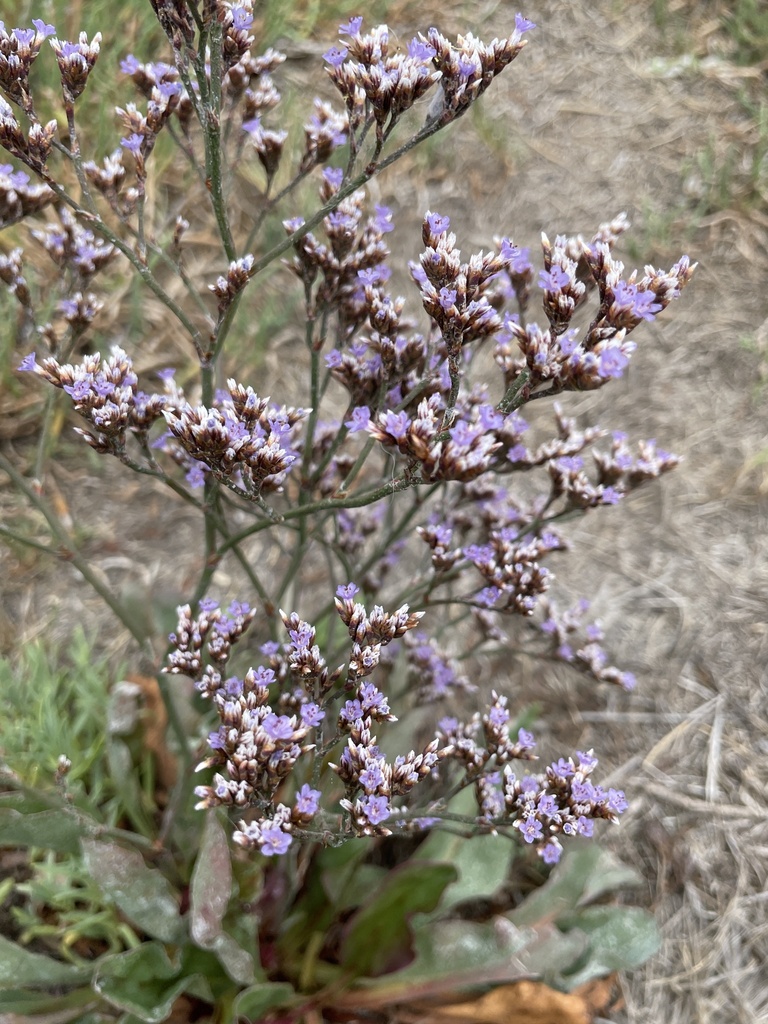
Limonium californicum, known as Western Marsh Rosemary or California sea lavender, is a salt-tolerant perennial of coastal salt marshes, beaches and tidal flats along the Pacific Coast. From a woody rootstock it forms a low rosette of thick, leathery, paddle-shaped leaves, and from midsummer into late fall it sends up stiff, much-branched stems covered in small lavender to whitish flowers. It is not related to culinary rosemary; it belongs to the leadwort or plumbago family (Plumbaginaceae), the family of sea lavenders and thrift.
Western marsh rosemary is a characteristic plant of the upper salt marsh in California, where it grows with pickleweed, saltgrass and gumplant just above the reach of most daily tides. Its pale sprays of flowers color the marshes of San Francisco Bay, Morro Bay and other estuaries late in the season, when most other wildflowers are finished, and they provide nectar for many small insects.
Native plant gardeners on the coast can grow it in sunny, well-drained or salty soils, and its long-lasting papery flowers dry well. This guide covers how to identify it, where it grows, how to grow it, and how to tell it from the non-native sea lavenders that are invading some California marshes.
Identification
Western marsh rosemary combines a flat rosette of thick leaves with tall, airy, zigzag sprays of tiny papery flowers. It is easiest to recognize in bloom from July to November.
Leaves & Growth Habit
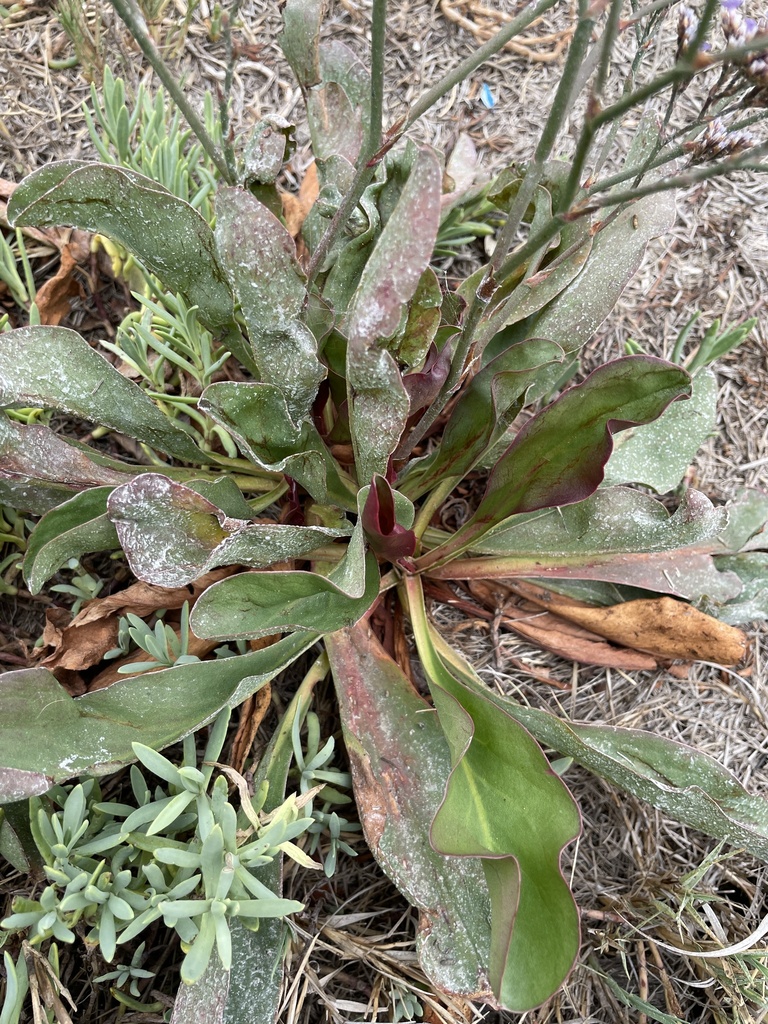
A perennial herb from a stout, woody root crown. The leaves are all basal, thick and leathery, oval to spoon-shaped or oblanceolate, up to about 12 inches long including the stalk, with smooth edges and a rounded tip. They are often gray-green and sometimes flushed red or purple, and may show a white crust where the plant excretes salt from glands on the leaf surface.
Flowering Stems
The flowering stems are stiff and leafless, usually 8 to 20 inches tall, and branch repeatedly into a broad, flat-topped or rounded panicle. The flowers are borne on one side of the short end branches in small spikelets.
Flowers
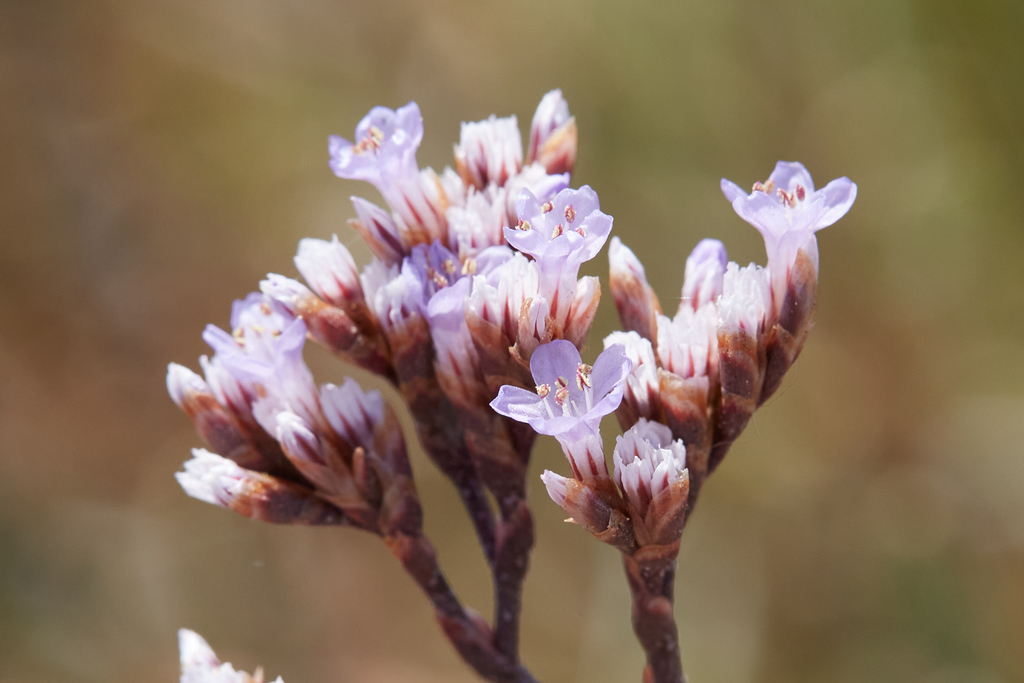
Each flower is about 1/4 inch long. The calyx is funnel-shaped, papery, whitish to brownish with ribs, and remains on the plant after flowering; the five petals are pale lavender to nearly white. Flowering runs from about July to December, peaking in late summer and early fall.
Look-alikes
Two Mediterranean sea lavenders, Limonium ramosissimum (Algerian sea lavender) and Limonium duriusculum, have escaped into salt marshes in the San Francisco Bay area and Southern California and are considered invasive there. They form denser, smaller-leaved clumps with more crowded flowers. The garden statice or wavyleaf sea lavender, Limonium sinuatum, and Perez’s sea lavender, Limonium perezii, have showier, deep purple flowers and wavy or lobed leaves. On the East Coast, the closely related Carolina Sea Lavender fills the same role in Atlantic salt marshes.
Quick Facts
| Scientific Name | Limonium californicum (syn. Statice californica) |
| Family | Plumbaginaceae (leadwort family) |
| Plant Type | Herbaceous perennial from a woody root crown |
| Mature Height | 8–24 in in flower |
| Mature Spread | 8–18 in |
| Growth Rate | Moderate |
| Sun Exposure | Full sun |
| Water Needs | Moist to seasonally wet, salty soil; tolerates dry sandy soil |
| Soil Type | Saline clay, silt or sand of salt marshes and beaches |
| Soil pH | Neutral to alkaline; salt tolerant |
| Bloom Time | July–December |
| Flower Color | Pale lavender to white, with whitish papery calyces |
| Fall Color | Flowers persist and fade to papery tan |
| Fruit | Small one-seeded fruit (utricle) enclosed in the dry calyx |
| Deer Resistant | Generally not browsed |
| USDA Hardiness Zones | About 8–11 |
Native Range
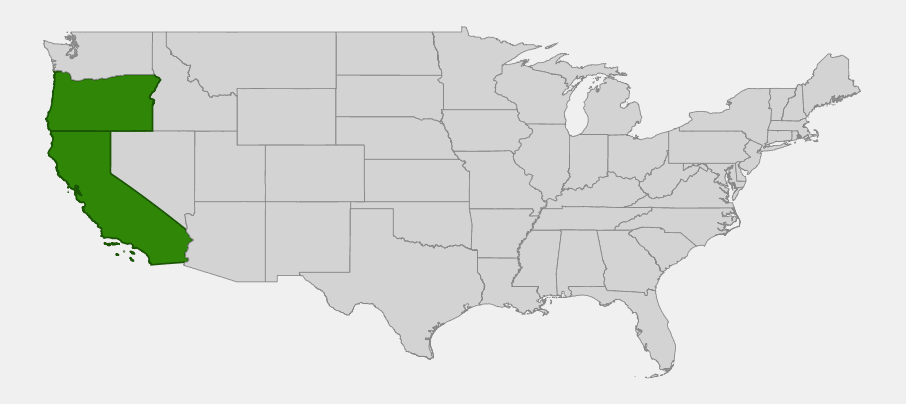
Western marsh rosemary is native to the Pacific Coast of North America. USDA PLANTS lists it in California and Oregon, and it continues south along the coast into Baja California, Mexico. In Oregon it is found only along the southern coast, while in California it grows in coastal marshes from the north coast and Humboldt Bay through San Francisco Bay and the Central Coast to San Diego.
It is almost entirely a coastal species, although there are a few reports from inland alkaline sites such as playas. It is most common in the large estuaries and bays, including San Francisco Bay, Elkhorn Slough, Morro Bay and the remaining marshes of Southern California.
Its habitat is the middle to upper salt marsh, the edges of tidal channels, salt flats, coastal bluffs and sandy beaches, where the soil is periodically flooded by high tides or soaked with salt spray. Coastal development has destroyed much of California’s salt marsh, and western marsh rosemary is one of the plants that benefit from tidal marsh restoration.
📋 Regional plant lists featuring Western Marsh Rosemary: California & Nevada · Western Oregon & Western Washington
Growing & Care Guide
Western marsh rosemary is not a common nursery plant, but some California native plant nurseries carry it for coastal gardens, bioswales and marsh restoration. It is a good choice for salty, sunny sites near the coast where few other flowering plants will thrive.
Light
Full sun. It grows in open marshes and beaches and flowers poorly in shade.
Soil & Water
It tolerates salty, heavy or sandy soil and does well in clay that stays moist in winter. In a garden it also grows in ordinary well-drained soil with occasional summer water. Avoid rich, fertilized soil, which encourages soft growth and rot.
Planting Tips
Plant in fall or winter, when coastal rains help it establish. It is best suited to gardens within the coastal fog belt of California and southern Oregon, in salt-spray zones, rain gardens on saline soil, or the edges of tidal restoration sites. Space plants about 12 to 18 inches apart.
Pruning & Maintenance
Cut the old flowering stems back in winter, or leave them standing for their dried flowers and seeds. Remove old, withered leaves from the rosette as needed. It needs little other care.
Propagation
Grow it from fresh seed sown in fall on a sandy mix, or by careful division of older plants. For restoration projects, use seed collected from local populations, and never dig plants from protected marshes.
Landscape Uses
- Coastal gardens: for salty, windy sites in full sun
- Salt marsh restoration: an upper-marsh species for tidal wetland projects
- Dried flowers: the papery calyces hold their color for arrangements
- Late-season nectar: flowers from late summer into December
Wildlife & Ecological Value
Western marsh rosemary is part of the specialized plant community of Pacific salt marshes and supports the insects and birds that live there.
For Pollinators
Its small flowers produce nectar late in the season and are visited by small bees, flies, wasps and butterflies, including the tiny western pygmy blue, a butterfly whose caterpillars feed on nearby saltbush and pickleweed.
For Birds
It provides little direct food for birds, but the upper salt marsh where it grows is critical habitat for wildlife such as the endangered Ridgway’s rail and the salt marsh harvest mouse, as well as many shorebirds and sparrows.
For Mammals
It is not a significant food plant for mammals. It forms part of the vegetation cover used by small marsh mammals.
Ecosystem Role
As one of the characteristic plants of the upper marsh, it helps stabilize the sediment along tidal channels and marsh edges. Marsh plants like it are increasingly important as sea levels rise and marshes need room to migrate upslope.
Cultural & Historical Uses
The species was first described in the 1800s as Statice californica, and later moved to Limonium, the genus of sea lavenders. The name Limonium comes from the Greek leimon, meaning meadow, in reference to the salt meadows where many species grow.
The common name “marsh rosemary” is shared with the eastern Carolina sea lavender and refers to the plant’s salt-marsh habitat and its sprays of small lavender-blue flowers, not to any culinary use. Sea lavenders have long been harvested for dried-flower arrangements, which has damaged wild populations in some places; garden-grown plants are a better source.
Western marsh rosemary has become a marker in the fight against invasive sea lavenders in California. Resource managers in the San Francisco Bay area and Southern California work to remove the non-native Algerian sea lavender and other Mediterranean Limonium species, which can crowd out the native plant in the upper marsh.
Frequently Asked Questions
Is western marsh rosemary related to culinary rosemary?
No. It belongs to the leadwort family (Plumbaginaceae), the family of sea lavenders, thrift and plumbago. The name refers to its marsh habitat and lavender flowers, and it is not used as an herb.
Where does western marsh rosemary grow?
In coastal salt marshes, tidal flats and beaches from the southern Oregon coast through California into Baja California, Mexico.
When does it bloom?
From about July to December, with the peak in late summer and early fall.
Can I grow it in my garden?
Yes, in full sun near the coast. It tolerates salt, clay and sandy soil, and is best in gardens within the coastal fog belt. Buy it from native plant nurseries and never dig it from the wild.
How do I tell the native species from invasive sea lavenders?
Western marsh rosemary has large, broad, leathery leaves and open, airy flower sprays. The invasive Algerian sea lavender forms denser clumps with smaller leaves and more crowded flower clusters. Check with your local resource agency or a regional flora if you are unsure.

Looking for a nursery that carries Western Marsh Rosemary?
Browse our native plant nursery directory: California · Oregon

