
Texas Peachbush (Prunus texana)
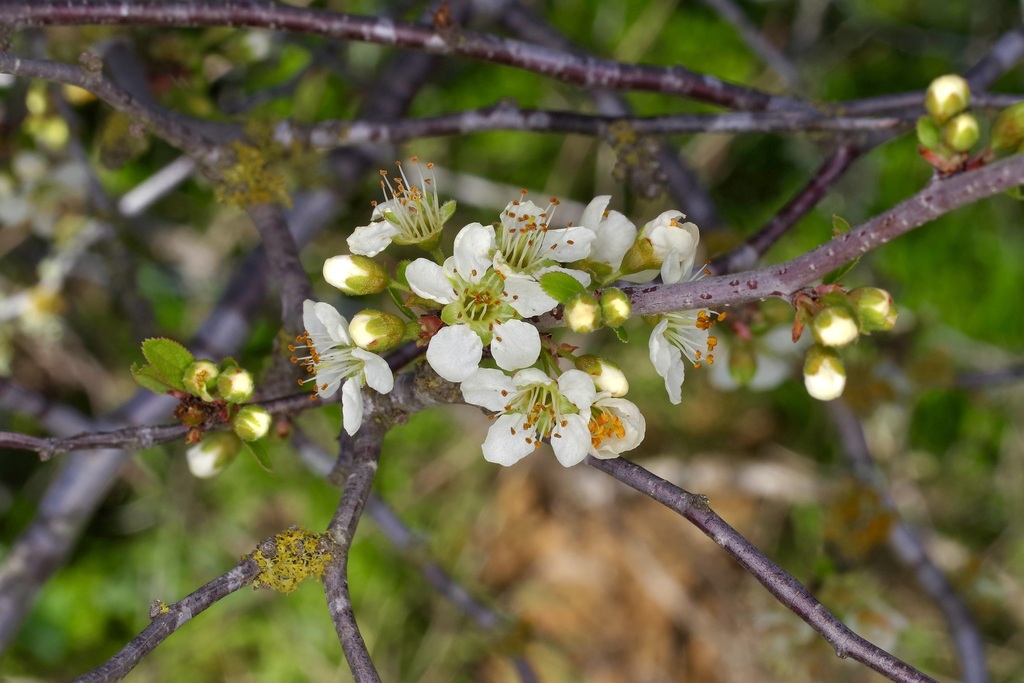
Prunus texana, known as Texas Peachbush, peach bush, Texas almond cherry or duraznillo (“little peach” in Spanish), is a low, thicket-forming wild plum that grows only in Texas. In late winter its bare, twiggy branches are covered in small white flowers, and by late spring it bears small, velvety, yellow to orange fruits that look like miniature peaches.
Despite its name and its fuzzy fruits, it is not a true peach. It belongs to the same group of American plums (Prunus section Prunocerasus) as Wild Plum and Chickasaw plum. It grows on deep sandy soils in the oak savannas, brushlands and grasslands of south-central and South Texas, where it spreads by root suckers into dense, knee- to chest-high colonies.
Texas peachbush is one of the earliest-blooming native shrubs in its range, giving bees an important early source of nectar and pollen. It is a good choice for native hedges, wildlife thickets and erosion control on sandy soils. This guide covers how to identify it, where it grows, and how to grow it. Safety note: as with all Prunus, the seeds, leaves and wilted foliage contain compounds that release cyanide; never eat the pits.
Identification
Texas peachbush is a small, much-branched shrub with early white flowers, finely toothed leaves and fuzzy, peach-like fruits.
Growth Habit
A deciduous shrub, usually 2 to 5 feet tall, with stiff, spreading branches. It spreads by underground runners into dense colonies that can cover a sizable patch of sandy ground. Young twigs are softly hairy, and older bark is gray to reddish-brown with horizontal lenticels typical of plums and cherries.
Leaves
The leaves are alternate, elliptic to oval, 1 to 2½ inches long, with finely toothed edges. They are dull green and slightly hairy above and paler and velvety below, which helps separate it from other Texas plums.
Flowers
White, five-petaled flowers about ½ inch across appear in February and March, singly or in small clusters, before or just as the leaves open. Each has many stamens with yellow anthers.
Fruit & Look-alikes
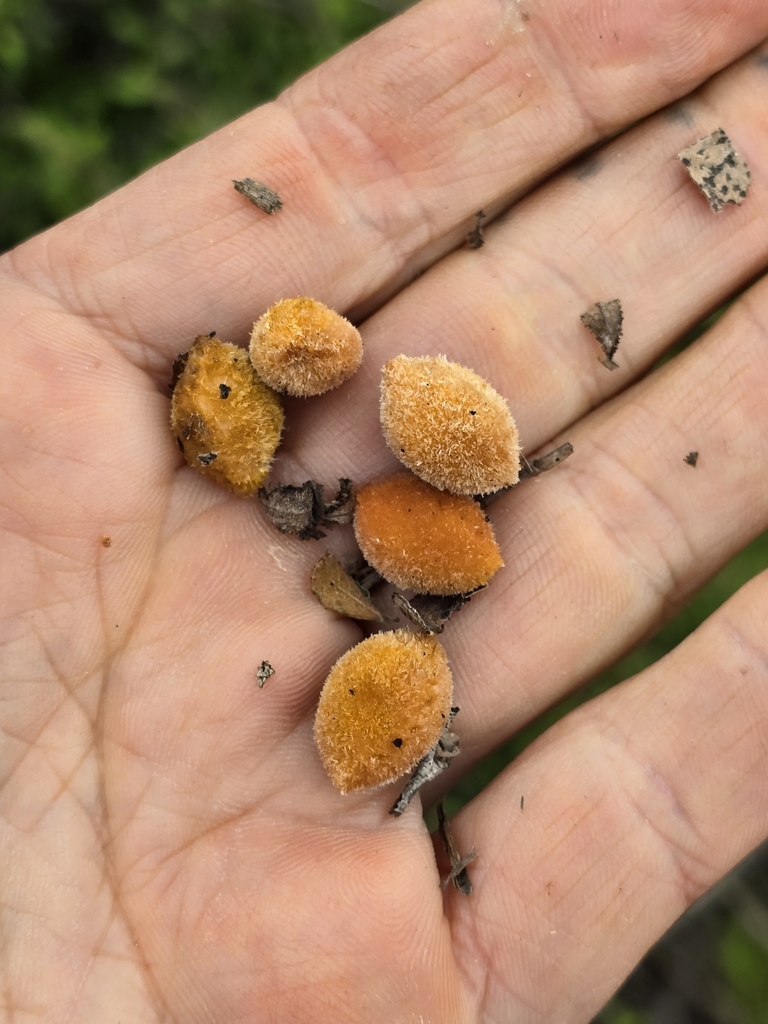
The fruit is an egg-shaped drupe about ½ to ¾ inch long, covered in fine velvety hairs and ripening yellow to orange or reddish in late spring and early summer. Each contains a single stone. Wild Plum and Chickasaw plum (Prunus angustifolia) have smooth, hairless fruits. Mexican plum (Prunus mexicana) is a small tree with larger, smooth purple fruits.
Quick Facts
| Scientific Name | Prunus texana |
| Family | Rosaceae (rose family) |
| Plant Type | Deciduous, thicket-forming shrub |
| Mature Height | 2–5 ft |
| Mature Spread | 2–5 ft per stem cluster; spreads into colonies |
| Growth Rate | Moderate |
| Sun Exposure | Full sun to part shade |
| Water Needs | Low; drought tolerant once established |
| Soil Type | Deep, well-drained sand or sandy loam |
| Soil pH | Slightly acidic to neutral |
| Bloom Time | February–March |
| Flower Color | White |
| Fall Color | Not notable |
| Fruit | Velvety yellow to orange drupe, ripening May–June |
| Deer Resistant | Low; deer browse the twigs and leaves |
| USDA Hardiness Zones | 8–9 |
Native Range
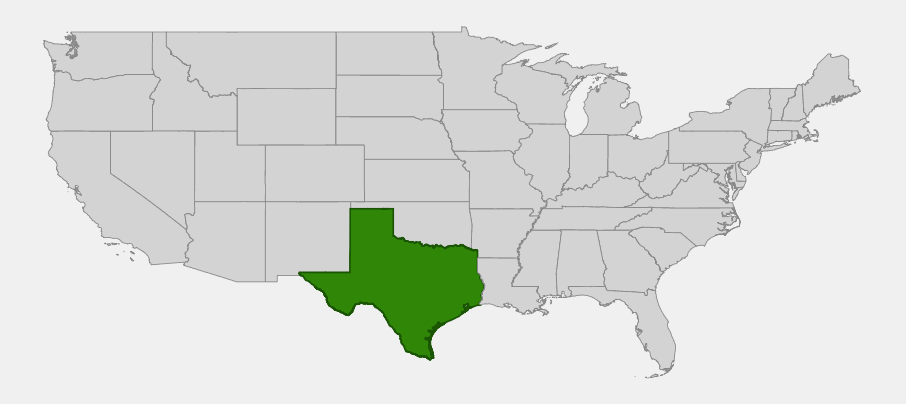
Texas peachbush is endemic to Texas. It grows mainly in south-central and South Texas, from the Post Oak Savannah and the sandy Carrizo-Wilcox belt south through the Rio Grande Plains, and along the southern and eastern edges of the Edwards Plateau. It is not found outside the state.
It is closely tied to deep, sandy soils, so its distribution is patchy, and it can be locally common in the sandy oak woodlands and brushlands of counties south and southeast of San Antonio while being absent from nearby clay soils.
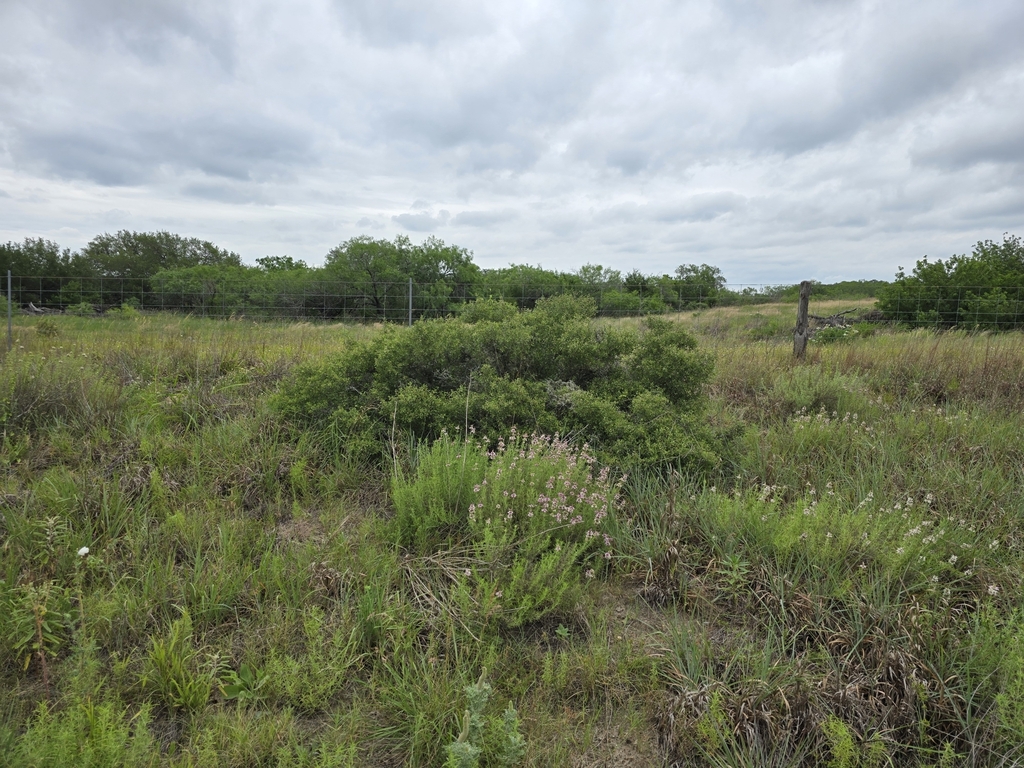
Its habitat includes sandy grasslands, open post oak woodlands, mesquite brushlands, field edges, roadsides and fencerows. It tolerates disturbance and often persists along old pasture edges and roadsides where the sand has been left undisturbed.
📋 Regional plant lists featuring Texas Peachbush: South & West Texas
Growing & Care Guide
Texas peachbush is an easy, tough native shrub for sandy, well-drained soils in central and South Texas. It is sold by some Texas native plant nurseries and is useful where you want a low, wildlife-friendly thicket.
Light
Full sun to part shade. It flowers and fruits best in full sun.
Soil & Water
It needs well-drained soil and does best in deep sand or sandy loam. It struggles in heavy, poorly drained clay. Water regularly during its first summer; after that, it is highly drought tolerant.
Planting Tips
Plant in fall or winter, about 3 feet apart for a hedge. Give it room to spread, or plant it where its suckering habit is welcome, such as a wildlife thicket, a slope that needs stabilizing, or the edge of a native meadow.
Pruning & Maintenance
Prune right after flowering if you need to shape it, and remove suckers where you do not want it to spread. Like other plums, it can be affected by tent caterpillars, black knot or other plum diseases, but it is generally trouble-free.
Propagation
Grow it from seed collected from ripe fruit. Clean the pits and give them two to three months of cold, moist stratification, or sow them outdoors in fall. It can also be propagated by digging and replanting rooted suckers from garden plants.
Landscape Uses
- Native hedges: low, informal hedges on sandy soils
- Wildlife thickets: cover and fruit for birds and small mammals
- Erosion control: its suckering roots hold sandy soil on slopes and banks
- Early pollinator gardens: one of the first native shrubs to bloom in late winter
Wildlife & Ecological Value
Like other native plums, Texas peachbush is valuable to wildlife in every season.
For Pollinators
Its late-winter flowers are an important early source of nectar and pollen for native bees, honeybees and flies. Native Prunus species are also larval host plants for many butterflies and moths, including hairstreaks, tiger swallowtails and the cecropia moth.
For Birds
Birds eat the ripe fruits, and the dense, twiggy thickets provide nesting and escape cover for quail, cardinals, thrashers and other brush-loving birds.
For Mammals
Raccoons, coyotes, foxes and other mammals eat the fallen fruit, and deer browse the twigs and leaves. The thickets shelter rabbits and other small mammals.
Ecosystem Role
Its colonies stabilize deep sandy soils, and its early flowers support pollinators when little else is in bloom. As an endemic shrub of the sandy soils of south-central Texas, it is part of a plant community that has been greatly reduced by land clearing.
Cultural & Historical Uses
Texas peachbush was described in the 1840s by the German botanist David Dietrich. Its Spanish name, duraznillo, means “little peach,” a reference to its velvety fruits.
The small fruits are edible but tart. Like other wild plums, they can be eaten fresh when fully ripe or cooked into jelly and preserves, though most gardeners leave them for wildlife.
Texas peachbush readily hybridizes with other native and cultivated plums, which can make some wild plants hard to identify. In native landscaping, it is valued as one of the few wild plums suited to the deep sands of South Texas.
Frequently Asked Questions
Is Texas peachbush a real peach?
No. It is a wild American plum, closely related to Chickasaw plum and wild plum. Its name comes from its small, velvety fruits, which look like tiny peaches.
Are the fruits edible?
The flesh of the ripe fruit is edible but tart. Never eat the pits, leaves or wilted foliage: like all Prunus, they contain compounds that release cyanide.
Where does Texas peachbush grow?
Only in Texas, mainly on deep sandy soils in the oak savannas, grasslands and brushlands of south-central and South Texas.
When does it bloom?
In February and March, often before its leaves appear, making it one of the earliest native shrubs to flower in its range.
Does it spread?
Yes. It spreads by root suckers into dense colonies, which makes it good for wildlife thickets and erosion control but less suited to small, formal beds.

Looking for a nursery that carries Texas Peachbush?
Browse our native plant nursery directory: Texas

