
Virginia Meadowsweet (Spiraea virginiana)
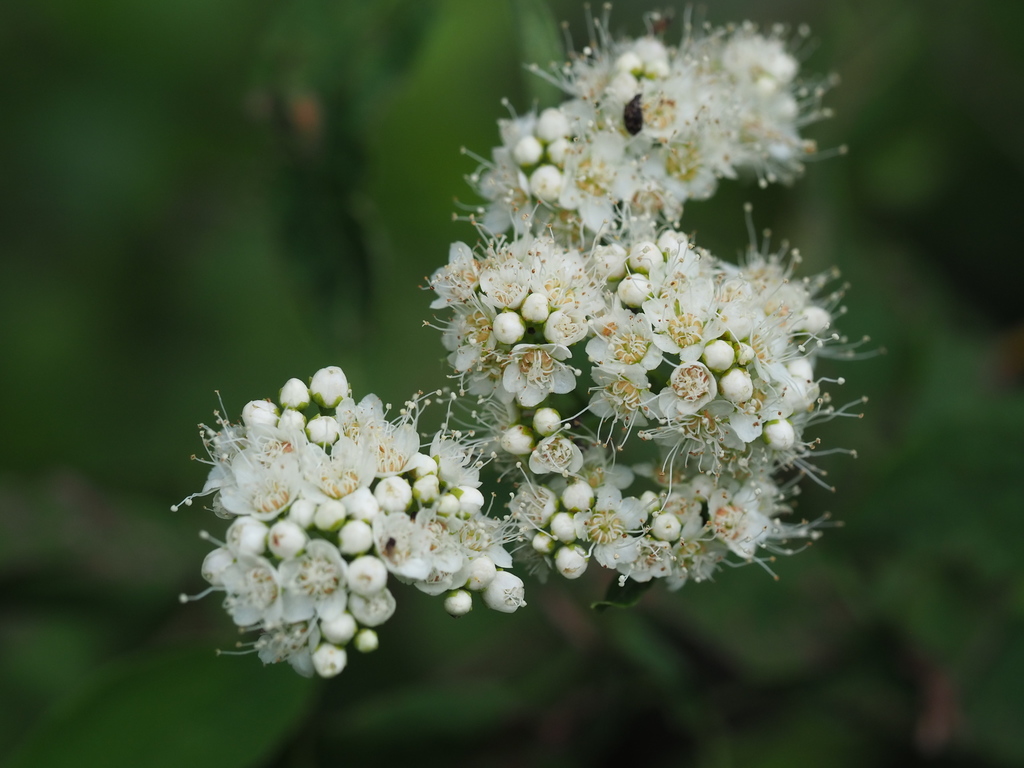
Spiraea virginiana, the Virginia Meadowsweet (also called Virginia spiraea), is a rare native shrub of the Appalachian region, listed as threatened under the U.S. Endangered Species Act. It grows along rocky, flood-scoured banks of rivers and large creeks, mostly in the southern and central Appalachians and the Cumberland Plateau.
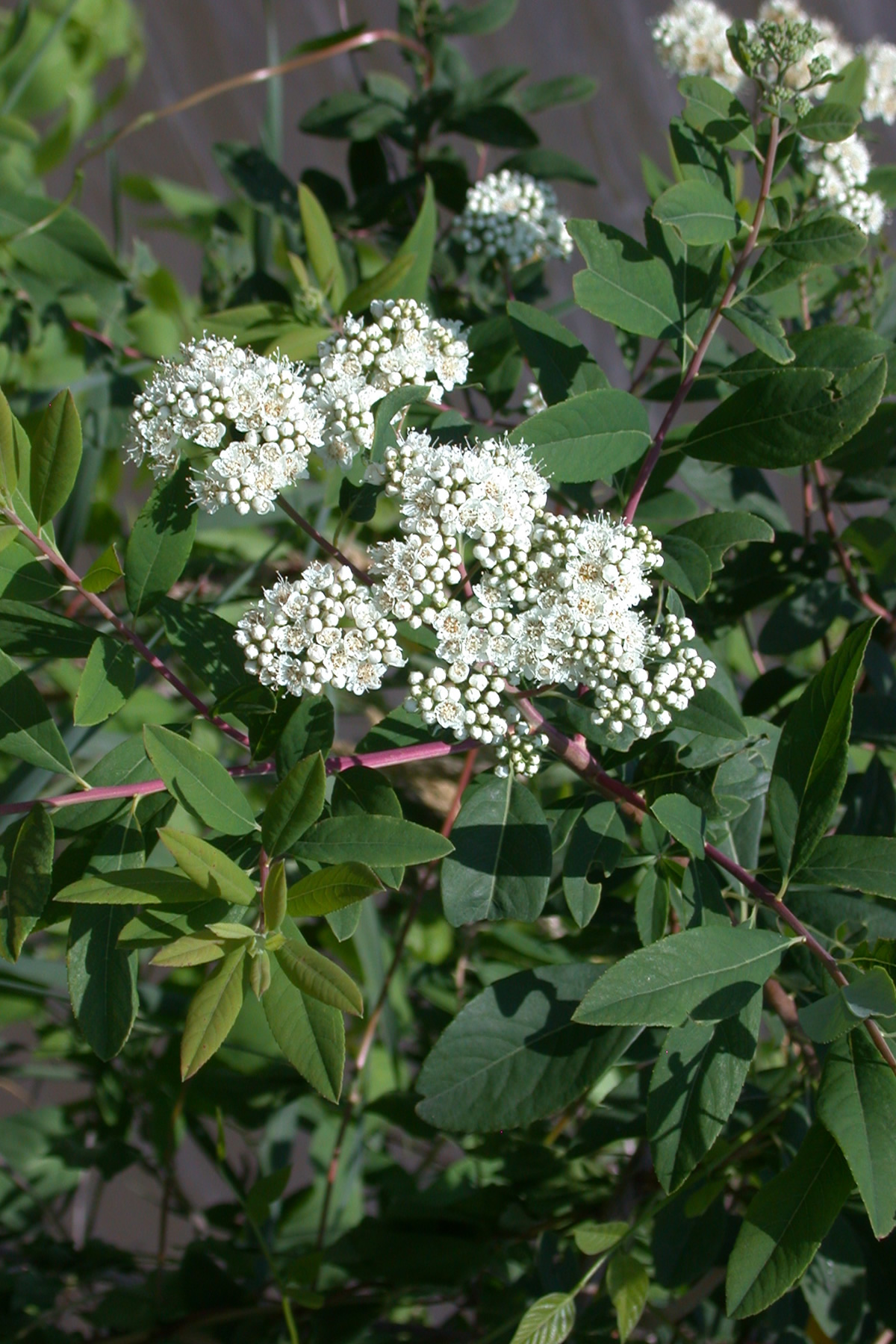
It is a clump-forming shrub 3 to 10 feet tall with lance-shaped leaves and dense, flat-topped clusters of small, creamy white flowers in June and July. Although it flowers well, it rarely produces viable seed and spreads mainly by root sprouts, so many populations are made up of just a few genetic individuals.
Changes to river flow and flooding, dams, bank development and invasive plants have made it rare. This page is an identification and appreciation guide: it covers how to recognize Virginia meadowsweet, where it grows, why it is threatened and how it is being conserved. Never dig or take cuttings from wild plants.
Identification
Virginia meadowsweet is a multi-stemmed, clonal shrub with alternate, lance-shaped leaves and flat-topped clusters of small, white flowers at the stem tips.
Form & Stems
It grows 3 to 10 feet tall in dense clumps, with many upright to arching stems arising from spreading roots. Young stems are reddish-brown to brown, becoming gray with age. Clumps can spread several yards along a riverbank.
Leaves
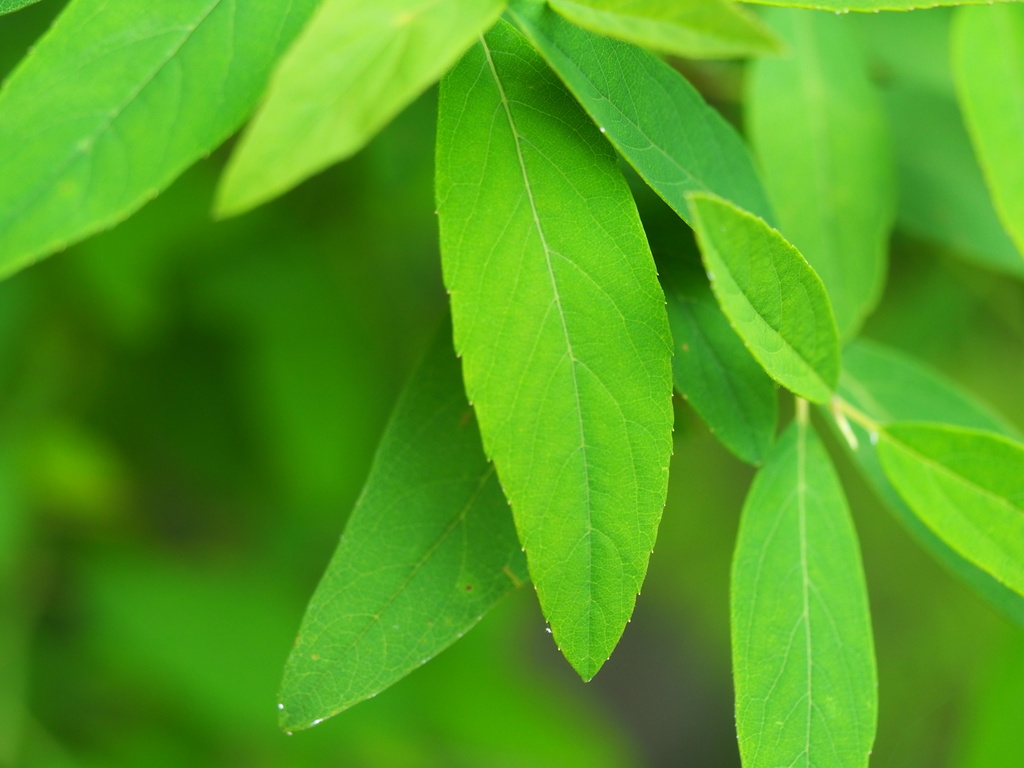
The leaves are alternate, lance-shaped to oblong, about 1 to 3 inches long, with smooth edges or a few teeth near the tip. They are green above and paler beneath. Leaf shape and size vary considerably, even on one plant.
Flowers
In June and July, it bears dense, flat-topped to slightly domed clusters (corymbs) 2 to 4 inches across at the branch tips, made up of many tiny, creamy white flowers about ¼ inch wide with five petals and many long stamens that give the clusters a fuzzy look.
Fruit & Look-alikes
The fruits are small, dry follicles, but viable seed is rare. White Meadowsweet (S. alba) has narrow, sharply toothed leaves and long, spire-like flower clusters, and Japanese spiraea (S. japonica), an invasive shrub that can share the same riverbanks, has pink flowers. Virginia meadowsweet is best identified by its flat-topped white flower clusters, mostly smooth-edged leaves and riverbank habitat.
Quick Facts
| Scientific Name | Spiraea virginiana Britton |
| Family | Rosaceae (rose family) |
| Plant Type | Deciduous clonal shrub; federally threatened |
| Mature Height | 3–10 ft |
| Mature Spread | Spreads by root sprouts into clumps |
| Growth Rate | Moderate |
| Sun Exposure | Full sun to partial shade |
| Water Needs | Moist; tolerates periodic flooding |
| Soil Type | Rocky, sandy or gravelly alluvium along streams |
| Soil pH | About 5.0–7.0 |
| Bloom Time | June–July |
| Flower Color | Creamy white |
| Fall Color | Yellow to reddish |
| Fruit | Small dry follicles; seed rarely produced |
| Deer Resistant | Low; browsed by deer |
| USDA Hardiness Zones | 5–8 |
Native Range
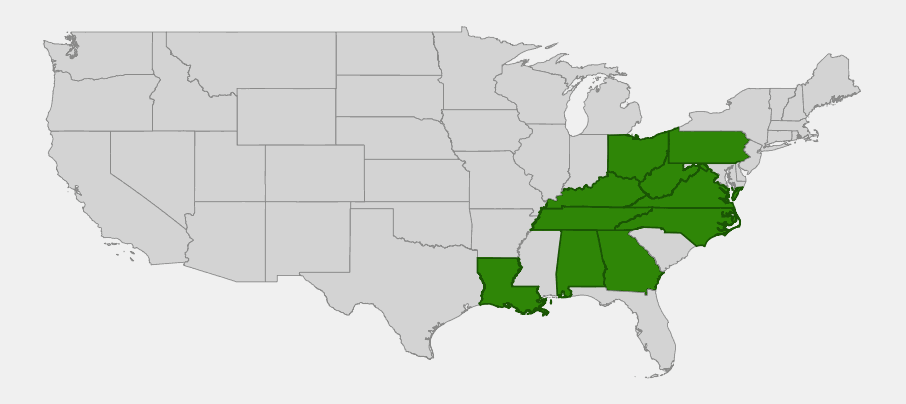
Virginia meadowsweet is native to the Appalachian region of the eastern United States. USDA PLANTS lists it in West Virginia, Virginia, Kentucky, Tennessee, North Carolina, Georgia, Alabama, Ohio and Pennsylvania, plus a disjunct record from Louisiana. Most surviving populations are in the Blue Ridge, the Appalachian Plateau and the Cumberland Plateau.
It grows along rivers such as the New, Gauley, Bluestone, Little Tennessee and Nolichucky and their tributaries. When it was listed as threatened in 1990, only about two dozen populations were known, and many of these are small. Some historic populations have disappeared.
Its habitat is the scour zone of rivers and large creeks: rocky or gravelly bars, ledges, islands and banks where periodic floods clear away competing trees and shrubs. It also grows in disturbed openings such as road and power-line rights-of-way near streams. Without flooding or other disturbance, it is shaded out by taller vegetation.
📋 Regional plant lists featuring Virginia Meadowsweet: Alabama, Georgia & Mississippi · Kentucky & Tennessee · North & South Carolina · Maryland, Virginia & West Virginia · Ohio & Indiana · New York, Pennsylvania & Northern New Jersey · Arkansas, Louisiana, Eastern Oklahoma & Eastern Texas
Can You Grow It?
Virginia meadowsweet is a federally threatened species. It is grown from cuttings by a few conservation programs and specialty nurseries, but wild plants are protected, and you should never dig plants or take cuttings from wild populations. If you buy it, choose only plants from legally propagated nursery stock, and check that sales comply with federal and state rules. Common native alternatives for a moist, sunny spot include White Meadowsweet and Steeplebush.
Light
In the wild it grows in full sun to partial shade on open riverbanks. It needs good light to flower and declines when shaded by trees.
Soil & Water
It is adapted to moist, well-drained, rocky or sandy alluvial soil that floods periodically. In cultivation it grows in average to moist garden soil.
Planting Tips
Planting of nursery-propagated stock is used in conservation projects to restore populations along rivers. In gardens, give it a sunny, moist site with room to spread.
Pruning & Maintenance
Old stems can be cut back to the ground in late winter to renew the clump. In the wild, managers sometimes remove competing woody plants and invasive species to keep sites open.
Propagation
It roots easily from cuttings and spreads from root sprouts, which is how conservation programs propagate it. Seed is rarely viable.
Landscape Uses
- River restoration: conservation plantings on flood-scoured banks
- Botanic gardens: conservation collections display propagated plants
- Native alternatives: grow white meadowsweet or steeplebush at home
- River trips: look for it on rocky banks of Appalachian rivers in early summer
Wildlife & Ecological Value
Virginia meadowsweet is part of the specialized plant community of flood-scoured Appalachian riverbanks.
For Pollinators
The fuzzy white flower clusters attract many small bees, flies, beetles and butterflies for nectar and pollen. Spiraeas are larval host plants for several moths.
For Birds
The dense clumps provide nesting and escape cover for songbirds along rivers.
For Mammals
Deer browse the shoots and leaves, which can be a problem for small populations.
Ecosystem Role
Its dense root systems help hold gravel and soil on riverbanks against floods. It depends on natural flood disturbance, so it is an indicator of healthy, free-flowing river systems.
Cultural & Historical Uses
Nathaniel Lord Britton, founder of the New York Botanical Garden, described Spiraea virginiana in the late 19th century. The species name refers to Virginia.
The U.S. Fish and Wildlife Service listed Virginia meadowsweet as threatened in 1990. Recovery efforts include protecting populations, controlling invasive plants such as Japanese knotweed and Japanese spiraea, and propagating plants to boost small populations.
Genetic studies have found that many populations are made up of only one or a few clones, which may explain why seed is so rarely produced.
Frequently Asked Questions
Is Virginia meadowsweet endangered?
It is listed as threatened under the U.S. Endangered Species Act, with only a few dozen populations along Appalachian rivers.
Where does Virginia meadowsweet grow?
On rocky, flood-scoured banks of rivers and creeks in the Appalachian region, mainly in West Virginia, Virginia, Kentucky, Tennessee, North Carolina and Georgia.
When does Virginia meadowsweet bloom?
In June and July, with flat-topped clusters of creamy white flowers.
Can I grow Virginia meadowsweet?
Only from legally propagated nursery stock. Never collect plants or cuttings from the wild. White meadowsweet is a common native alternative.
Why does Virginia meadowsweet rarely make seed?
Many populations consist of only one or a few clones, and the plant rarely sets viable seed, spreading instead by root sprouts.

Looking for a nursery that carries Virginia Meadowsweet?
Browse our native plant nursery directory: Alabama · Georgia · Kentucky & Louisiana · North Carolina & Ohio · Pennsylvania, Tennessee & Virginia · West Virginia

