
Lindley’s Blazingstar (Mentzelia lindleyi)
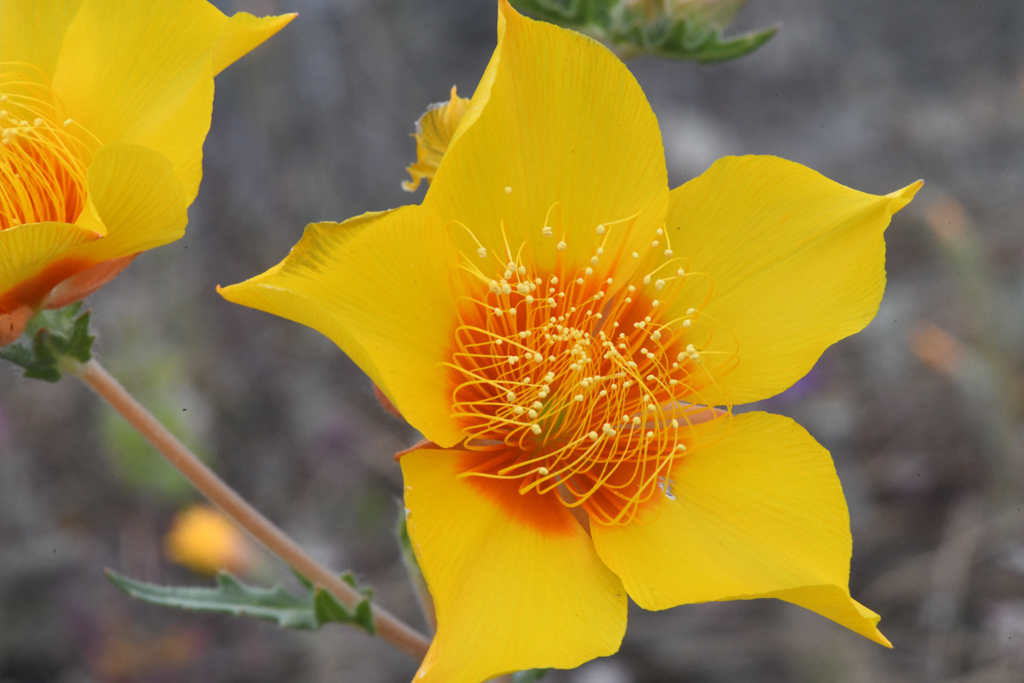
Mentzelia lindleyi, Lindley’s Blazingstar, also called golden bartonia or evening star, is a California native annual wildflower with some of the largest and showiest flowers of any spring annual in the state. In the wild it is found mainly on rocky slopes in the Coast Ranges around the San Francisco Bay Area and in the inner Coast Ranges that border the San Joaquin Valley.
Each plant grows 1 to 2 feet tall and carries glossy, golden-yellow, five-petaled flowers up to 3 inches across, with an orange-red blush at the center and a dense brush of stamens. The flowers open in the late afternoon or evening and stay open into the next day, which gives the plant its “evening star” name. Its narrow, deeply toothed leaves are covered in tiny barbed hairs.
It has been grown in European gardens since the 1830s, often under the old name Bartonia aurea, and its seed is still sold for wildflower meadows, dry gardens and pollinator plantings. This guide covers how to identify it, where it grows wild, how to grow it from seed and what visits its flowers.
Identification
Lindley’s blazingstar is an upright, branched annual with rough, comb-toothed leaves and big, shining yellow flowers with an orange-red center.
Stems & Habit
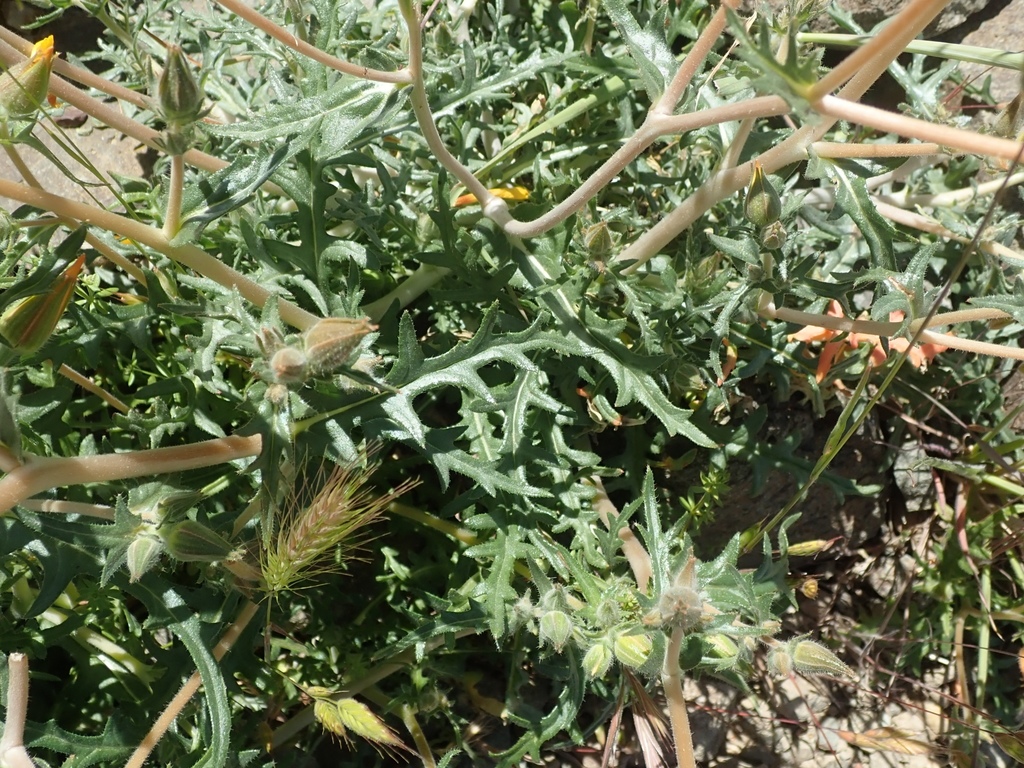
It grows from a taproot to 1 to 2 feet tall (occasionally taller), with a single stem or several spreading branches. The stems are whitish to pale green and rough with hairs. Plants grown in good conditions become bushy, with 25 or more flowers over the season.
Leaves
The leaves are up to about 4 inches long, narrow and stalkless, and deeply and evenly toothed, like a comb, somewhat resembling a dandelion leaf. Like other members of the stickleaf family, they are covered in tiny barbed hairs that make them cling to clothing and fur.
Flowers
The flowers are 1½ to 3 inches across, with five broad, glossy, golden-yellow petals that are often tinged orange-red at the base, and about a hundred long, yellow stamens. They are borne at the branch tips from about March to June, opening in late afternoon or evening and closing by the next afternoon, and are lightly fragrant.
Fruit & Look-alikes
The fruit is a narrow, club-shaped capsule up to about 1½ inches long, packed with small, angular seeds. California Poppy also has glossy orange-yellow flowers, but it has four petals and finely divided, smooth blue-green leaves. Other blazingstars such as Whitestem Blazingstar have much smaller flowers, and Smoothstem Blazingstar is a taller biennial with pale yellow flowers that open in the evening.
Quick Facts
| Scientific Name | Mentzelia lindleyi Torr. & A. Gray |
| Family | Loasaceae (stickleaf family) |
| Plant Type | Annual wildflower |
| Mature Height | 1–2 ft |
| Mature Spread | About 1 ft |
| Growth Rate | Fast |
| Sun Exposure | Full sun |
| Water Needs | Very low; drought tolerant |
| Soil Type | Sandy, gravelly or rocky, well-drained |
| Soil pH | About 6.0–8.0 |
| Bloom Time | March–June |
| Flower Color | Golden yellow with an orange-red center |
| Fall Color | None (annual) |
| Fruit | Narrow club-shaped capsule |
| Deer Resistant | Generally; rough, clinging leaves |
| USDA Hardiness Zones | Annual; grown as a cool-season annual in most climates |
Native Range
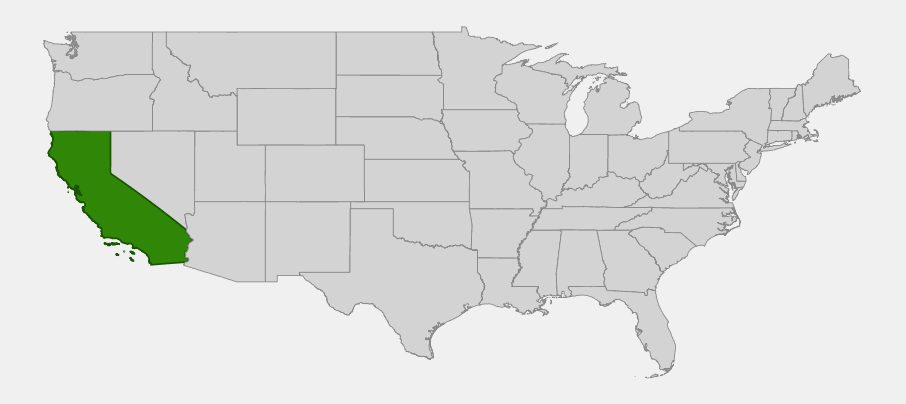
Lindley’s blazingstar is native to California, where wild populations are centered in the Coast Ranges from Alameda and Contra Costa counties south through Santa Clara County and the Diablo Range, and east into the inner Coast Ranges of western Stanislaus, Merced and Fresno counties. It is easy to see in spring in places such as Sunol Regional Wilderness, Del Puerto Canyon and Frank Raines Regional Park.
Because it is a popular garden wildflower, it also turns up as an occasional escape from cultivation in other parts of California and beyond. USDA PLANTS lists Arizona as well, but the Arizona flora treats it as a cultivated plant that occasionally escapes, with records from the Phoenix area, so the map shows California only.
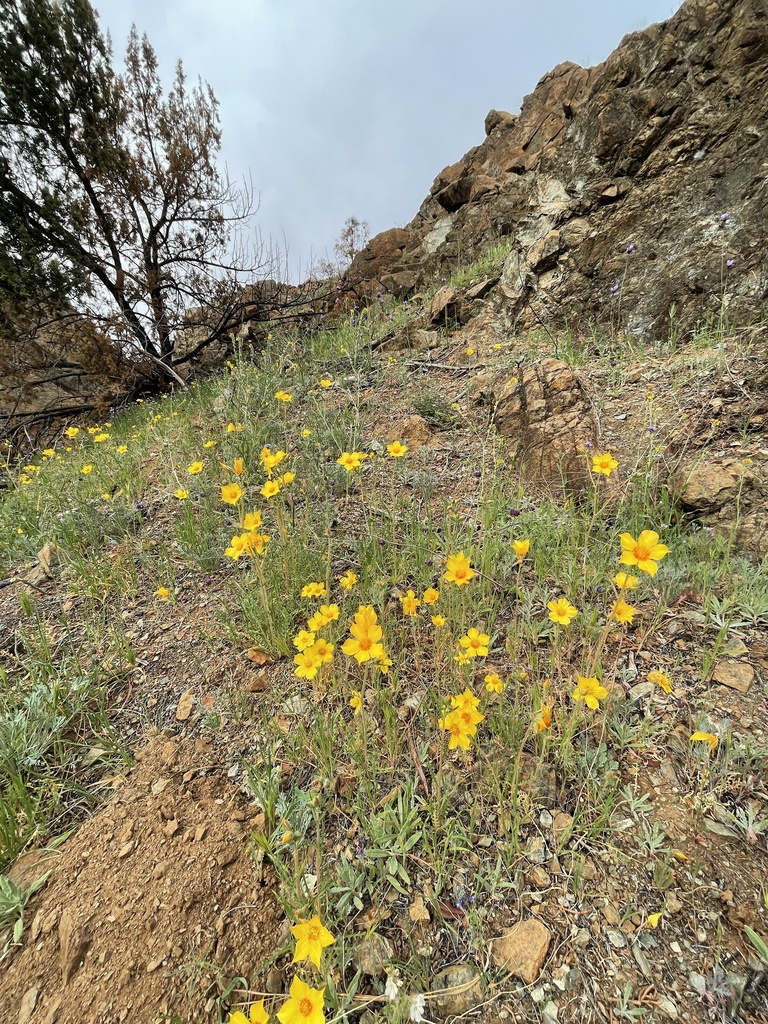
In the wild it grows on rocky, open slopes, road cuts, talus and openings in oak woodland, chaparral and coastal sage scrub, usually below about 2,500 to 4,000 feet. It favors thin, well-drained and often disturbed soils, and its numbers rise and fall with winter rainfall.
📋 Regional plant lists featuring Lindley’s Blazingstar: California & Nevada
Growing & Care Guide
Lindley’s blazingstar is one of the easiest and most rewarding California annuals to grow from seed, and seed is widely available from native seed companies. It needs sun, sharp drainage and little else. In mild-winter climates, sow it in fall to bloom in spring; in cold-winter areas, sow it in spring as a summer annual.
Light
Full sun gives the most flowers and sturdiest plants. It tolerates light shade but flowers less.
Soil & Water
Sandy, gravelly or rocky soil with fast drainage is ideal; poor soil is fine. In California, winter rain is usually enough. Avoid summer water and heavy, wet clay, which cause root rot.
Planting Tips
Sow seed directly where it is to grow in fall or early winter, scattering it thinly and pressing it into the soil surface, because the taproot resents transplanting. Thin seedlings to 8 to 12 inches apart. It looks best in drifts in a meadow, on a slope or in a gravel garden, rather than in small, confined spaces.
Pruning & Maintenance
Deadheading spent flowers can extend the bloom season. Leave some capsules to ripen if you want plants to reseed. Wear gloves when handling plants, since the barbed hairs stick to skin and clothing.
Propagation
Propagate by seed. No pretreatment is needed; sow in fall or early winter in mild climates, or in spring after frost elsewhere. Collect seed from your own plants as the capsules dry in early summer.
Landscape Uses
- Wildflower meadows and hillside plantings: big, bright spring color from seed
- Dry and gravel gardens: thrives in poor, fast-draining soil without summer water
- Pollinator gardens: abundant pollen for native bees
- Containers: compact plants for sunny patios when grown in sandy mix
Wildlife & Ecological Value
The large, open, pollen-rich flowers attract many insects, especially native bees.
For Pollinators
Bumble bees, including the yellow-faced bumble bee, and many smaller native bees gather its abundant pollen. The evening-opening flowers are also visited by moths, and flowers that remain open the next morning are visited by bees and beetles.
For Birds
Finches and other seed-eating birds may pick seeds from the dry capsules in early summer.
For Mammals
The rough, clinging leaves are not a favorite of deer or rabbits. The barbed hairs help the leaves and fruits stick to passing animals.
Ecosystem Role
As a fast-growing annual of open, rocky and recently disturbed slopes, it is one of the colonizers of bare ground in the Coast Ranges, adding to the spectacular spring wildflower displays that follow wet winters.
Cultural & Historical Uses
John Torrey and Asa Gray named Mentzelia lindleyi for the English botanist John Lindley, who had described the same plant a few years earlier as Bartonia aurea from seed collected in California by the Scottish plant explorer David Douglas. The genus name honors the 17th-century German botanist Christian Mentzel.
Under the name bartonia, it became a popular annual in Victorian flower gardens in Britain and Europe, and it still appears in seed catalogs and older garden books under that name.
Mary Elizabeth Parsons featured it as “blazing-star” in her classic 1897 book The Wild Flowers of California, and it remains one of the signature spring wildflowers of the hills around the San Francisco Bay.
Frequently Asked Questions
Is Lindley’s blazingstar an annual?
Yes. It grows from seed, flowers and dies in a single season. Leave some seed capsules to ripen and it will often reseed itself.
When does Lindley’s blazingstar bloom?
From about March to June in California. Individual flowers open in late afternoon or evening and close by the next afternoon.
Where does Lindley’s blazingstar grow wild?
Mainly in the Coast Ranges of the San Francisco Bay Area and the inner Coast Ranges west of the San Joaquin Valley, on rocky open slopes.
Is Mentzelia lindleyi native to Arizona?
Not according to the Arizona flora, which treats it as a cultivated plant that occasionally escapes. It is a California native.
How do I grow Lindley’s blazingstar from seed?
Sow seed directly in a sunny spot with fast-draining soil in fall (mild climates) or spring (cold climates). Do not transplant, and avoid summer water.

Looking for a nursery that carries Lindley’s Blazingstar?
Browse our native plant nursery directory: California

