
Maiapilo (Capparis sandwichiana)
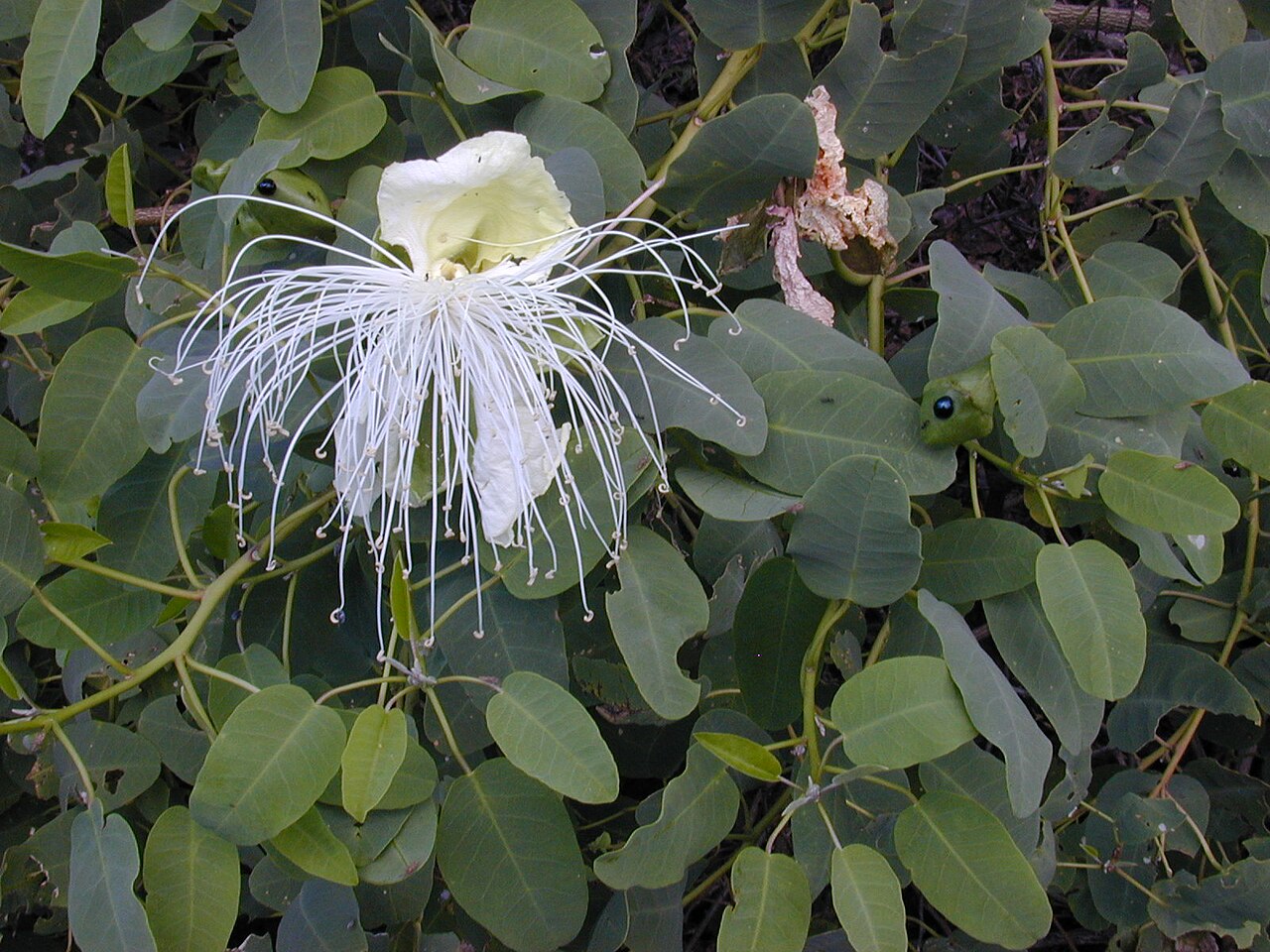
Capparis sandwichiana, known as Maiapilo, pua pilo or Hawaiian caper, is a sprawling shrub endemic to the Hawaiian Islands. It grows on dry, rocky coasts, raised coral reefs and young lava flows, often within reach of salt spray. It belongs to the caper family (Capparaceae) and is a close relative of the Mediterranean caper bush whose flower buds are pickled as capers.
Maiapilo is famous for its flowers. Large, fragrant and white, each one is a spray of dozens of long white stamens around four delicate petals. They open in the evening, perfume the night air, and by the next morning fade to pink before wilting, so most people see them at dusk or early morning. They are followed by long, cucumber-like fruits.
This tough, drought- and salt-tolerant shrub has become a favorite of Hawaiian native landscaping, for coastal gardens, xeriscapes and groundcover plantings. Wild populations, however, have declined, and it is listed as Vulnerable by the IUCN. This guide covers how to identify it, where it grows, how to grow it outdoors in Hawaiʻi and other frost-free climates, and its cultural significance.
Identification
Maiapilo is easy to recognize by its rounded, slightly fleshy leaves on sprawling stems and its spectacular white flowers with long stamens.
Leaves & Growth Habit
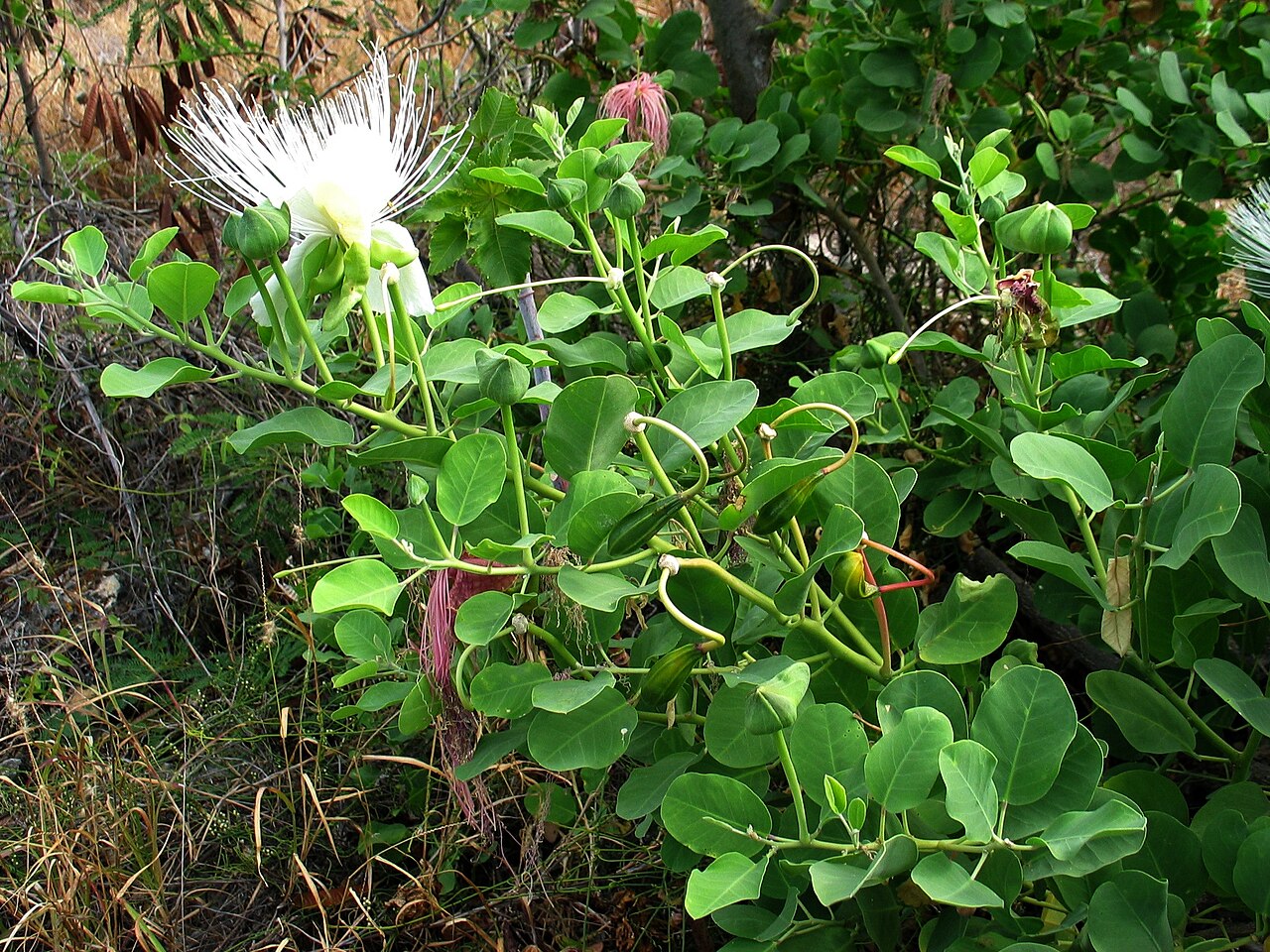
A sprawling to mounding shrub, usually prostrate or up to about 3 to 5 feet tall, spreading several feet wide; on windy coasts it hugs the ground. The leaves are alternate, rounded to oval, 1 to 2½ inches long, slightly thick and fleshy, bright green to gray-green, often with a small notch or point at the tip.
Flowers
Flowers are borne singly in the leaf axils, mostly from spring through summer, though plants can bloom at other times. Each flower has four white petals and a burst of many long white stamens, 1½ to 3 inches long, around a central stalked ovary. They open in the evening, are strongly fragrant at night, turn pink by the following morning and wilt by midday.
Fruit
The fruit is a long, cucumber-shaped berry, 2 to 3 inches long, hanging on a stalk. It is green and smooth, ripening to a soft fruit with an unpleasant odor, which gives the plant its name: pilo means “foul-smelling” in Hawaiian. Inside are many seeds in orange pulp.
Look-alikes
The Mediterranean caper bush (Capparis spinosa) is similar but has spiny stems and pinkish-white flowers; it is not native to Hawaiʻi. In Florida, the related Limber Caper (Capparis flexuosa, now often Cynophalla flexuosa) has similar white, night-blooming flowers but grows as a vine-like shrub with narrower, leathery leaves. In Hawaiian coastal plantings, maiapilo may grow with Naupaka Kahakai, which has fleshy, paddle-shaped leaves and white half-flowers.
Quick Facts
| Scientific Name | Capparis sandwichiana |
| Family | Capparaceae (caper family) |
| Plant Type | Sprawling evergreen shrub |
| Mature Height | 1–5 ft |
| Mature Spread | 3–10 ft |
| Growth Rate | Moderate |
| Sun Exposure | Full sun |
| Water Needs | Low; very drought tolerant once established |
| Soil Type | Rocky, sandy, coralline and lava soils; excellent drainage |
| Soil pH | Neutral to alkaline |
| Bloom Time | Mainly spring–summer; flowers open at night |
| Flower Color | White, fading to pink |
| Fall Color | Evergreen |
| Fruit | Cucumber-shaped green berry, 2–3 in, with a strong odor when ripe |
| Deer Resistant | Not well documented; browsed by goats and other feral ungulates |
| USDA Hardiness Zones | 10–13 (frost-free only) |
Native Range
Maiapilo is endemic to Hawaiʻi and grows nowhere else in the world. USDA PLANTS lists it as native to Hawaiʻi. It occurs on all the main Hawaiian Islands and on several of the Northwestern Hawaiian Islands, including Laysan, Midway Atoll and Pearl and Hermes Atoll, now part of the Papahānaumokuākea Marine National Monument.
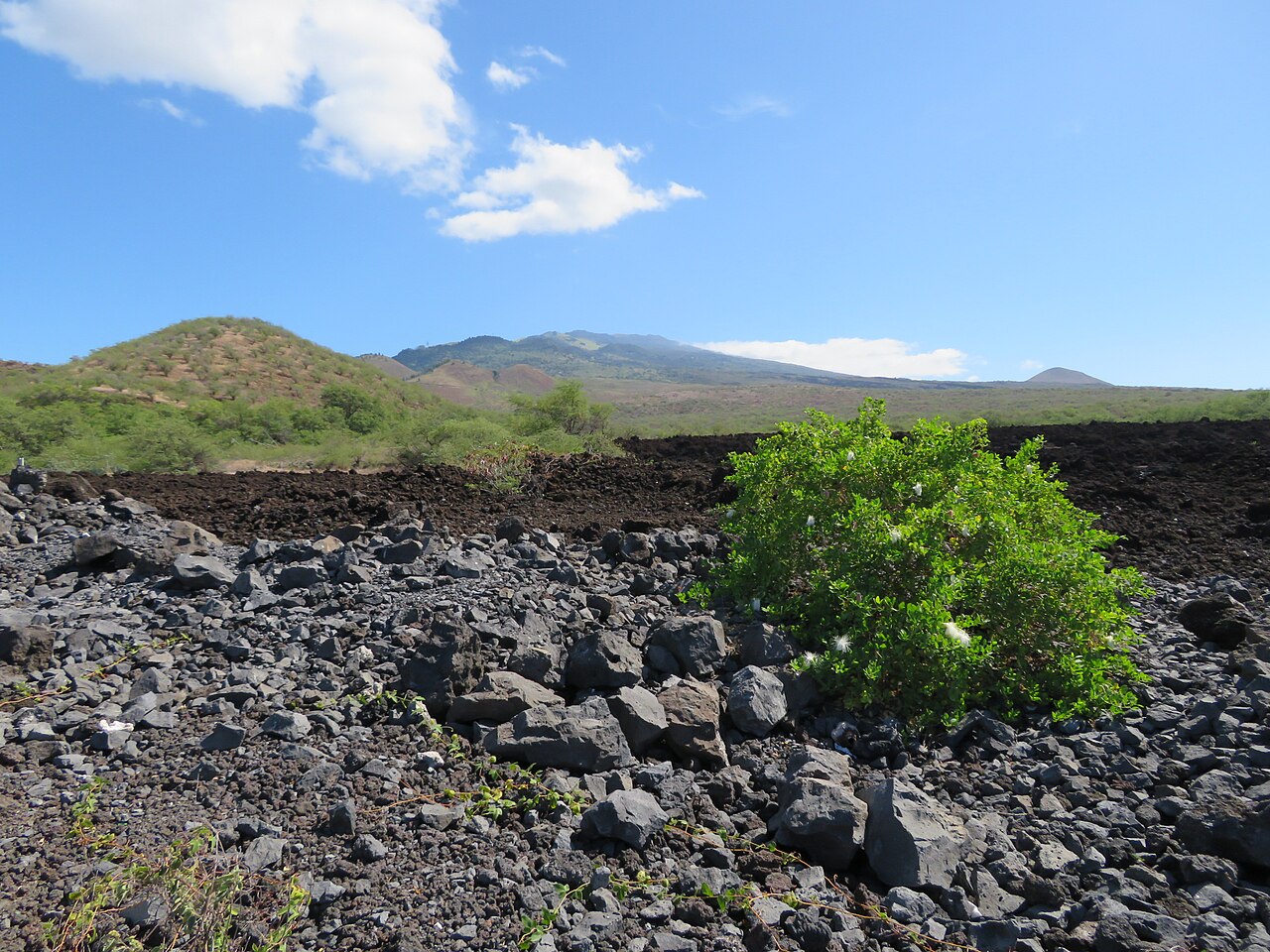
It grows in dry coastal habitats: rocky shores and sea cliffs, raised limestone reefs, coastal strand, young lava flows and low, dry shrublands, mostly from near sea level to a few hundred feet in elevation. Notable populations grow on the leeward coasts of Oʻahu and on the lava fields of southwest Maui, and on offshore islets around the main islands.
Its numbers have declined because of coastal development, grazing and browsing by goats and other feral animals, and competition from invasive plants such as kiawe and buffelgrass, as well as fires fueled by invasive grasses. The IUCN lists it as Vulnerable. It is not federally listed, but buy only nursery-propagated plants and never collect plants, cuttings or seed from the wild.
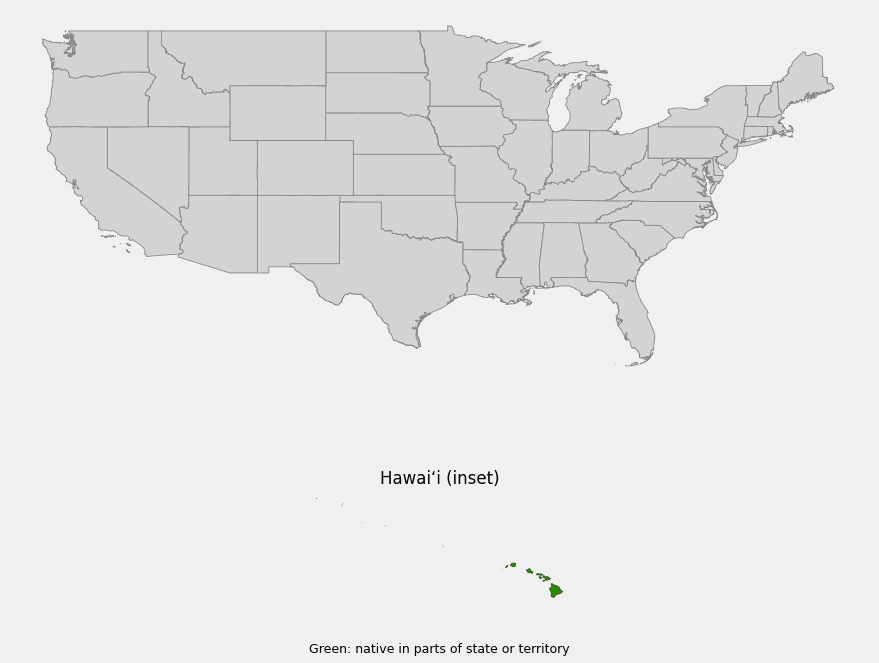
📋 Regional plant lists featuring Maiapilo: Hawaii
Growing & Care Guide
Maiapilo is one of the toughest Hawaiian natives for coastal gardens and is grown by native plant nurseries across the islands. It can only be grown outdoors in frost-free climates (USDA zones 10 to 13), such as Hawaiʻi and the warmest parts of coastal California and South Florida. Elsewhere it can be grown in a large container in full sun and moved indoors to a bright, cool-season spot, though it rarely flowers well indoors.
Light
Full sun. It tolerates wind and salt spray and flowers best in hot, bright, open sites.
Soil & Water
Plant it in fast-draining soil: sand, cinder, crushed coral or rocky soil. Water regularly for the first few months until established, then only during long droughts; overwatering and heavy, poorly drained soil cause root rot. Once established it thrives in dry leeward conditions with little or no supplemental water. A light, occasional feeding with a balanced slow-release fertilizer is enough.
Planting Tips
Use it as a sprawling groundcover, on slopes and rock walls, in coastal and xeriscape gardens, or as a low informal hedge. Space plants 4 to 6 feet apart. Plant near a patio or path so you can enjoy the night-blooming fragrance. In containers, use a large pot with a gritty cactus mix.
Pruning & Maintenance
Prune lightly to shape or to keep it from sprawling over paths; it tolerates heavier pruning to rejuvenate leggy plants. Watch for caterpillars, such as those of the diamondback moth, which occasionally feed on the leaves, and for scale and mealybugs on stressed plants.
Propagation
Grow it from fresh seed cleaned of its pulp; seeds germinate in a few weeks to months in a well-drained mix. Semi-hardwood cuttings can be rooted with rooting hormone in a sandy, well-drained medium, though rooting can be slow.
Landscape Uses
- Coastal gardens: salt- and wind-tolerant groundcover for seaside landscapes
- Xeriscapes: very low water use once established
- Evening and fragrance gardens: night-blooming, fragrant white flowers
- Native Hawaiian restoration: for dry coastal and lowland plantings
Wildlife & Ecological Value
Maiapilo is part of Hawaiʻi’s unique dry coastal plant community, much of which has been lost to development and invasive species.
For Pollinators
Its night-opening, fragrant white flowers with long stamens fit the pattern of moth-pollinated flowers, and night-flying moths visit them in the evening. Bees and other insects visit the fading flowers the next morning.
For Birds
It is not an important bird food, but on offshore islets and the Northwestern Hawaiian Islands it is part of the low coastal vegetation where seabirds nest and rest.
For Mammals
Hawaiʻi has only two native land mammals, the Hawaiian hoary bat and the Hawaiian monk seal, and neither depends on maiapilo. Introduced goats and deer browse it heavily, which is one reason for its decline.
Ecosystem Role
As one of the few shrubs that can grow on bare lava, raised reef and salt-sprayed rock, maiapilo helps hold soil and provides shade and shelter for insects and other small life in some of the harshest coastal sites in Hawaiʻi. It also feeds native and introduced insects, including moth caterpillars that browse its leaves.
Cultural & Historical Uses
The Hawaiian name maiapilo is usually translated as “foul-smelling banana,” referring to the long fruit and its strong odor when ripe; pua pilo means “foul-smelling flower,” although the fresh flowers themselves are sweetly fragrant. The species name sandwichiana refers to the Sandwich Islands, the name Captain Cook gave to Hawaiʻi.
Maiapilo was used in traditional Hawaiian medicine. According to ethnobotanical accounts, plant parts were pounded and used in poultices for wounds and injuries, including broken bones. It is a relative of the Mediterranean caper, but its buds and fruits are not used as food.
Today maiapilo is one of the native plants most often used in Hawaiian landscaping and roadside plantings, and conservation groups have planted it in restoration projects on offshore islets and coastal preserves, helping to secure a plant that was once declining across the islands.
Frequently Asked Questions
Is maiapilo native to Hawaiʻi?
Yes. It is endemic to the Hawaiian Islands, growing naturally on all the main islands and several of the Northwestern Hawaiian Islands, and nowhere else in the world.
When do maiapilo flowers open?
In the evening. The flowers open around dusk, are fragrant through the night, turn pink by the next morning and wilt by midday.
Can you eat maiapilo capers?
Maiapilo is a relative of the caper bush, but it is not a food plant, and its ripe fruit has an unpleasant smell. It was used medicinally, not as food, in traditional Hawaiian culture.
Is maiapilo endangered?
It is not federally listed, but the IUCN lists it as Vulnerable because of habitat loss, grazing and invasive species. Buy nursery-propagated plants and never collect from the wild.
Can I grow maiapilo outside Hawaiʻi?
Only outdoors in frost-free climates (USDA zones 10 to 13). Elsewhere, grow it in a large container in full sun and protect it from frost; it rarely blooms well indoors.

Looking for a nursery that carries Maiapilo?
Browse our native plant nursery directory: Hawaii

