
San Francisco Wallflower (Erysimum franciscanum)
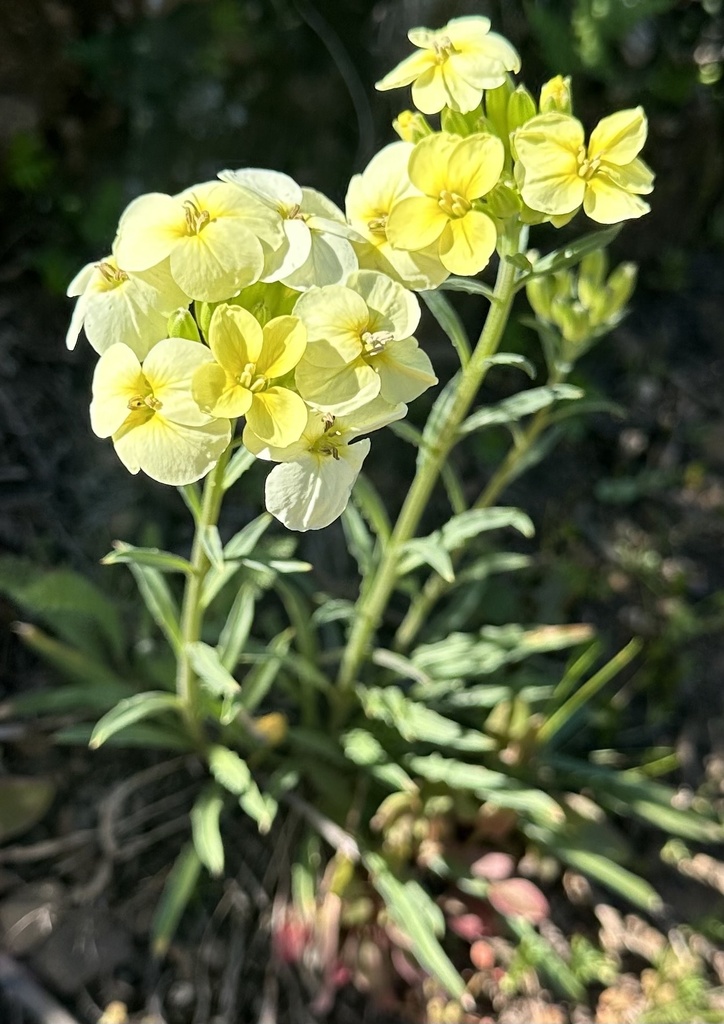
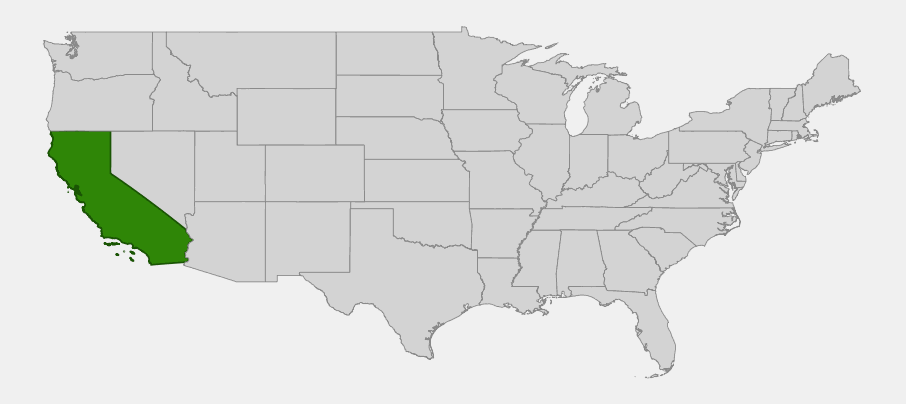
Erysimum franciscanum, the San Francisco Wallflower (also called Franciscan wallflower), is a fragrant native wildflower found only along the central California coast, from Sonoma County south through Marin, San Francisco and San Mateo Counties to Santa Cruz County, with inland populations on serpentine in the South Bay.
It is a low, short-lived perennial or biennial with a rosette of narrow, toothed leaves and rounded clusters of cream to pale yellow, four-petaled flowers in late winter and spring. It grows on coastal bluffs, rocky and sandy slopes, serpentine and granitic outcrops, coastal scrub and coastal prairie.
The California Native Plant Society lists it on its watch list of plants of limited distribution (Rank 4.2), and much of its habitat has been lost to development. San Bruno Mountain and the Presidio of San Francisco are among the best places to see it. This guide covers how to identify it, where it grows, how to grow it and its value to wildlife.
Identification
San Francisco wallflower is a low rosette plant with narrow, toothed leaves covered in fine forked hairs and dense clusters of fragrant cream to pale yellow flowers.
Growth Form
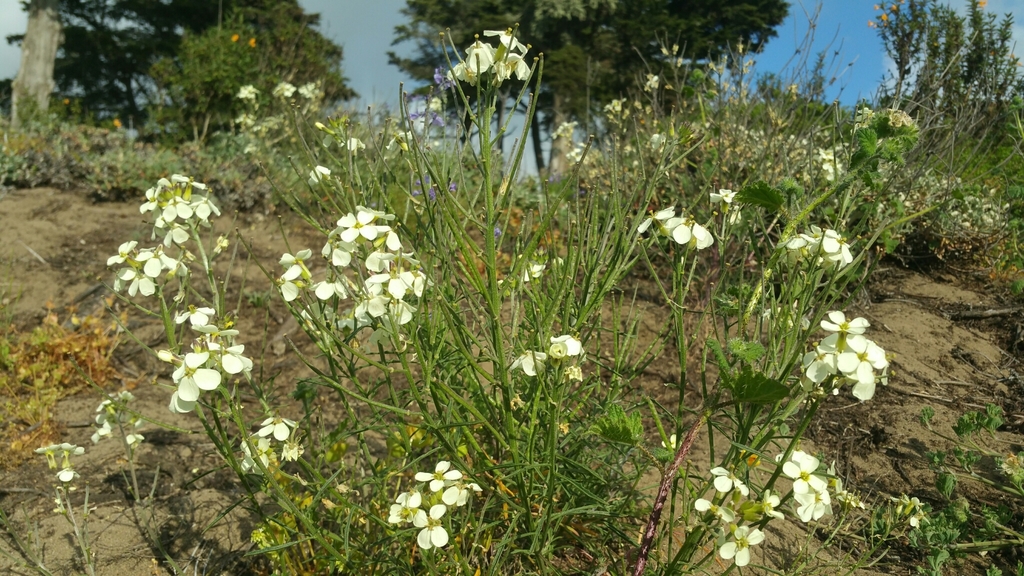
It forms a basal rosette of leaves, from which one to several stems rise 4 to 20 inches tall at flowering. Plants may flower in their second year and then die, or persist for a few years as short-lived perennials, sometimes branching at the base into several rosettes.
Leaves
The leaves are narrow, lance-shaped to spoon-shaped, about 1½ to 4 inches long, with wavy or sharply toothed edges. They are gray-green and rough to the touch, covered in tiny, flat, two- and three-forked hairs that you can see with a hand lens.
Flowers
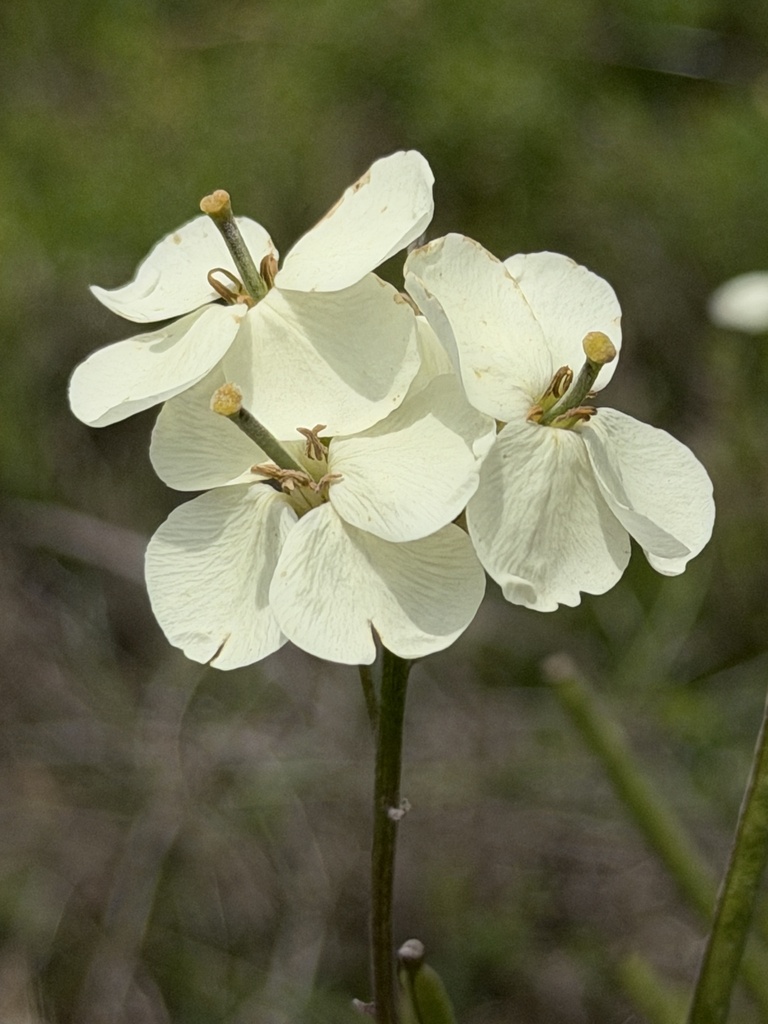
From about February to June, the stems end in dense, rounded clusters of four-petaled flowers about ¾ to 1 inch across, cream, ivory or pale yellow and sweetly fragrant. Coastal plants tend to be paler, while some inland plants have brighter yellow flowers. The clusters lengthen as flowering continues.
Fruit & Look-alikes
The fruits are long, slender, four-angled pods (siliques) about 2 to 4 inches long, held upward and outward along the stem, which split to release small seeds. Western Wallflower is taller, more widespread, and usually has bright orange to yellow flowers. Menzies’ wallflower (E. menziesii) is a rare, endangered plant of coastal dunes with fleshier, spoon-shaped leaves. Non-native mustards have smaller, bright yellow flowers.
Quick Facts
| Scientific Name | Erysimum franciscanum G. Rossb. |
| Family | Brassicaceae (mustard family) |
| Plant Type | Short-lived perennial or biennial wildflower |
| Mature Height | 4–20 in |
| Mature Spread | 6–12 in |
| Growth Rate | Moderate |
| Sun Exposure | Full sun |
| Water Needs | Low; dry summers once established |
| Soil Type | Well-drained sandy, rocky, granitic or serpentine soil |
| Soil pH | About 6.0–8.0 |
| Bloom Time | February–June |
| Flower Color | Cream to pale yellow |
| Fall Color | None |
| Fruit | Long, slender seed pod (silique) |
| Deer Resistant | Moderate |
| USDA Hardiness Zones | 8–10 |
Native Range
San Francisco wallflower is endemic to the central California coast. USDA PLANTS lists it only in California, where it grows in Sonoma, Marin, San Francisco, San Mateo and Santa Cruz Counties, with additional populations on serpentine in Santa Clara County.
Its stronghold is the San Francisco Peninsula. San Bruno Mountain, the Presidio, the Marin Headlands and the coastal hills of San Mateo County all support good populations, often on steep, rocky slopes or bluffs where development and dense shrubs have not reached. Restoration programs in San Francisco have reintroduced it to several parks.
It grows in open, sunny, well-drained places: coastal bluffs, sandy and rocky slopes, coastal scrub and coastal prairie, and outcrops of serpentine, granite and sandstone, from near sea level to about 1,800 feet. It needs open ground and does poorly where invasive grasses or ice plant crowd it out.
📋 Regional plant lists featuring San Francisco Wallflower: California & Nevada
Growing & Care Guide
San Francisco wallflower is grown by some Bay Area native nurseries and restoration programs, and seed is occasionally available. It is an easy, fragrant plant for sunny rock gardens and coastal native gardens, but it is short-lived, so let it self-sow to keep it going. Do not collect plants or seed from wild populations without permission.
Light
Full sun is best. Near the coast it takes all-day sun; inland, a little afternoon shade helps in hot spells.
Soil & Water
Plant in very well-drained sandy, gravelly or rocky soil. It does well on slopes and in rock gardens and tolerates serpentine and other poor soils. Water occasionally the first summer; after that it needs little or no summer water near the coast. Heavy, wet soil rots the crown.
Planting Tips
Sow seed in fall or plant small container plants in winter at the start of the rainy season, 8 to 12 inches apart. Grow it in drifts in a rock garden, on a bank or in a coastal meadow planting, where its spring fragrance can be enjoyed.
Pruning & Maintenance
Little care is needed. Leave some seed pods to ripen so it can self-sow, and keep competing grasses and weeds down around the rosettes. Remove old plants once they die after flowering.
Propagation
Grow it from seed, which germinates readily without special treatment when sown in fall or early spring. Plants grown from seed usually flower in their second spring.
Landscape Uses
- Coastal native gardens: fragrant spring flowers for sunny, sandy sites
- Rock gardens and slopes: compact rosettes for well-drained ground
- Habitat restoration: coastal scrub, prairie and serpentine sites in the Bay Area
- Pollinator plantings: early nectar for bees and butterflies
Wildlife & Ecological Value
San Francisco wallflower provides early nectar on the windy coast and is part of the Bay Area’s unique coastal flora.
For Pollinators
The fragrant flowers are visited by native bees, bumble bees, flies and butterflies, which take nectar from the base of the petals. Members of the mustard family serve as caterpillar food plants for white and orangetip butterflies, and wallflowers are among the native host plants used in the region.
For Birds
Finches and other seed-eating birds feed on the small seeds when the pods split, and the insects visiting the flowers feed coastal songbirds.
For Mammals
Rabbits and deer may browse the rosettes, and small rodents eat some seeds. The plant is not known as an important mammal food.
Ecosystem Role
It is a member of the rich and highly threatened coastal scrub, coastal prairie and serpentine communities of the San Francisco Bay Area, which support many rare plants and insects, including endangered butterflies on San Bruno Mountain.
Cultural & Historical Uses
The botanist George B. Rossbach described Erysimum franciscanum in the late 1950s, in his work on the wallflowers of western North America. The name franciscanum refers to the San Francisco Bay region, where it is most common.
Wallflowers get their common name from European species that grow on old stone walls. The genus name Erysimum comes from an old Greek name for a mustard-family plant.
San Francisco wallflower has become a symbol of the city’s remnant natural areas. Local volunteers and the San Francisco Recreation and Park Department’s natural areas program grow it for restoration projects in places such as Grand View Park and the Presidio.
Frequently Asked Questions
Where does San Francisco wallflower grow?
Only along the central California coast, from Sonoma County to Santa Cruz County, with inland populations on serpentine in Santa Clara County, on coastal bluffs, rocky slopes, coastal scrub and prairie.
Is San Francisco wallflower rare?
It has a limited range and is on the California Native Plant Society’s watch list (Rank 4.2), but it is not federally or state listed. Much of its habitat has been lost to development.
How do I recognize San Francisco wallflower?
Look for a low rosette of narrow, toothed, gray-green leaves and rounded clusters of fragrant cream to pale yellow four-petaled flowers in spring, followed by long, slender pods.
How is it different from western wallflower?
Western wallflower is taller and more widespread and usually has bright orange or yellow flowers. San Francisco wallflower is lower, with cream to pale yellow flowers, and is restricted to the central coast.
Can I grow San Francisco wallflower?
Yes. Sow seed or plant nursery-grown plants in full sun and very well-drained soil in coastal California. It is short-lived, so let it reseed.

Looking for a nursery that carries San Francisco Wallflower?
Browse our native plant nursery directory: California

