
Jicamilla (Jatropha cathartica)
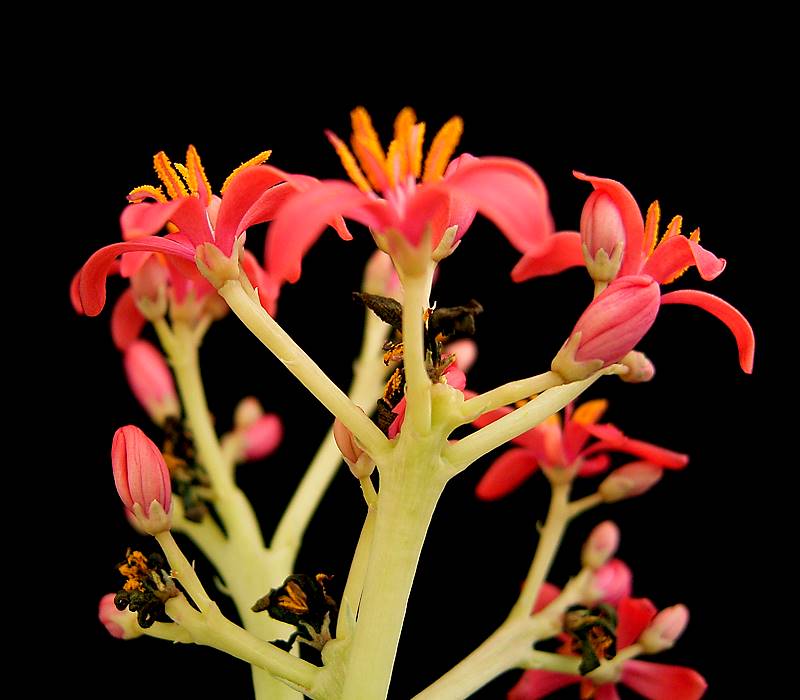
Jatropha cathartica, known as Jicamilla or Berlandier’s nettlespurge (and in the plant trade often as Jatropha berlandieri), is a native perennial of South Texas and northeastern Mexico. It grows from a large, swollen, woody root and sends up low, leafy stems with deeply lobed, gray-green leaves and clusters of bright coral-red to pink flowers.
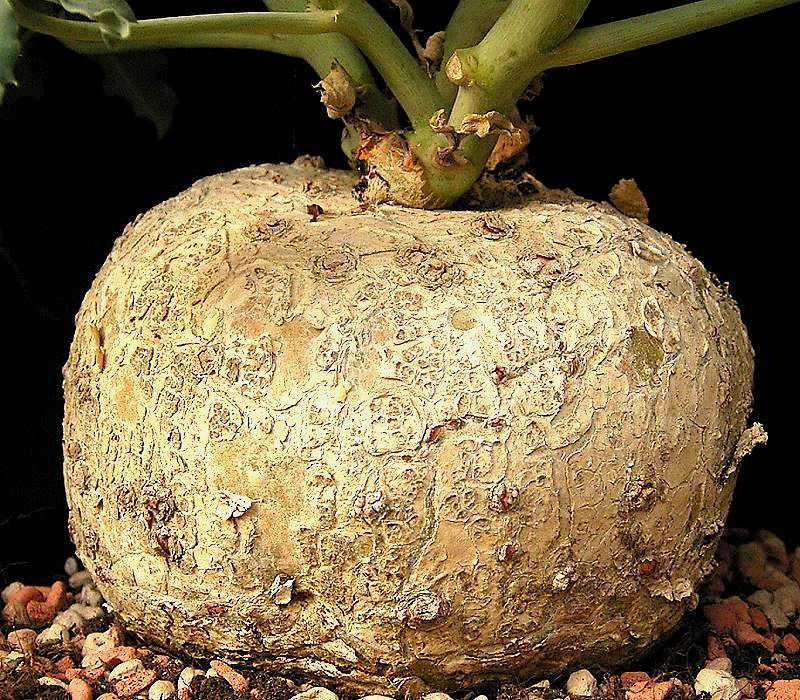
In the wild it grows scattered among thorny brush on dry clay and rocky soils in the Tamaulipan thornscrub of the Rio Grande Plains, dying back to its root in winter and resprouting after warm-season rains. Collectors around the world grow it as a “caudex plant,” raising its pale, rounded root above the soil in a pot.
Safety note: like many jatrophas, jicamilla is poisonous. The seeds and roots are toxic if eaten, and the sap can irritate skin and eyes. Keep it away from children and pets. This guide covers how to identify it, where it grows, how to grow it and its role in South Texas ecosystems.
Identification
Jicamilla is a low, herbaceous perennial from a large, round underground caudex, with long-stalked, deeply lobed, gray-green leaves and clusters of red to pink flowers.
Root & Stems
It grows from a globe-shaped, woody caudex up to about 8 inches wide or more, which is usually buried in the wild. Each year it produces several short stems up to about 1 foot long that die back in winter. The plant has clear to milky, irritating sap.
Leaves
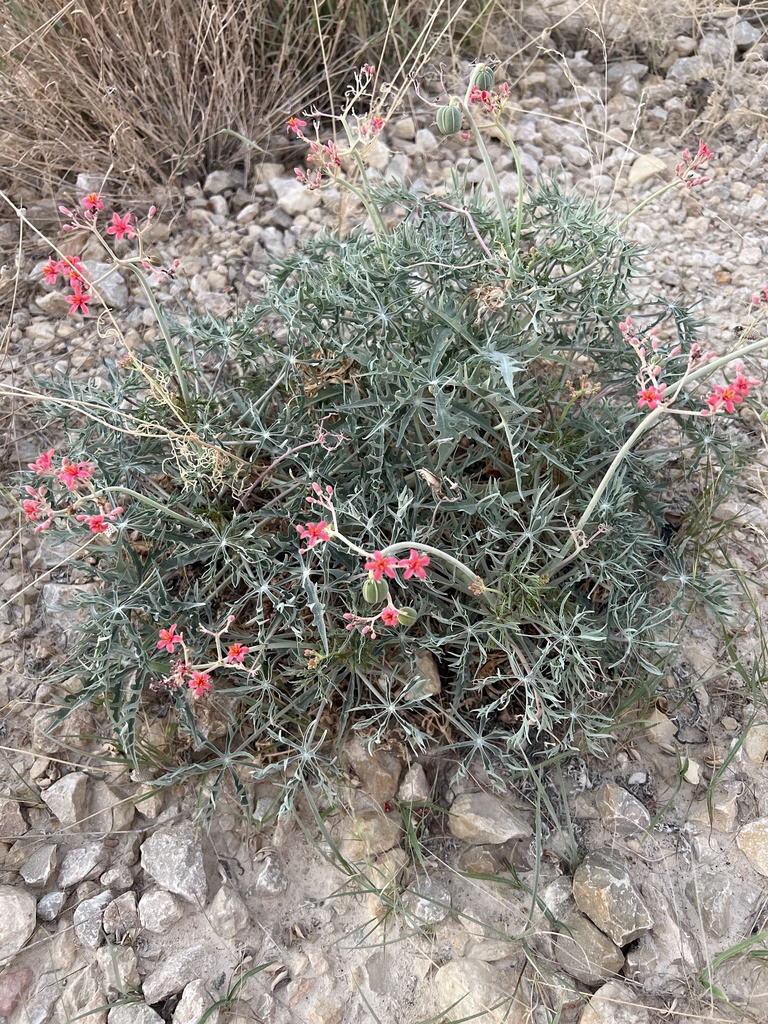
The leaves are long-stalked, up to about 4 inches across, gray-green and deeply divided into five to seven narrow lobes, giving the plant a lacy look. Leaf stalks can be up to about 6 inches long.
Flowers
From spring to fall, mainly in summer, loose clusters of small flowers rise on long stalks above the leaves. Each flower is about ½ inch across, with five spreading, coral-red to rose-pink petals and yellow-orange stamens. Each cluster has a few female flowers and more male flowers.
Fruit & Look-alikes
The fruit is a small, green, three-lobed capsule with three seeds. Leatherstem (Jatropha dioica), another Texas native, is a shrubby plant with rubbery, leafless-looking stems, small narrow leaves and tiny pinkish flowers. The stinging bull nettles (Cnidoscolus) have white flowers and stinging hairs.
Quick Facts
| Scientific Name | Jatropha cathartica Terán & Berland. (syn. J. berlandieri) |
| Family | Euphorbiaceae (spurge family) |
| Plant Type | Herbaceous perennial from a woody caudex |
| Mature Height | 6–12 in |
| Mature Spread | 1–2 ft |
| Growth Rate | Slow (caudex); fast seasonal leaf growth |
| Sun Exposure | Full sun to partial shade |
| Water Needs | Low; drought tolerant, dormant in winter |
| Soil Type | Clay, caliche or rocky; well-drained |
| Soil pH | About 7.0–8.5 |
| Bloom Time | Spring–fall, mainly summer |
| Flower Color | Coral-red to rose-pink |
| Fall Color | Leaves yellow before dormancy |
| Fruit | Small three-seeded capsule; toxic |
| Deer Resistant | Yes; toxic |
| USDA Hardiness Zones | 8–11 |
Native Range
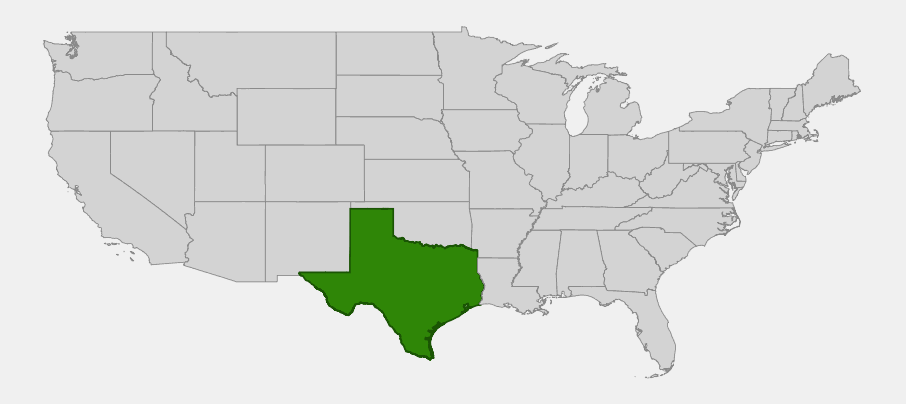
Jicamilla is native to South Texas and northeastern Mexico. USDA PLANTS lists it in Texas, where it grows mainly in the Rio Grande Plains and nearby areas of South Texas, west to the edge of the Edwards Plateau and the Trans-Pecos around Val Verde County. In Mexico it ranges through Coahuila, Nuevo León and Tamaulipas.
It grows scattered among thornscrub on dry, often clay or caliche soils and on rocky slopes and limestone outcrops. Its large underground root lets it survive long droughts and summer heat, and it leafs out and flowers after rains.
Much of the native thornscrub of South Texas has been cleared for agriculture and development, but jicamilla still persists in brushland, on rangeland and along roadsides in its range.
📋 Regional plant lists featuring Jicamilla: South & West Texas
Growing & Care Guide
Jicamilla is grown by succulent and caudex enthusiasts and is sometimes sold by specialty cactus and succulent nurseries, usually as Jatropha berlandieri. Outdoors it suits dry, sunny gardens in South and West Texas and other zones 8 to 11 climates; elsewhere it is grown in pots. Buy nursery-grown plants, never dug wild roots, and remember that all parts are toxic.
Light
Full sun to light afternoon shade. Indoors, give it the sunniest window or a bright greenhouse in summer.
Soil & Water
Use a very fast-draining cactus mix or gritty, rocky soil. Water regularly during warm-season growth, allowing the soil to dry between waterings, and keep it completely dry when it is leafless and dormant in winter. Cold, wet soil causes rot.
Planting Tips
In the ground, plant on a slope, berm or rock garden. In pots, set the caudex partly above the soil line for display, in a pot only slightly larger than the root. Wear gloves when handling, since the sap is irritating.
Pruning & Maintenance
No pruning is needed. Remove dead stems after dormancy. Feed lightly in summer. Protect potted plants from freezing; in-ground plants survive light frosts while dormant.
Propagation
Grow from seed sown in warm weather in a sandy mix; seedlings begin forming a caudex in their first year.
Landscape Uses
- Caudex and succulent collections: sculptural root with lacy leaves and red flowers
- South Texas xeric gardens: drought-tolerant native with long bloom
- Rock gardens and containers: compact size and summer flowers
- Pollinator plantings: nectar for butterflies and bees
Wildlife & Ecological Value
Jicamilla is part of the diverse plant community of the Tamaulipan thornscrub, one of the most biologically rich habitats in Texas.
For Pollinators
The bright red to pink flowers attract butterflies, bees and other insects, and the long bloom season provides nectar through the hot summer.
For Birds
The thornscrub where it grows is home to many specialty birds of South Texas, but its toxic seeds are not an important bird food.
For Mammals
Its toxic leaves and roots are generally avoided by deer and livestock.
Ecosystem Role
Its deep, swollen root stores water and nutrients, allowing it to persist through drought and fire and to resprout quickly when rains return.
Cultural & Historical Uses
The plant was collected in northeastern Mexico by Jean-Louis Berlandier, a French-Swiss naturalist who explored Texas and Mexico in the 1820s and 1830s, and it is often called Berlandier’s nettlespurge in his honor.
The species name cathartica refers to its strong purgative (laxative) effect, which reflects its toxicity. Many jatrophas contain toxic compounds in their seeds and sap, and none should be eaten.
The common name jicamilla, meaning “little jícama,” refers to its large, round root, which looks like the edible jícama tuber but is poisonous.
Frequently Asked Questions
Is jicamilla poisonous?
Yes. All parts, especially the seeds and root, are toxic if eaten, and the sap can irritate skin and eyes. Keep it away from children and pets, and wear gloves when handling it.
Is jicamilla the same as Jatropha berlandieri?
Yes. Jatropha berlandieri is a widely used name for the same plant; J. cathartica is the accepted name.
Where does jicamilla grow wild?
In South Texas and northeastern Mexico, in dry thornscrub, clay flats and rocky slopes.
How do I grow jicamilla in a pot?
Use a gritty cactus mix, full sun and regular summer water, then keep it dry while it is dormant in winter. The caudex can be raised above the soil for display.
When does jicamilla bloom?
From spring to fall, mainly in summer, with loose clusters of coral-red to pink flowers.

Looking for a nursery that carries Jicamilla?
Browse our native plant nursery directory: Texas

