
Blunt-leaved Rein Orchid (Platanthera obtusata)
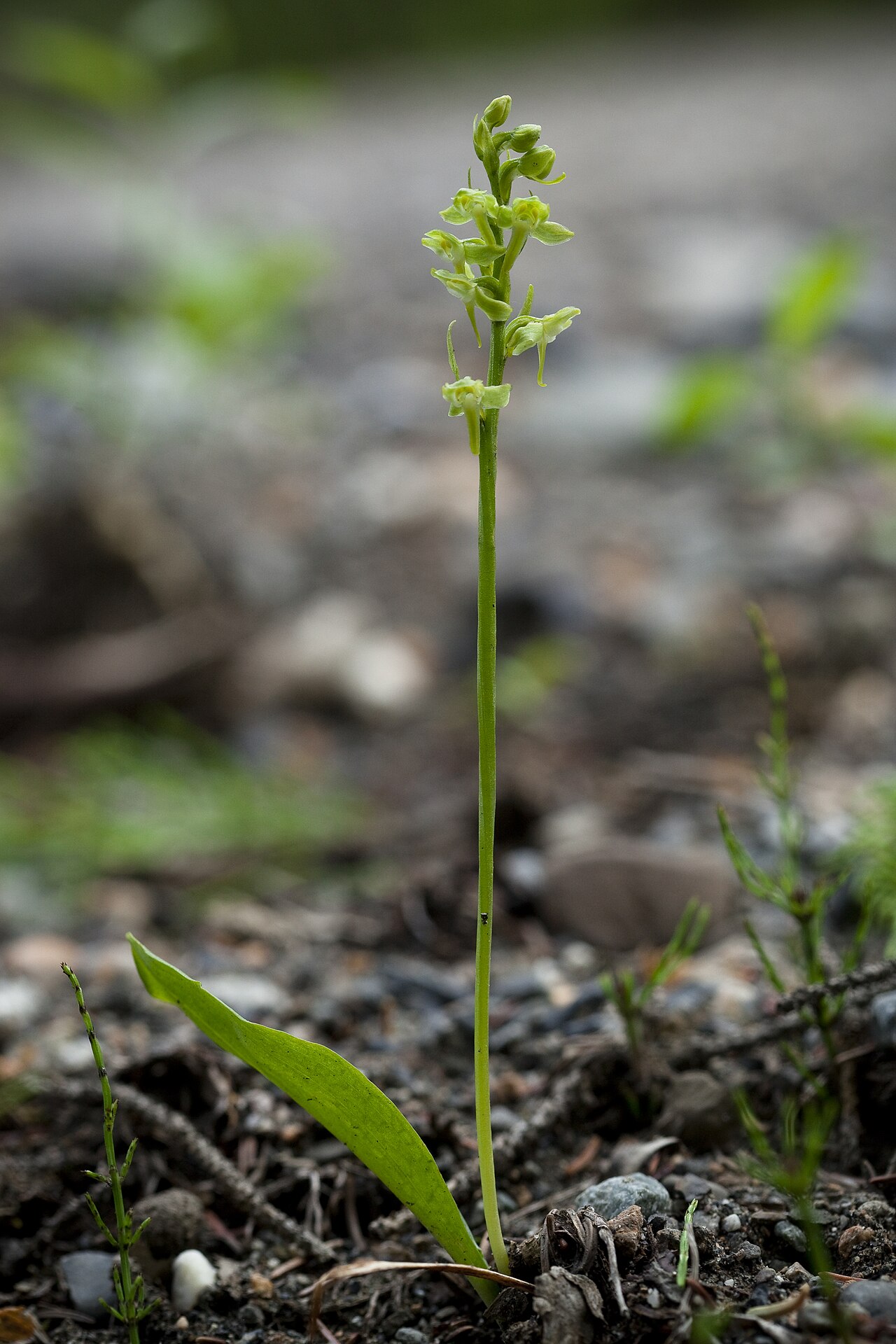
Platanthera obtusata, the Blunt-leaved Rein Orchid (also called bluntleaf orchid, one-leaf rein orchid or small northern bog orchid), is a small, delicate native orchid of cold northern forests and bogs. It ranges across Alaska and most of Canada, south in the West through the Cascades and Rocky Mountains to Oregon, Utah and Colorado, and in the East through the upper Great Lakes states to New York and northern New England.
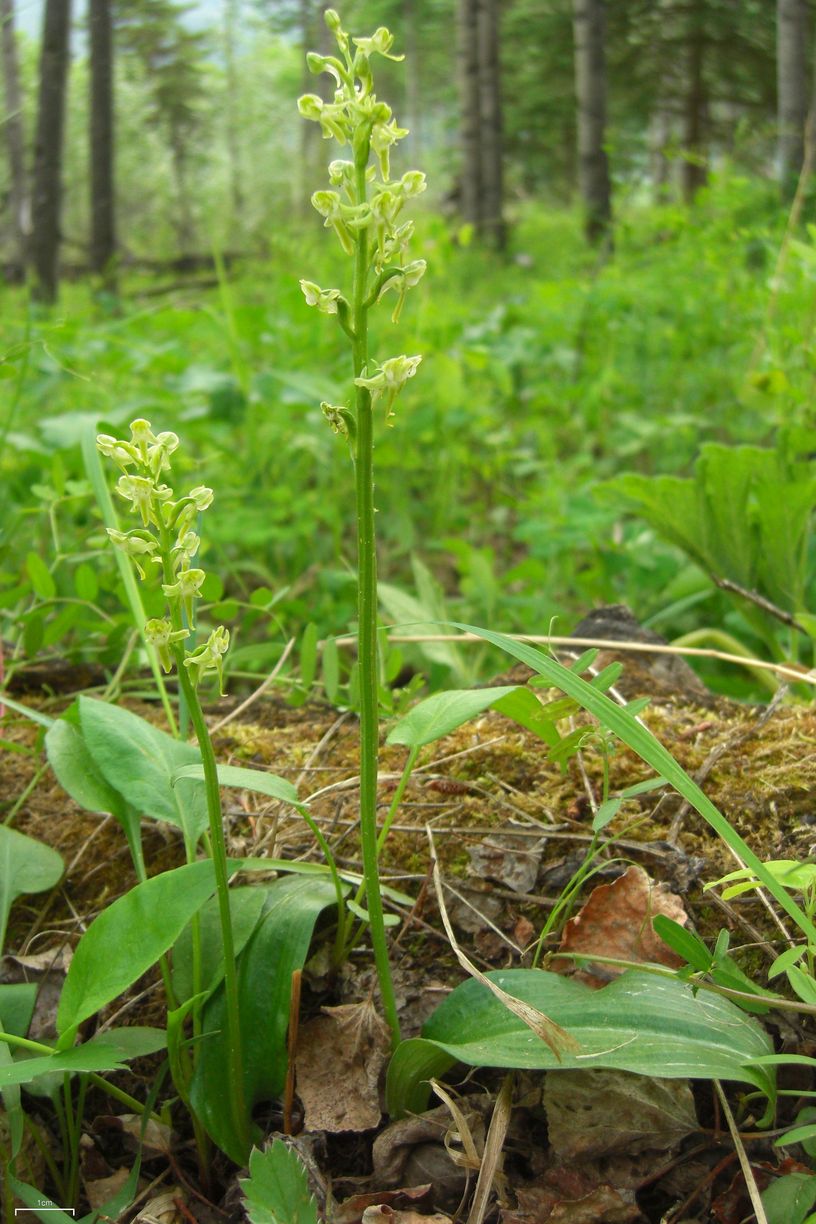
It is easy to overlook: a single, blunt-tipped leaf at the base and a slender spike, only a few inches tall, of small greenish-white flowers. Look for it in mossy, wet coniferous woods, bog edges and seeps in early to midsummer.
It is best known for its pollinators: mosquitoes, which visit the flowers for nectar and carry away the pollen sacs stuck to their eyes. It is not available from nurseries and cannot be transplanted, so this page is an identification and appreciation guide.
Identification
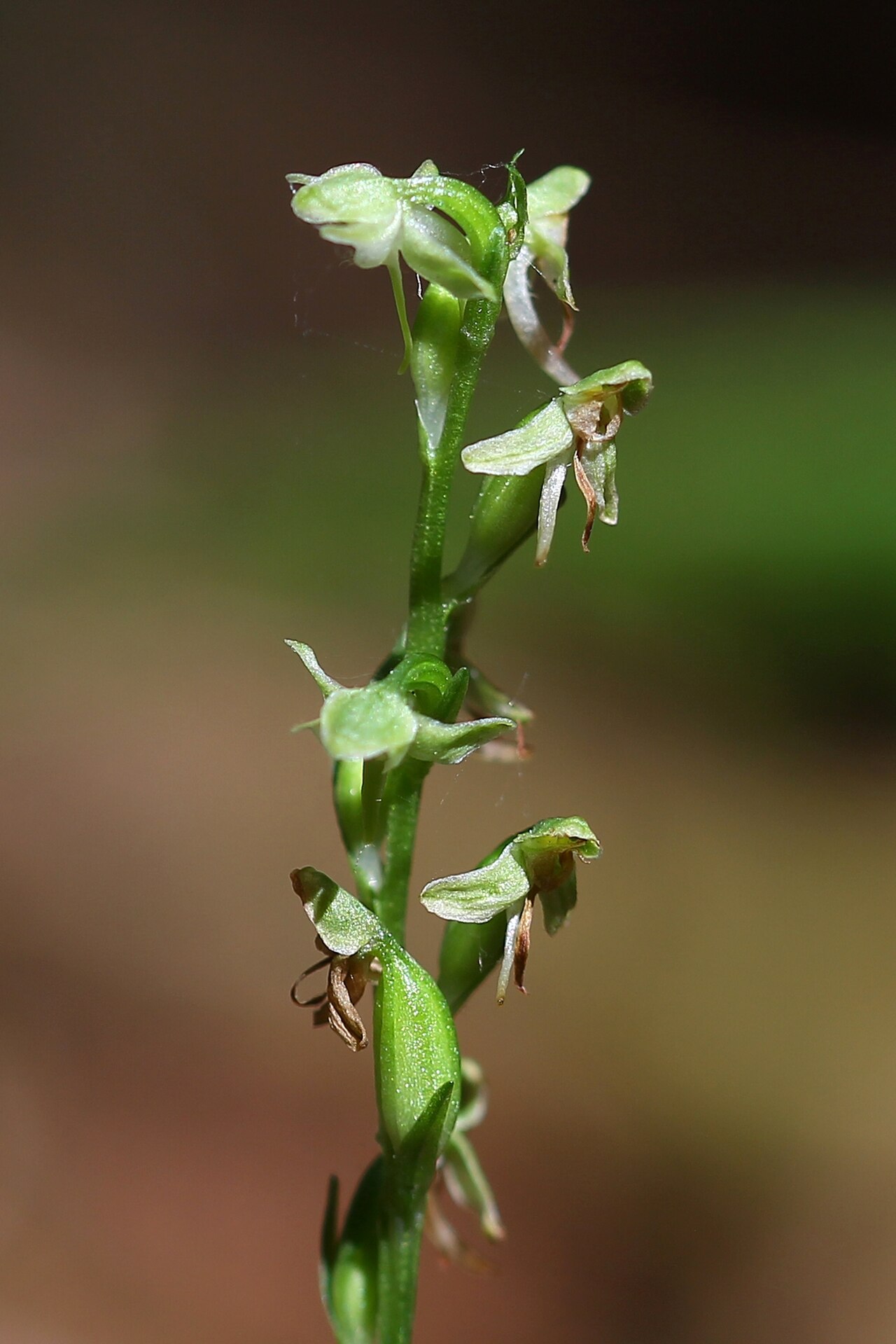
Blunt-leaved rein orchid is a small terrestrial orchid with one basal leaf, a leafless stem and a loose spike of small greenish-white flowers with a strap-shaped lip and a tapering spur.
Leaf
Each plant has one leaf (rarely two) at the base of the stem. It is oblong to spoon-shaped, 2 to 6 inches long, broadest above the middle and blunt or rounded at the tip, narrowing toward the base, and often angled upward.
Stem & Flower Spike
A slender, leafless stem 2 to 12 inches tall rises from the leaf and carries a loose spike of about 3 to 15 small flowers. The plant grows from fleshy roots in moss or wet organic soil.
Flowers
From June to August the small flowers open greenish to greenish-white. The upper sepal and petals form a little hood, the side sepals spread, and the lip is narrow, strap-like and points downward. Behind it is a tapering, slightly curved spur about as long as the lip, holding nectar. The flowers are faintly scented, especially in the evening.
Look-alikes
Small green wood orchid (P. clavellata) also has one main leaf, but it sits partway up the stem, and its spur is club-shaped. Hooker’s orchid (P. hookeri) and round-leaved orchid (P. orbiculata) have two broad, round leaves flat on the ground. White bog orchid is much taller, with several leaves along the stem and bright white, fragrant flowers.
Quick Facts
| Scientific Name | Platanthera obtusata (Banks ex Pursh) Lindl. |
| Family | Orchidaceae (orchid family) |
| Plant Type | Small terrestrial perennial orchid |
| Mature Height | 2–12 in |
| Mature Spread | 2–6 in (single basal leaf) |
| Growth Rate | Slow |
| Sun Exposure | Partial to full shade; sun in bogs and tundra |
| Water Needs | High; constantly moist |
| Soil Type | Wet, mossy, organic soil or peat |
| Soil pH | About 5.0–7.5 |
| Bloom Time | June–August |
| Flower Color | Greenish to greenish-white |
| Fall Color | None; dies back after seeding |
| Fruit | Small capsule with dust-like seeds |
| Deer Resistant | Unknown; rarely noticed by browsers |
| USDA Hardiness Zones | 1–6 |
Native Range
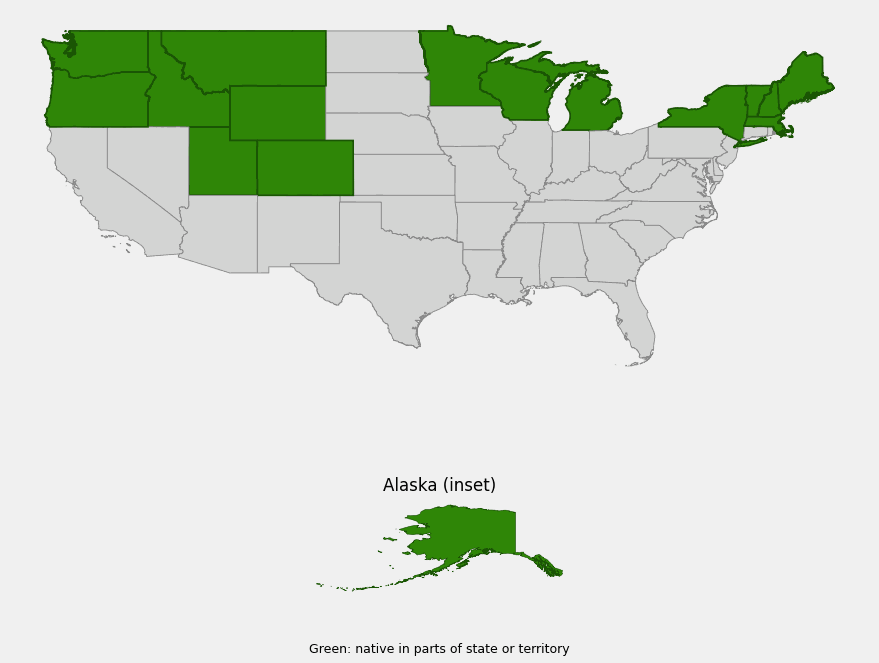
Blunt-leaved rein orchid has a broad boreal range across North America, including Saint Pierre and Miquelon; closely related plants in Eurasia are sometimes included in it. It grows in Alaska and every Canadian province and territory.
In the lower 48, USDA PLANTS lists it in the West in Washington, Oregon, Idaho, Montana, Wyoming, Utah and Colorado, mostly in the mountains, and in the East in Minnesota, Wisconsin, Michigan, New York, Vermont, New Hampshire, Maine and Massachusetts. It is common in the far north but scarce at the southern edge of its range, where several states track it as rare.
It grows in cool, wet, mossy places: black spruce and cedar swamps, the shaded edges of bogs and fens, wet coniferous and mixed forests, mossy stream banks and seeps, and moist subalpine and arctic tundra.
📋 Regional plant lists featuring Blunt-leaved Rein Orchid: Alaska · Western Oregon & Western Washington · Idaho, Eastern Oregon & Eastern Washington · Montana & Wyoming · Utah & Western Colorado · Michigan, Wisconsin & Eastern Minnesota · New York, Pennsylvania & Northern New Jersey · Delaware, Southern New Jersey & Long Island · Connecticut, Massachusetts & Rhode Island · New Hampshire, Maine & Vermont
Can You Grow It?
Blunt-leaved rein orchid is not grown from nursery stock and should never be dug up. Like other native orchids it depends on specific soil fungi to germinate and grow, and wild plants almost always die when moved. Some states protect it as a rare plant, and collecting it on public land is illegal. The best way to enjoy it is to look for it in the wild, photograph it, and protect the wet, mossy habitats where it grows.
Light
In the wild it grows in shade to partial shade under conifers, and in more open light in bogs and northern tundra.
Soil & Water
It needs constantly cool, moist to wet, mossy or peaty soil with an intact community of soil fungi. Draining, trampling or logging its swamps and bogs destroys it.
Planting Tips
Do not plant or transplant it. Protect existing populations by staying on trails and boardwalks in bogs and keeping wet forests intact.
Pruning & Maintenance
No care is needed in the wild. Avoid picking the flower spikes, which prevents the plant from setting seed.
Propagation
It reproduces only by tiny, dust-like seeds that need a partner fungus to germinate. Propagation is limited to specialized laboratory work by orchid conservation programs.
Where to See It
- Wildflower viewing: a small orchid of northern bogs and forests
- Nature photography: mosquito pollination is fascinating to watch
- Habitat protection: an indicator of intact, wet boreal forest
Wildlife & Ecological Value
Blunt-leaved rein orchid has one of the best-studied and most unusual pollination stories of any North American wildflower.
For Pollinators
Female and male mosquitoes, mainly Aedes species, feed on the nectar in the spurs, and the pollen sacs (pollinaria) stick to their eyes, to be carried to the next flower. Studies have shown the flowers emit a scent that attracts the mosquitoes. Small moths and other insects also visit.
For Birds
It has no special value to birds.
For Mammals
Small mammals may occasionally nibble the leaves, but it is too small and scattered to be an important food.
Ecosystem Role
It depends on mycorrhizal fungi throughout its life, and it is part of the rich understory flora of mossy boreal forests and bogs.
Cultural & Historical Uses
Frederick Pursh described the species as Orchis obtusata in 1813, crediting the name to Joseph Banks, and John Lindley moved it to Platanthera in 1835. It has also been called Habenaria obtusata and Lysiella obtusata. The name obtusata means “blunt,” for the leaf.
Its mosquito pollination has been documented and studied by botanists for decades. In 2020 researchers showed that the flowers’ scent chemistry attracts mosquitoes, making it a model for how mosquitoes find nectar.
Because of its tiny size and greenish flowers, it is often overlooked, and it is a prized find for orchid hunters in the northern states.
Frequently Asked Questions
How do I recognize blunt-leaved rein orchid?
Look for a small orchid with a single, blunt-tipped leaf at the base and a slender spike of small greenish-white flowers with a narrow lip and a tapering spur, in mossy, wet northern woods.
Is it really pollinated by mosquitoes?
Yes. Mosquitoes drink nectar from the spurs and carry the pollen sacs stuck to their eyes, though small moths and other insects also visit.
Where does it grow?
Across Alaska and Canada, in western mountains south to Oregon, Utah and Colorado, and in the East from Minnesota to New York and northern New England, in bogs, swamps and wet conifer forests.
Can I grow blunt-leaved rein orchid?
No. It is not available from nurseries, depends on specific soil fungi, and dies when transplanted. Never dig it from the wild.
When does it bloom?
From June to August, depending on latitude and elevation.

Looking for a nursery that carries Blunt-leaved Rein Orchid?
Browse our native plant nursery directory: Alaska · Colorado · Idaho · Maine, Massachusetts, Michigan, Minnesota & Montana · New Hampshire & New York · Oregon · Utah & Vermont · Washington · Wisconsin & Wyoming

