
Naupaka Kuahiwi (Scaevola gaudichaudii)
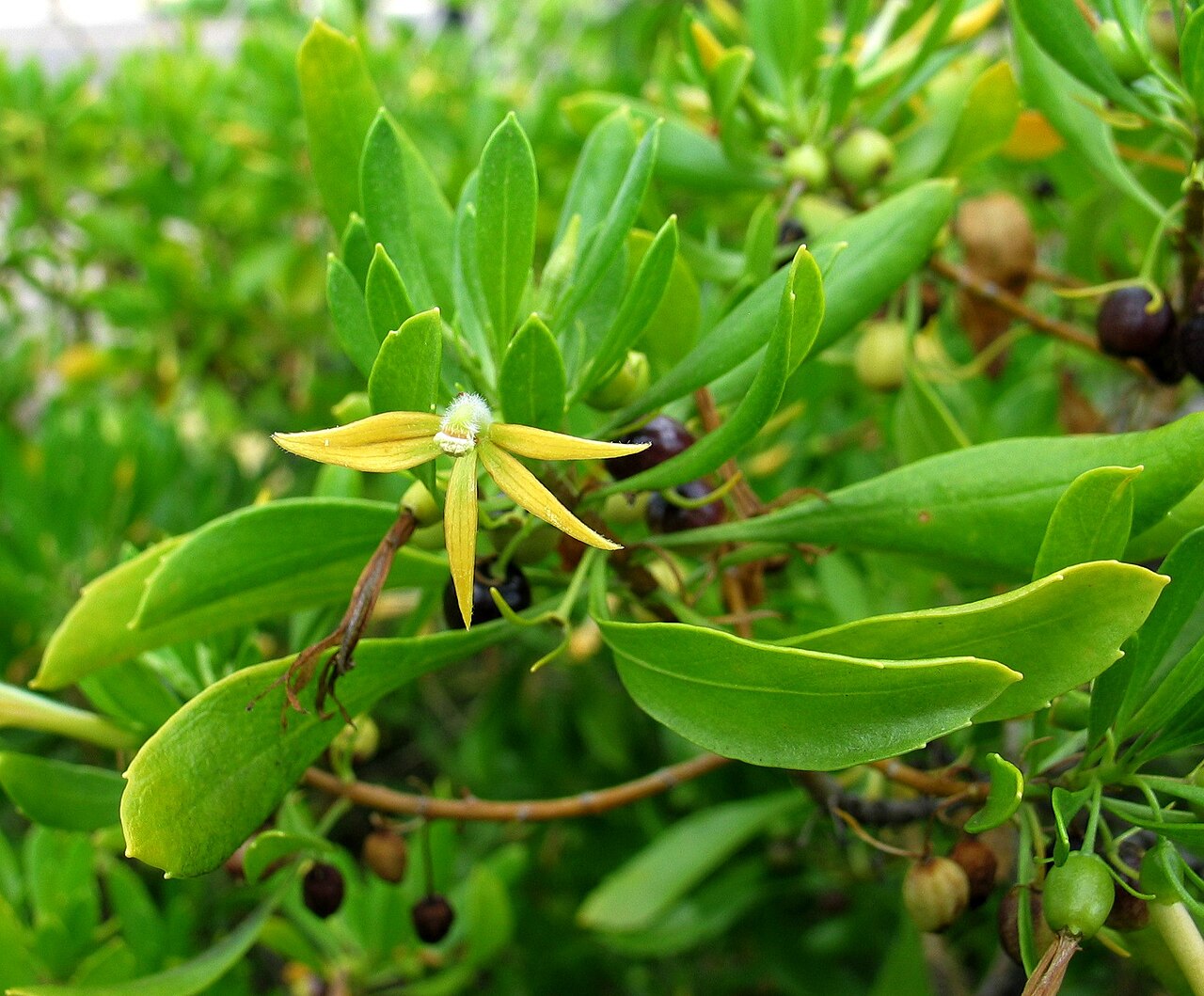
Scaevola gaudichaudii, called naupaka kuahiwi (“mountain naupaka”) in Hawaiian and ridgetop naupaka in English, is an evergreen shrub of the Goodenia family (Goodeniaceae) found only in the Hawaiian Islands. It forms a dense, rounded shrub usually 2 to 6 feet tall, with narrow bright green leaves, yellow to brownish-yellow “half-flowers,” and small, glossy purple-black fruits.
Unlike most of the mountain naupaka, which grow in wet forests, this one is a plant of dry ridges and flats. It is endemic to Hawaiʻi, where it grows in open, dry shrubland and forest on Kauaʻi, Oʻahu, Molokaʻi, Lānaʻi, Maui and Hawaiʻi Island, from about 250 to over 2,600 feet. It is not federally listed, but on Oʻahu it has become rare outside the northern Waiʻanae Mountains.
Native plant growers consider it one of the easiest and most rewarding naupaka for Hawaiian gardens: it loves sun, wind and heat, needs little water once established, and blooms and fruits almost all year. Buy nursery-propagated plants from a Hawaiʻi native plant nursery, and never collect plants or cuttings from the wild. This guide covers identification, range, growing tips and the naupaka story.
Identification
Naupaka kuahiwi is easy to recognize as a naupaka because of its lopsided flowers, which look as if half the petals have been torn away. Its yellow flower color and dark fruits separate it from the white-flowered beach naupaka.
Growth Habit
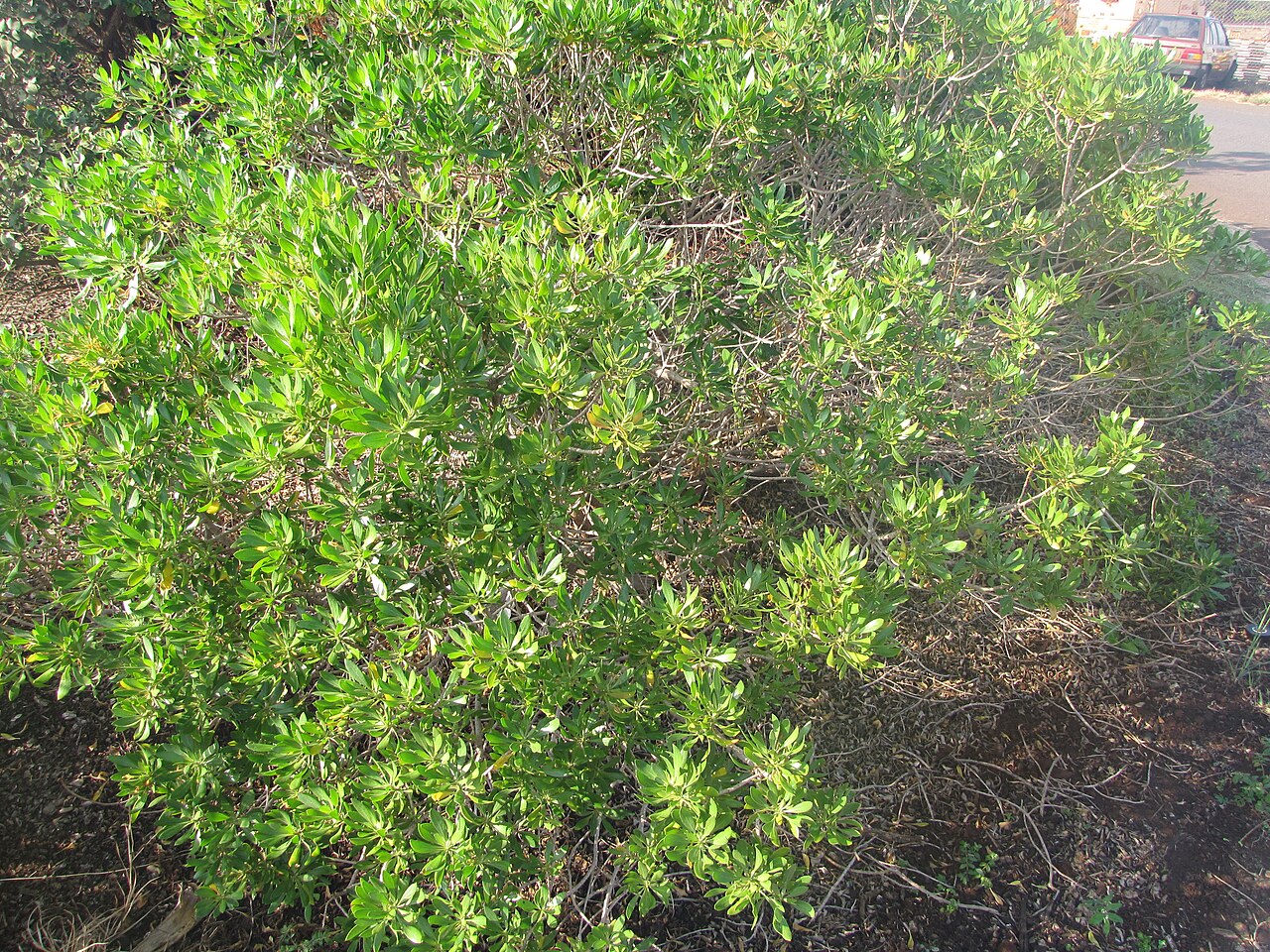
A compact, much-branched, rounded evergreen shrub, usually 2 to 6 feet tall and often wider than tall; garden plants can spread to about 8 feet. On exposed, windswept ridges it can stay low and mounding.
Leaves
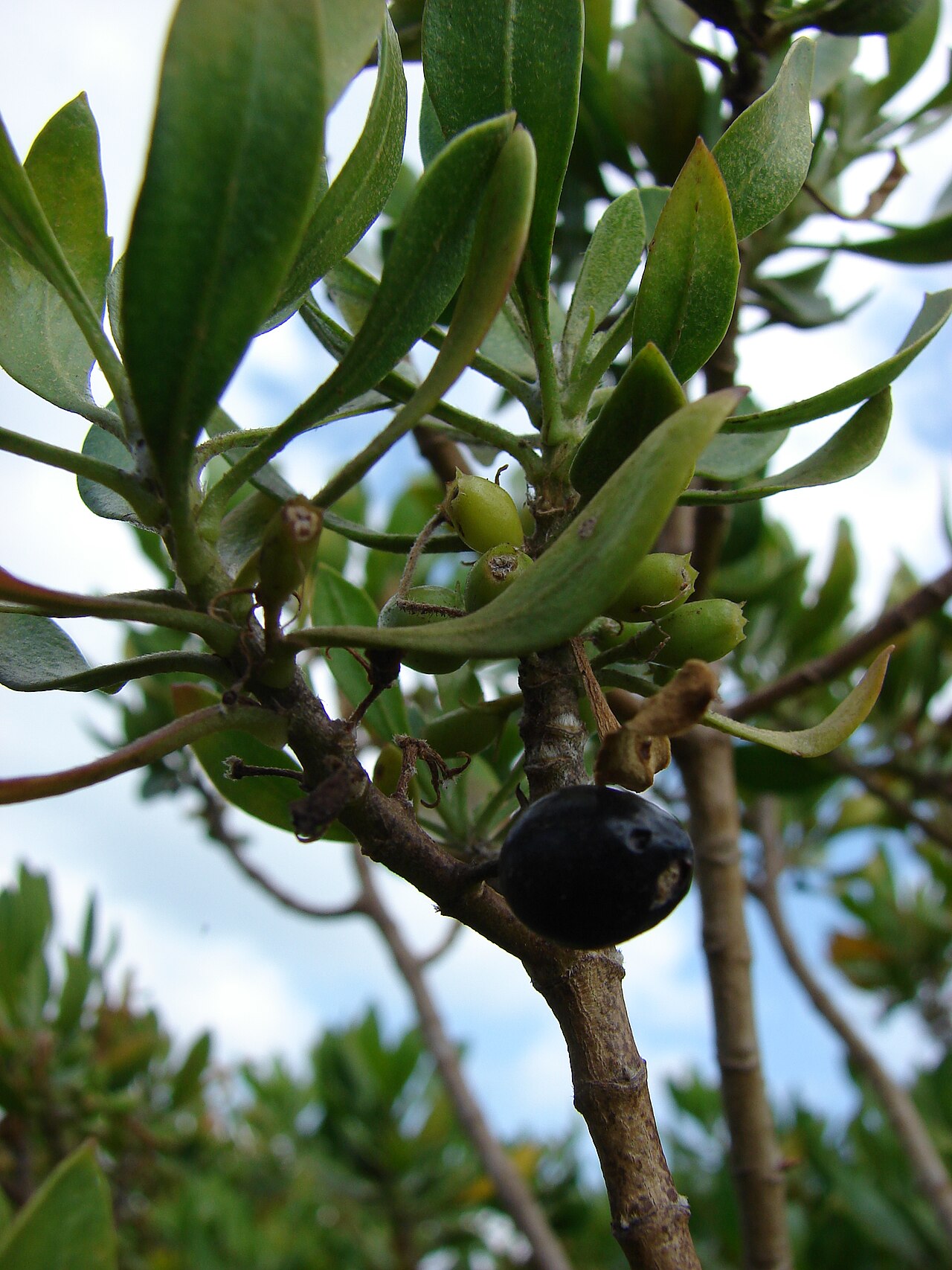
Leaves are alternate and crowded toward the branch tips, narrow and oblong to lance-shaped, about 1 to 2 inches long, with slightly toothed edges. They are bright to medium green and give the shrub a fine to medium texture.
Flowers
Each flower is a classic naupaka “half-flower”: the five narrow petal lobes fan out to one side only, like a hand or a half-circle. In this species the flowers are dark yellow to brownish yellow, rarely pinkish, borne singly or a few together in the leaf axils. They can be weakly to mildly fragrant, and garden plants bloom almost continuously.
Fruit & Look-alikes
The fruit is a small, round, fleshy drupe that ripens glossy purple to purple-black. Beach naupaka (S. taccada, sometimes listed as S. sericea) has white half-flowers, large, fleshy leaves and white fruit, and grows at the coast. Mountain naupaka (S. gaudichaudiana), whose name is easily confused with this one, has white flowers, often streaked with purple, and grows in wetter forests on Kauaʻi and Oʻahu.
Quick Facts
| Scientific Name | Scaevola gaudichaudii Hook. & Arn. |
| Family | Goodeniaceae (Goodenia family) |
| Plant Type | Evergreen shrub; Hawaiian endemic |
| Mature Height | 2–6 ft |
| Mature Spread | 4–8 ft |
| Growth Rate | Moderate |
| Sun Exposure | Full sun |
| Water Needs | Low; drought tolerant once established |
| Soil Type | Well-drained soils, including cinder and rocky soils |
| Soil pH | Slightly acidic to neutral |
| Bloom Time | Year-round |
| Flower Color | Dark yellow to brownish yellow, rarely pinkish |
| Fall Color | None; evergreen |
| Fruit | Small, glossy purple-black drupe |
| Deer Resistant | No; browsed by goats and deer |
| USDA Hardiness Zones | 10–12 (outdoors in Hawaiʻi) |
Native Range
Naupaka kuahiwi is endemic to the Hawaiian Islands. USDA PLANTS lists it as native only in Hawaiʻi, and the Smithsonian’s Flora of the Hawaiian Islands records it from all the main islands except Niʻihau and Kahoʻolawe: Kauaʻi, Oʻahu (Waiʻanae and Koʻolau mountains), East Molokaʻi, Lānaʻi, West and East Maui, and Hawaiʻi Island.
It grows on dry ridges and flats in open shrubland and dry to mesic forest, from about 250 to over 2,600 feet in elevation, in places that get less than about 50 inches of rain a year. Typical companions are ʻaʻaliʻi, ʻūlei, pūkiawe, ʻōhiʻa and ʻiliahi.
The species is not federally listed and is still locally common on some islands, but its dry habitats are threatened by wildfire, invasive grasses and browsing goats. On Oʻahu it remains locally common in the Kuaokalā area of the Waiʻanae Mountains, while only a handful of plants are known from the Koʻolau Range.
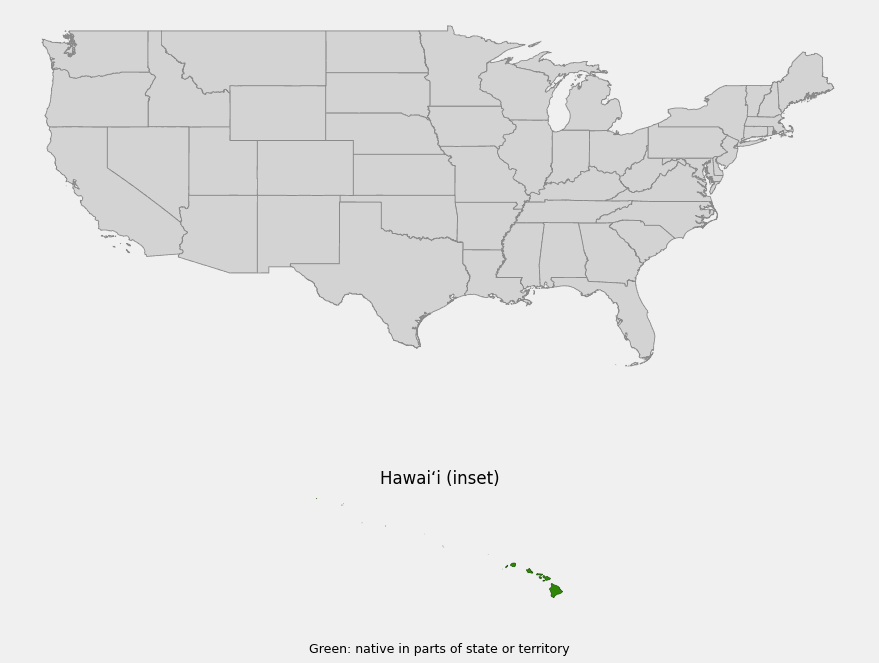
📋 Regional plant lists featuring Naupaka Kuahiwi: Hawaii
Growing & Care Guide
Naupaka kuahiwi is one of the easiest native shrubs for sunny, dry Hawaiian gardens and is grown by several native plant nurseries. It grows outdoors in frost-free climates, roughly USDA zones 10–12, and is a good choice for the mauka (upslope) side of a home, the way beach naupaka is planted makai (toward the sea). Buy nursery-propagated plants from a Hawaiʻi native plant nursery, and never collect plants or cuttings from the wild. Hawaiʻi restricts bringing plants in from other states, so local growers are the right source.
Light
Full sun. It does best in bright, open sites and becomes leggy and sparse in shade.
Soil & Water
Any well-drained soil, including cinder, rocky and sandy soils. Water regularly until established, then water deeply but infrequently; it prefers dry conditions but tolerates moderate moisture if the soil drains well. It is somewhat salt tolerant and handles heat and wind.
Planting Tips
Use it as a low hedge, accent, foundation shrub, informal ground cover on slopes, or container plant. Give it room to spread to about 8 feet. It needs less fertilizer than wet-forest natives; a yearly dressing of compost or a light, balanced slow-release fertilizer is enough.
Pruning & Maintenance
It tolerates moderate pruning and can be shaped into a neat hedge. It is fairly resistant to pests and disease, but ants can farm scale insects and other sucking pests on it; control the ants and treat heavy infestations with horticultural oil or soap.
Propagation
Grown from seed cleaned from ripe purple fruit, or from cuttings. Seeds can be slow and irregular to germinate. Home gardeners should propagate only from their own nursery-bought plants.
Landscape Uses
- Dry, sunny native gardens: a tough, drought-tolerant shrub that blooms year-round
- Low hedges and borders: dense, compact growth that tolerates pruning
- Slopes and windy sites: handles wind, heat and cinder soils
- Containers: a neat, slow-spreading shrub for lanai pots
Wildlife & Ecological Value
Naupaka kuahiwi is a typical shrub of Hawaiʻi’s dry ridges, a habitat that has lost much of its native cover.
For Pollinators
The half-flowers offer nectar and pollen to insects, including native bees; the lopsided shape places pollen on visitors as they reach the nectar.
For Birds
The small purple fruits are eaten by birds, which disperse the seeds. The dense shrubs also give cover to small birds.
For Mammals
Hawaiʻi’s only native land mammal is the Hawaiian hoary bat. Introduced goats and deer browse naupaka kuahiwi and damage its dry habitat.
Ecosystem Role
As a dense, drought-tolerant shrub, it helps hold soil on dry ridges and is useful in restoration plantings, where it can help shade out invasive grasses that carry fire.
Cultural & Historical Uses
Naupaka are famous for their half-flowers, and Hawaiian tradition explains them with the story of two lovers who were separated, one sent to the mountains and one to the sea. The flowers of beach naupaka and mountain naupaka each look like half of a whole, and some tellings say the two halves together make a complete flower. Six upland species share the name naupaka kuahiwi, “naupaka of the mountains.”
Early Hawaiians used the fruits of naupaka kuahiwi to make a purplish-black dye. The genus name Scaevola comes from the Latin and Greek for “left-handed,” likely after the one-sided flowers, and the species name honors Charles Gaudichaud-Beaupré, the French botanist who collected plants in Hawaiʻi in 1819.
Ten species of Scaevola are native to Hawaiʻi. Naupaka kuahiwi was once scarce in cultivation, but nursery growers have made it one of the more widely planted native shrubs for dry, sunny Hawaiian landscapes.
Frequently Asked Questions
Is naupaka kuahiwi endangered?
No. Scaevola gaudichaudii is not federally listed, though it has become rare on Oʻahu and its dry habitats are threatened by fire and invasive plants.
How is it different from beach naupaka?
Beach naupaka has white half-flowers, large fleshy leaves and white fruit and grows at the coast. Naupaka kuahiwi has yellow half-flowers, small narrow leaves and purple-black fruit and grows on dry inland ridges.
Is this the same as mountain naupaka (Scaevola gaudichaudiana)?
No. The names are confusingly similar, but S. gaudichaudiana has white flowers, often streaked with purple, and grows in wetter forests on Kauaʻi and Oʻahu.
Is it easy to grow?
Yes, in sunny, well-drained sites in Hawaiʻi. It is drought, wind and heat tolerant and needs little fertilizer.
Where can I buy it?
From Hawaiʻi native plant nurseries. Hawaiʻi restricts bringing plants in from other states, so buy locally grown, nursery-propagated plants.

Looking for a nursery that carries Naupaka Kuahiwi?
Browse our native plant nursery directory: Hawaii

