
Wahine Noho Mauna (Adenophorus tamariscinus)
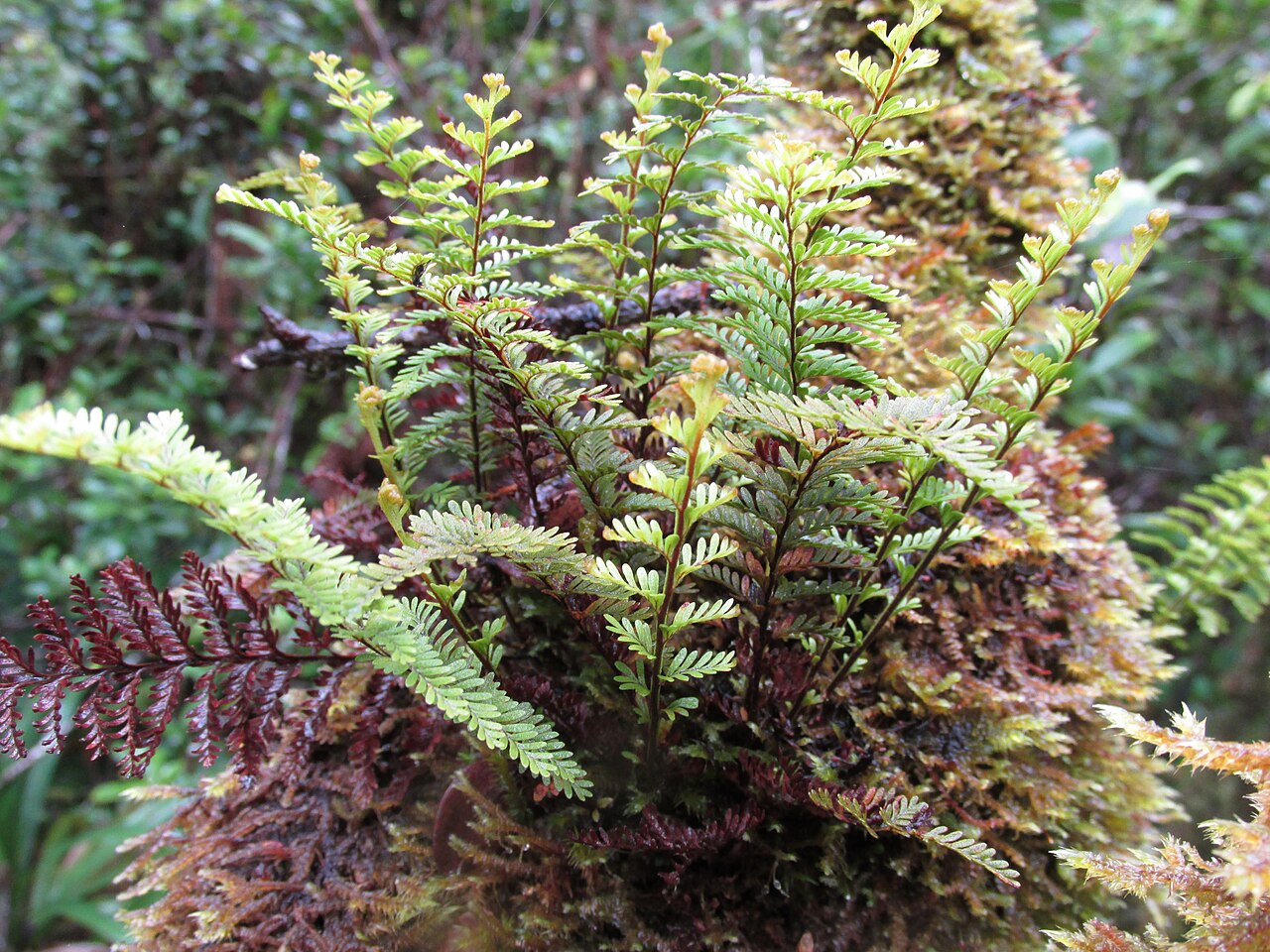
Adenophorus tamariscinus, known in Hawaiian as Wahine Noho Mauna, “the woman who lives in the mountains,” is a small epiphytic fern found only in the Hawaiian Islands. Its narrow, comb-like fronds, usually no more than about 8 inches long, hang or arch from mossy tree trunks and branches in the wet forests of Kauaʻi, Oʻahu, Molokaʻi, Maui and Hawaiʻi Island. Young fronds are fresh green; older ones turn a rich reddish brown, so a single clump often shows both colors.
It belongs to Adenophorus, a genus that is itself endemic to Hawaiʻi. These are grammitid ferns, a group of small, mostly epiphytic ferns of tropical cloud forests that live their whole lives in the moss layer on trees. The genus name means “gland-bearing,” after the tiny glandular hairs found on the fronds of many species.
Be aware that this fern is very hard to grow. Like other grammitid ferns, it depends on the constant humidity, cool temperatures and living moss of the cloud forest, and it rarely survives in gardens or homes. This guide covers how to recognize it, where it grows, what it would take to grow it, and its role in Hawaiʻi’s forests.
Identification
Hawaiʻi has about a dozen Adenophorus species and hybrids, all small ferns of wet forests, and several of them can grow side by side on the same mossy trunk. Wahine noho mauna is one of the most widespread and most often seen.
Growth Habit
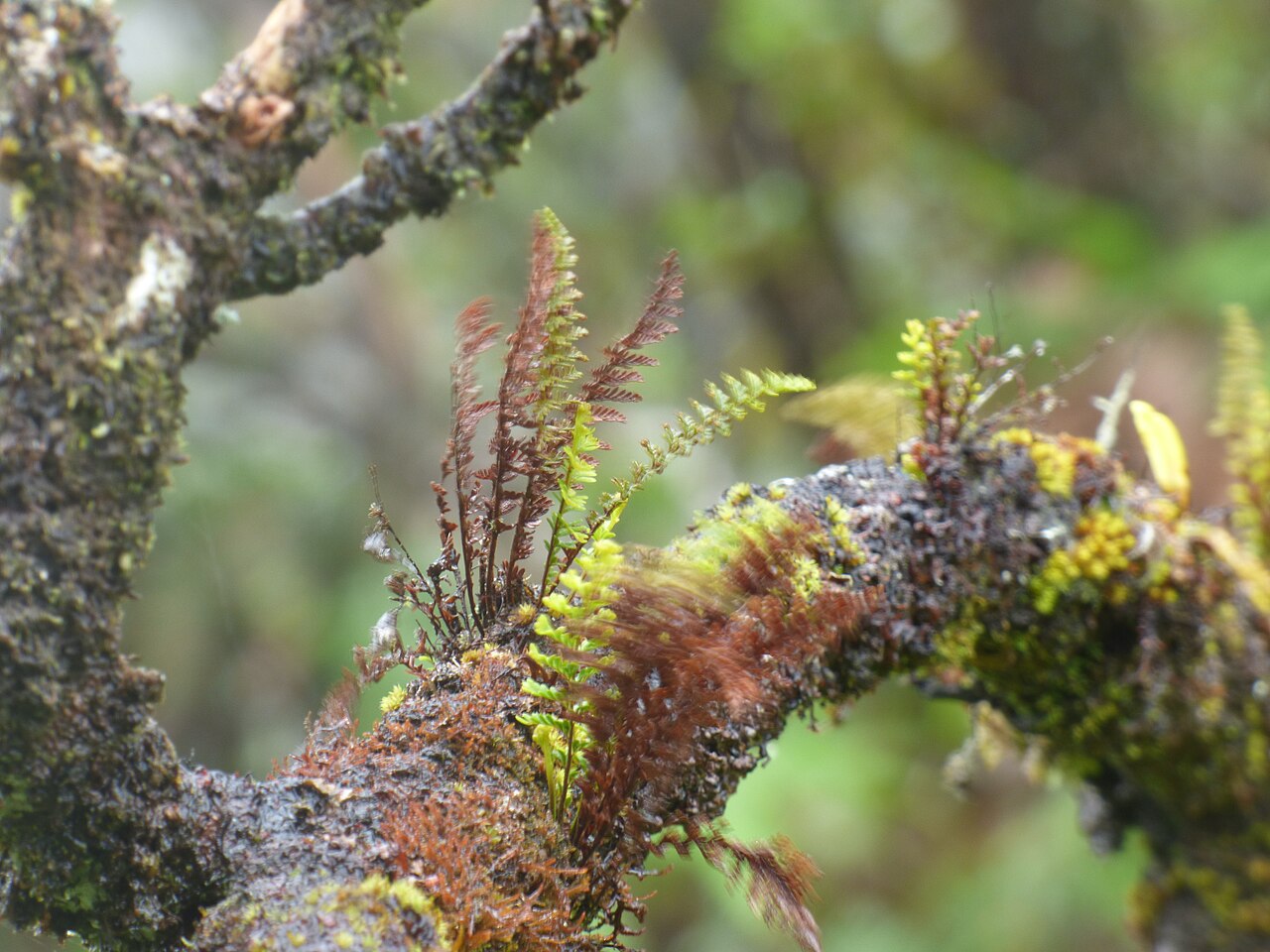
Wahine noho mauna grows in small tufts from a short, creeping or erect rhizome tucked into moss on tree trunks, branches and tree-fern trunks, and occasionally on mossy ground or rocks. The fronds hang, arch or stand out from the trunk, forming a loose clump a few inches to about a foot across.
Fronds
The fronds are narrow and strap-shaped in outline, usually about 2 to 8 inches long and well under an inch wide. They are pinnate, with numerous small, closely spaced segments arranged like the teeth of a comb along the central stalk, each segment often slightly lobed. Fresh fronds are bright to yellow-green; older fronds turn coppery or reddish brown and persist on the plant. Small reddish hairs may be present on the stalk and segments.
Sori
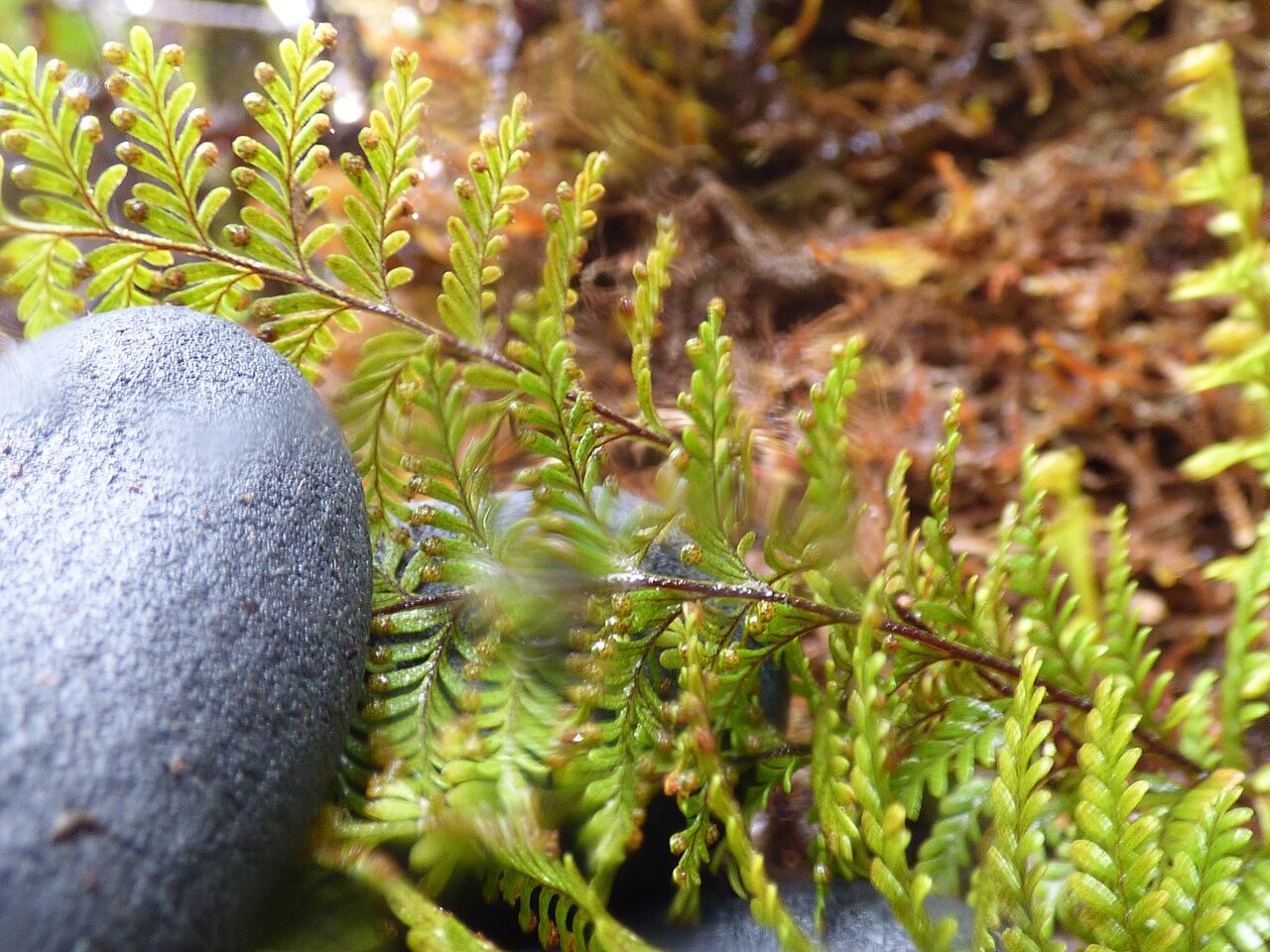
The spore clusters (sori) are small, round and have no protective cover (indusium). They sit on the segments, often slightly sunken, and look like tiny dots on the underside. Like all grammitid ferns, it produces green, chlorophyll-filled spores that are short-lived and must germinate quickly in a constantly moist place.
Habitat Clues
Look for it on mossy ʻōhiʻa trunks and branches and on tree-fern trunks in wet and wet-mesic forests, often at about eye level along forest trails and in cloud-forest areas where the moss is thick.
Similar Species
Other Adenophorus species differ in frond size and division. Some, such as A. pinnatifidus, have fronds that are lobed rather than fully divided, and the delicate A. hymenophylloides has finely divided, almost filmy fronds. Some forms of wahine noho mauna were once treated as varieties and are now often recognized as separate species, such as A. montanus and A. epigaeus. Introduced ferns rarely grow as true epiphytes in the native cloud forest.
Quick Facts
| Scientific Name | Adenophorus tamariscinus (Kaulf.) Hook. & Grev. |
| Family | Polypodiaceae (grammitid ferns) |
| Plant Type | Small epiphytic fern; endemic to Hawaiʻi |
| Mature Height | 2–8 in (fronds) |
| Mature Spread | A few inches to about 1 ft |
| Growth Rate | Slow |
| Sun Exposure | Shade to bright filtered light |
| Water Needs | High; constant moisture and humidity |
| Soil Type | None in the wild; grows in living moss on trunks and branches |
| Soil pH | Acidic (moss and decaying bark) |
| Bloom Time | None (fern; produces spores) |
| Flower Color | None |
| Fall Color | None; old fronds turn reddish brown year-round |
| Fruit | None; small round sori without indusia |
| Deer Resistant | Usually out of reach of browsers on trunks and branches |
| USDA Hardiness Zones | 10–12 (cool, constantly humid cloud-forest conditions) |
Native Range
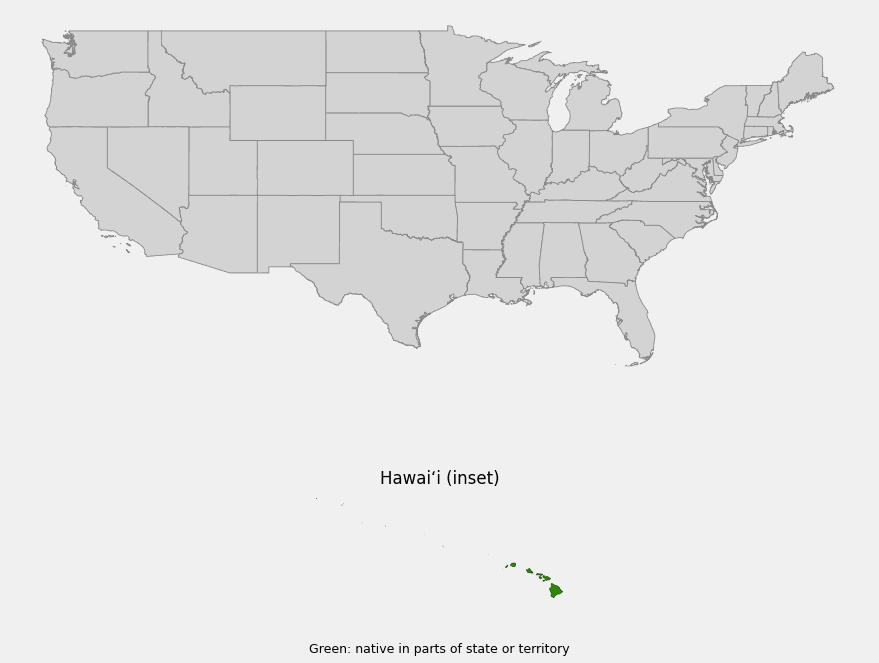
Wahine noho mauna is endemic to the Hawaiian Islands, and so is its genus. USDA PLANTS records it only from Hawaiʻi. It is known from Kauaʻi, Oʻahu, Molokaʻi, Maui and Hawaiʻi Island, and research-grade iNaturalist records are most numerous from Oʻahu, Kauaʻi and Hawaiʻi Island.
It grows as an epiphyte in wet and wet-mesic forests, mainly at middle to upper elevations where clouds and mist keep the moss layer constantly damp. Typical hosts are ʻŌhiʻa Lehua trunks and branches and the trunks of tree ferns such as Hāpuʻu Pulu. It is common in good native forest, such as the cloud forests of the Koʻolau summit, the Alakaʻi area of Kauaʻi and windward East Maui.
Wahine noho mauna is not federally listed; the only Adenophorus on the USFWS ECOS database is the endangered A. periens. Because it depends on intact, mossy native forest, it declines where forests are opened by feral pigs, invasive plants or the loss of ʻōhiʻa to Rapid ʻŌhiʻa Death.
📋 Regional plant lists featuring Wahine Noho Mauna: Hawaii
Growing & Care Guide
Honestly, wahine noho mauna is one of the hardest Hawaiian natives to grow, and it is almost never sold. It needs the constant mist, cool temperatures and living moss of the cloud forest, and grammitid ferns are notorious among fern growers for dying in cultivation. The best way to enjoy it is to see it on a forest hike. If you want to try, start only with material from a Hawaiian native plant nursery or a legitimate propagation program; never pull it from trees in the forest, where it will almost certainly die. Gardeners outside Hawaiʻi should know that Hawaiʻi restricts plant shipments between states and this fern is not available on the mainland.
Light
Give it shade or bright, filtered light, never direct sun. In the forest it grows under a dense canopy, often in mist much of the day.
Soil & Water
It needs no soil. Grow it on a slab of tree-fern fiber or cork wrapped with living moss, or in a shallow pot of loose, airy moss and fine bark. The roots and moss must stay damp but never waterlogged, and humidity must stay high, ideally near 100%. Use rainwater or low-mineral water; hard water and fertilizer salts damage grammitid ferns.
Planting Tips
Realistically, success outside a cloud-forest garden requires a terrarium, orchidarium or cool, misted shade house kept around 50 to 75°F. In Hawaiʻi, a shaded, mossy tree-fern trunk in a garden above about 2,000 feet on the windward side is the closest match to its natural home. Hot, dry or windy lowland sites will kill it quickly.
Pruning & Maintenance
Leave the old reddish-brown fronds in place unless they rot; they are a normal part of the plant. Never let the moss dry out, and keep air moving gently to prevent rot. Watch for slugs, which can eat the young fronds.
Propagation
Propagation is a job for specialists. The green spores live only a short time and must be sown fresh on sterile, constantly moist media, and the young plants grow slowly. Small clumps can be divided with their moss, but even divisions often fail. Botanical gardens and conservation nurseries in Hawaiʻi have the best chance of success.
Landscape Uses
- Nature viewing: a common sight on mossy trunks along Hawaiʻi’s cloud-forest trails
- Terrarium and fern collections: for experienced growers with cool, misted conditions
- Tree-fern mounts: on hāpuʻu trunks in cool, wet upland gardens in Hawaiʻi
- Forest restoration: part of the epiphyte layer that returns as native forest recovers
- Education: an example of Hawaiʻi’s endemic fern genera
Wildlife & Ecological Value
Small as it is, wahine noho mauna is part of the moss and epiphyte layer that makes Hawaiian cloud forests work.
For Pollinators
Ferns have no flowers and do not need pollinators; they spread by wind-borne spores. Its value to insects comes from the shelter of the moss clumps it grows in.
For Birds
Native forest birds, such as the ʻelepaio and the ʻamakihi, forage for insects and spiders on mossy trunks and branches among epiphytic ferns.
For Mammals
Hawaiʻi’s only native land mammal, the Hawaiian hoary bat, hunts insects over the cloud forest. Because it grows up on trunks, this fern is mostly out of reach of feral pigs, though pigs damage the forest around it.
Ecosystem Role
Epiphytic ferns and mosses on trunks and branches catch rain and cloud moisture and slowly release it, helping keep the forest damp and feeding streams. The mats also hold organic matter and shelter many native snails, insects and spiders.
Cultural & Historical Uses
The Hawaiian name wahine noho mauna means “woman who lives in the mountains,” a fitting name for a delicate fern that grows only in the high, misty forests.
The species was described in 1824 by the German botanist Georg Friedrich Kaulfuss, from specimens collected in Hawaiʻi during the Russian Romanzov expedition with Adelbert von Chamisso, and later moved to Adenophorus by William Hooker and Robert Greville. The epithet tamariscinus compares its finely divided fronds to the tiny leaves of tamarisk.
Hawaiʻi has an unusually high share of endemic ferns, and Adenophorus is one of a few fern genera found nowhere else on Earth. Seeing wahine noho mauna on a mossy trunk is a good sign that a forest is still healthy and native.
Frequently Asked Questions
Can I grow wahine noho mauna?
Only with great difficulty. It needs constant high humidity, cool temperatures and living moss, as in its cloud-forest home. It usually dies in ordinary gardens and homes. If you want to try, use nursery-propagated material and a cool, misted terrarium or shade house.
Is wahine noho mauna native to Hawaiʻi?
Yes. It is endemic to the Hawaiian Islands, and its genus, Adenophorus, is also found only in Hawaiʻi.
Where can I see it?
Look on mossy trunks and branches in wet native forests, such as the Koʻolau summit trails on Oʻahu, the Kōkeʻe and Alakaʻi areas of Kauaʻi, and wet forests on Maui and Hawaiʻi Island.
Why are some fronds red?
Fronds start out green and turn coppery to reddish brown as they age. Old fronds persist on the plant, so a healthy clump often shows both colors.
Is it endangered?
No. Wahine noho mauna is not federally listed and is common in intact wet forest. One relative, Adenophorus periens, is federally endangered.

Looking for a nursery that carries Wahine Noho Mauna?
Browse our native plant nursery directory: Hawaii

