
ʻOhe Naupaka (Scaevola glabra)
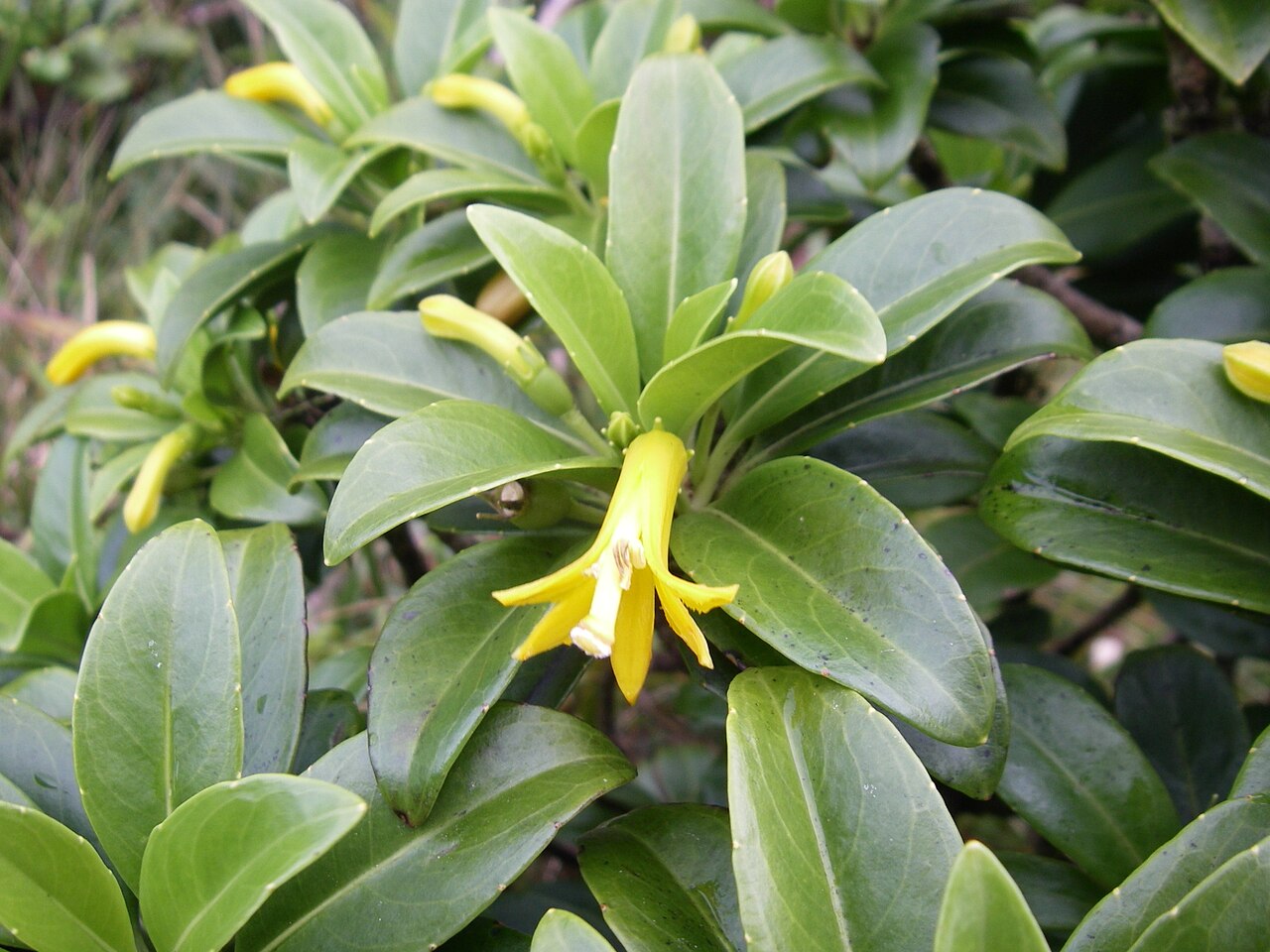
Scaevola glabra, known in Hawaiian as ʻohe naupaka, is a rare and unusual naupaka found only in the wet mountain forests of Kauaʻi and Oʻahu. Instead of the white, fan-shaped half-flowers that most people associate with naupaka, it bears bright yellow, curved, tube-shaped flowers among glossy, dark green leaves.
The Hawaiian word ʻohe means bamboo or a tube, and it refers to the tubular flowers. Their shape and color suggest that ʻohe naupaka evolved to be pollinated by native nectar-feeding birds such as the Hawaiian honeycreepers, whose curved bills fit the curved flower tubes. It is one of the most distinctive examples of how the naupaka group diversified after reaching Hawaiʻi.
ʻOhe naupaka is endemic to Hawaiʻi and is not federally listed, but it grows only in cool, rain-soaked forests and on windswept summit ridges, and it is seldom seen in gardens. This guide covers how to recognize it, where it grows, what it takes to grow it, and its place in Hawaiian forests.
Identification
Hawaiʻi has about ten native Scaevola species. Most have white, cream or purple-streaked half-flowers that look as if half the petals are missing. ʻOhe naupaka is the only one with bright yellow, tubular flowers, which makes it easy to identify when it is in bloom.
Growth Habit
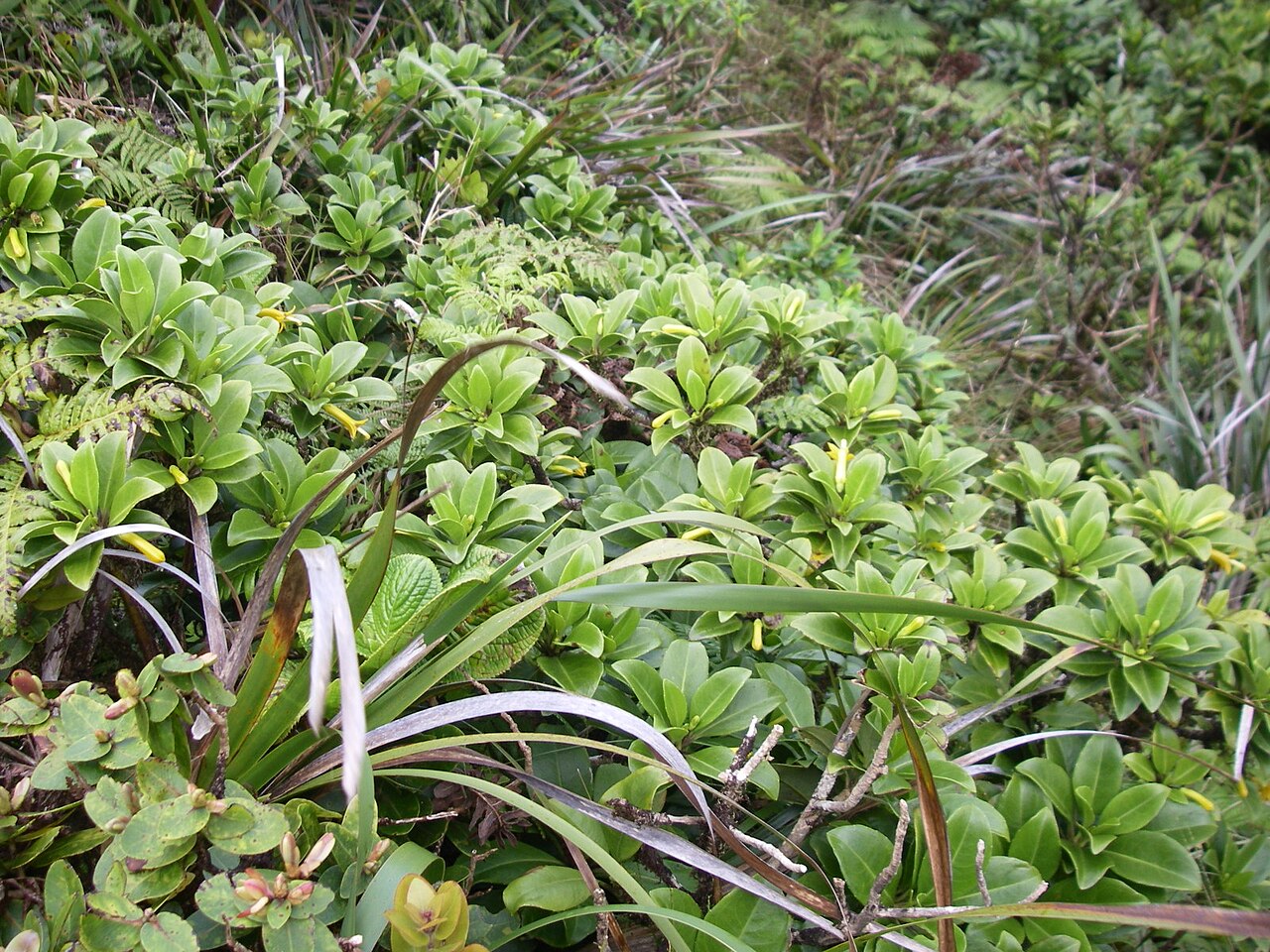
ʻOhe naupaka is an evergreen shrub, usually about 2 to 6 feet tall, with stout, somewhat succulent young stems that become woody and gray with age. Branches are often few, with the leaves crowded toward the tips. On exposed summit ridges plants stay low and compact.
Leaves
The leaves are thick, glossy and smooth (the name glabra means hairless), elliptic to oval, usually about 3 to 6 inches long, with smooth or faintly toothed edges. They are dark green above, paler below, and arranged in tight rosettes at the branch tips.
Flowers
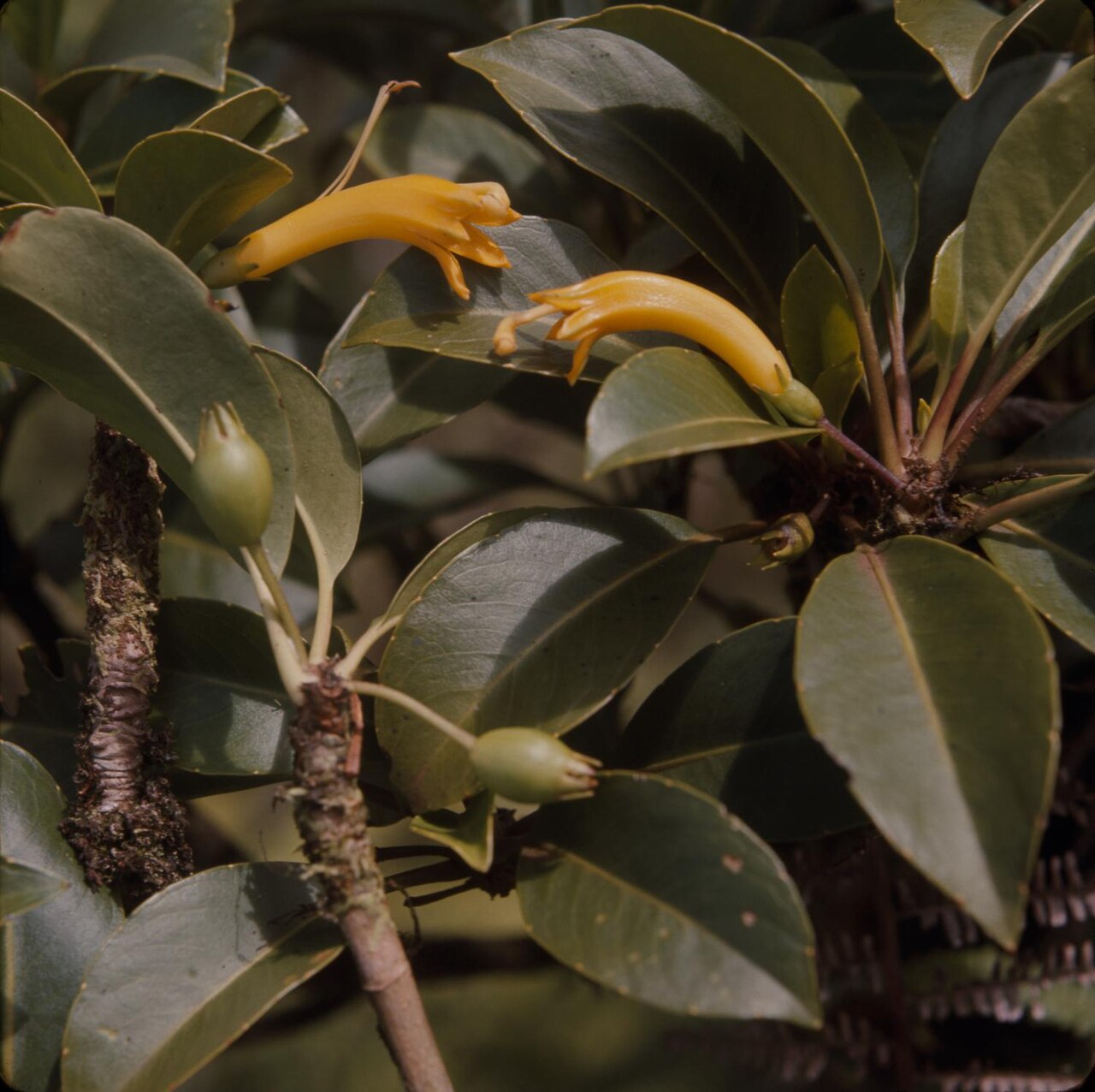
The flowers are bright yellow to golden orange, about an inch long, with a curved tube and five short, spreading lobes at the mouth. Unlike the half-flowers of other naupaka, the tube is not deeply split down one side. Flowers are borne singly or in small clusters in the leaf axils near the branch tips and can appear at various times of year.
Fruit
The fruits are oval, fleshy drupes about half an inch long, green at first and ripening dark purple to black. Each contains a hard, ridged seed.
Similar Species
Mountain Naupaka (Scaevola gaudichaudiana) and Naupaka Kuahiwi (Scaevola gaudichaudii) share upland forests with ʻohe naupaka but have white to yellowish half-flowers that are split to the base. Beach Naupaka (Scaevola sericea) grows on the coast and has white half-flowers and white fruits.
Quick Facts
| Scientific Name | Scaevola glabra Hook. & Arn. |
| Family | Goodeniaceae (goodenia family) |
| Plant Type | Evergreen shrub; endemic to Kauaʻi and Oʻahu |
| Mature Height | 2–6 ft |
| Mature Spread | 2–4 ft |
| Growth Rate | Slow |
| Sun Exposure | Part shade to full sun in cool, cloudy sites |
| Water Needs | High; constantly moist soil and high humidity |
| Soil Type | Moist, acidic, organic-rich soil with good drainage |
| Soil pH | About 4.5–6.0 |
| Bloom Time | Variable; can flower at various times of year |
| Flower Color | Bright yellow to golden orange |
| Fall Color | None (evergreen) |
| Fruit | Oval fleshy drupe, green ripening dark purple to black |
| Deer Resistant | Not applicable; seedlings damaged by feral pigs |
| USDA Hardiness Zones | 10–11 (cool, wet upland conditions) |
Native Range
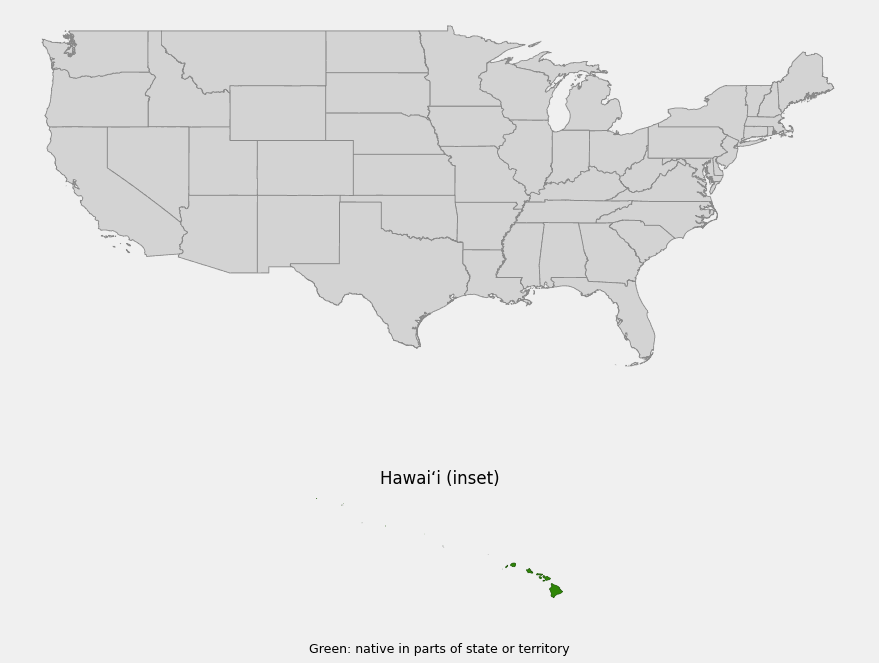
ʻOhe naupaka is endemic to the Hawaiian Islands and grows only on Kauaʻi and Oʻahu. USDA PLANTS records it only from Hawaiʻi. On Kauaʻi it occurs in the wet forests and bog margins of the central uplands, such as the Alakaʻi region and the Wahiawa Mountains. On Oʻahu it grows along the windswept summit ridges and upper slopes of the Koʻolau Range, on trails such as Poamoho and Wiliwilinui.
Its habitat is montane wet forest and wet shrubland, often on exposed ridges and the edges of bogs, at roughly 1,500 to 5,000 feet (about 450 to 1,500 m). These places are cloudy, windy and very wet, with frequent rain and fog, cool temperatures and acidic, waterlogged soils. It typically grows among ʻŌhiʻa Lehua, Uluhe, native sedges, kanawao and other wet-forest shrubs.
ʻOhe naupaka is not federally listed. It is vulnerable to feral pigs, which damage the ground and spread weeds, and to invasive plants such as Koster’s curse, strawberry guava and Australian tree fern. The loss of many native nectar-feeding birds from the lowlands and mid-elevation forests may also affect its pollination.
📋 Regional plant lists featuring ʻOhe Naupaka: Hawaii
Growing & Care Guide
ʻOhe naupaka is honestly a challenge to grow outside its native habitat. It needs the cool temperatures, high humidity, frequent rain and acidic soils of Hawaiʻi’s upland wet forests, and it rarely thrives in warm lowland gardens. It can be grown in cool, wet, windward or upland gardens in Hawaiʻi, and by botanical gardens and native-plant growers who can provide those conditions. Buy only nursery-propagated plants from a Hawaiʻi native plant nursery, never collect from the wild, and note that Hawaiʻi restricts bringing plants in from other states.
Light
Bright, filtered light or part shade suits most gardens. On cool, cloudy upland sites it can take full sun, as it does on open summit ridges, but in warmer gardens it needs protection from hot afternoon sun.
Soil & Water
Plant in moist, acidic soil rich in organic matter, such as a mix of peat or coir, compost and cinder or perlite for drainage. Keep the soil consistently moist and the air humid; it will not tolerate drought. At the same time, avoid stagnant, airless soil, which can rot the roots.
Planting Tips
Choose a sheltered, humid spot in a cool upland or windward garden, ideally above about 1,500 feet in Hawaiʻi. Plant it among other wet-forest natives such as ʻōlapa, native ferns and ʻōhiʻa, which create the moist microclimate it needs. In lowland areas, a shade house with misting gives it the best chance.
Pruning & Maintenance
Little pruning is needed; remove dead leaves and occasionally pinch tips to encourage branching. Mulch to keep roots cool and moist, protect plants from slugs, and fence out pigs in rural areas.
Propagation
Propagation is by seed or cuttings from cultivated plants. Clean ripe fruits and sow the seeds in a moist, well-drained, acidic mix; germination can be slow and uneven. Tip cuttings may root in a humid propagation chamber with rooting hormone. Use only nursery stock or material collected with permission.
Landscape Uses
- Upland native gardens: an unusual yellow-flowered naupaka for cool, wet gardens
- Wet-forest restoration: part of the native shrub layer on ridges and bog margins
- Botanical and educational gardens: illustrates bird-pollinated flower evolution in naupaka
- Shade-house collections: grows best with high humidity and steady moisture
- Cultural plantings: one of several naupaka featured in Hawaiian stories
Wildlife & Ecological Value
ʻOhe naupaka is one of the many Hawaiian plants whose flowers evolved to match the bills of native birds.
For Pollinators
The yellow, curved, tubular flowers are thought to be adapted to pollination by native nectar-feeding birds, especially Hawaiian honeycreepers with curved bills. Insects may also visit the flowers, but the long tube restricts access to nectar.
For Birds
Native forest birds such as the ʻapapane, ʻiʻiwi and ʻamakihi, still found in some upland forests, are likely visitors to the flowers. Fruit-eating birds may also disperse the seeds.
For Mammals
Hawaiʻi’s only native land mammal, the Hawaiian hoary bat, forages over upland forests where ʻohe naupaka grows. Feral pigs damage the habitat and seedlings.
Ecosystem Role
As part of the low, dense shrub layer on windswept summit ridges and bog margins, ʻohe naupaka helps protect thin soils from erosion and shelters native insects, snails and ferns. Its nectar-rich flowers form part of the food web that supports Hawaiʻi’s remaining native forest birds.
Cultural & Historical Uses
Scaevola glabra was described in the nineteenth century by the British botanists William Jackson Hooker and George Arnott, from specimens collected in Hawaiʻi on early voyages. Its Hawaiian name, ʻohe naupaka, combines naupaka with ʻohe, meaning bamboo or tube, after its tubular flowers.
Naupaka are among the best-known plants in Hawaiian storytelling. In the most famous legend, two lovers are separated, one sent to the mountains and one to the shore, and the naupaka of the mountains and of the beach each bear only half a flower. ʻOhe naupaka, with its whole, tubular flower, is a striking exception within the group.
For botanists, ʻohe naupaka is a classic example of adaptive radiation in Hawaiʻi: the Hawaiian naupaka descend from a few colonizing ancestors and evolved into coastal mats, beach shrubs and mountain shrubs with a variety of flower shapes and colors. Hikers on Oʻahu’s Koʻolau summit trails and in Kauaʻi’s upland forests can still find it in bloom.
Frequently Asked Questions
Why does ʻohe naupaka have yellow tubular flowers?
Most naupaka have white half-flowers pollinated by insects. ʻOhe naupaka’s yellow, curved, tubular flowers are thought to have evolved for pollination by native nectar-feeding birds such as Hawaiian honeycreepers.
Where does ʻohe naupaka grow?
It is endemic to Kauaʻi and Oʻahu, where it grows in cool, wet upland forests, on windswept summit ridges of the Koʻolau Range and at the edges of montane bogs.
Is ʻohe naupaka endangered?
It is not federally listed. It is endemic to Hawaiʻi and limited to wet upland habitats that are threatened by feral pigs and invasive plants.
Can I grow ʻohe naupaka in my garden?
Only in cool, humid, wet conditions, such as an upland or windward garden in Hawaiʻi or a misted shade house. It struggles in hot, dry lowland gardens. Buy only nursery-propagated plants from a Hawaiʻi native plant nursery.
What does ʻohe mean in ʻohe naupaka?
ʻOhe means bamboo or tube in Hawaiian, and it describes the plant’s tubular flowers.

Looking for a nursery that carries ʻOhe Naupaka?
Browse our native plant nursery directory: Hawaii

