
ʻUki (Gahnia beecheyi)
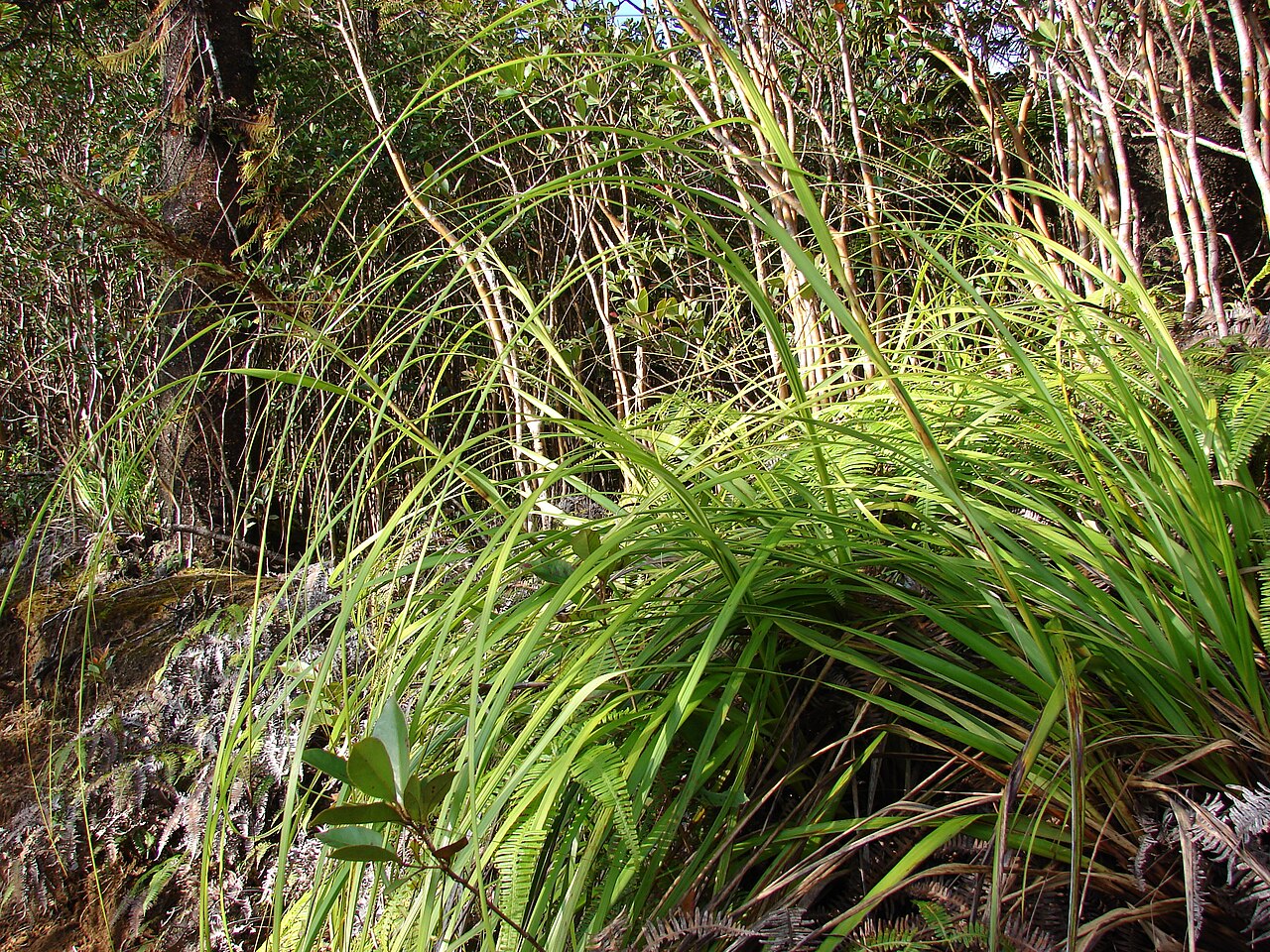
Gahnia beecheyi, known in Hawaiian as ʻuki and in English as forest sawsedge, is a large, tussock-forming sedge found only in the Hawaiian Islands. It grows in mesic and wet forests and on forested ridges, where its fountains of long, tough, saw-edged leaves and tall, dark brown flower heads are a familiar sight along many island trails.
Sawsedges (Gahnia) are a group of about 40 sedges of Australia, New Zealand, Southeast Asia and the Pacific islands, named for the fine, sharp teeth along their leaf edges. ʻUki is the Hawaiian endemic member of the genus, though a second, more widespread Pacific species, Gahnia aspera, also grows in Hawaiʻi. Note that the Hawaiian name ʻuki is also used for other plants, including the sedge Machaerina, and that ʻUki ʻUki (Dianella sandwicensis) is a different plant in the lily family.
ʻUki is not federally listed and is still fairly common in protected forests on several islands. It is a striking native ornamental grass-like plant for upland gardens in Hawaiʻi, although it is slow to establish and seldom offered by nurseries. This guide covers how to recognize it, where it grows, how to grow it and its role in Hawaiian forests.
Identification
ʻUki is one of the largest native sedges in Hawaiʻi. Its size, sharp leaf edges and dark, branched flower heads set it apart from native grasses and smaller sedges.
Growth Habit
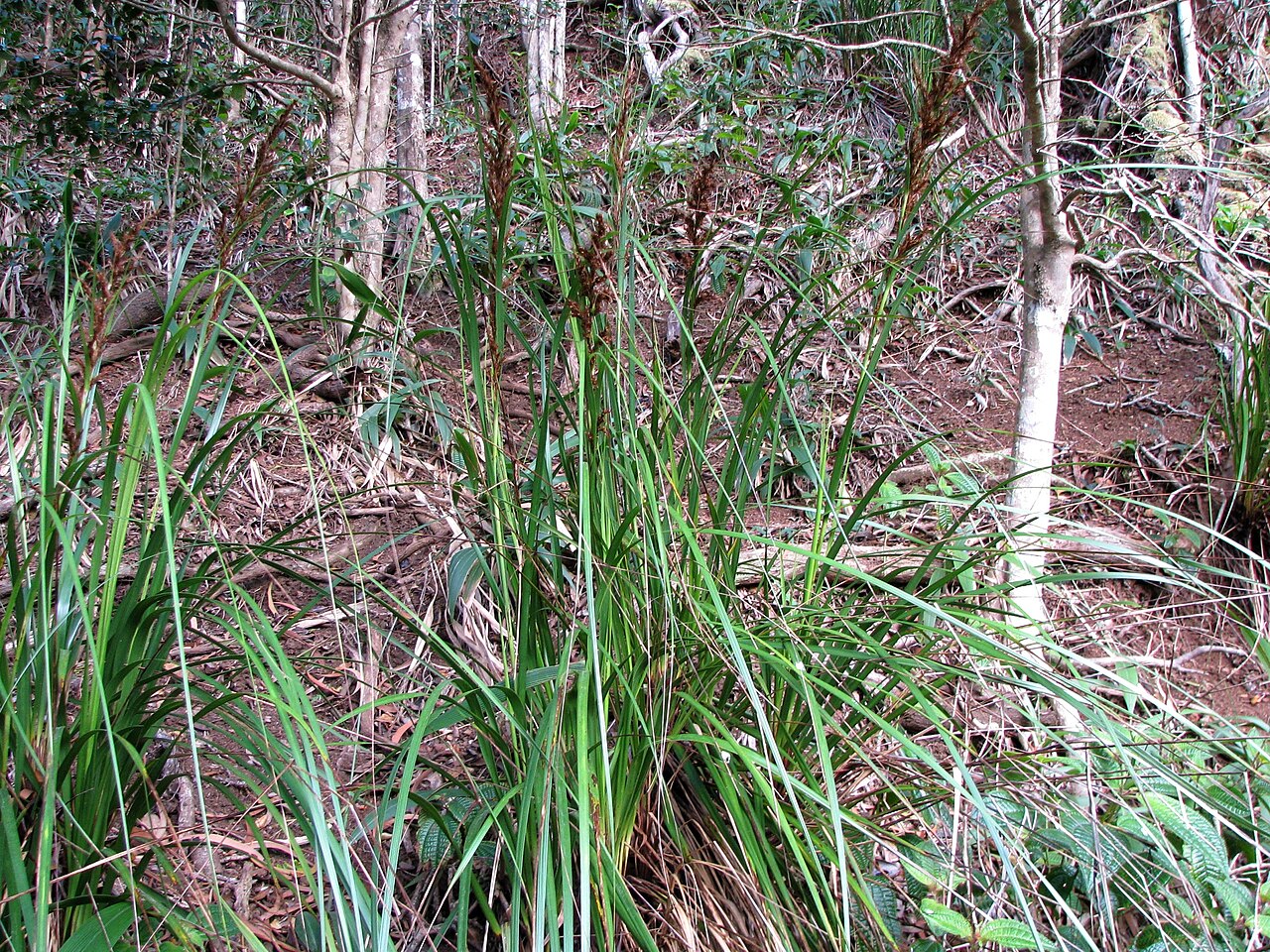
ʻUki forms dense, fountain-like tussocks usually about 3 to 6 feet tall and wide, from a short, thick, woody base. Old clumps accumulate dead leaves at the base. The flowering stems are stout and leafy and can rise above or arch out of the clump.
Leaves
The leaves are long, narrow and tough, often several feet long and about a quarter to half an inch wide, tapering to a fine point. They are rolled or folded and have finely toothed, rough edges that can cut bare skin, which is why Gahnia species are called sawsedges. Handle ʻuki with gloves.
Flowers
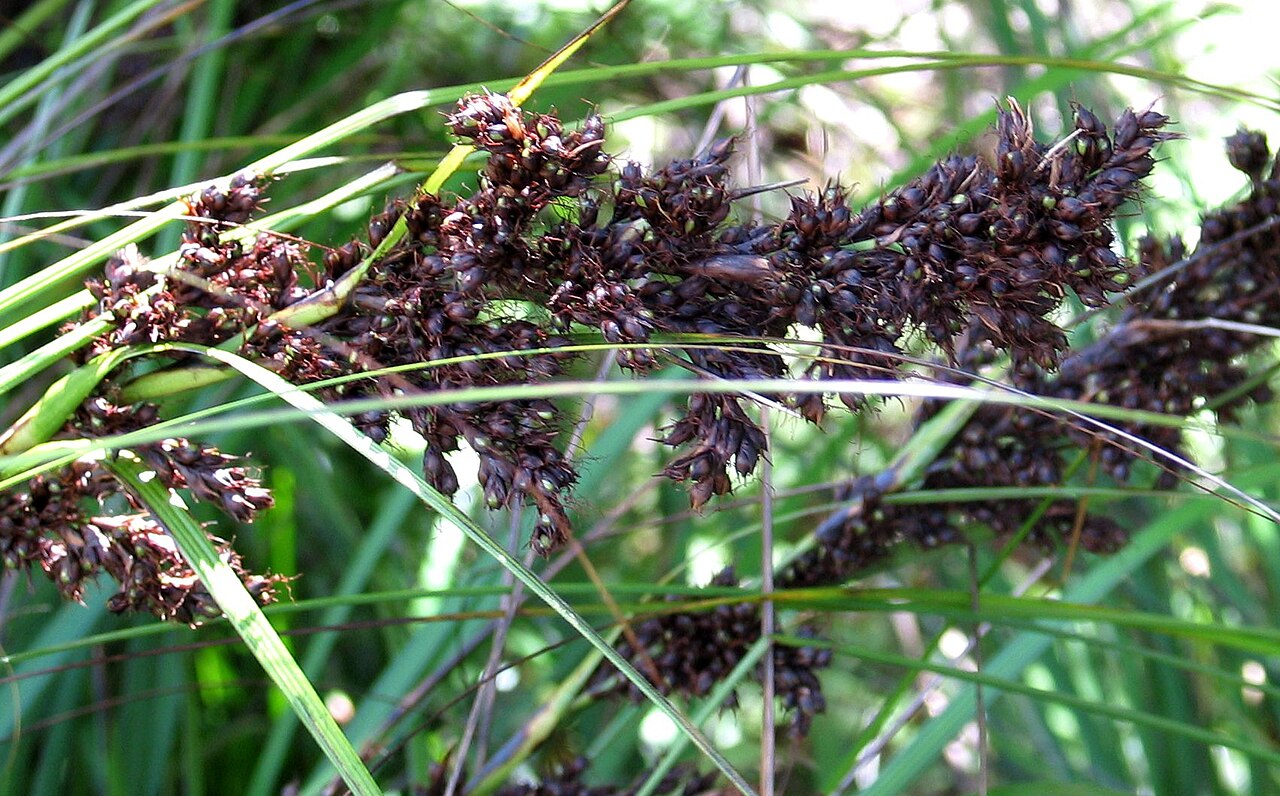
The flowers are tiny and wind-pollinated, held in narrow, branched, plume-like clusters up to about a foot or more long at the ends of the flowering stems. The clusters are made of many small, dark brown to blackish spikelets covered with papery scales, giving the whole head a dark, shaggy look.
Fruit
Each fertile spikelet produces a small, hard, shiny nutlet (achene). The seed heads stay on the plant for a long time and turn rusty brown as they age.
Similar Species
Gahnia aspera is a smaller, more widespread Pacific sawsedge that also grows in Hawaiʻi; it is distinguished by technical features of its flower heads and nutlets. Machaerina sedges, also called ʻuki, have flat, iris-like leaves in fans. Introduced pampas grass and other large grasses have hollow, jointed stems and feathery, silvery plumes rather than dark sedge heads.
Quick Facts
| Scientific Name | Gahnia beecheyi H. Mann |
| Family | Cyperaceae (sedge family) |
| Plant Type | Large tussock-forming perennial sedge; endemic to Hawaiʻi |
| Mature Height | 3–6 ft |
| Mature Spread | 3–6 ft |
| Growth Rate | Slow |
| Sun Exposure | Full sun to part shade |
| Water Needs | Medium to high; regular moisture |
| Soil Type | Well-drained, acidic, organic-rich soil; tolerates thin soils on ridges |
| Soil pH | About 4.5–6.5 |
| Bloom Time | Variable; mainly spring to summer |
| Flower Color | Dark brown to blackish (wind-pollinated) |
| Fall Color | None (evergreen) |
| Fruit | Small hard, shiny nutlet in long-lasting seed heads |
| Deer Resistant | Not well documented; seedlings damaged by feral pigs |
| USDA Hardiness Zones | 10–12 |
Native Range
ʻUki is endemic to the Hawaiian Islands. USDA PLANTS lists it only from Hawaiʻi, and it is found on Kauaʻi, Oʻahu, Molokaʻi, Lānaʻi and Maui, with the most records from Oʻahu and Kauaʻi. On Oʻahu it is common along ridge trails in both the Koʻolau and Waiʻanae ranges, and on Lānaʻi it lines the Munro Trail near the island’s summit.
It grows in mesic and wet forest, on forested ridges and slopes, and in open shrubland, roughly from 1,000 to 4,000 feet (about 300 to 1,200 m). It is often found on the drier edges of wet forest and on exposed ridges, where it grows with ʻŌhiʻa Lehua, Koa, Uluhe and other native shrubs and ferns.
ʻUki is not federally listed. Like other native forest plants it faces competition from invasive species such as strawberry guava, Koster’s curse and introduced grasses, as well as disturbance by feral pigs and wildfire on drier sites.
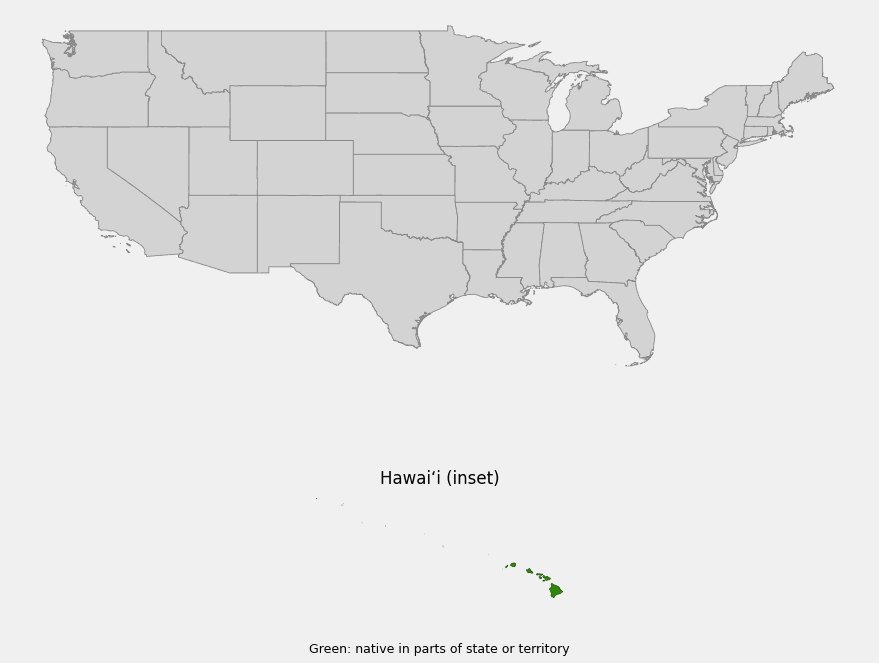
📋 Regional plant lists featuring ʻUki: Hawaii
Growing & Care Guide
ʻUki makes a bold, low-maintenance accent plant for upland and windward gardens in Hawaiʻi, much like an ornamental grass but with darker, more dramatic seed heads. It is slow to establish and is not often available, so look for nursery-propagated plants from Hawaiʻi native plant nurseries and never dig clumps from the wild. Hawaiʻi also restricts bringing plants in from other states, so source plants locally.
Light
Full sun to part shade. It grows in forest openings and on exposed ridges, and plants in more sun stay more compact and flower more heavily. In hot lowland gardens, light afternoon shade helps.
Soil & Water
Plant in well-drained, slightly acidic soil rich in organic matter; a mix with cinder or gravel works well. Keep it evenly moist while it establishes. Once settled, it tolerates short dry spells, but it looks best with regular moisture, as in its mesic and wet forest home. Avoid waterlogged soil.
Planting Tips
Give each plant room to form a clump 3 to 6 feet across, and keep it back from paths, because the sharp-edged leaves can cut skin. It looks good on slopes, along forest edges and as a backdrop for smaller native shrubs and ferns. It does best in cooler gardens above about 1,000 feet in Hawaiʻi; in hot, dry lowland gardens it needs extra water and shade.
Pruning & Maintenance
Wear gloves and long sleeves. Pull or cut out dead leaves from the base occasionally, and remove old flower stems if you want a tidier look. Avoid cutting the whole clump to the ground; it regrows slowly.
Propagation
Seed germination in sawsedges is often slow and erratic: sow fresh seed on a moist, well-drained mix and be patient, as seedlings may appear over several months. Large clumps can be divided carefully, keeping plenty of roots on each division, but divisions are slow to re-establish and need shade and steady moisture until new growth appears. Use only nursery stock or material collected with permission.
Landscape Uses
- Upland native gardens: a bold, grass-like accent with dark seed heads
- Slope and ridge plantings: tough clumps help hold soil on slopes
- Forest restoration: part of the native understory of mesic and wet forest
- Low-maintenance borders: long-lived clumps need little care
- Educational gardens: illustrates the endemic sedges of Hawaiʻi
Wildlife & Ecological Value
Large native sedges such as ʻuki give structure to the understory of Hawaiian forests and shelter many small native animals.
For Pollinators
ʻUki is wind-pollinated and offers little to pollinators directly, but the dense clumps shelter native insects.
For Birds
The seeds may be eaten by birds, and the clumps provide cover for foraging birds and insects that birds feed on.
For Mammals
Hawaiʻi’s only native land mammal, the Hawaiian hoary bat, forages for insects over the forests where ʻuki grows. Feral pigs disturb the soil around clumps and damage seedlings.
Ecosystem Role
The dense tussocks and fibrous roots of ʻuki help hold soil on steep forested slopes and ridges, trap leaf litter and moisture, and provide shelter for native snails, spiders and insects.
Cultural & Historical Uses
Gahnia beecheyi was described by the American botanist Horace Mann Jr., who studied the Hawaiian flora in the 1860s. Its name honors Frederick William Beechey, the British naval officer whose expedition aboard HMS Blossom visited Hawaiʻi in the 1820s and collected plants there.
In Hawaiian, ʻuki is a name shared by several large sedges with long, tough leaves, and ʻuki ʻuki is used for the native lily Dianella. Hawaiians used tough native sedges and grasses for thatching and other fiber purposes, and the sharp leaves of sawsedges were well known to anyone walking through upland forests.
Today ʻuki is a familiar plant to hikers on trails such as the ʻAiea Loop Trail on Oʻahu, the Munro Trail on Lānaʻi and trails in Kōkeʻe on Kauaʻi. It is used in native forest restoration and is increasingly appreciated as a striking native grass-like plant for gardens.
Frequently Asked Questions
What is the difference between ʻuki and ʻuki ʻuki?
ʻUki here refers to Gahnia beecheyi, a large sawsedge; the name is also used for Machaerina sedges. ʻUki ʻuki is Dianella sandwicensis, a native lily with blue berries.
Why is it called a sawsedge?
The leaf edges carry tiny, sharp teeth that feel like a fine saw and can cut bare skin. Wear gloves when handling ʻuki.
Is ʻuki native to Hawaiʻi?
Yes. Gahnia beecheyi is endemic to the Hawaiian Islands and grows on Kauaʻi, Oʻahu, Molokaʻi, Lānaʻi and Maui. It is not federally listed.
Can I grow ʻuki in my garden?
Yes, in Hawaiʻi, especially in cooler upland or windward gardens with well-drained soil and regular moisture. It is slow to establish and not always available, so look for nursery-propagated plants from Hawaiʻi native plant nurseries.
Is ʻuki a grass?
No. It is a sedge (family Cyperaceae). Sedges have solid stems and grow differently from true grasses, though ʻuki is often used like an ornamental grass in gardens.

Looking for a nursery that carries ʻUki?
Browse our native plant nursery directory: Hawaii

