
ʻŌhelo Kau Lāʻau (Vaccinium calycinum)
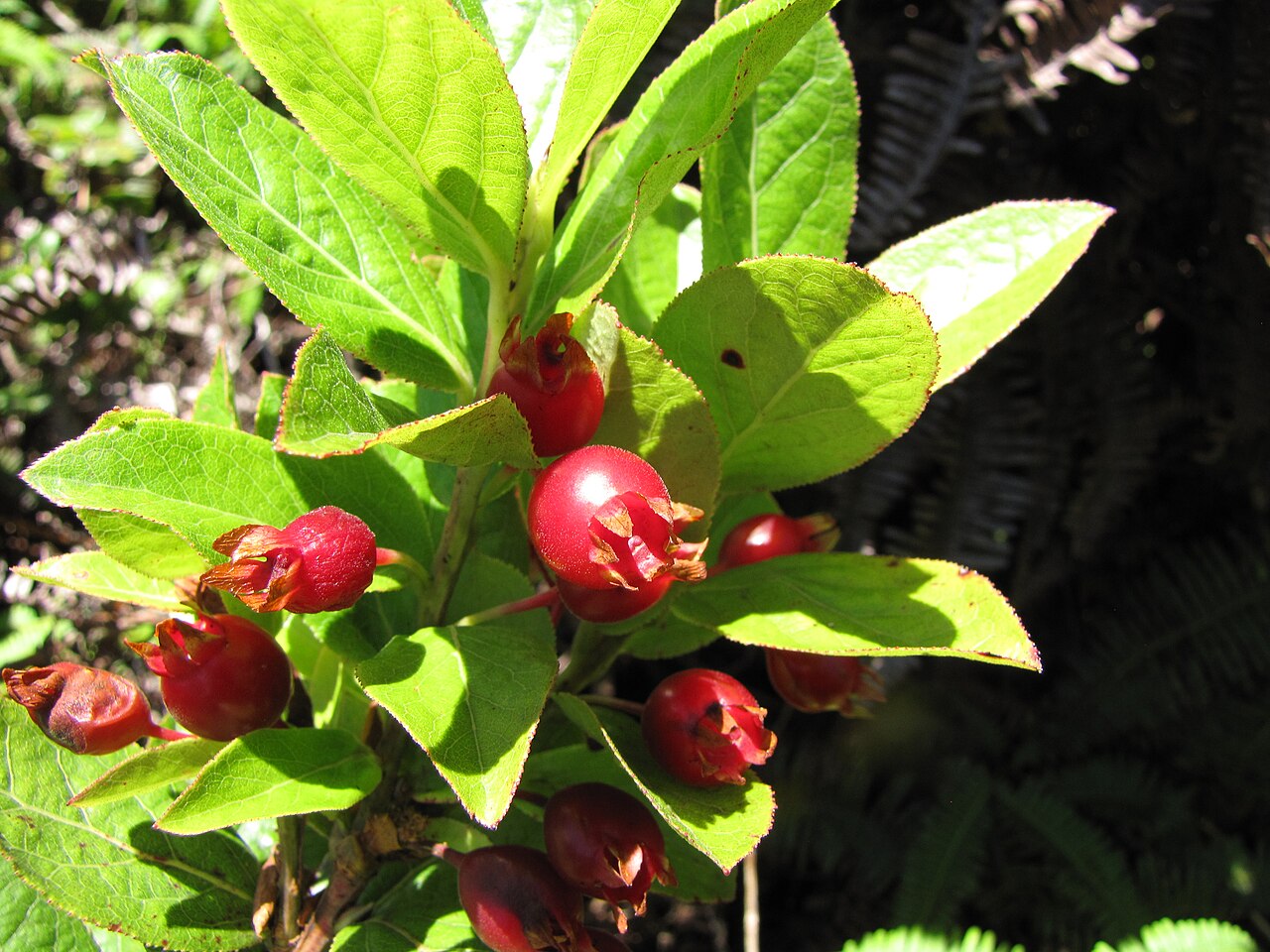
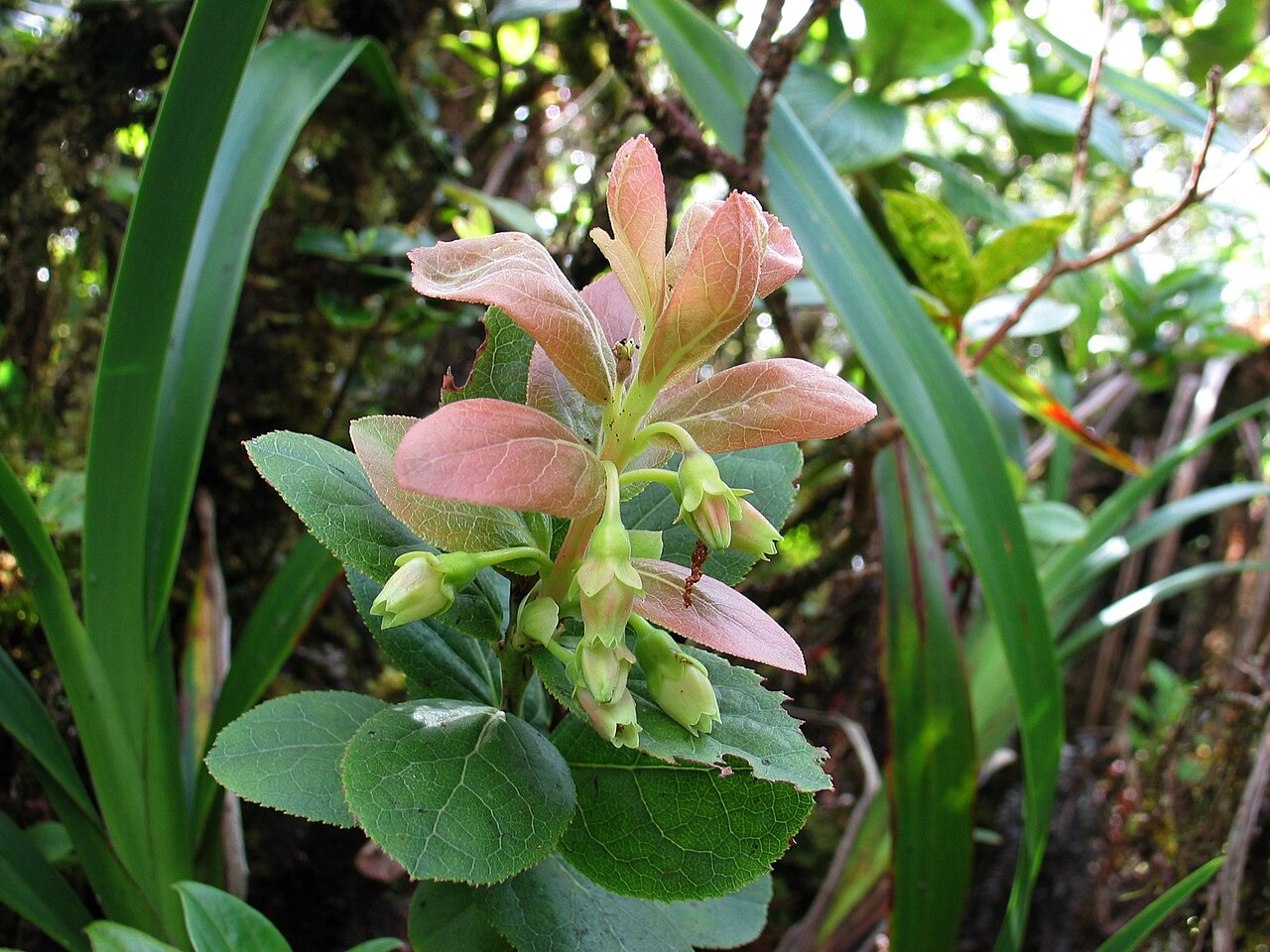
Vaccinium calycinum, known in Hawaiian as ʻŌhelo Kau Lāʻau or simply ʻōhelo, and in English as tree ʻōhelo, is the largest of Hawaiʻi’s native blueberry relatives. It is a shrub or small tree of the wet mountain forests, with thin, bright green, finely toothed leaves, pink-tinged new growth, nodding bell-shaped flowers and glossy, translucent red berries.
The Hawaiian name kau lāʻau refers to its habit of growing up on trees: in the rain forest it often perches on fallen logs, the trunks of hāpuʻu tree ferns and the mossy branches of ʻōhiʻa, as well as on the ground. That sets it apart from the low, sun-loving ʻŌhelo ʻAi (Vaccinium reticulatum) of the volcanic uplands, whose berries are the ones most often picked.
ʻŌhelo kau lāʻau is endemic to Hawaiʻi and found on most of the main islands. It is a plant for cool, wet upland gardens rather than hot lowland yards. This guide covers how to recognize it, where it grows, and how to grow it.
Identification
Hawaiʻi has three native Vaccinium species, all called ʻōhelo. ʻŌhelo kau lāʻau is the tallest, with the largest and thinnest leaves.
Growth Habit
ʻŌhelo kau lāʻau is an erect, branched shrub or small tree, usually 3 to 10 feet tall and occasionally to about 16 feet. Plants growing as epiphytes on logs and tree ferns are often smaller and more sprawling. Young twigs are green to reddish.
Leaves
The leaves are alternate, thin, oval to lance-shaped, about 1.5 to 4 inches long, and finely and evenly toothed along the margins, with a pointed tip. They are bright green and fairly smooth, often with reddish midribs, and the new leaves are flushed pink to red. Some leaves turn red before they fall, and plants can drop many leaves in cooler months.
Flowers
The flowers hang singly from the leaf axils on short stalks. They are urn- to bell-shaped, about a third of an inch long, greenish to pale pink or red, with five small lobes. Flowering is spread through much of the year, with a peak in spring and summer.
Fruit
The berries are round, about a quarter to three-eighths of an inch across, and ripen glossy, translucent red. They are topped by large, persistent calyx lobes, the feature that gives the species its name, calycinum. The berries are edible but usually tart, and they are less often eaten than ʻōhelo ʻai.
Similar Species
ʻŌhelo ʻai (V. reticulatum) is a low shrub of open volcanic uplands, usually under 3 feet, with smaller, thick, blue-green leaves and red, orange or yellow berries. The third native species, V. dentatum, is a shrub of wet forest and bogs with smaller, thicker leaves than ʻōhelo kau lāʻau. Hybrids between the Hawaiian species are known, which can make some plants hard to place.
Quick Facts
| Scientific Name | Vaccinium calycinum Sm. |
| Family | Ericaceae (heath family) |
| Plant Type | Shrub or small tree, sometimes epiphytic; endemic to Hawaiʻi |
| Mature Height | 3–10 ft (occasionally to 16 ft) |
| Mature Spread | 3–8 ft |
| Growth Rate | Slow to moderate |
| Sun Exposure | Part shade to full sun in cool, cloudy sites |
| Water Needs | High; constantly moist soil and humid air |
| Soil Type | Moist, acidic, organic soil; tree fern fiber, logs or bog peat |
| Soil pH | Acidic, about 4.0–5.5 |
| Bloom Time | Through much of the year; peak spring–summer |
| Flower Color | Greenish to pink or red |
| Fall Color | Some leaves turn red before dropping |
| Fruit | Translucent red berry with persistent calyx lobes; edible, tart |
| Deer Resistant | No; browsed by deer, goats and pigs |
| USDA Hardiness Zones | 10–12 (cool, wet upland conditions) |
Native Range
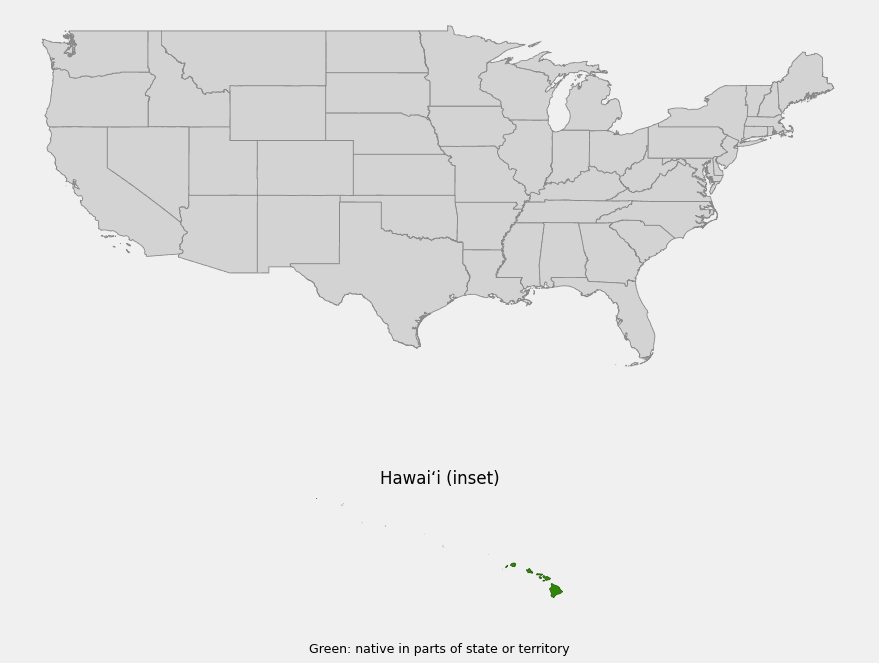
ʻŌhelo kau lāʻau is endemic to Hawaiʻi. USDA PLANTS records it only from Hawaiʻi, and it grows on all the main islands except Niʻihau and Kahoʻolawe: Kauaʻi, Oʻahu, Molokaʻi, Lānaʻi, Maui and Hawaiʻi Island.
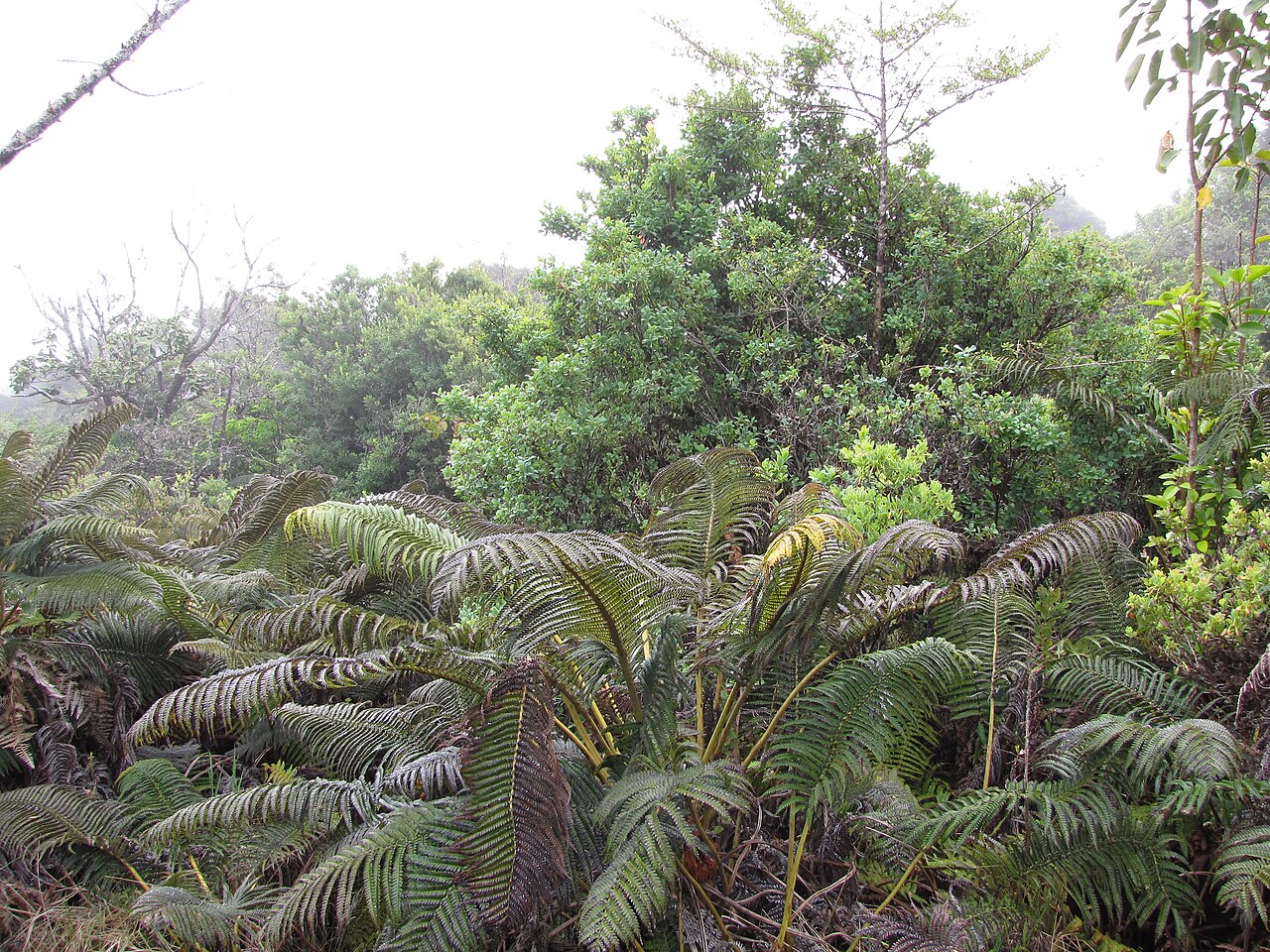
It grows in wet forests and bogs at elevations of about 1,600 to 5,900 feet (500 to 1,800 m), in places such as the Alakaʻi on Kauaʻi, the summit regions of the Koʻolau and Waiʻanae ranges on Oʻahu, the West Maui Mountains, Waikamoi on Haleakalā, and the rain forests of Hawaiʻi Island. It grows on the ground in openings and along ridges, and often as an epiphyte on logs, tree ferns and mossy trunks.
ʻŌhelo kau lāʻau is not federally listed and is still fairly common in protected wet forests, though conservation rankings consider it vulnerable. Feral pigs, invasive plants and habitat loss threaten its forests. Buy only nursery-propagated plants from Hawaii native plant nurseries, and never dig plants from the wild.
📋 Regional plant lists featuring ʻŌhelo Kau Lāʻau: Hawaii
Growing & Care Guide
ʻŌhelo kau lāʻau is a plant for cool, wet upland gardens in Hawaiʻi, ideally above about 1,500 feet with frequent rain and cloud. Like blueberries, it needs acidic, constantly moist, well-aerated soil, and it struggles in hot, dry lowland gardens. Buy nursery-propagated plants from Hawaii native plant nurseries and never collect plants or cuttings from the wild.
Light
In its cloudy forest habitat it grows in part shade to sun filtered by mist. In gardens, give it morning sun with afternoon shade or bright dappled light. Plants in deep shade grow lanky and fruit poorly.
Soil & Water
Plant in acidic, organic soil: a mix of peat or compost, tree fern fiber and cinder suits it well, as it would a blueberry. Keep the soil evenly moist and never let it dry out, but avoid stagnant, airless mud. Mulch with leaf litter or bark. Use rainwater if your tap water is alkaline.
Planting Tips
Plant it in a sheltered, humid spot in a wet-forest garden with ʻōhiʻa, hāpuʻu and native ferns. You can also try it on a decaying log or the trunk of a tree fern, as it grows in the wild. Protect young plants from slugs and, in rural areas, from pigs and deer. Hawaiʻi restricts bringing plants in from other states, and imported blueberries can carry pests, so source plants from Hawaiian nurseries.
Pruning & Maintenance
Prune lightly after fruiting to remove weak or dead stems and keep plants bushy. Feed sparingly with an acid-loving plant fertilizer. Watch for scale insects and keep invasive plants such as strawberry guava and Clidemia from crowding it.
Propagation
ʻŌhelo kau lāʻau can be grown from seed or cuttings. Mash ripe berries, rinse out the tiny seeds and sow them on the surface of moist, acidic, sterile mix; germination takes several weeks and seedlings grow slowly. Semi-hardwood cuttings can be rooted in a peat-perlite mix under mist or in a humid propagation box.
Landscape Uses
- Wet upland native gardens: a colorful shrub for cool, rainy sites
- Epiphyte plantings: can grow on logs and tree fern trunks
- Wet-forest restoration: part of native understory plantings
- Bird plantings: berries for native forest birds
- Ornamental foliage: pink new growth and red fall-like leaves
Wildlife & Ecological Value
ʻŌhelo kau lāʻau is a fruiting understory plant of Hawaiian rain forests and an important food source for native birds.
For Pollinators
The nodding bell-shaped flowers are visited by insects, including native bees. Their small size and hanging form are typical of blueberry relatives.
For Birds
The red berries are eaten by native and introduced forest birds, which spread the seeds onto logs, tree ferns and forest openings. ʻŌhelo fruits are a known food for the nēnē and for native thrushes.
For Mammals
Hawaiʻi’s only native land mammal, the Hawaiian hoary bat, forages over the wet forests where ʻōhelo kau lāʻau grows. Feral pigs, deer and goats browse the plant and damage its habitat.
Ecosystem Role
As both a ground shrub and an epiphyte, ʻōhelo kau lāʻau adds fruit and structure to the forest understory and the layer of plants growing on logs and tree ferns. It helps feed the birds that disperse many other native plants.
Cultural & Historical Uses
ʻŌhelo are among the best-known native Hawaiian plants. The berries are traditionally associated with Pele, the volcano goddess, and custom holds that an offering of ʻōhelo should be made to her before eating the berries near Kīlauea. Those traditions are usually told about ʻōhelo ʻai, the low shrub of the volcanic uplands, but the name ʻōhelo is shared by all three native species.
ʻŌhelo kau lāʻau was described by the English botanist James Edward Smith in the early nineteenth century from specimens collected in Hawaiʻi. Its species name, calycinum, refers to the conspicuous calyx lobes that remain on top of the berry.
Today the plant is a familiar sight to hikers on wet ridge trails such as the Waiheʻe Ridge Trail on Maui and the trails of Kōkeʻe on Kauaʻi, where its pink new leaves and red berries brighten the misty forest.
Frequently Asked Questions
Are ʻōhelo kau lāʻau berries edible?
Yes. The berries are edible, though usually more tart than those of ʻōhelo ʻai. Pick only from cultivated plants or where collecting is allowed, never in national parks or nature reserves, and leave plenty for the birds.
What does ʻōhelo kau lāʻau mean?
ʻŌhelo is the Hawaiian name for the native Vaccinium species. Kau lāʻau refers to being set on a tree, because this species often grows perched on logs, tree ferns and mossy trunks in the rain forest.
Is ʻōhelo kau lāʻau related to blueberries?
Yes. It belongs to the genus Vaccinium, the same genus as blueberries, cranberries and huckleberries. Its ancestors reached Hawaiʻi long ago, probably carried by birds.
Where does ʻōhelo kau lāʻau grow?
It is endemic to Hawaiʻi and grows in wet forests and bogs at about 1,600 to 5,900 feet on Kauaʻi, Oʻahu, Molokaʻi, Lānaʻi, Maui and Hawaiʻi Island.
Can I grow ʻōhelo kau lāʻau in my garden?
Yes, in a cool, wet upland garden with acidic, constantly moist soil. It is difficult in hot, dry lowland areas. Buy nursery-propagated plants from Hawaii native plant nurseries.

Looking for a nursery that carries ʻŌhelo Kau Lāʻau?
Browse our native plant nursery directory: Hawaii

