
Hoi Kuahiwi (Smilax melastomifolia)
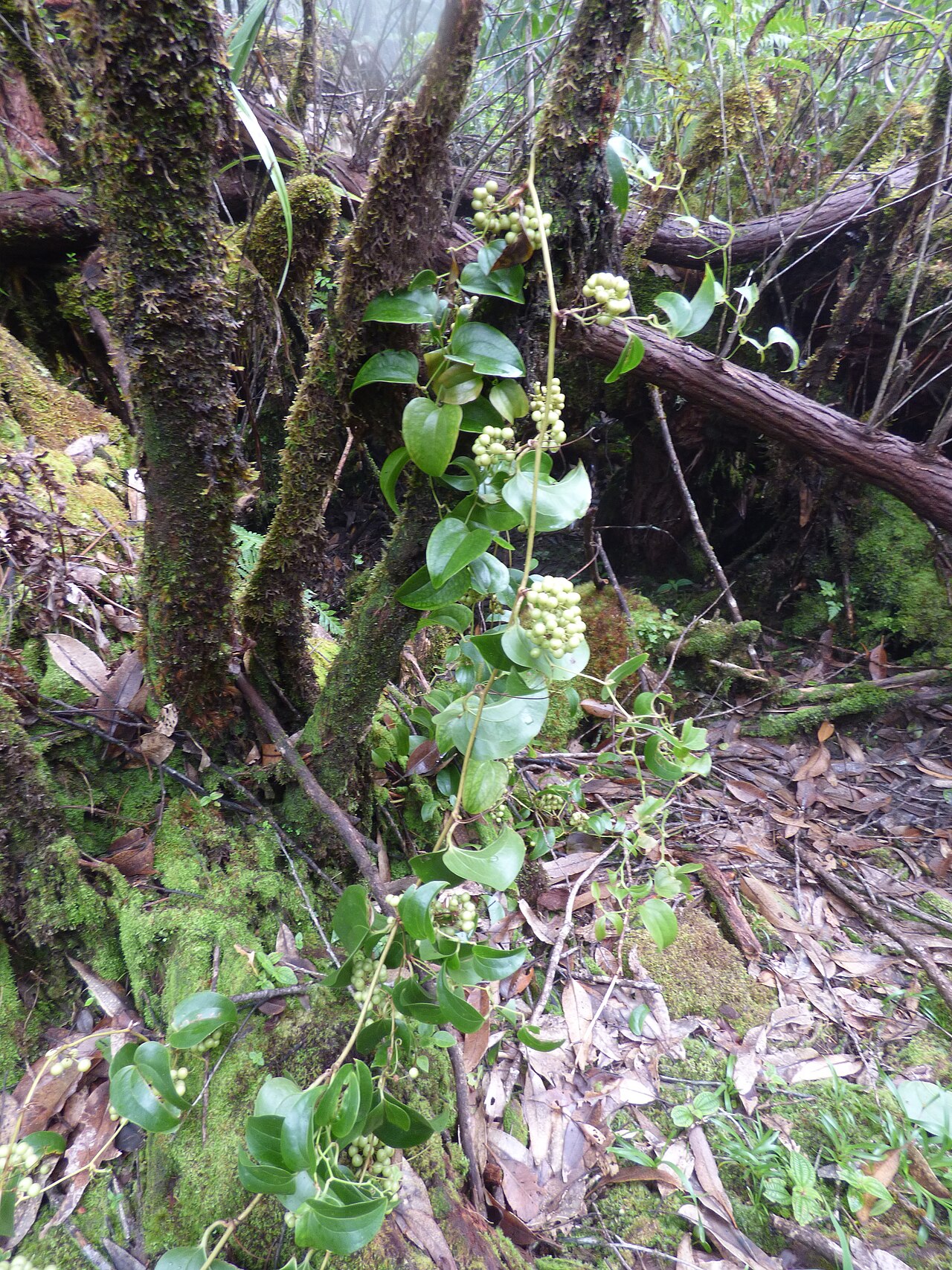
Smilax melastomifolia, called Hoi Kuahiwi in Hawaiian and Hawaiian greenbrier or Hawaiʻi greenbrier in English, is Hawaiʻi’s only native Smilax: a woody, climbing vine with glossy, heart-shaped leaves, curling tendrils, rounded clusters of small greenish flowers and pale greenish-white berries. It scrambles through shrubs and climbs into trees in native mesic and wet forests.
Hoi kuahiwi is endemic to the Hawaiian Islands, found nowhere else. It grows on Kauaʻi, Oʻahu, Molokaʻi, Lānaʻi, Maui and Hawaiʻi Island, from mesic forest into montane wet forest and cloud-swept ridges. It is not federally listed, though conservation ranks treat it as vulnerable.
The Hawaiian name means “mountain hoi,” comparing it to hoi, the bitter wild yam, whose heart-shaped leaves look similar. It is rarely grown, but it can be raised from seed in cool, moist upland gardens in Hawaiʻi. This guide covers how to identify it, where it grows, how to grow it and its role in the forest.
Identification
Look for a climbing vine with paired tendrils at the base of each leaf stalk and glossy, heart-shaped leaves with several prominent veins running from base to tip.
Stems & Growth Habit
A woody, evergreen climbing vine that scrambles over shrubs or climbs into trees, sometimes reaching 15 feet or more. The green stems may carry scattered small prickles, which can also occur on the leaf undersides and flower stalks, and the plant climbs with a pair of coiling tendrils that grow from the base of each leaf stalk.
Leaves
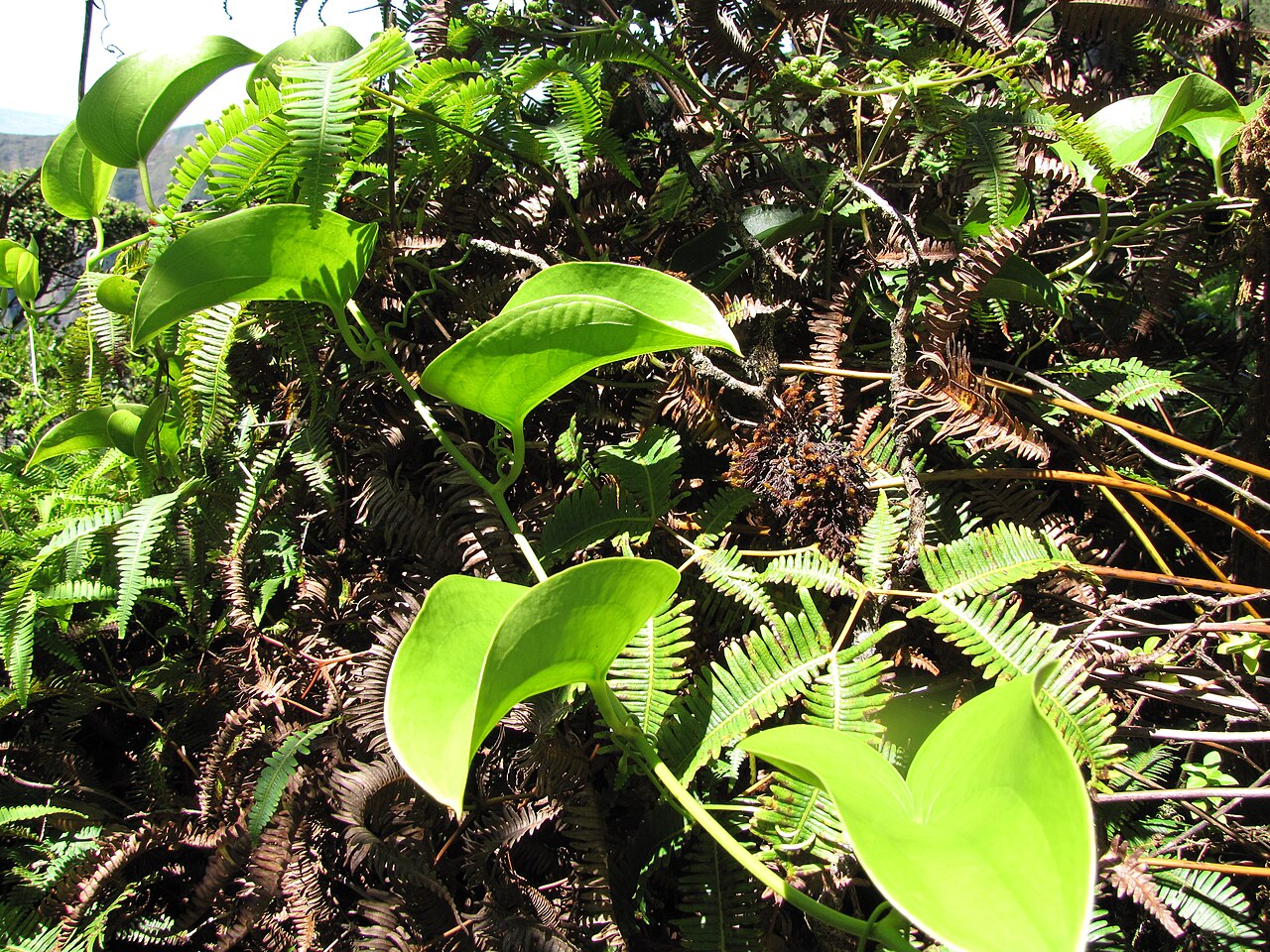
Leaves are alternate, glossy, leathery, heart-shaped to broadly oval, about 2 to 5 inches long, with a pointed tip. Three to seven prominent veins arch from the base to the tip, the feature that recalls the melastome family (Melastomataceae) and gives the plant its name melastomifolia, “with leaves like Melastoma.”
Flowers
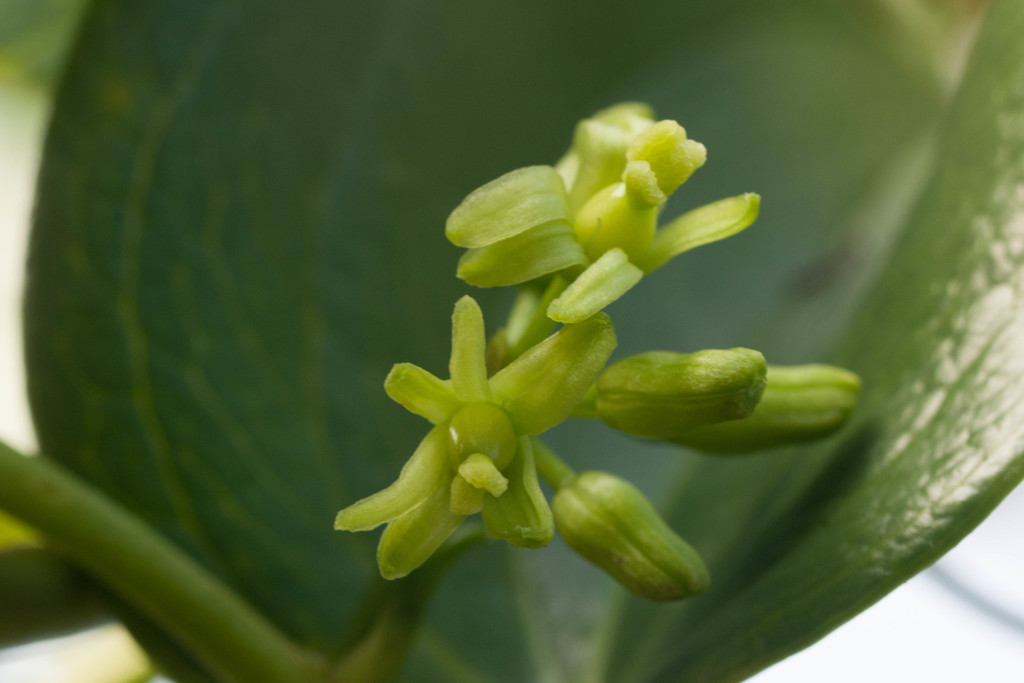
Like all greenbriers, hoi kuahiwi is dioecious: male and female flowers grow on separate plants. The small, greenish to yellowish-green, six-parted flowers are borne in rounded umbels on stalks from the leaf axils.
Fruit & Look-alikes
Pollinated female plants produce clusters of round berries about ⅜ inch across that ripen to pale green or whitish. The invasive air potato and the Polynesian-introduced hoi (Dioscorea bulbifera) have similar heart-shaped leaves but twine without tendrils and produce aerial tubers. Native Maile is also a forest vine, but it has milky sap and small, opposite leaves.
Quick Facts
| Scientific Name | Smilax melastomifolia Sm. |
| Family | Smilacaceae (greenbrier family) |
| Plant Type | Woody evergreen climbing vine; Hawaiian endemic |
| Mature Height | Climbs to 15 ft or more |
| Mature Spread | 3–10 ft |
| Growth Rate | Slow to moderate |
| Sun Exposure | Partial shade to shade |
| Water Needs | Moderate to high; moist soil and humid air |
| Soil Type | Moist, well-drained, organic or volcanic forest soil |
| Soil pH | Acidic, about 4.5–6.5 |
| Bloom Time | Variable; mostly spring and summer |
| Flower Color | Greenish to yellowish-green |
| Fall Color | None; evergreen |
| Fruit | Round berries ripening pale green to whitish (female plants) |
| Deer Resistant | No; browsed by goats and deer |
| USDA Hardiness Zones | 10–11 (cool, moist upland Hawaiʻi) |
Native Range
Hoi kuahiwi is endemic to Hawaiʻi and grows on all six of the largest islands: Kauaʻi, Oʻahu, Molokaʻi, Lānaʻi, Maui and Hawaiʻi Island. It is a vine of mesic and wet forests, from the lower forested slopes into the montane rain forest and windswept, cloud-covered ridges. On Maui it is common along trails such as Waiheʻe Ridge and in forests at Waikamoi, Makawao and Polipoli; on Oʻahu it grows along the forested ridges of the Koʻolau and Waiʻanae ranges.
It grows among and over the native trees and shrubs of these forests, including ʻōhiʻa, koa, ʻōlapa and kanawao, and through thickets of native ferns. It often climbs toward light at forest edges and in gaps.
Like many Hawaiian forest plants, it has lost habitat to feral pigs, goats and deer, invasive plants such as strawberry guava and kāhili ginger, and fire on drier slopes. Large populations survive in protected watershed forests.
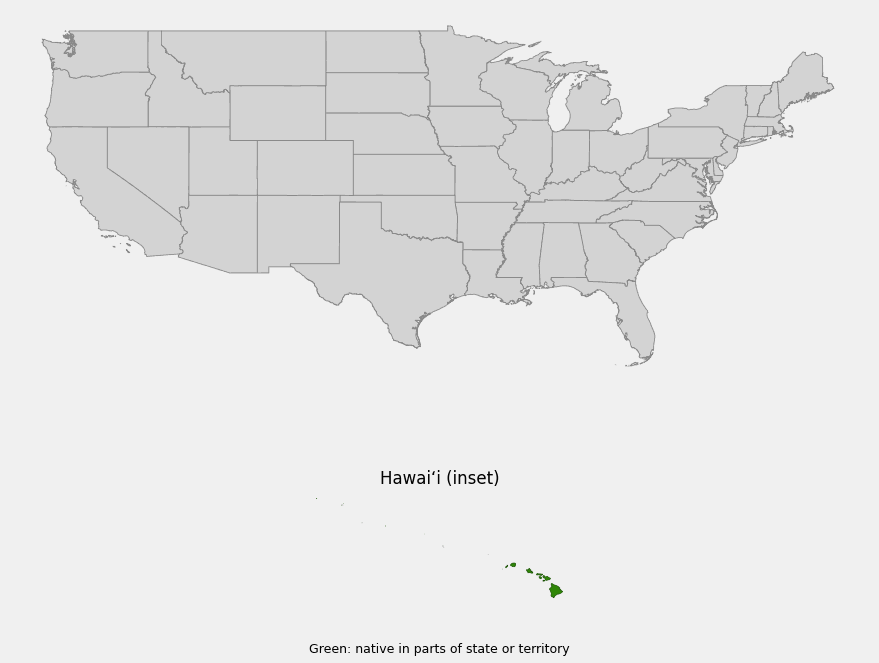
📋 Regional plant lists featuring Hoi Kuahiwi: Hawaii
Growing & Care Guide
Hoi kuahiwi is seldom sold, but some Hawaiian native plant nurseries and conservation growers produce it from seed. It is a forest vine that needs cool, moist, shady conditions and grows slowly, so it is best suited to upland gardens and restoration plantings in Hawaiʻi. Buy only nursery-propagated plants and never dig wild vines, which rarely survive transplanting. Hawaiʻi restricts bringing plants in from other states, and the species is essentially unavailable outside the islands.
Light
Partial shade to shade, with its roots in cool shade and room to climb toward brighter light. Hot afternoon sun scorches it at low elevations.
Soil & Water
Moist, well-drained, acidic soil rich in organic matter. Keep it evenly moist and mulch the root zone. It does best where rainfall is regular and humidity is high, as in windward and upland areas above about 1,000 feet.
Planting Tips
Plant it at the base of a tree, large shrub, trellis or fence that it can climb with its tendrils. Combine it with native forest shrubs and ferns in a shade garden. Because plants are male or female, grow several from seed if you want berries.
Pruning & Maintenance
Little care is needed. Guide young stems onto their support and trim stems that wander. Protect it from slugs and snails when young.
Propagation
Grown from seed cleaned from ripe berries and sown fresh in a moist, well-drained mix in shade. Germination is slow and can take several months. It can also be propagated from the tuber-like rootstock, but don’t dig wild plants.
Landscape Uses
- Upland native gardens: a glossy-leaved native vine for shady fences and trellises
- Forest restoration: a native climber for mesic and wet forest plantings
- Shade gardens: pairs well with native ferns and forest shrubs
- Wildlife plantings: berries and foliage support forest birds and insects
Wildlife & Ecological Value
Hoi kuahiwi adds structure to the Hawaiian forest, linking the understory to the canopy.
For Pollinators
Its small flowers are visited by insects; the specific native pollinators of the Hawaiian greenbrier are not well documented.
For Birds
Native forest birds forage for insects on its foliage, and the berries are eaten by birds, which disperse the seeds.
For Mammals
Hawaiʻi’s only native land mammal is the Hawaiian hoary bat, which hunts insects in and above the forest. Feral pigs, goats and deer damage forest vines and their habitat.
Ecosystem Role
As a climbing vine, it adds layers of foliage between the forest floor and the canopy, giving shelter to native insects, spiders and snails.
Cultural & Historical Uses
The name hoi kuahiwi combines hoi, the bitter yam (Dioscorea bulbifera) brought to Hawaiʻi by early Polynesians, with kuahiwi, “mountain.” Its heart-shaped leaves resemble those of the yam, but the two plants are not closely related. Traditional Hawaiian uses of this plant are not well documented.
Smilax is a large genus of about 250 species worldwide, including the greenbriers of the eastern United States such as Roundleaf Greenbrier and Laurel Greenbrier, and the tropical species once used as sarsaparilla. Many are armed with sharp prickles, and Hawaiʻi’s species can carry scattered prickles too.
The English botanist James Edward Smith described the species in the early 19th century, from specimens collected in Hawaiʻi by early European expeditions.
Frequently Asked Questions
Is hoi kuahiwi native to Hawaiʻi?
Yes. It is endemic, found only in the Hawaiian Islands, where it grows in mesic and wet forests on the six largest islands.
Does Hawaiian greenbrier have thorns?
It can have scattered small prickles on the stems, leaf undersides and flower stalks, but it is generally less fiercely armed than many mainland greenbriers. Wear gloves when handling it.
Can I grow hoi kuahiwi?
Yes, in cool, moist, shady upland gardens in Hawaiʻi. It is slow-growing and seldom sold; grow it from nursery stock or seed, and never dig wild plants.
Why doesn’t my plant have berries?
Hoi kuahiwi has separate male and female plants. Only female plants produce berries, and they need a male plant nearby.
What does the name hoi kuahiwi mean?
“Mountain hoi.” Hoi is the bitter yam, whose heart-shaped leaves look similar.

Looking for a nursery that carries Hoi Kuahiwi?
Browse our native plant nursery directory: Hawaii

