
Kanawao (Hydrangea arguta)
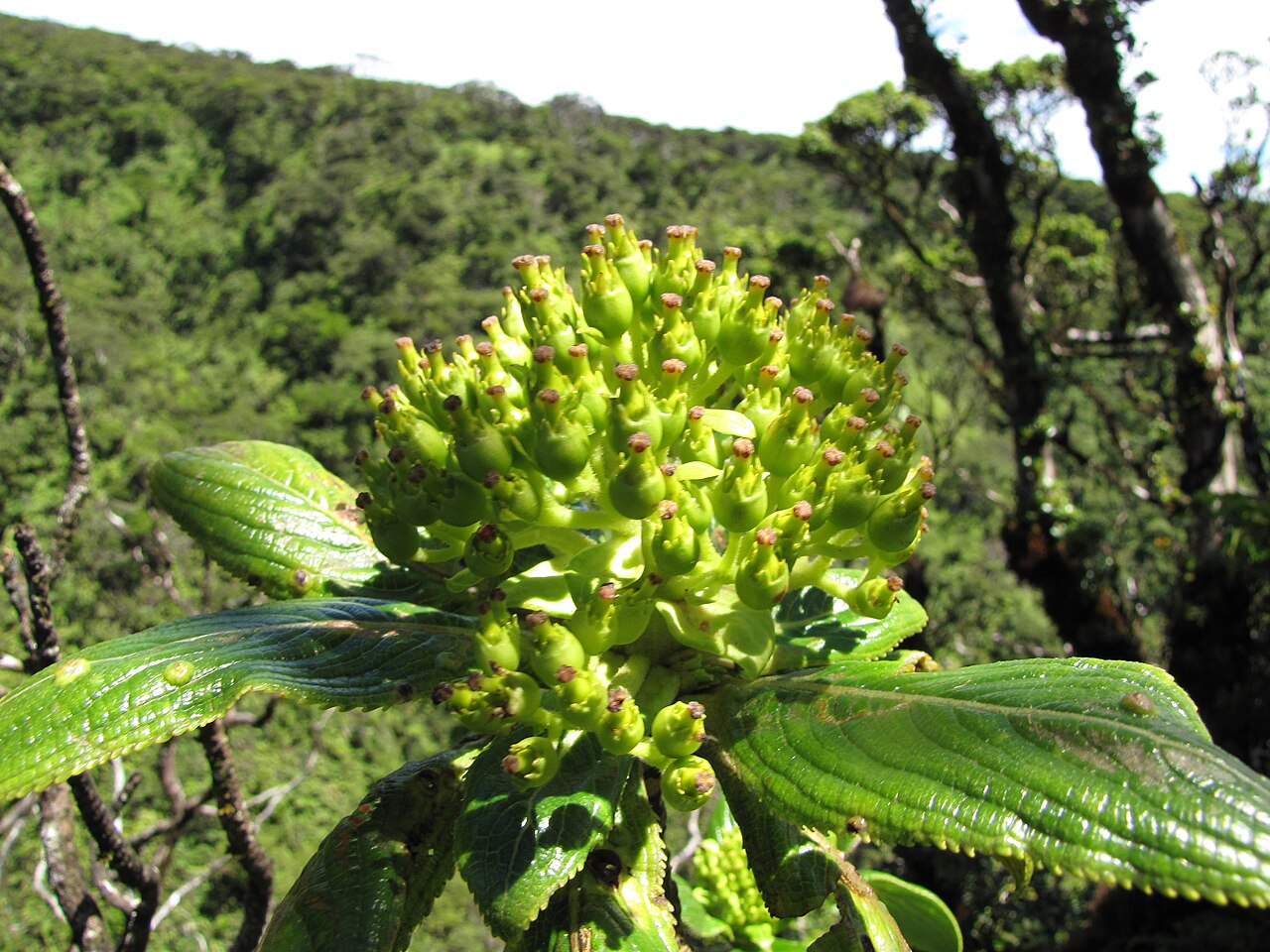
Hydrangea arguta, known in Hawaiian as Kanawao, is Hawaiʻi’s only native member of the hydrangea family (Hydrangeaceae): a large-leaved shrub or small tree of wet and mesic mountain forests, with dense, rounded clusters of small flowers and bunches of reddish-purple to blue-black berries. For more than a century it was placed in its own genus as Broussaisia arguta, the name USDA PLANTS still uses; DNA studies have shown that it belongs within Hydrangea, and iNaturalist and Plants of the World Online now call it Hydrangea arguta.
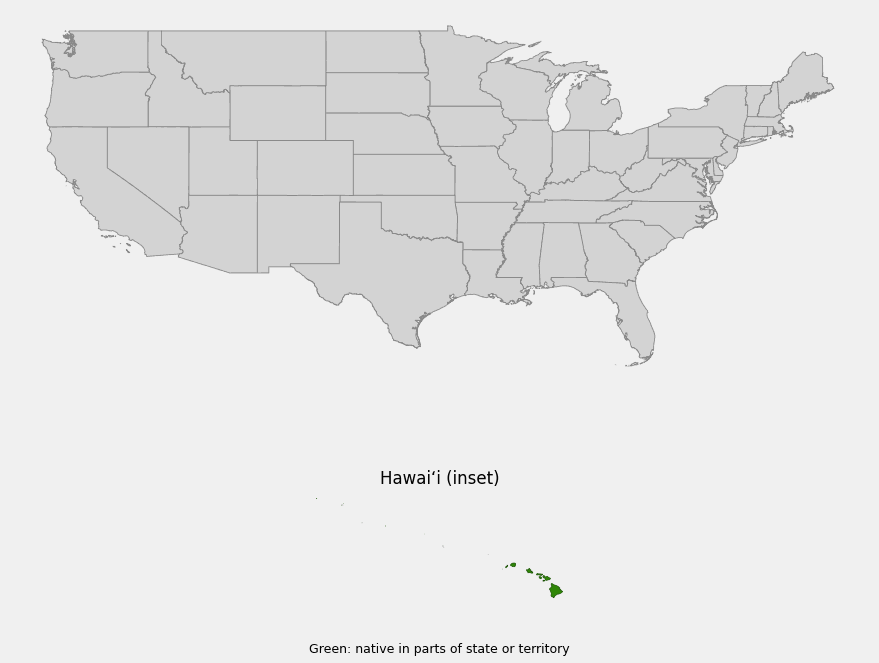
Kanawao is endemic to the Hawaiian Islands, found nowhere else. It grows on the six largest islands in wet and mesic forests and shrublands, mostly between about 1,000 and 6,000 feet. It is not federally listed under the Endangered Species Act and is still widespread, though conservation ranks treat it as vulnerable because native wet forests continue to shrink.
Its big, boldly veined leaves make it one of the easiest native forest shrubs to recognize, and it provides habitat for native insects, spiders and snails. It can be grown in cool, moist, upland gardens in Hawaiʻi, but it is not an easy plant in hot, dry lowlands. This guide covers how to identify it, where it grows, how to grow it and its role in Hawaiian forests and culture.
Identification
In a Hawaiian rain forest, look for a shrub with very large, stiff, deeply veined, finely toothed leaves held in pairs, and dense, flat-topped clusters of flowers or berries at the branch tips.
Growth Habit
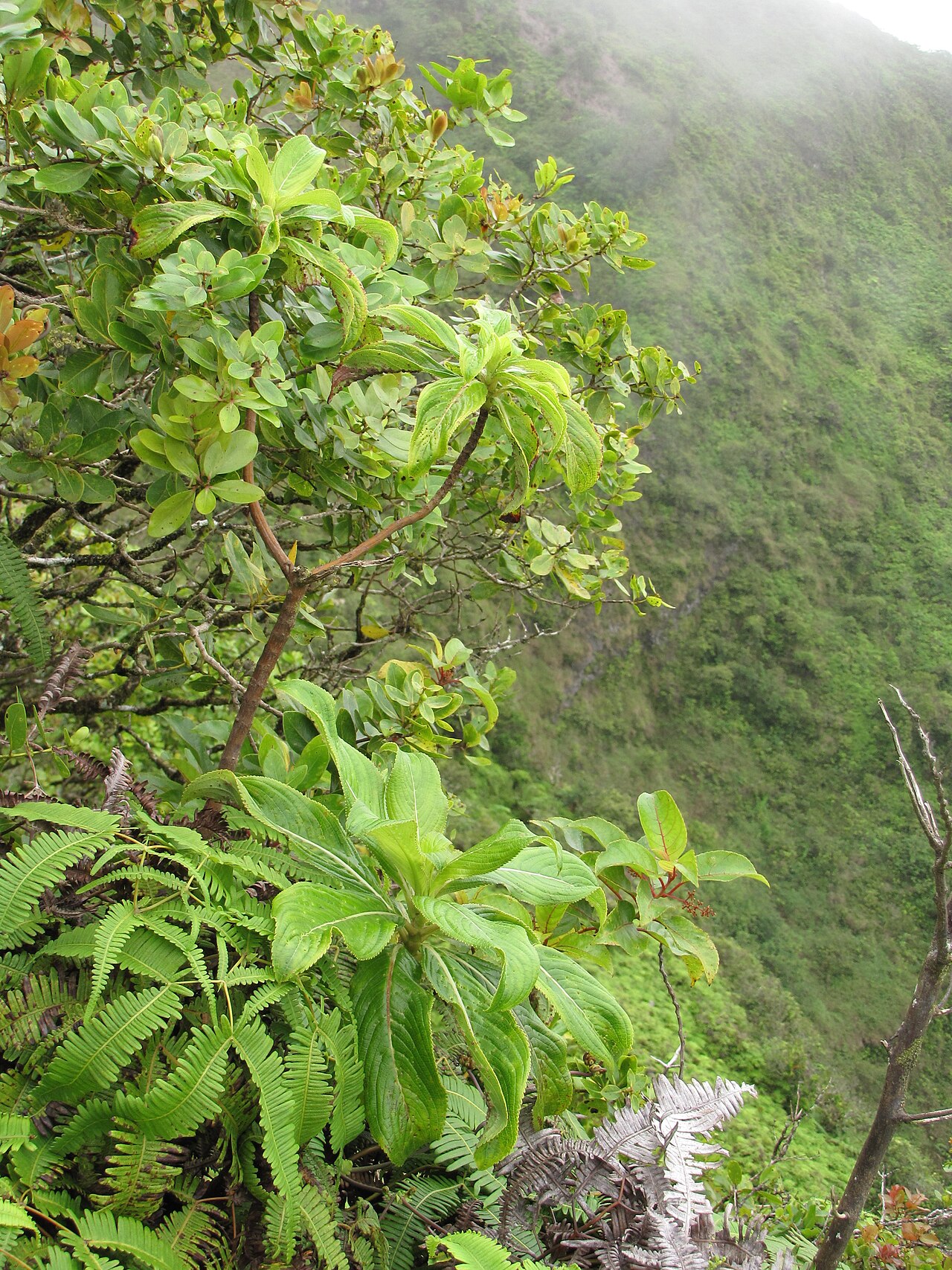
An evergreen shrub usually 5 to 10 feet tall, or a small tree to about 20 feet, with stout, sparsely branched stems. On exposed ridges it is low and compact; in sheltered gulches it becomes taller and more open.
Leaves
Leaves are opposite, large and leathery, obovate to elliptic, about 4 to 10 inches long and 1½ to 3½ inches wide. Their edges are finely and sharply toothed, which gives the species its name arguta, “sharp-toothed.” The upper surface is deep green and often puckered between the prominent veins.
Flowers
Kanawao is dioecious: male and female flowers grow on separate plants. The small flowers are packed into dense, rounded to flat-topped clusters (corymbs) at the branch tips. Clusters are green in bud and open to pale greenish, bluish, pinkish or purplish flowers; male flowers are slightly larger than female flowers.
Fruit & Look-alikes
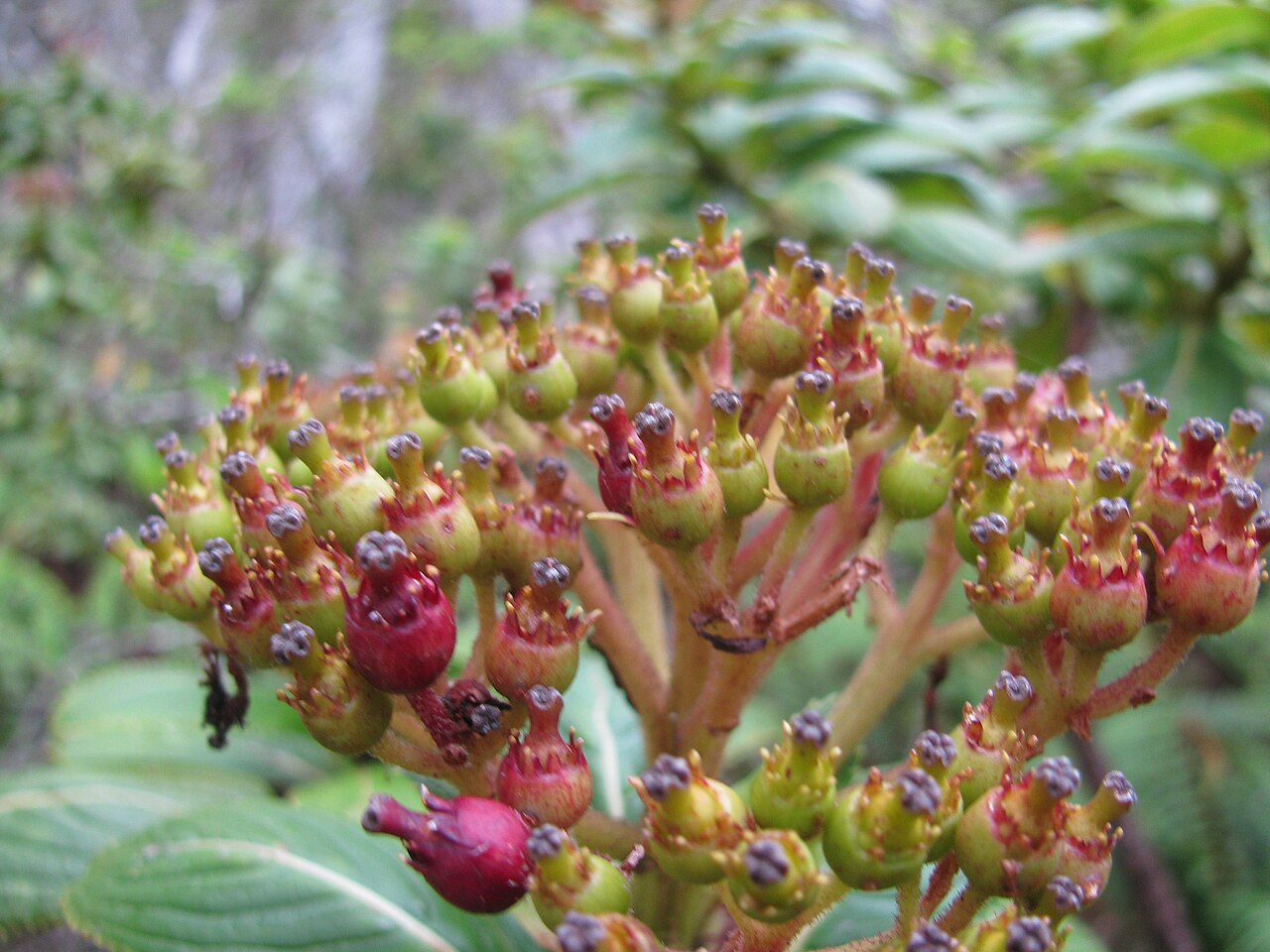
Pollinated female plants produce clusters of small, fleshy berries about ⅜ inch across that ripen from green to red and then dark purplish-blue. No other native Hawaiian shrub has this combination of very large, opposite, toothed leaves and hydrangea-like flower clusters. Young ʻŌlapa and Lapalapa also have dark berries, but their leaves are divided into leaflets or are rounded and fluttering.
Quick Facts
| Scientific Name | Hydrangea arguta (Gaudich.) Y. De Smet & Granados; synonym Broussaisia arguta Gaudich. (USDA) |
| Family | Hydrangeaceae (hydrangea family) |
| Plant Type | Evergreen shrub or small tree; Hawaiian endemic |
| Mature Height | 5–10 ft (to 20 ft) |
| Mature Spread | 4–8 ft |
| Growth Rate | Slow to moderate |
| Sun Exposure | Partial shade to shade; sun only in cool, misty sites |
| Water Needs | High; constantly moist soil and humid air |
| Soil Type | Moist, rich, well-drained, organic or volcanic soil |
| Soil pH | Acidic, about 4.5–6.0 |
| Bloom Time | Varies by site; often spring and summer |
| Flower Color | Greenish, bluish, pinkish or purplish |
| Fall Color | None; evergreen |
| Fruit | Small berries ripening red to dark purplish-blue (female plants) |
| Deer Resistant | No; damaged by feral pigs, goats and deer |
| USDA Hardiness Zones | 10–11 (cool, wet upland Hawaiʻi) |
Native Range
Kanawao is endemic to the Hawaiian Islands and grows on Kauaʻi, Oʻahu, Molokaʻi, Lānaʻi, Maui and Hawaiʻi Island. It is a characteristic shrub of mesic and wet forests, typically between about 1,000 and 6,000 feet, where it grows in the understory of ʻōhiʻa and koa forest, along streams and gulches, and on windswept, cloud-covered ridges and bog margins.
It is most common in the wettest forests, where rain and fog keep the air humid nearly all year. It often grows with native tree ferns, ʻōlapa, ʻōhelo, pūkiawe and many native ferns, and it is one of the shrubs that make up the dense, layered understory of healthy Hawaiian rain forest.
Feral pigs, goats and deer, invasive plants such as strawberry guava, kāhili ginger and Miconia, and forest loss have reduced its habitat. Fenced, managed watershed forests on several islands protect large populations.
📋 Regional plant lists featuring Kanawao: Hawaii
Growing & Care Guide
Kanawao is occasionally available from Hawaiian native plant nurseries, especially those in cool, wet upland areas. It is not rare, but it is a forest plant with specific needs, and it usually struggles in hot, dry lowland gardens. Buy nursery-propagated plants and never dig plants or take cuttings from the forest. Hawaiʻi restricts bringing plants in from other states, and kanawao is essentially unavailable and impractical to grow outside Hawaiʻi.
Light
Partial shade to shade, such as under taller trees or on the shady side of a building. In cool, misty upland gardens it can take more sun; in warm, sunny places its leaves scorch.
Soil & Water
It needs moist, acidic soil rich in organic matter, with good drainage, and high humidity. Keep the soil evenly moist and never let it dry out. Mulch heavily with leaf litter or wood chips. It grows best where rainfall is high and regular, as in windward and upland areas.
Planting Tips
It does best in Hawaiʻi above about 1,000 feet, in gardens such as those in Volcano, upcountry Maui or Kōkeʻe, or in sheltered, well-watered shade gardens at lower elevations. Plant it with native ferns and other forest plants. Because plants are either male or female, you need both, planted near each other, for berries.
Pruning & Maintenance
Little pruning is needed; remove dead or damaged branches. Protect plants from wind, which tears the large leaves. Watch for scale insects, mealybugs and slugs, and keep the root zone mulched and moist.
Propagation
Grows from seed cleaned from ripe berries and sown fresh on a moist, fine, acidic mix in shade; germination can be slow. Semi-hardwood cuttings can also be rooted with patience under high humidity.
Landscape Uses
- Upland native gardens: a bold-leaved native shrub for cool, wet, shady gardens
- Forest restoration: an understory shrub for wet and mesic forest plantings
- Fern and shade gardens: pairs well with native tree ferns and ground ferns
- Habitat plantings: shelters native insects, spiders and land snails
Wildlife & Ecological Value
Kanawao is an important part of the Hawaiian rain forest understory and supports a surprising number of native animals.
For Pollinators
Its flowers are visited by native insects; Hawaiian wet-forest plants are often pollinated by native bees, flies and moths. At least one native plant bug, Orthotylus broussaisiae on Kauaʻi, is known to feed specifically on kanawao.
For Birds
Native forest birds forage for insects and snails on its large leaves. The poʻouli, a Maui honeycreeper declared extinct in 2019, was known to forage on kanawao. The berries are eaten by birds, which spread the seeds.
For Mammals
Hawaiʻi’s only native land mammal is the Hawaiian hoary bat, which hunts insects in and above the forest. Feral pigs, goats and deer damage or eat kanawao and its seedlings.
Ecosystem Role
Its broad leaves provide shelter for the Hawaiian happy-face spider, native leafhoppers and several rare native land snails, making kanawao a valuable host plant in the forest understory.
Cultural & Historical Uses
Kanawao has several Hawaiian names, including puʻahanui, kupuwao, akiahala and piʻohiʻa. Its flowers and fruit were eaten in Hawaiian tradition, and the fruit was used medicinally, including to aid conception and to treat thrush. Some forms were reserved for men and others for women and children.
Safety note: many hydrangea relatives contain compounds that can be harmful if eaten, especially to pets. Do not eat kanawao fruit or use it as medicine without guidance from a knowledgeable practitioner, and keep pets from chewing the leaves.
The French botanist Charles Gaudichaud-Beaupré described the plant around 1830 from specimens collected on the voyage of the Uranie, naming the genus Broussaisia for the French physician François Broussais. Molecular studies have since shown that the Hawaiian plant is nested within the large genus Hydrangea, which is why many botanists now call it Hydrangea arguta.
Frequently Asked Questions
Is kanawao a hydrangea?
Yes. It is Hawaiʻi’s only native member of the hydrangea family. Long known as Broussaisia arguta, it is now classified by many botanists as Hydrangea arguta.
Where does kanawao grow?
Only in Hawaiʻi, on all the main islands except Niʻihau and Kahoʻolawe, in wet and mesic mountain forests, mostly between about 1,000 and 6,000 feet.
Can I grow kanawao in my garden?
Yes, if you live in a cool, wet part of Hawaiʻi or can give it shade, humidity and constantly moist, acidic soil. It usually struggles in hot, dry lowlands and is not practical outside Hawaiʻi.
Why doesn’t my kanawao have berries?
Kanawao has separate male and female plants. Only female plants produce berries, and they need a male plant nearby for pollination.
Is kanawao endangered?
No, it is not federally listed and is still widespread, but it is ranked vulnerable, and its wet-forest habitat is threatened by feral animals and invasive plants.

Looking for a nursery that carries Kanawao?
Browse our native plant nursery directory: Hawaii

