
Mauna Loa Silversword (Argyroxiphium kauense)
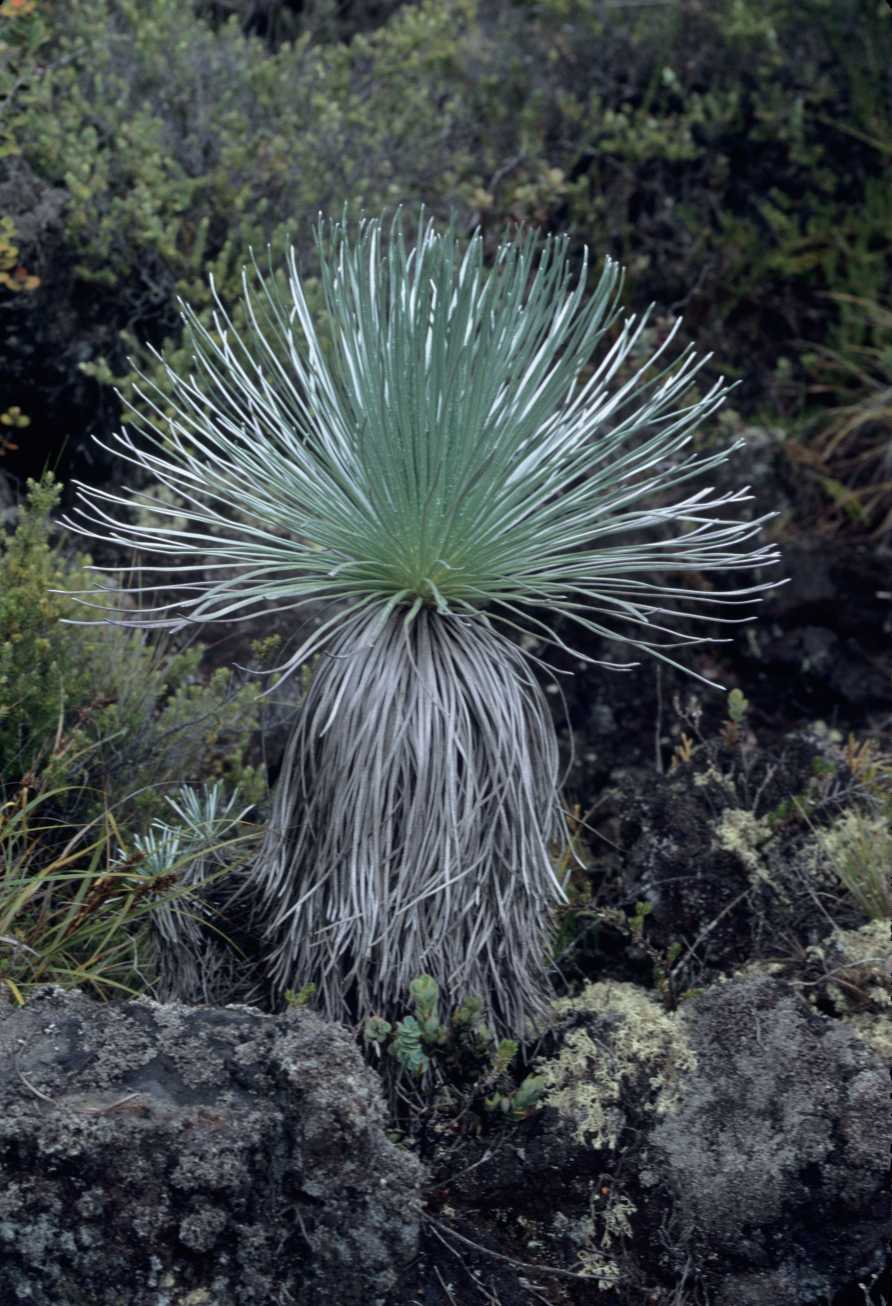
The Mauna Loa silversword (Argyroxiphium kauense), also called the Kaʻū silversword and, like its relatives, ʻāhinahina (“very gray”) in Hawaiian, is a rare rosette plant with silvery, sword-shaped leaves. It is endemic to Hawaiʻi Island, where it grows only on the eastern and southern slopes of Mauna Loa. Like the better-known ʻĀhinahina (Argyroxiphium sandwicense) of Haleakalā and Mauna Kea, it is a separate species in the sunflower family.
The Mauna Loa silversword grows for 10 to 30 years as a rosette, then sends up a single tall stalk of flowers, sets seed and dies. Unlike the alpine silverswords, it grows lower on the mountain in open ʻōhiʻa woodland, shrubland on lava and even montane bogs. It is listed as Endangered under the federal Endangered Species Act (listed in 1993), and only three wild populations remain, at Kapāpala, Upper Waiākea and Kahuku, with fewer than 1,000 wild plants.
This is not a garden plant. It is raised only by conservation nurseries for planting back into protected, fenced habitat, and it needs cool, high-elevation conditions that are almost impossible to provide elsewhere. This guide explains how to recognize it, where it grows, what it needs in cultivation, and why it matters.
Identification
The Mauna Loa silversword is the only silversword on Mauna Loa. Its rosettes are looser and often taller than those of the alpine ʻāhinahina, and older plants stand on a visible stem.
Stems & Growth Habit
It is a rosette shrub, usually with a single stem. The upright stem can reach about 6 feet tall on old plants, especially at lower elevations, and is covered by a skirt of dead leaves that is thought to protect it from frost. Some plants branch and produce more than one rosette.
Leaves
The leaves are long, narrow and dagger-shaped, crowded into a round rosette up to about 2 feet across. Dense, felt-like hairs give them a silvery sheen that reduces ultraviolet absorption and water loss. Compared with the Haleakalā and Mauna Kea silversword, the leaves are narrower and the rosette is looser.
Flowers
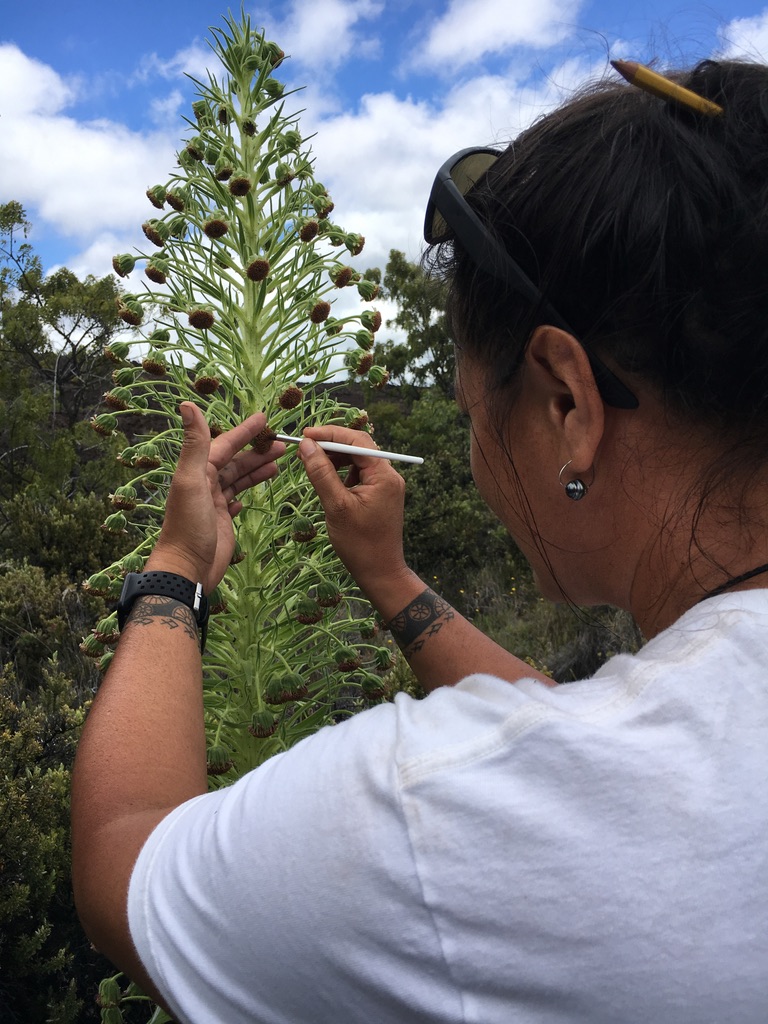
After 10 to 30 years, a mature rosette produces a single flowering stalk up to about 9 feet tall, branching into many nodding, sunflower-like flower heads with dark maroon to purplish florets. Flowering is mostly in late summer, around August and September. Plants are self-incompatible, so they need pollen from another flowering plant, carried mainly by native yellow-faced bees.
Fruit & Seeds
Each flower head produces many dry, one-seeded fruits (achenes). After the seeds ripen, the whole plant dies, which is called a monocarpic life cycle. Many seeds are not viable when few plants flower at the same time.
Similar Species
The Haleakalā and Mauna Kea silverswords (A. sandwicense) grow in alpine cinder deserts, not on Mauna Loa. The greenswords (A. grayanum and A. virescens) of Maui have green leaves. The related naʻenaʻe (Dubautia) shrubs have smaller leaves on branching stems.
Quick Facts
| Scientific Name | Argyroxiphium kauense (Rock & Neal) O. Deg. & I. Deg. |
| Family | Asteraceae (aster or sunflower family) |
| Plant Type | Monocarpic rosette shrub; endemic to Hawaiʻi Island |
| Mature Height | Rosette 1–2 ft; stem to about 6 ft; flowering stalk to about 9 ft |
| Mature Spread | About 1–2 ft |
| Growth Rate | Very slow (10–30 years to flowering) |
| Sun Exposure | Full sun |
| Water Needs | Medium; cool, moist montane conditions with good drainage |
| Soil Type | Volcanic cinder, young lava and bog margins |
| Soil pH | Acidic volcanic and bog soils |
| Bloom Time | Late summer (about August–September), once in a lifetime |
| Flower Color | Dark maroon to purplish |
| Fall Color | None; silver all year |
| Fruit | Small dry achenes |
| Deer Resistant | No; heavily damaged by feral pigs, goats, sheep and cattle |
| USDA Hardiness Zones | Cool montane Hawaiʻi only; tolerates light frost |
Native Range
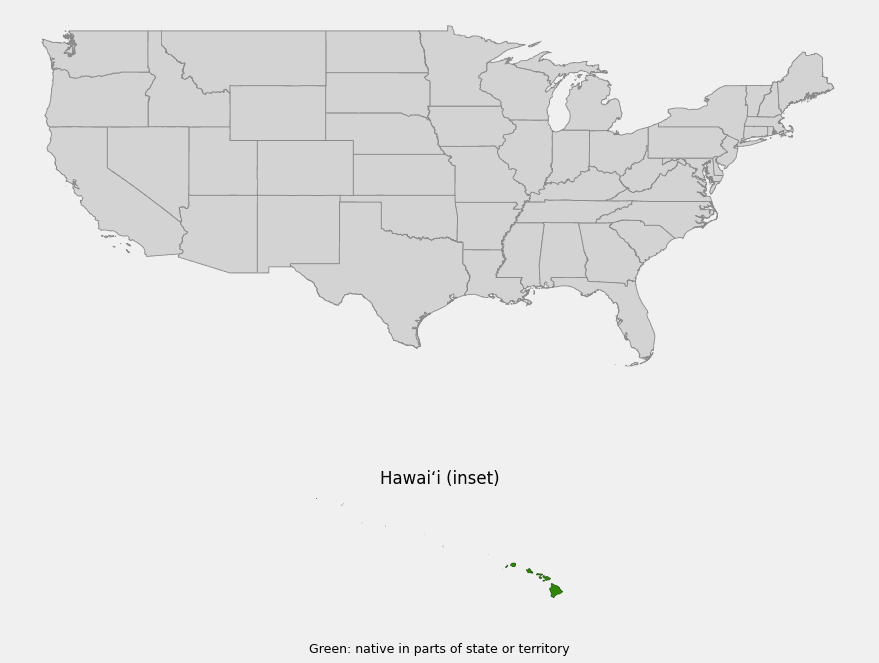
The Mauna Loa silversword is endemic to Hawaiʻi Island, and USDA PLANTS records it only from Hawaiʻi. It grows on the eastern and southern slopes of Mauna Loa, at about 5,000 to 8,000 feet elevation, in three remaining wild populations: Kapāpala, Upper Waiākea and Kahuku. Before its decline, plants numbered in the thousands and grew in a band around much of the mountain.
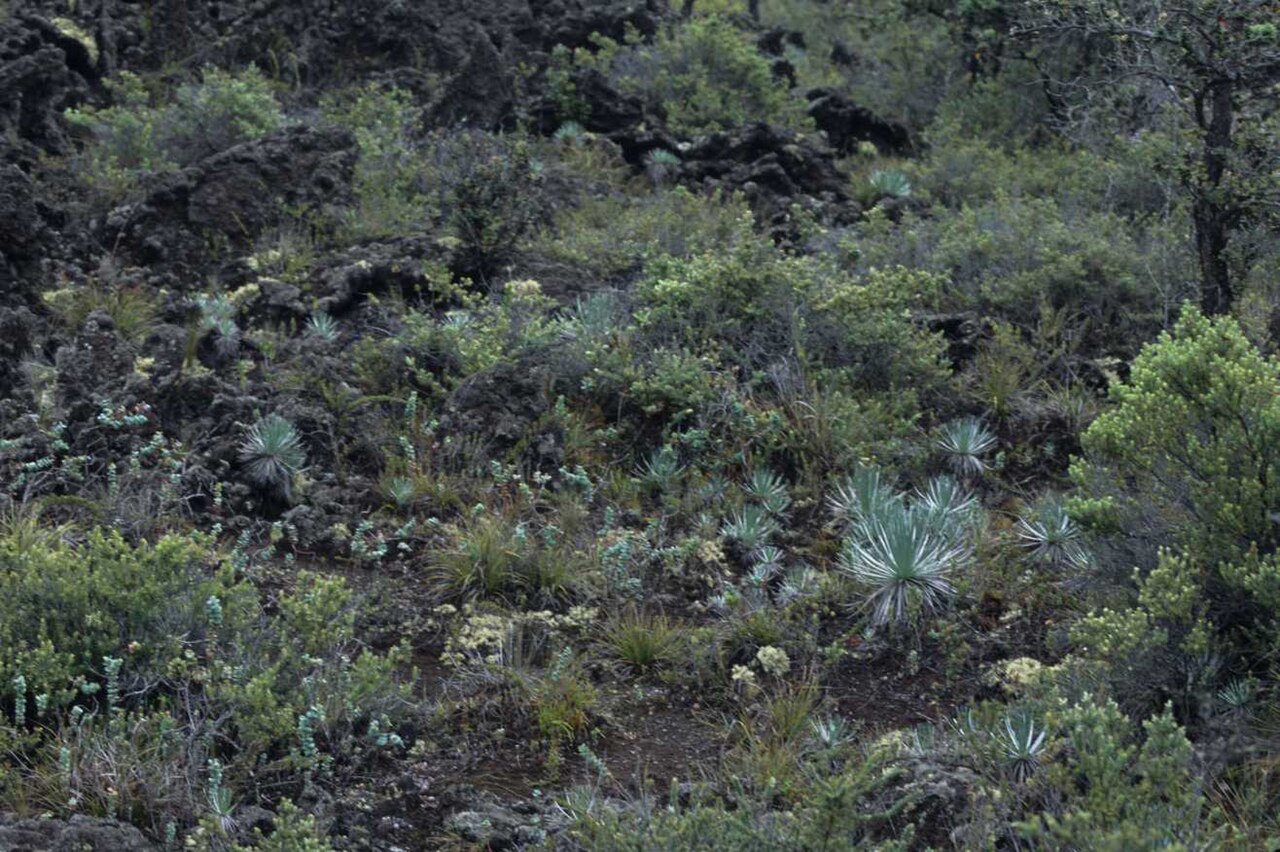
Its habitats are unusually varied for a silversword: montane bogs, where seedlings are often found near sphagnum moss beds, open wet ʻōhiʻa forest, and drier shrubby ʻōhiʻa woodland on smooth pāhoehoe and rough ʻaʻā lava. Companions include ʻŌhiʻa Lehua, Pūkiawe, ʻōhelo and native sedges and ferns.
The U.S. Fish and Wildlife Service listed Argyroxiphium kauense as Endangered on April 7, 1993. Its decline was caused by feral cattle, goats, pigs and mouflon sheep, which eat and trample the rosettes, along with fire and invasive plants. Invasive ants and wasps also threaten its native bee pollinators. The National Park Service and the Hawaiʻi Division of Forestry and Wildlife now protect the wild populations inside fenced exclosures and plant out nursery-raised seedlings.
📋 Regional plant lists featuring Mauna Loa Silversword: Hawaii
Growing & Care Guide
The Mauna Loa silversword is very hard to grow outside its habitat, and it is not sold to home gardeners. It is an endangered species protected by federal and Hawaiʻi state law, so never collect plants or seeds, and do not buy plants or seeds offered online. All legitimate cultivation is done by permitted conservation nurseries, such as the rare plant facility at Hawaiʻi Volcanoes National Park, which raise seedlings for outplanting on Mauna Loa. The notes below describe what it needs in those programs.
Light
It needs full, strong high-elevation sun. In shade or in low-light greenhouses, rosettes become weak and lose their silvery coating.
Soil & Water
Nurseries grow seedlings in very fast-draining media rich in volcanic cinder. In the wild it gets cool temperatures, frequent clouds and fog, and moderate rainfall, with good drainage around the crown even in bog-edge sites. Hot, humid lowland conditions and soggy soils quickly rot the plants.
Planting Tips
Outplanting is done only within its natural elevation range on Mauna Loa, around 5,000 to 8,000 feet, inside fences that exclude pigs, goats, sheep and cattle. Seedlings are set into cinder or lava pockets in open sun, often near moss beds in bog habitat. Outside this cool montane climate, the species is not expected to survive for long.
Pruning & Maintenance
No pruning is needed; the skirt of old leaves protects the stem and should be left in place. Long-term care is about protection: maintaining fences, removing invasive plants, controlling ants and wasps that harm native pollinators, and keeping visitors and animals from trampling the shallow roots.
Propagation
Conservation biologists hand-pollinate flowering plants with pollen from other individuals, collect the seed and raise seedlings in nurseries before outplanting them. Because so few wild plants remain, pollen is carefully exchanged among populations to keep genetic diversity. Propagation of this species is done only under federal and state permits.
Landscape Uses
- Conservation outplanting: nursery-raised plants are restored to fenced habitat on Mauna Loa
- Responsible viewing: seen in protected areas of Hawaiʻi Volcanoes National Park; ask staff about access and stay on trails
- Education: a clear example of island evolution and adaptive radiation
- Research: studies of pollination, genetics and bog ecology
- Native plant appreciation: a symbol of Mauna Loa’s unique upland flora
Wildlife & Ecological Value
The Mauna Loa silversword is part of the Hawaiian silversword alliance, a group of about 30 plants that evolved from a single ancestor, a tarweed from western North America, after it reached Hawaiʻi millions of years ago.
For Pollinators
Native yellow-faced bees (Hylaeus) are its main pollinators. The plant and the bees depend on each other, so protecting the bees from invasive ants and wasps is part of silversword conservation.
For Birds
Native forest birds forage for insects in the ʻōhiʻa woodland and shrubland where the silversword grows. The silversword’s seeds are small and mostly fall close to the parent plant.
For Mammals
Hawaiʻi’s only native land mammal, the Hawaiian hoary bat, hunts insects over the upland forests of Mauna Loa. Introduced cattle, goats, pigs and mouflon sheep are the plant’s worst enemies and nearly wiped it out.
Ecosystem Role
As a long-lived rosette plant of bogs and lava shrublands, it adds a distinctive layer to Mauna Loa’s upland plant communities. Its abundant summer flowers support native bees, and seedlings often establish near sphagnum moss beds, which may help them survive in bog habitats.
Cultural & Historical Uses
The Hawaiian name ʻāhinahina, meaning “very gray,” is used for silverswords in general and describes their silvery leaves. The English name Kaʻū silversword refers to the Kaʻū district on the southern slope of Mauna Loa, and the species name kauense means “of Kaʻū.”
The plant was first described by Joseph Rock and Marie Neal as a variety of another silversword and later raised to a species by Otto and Isa Degener. A petition to protect it was filed in 1975, and it was finally listed as Endangered in 1993.
The silversword alliance is one of the best-known examples of adaptive radiation in the world, comparable to Darwin’s finches. From one ancestor, it produced trees, shrubs, vines and rosette plants adapted to habitats from rain forest and bogs to alpine cinder deserts.
Frequently Asked Questions
Is the Mauna Loa silversword endangered?
Yes. It has been listed as Endangered by the U.S. Fish and Wildlife Service since April 7, 1993. Only three wild populations remain, all on Mauna Loa, with fewer than 1,000 wild plants, supplemented by nursery-raised outplantings.
Can I grow a Mauna Loa silversword?
Not realistically. It is not sold to the public, it is illegal to collect, and it needs cool, high-elevation conditions on Hawaiʻi Island. It is grown only by permitted conservation nurseries for planting back into protected habitat.
How is it different from the Haleakalā silversword?
The Mauna Loa silversword is a separate species. It grows lower on the mountain, in bogs, ʻōhiʻa woodland and lava shrubland rather than alpine cinder deserts, and it has narrower leaves and often a taller stem.
Does it die after flowering?
Yes, in most cases. Each rosette grows for 10 to 30 years, flowers once and dies after its seeds ripen.
Where can I see one?
Most plants grow in fenced, protected areas of Hawaiʻi Volcanoes National Park and state lands on Mauna Loa, some of them remote. Ask park staff about access, stay on trails, and never touch plants or walk near their roots.

Looking for a nursery that carries Mauna Loa Silversword?
Browse our native plant nursery directory: Hawaii

