
Lehua Papa (Metrosideros rugosa)
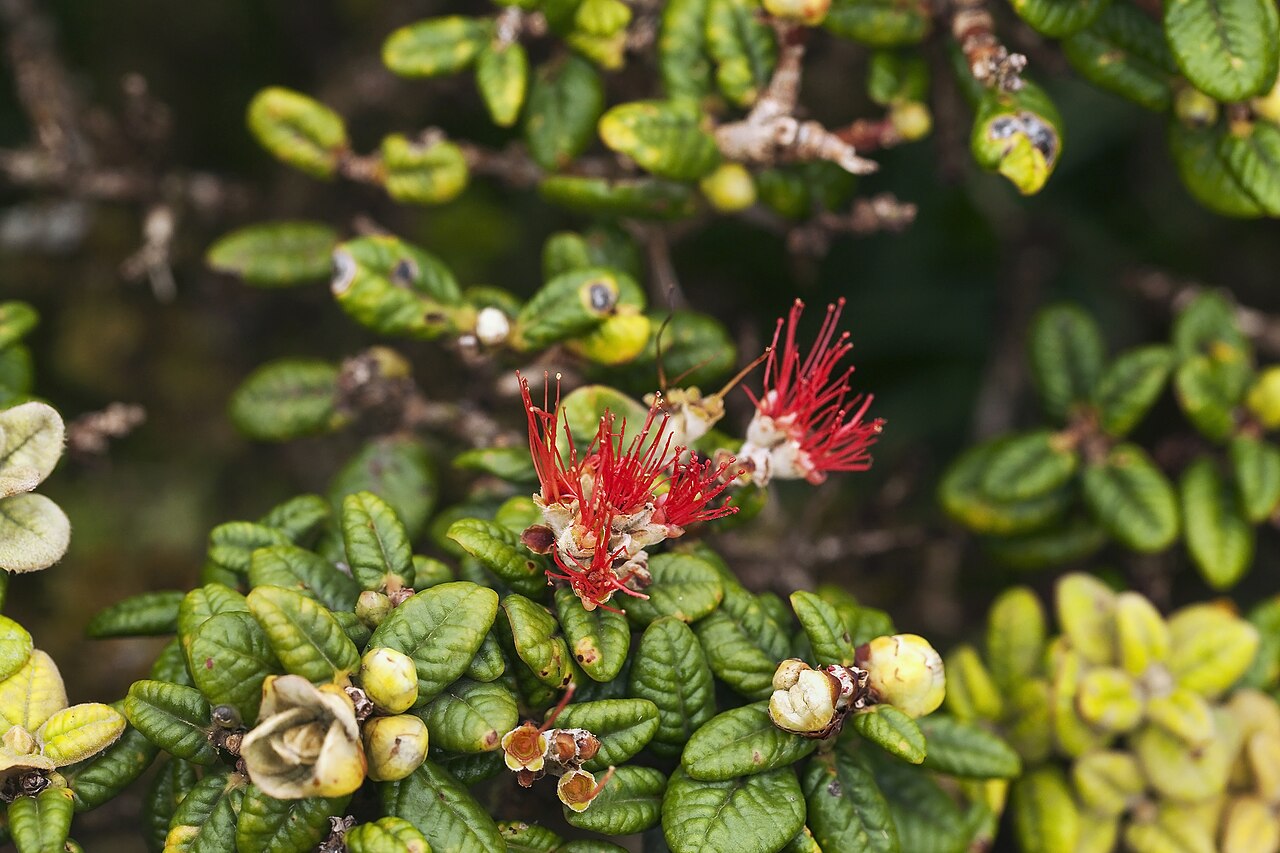
Metrosideros rugosa, known in Hawaiian as lehua papa, is a small, compact relative of the famous ʻŌhiʻa Lehua that grows only on the island of Oʻahu. It lives in one of the harshest habitats in Hawaiʻi: the cloud-covered, windswept summit ridges and cliffs of the Koʻolau Range, where it bears the same bright red pompom flowers as ʻōhiʻa above small, thick, deeply wrinkled leaves.
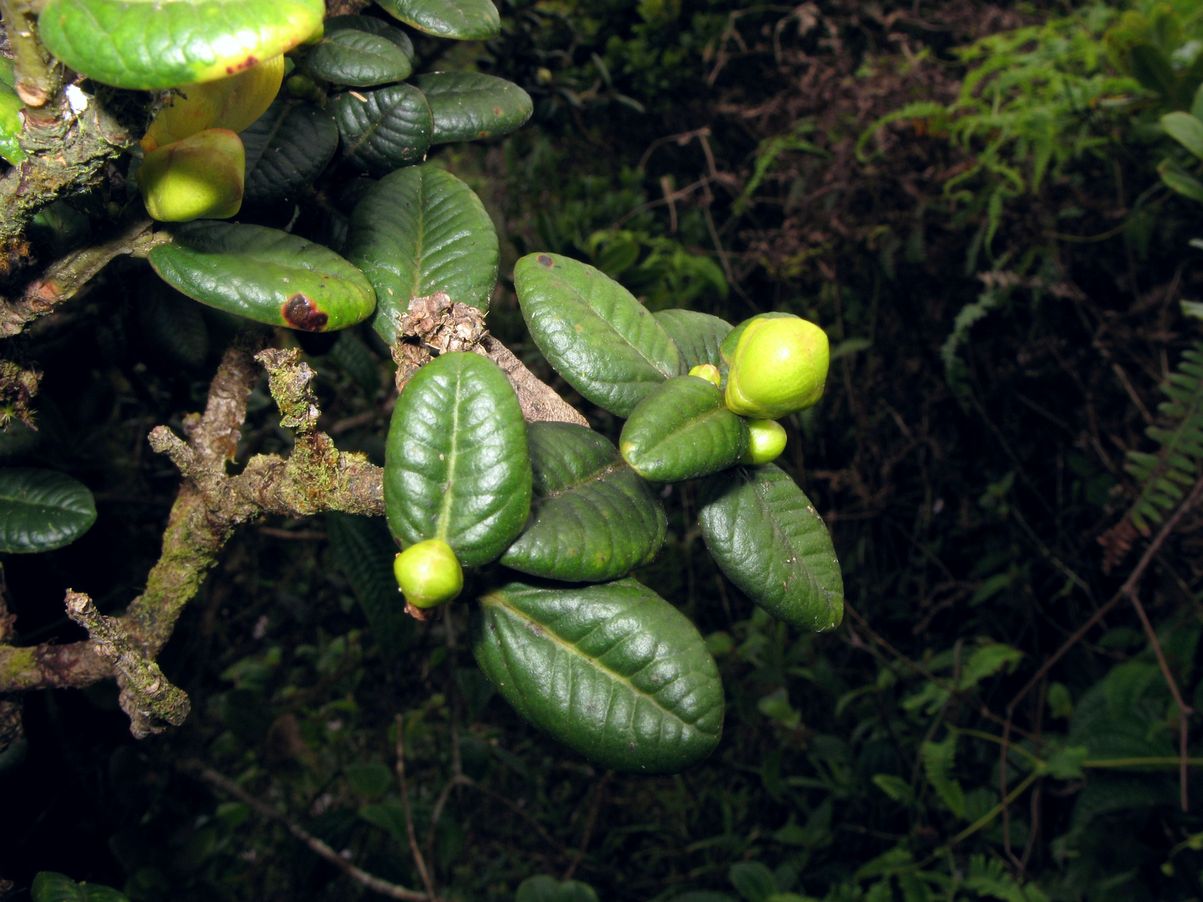
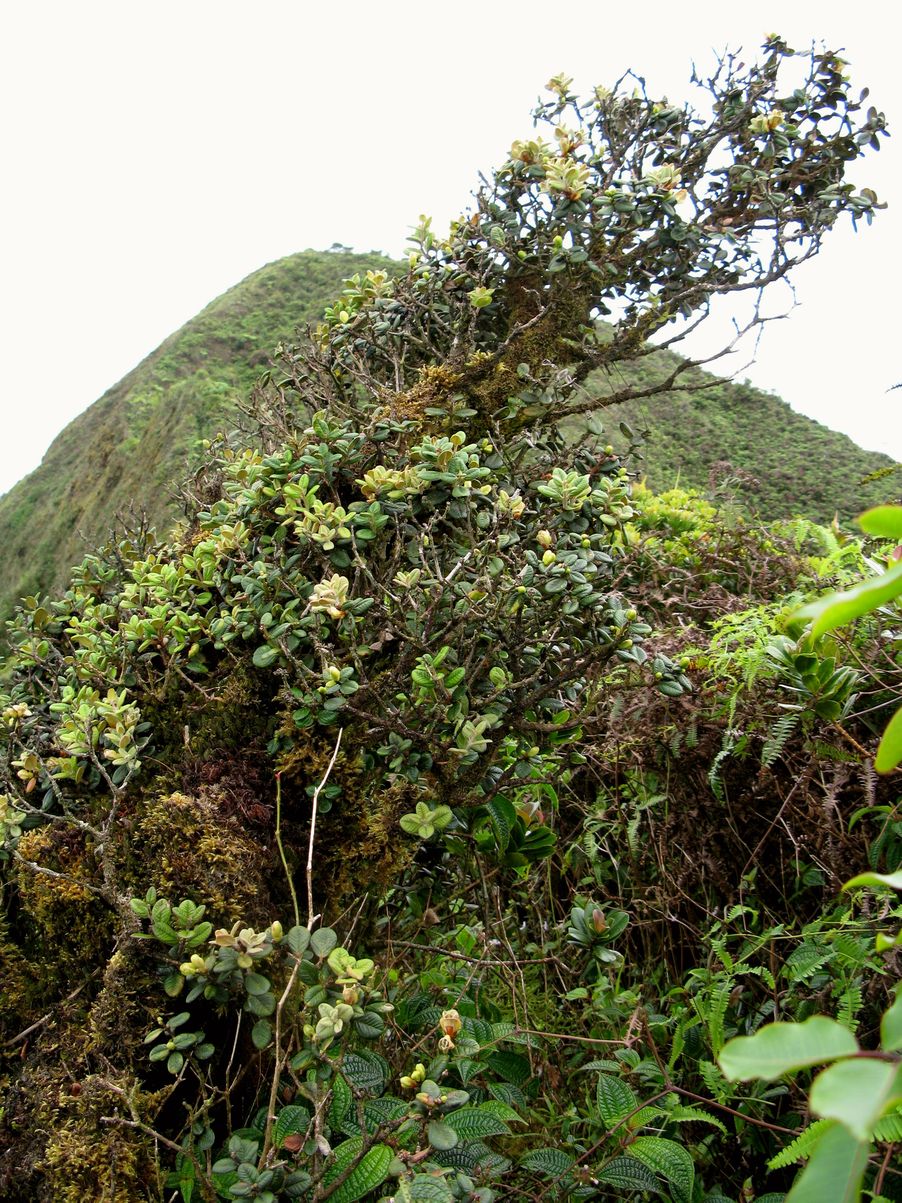
Its scientific name, rugosa, means wrinkled, and the deeply puckered leaves with sunken veins, rolled edges and woolly undersides are the easiest way to tell it from ʻōhiʻa. Shaped by constant wind, fog and rain, lehua papa grows as a dense shrub or small, gnarled tree, often only a few feet tall.
Lehua papa is endemic to Oʻahu and is not federally listed, but it is confined to a narrow band of summit habitat. Like all Metrosideros in Hawaiʻi, it is at risk from Rapid ʻŌhiʻa Death and ʻōhiʻa rust, so ʻōhiʻa plants, wood and soil must never be moved between islands. This guide covers how to recognize it, where it grows, how it can be grown, and how to help protect it.
Identification
Hawaiʻi has several native Metrosideros species and many forms of ʻōhiʻa, and they can be hard to tell apart. On Oʻahu’s Koʻolau summit ridges, the combination of small, thick, strongly wrinkled leaves and a compact, wind-pruned shape marks lehua papa.
Growth Habit
Lehua papa is a dense, compact shrub or small tree, usually about 3 to 10 feet tall, with stout, twisted branches. On the most exposed ridges it may be knee-high and wind-shaped; in slightly sheltered spots it can grow taller. Its bark is gray and rough, and the branches are often covered in mosses and lichens.
Leaves
The leaves are opposite, thick and stiff, oval to nearly round, usually about 1 to 2 inches long. The upper surface is dark, glossy green and strongly wrinkled, with the veins deeply sunken, and the edges are often rolled under. The undersides and young shoots are covered in dense, pale to rusty woolly hairs. New leaves often emerge yellowish-green or pale.
Flowers
The flowers are like those of ʻōhiʻa: clusters of small flowers, each with a ring of many long, bright red stamens, forming a fluffy pompom. The flower buds and stalks are woolly. Flowering can occur through much of the year.
Fruit
The fruit is a small, dry capsule that splits open to release many tiny, wind-dispersed seeds, as in ʻōhiʻa.
Similar Species
ʻŌhiʻa Lehua (Metrosideros polymorpha) is extremely variable and also grows on the Koʻolau summits, where some forms have rolled or hairy leaves. Lehua papa differs in its strongly wrinkled upper leaf surface with deeply sunken veins and its compact form. Intermediate plants, probably hybrids, can occur where the two grow together. Other Oʻahu ʻōhiʻa relatives, such as M. tremuloides (lehua ʻāhihi), have narrow, drooping leaves.
Quick Facts
| Scientific Name | Metrosideros rugosa A. Gray |
| Family | Myrtaceae (myrtle family) |
| Plant Type | Compact evergreen shrub or small tree; endemic to Oʻahu |
| Mature Height | 3–10 ft; often shorter on exposed ridges |
| Mature Spread | 3–8 ft |
| Growth Rate | Slow |
| Sun Exposure | Full sun to part shade, in cool, cloudy conditions |
| Water Needs | High; constant moisture and humidity |
| Soil Type | Wet, acidic, organic-rich soil; tolerates thin soils over rock |
| Soil pH | About 4.0–6.0 |
| Bloom Time | Through much of the year |
| Flower Color | Red |
| Fall Color | None (evergreen); new leaves pale yellowish-green |
| Fruit | Small dry capsule with many tiny wind-dispersed seeds |
| Deer Resistant | Not applicable on Oʻahu; damaged by feral pigs |
| USDA Hardiness Zones | 10–11 (cool, wet upland conditions) |
Native Range
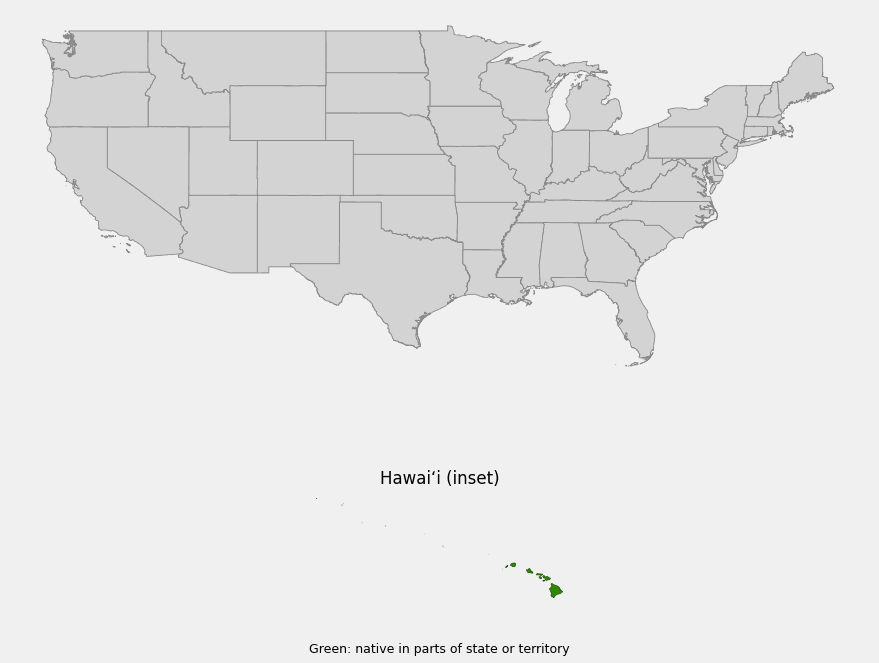
Lehua papa is endemic to Oʻahu, where it grows only in the Koʻolau Range. USDA PLANTS records it only from Hawaiʻi. It is found along the summit crest and upper ridges of the Koʻolau, from the central and northern Koʻolau to peaks such as Konahuanui above Honolulu, mostly at roughly 1,800 to 3,100 feet (about 550 to 950 m).
Its habitat is wet, windswept summit shrubland and cloud forest on narrow ridges, cliff tops and steep slopes. These places are covered in cloud much of the time, receive very high rainfall and constant trade winds, and have thin, waterlogged, acidic soils. It grows with ʻŌhiʻa Lehua, Uluhe, ʻohe naupaka, kanawao, native sedges and many mosses and ferns.
Lehua papa is not federally listed. Its main threats are invasive plants such as Koster’s curse and strawberry guava creeping up the ridges, feral pigs, ʻōhiʻa rust (Austropuccinia psidii), which has been seen on its leaves, and Rapid ʻŌhiʻa Death, a fungal disease that has killed ʻōhiʻa on several islands, including Oʻahu.
📋 Regional plant lists featuring Lehua Papa: Hawaii
Growing & Care Guide
Lehua papa is honestly difficult to grow away from Oʻahu’s cool, cloudy summits. It needs steady moisture, high humidity, cool temperatures and acidic soil, and it grows very slowly. It can be grown on Oʻahu by experienced native-plant growers in cool, wet, windward or upland gardens, or in a misted shade house. Buy only nursery-propagated plants from a Hawaiʻi native plant nursery and never collect from the wild.
Light
In cool, cloudy upland sites, full sun to light shade. In warmer lowland gardens, give it bright, filtered light or morning sun with afternoon shade, since heat and dry sun stress it.
Soil & Water
Plant in acidic, moist, organic-rich soil with good drainage, such as a mix of peat or coir, compost and cinder. Keep it evenly moist and never let it dry out, and keep humidity high. Avoid lime, heavy fertilizer and stagnant, airless soil.
Planting Tips
This is a plant for Oʻahu gardens, especially cool, wet, windward sites at higher elevations. Plant it among other wet-forest natives such as ʻōhiʻa, native ferns and ʻohe naupaka, and protect it from hot, dry wind. In lowland areas, a container in a misted shade house gives the best chance. Rapid ʻŌhiʻa Death (ROD) and quarantine: never move ʻōhiʻa or other Metrosideros plants, cuttings, wood, leaves or soil between islands. Hawaiʻi Department of Agriculture rules restrict interisland movement of ʻōhiʻa material, and Hawaiʻi also restricts bringing plants in from other states. Buy plants raised on Oʻahu from a reputable Oʻahu nursery.
Pruning & Maintenance
Avoid unnecessary pruning, because wounds can be entry points for the fungi that cause Rapid ʻŌhiʻa Death. If you must prune, do it in dry weather, clean tools with 70% rubbing alcohol before and after, and keep cuts clean and small. Clean boots, tools and vehicles when moving between natural areas. Watch for ʻōhiʻa rust (yellow powdery spots on new growth) and remove badly infected shoots.
Propagation
Propagation is by seed or cuttings from cultivated plants. The tiny seeds should be sown fresh on the surface of a moist, fine, acidic mix and kept humid; they germinate within a few weeks but seedlings grow very slowly. Semi-hardwood cuttings root slowly in a humid chamber. Never collect seed or cuttings from the wild, and never move material between islands.
Landscape Uses
- Oʻahu native gardens: a compact, red-flowered ʻōhiʻa relative for cool, wet gardens
- Summit-ridge restoration: part of the dwarf wet-forest community of the Koʻolau
- Shade-house and botanical collections: preserves a rare Oʻahu endemic in cultivation
- Cultural plantings: lehua blossoms are central to Hawaiian lei, chant and hula
- Watershed plantings: helps capture cloud moisture on wet upland sites
Wildlife & Ecological Value
Like ʻōhiʻa, lehua papa is a nectar source for native birds and insects on Oʻahu’s high ridges.
For Pollinators
The red pompom flowers produce plenty of nectar and pollen and are visited by native insects, including yellow-faced bees (Hylaeus), as well as introduced honeybees.
For Birds
ʻŌhiʻa and lehua flowers are a key nectar source for Hawaiian honeycreepers. On Oʻahu, the ʻapapane and Oʻahu ʻamakihi still visit lehua blossoms in the Koʻolau, and introduced birds such as the Japanese white-eye also feed on the nectar.
For Mammals
Hawaiʻi’s only native land mammal, the Hawaiian hoary bat, forages over the Koʻolau ridges. Feral pigs damage the fragile summit habitat and help spread invasive plants.
Ecosystem Role
On the windswept Koʻolau summit, lehua papa is one of the woody plants that hold thin soils on steep ridges and capture cloud moisture with its leaves, which drips into the soil and feeds streams below. Its mossy branches shelter native snails, including endangered Oʻahu tree snails (Achatinella) that live in the summit forests, along with insects and spiders.
Cultural & Historical Uses
Metrosideros rugosa was described by the American botanist Asa Gray from specimens collected on the U.S. Exploring Expedition in the 1840s. Its Hawaiian name, lehua papa, combines lehua, the name for the blossoms of ʻōhiʻa and their relatives, with papa, often translated as flat or low, perhaps a reference to its low, compact form.
Lehua blossoms are among the most important plants in Hawaiian culture. They are sacred to Pele and to Laka, the goddess of hula, and appear in many chants, songs and proverbs. Many Hawaiians have the custom of asking permission before picking lehua, and a well-known saying warns that picking lehua on the way up a mountain brings rain.
Today lehua papa is known mainly to hikers on Oʻahu’s summit trails, such as Poamoho, Wiliwilinui and the trails to Konahuanui. Watershed partnerships on Oʻahu fence and weed the upper Koʻolau to protect these rare summit plants and the water they help capture.
Frequently Asked Questions
How is lehua papa different from ʻōhiʻa lehua?
Lehua papa (Metrosideros rugosa) is a compact shrub or small tree of Oʻahu’s Koʻolau summits, with small, thick leaves that are strongly wrinkled above with sunken veins and woolly underneath. ʻŌhiʻa lehua is a larger, more widespread and highly variable tree found on all the main islands.
Is lehua papa endangered?
It is not federally listed, but it grows only on the summit ridges of the Koʻolau Range on Oʻahu and is threatened by invasive plants, pigs, ʻōhiʻa rust and Rapid ʻŌhiʻa Death.
What is Rapid ʻŌhiʻa Death?
Rapid ʻŌhiʻa Death is a disease caused by two fungi (Ceratocystis species) that can kill ʻōhiʻa trees within weeks. To prevent its spread, never move ʻōhiʻa plants, wood, leaves or soil between islands, clean tools and boots, and avoid wounding trees.
Can I grow lehua papa?
It is hard to grow outside cool, wet, humid conditions. On Oʻahu, experienced growers can grow nursery-propagated plants in cool windward or upland gardens or a misted shade house. Buy only from a Hawaiʻi native plant nursery and never collect from the wild.
Where can I see lehua papa?
On Oʻahu’s Koʻolau summit trails, such as Poamoho and Wiliwilinui. Stay on the trail, clean your boots before and after hiking, and do not pick plants.

Looking for a nursery that carries Lehua Papa?
Browse our native plant nursery directory: Hawaii

