
Neke (Cyclosorus interruptus)
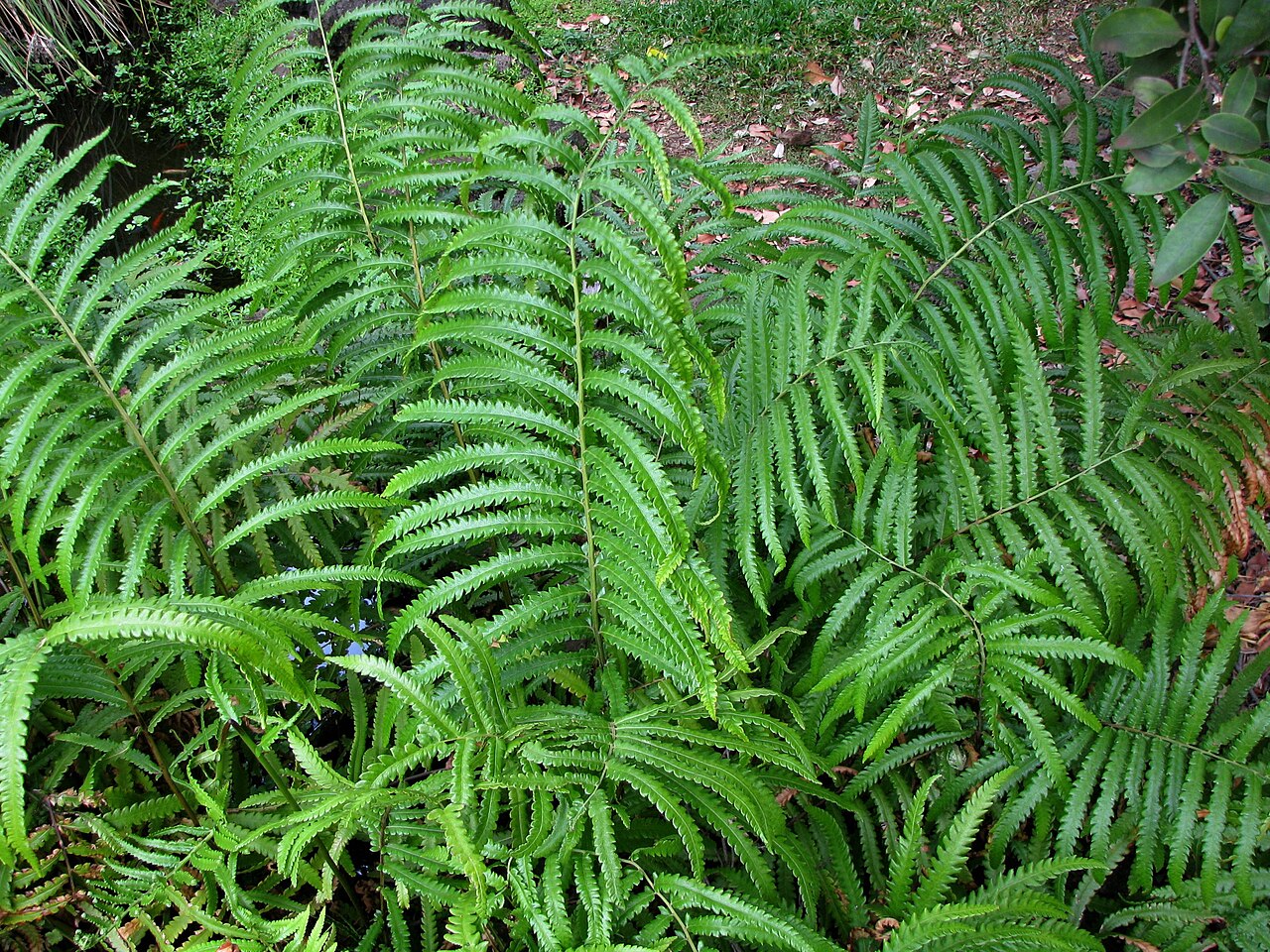
Neke (Cyclosorus interruptus), known in English as swamp shield-fern, Willdenow’s maiden fern or Hottentot fern, is a tough, colony-forming fern of freshwater marshes, swamps and bogs. It has upright, glossy fronds 1 to 3 feet tall rising from long, creeping rhizomes. In Hawaiʻi it is indigenous: it arrived on its own and grows on all the main islands, but it is also native across the tropics and subtropics of the world.
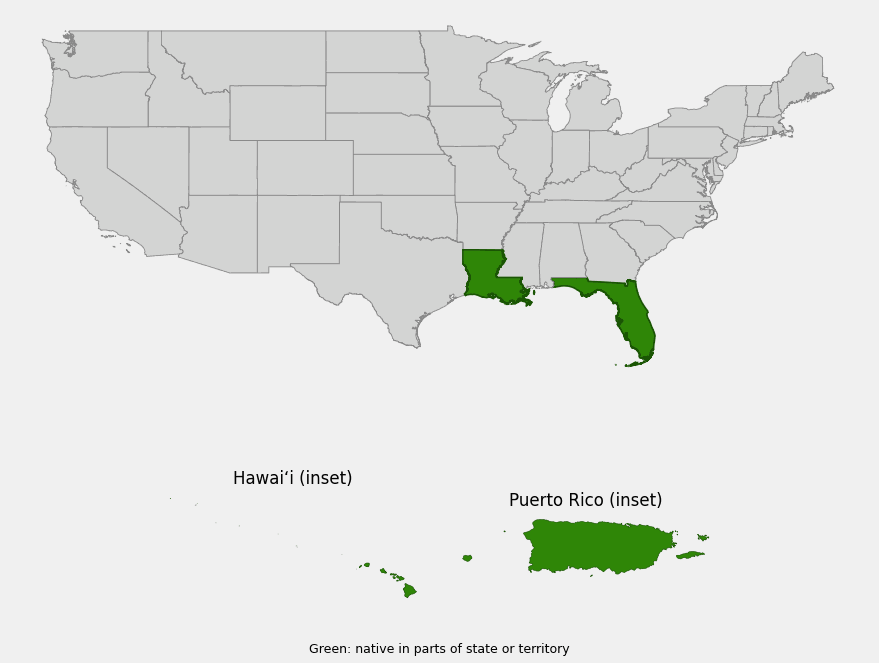
USDA PLANTS lists it as Thelypteris interrupta and records it as native in Hawaiʻi, Florida, Louisiana and Puerto Rico. Current fern classifications, followed by iNaturalist and the Atlas of Florida Plants, place it in the genus Cyclosorus, and older books also use Christella or Dryopteris. It is a member of the marsh fern family, Thelypteridaceae.
Neke is one of the easiest native ferns to grow, and one of the few that thrives in full sun as long as its roots stay wet. It is a good choice for pond edges, rain gardens, wet ditches and erosion control along freshwater banks. This guide covers how to recognize it, where it grows, how to grow it, and its place in Hawaiian culture.
Identification
Neke is a medium-sized, coarse fern that grows in wet ground, usually in dense stands. The combination of a long-creeping dark rhizome, shallowly lobed pinnae and round sori close to the margins helps separate it from similar marsh ferns.
Rhizome & Growth Habit
The rhizome is long-creeping, dark brown to black and fairly thick, branching to form extensive colonies. Fronds rise singly along it, usually 1 to 3 feet tall and occasionally taller in rich, sunny marshes.
Fronds
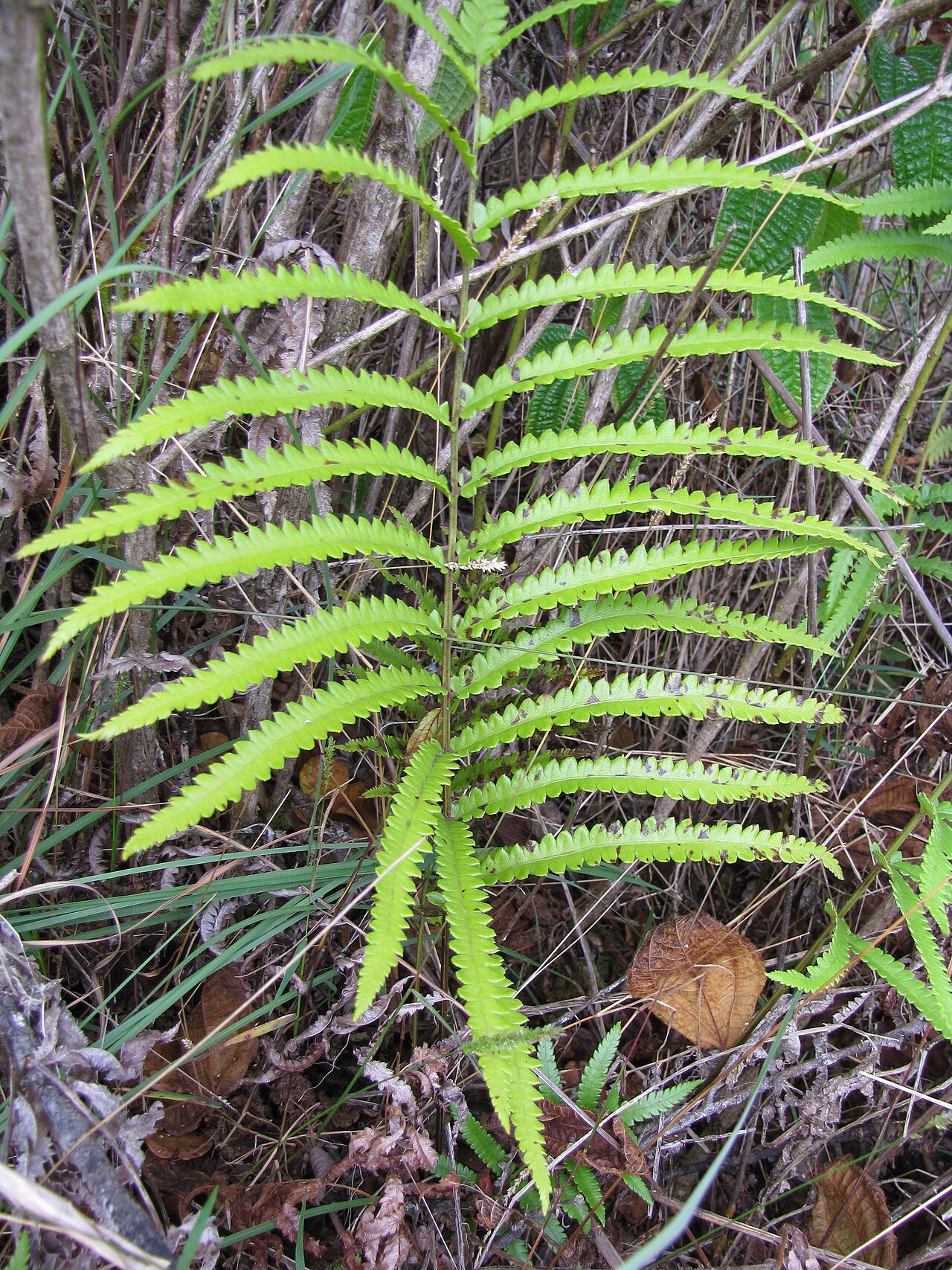
The fronds are once-pinnate, lance-shaped and somewhat leathery and glossy, with a long, straw-colored to brownish stalk. The pinnae are long and narrow, cut only about a quarter to a third of the way to the midrib into short, rounded or slightly pointed lobes, and the lowest pinnae are about as long as those above. Fine whitish hairs grow on the axes. Crushed fronds have a light scent, sometimes compared to new-mown hay.
Sori
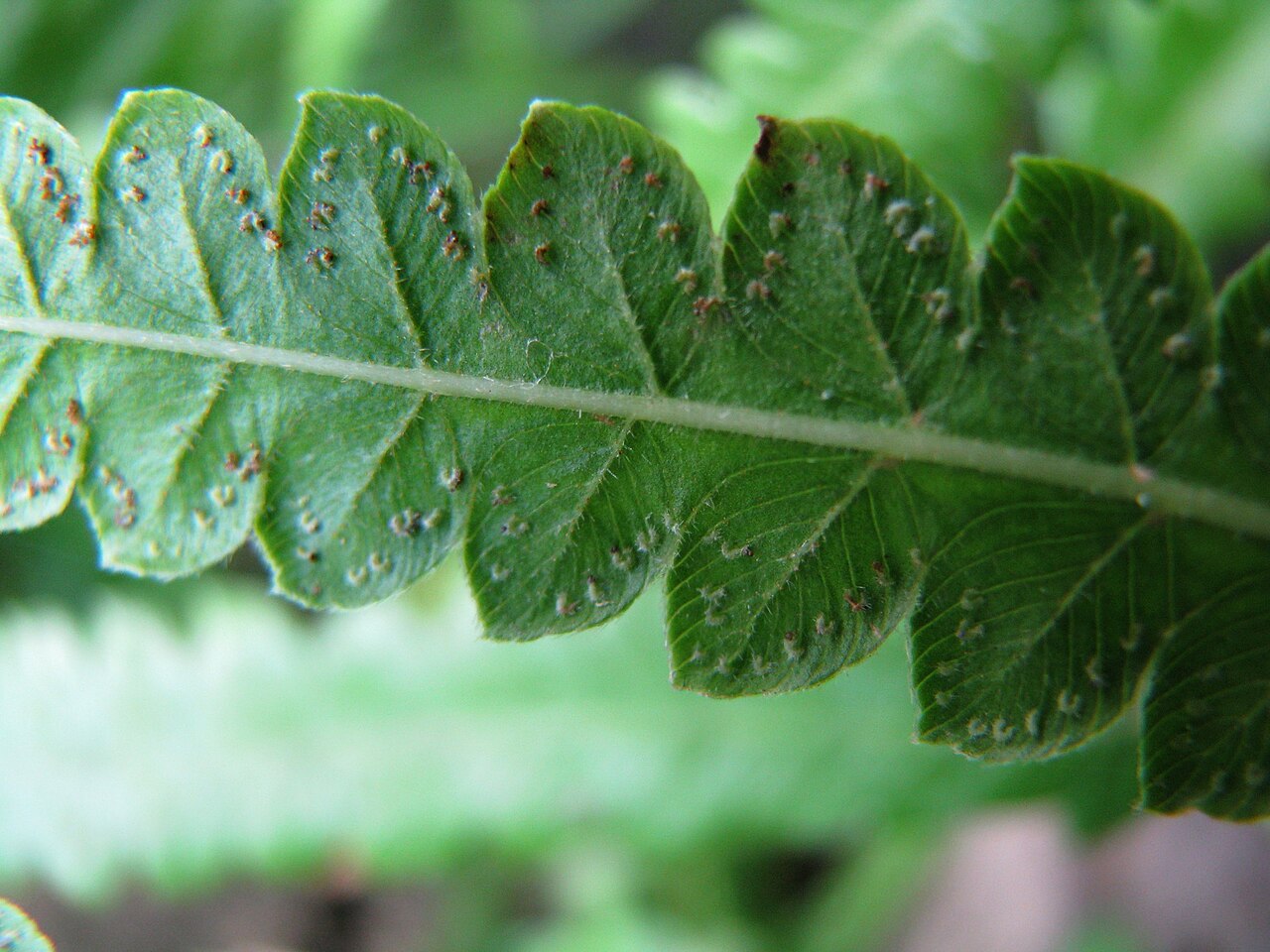
The sori are small and round, set in a row along each lobe close to the margin, and covered when young by a small kidney-shaped indusium. Spores are produced through much of the year in warm climates.
Similar Species
The Southern Shield Fern (Christella or Thelypteris kunthii) grows in moist woods rather than open marshes and has more deeply cut, hairier pinnae and reduced lowest pinnae. The Marsh Fern is thinner and more delicate, with deeply cut pinnae. The Swamp Fern (Telmatoblechnum serrulatum) has finely toothed, unlobed pinnae with long, linear sori along the midribs.
Where You See It
In Hawaiʻi, neke is a familiar fern of wet taro patches, marshes and ditches. In Florida, look for it in freshwater marshes, swamp edges and wet roadside ditches, often with Sawgrass and Giant Leather Fern.
Quick Facts
| Scientific Name | Cyclosorus interruptus (Willd.) H. Itô; syn. Thelypteris interrupta (Willd.) K. Iwats. (USDA) |
| Family | Thelypteridaceae (marsh fern family) |
| Plant Type | Colony-forming evergreen fern; indigenous to Hawaiʻi |
| Mature Height | 1–3 ft |
| Mature Spread | Spreads indefinitely by rhizomes; space plants 1–2 ft apart |
| Growth Rate | Fast in wet, sunny sites |
| Sun Exposure | Full sun to part shade |
| Water Needs | High; constantly wet or saturated soil |
| Soil Type | Wet organic muck, peat, mud and marsh soils |
| Soil pH | About 5.0–7.5 |
| Bloom Time | None (fern); spores much of the year |
| Flower Color | None |
| Fall Color | None; evergreen in frost-free climates |
| Fruit | None; reproduces by spores |
| Deer Resistant | Generally not browsed |
| USDA Hardiness Zones | 9b–12 |
Native Range
In the United States, USDA PLANTS lists neke as native in Hawaiʻi, Florida and Louisiana, and in Puerto Rico. In Hawaiʻi it grows on Kauaʻi, Oʻahu, Molokaʻi, Lānaʻi, Maui and Hawaiʻi Island, mostly at low elevations in wet places. In Florida it occurs through much of the peninsula and is most common in the central and southern counties. The Louisiana records are outlying, at the northern edge of its range.
Its habitats include freshwater marshes, swamps and swamp edges, bogs and fens, wet ditches and canal banks, spring runs, and in Hawaiʻi especially old and active loʻi kalo (taro patches). It does best in open, sunny wetlands with constantly saturated soil.
Worldwide, the species is pantropical: it grows from Africa and southern Asia through Southeast Asia to Australia, northern New Zealand (around hot springs) and the Pacific islands, and in the American tropics and subtropics. Because it is common in taro patches, some botanists have wondered whether early Polynesians carried it to Hawaiʻi in mud around taro, but it is currently recognized as indigenous. It is not federally listed.
📋 Regional plant lists featuring Neke: Hawaii · North & South Florida · Arkansas, Louisiana, Eastern Oklahoma & Eastern Texas · Puerto Rico
Growing & Care Guide
Neke is one of the easiest native ferns to grow anywhere you can keep its roots wet. Buy plants from a native plant nursery in your state or territory. In Hawaiʻi, use local nursery stock, since Hawaiʻi restricts bringing plants in from other states. Because it spreads quickly, give it room or confine it.
Light
Neke grows in full sun to part shade and is most vigorous in full sun with constant moisture. It is one of the few native Hawaiian ferns that tolerates full sun, as long as its feet stay wet.
Soil & Water
Plant in constantly wet or soggy soil, in shallow water at the edge of a pond, or in a spot that stays wet, such as below a downspout. It tolerates waterlogged soil and does not need good drainage. Do not let the soil dry out.
Planting Tips
Set plants a foot or more apart; the rhizomes spread quickly in good conditions. Use it in large water features, rain gardens, wetland restoration and along freshwater banks, where its dense, fibrous roots help hold soil against erosion. In small water features or containers, keep it in a pot to control its spread.
Pruning & Maintenance
Remove brown fronds as needed, and control spread by cutting back the surface rhizomes. In contained water features, a light monthly feeding with kelp or fish emulsion helps; never fertilize plants in natural ponds or near streams. Caterpillars occasionally chew the fronds, but neke is otherwise mostly pest free.
Propagation
The easiest method is dividing a clump or cutting sections of rhizome with fronds attached. It can also be grown from spores sown on a moist, sterile medium, though division is much faster.
Landscape Uses
- Pond edges and water gardens: thrives in shallow water and saturated soil
- Rain gardens and wet spots: grows where other plants drown
- Erosion control: fibrous roots stabilize freshwater banks
- Wetland restoration: a native fern for marsh and swamp plantings
- Cultural plantings: traditionally used in lei
Wildlife & Ecological Value
Neke stands help shape freshwater wetlands, providing cover and holding soil along the water’s edge.
For Pollinators
Ferns do not flower, so neke offers no nectar or pollen. Its dense fronds shelter insects, including the caterpillars that occasionally feed on them.
For Birds
Wetland birds use neke stands for cover. In Hawaiʻi, endangered waterbirds such as the Hawaiian gallinule (ʻalae ʻula) and Hawaiian stilt (aeʻo) live in the marshes and taro patches where neke grows.
For Mammals
Small mammals shelter in dense fern stands in Florida marshes. In Hawaiʻi, the native Hawaiian hoary bat forages for insects over wetlands.
Ecosystem Role
Its creeping rhizomes and fibrous roots bind wet soils and slow erosion along banks, and its fronds add organic matter to marsh soils. It also helps native wetland plant communities compete with invasive grasses.
Cultural & Historical Uses
The stiff fronds of neke were used by early Hawaiians in lei making. The place name Waineke, near Kōkeʻe on Kauaʻi, is named for this fern.
Neke’s abundance in loʻi kalo (taro patches) has led to discussion of whether it was carried to Hawaiʻi by early Polynesian voyagers, who packed taro corms in mud for canoe journeys. Today it is accepted as an indigenous Hawaiian fern.
The genus name Cyclosorus comes from Greek words for “circle” and “heap,” referring to the round sori. The epithet interruptus means “interrupted,” though how it applies to this species is unclear.
Frequently Asked Questions
Is neke native to Hawaiʻi?
Yes. Neke is indigenous to Hawaiʻi and grows on all the main islands, but it is also native across the tropics and subtropics, including Florida, Louisiana and Puerto Rico.
Can neke grow in full sun?
Yes, as long as its roots stay constantly wet. It is one of the few native Hawaiian ferns that thrives in full sun.
Is neke invasive?
It is native, but it spreads aggressively by rhizomes in good conditions. In small gardens or water features, contain it in a pot or cut back the rhizomes.
What is the scientific name of swamp shield-fern?
It is now usually called Cyclosorus interruptus. USDA PLANTS lists it as Thelypteris interrupta, and older names include Christella interrupta and Dryopteris gongylodes.
How do I propagate neke?
Divide clumps or cut sections of rhizome with a few fronds attached and replant them in wet soil. It can also be grown from spores, but division is much faster.

Looking for a nursery that carries Neke?
Browse our native plant nursery directory: Florida & Hawaii · Louisiana

