
ʻŌhā Wai (Clermontia peleana)
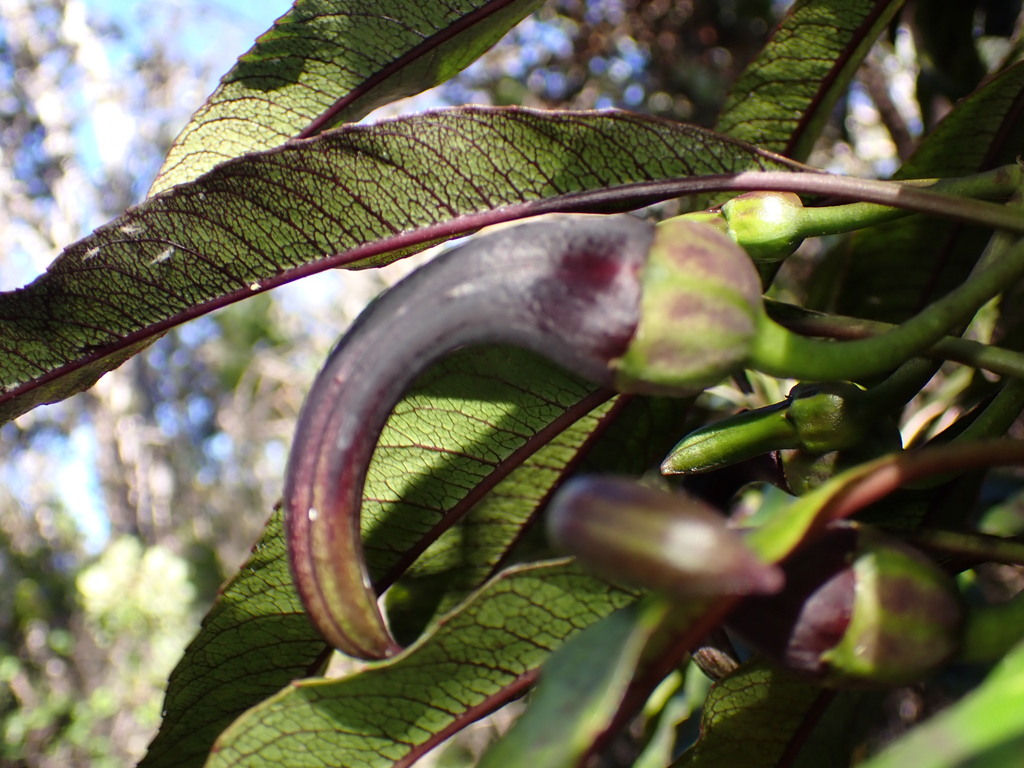
Clermontia peleana, known in Hawaiian as ʻŌhā wai (a name shared by other Clermontia) and in English as Pele clermontia, is one of the rarest Hawaiian lobelioids. It is a shrub or small tree of the bellflower family (Campanulaceae) with long, glossy leaves clustered at the branch tips and striking, strongly curved, dark purple to blackish flowers shaped like a claw.
It is federally listed as Endangered under the U.S. Endangered Species Act (listed in 1994). When it was listed, the typical subspecies was known from only eight wild plants in the wet forests of Hawaiʻi Island; the last of them died in 2000, and for a time the subspecies survived only as a single cultivated plant. Seedlings raised from it were planted back into native forest, and by 2007 one of them was flowering. A second subspecies, last seen in 1909 on Hawaiʻi Island and 1920 on Maui, was rediscovered in the Kohala Mountains in 2010.
Because it is so rare, ʻōhā wai is grown almost entirely by conservation programs, and it is not normally sold. Never collect plants, cuttings, fruit or seeds from the wild; as a federally and state-listed endangered species, it is protected by law. This guide covers how to identify it, its history and habitat, its cultivation needs, and the work to save it.
Identification
ʻŌhā wai is easiest to recognize in flower: no other Hawaiian Clermontia has such strongly hooked, dark purple-black flowers.
Growth Habit
A shrub or small tree, usually about 6 to 15 feet tall, with forking, soft-wooded branches that give it an open, candelabra-like form. Like many Clermontia, it often grows as an epiphyte, rooted in moss on the trunks of ʻōhiʻa, koa and tree ferns, as well as on the ground. Broken stems and leaves bleed a milky latex.
Leaves
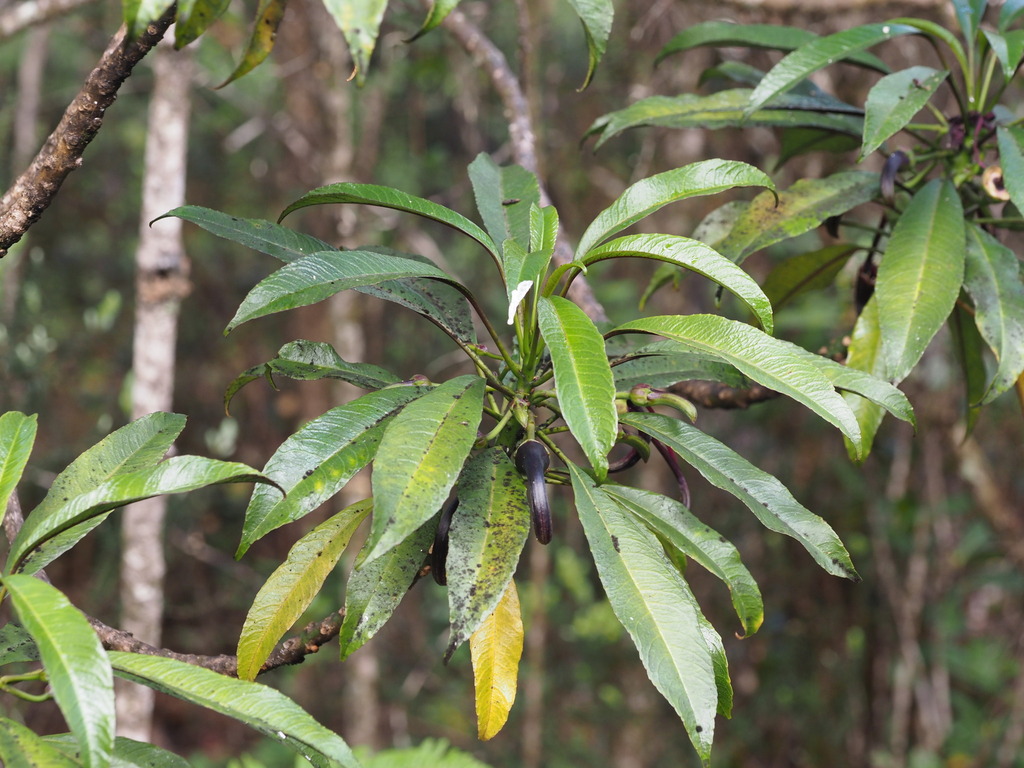
Leaves are clustered in rosettes at the branch tips. They are long and narrow to oblong, roughly 4 to 9 inches long, leathery and glossy, dark green above and paler beneath, with finely toothed edges and often purplish midribs and stalks.
Flowers
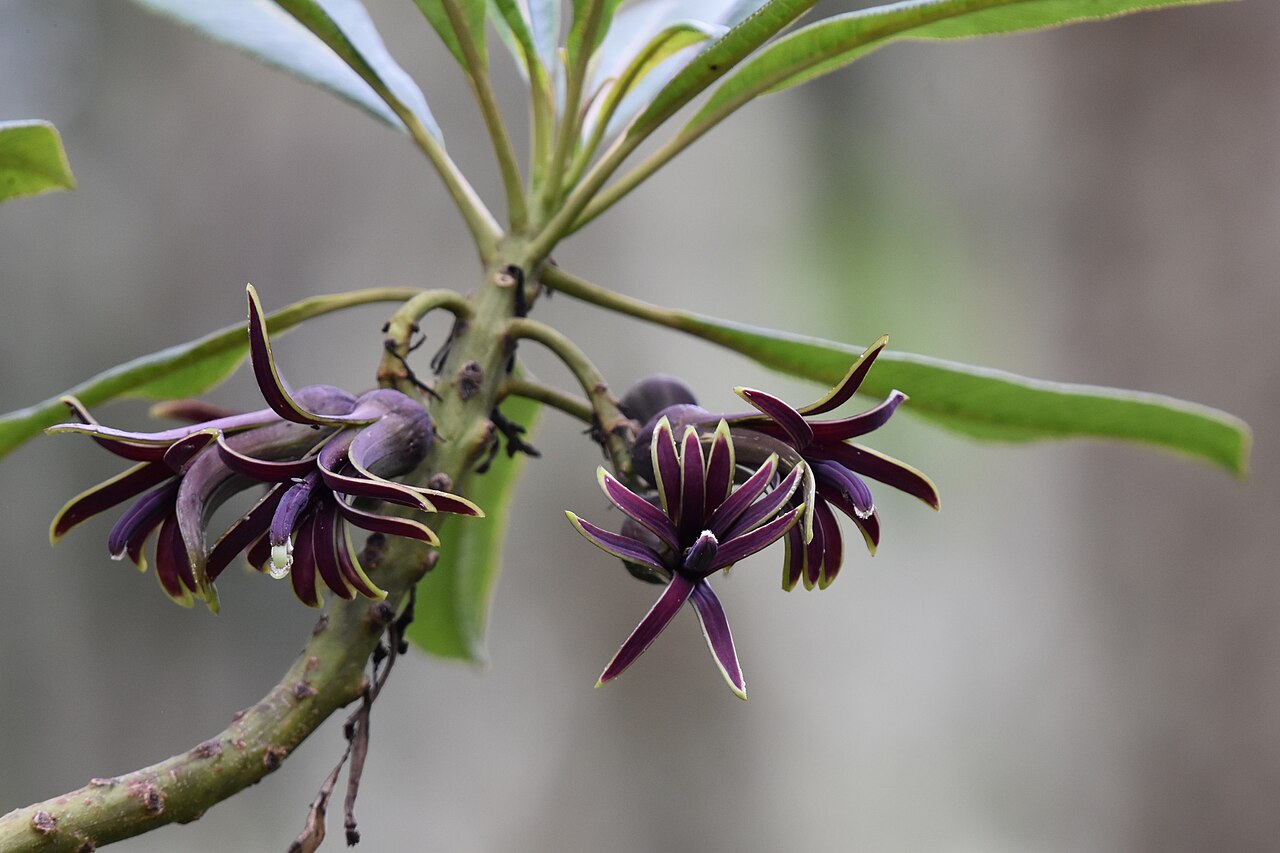
Flowers hang on stalks from the leaf axils, singly or in small groups. Each is a thick, tubular flower about 2 to 3 inches long, bent into a strong hook or claw, colored dark purple to blackish-purple, sometimes with greenish-yellow tints. When fully open, the tube splits into narrow, curling lobes around the purple stamen column. As in other Clermontia, the sepals look like petals, so the flower appears doubled.
Fruit & Look-alikes
The fruit is a fleshy, rounded berry packed with tiny seeds. ʻŌhā Kēpau (C. hawaiiensis), which shares its wet forest habitat on Hawaiʻi Island, has greenish-white to magenta flowers and bright orange, ribbed fruit. Other Clermontia species have greenish, white or paler purple flowers that are less strongly hooked.
Quick Facts
| Scientific Name | Clermontia peleana Rock |
| Family | Campanulaceae (bellflower family; Hawaiian lobelioids) |
| Plant Type | Evergreen shrub or small tree, often epiphytic; federally endangered |
| Mature Height | 6–15 ft |
| Mature Spread | 3–8 ft |
| Growth Rate | Moderate |
| Sun Exposure | Partial shade to filtered sun |
| Water Needs | High; constantly moist, humid conditions |
| Soil Type | Humus-rich, well-drained organic soil or moss |
| Soil pH | Acidic |
| Bloom Time | Flowers at various times of year |
| Flower Color | Dark purple to blackish-purple |
| Fall Color | None; evergreen |
| Fruit | Fleshy berry with many tiny seeds |
| Deer Resistant | No; damaged by feral pigs and rats |
| USDA Hardiness Zones | 10–12 (cool, wet uplands of Hawaiʻi) |
Native Range
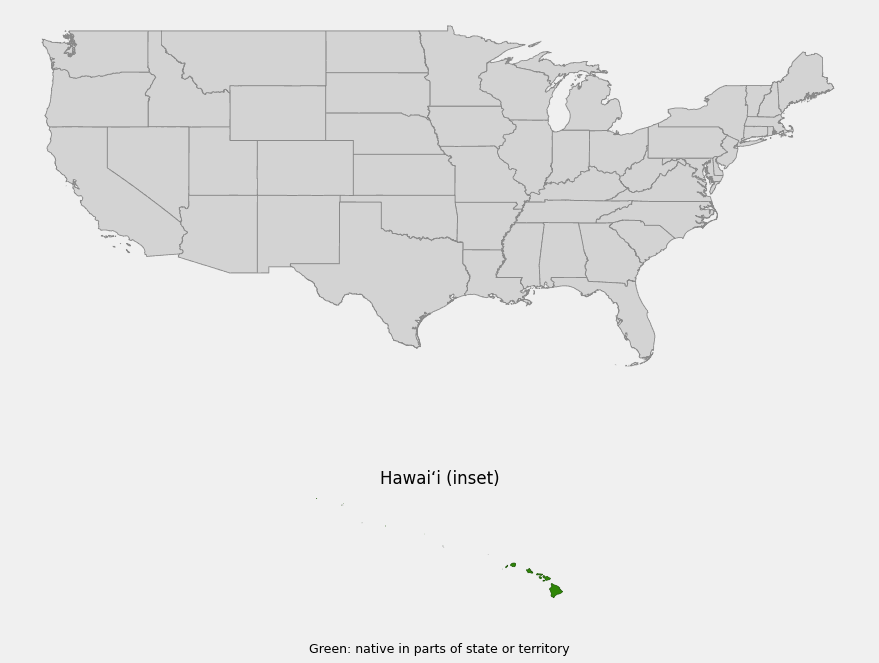
ʻŌhā wai is endemic to the Hawaiian Islands and grows nowhere else in the wild. USDA PLANTS lists it as native only in Hawaiʻi. The typical subspecies, C. peleana subsp. peleana, is known only from the windward wet forests of Hawaiʻi Island, where today it survives mainly as plants reintroduced into protected forest. The second subspecies, subsp. singuliflora, was historically recorded on Hawaiʻi Island and Maui and was rediscovered in the Kohala Mountains of Hawaiʻi Island in 2010.
It grows in montane wet forest dominated by ʻōhiʻa lehua, koa and hāpuʻu tree ferns, where rain and mist are frequent. It is often epiphytic, perched on mossy trunks and logs, which may also help it escape feral pigs.
Its decline is due to feral pigs and cattle that destroyed the forest understory, rats that eat stems, fruit and seeds, slugs, invasive plants, and the loss of the native birds that pollinated its flowers and spread its seeds. Recovery depends on fenced, pig-free forest, rat control and continued propagation and outplanting.
📋 Regional plant lists featuring ʻŌhā Wai: Hawaii
Growing & Care Guide
ʻŌhā wai is grown almost entirely by conservation programs and rare plant facilities in Hawaiʻi, which propagate it for outplanting into protected forest. It is not normally available to home gardeners. It is a federally and state-listed endangered species, so never collect plants, cuttings, fruit or seeds from the wild, and buy only legally propagated plants from Hawaiʻi growers with the required permits if it is ever offered. Hawaiʻi restricts bringing plants in from other states. Its needs are similar to those of other wet-forest Clermontia: cool, humid, frost-free conditions at middle elevations.
Light
Partial shade or filtered sun under a forest canopy. Hot, direct sun in dry lowland locations stresses it.
Soil & Water
A loose, humus-rich mix that stays moist but drains freely, or a mossy perch on a log or tree-fern trunk. It needs high humidity and frequent rain or irrigation and should never dry out.
Planting Tips
In conservation plantings, it is outplanted into fenced, pig-free wet forest, sometimes on tree-fern trunks or logs where it naturally grows as an epiphyte. Containers in a cool, humid shade house are used for nursery stock.
Pruning & Maintenance
Little pruning is needed. Protect plants from rats, slugs and snails, which can kill seedlings and damage stems. Scale insects and mealybugs can be treated with horticultural oil or soap.
Propagation
Conservation growers raise it from the tiny seeds in ripe fruit, sown on a fine, moist mix, and from cuttings. Because the species has so few plants, propagation is coordinated to preserve as much genetic diversity as possible.
Landscape Uses
- Conservation and recovery: propagated and outplanted to restore wild populations
- Botanical gardens and rare plant collections: grown to safeguard the species
- Wet forest restoration: outplanting in fenced, pig-free forest with permits
- Education: a vivid example of Hawaiian plant–bird coevolution and extinction risk
Wildlife & Ecological Value
ʻŌhā wai shows how closely Hawaiian plants depend on native birds, and what happens when those birds disappear.
For Pollinators
Its curved, dark purple flowers are shaped to fit the long, curved bills of nectar-feeding Hawaiian honeycreepers, which were probably its main pollinators. With many of these birds rare or extinct, poor pollination is thought to be one of the reasons it has struggled to reproduce in the wild.
For Birds
Native forest birds feed on its nectar, and fruit-eating birds once spread its seeds. Loss of native fruit-eating birds has reduced natural seed dispersal for many Hawaiian plants.
For Mammals
Hawaiʻi’s only native land mammal, the Hawaiian hoary bat, hunts insects over the forest. Introduced feral pigs, cattle and rats have been major threats to ʻōhā wai and other soft-stemmed lobelioids.
Ecosystem Role
As an understory and epiphytic shrub in wet forest, it is part of the diverse lobelioid flora that once fed Hawaiʻi’s nectar-feeding birds. Restoring it helps rebuild those plant–bird relationships.
Cultural & Historical Uses
ʻŌhā and ʻōhā wai are Hawaiian names for the genus Clermontia. The English name Pele clermontia and the scientific name peleana both honor Pele, the Hawaiian goddess of volcanoes, whose home is said to be at Kīlauea on Hawaiʻi Island. The species was described by Joseph F. Rock, the botanist and explorer who studied the Hawaiian lobelioids in the early 20th century.
The Hawaiian lobelioids, with more than 125 species in six genera, are the largest plant radiation on any island chain. Sadly, they are also among the hardest hit by extinction: many species are endangered, and some have already disappeared. The story of ʻōhā wai, reduced to a single plant and then slowly rebuilt, is a reminder of how close many of them have come.
ʻŌhā wai was listed as endangered by the U.S. Fish and Wildlife Service in 1994. Recovery work includes fencing and removing pigs from wet forest, rat and weed control, banking seed, and propagating plants for outplanting. The 2010 rediscovery of subspecies singuliflora, a plant not seen for about 90 years, shows how much can still be found in Hawaiʻi’s remote forests.
Frequently Asked Questions
Is ʻōhā wai endangered?
Yes. Clermontia peleana is federally listed as Endangered under the U.S. Endangered Species Act and is one of the rarest Hawaiian lobelioids.
Can I grow it?
It is grown almost entirely by conservation programs and is not normally sold. Never collect it from the wild; if it is ever offered, buy only legally propagated plants from Hawaiʻi growers with the required permits.
What do its flowers look like?
They are thick, strongly curved, claw-shaped tubes, dark purple to blackish-purple, about 2 to 3 inches long, hanging below the leaves.
Where does it grow?
Only in Hawaiʻi: in windward wet forests on Hawaiʻi Island, often as an epiphyte on mossy trunks. One subspecies was also historically recorded on Maui.
Why is it named after Pele?
Its name honors Pele, the Hawaiian goddess of volcanoes, whose home is said to be at Kīlauea on Hawaiʻi Island, where the species grows.

Looking for a nursery that carries ʻŌhā Wai?
Browse our native plant nursery directory: Hawaii

