
California Fagonbush (Fagonia laevis)
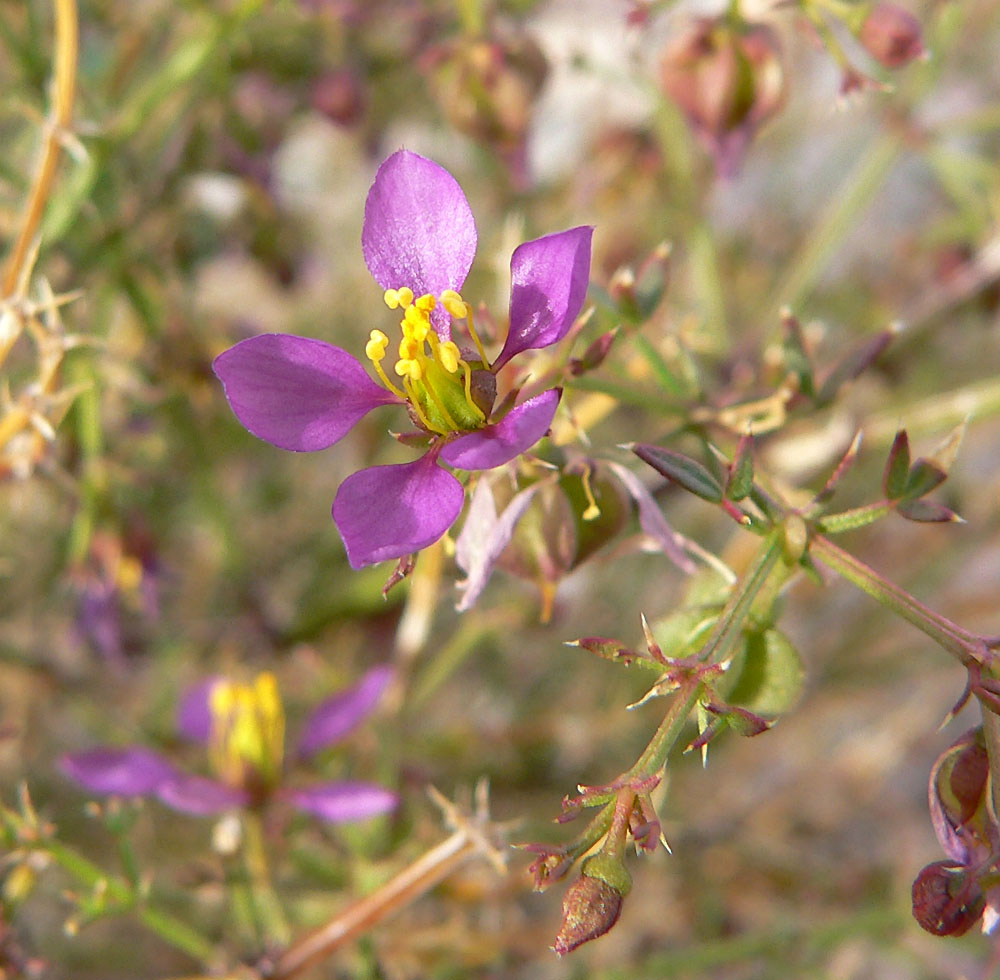
Fagonia laevis, known as California Fagonbush, is a low, rounded desert subshrub of the Mojave and Sonoran deserts. It grows from southern Nevada and southwestern Utah through western Arizona and southeastern California into northwestern Mexico. It belongs to the creosote bush family (Zygophyllaceae) and was formerly treated as Fagonia californica ssp. laevis.
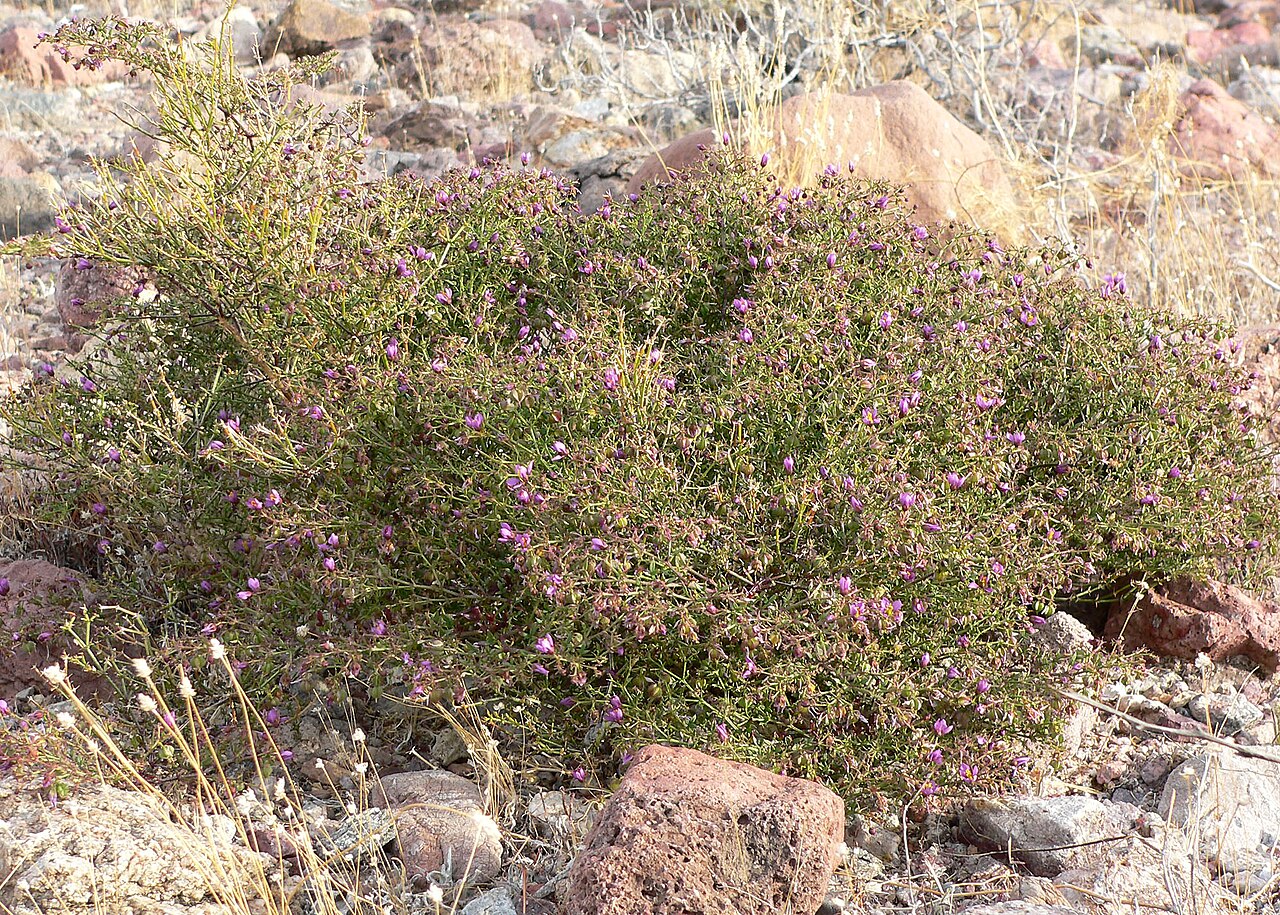
Its form is unusual: a tangle of thin, green, angled, forking stems with tiny leaves and small spines, forming a loose mound up to about 2 feet tall and wide. Lady Bird Johnson Wildflower Center describes it as so open that it hardly casts a shadow. After winter rains, the mound is dotted with starry, five-petaled, pink-purple to magenta flowers about 1/2 inch across.
California fagonbush is a true desert plant, adapted to hot, dry rocky slopes and washes. Its green stems carry out most of the photosynthesis, so the plant can drop its few small leaves in drought. It is rarely sold, but it is an interesting plant for desert rock gardens and naturalistic plantings in the low desert, where it needs only occasional water.
Identification
Look for a low, open, rounded mound of green, angled, forking stems with tiny spines and scattered starry purple flowers on rocky desert slopes and washes.
Growth Habit
California fagonbush is a perennial subshrub, usually 8 to 24 inches tall and about as wide, with a woody base and a dense tangle of slender, green, sharply angled or grooved stems that fork repeatedly. The stems stay green and carry out most photosynthesis. Old plants can form neat hemispheres, while younger plants are looser and more sprawling.
Leaves & Spines
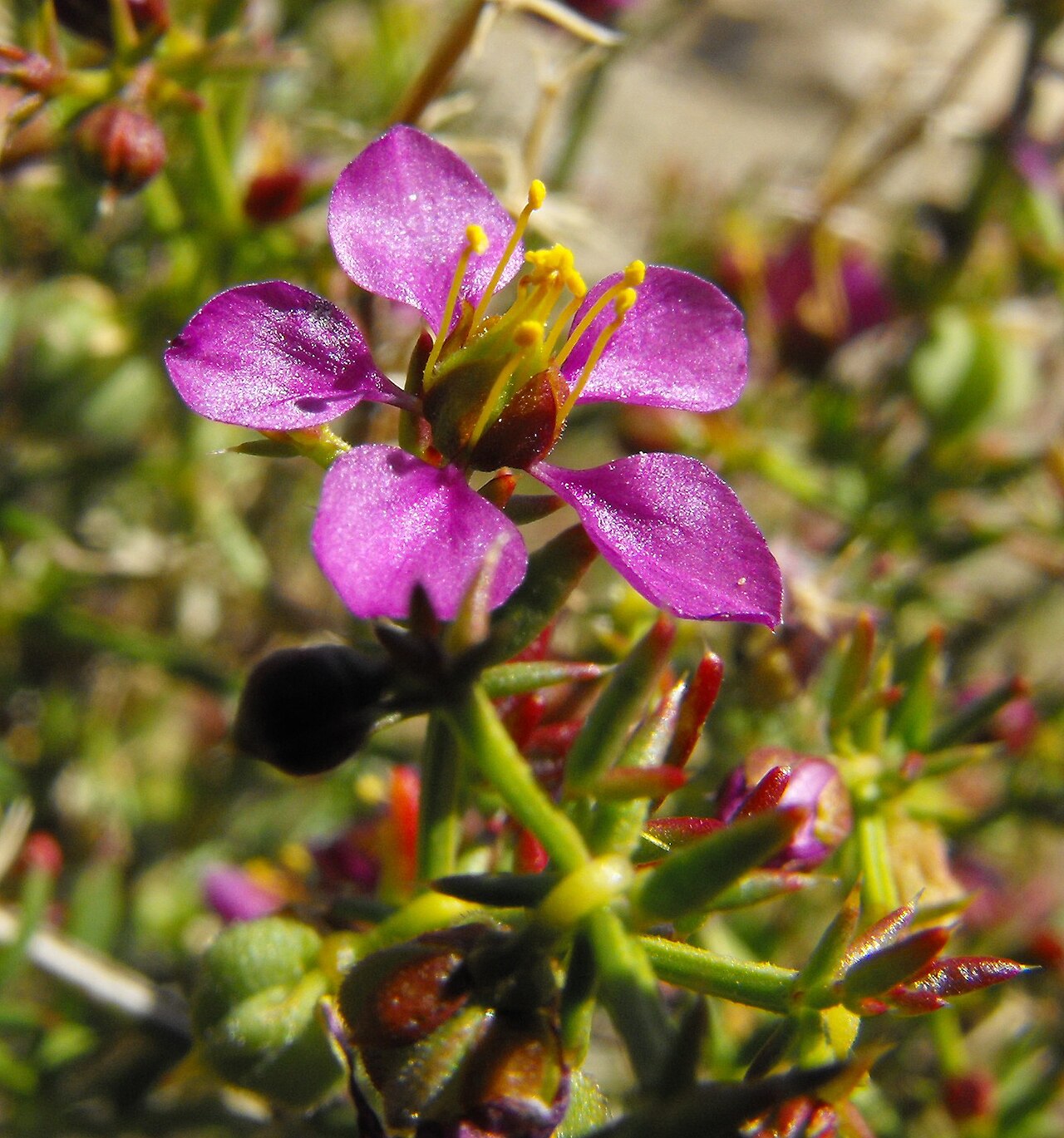
The leaves are opposite and small, usually divided into three narrow leaflets, each less than 1/2 inch long, though the upper leaves may be simple. They often drop in drought, leaving the stems bare. At each node, pairs of short, sharp, spine-like stipules point outward, making the plant prickly to handle.
Flowers
The flowers grow singly at the stem nodes and branch ends. Each is about 1/2 inch across, with five spreading, spoon-shaped petals in pink-purple to magenta, narrowed to a slender claw at the base, and ten yellow stamens. The main bloom is from about February to May, and plants may flower again after summer or fall rains.
Fruit
The fruit is a small, five-lobed capsule about 1/4 inch wide, smooth or nearly so, splitting into five one-seeded sections when ripe. The species name laevis, meaning “smooth,” refers to the mostly hairless plant and fruit.
Look-alikes
Its close relative, sticky fagonbush (Fagonia pachyacantha), has glandular, sticky-hairy stems and fruits and thicker spines. The overall look of a spiny, green-stemmed mound can suggest other desert subshrubs, but the starry purple flowers and three-parted leaves are distinctive. Related plants in the same family include creosote bush, which has yellow flowers and resinous leaves.
Quick Facts
| Scientific Name | Fagonia laevis (syn. Fagonia californica ssp. laevis) |
| Family | Zygophyllaceae (creosote bush family) |
| Plant Type | Low, rounded desert subshrub |
| Mature Height | 8–24 in |
| Mature Spread | 1–2 ft |
| Growth Rate | Moderate |
| Sun Exposure | Full sun |
| Water Needs | Very low |
| Soil Type | Rocky, gravelly or sandy desert soils; slopes, washes and desert pavement |
| Soil pH | Neutral to alkaline (about 7.0–8.5) |
| Bloom Time | February–May; sometimes again after summer or fall rains |
| Flower Color | Pink-purple to magenta |
| Fall Color | None; green stems all year |
| Fruit | Small, smooth, five-lobed capsule |
| Deer Resistant | Yes; spiny and seldom browsed |
| USDA Hardiness Zones | 8–11 |
Native Range
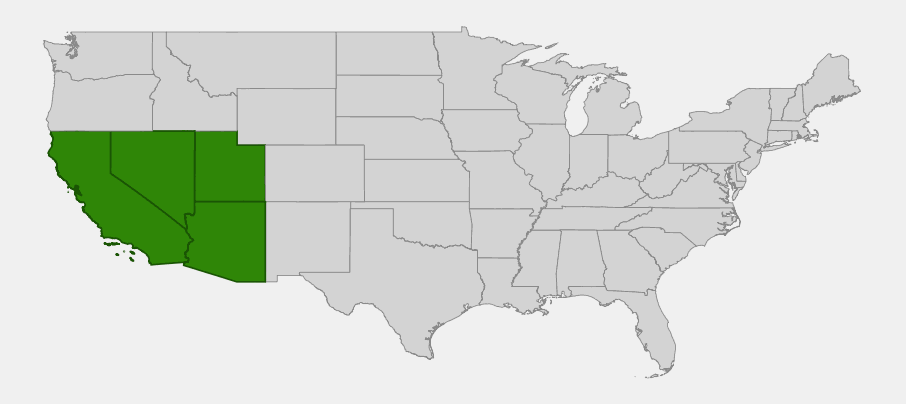
California fagonbush grows in the hot deserts of the American Southwest and northwestern Mexico. USDA PLANTS lists it as native in Arizona, California, Nevada and Utah. Lady Bird Johnson Wildflower Center describes its range as southern Utah south through western Arizona and southeastern California to northwestern Mexico, where it grows in Baja California and Sonora.
In California it is common in the Colorado Desert, including Anza-Borrego Desert State Park and the Coachella Valley, and in the warmer, lower parts of the Mojave Desert, such as Joshua Tree and Death Valley national parks. In Arizona it grows in the western and southwestern deserts, including Organ Pipe Cactus National Monument. In Nevada and Utah it reaches its northern limit in the far southern part of each state.
Its habitat is rocky slopes, canyon walls, gravelly washes, alluvial fans and desert pavement in creosote bush scrub, mostly below about 4,000 feet. It often grows on volcanic or limestone rock, in some of the hottest and driest places in North America.
📋 Regional plant lists featuring California Fagonbush: Utah & Western Colorado · Arizona & New Mexico · California & Nevada
Growing & Care Guide
California fagonbush is a plant for hot, dry, low-desert gardens. It is seldom sold in nurseries, so it is mostly grown from seed by native plant enthusiasts and restoration growers. In the right setting, it needs almost no care.
Light
Full sun and reflected heat. It does poorly in shade or in humid, cool climates.
Soil & Water
Plant it in very well-drained, rocky, gravelly or sandy soil. It will rot in heavy or wet soil. In the low desert, water occasionally during the first summer, then only during long droughts. Too much water makes it lanky and short-lived.
Planting Tips
Plant in fall or late winter, among rocks or on a slope, mound or gravel garden where water drains away quickly. It looks best with other low desert shrubs and wildflowers, such as creosote bush, brittlebush, white bursage and globemallows. Wear gloves when handling it; the stem spines are sharp.
Pruning & Maintenance
Little or no pruning is needed. Old plants can be trimmed lightly after flowering to remove dead stems. Do not fertilize.
Propagation
Sow seed in fall or winter, uncovered or lightly covered, in a gritty mix, and keep it slightly moist until seedlings appear. Seedlings dislike root disturbance, so sow in deep pots or directly in place. Collect seed only in small amounts from plants on private land with permission, and never collect in parks or protected areas.
Landscape Uses
- Desert rock gardens: a low, airy mound with starry purple flowers
- Xeriscapes: for hot, dry low-desert gardens with no summer water
- Slopes and gravel gardens: fits well among rocks and boulders
- Habitat gardens: a spring flower for desert bees
- Desert restoration: suited to revegetating rocky slopes and washes
Wildlife & Ecological Value
California fagonbush is a small but regular member of the plant community of the Sonoran and Mojave deserts.
For Pollinators
Its flowers are visited by native desert bees and other small insects, which collect pollen and nectar in late winter and spring.
For Birds
Its seeds are part of the desert seed bank used by seed-eating birds such as Gambel’s quail and sparrows, and the spiny mounds offer some cover to small birds and lizards.
For Mammals
Desert rodents such as kangaroo rats and pocket mice forage for seeds of desert plants, including fagonbush. Its spines discourage browsing by larger animals.
Ecosystem Role
Like other low desert shrubs, it helps hold rocky and gravelly soils in place, and its mounds trap windblown seeds and organic matter, creating small patches where other plants and animals can live.
Cultural & Historical Uses
The genus Fagonia honors Guy-Crescent Fagon, physician to King Louis XIV of France and an important patron of botany at the royal garden in Paris. The species name laevis means “smooth,” which separates it from its sticky-haired relatives.
There are several dozen species of Fagonia, most of them in the deserts of North Africa, the Middle East and Asia, where they are well known desert plants. Only a few, including California fagonbush, grow in the deserts of North and South America.
Its green, nearly leafless stems are a classic example of desert adaptation. By relying on stems for photosynthesis and shedding leaves in drought, it exposes little surface to the hot, dry air. Lady Bird Johnson Wildflower Center notes that the plant is so open it hardly casts a shadow.
Frequently Asked Questions
Is California fagonbush a shrub or a wildflower?
It is a low, perennial subshrub with a woody base and green stems, usually 8 to 24 inches tall, which blooms like a wildflower in spring.
Is California fagonbush the same as Fagonia californica?
It was formerly treated as Fagonia californica ssp. laevis. USDA PLANTS now treats it as its own species, Fagonia laevis.
Does California fagonbush have thorns?
Yes. Pairs of short, sharp, spine-like stipules grow at the stem joints, so wear gloves when handling it.
When does California fagonbush bloom?
Mainly from February to May, and sometimes again after summer or fall rains.
Can I grow California fagonbush outside the desert?
It is difficult. It needs hot sun, excellent drainage and dry conditions, and it rots in wet or humid climates.

Looking for a nursery that carries California Fagonbush?
Browse our native plant nursery directory: Arizona · California · Nevada · Utah

