
Carolina Ash (Fraxinus caroliniana)
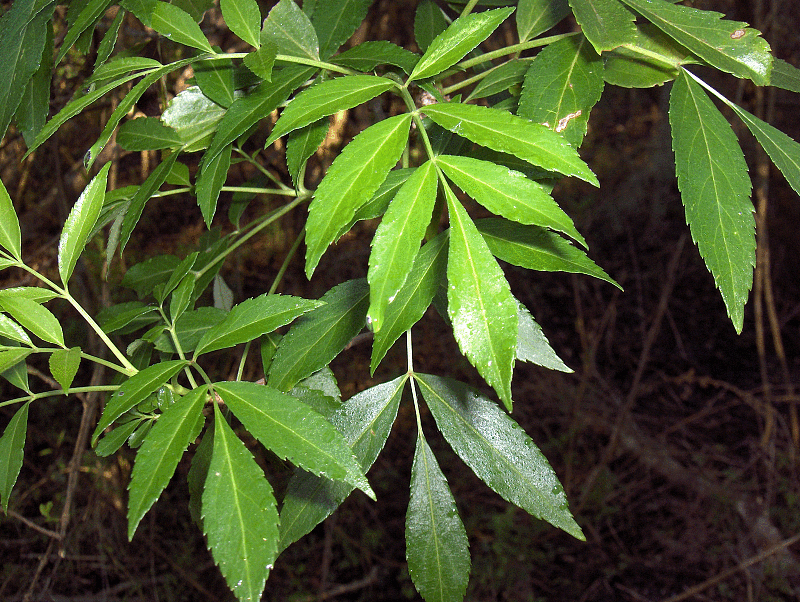
Fraxinus caroliniana, commonly called Carolina Ash (also Pop Ash, Water Ash, or Swamp Ash), is a small, flood-adapted tree of the Southeast’s river swamps and tupelo-cypress sloughs. It belongs to the olive family (Oleaceae) along with the other native ashes, but is far more at home with “wet feet” than most of its relatives — often growing from a flared, swollen trunk base standing directly in slow, dark swamp water for much of the year.
Carolina Ash is the smallest of the native American ashes, usually reaching just 20 to 30 feet, with glossy, pinnately compound leaves of 5 to 7 leaflets and broad, winged samaras up to 2 inches long — among the largest-winged fruit of any American ash, and a key identification feature that distinguishes it from Green Ash and White Ash growing nearby on slightly drier ground.
Though rarely sold in the nursery trade, Carolina Ash is a valuable, under-planted choice for swamp forest restoration, pond and slough margins, and any landscape feature that holds standing water for part of the year. It pairs naturally with Bald Cypress, Pond Cypress, and Swamp Tupelo in the wettest parts of a native planting.
Identification
Carolina Ash is a small deciduous tree or large shrub, typically 20 to 30 feet tall (occasionally to 40 feet on the best sites), often multi-trunked, with a swollen, flood-adapted trunk base. The crown is rounded and open. Like other ashes, it has opposite branching, a useful quick check in the field when leaves are absent.
Bark & Stems
Bark is light gray and relatively smooth on young trees, developing shallow fissures and flattened ridges with age. Twigs are stout, gray to olive-green, and hairless to finely hairy, with the opposite branching typical of the ash genus.
Leaves
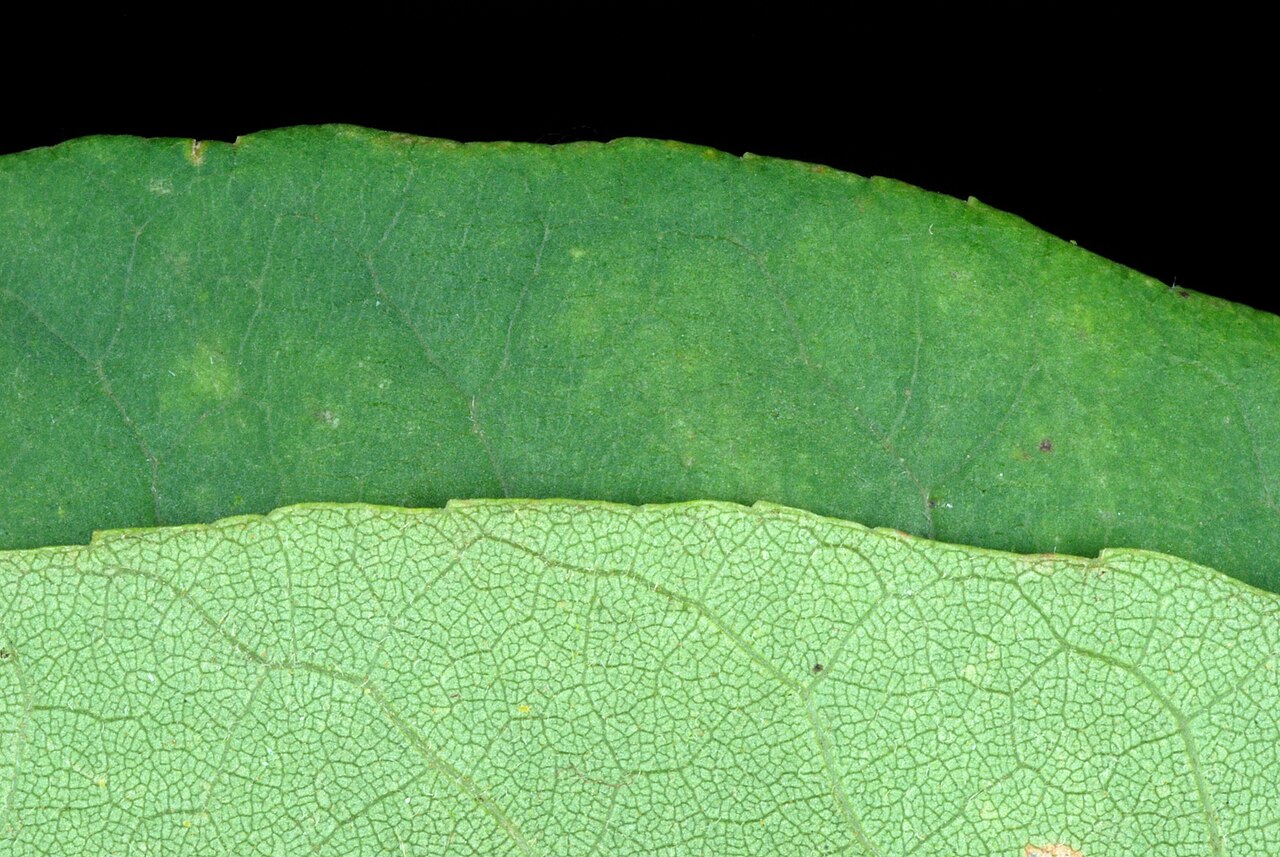
Leaves are pinnately compound, 6 to 12 inches long, with 5 to 7 (occasionally up to 9) stalked, ovate-to-lance-shaped leaflets 2 to 5 inches long. Leaflet margins are finely toothed to nearly smooth, the upper surface glossy dark green, the underside paler and often slightly hairy along the veins. Fall color is an unremarkable yellow to brownish-yellow.
Flowers
Like most ashes, Carolina Ash is dioecious, with separate male and female trees. Small, petal-less, purplish-green flowers appear in dense clusters in early spring, before or with the emerging leaves, wind-pollinated and inconspicuous.
Fruit & Seeds
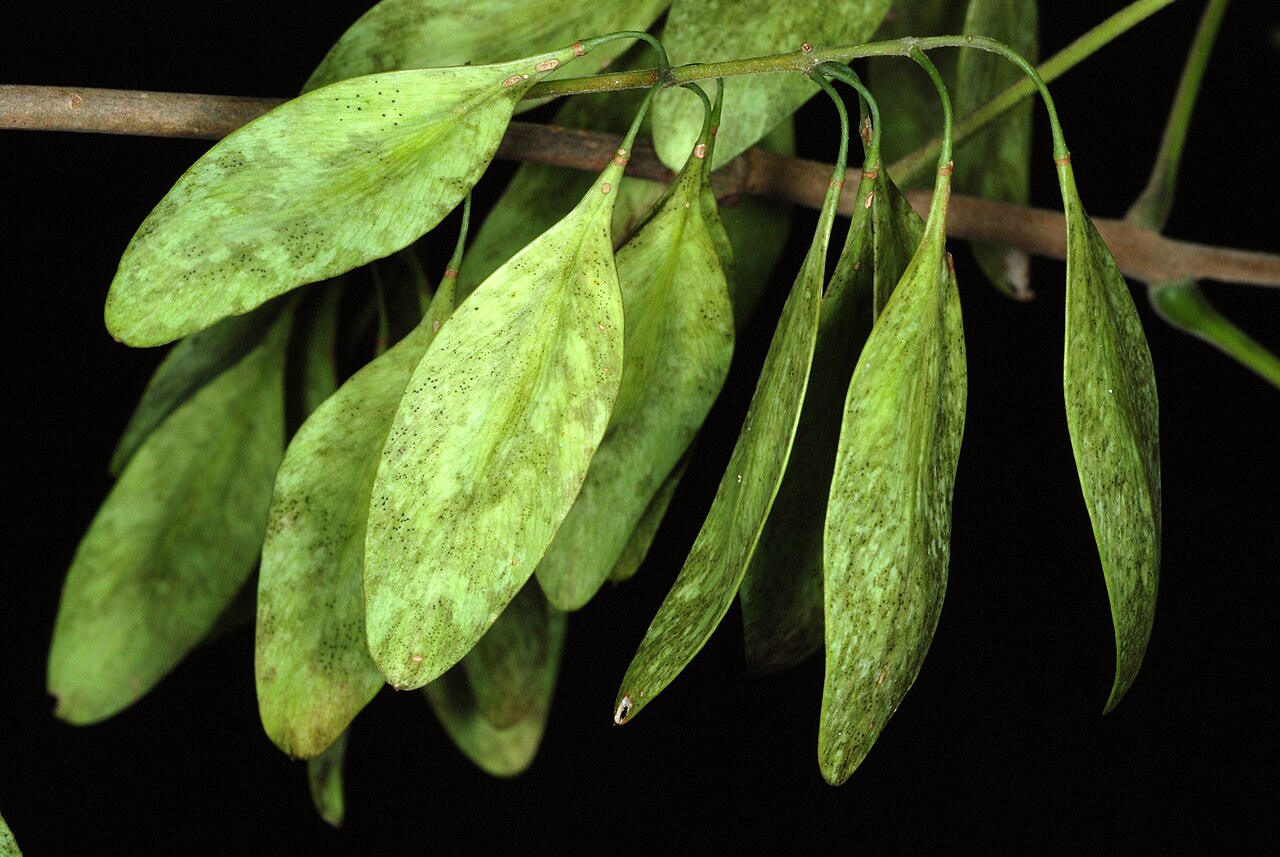
The fruit is a flattened, winged samara 1 to 2 inches long and notably broad for an ash — the wing often extends most of the way down the seed body, giving it a paddle- or canoe-paddle-shaped outline. This broad wing is Carolina Ash’s most reliable identification feature, distinguishing it from the narrower-winged samaras of Green Ash (Fraxinus pennsylvanica) and White Ash (Fraxinus americana). Samaras mature in late summer and are dispersed in part by water, floating on swamp surfaces.
Quick Facts
| Scientific Name | Fraxinus caroliniana |
| Family | Oleaceae (Olive) |
| Plant Type | Deciduous Tree / Large Shrub |
| Mature Height | 20–30 ft |
| Mature Spread | 15–25 ft |
| Growth Rate | Moderate |
| Sun Exposure | Full Sun to Part Shade |
| Water Needs | Wet; tolerates standing/seasonal flooding |
| Soil Type | Wet muck, silty alluvium, or swamp clay |
| Soil pH | 5.0–7.0 |
| Bloom Time | February – April |
| Flower Color | Purplish-green (inconspicuous) |
| Fall Color | Yellow to brownish-yellow |
| Fruit | Broad-winged samara, 1–2 in, water-dispersed |
| Deer Resistant | No (deer browse young foliage) |
| USDA Hardiness Zones | 7–10 |
Native Range
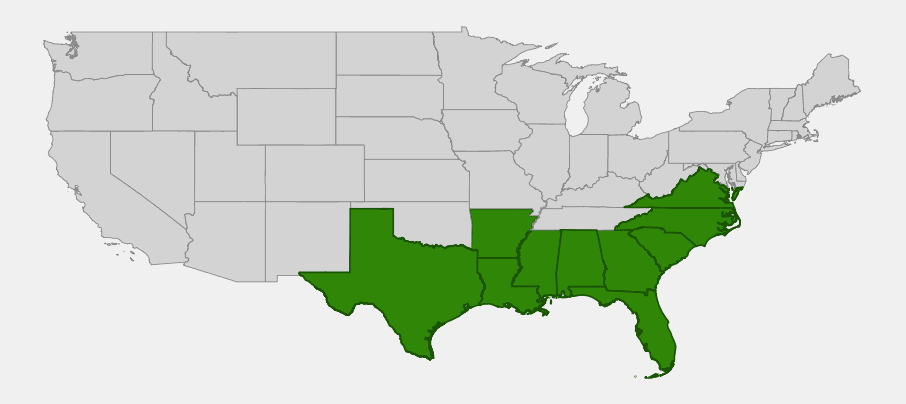
Carolina Ash is native to the Atlantic and Gulf coastal plains of the southeastern United States, from southeastern Virginia south through the Carolinas, Georgia, and Florida, and west along the Gulf Coast through Alabama, Mississippi, Louisiana, and into eastern Texas, with an inland extension into southern Arkansas. It reaches its greatest abundance and largest size in the cypress-tupelo swamps of peninsular Florida, where mature trees are most common.
Within this coastal-plain range, Carolina Ash is confined almost entirely to swamp forests, sloughs, pond margins, and the edges of blackwater rivers — sites that are seasonally or permanently flooded. It is rarely found on upland soils and should be treated as a strict wetland indicator species when siting a planting.
Scattered historical reports from further inland or north of Virginia are not supported by current county-level BONAP and Flora of North America records and are not included in the range described here.
📋 Regional plant lists featuring Carolina Ash: Georgia, Alabama & Mississippi · Arkansas, Louisiana, Eastern Oklahoma & Eastern Texas · North Carolina & South Carolina · Maryland, Virginia & West Virginia (native only in southeastern Virginia within that list’s area; no dedicated Florida list exists on this site, though Carolina Ash is also native there)
Growing & Care Guide
Carolina Ash is a specialist for wet sites, not a general-purpose shade tree. If you have a pond edge, rain garden basin, or seasonally flooded low spot in USDA zones 7–10, it is one of the few small native trees built for exactly that condition.
Light
Grows best in full sun to light shade. In the deep shade of a closed swamp canopy it persists but flowers and fruits less, favoring more open sloughs and pond margins for best form and seed production.
Soil & Water
Carolina Ash needs consistently wet soil — swamp muck, silty alluvium, or heavy wet clay — and tolerates standing water for extended periods during the growing season. It does not perform well on dry or even average garden soil; like Water Locust and the native cypresses, it belongs in the wettest part of a landscape, not a typical border planting.
Planting Tips
Plant container stock in late winter to early spring directly into saturated or seasonally flooded soil. Because it is naturally multi-trunked, allow room for a broad base; space trees 15 to 20 feet apart in a grove or swamp-margin planting. Mulch lightly, since the surrounding soil is typically already saturated.
Pruning & Maintenance
Minimal pruning is needed. Remove dead or storm-damaged wood in late winter. Watch for the same pests that affect other American ashes, including the invasive emerald ash borer, which has begun to threaten Fraxinus species across the eastern United States; report suspected infestations to local extension services.
Propagation
Propagated from seed, which benefits from a period of cold-moist stratification to break dormancy. Because the winged samaras float, seed collected from swamp-water surfaces in late summer and fall is a practical, low-cost collection method for restoration plantings.
Landscape Uses
Carolina Ash fits a narrow but important niche:
- Swamp forest and wetland restoration on seasonally or permanently flooded sites
- Pond and blackwater slough margins
- Rain garden and stormwater basin plantings in the Southeast
- Wildlife plantings alongside Bald Cypress and Swamp Tupelo
- Streambank stabilization on coastal-plain waterways
Wildlife & Ecological Value
Carolina Ash contributes modest but real habitat value within the swamp forests where it grows, filling a niche among the dominant cypresses and tupelos.
For Pollinators
Its early, wind-pollinated flowers are not a major nectar source, but the tree still provides structural habitat and larval host material for a range of insects that depend on native ash species.
For Birds
Wood Ducks and songbirds that nest and forage in flooded swamp forests use Carolina Ash as part of the habitat mosaic, and the winged samaras are eaten by some seed-eating birds.
For Mammals
Deer browse young foliage where accessible, and the tree’s dense, multi-trunked growth form provides cover in the lower canopy of swamp forests.
Ecosystem Role
As one of the relatively few trees able to establish and persist in standing water, Carolina Ash helps stabilize soil in the wettest, most erosion-prone parts of coastal-plain swamp forests. Its water-dispersed samaras allow it to recolonize disturbed sloughs and pond margins after flood events, much like the Water Locust and native cypresses it grows alongside.
Cultural & Historical Uses
Carolina Ash has little commercial timber history; its trunks are typically too small, crooked, and swamp-bound for efficient harvest, unlike the larger, straighter-growing Green Ash and White Ash. Where occasionally cut, the wood has seen only local, small-scale use.
The common name “Pop Ash” reflects an old regional practice of using the lightweight wood for net floats and similar buoyant purposes along the Gulf Coast, taking advantage of the same low-density wood that lets its seeds float. The species has drawn more attention from botanists and wetland ecologists studying swamp forest composition than from the timber or ornamental trades.
Today, interest in Carolina Ash centers on restoration ecology: as emerald ash borer continues to threaten American ash species broadly, maintaining diverse, wetland-adapted ash populations like Carolina Ash is increasingly valued for the resilience it may offer southeastern swamp forest ecosystems.
Frequently Asked Questions
How do you tell Carolina Ash from Green Ash?
The clearest field mark is the fruit: Carolina Ash has a notably broad, paddle-shaped winged samara up to 2 inches long, wider than the narrower samara of Green Ash (Fraxinus pennsylvanica). Carolina Ash is also smaller overall and strictly confined to standing-water swamp habitat, while Green Ash tolerates much drier sites.
Can Carolina Ash grow in a normal yard?
Only if the site stays consistently wet or seasonally flooded. In average garden soil it generally struggles. It is best used in rain gardens, pond margins, or wetland restoration plantings in zones 7–10.
Is Carolina Ash affected by emerald ash borer?
Like other native Fraxinus species, Carolina Ash is considered susceptible to this invasive pest, which has spread through much of the eastern United States. Monitor trees for D-shaped exit holes and canopy dieback, and report suspected infestations to local extension services.
Do the seed pods really float?
Yes — the broad-winged samaras are buoyant and disperse across swamp and slough surfaces on floodwaters, a form of water-based seed dispersal (hydrochory) shared with several other swamp-forest trees.
What’s the difference between Carolina Ash and Pumpkin Ash?
Both are swamp-dwelling ashes with overlapping range, but Pumpkin Ash (Fraxinus profunda) is a much larger tree, often 80 feet or more, with a more strongly swollen buttressed base and larger leaflets, while Carolina Ash stays small, usually under 30 feet.

Looking for a nursery that carries Carolina Ash?
Browse our native plant nursery directory: Alabama & Arkansas · Florida & Georgia · Louisiana & Mississippi · South Carolina, Texas & Virginia · North Carolina
For other swamp-forest associates, see our pages on Pond Cypress, Swamp Tupelo, and Buttonbush. For wet-site planting guidance generally, see our rain garden plant selection guide and our overview of the benefits of planting native trees.

