
Desert Larkspur (Delphinium parishii)
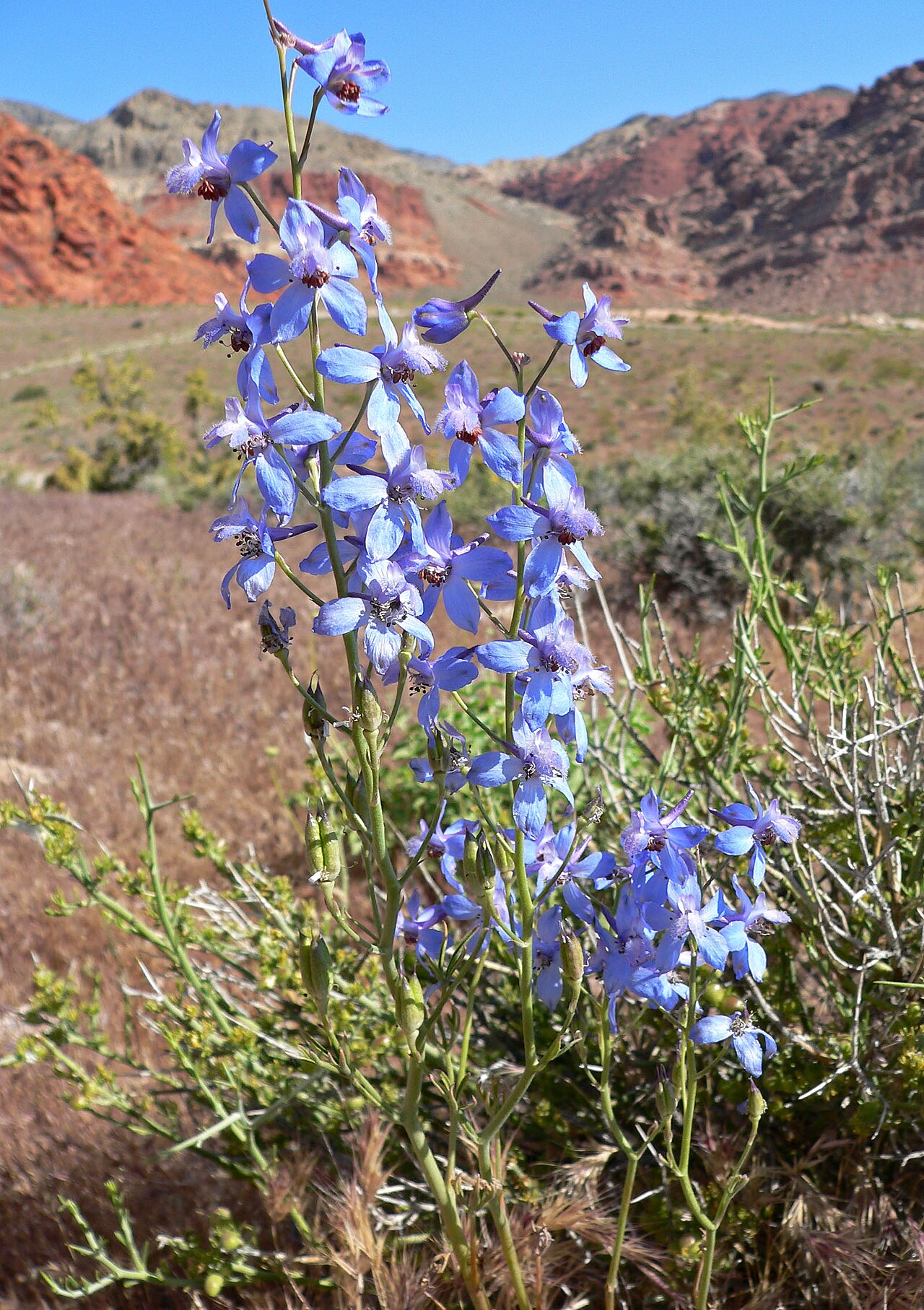
Delphinium parishii, known as Desert Larkspur or Parish’s larkspur, is a spring wildflower of the deserts of the American Southwest in the buttercup family (Ranunculaceae). From a woody root it sends up one to several slender stems 1 to 2 feet tall (sometimes taller), lined with delicate, sky-blue to blue-violet flowers, each with a long spur. Its few, finely divided leaves grow mostly at the base and often wither by the time it blooms.
Desert larkspur grows in the Mojave Desert and adjacent areas of southern California, southern Nevada, western Arizona and southwestern Utah, and south into Baja California. It is often called the most drought-adapted larkspur in North America, growing on dry, rocky knolls, desert mesas, washes and slopes in creosote bush scrub, Joshua tree woodland and pinyon-juniper woodland.
Safety note: like all larkspurs, desert larkspur is poisonous. All parts of the plant, especially the young growth and seeds, contain toxic alkaloids that can be fatal to people, pets and livestock if eaten. Admire it in the wild or grow it from seed in a dry garden away from grazing animals, and never eat any part of it.
Identification
Look for slender stems in spring desert scrub with spikes of sky-blue, long-spurred flowers, and only a few finely divided leaves near the base of the plant.
Growth Habit
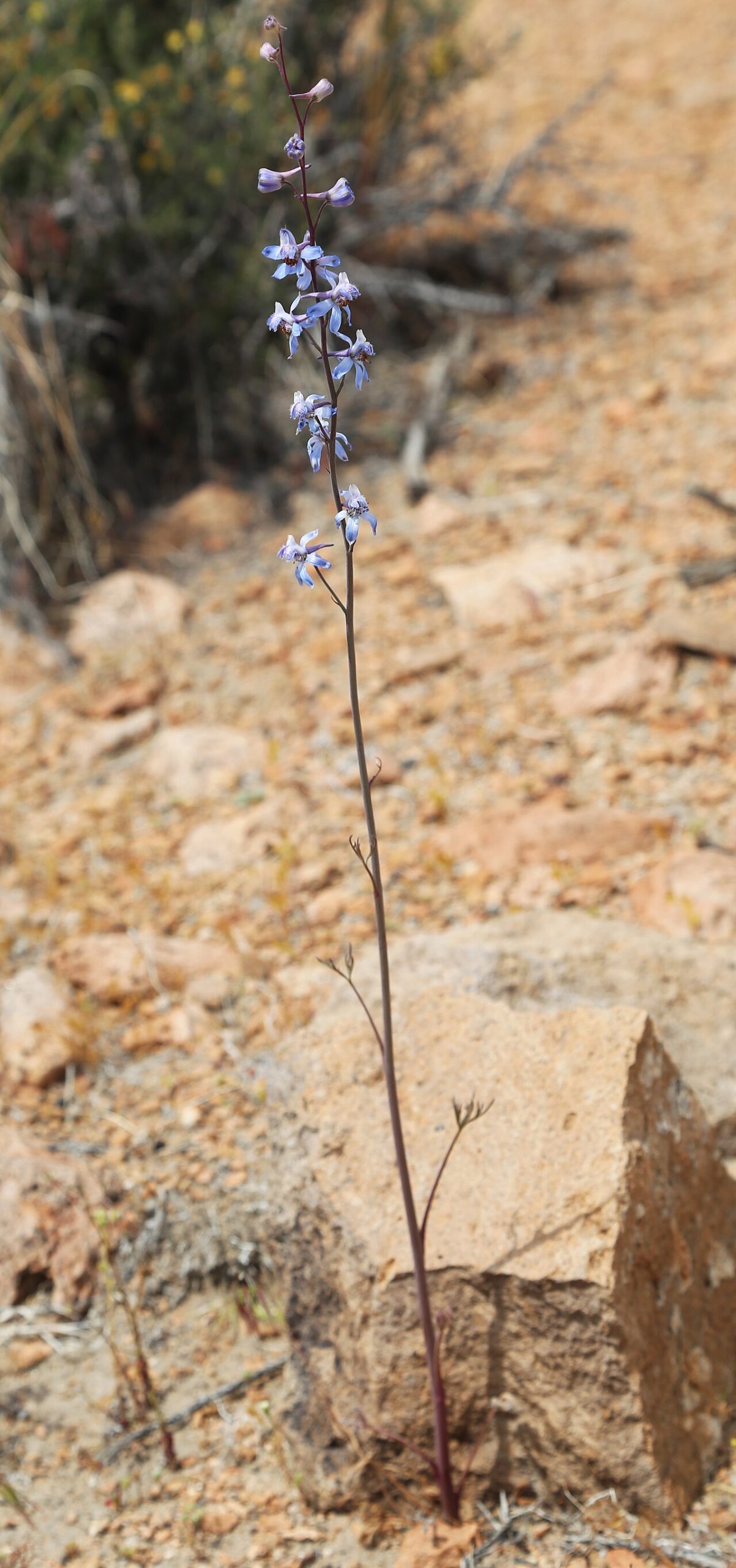
Desert larkspur is a perennial that grows from a woody, somewhat fleshy root. Each spring it produces one to several upright, slender stems, usually 1 to 2 feet tall and occasionally to about 3 feet. After flowering and setting seed, the plant dies back to its root and stays dormant through the summer heat.
Leaves
The leaves are mostly at the base of the stem, rounded in outline and deeply divided palmately into narrow lobes. They are few and small for the size of the plant, and often have dried up by flowering time, a reduction that helps it survive heat and drought.
Flowers
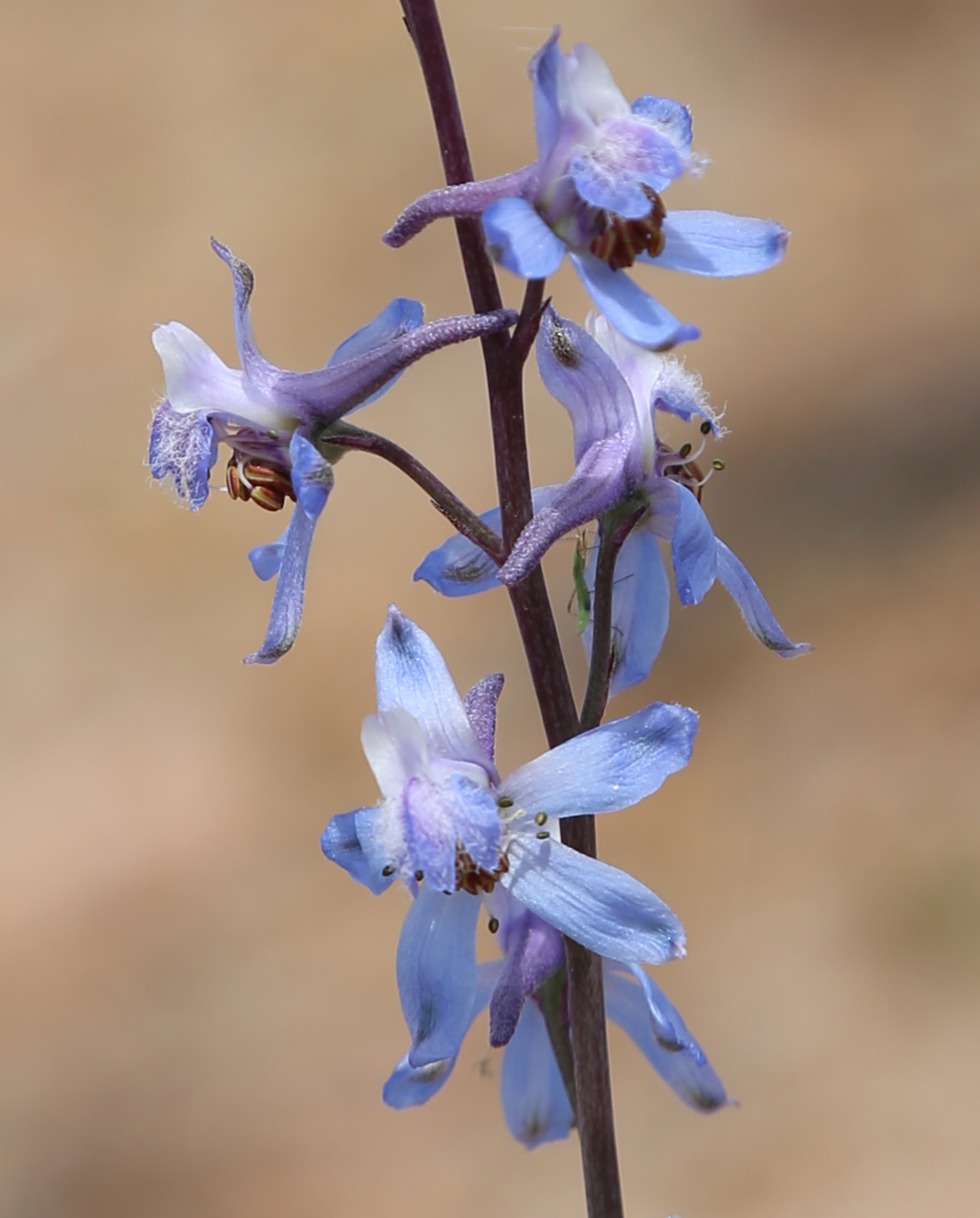
It blooms from about March to June. The flowers grow in a loose to dense raceme along the upper stem. Each flower is about 1/2 to 1 inch across and has five petal-like sepals, light blue to blue-violet and sometimes pinkish or whitish, with the upper sepal extended into a slender spur about 1/2 inch long. Four small petals at the center are often white or pale with darker markings.
Fruit
The fruit is a cluster of three erect, dry pods (follicles), each about 1/2 inch long, that split along one side to release small dark seeds.
Look-alikes
Upland larkspur (Delphinium nuttallianum) of higher, cooler sites has darker, deep blue-purple flowers and more leaves on the stem. Anderson’s larkspur (Delphinium andersonii) of the Great Basin has deeper blue flowers and fleshier leaves. Desert larkspur is usually recognized by its pale sky-blue flowers, its slender stems and its few, small leaves in low desert habitats. Lupines have pea-shaped flowers and leaves divided into separate leaflets, not lobed.
Quick Facts
| Scientific Name | Delphinium parishii |
| Family | Ranunculaceae (buttercup family) |
| Plant Type | Herbaceous perennial wildflower (summer-dormant) |
| Mature Height | 1–3 ft |
| Mature Spread | 6–12 in |
| Growth Rate | Moderate |
| Sun Exposure | Full sun |
| Water Needs | Very low; dry, rocky soil |
| Soil Type | Rocky, gravelly or sandy desert soil |
| Soil pH | About 6.5–8.5 |
| Bloom Time | March–June |
| Flower Color | Sky blue to blue-violet |
| Fall Color | Dormant by summer |
| Fruit | Three erect, dry pods (follicles) |
| Deer Resistant | Yes; toxic to browsing animals |
| USDA Hardiness Zones | 7–10 |
Native Range
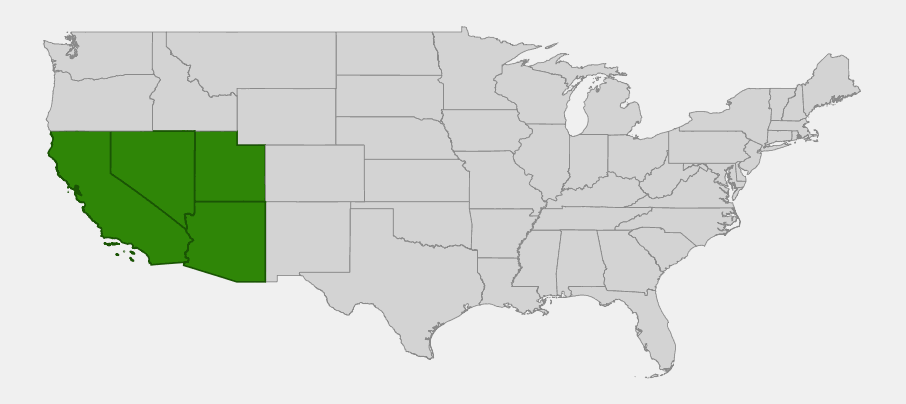
Desert larkspur is native to the southwestern United States and northern Baja California, Mexico. USDA PLANTS lists it from four states: California, Nevada, Arizona and Utah.
It is most common in the Mojave Desert of southern California and southern Nevada, including the mountains and basins around Las Vegas, the Joshua Tree region and the desert slopes of the Transverse and Peninsular ranges. It extends east into western Arizona, northeast into southwestern Utah, and north into the western edge of the Great Basin. Several subspecies are recognized, including subspecies parishii, the most widespread, and subspecies subglobosum, pallidum and purpureum, which differ in flower color and shape.
Its habitat is dry desert and desert-edge country: rocky knolls, mesas, washes, alluvial fans and slopes in creosote bush scrub, blackbrush, Joshua tree woodland and pinyon-juniper woodland, from about 1,000 to 7,500 feet. It often grows in the shelter of shrubs.
📋 Regional plant lists featuring Desert Larkspur: Arizona & New Mexico · California & Nevada · Utah & Western Colorado
Growing & Care Guide
Desert larkspur is a lovely spring wildflower for dry desert gardens, but it is not often sold. Grow it from seed, and never dig plants from the wild. Safety note: every part of the plant is poisonous. Do not plant it where children, pets or livestock might eat it, and wash your hands after handling it.
Light
Full sun. In the hottest low deserts it can take a little afternoon shade from nearby shrubs.
Soil & Water
It needs rocky, gravelly or sandy soil with excellent drainage. It grows with winter and spring rain and then goes dormant; keep it dry in summer, since summer water rots the dormant root. In very dry winters, a deep watering once or twice in late winter can help it bloom.
Planting Tips
Sow seed outdoors in fall where it is to grow, on a slope or in a rock garden among desert shrubs, which give it some shelter. Mark the spot so the dormant plant is not disturbed in summer. Protect young shoots from snails, slugs and rabbits in gardens.
Pruning & Maintenance
No pruning is needed. Let the plant set seed, then cut or pull the dry stems once they have dropped their seed. Wear gloves when handling it.
Propagation
Grow it from seed. Sow fresh seed in fall so it receives a cool, moist winter before germinating; stored seed may need several weeks of cold, moist stratification. Seedlings often take two or more years to flower. It is not easily divided.
Landscape Uses
- Desert wildflower gardens: sky-blue spires in spring
- Rock gardens and dry slopes: thrives in lean, rocky soil
- Pollinator plantings: spring nectar for bumble bees and hummingbirds
- Habitat restoration: for desert scrub and woodland edges
- Wildflower viewing: a highlight of spring in the Mojave Desert
Wildlife & Ecological Value
Desert larkspur is a valuable spring nectar source in the Mojave Desert.
For Pollinators
Its long-spurred flowers are pollinated mainly by bumble bees and other long-tongued bees, which reach the nectar at the back of the spur. Hummingbirds also visit larkspur flowers, and some short-tongued bees steal nectar by biting holes in the spur.
For Birds
Hummingbirds sip its nectar. Seed-eating birds may take the seeds, which are toxic to many other animals.
For Mammals
Its toxic alkaloids protect it from most grazing animals. Larkspurs are a well-known cause of livestock poisoning in the West, especially in cattle.
Ecosystem Role
As a spring-blooming perennial, it adds nectar to the desert ecosystem during the short spring growing season, then retreats underground to survive summer heat.
Cultural & Historical Uses
The species is named for Samuel Bonsall Parish, a botanist who, with his brother William, collected extensively in the San Bernardino area of southern California in the late 19th century. The genus name Delphinium comes from the Greek word for “dolphin,” for the shape of the flower buds.
All larkspurs contain diterpenoid alkaloids, such as methyllycaconitine, that block nerve signals to muscles. They are among the most important poisonous plants of western rangelands, especially for cattle, and they are also dangerous to people. Desert larkspur is no exception, and no part of it should be eaten.
Desert larkspur is one of the classic spring wildflowers of the Mojave Desert, celebrated in places such as Red Rock Canyon, Joshua Tree National Park and the deserts around Las Vegas.
Frequently Asked Questions
Is desert larkspur poisonous?
Yes. All parts of the plant contain toxic alkaloids that can be fatal to people, pets and livestock if eaten. Never eat any part of it.
When does desert larkspur bloom?
From about March to June, depending on elevation and rainfall.
Why does desert larkspur have so few leaves?
Its leaves are few, small and often dry up by flowering time. This helps it survive heat and drought.
Can I grow desert larkspur?
Yes, from seed in a dry, sunny, rocky garden in the desert Southwest. Keep it dry in summer and do not plant it where animals graze.
Where can I see desert larkspur in the wild?
In spring in the Mojave Desert, including Red Rock Canyon near Las Vegas, Joshua Tree National Park and other desert parks of California, Nevada, Arizona and Utah.

Looking for a nursery that carries Desert Larkspur?
Browse our native plant nursery directory: Arizona · California · Nevada · Utah

