
Elm-Leaved Goldenrod (Solidago ulmifolia)
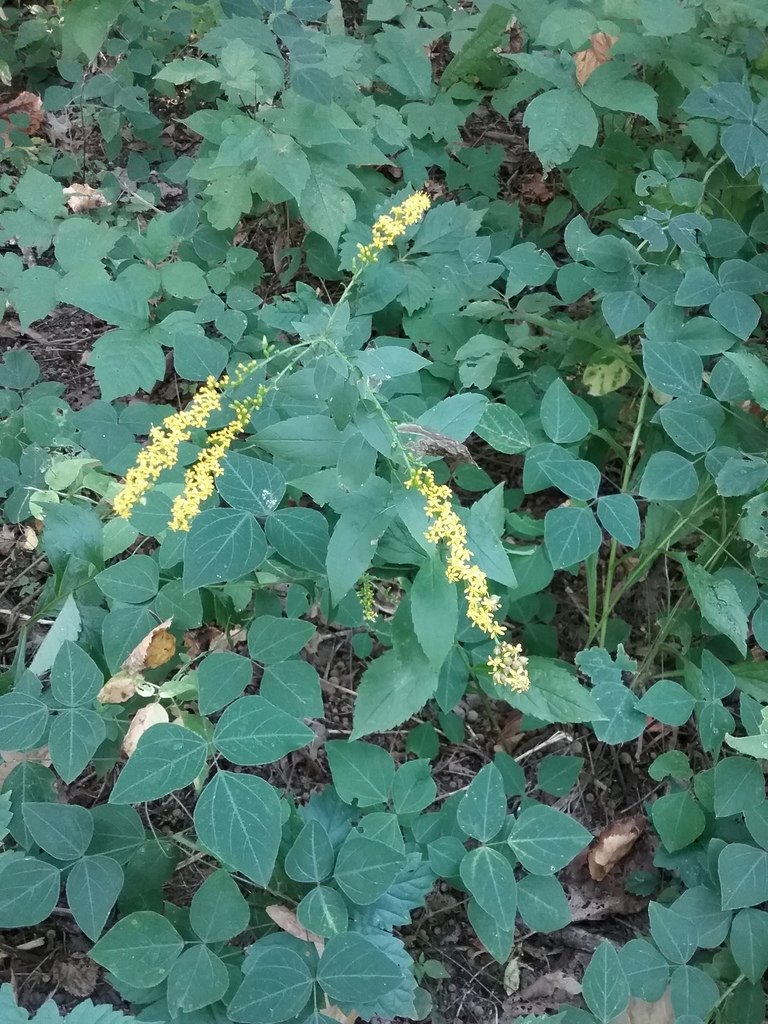
Solidago ulmifolia, known as Elm-Leaved Goldenrod or elmleaf goldenrod, is a graceful woodland goldenrod of the eastern and central United States. Unlike the tall, aggressive goldenrods of old fields, it is a modest, clump-forming plant of open woods, wooded slopes and woodland edges, with arching stems, broad, toothed leaves like those of an elm, and loose, spreading sprays of small yellow flowers in late summer and fall.
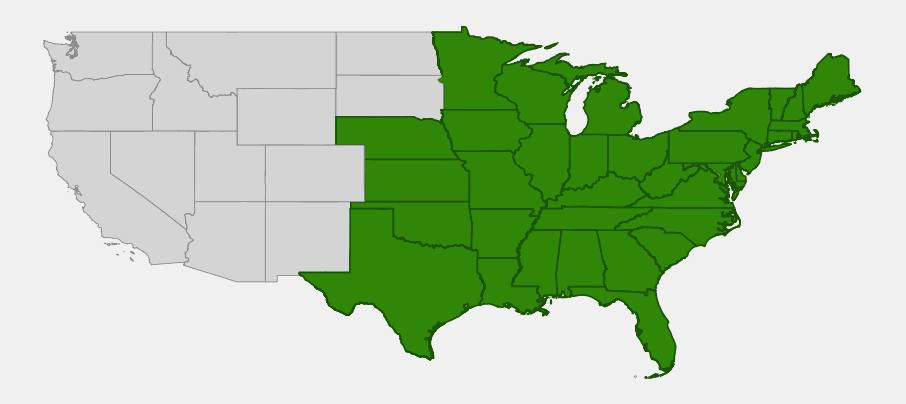
It belongs to the aster family (Asteraceae). Its range spans much of the eastern half of the country, from Maine and southern Ontario and Nova Scotia south to Florida and west to Minnesota, Nebraska, Kansas, Oklahoma and Texas. Botanists recognize several varieties, including a small-leaved form on the Edwards Plateau of Texas and a form in the Ozarks.
Elm-leaved goldenrod is one of the best goldenrods for dry to medium shade, offering late-season color and food for pollinators under trees where few other fall wildflowers bloom. It is a well-behaved garden plant that does not spread aggressively. This guide covers how to identify it, where it grows, how to grow it, and its value for wildlife.
Identification
Elm-leaved goldenrod is best identified in late summer and fall by its combination of broad, coarsely toothed leaves and open, arching flower branches with the heads lined up along one side, in a woodland setting.
Growth Habit
It is an herbaceous perennial with one to several slender, smooth stems from a short, woody base, usually 1½ to 4 feet tall. The stems often lean or arch rather than standing stiffly upright. It forms clumps rather than spreading aggressively by rhizomes.
Leaves
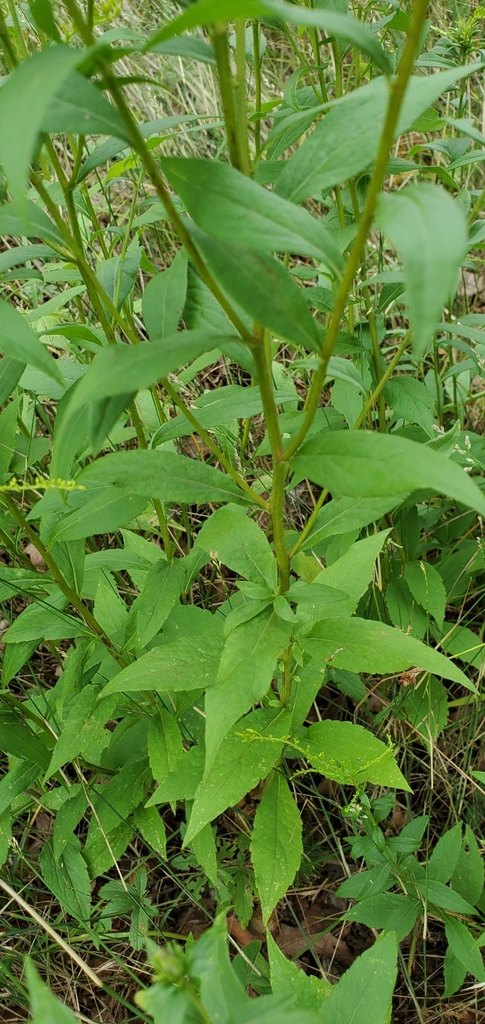
The leaves are alternate, broadly elliptic to ovate, about 2 to 5 inches long, with coarse, sharp teeth and prominent veins, much like elm leaves. They are smooth or slightly rough above and usually hairy on the veins beneath. The lower leaves are largest and often wither by flowering time; upper leaves become smaller toward the flower cluster.
Flowers
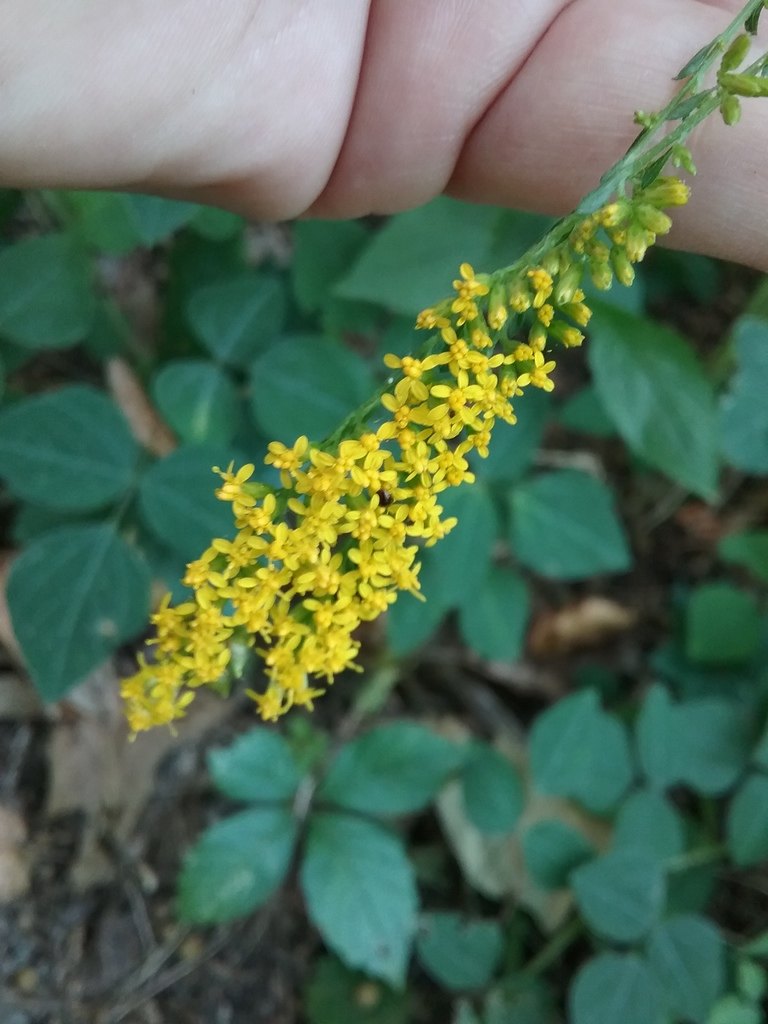
The flowers are borne at the top of the stem in a loose, open cluster of a few to many slender, spreading or arching branches. The small yellow heads, each about ¼ inch across with a few short rays, are lined up along the upper side of each branch. Bloom runs from about August to October.
Fruit & Look-alikes
The fruits are small, hairy achenes with a tuft of white bristles that carry them on the wind. Zigzag goldenrod (S. flexicaulis) has broad leaves too, but its flowers are in small clusters in the leaf axils along a zigzag stem. Wreath goldenrod (S. caesia) has narrow, smooth leaves and a bluish, waxy stem. Rough-leaved goldenrod (S. rugosa) has a similar arching flower cluster but very hairy stems and rough, wrinkled leaves and usually grows in wetter, sunnier sites.
Quick Facts
| Scientific Name | Solidago ulmifolia Muhl. ex Willd. |
| Family | Asteraceae (aster family) |
| Plant Type | Clump-forming herbaceous perennial wildflower |
| Mature Height | 1½–4 ft |
| Mature Spread | 1–2 ft |
| Growth Rate | Moderate |
| Sun Exposure | Part shade to full sun |
| Water Needs | Low to medium |
| Soil Type | Dry to medium, well-drained loam, rocky or clay soils |
| Soil pH | About 5.5–7.5; tolerates limestone soils |
| Bloom Time | August–October |
| Flower Color | Yellow |
| Fall Color | Stems and leaves may turn bronze or purplish |
| Fruit | Small achene with white bristles |
| Deer Resistant | Moderately; occasionally browsed |
| USDA Hardiness Zones | 3–9 |
Native Range
Elm-leaved goldenrod is native to the eastern and central United States and southeastern Canada. USDA PLANTS lists it from 35 states: Alabama, Arkansas, Connecticut, Delaware, Florida, Georgia, Iowa, Illinois, Indiana, Kansas, Kentucky, Louisiana, Massachusetts, Maryland, Maine, Michigan, Minnesota, Missouri, Mississippi, North Carolina, Nebraska, New Hampshire, New Jersey, New York, Ohio, Oklahoma, Pennsylvania, Rhode Island, South Carolina, Tennessee, Texas, Virginia, Vermont, Wisconsin and West Virginia, as well as Ontario and Nova Scotia.
It is most common in the Ozarks, the Interior Highlands and the hardwood forests of the Midwest and Southeast. Toward the edges of its range, in northern New England, the northern Lake States, peninsular Florida and the western Plains states, it is more local and uncommon. In Texas and Oklahoma it is represented partly by distinct varieties, including a small-leaved form of the Edwards Plateau.
It grows in dry to mesic deciduous and mixed woods, on rocky wooded slopes and ravines, in open oak and hickory woodlands, along woodland edges and in thickets, often on calcareous or rocky soils. It tolerates more shade than most goldenrods.
📋 Regional plant lists featuring Elm-Leaved Goldenrod: North & South Florida · Alabama, Georgia & Mississippi · North & South Carolina · Maryland, Virginia & West Virginia · Kentucky & Tennessee · Arkansas, Louisiana, Eastern Oklahoma & Eastern Texas · Illinois, Iowa & Missouri · Ohio & Indiana · Nebraska, Kansas & Eastern Colorado · Michigan, Wisconsin & Eastern Minnesota · New York, Pennsylvania & Northern New Jersey · Delaware, Southern New Jersey & Long Island · Connecticut, Massachusetts & Rhode Island · New Hampshire, Maine & Vermont
Growing & Care Guide
Elm-leaved goldenrod is an easy, adaptable native for woodland gardens, shady borders and the edges of wooded lots. It is offered by native plant nurseries, especially in the Midwest. Because it forms clumps rather than spreading by rhizomes, it stays where you plant it.
Light
It grows best in part shade or dappled light under deciduous trees, and it tolerates full sun in soil that does not dry out completely. It flowers less in deep shade.
Soil & Water
It adapts to most well-drained soils, from rocky and clay to loam, including limestone-based soils. Once established it tolerates dry shade and summer drought well. Avoid waterlogged soil.
Planting Tips
Plant in spring or fall, about 18 inches apart. It looks best in loose groups at the edge of woods or under high trees, combined with woodland asters, wreath goldenrod, ferns and sedges. Its arching stems drape nicely over paths and rocks.
Pruning & Maintenance
Little care is needed. Leave the stems standing through winter for seed-eating birds and overwintering insects, then cut them back in late winter or early spring. In rich soils, cutting stems back by a third in early summer can keep plants more compact.
Propagation
Sow seed outdoors in fall or cold-stratify it for about 60 days before spring sowing; it germinates readily with light. Clumps can also be divided in early spring.
Landscape Uses
- Woodland gardens: late-season yellow flowers for dry to medium shade
- Shady borders: a clump-forming goldenrod that stays in place
- Pollinator gardens: fall nectar and pollen when few woodland plants bloom
- Woodland edge restoration: for oak-hickory woods, slopes and wooded edges within its range
- Naturalistic plantings: arching sprays pair well with asters, ferns and sedges
Wildlife & Ecological Value
Like other goldenrods, elm-leaved goldenrod is an important late-season food source for insects, and it supports a broad web of wildlife in woodland habitats.
For Pollinators
Its flowers are visited by many native bees, including bumble bees and small sweat bees, as well as wasps, flower flies, beetles and late-season butterflies. Goldenrods as a group are among the most important native host plants for moth and butterfly caterpillars in eastern North America, and they support specialist bees that collect goldenrod pollen.
For Birds
Goldfinches, juncos and sparrows eat the seeds in fall and winter, and insect-eating birds forage on the many insects that live on goldenrods. Leaving the stems standing provides winter food.
For Mammals
Deer and rabbits sometimes browse the foliage. Small mammals eat the seeds that fall to the ground.
Ecosystem Role
As one of the few goldenrods adapted to shade, it extends the goldenrod season of nectar and pollen into woodlands. Its stems host gall-forming insects and provide overwintering sites for native bees and other insects.
Cultural & Historical Uses
The species was named by the German botanist Carl Ludwig Willdenow, based on the work of the Pennsylvania botanist and Lutheran minister Gotthilf Henry Ernest Muhlenberg. The name ulmifolia means “elm-leaved,” and Solidago comes from the Latin for “to make whole,” a reference to the healing reputation of goldenrods in European herbal medicine.
Goldenrods are often blamed for fall hay fever, but their pollen is heavy and sticky and carried by insects, not the wind. The real cause is usually ragweed, which blooms at the same time. Elm-leaved goldenrod is a good example of how varied and garden-worthy native goldenrods can be.
Woodland gardeners and restoration ecologists value elm-leaved goldenrod as a shade-tolerant, non-aggressive goldenrod, and it is increasingly offered by native nurseries for shade gardens.
Frequently Asked Questions
Does elm-leaved goldenrod grow in shade?
Yes. It is one of the most shade-tolerant goldenrods and grows well in part shade under deciduous trees. It flowers less in deep shade.
Is elm-leaved goldenrod invasive or aggressive?
No. It forms clumps rather than spreading by long rhizomes, so it stays where it is planted, unlike tall field goldenrods.
Does elm-leaved goldenrod cause hay fever?
No. Its pollen is heavy and carried by insects. Fall hay fever is mostly caused by wind-pollinated ragweed, which blooms at the same time.
When does elm-leaved goldenrod bloom?
From about August to October, with arching sprays of small yellow flower heads.
How can I tell it from other woodland goldenrods?
Look for broad, coarsely toothed, elm-like leaves and an open cluster of arching branches at the top of the stem with the flower heads lined up on one side. Zigzag goldenrod has flowers along the stem in the leaf axils, and wreath goldenrod has narrow leaves.

Looking for a nursery that carries Elm-Leaved Goldenrod?
Browse our native plant nursery directory: Alabama & Arkansas · Connecticut, Delaware, Florida & Georgia · Illinois, Indiana, Iowa & Kansas · Kentucky, Louisiana, Maine, Maryland, Massachusetts, Michigan, Minnesota, Mississippi & Missouri · Nebraska, New Hampshire, New Jersey, New York, North Carolina, Ohio & Oklahoma · Pennsylvania, Rhode Island, South Carolina, Tennessee, Texas, Vermont & Virginia · West Virginia & Wisconsin

