
False Dayflower (Tinantia anomala)
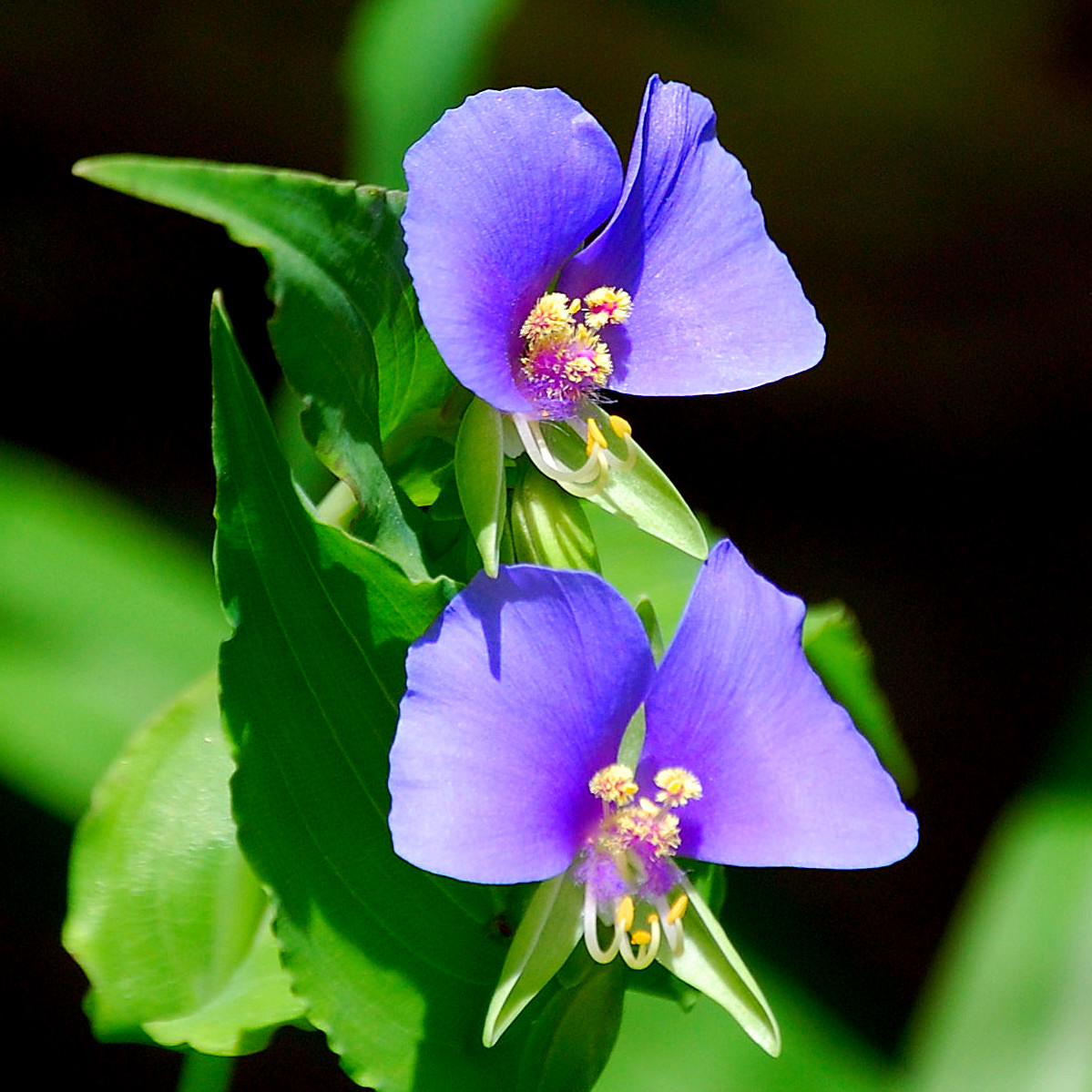
Tinantia anomala, known as False Dayflower (USDA: widowstears), is a cool-season annual in the spiderwort family (Commelinaceae) that is native almost entirely to central Texas. It sprouts in autumn, spends the winter as a tuft of fleshy, grass-like leaves, then shoots up in early spring to 1 to 2 feet tall and opens a long series of soft lavender-blue flowers from March into May. By early summer the plants set seed, turn yellow and disappear until the next fall.
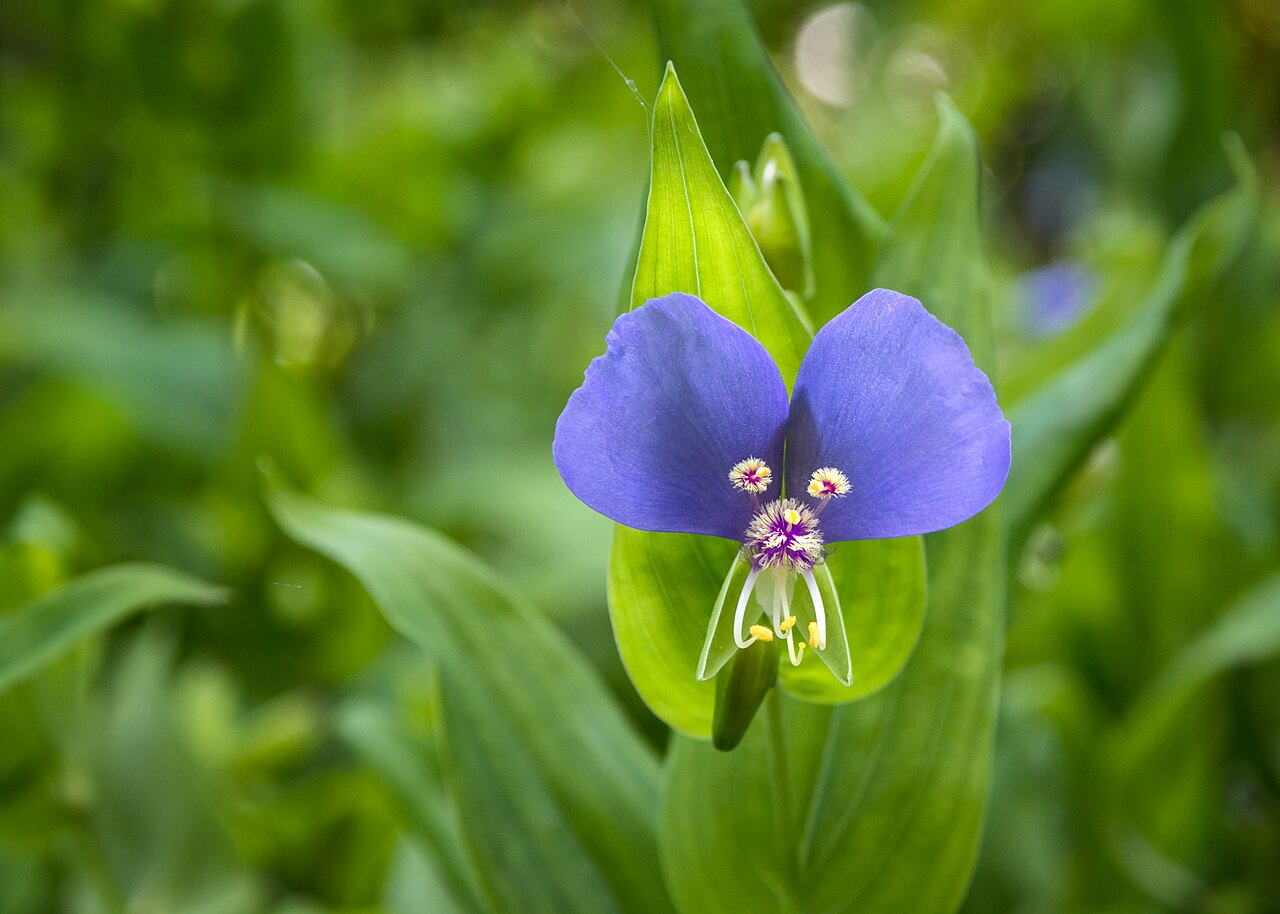
The flowers explain both the common name and the species name anomala, meaning “unusual.” Like the true dayflowers (Commelina), each bloom has two large, rounded upper petals and a much smaller lower one, and each flower lasts only a day. But the upper stamens carry dense beards of purple and yellow hairs, and the plant is larger and more upright than most dayflowers. Botanists have placed it at different times in Tradescantia, Commelina and its own genus, Commelinantia, before settling on Tinantia.
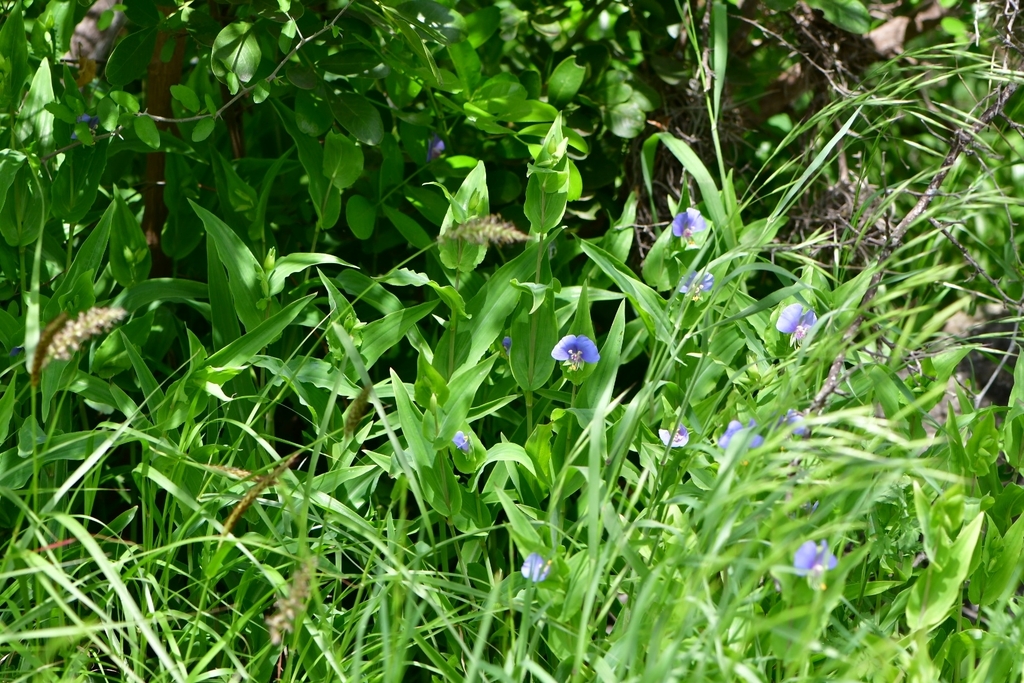
False dayflower is one of the best native annuals for shade in Texas. It grows naturally among limestone rocks in canyons, ravines and wooded slopes of the Edwards Plateau and Hill Country, and it reseeds freely in shady beds with loose, alkaline, humus-rich soil. Bees visit the flowers, and turkeys and squirrels eat the seeds.
Identification
False dayflower is easy to recognize in spring by its upright habit, clasping, grass-like leaves and lavender-blue flowers with two large upper petals and one small lower petal. In winter, look for its tufts of fleshy, blue-green leaves on shady limestone slopes.
Growth Habit
A winter annual, sometimes behaving as a short-lived plant in cool shady spots. Seedlings appear in fall after the first good rains and form loose tufts of leaves through the winter. In early spring the stems elongate quickly, becoming erect or leaning and 1 to 2 feet tall, occasionally taller in rich, moist shade. Stems are smooth, somewhat succulent and jointed at the leaf nodes, like those of spiderworts.
Leaves
The leaves are alternate, narrowly lance-shaped to linear and 3 to 8 inches long, with parallel veins and a sheathing base that wraps around the stem. They are smooth, slightly fleshy and blue-green. The upper leaves are shorter and broader. Near each flower cluster there is a leaf-like, folded bract that partly encloses the buds.
Flowers
The flowers are about 1 inch across and open in the morning from a cluster of buds at the stem tips. The two upper petals are broad, rounded and lavender-blue to pale violet, sometimes nearly white. The lower petal is small, narrow and whitish. There are six stamens of two kinds: the upper ones have showy beards of purple hairs tipped with yellow, while the lower ones are longer and curve forward. Each flower lasts a single day, but a plant produces new flowers for several weeks, from March to May.
Fruit & Seeds
After flowering, the stalk bends down and the flower develops into a small, three-celled capsule containing a few rough, grayish seeds. The capsules split when ripe, scattering the seeds close to the parent plant. Seeds lie dormant through the hot summer and germinate in fall, which is why false dayflower comes back in the same spots year after year.
Look-alikes
True dayflowers such as Whitemouth Dayflower (Commelina erecta) are perennial, bloom in summer, and hold their flowers in a folded, boat-shaped spathe; their upper stamens lack the purple beards. Spiderworts such as Common Spiderwort (Tradescantia ohiensis) have three equal petals. The name widow’s tears (USDA: widowstears) is also used for some dayflowers, so check the scientific name when buying seed.
Safety
False dayflower is not known to be toxic to people or pets. Like other spiderwort-family plants, its sap may mildly irritate sensitive skin, so wear gloves if you are prone to plant-related rashes.
Quick Facts
| Scientific Name | Tinantia anomala |
| Family | Commelinaceae (spiderwort family) |
| Plant Type | Cool-season (winter) annual forb; reseeds |
| Mature Height | 1–2 ft |
| Mature Spread | 6–12 in |
| Growth Rate | Fast in spring |
| Sun Exposure | Part shade to dappled shade |
| Water Needs | Low to medium; moist in winter and spring |
| Soil Type | Loose, rocky, humus-rich calcareous soil |
| Soil pH | Alkaline (about 7.2–8.5) |
| Bloom Time | March–May |
| Flower Color | Lavender-blue to pale violet, sometimes white |
| Fall Color | None; fresh leaves emerge in fall |
| Fruit | Small capsule with a few rough gray seeds |
| Deer Resistant | No; deer browse it |
| USDA Hardiness Zones | 7–9 (as a winter annual) |
Native Range
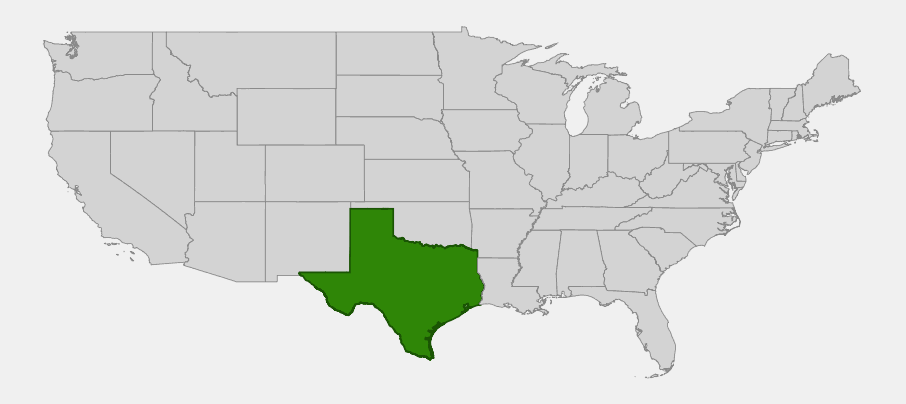
False dayflower has one of the smallest ranges of any plant in its family in the United States. USDA PLANTS lists it as native only in Texas, and the Lady Bird Johnson Wildflower Center gives its native distribution as central Texas and Durango in northern Mexico. The Mexican record rests on a single old specimen, so for practical purposes it is a Texas plant.
Within Texas it is centered on the Edwards Plateau and the Balcones Escarpment, including the Hill Country around Austin and San Antonio, and it extends into nearby parts of central Texas. It is often abundant in shady canyons and along creeks in the Austin area, such as the Barton Creek Greenbelt, and in wooded parts of Bexar and Travis counties. It is not a plant of the East Texas pineywoods.
Its habitat is limestone gravel and rocky ground in partial shade: ravines and canyon bottoms, crevices among boulders, wooded slopes under oaks and junipers, and floodplains. It favors spots that stay moist through the cool season and dry out in summer, when the plants are already gone.
📋 Regional plant lists featuring False Dayflower: South & West Texas
Growing & Care Guide
False dayflower is an easy, self-sowing annual for shady Texas gardens with alkaline soil. Treat it as a seasonal plant: it fills a shady bed with green in winter and blue flowers in spring, then vanishes in summer, so pair it with perennials that take over later in the year.
Light
Give it part shade or dappled shade, such as the edge of a woodland or under high tree canopy. The Lady Bird Johnson Wildflower Center notes that it becomes stressed in continuous full sun, burning easily and turning yellow. Morning sun with afternoon shade works well.
Soil & Water
It prefers loose, well-drained, calcareous soil rich in humus, the kind that forms among limestone rocks under oaks and junipers. It tolerates clay loam if drainage is decent. Keep the soil moderately moist in fall, winter and spring, when the plant is growing. In summer it is dormant as seed and needs no watering.
Planting Tips
Sow seed in fall directly where you want the plants, on moist, loosened soil, and press it lightly into the surface. Seedlings appear with the cool autumn rains. Young plants also transplant very easily if you need to move a few. Plant it in drifts at the front of shade beds, along shady paths, or among rocks.
Pruning & Maintenance
No pruning is needed. When the plants begin to yellow and flop in early summer, you can cut them back for neatness, but leave a few stems until the capsules ripen if you want them to reseed. Avoid heavy mulch where you want seedlings to come up.
Propagation
Grow it from seed. Collect ripe capsules in late spring, store the seeds dry over summer and sow them in fall. Plants self-sow freely, so once established, a patch usually maintains itself. Share extra seedlings in fall when they are small.
Landscape Uses
- Shade gardens: spring color under trees where few annuals bloom
- Woodland edges: naturalized drifts along shady paths and creek banks
- Rock gardens: among limestone rocks and boulders in partial shade
- Pollinator gardens: an early-spring nectar and pollen source for bees
- Winter greenery: fresh, grass-like foliage through the cool season
Wildlife & Ecological Value
False dayflower is a modest but useful early-season plant for wildlife in central Texas, offering pollen in spring and seeds in early summer.
For Pollinators
The flowers attract bees, including bumble bees, which collect pollen from the bearded stamens. Like other spiderwort-family flowers, the blooms offer little or no nectar; the hairs and stamens are a pollen display.
For Birds
Wild turkeys eat the seeds, according to the Lady Bird Johnson Wildflower Center, and other ground-feeding birds likely pick up seeds under the plants.
For Mammals
Squirrels eat the seeds. Deer browse the tender foliage, so protect plantings where deer are numerous.
Ecosystem Role
As a winter annual, it occupies shady ground during the cool season, holding soil on rocky slopes and providing cover before summer-active perennials take over. Its short life cycle lets it avoid the summer drought of central Texas entirely.
Cultural & Historical Uses
The species was first described in the 1850s by the American botanist John Torrey as Tradescantia anomala, from specimens collected in Texas. The name anomala refers to its unusual flowers, which do not match either spiderworts or dayflowers neatly.
Later botanists moved it into Commelina, and in 1922 the Texas botanist Benjamin Carroll Tharp placed it in a genus of its own, Commelinantia, a name still found in older Texas floras and wildflower guides. Today it is usually included in Tinantia, a mainly Mexican genus named after the Luxembourg forester and botanist François Auguste Tinant.
False dayflower is a familiar spring wildflower on Austin and San Antonio hiking trails and a favorite of native-plant gardeners in the Hill Country, where it is valued as one of the few showy annuals that thrives in shade.
Frequently Asked Questions
Is false dayflower a perennial?
No. It is a winter annual. It germinates in fall, grows through winter, blooms in spring and dies in early summer, returning from seed the next fall.
Can I grow false dayflower in full sun?
It does best in part shade. In continuous full sun it burns easily and turns yellow early. Morning sun with afternoon shade is ideal.
Will it spread in my garden?
It reseeds freely in suitable spots, forming loose colonies, but it is easy to pull or transplant where it is not wanted.
Is it the same as widow’s tears?
USDA calls it widowstears, but that name is also used for some true dayflowers (Commelina). The scientific name Tinantia anomala avoids confusion.
Does it grow outside Texas?
In the wild it is essentially a Texas endemic, with one old record from Durango, Mexico. Gardeners elsewhere in zones 7–9 with alkaline soil and mild winters may be able to grow it as a winter annual.

Looking for a nursery that carries False Dayflower?
Browse our native plant nursery directory: Texas