
False Rue Anemone (Enemion biternatum)
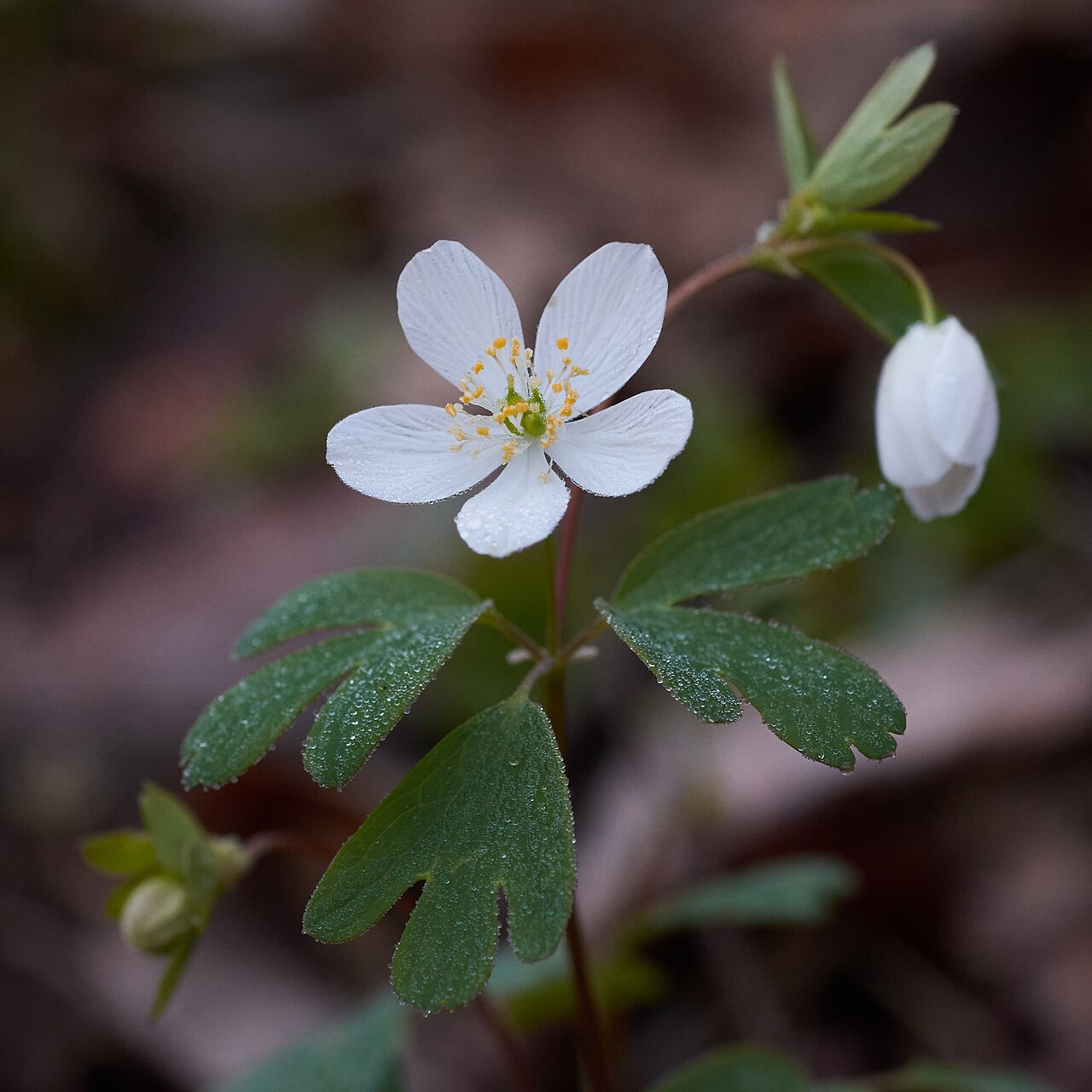
Enemion biternatum, known as False Rue Anemone (USDA PLANTS: eastern false rue anemone), is a delicate spring wildflower of rich eastern and Midwestern woodlands. In March and April it forms low, spreading patches of blue-green, finely divided leaves topped with small white flowers about three-quarters of an inch across. Each flower has five rounded, petal-like sepals and a central tuft of yellow-tipped stamens. It belongs to the buttercup family (Ranunculaceae) and was long known as Isopyrum biternatum, the name used in many older wildflower books.
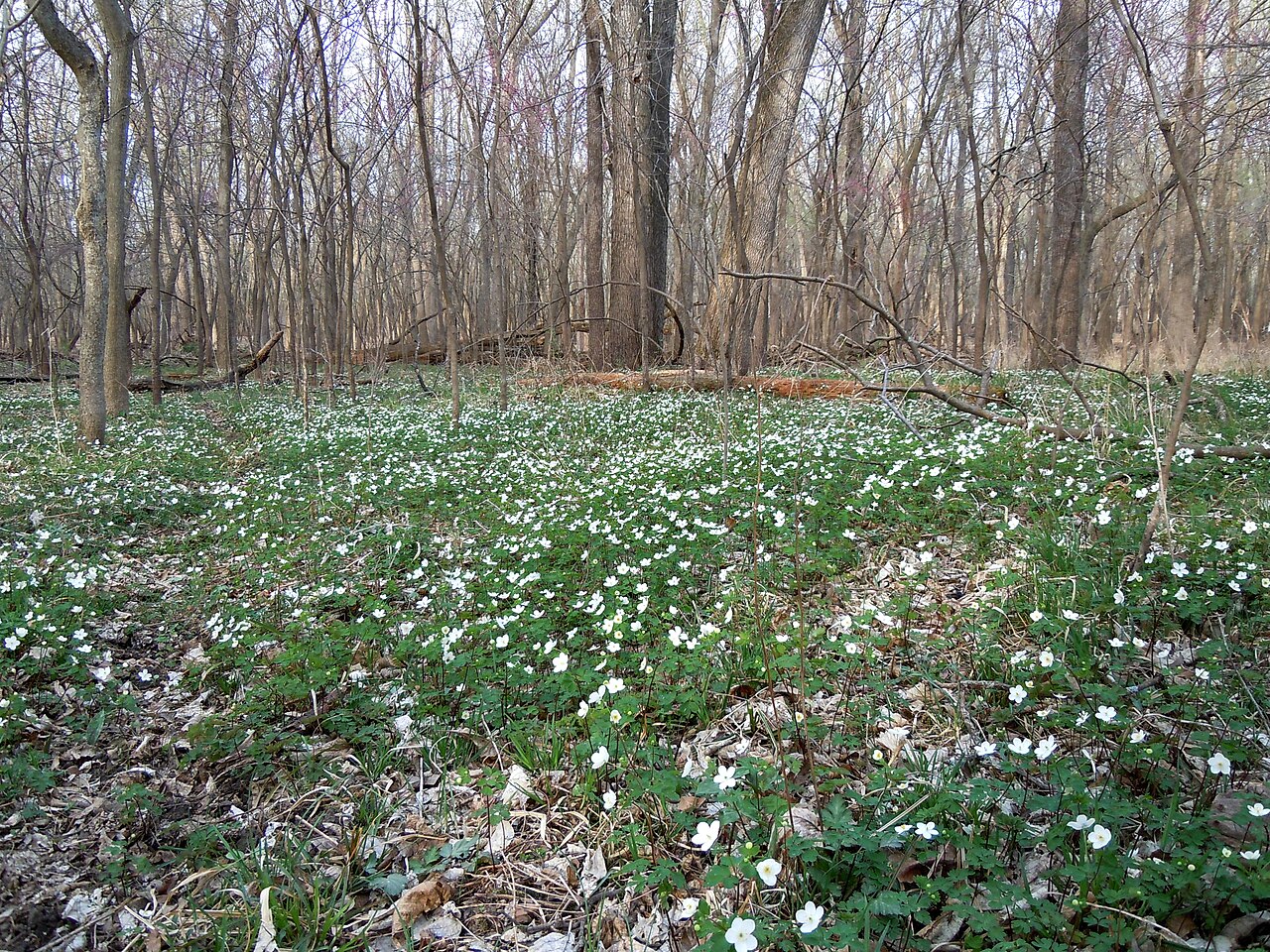
False rue anemone is a true spring ephemeral. It emerges early, flowers before the trees leaf out, sets seed, and then goes dormant by early summer. Where conditions suit it, particularly in rich, moist floodplain forests and on limestone slopes, it spreads by its roots into wide colonies that can carpet the forest floor in white. It grows from southern Ontario, Michigan and Minnesota south to northern Florida and Texas.
For gardeners it is a lovely, low-maintenance plant for woodland gardens, especially in moist, rich shade or in areas that flood briefly in spring. This guide covers how to identify it, how to distinguish it from the similar rue anemone, where it grows, and how to grow it from nursery plants.
Identification
False rue anemone is easily confused with Rue Anemone (Thalictrum thalictroides), which blooms at the same time and in similar habitats. The two are closely related members of the buttercup family, but there are reliable differences in their leaves, flowers and fruits.
Stems & Roots
Stems are slender, smooth and often branched, usually 4 to 12 inches tall and occasionally to 16 inches. Plants grow from fibrous roots, some of which carry small tuberous thickenings, and spread by short underground runners to form colonies. Large patches can include hundreds of stems.
Leaves
The leaves are compound, divided into three parts, each of which is divided again into three leaflets (biternate, the source of the species name). Each leaflet is rounded and has two or three shallow lobes. The foliage is soft, smooth and blue-green to medium green. Leaves grow both from the base and alternately along the flowering stems.
Flowers
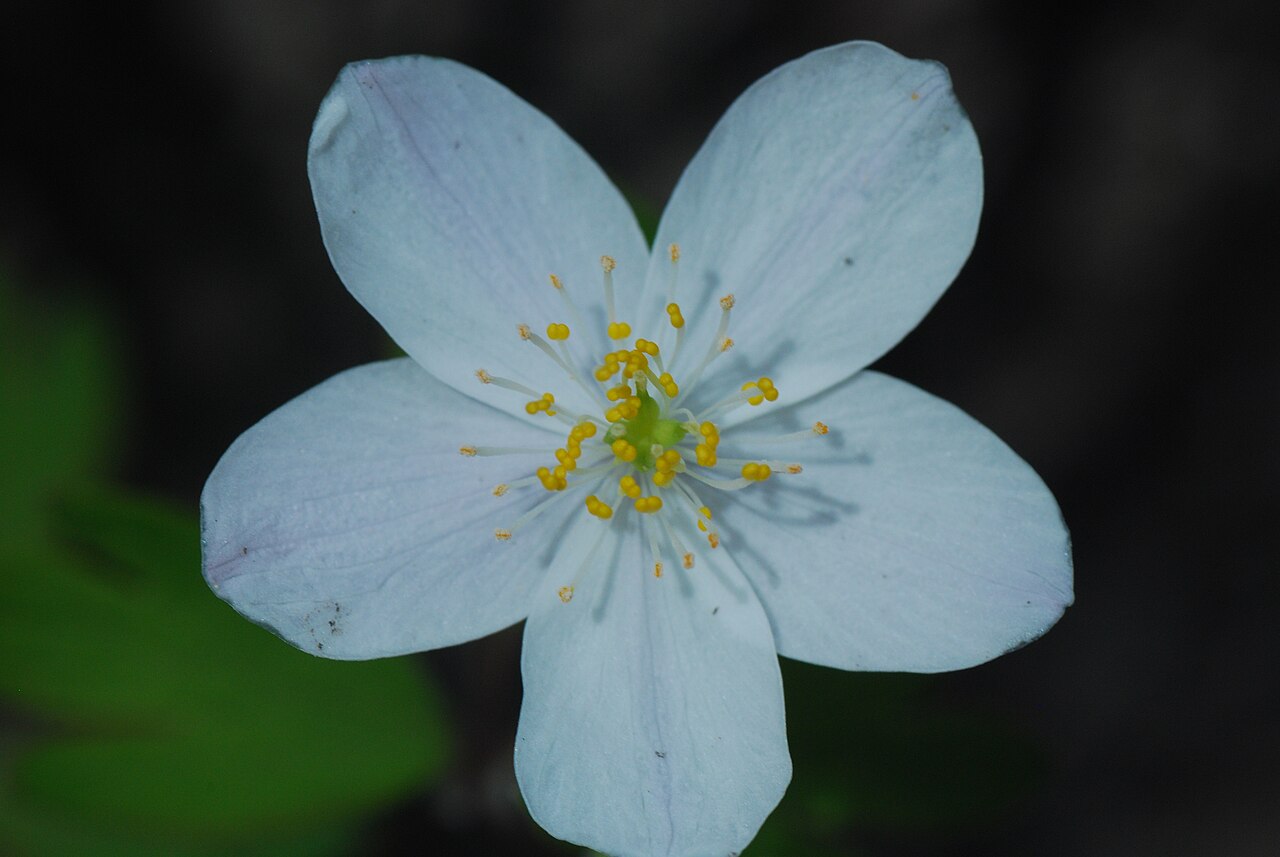
Flowers appear singly or in small clusters at the ends of stems and on slender stalks from the leaf axils. Each flower is about three-quarters of an inch across and has five white, rounded, petal-like sepals and no true petals. In the center are many yellow-tipped stamens around several small pistils. Bloom time runs from about March to May, earliest in the South.
Fruit & Seeds
Each flower produces a small cluster of 2 to 6 spreading, pod-like follicles, each with a short beak and a few seeds. They split open in late spring to release the seeds. Soon afterward the foliage yellows and disappears for the year.
False Rue Anemone vs. Rue Anemone
False rue anemone almost always has exactly five sepals, while rue anemone has five to ten (often six or more). False rue anemone has alternate stem leaves and flowers rising from the leaf axils, while rue anemone has a whorl of leaflike bracts directly beneath its cluster of long-stalked flowers. False rue anemone also produces small pod-like follicles, while rue anemone forms clusters of dry, ribbed achenes. The two often grow together.
Quick Facts
| Scientific Name | Enemion biternatum Raf. (syn. Isopyrum biternatum) |
| Family | Ranunculaceae (buttercup family) |
| Plant Type | Herbaceous perennial; spring ephemeral |
| Mature Height | 4–12 in (occasionally to 16 in) |
| Mature Spread | 6–12 in per clump; spreads to form colonies |
| Growth Rate | Moderate |
| Sun Exposure | Partial shade to full shade (spring sun under deciduous trees) |
| Water Needs | Medium to high; moist soil, tolerates brief spring flooding |
| Soil Type | Rich, humus-rich loam; floodplain alluvium; soils over limestone |
| Soil pH | About 5.5–7.5 (slightly acidic to neutral; tolerates lime) |
| Bloom Time | March–May |
| Flower Color | White |
| Fall Color | None; foliage goes dormant by early summer |
| Fruit | Small cluster of beaked follicles |
| Deer Resistant | Moderate; rarely browsed |
| USDA Hardiness Zones | 4–8 |
Native Range
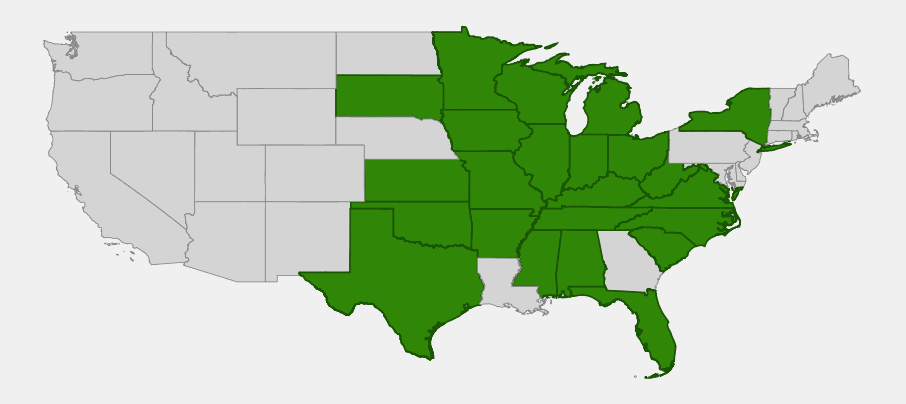
False rue anemone is native to eastern and central North America. USDA PLANTS records it in 23 states and in Ontario. Its range extends from southern Ontario, Michigan, Wisconsin and Minnesota south through the Midwest and the Ohio and Mississippi valleys to Kentucky, Tennessee and the Ozarks, and on to Alabama, Mississippi and the Florida panhandle. In the west it reaches eastern South Dakota, Kansas, Oklahoma and Texas, and in the east it grows in New York, Virginia, West Virginia, North Carolina and South Carolina.
It is most abundant in the Midwest and the Ohio and middle Mississippi valleys, where it can carpet floodplain forests and rich wooded slopes in early spring. Toward the Atlantic seaboard and Deep South it becomes much more scattered. It is uncommon or absent in much of the Appalachian Mountains and the Atlantic Coastal Plain, and it reaches Florida only in the panhandle.
Its typical habitats are rich, moist deciduous forests, especially floodplain and bottomland woods, stream terraces, wooded ravines, and slopes and ledges over limestone. It often grows with other spring ephemerals that favor rich, near-neutral soils.
📋 Regional plant lists featuring False Rue Anemone: New York, Pennsylvania & Northern New Jersey · Ohio & Indiana · Michigan, Wisconsin & Eastern Minnesota · Kentucky & Tennessee · Nebraska, Kansas & Eastern Colorado · Maryland, Virginia & West Virginia · Delaware, Southern New Jersey & Long Island · Illinois, Iowa & Missouri · Alabama, Georgia & Mississippi · North & South Florida
Growing & Care Guide
False rue anemone is easy to grow in a woodland garden with moist, rich soil, and it is offered by some native plant nurseries, particularly in the Midwest. Buy nursery-propagated plants rather than digging from the wild. Keep in mind that it is a spring ephemeral: it will disappear by early summer, so mark its location and plant it among later-emerging perennials.
Light
It needs spring sun and summer shade, the conditions found under deciduous trees. Plant it where it gets bright light in March and April and shade later in the season. It does not do well under evergreens or in hot, sunny sites.
Soil & Water
Give it rich, loose, humus-rich soil that stays moist in spring. It tolerates brief spring flooding and does well in low, moist areas of the garden, as in its native floodplain habitats. It tolerates soils from slightly acidic to neutral or limey. Mulch with shredded leaves, and allow the soil to become drier in summer while the plant is dormant.
Planting Tips
Plant potted plants in early spring or dormant roots in fall, about 6 to 12 inches apart. Over time they will knit together into a carpet. Pair them with later-emerging plants such as ferns, wild ginger, or woodland sedges that will fill in once the false rue anemone goes dormant.
Pruning & Maintenance
No pruning is needed. Let the foliage die back naturally after seeding, and leave fallen leaves on the bed in fall. Keep aggressive groundcovers and invasive plants such as garlic mustard and lesser celandine away from it, as they can overrun spring ephemerals.
Propagation
Divide established patches in late spring as the plants go dormant, or in early fall. Seed can be collected from the follicles in late spring as they begin to split and sown immediately outdoors; it may take a year or more to germinate, and seedlings take several years to bloom.
Landscape Uses
- Woodland gardens: a delicate early carpet of white flowers under deciduous trees
- Spring ephemeral plantings: with bluebells, spring beauty, trout lilies and Dutchman’s breeches
- Floodplain and rain garden edges: in shaded, moist soils that flood briefly in spring
- Naturalizing: spreads to fill large areas of rich woodland floor
- Pollinator gardens: early pollen for native bees in March and April
Wildlife & Ecological Value
As one of the earliest spring flowers in rich woods, false rue anemone provides food for insects that emerge before most other plants bloom.
For Pollinators
The open white flowers are visited by small native bees, including mining bees and sweat bees, and by flies, which collect pollen from the numerous stamens. In early spring, when few other flowers are open, these resources are important to newly emerged native bees.
For Birds
False rue anemone has little direct food value for birds. Large colonies of spring ephemerals help maintain rich forest soils and insect populations that ground-foraging birds rely on.
For Mammals
Deer and rabbits rarely browse it. Like many members of the buttercup family, it is not considered a food plant.
Ecosystem Role
As a spring ephemeral, false rue anemone uses sunlight on the forest floor before the trees leaf out, and it takes up nutrients in early spring that might otherwise wash away. Its dense colonies help stabilize soils on floodplains and slopes. Like other spring wildflowers, it is vulnerable to invasive plants and soil disturbance, and its abundance is a good sign of a healthy forest floor.
Cultural & Historical Uses
Constantine Rafinesque named the genus Enemion in 1820, but for most of the 19th and 20th centuries botanists included the plant in the Eurasian genus Isopyrum, as Isopyrum biternatum. Molecular and botanical studies later supported treating North American species as a separate genus, and Enemion biternatum is now the accepted name in USDA PLANTS. The species name refers to the leaves divided twice into threes.
There are few records of human use of false rue anemone. Like many plants in the buttercup family, it should not be eaten.
For spring wildflower enthusiasts in the Midwest, carpets of false rue anemone in bottomland forests are a beloved sight. It is common in many state parks and nature preserves along rivers, where it blooms with bluebells, spring beauty and Dutchman’s breeches.
Frequently Asked Questions
How do I tell false rue anemone from rue anemone?
False rue anemone almost always has five white sepals, alternate leaves on the stems, and flowers rising from the leaf axils. Rue anemone usually has five to ten sepals, often tinged pink, with its flowers clustered above a whorl of leafy bracts. The two often grow together.
Why did false rue anemone disappear in summer?
It is a spring ephemeral. It grows, blooms and sets seed in spring, then goes dormant by early summer. The roots remain alive underground and will sprout again next spring.
Is false rue anemone invasive?
No. It is a native woodland wildflower that spreads slowly by roots to form patches in rich, moist woods. It does not overrun other plants in the garden.
Can false rue anemone grow in wet soil?
Yes. It thrives in moist, rich soils and naturally grows in floodplain forests, so it tolerates brief spring flooding. It does not like sites that remain waterlogged all year.
Is false rue anemone poisonous?
It is not known to be highly toxic, but like many buttercup family plants it should not be eaten. Keep it as an ornamental woodland wildflower.

Looking for a nursery that carries False Rue Anemone?
Browse our native plant nursery directory: Alabama & Arkansas · Florida · Illinois, Indiana, Iowa & Kansas · Kentucky, Michigan, Minnesota, Mississippi & Missouri · New York, North Carolina, Ohio & Oklahoma · South Carolina, South Dakota, Tennessee, Texas & Virginia · West Virginia & Wisconsin