
Fen Orchid (Liparis loeselii)
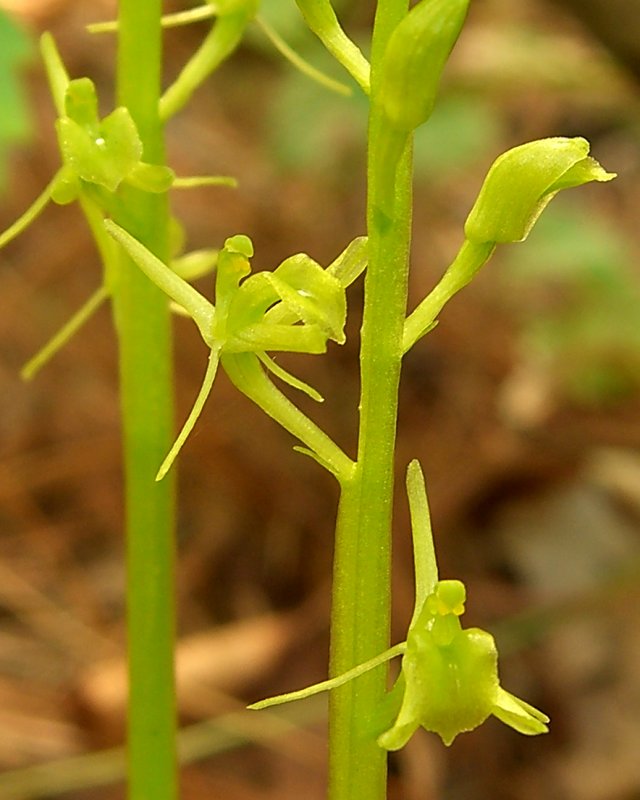
Liparis loeselii is a small, green-flowered orchid of fens, wet meadows and seepy open ground, known in North America as Loesel’s twayblade, bog twayblade or yellow widelip orchid, and in Britain and Europe as the Fen Orchid. It is easy to miss: a plant only a few inches tall with two shiny, yellow-green leaves and a short spike of tiny yellow-green flowers that blend into the surrounding sedges.
It has one of the widest ranges of any North American orchid, from the Great Plains and northern Rockies across the Great Lakes to New England and south through the Appalachians, and it also grows across much of Europe. In Britain and the European Union it is rare and strictly protected, which is why its European name “fen orchid” is so well known. In much of the northeastern United States and the Great Lakes region, it is still widespread in suitable wet, open habitat, though it is rare at the edges of its range.
This orchid should never be dug from the wild. Transplanted wild orchids almost always die, and digging damages fragile wetland habitat. If you want to grow it, look only for laboratory- or nursery-propagated plants from a reputable orchid grower. This guide focuses on identification, habitat and conservation.
Identification
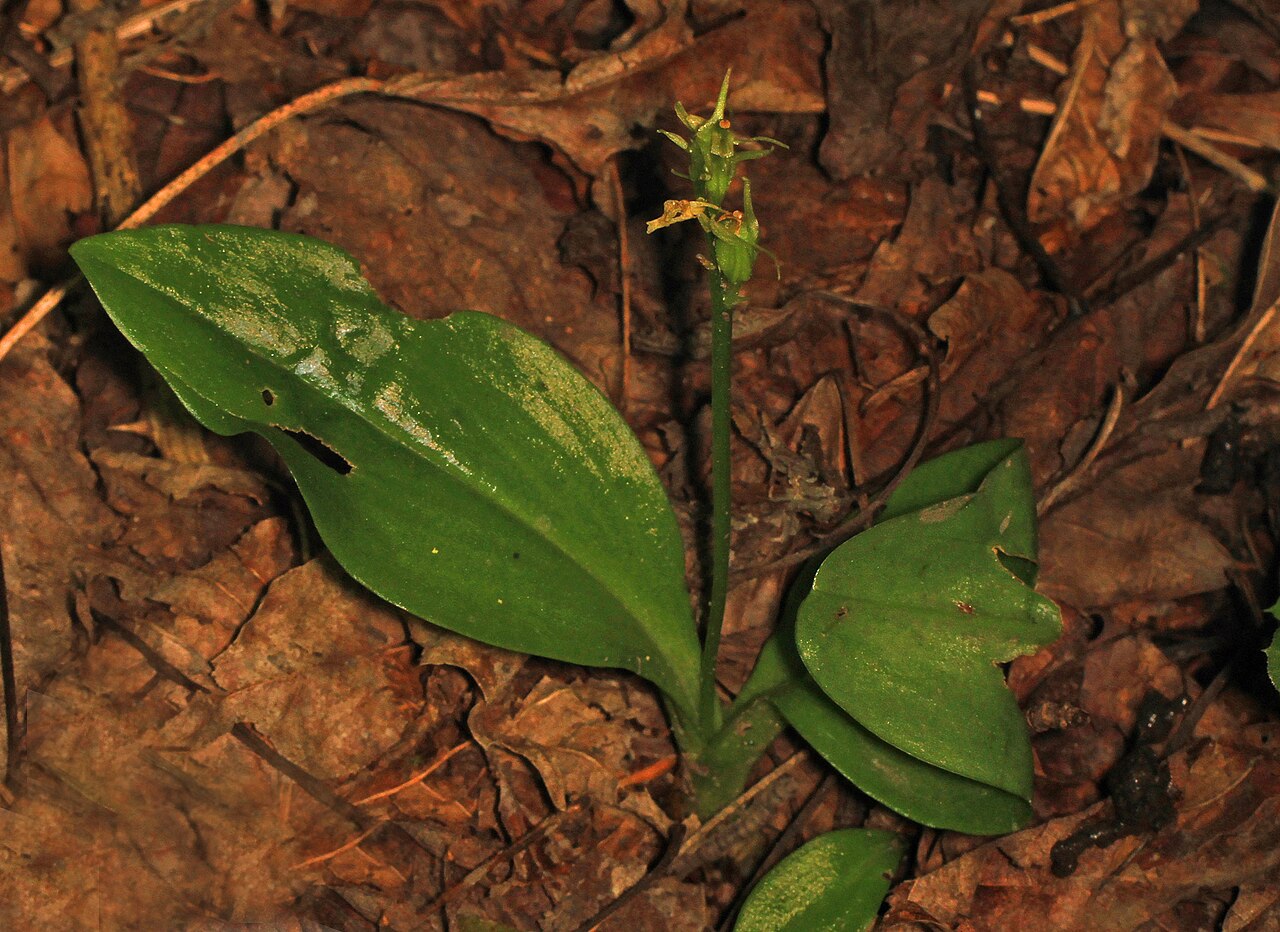
Look for a small plant, usually 2 to 8 inches tall (occasionally to 10 inches), with two glossy, yellow-green leaves at the base and a slender, angled stalk carrying a few to about 15 small yellow-green flowers in early to mid summer.
Leaves & Pseudobulb
There are two (rarely three) basal leaves, elliptic to lance-shaped, 2 to 6 inches long, glossy and yellowish green, with a keel along the midrib, so they look slightly folded. They clasp the base of the flower stalk, which rises from a small, bulb-like swelling (a pseudobulb) at or just below the soil surface, wrapped in the dried remains of last year’s leaves.
Flowers
The flowers are small (about ¼ inch), yellowish green and held on short stalks along the upper part of the stem. Each has three narrow sepals, two very thin, thread-like petals and a broader, oblong lip that is often curled at the edges and points forward or downward. They bloom from June into July. Much of the pollination is by self-pollination; in Europe, raindrops have been shown to help move pollen within the flower.
Fruit
The fruits are upright, ellipsoid capsules about ½ inch long, which release thousands of dust-like seeds. Dry fruiting stalks often persist into the next year and help locate plants.
Look-alikes
Large twayblade (Liparis liliifolia) is a woodland orchid with larger, purplish flowers with a broad, translucent mauve lip. Green adder’s-mouth orchids (Malaxis) usually have a single leaf. The true twayblades (Neottia, formerly Listera) have a pair of leaves partway up the stem, not at the base.
Quick Facts
| Scientific Name | Liparis loeselii (L.) Rich. |
| Family | Orchidaceae (orchid family) |
| Plant Type | Small terrestrial orchid from a pseudobulb |
| Mature Height | 2–8 in (occasionally to 10 in) |
| Mature Spread | 2–4 in |
| Growth Rate | Slow; populations often short-lived at a site |
| Sun Exposure | Full sun to part shade |
| Water Needs | High; constantly wet soil |
| Soil Type | Wet peat, marl, muck or wet sand |
| Soil pH | About 6.0–8.0 (neutral to alkaline, typical of fens) |
| Bloom Time | June–July |
| Flower Color | Yellowish green |
| Fall Color | Leaves yellow and wither by fall |
| Fruit | Upright capsule with dust-like seeds |
| Deer Resistant | Unknown; too small to be a major deer food |
| USDA Hardiness Zones | 3–7 |
Native Range
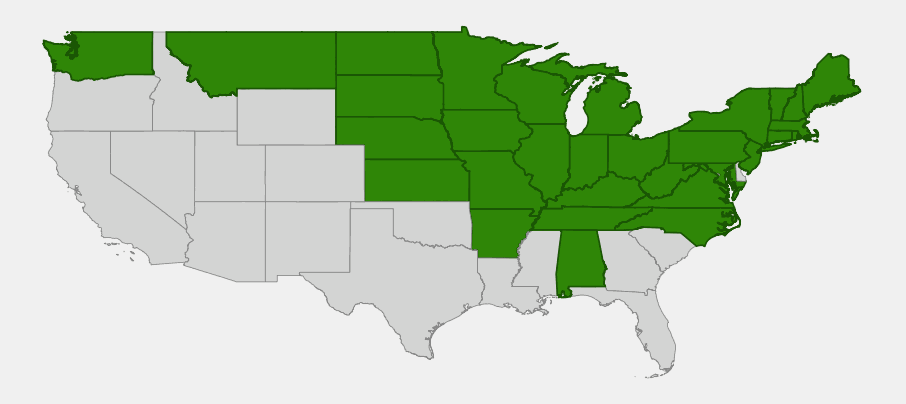
USDA PLANTS lists fen orchid as native in 31 states: across the Great Lakes region, the Northeast and New England, the Mid-Atlantic and Appalachians (south to North Carolina and Tennessee), the Upper Midwest and Great Plains (Iowa, Missouri, Nebraska, Kansas and the Dakotas), and the northern Rockies in Montana. In Canada it grows from British Columbia to Newfoundland. It is also native across much of Europe, east into western Asia.
It is most common in Michigan, Minnesota, Wisconsin, New York, Vermont, Pennsylvania and Maine. Some states have only outlying records. In Washington it is known from a few sites, including wet meadows in Klickitat County east of the Cascades. Arkansas and Kansas each have only a few collections, and in Alabama it is known only from an old historical record, so it may no longer grow there.
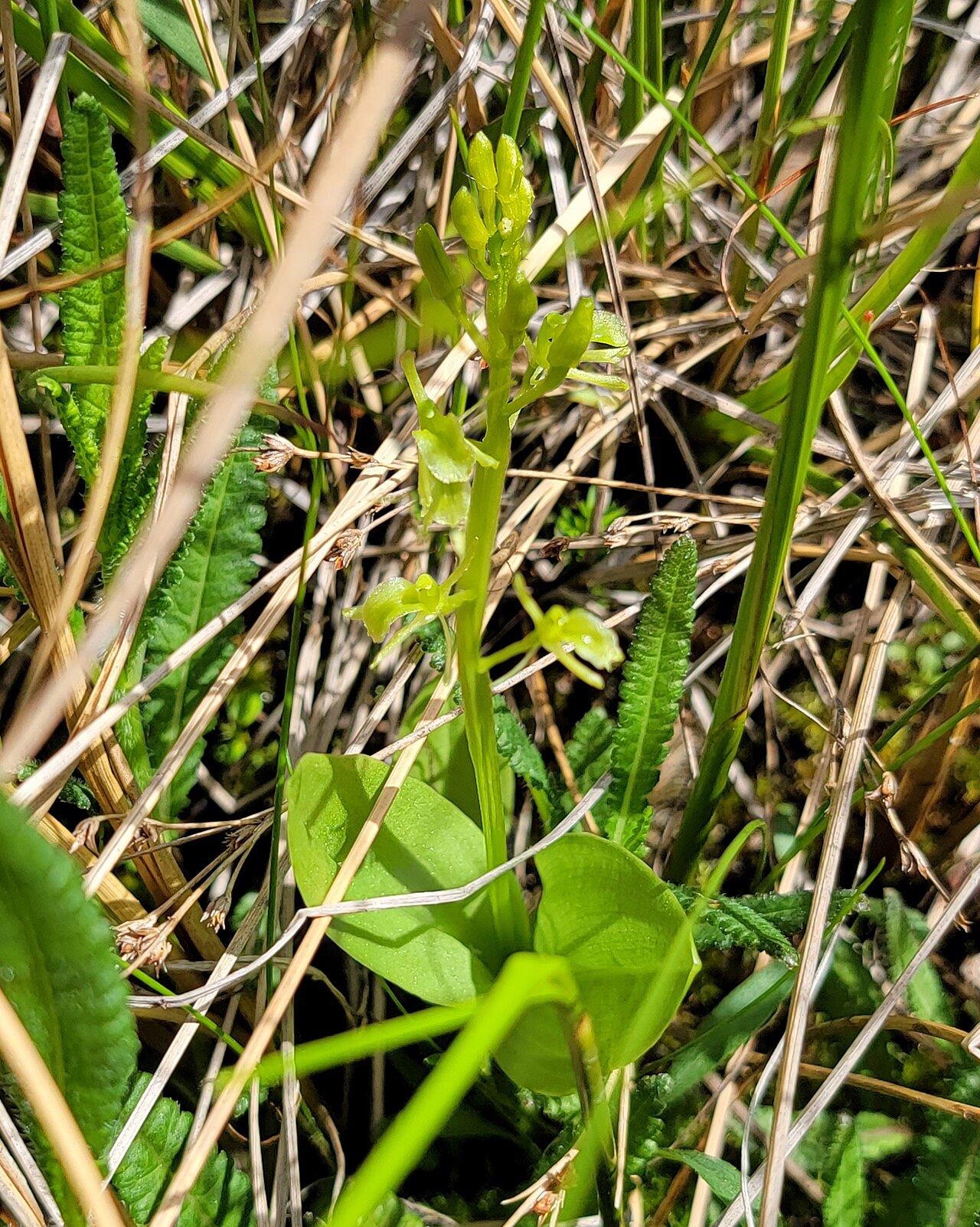
It is a plant of open, wet, mineral-rich places: calcareous fens, sedge meadows, seeps, interdunal swales near the Great Lakes, lakeshores and marl flats. It also colonizes human-made habitat with similar conditions, such as wet ditches, old sand and gravel pits and quarry floors, and it often appears in early stages of plant succession, then fades as shrubs and taller plants close in.
📋 Regional plant lists featuring Fen Orchid: New York, Pennsylvania & Northern New Jersey · Delaware, Southern New Jersey & Long Island · Connecticut, Massachusetts & Rhode Island · New Hampshire, Maine & Vermont · Maryland, Virginia & West Virginia · North & South Carolina · Kentucky & Tennessee · Ohio & Indiana · Illinois, Iowa & Missouri · Michigan, Wisconsin & Eastern Minnesota · North Dakota, South Dakota & Western Minnesota · Nebraska, Kansas & Eastern Colorado · Montana & Wyoming · Arkansas, Louisiana, Eastern Oklahoma & Eastern Texas
Can You Grow It?
Fen orchid is not a garden plant, and it should be enjoyed where it grows. Never dig it from the wild: like most terrestrial orchids, it depends on soil fungi and very specific wet, open conditions, and transplanted plants almost always die. Wild plants are also protected or tracked as rare in a number of states. If you want to try growing it, buy only laboratory- or nursery-propagated plants from a specialist grower, and treat it as an experiment.
Light
In the wild it grows in full sun to light shade in open fens and meadows. It declines when shrubs or tall plants shade it out.
Soil & Water
It needs constantly wet, mineral-rich, neutral to alkaline soil, such as fen peat, marl or wet sand, with cool groundwater. It does not tolerate drying out or stagnant, acidic water.
Planting Tips
Specialist growers raise it in a bog or fen garden with a mix of peat, sand and limestone grit kept wet with rainwater, but success is uncommon. For most people, the best way to help it is to protect fens and wet meadows where it already grows.
Pruning & Maintenance
Its habitat needs management more than the plant does. Fens and wet meadows where it grows benefit from controlling invasive plants (such as glossy buckthorn and common reed) and woody encroachment, often with brush cutting or prescribed fire, and from protecting groundwater flow.
Propagation
It reproduces by tiny wind-blown seeds that need a partner fungus to germinate, and by small offsets from the pseudobulb. Propagation is done in the laboratory on sterile media; collecting seed or plants from the wild is not appropriate.
Where to See It
- Calcareous fens and sedge meadows: in the Great Lakes states and the Northeast in June and July
- Great Lakes interdunal swales: wet hollows between dunes along lakeshores
- Nature preserves and fen restoration sites: where land trusts and agencies manage open wetlands
- Old gravel pits and wet ditches: where it sometimes appears in disturbed but wet, open, mineral-rich ground
Wildlife & Ecological Value
Fen orchid is a small but telling part of fen and wet meadow ecosystems, which hold some of the highest plant diversity of any northern habitat.
For Pollinators
Its small green flowers are visited only occasionally by small insects such as gnats and tiny bees. Most seed is set by self-pollination, which helps it reproduce in scattered, newly formed habitats.
For Birds
It has no special value as bird food, but the open fens and sedge meadows it inhabits are home to rails, sedge wrens, swamp sparrows and other wetland birds.
For Mammals
It is too small to be a significant food plant. Its habitats support small mammals such as meadow voles and bog lemmings.
Ecosystem Role
It depends on mycorrhizal fungi, especially when young, and on open, wet ground kept free of shrubs by groundwater, flooding, fire or disturbance. Because it appears early and fades as vegetation closes in, it is a good indicator of healthy, open fen and wet meadow conditions.
Cultural & Historical Uses
Carl Linnaeus described this orchid in 1753 as Ophrys loeselii, naming it for Johannes Loesel, a 17th-century physician and botanist in Prussia whose flora of the region included it. The French botanist Louis Claude Richard later moved it to Liparis, a name from the Greek for “oily” or “greasy,” for the shiny leaves.
In Britain the fen orchid is one of the rarest native orchids, found mainly in a few Norfolk fens and in coastal dune slacks in south Wales, and it is specially protected by law. Across the European Union it is listed under the Habitats Directive, and conservation programs there have restored fen habitat and dune slacks specifically to help it.
In North America it has attracted less attention, partly because it is still fairly widespread in the Great Lakes region and the Northeast. It is, however, listed as rare in several states at the edges of its range, and it is a familiar find for botanists and orchid enthusiasts exploring fens in early summer.
Frequently Asked Questions
Why is it called fen orchid?
“Fen orchid” is the British and European name. In Europe it grows mainly in fens and coastal dune slacks, where it has become rare and is protected. In North America it is more often called Loesel’s twayblade or bog twayblade, and USDA calls it yellow widelip orchid.
Can I dig up a fen orchid for my garden?
No. Never dig wild orchids. They depend on soil fungi and very specific wet conditions, and transplanted plants almost always die. It is also tracked or protected as rare in several states. Buy only laboratory- or nursery-propagated plants from specialist growers.
Where does fen orchid grow in the United States?
Mainly in the Great Lakes states, the Northeast, the Appalachians and the Upper Midwest, with outlying populations in Montana, Washington, Arkansas and Kansas. It grows in open fens, sedge meadows, seeps, interdunal swales, wet ditches and old gravel pits.
How do I recognize fen orchid?
Look in June and July for a plant only a few inches tall with two glossy, keeled, yellow-green basal leaves and a stalk of small yellow-green flowers with thread-like petals and a broader lip.
Is fen orchid endangered?
It is not federally listed in the United States and is widespread in parts of the Great Lakes and Northeast, but it is rare in several states at the edge of its range. In Britain and the European Union it is rare and legally protected.

Looking for a nursery that carries Fen Orchid?
Browse our native plant nursery directory: Alabama & Arkansas · Connecticut · Illinois, Indiana, Iowa & Kansas · Kentucky, Maine, Maryland, Massachusetts, Michigan, Minnesota, Missouri & Montana · Nebraska, New Hampshire, New Jersey, New York, North Carolina, North Dakota & Ohio · Pennsylvania, Rhode Island, South Dakota, Tennessee, Vermont & Virginia · Washington · West Virginia & Wisconsin

