Long Beech Fern (Phegopteris connectilis)
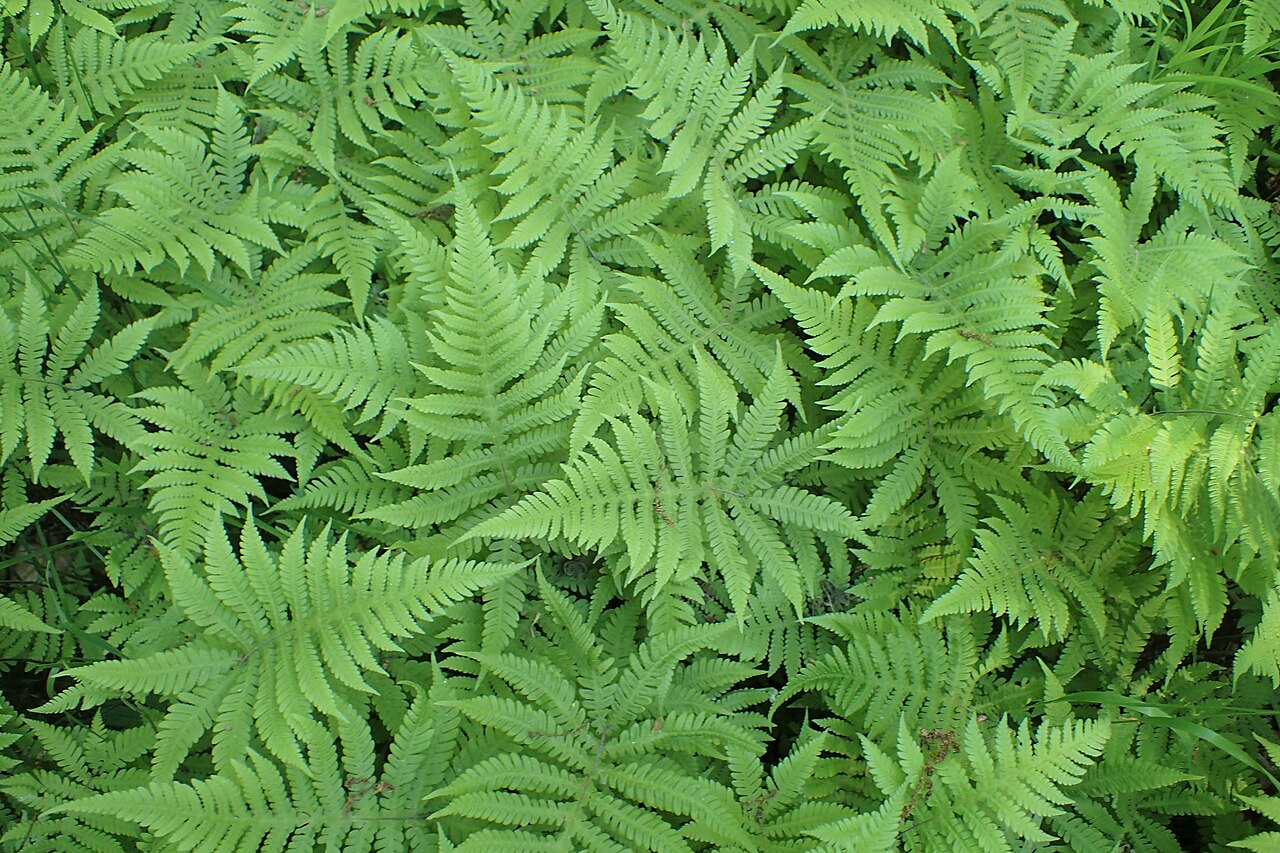
Long beech fern (Phegopteris connectilis), also called northern beech fern or narrow beech fern, brings a distinctive triangular outline to a shaded garden. The two lowest leaflets usually point outward or slightly backward, giving each frond a shape that is easy to notice once you know where to look. Beneath the foliage, slender creeping rhizomes slowly knit the planting into a colony.
This is a fern for a cool, protected root environment, not a drought-tolerant groundcover for exposed beds. A woodland border with evenly moist, humus-rich soil and filtered light is a useful starting point. Young plants can take time to settle, and a newly planted fern may remain small before beginning to spread. Patience and a stable site are more helpful than repeated lifting or heavy feeding.
In New England it fits naturally among the lower layers of a mixed woodland planting. It has no flowers or fruit, but the textured foliage remains valuable after many spring wildflowers finish blooming. Use nursery-propagated stock, maintain loose leaf litter, and allow room for a gradually widening patch. The species is native beyond North America as well, so a European photograph does not by itself indicate an introduced garden species.
Identification
Rhizomes & Frond Arrangement
There is no trunk or woody bark. Fronds arise at intervals from a slender horizontal rhizome, rather than forming one dense vase from a heavy central crown. The underground stem can extend through suitable soil and produce new growth nearby. That spreading arrangement helps distinguish the garden habit from a clump-forming fern, although newly installed plants may look solitary for several seasons. Avoid pulling at an isolated frond to investigate the rhizome; doing so can injure the connected plant.
Triangular Blades
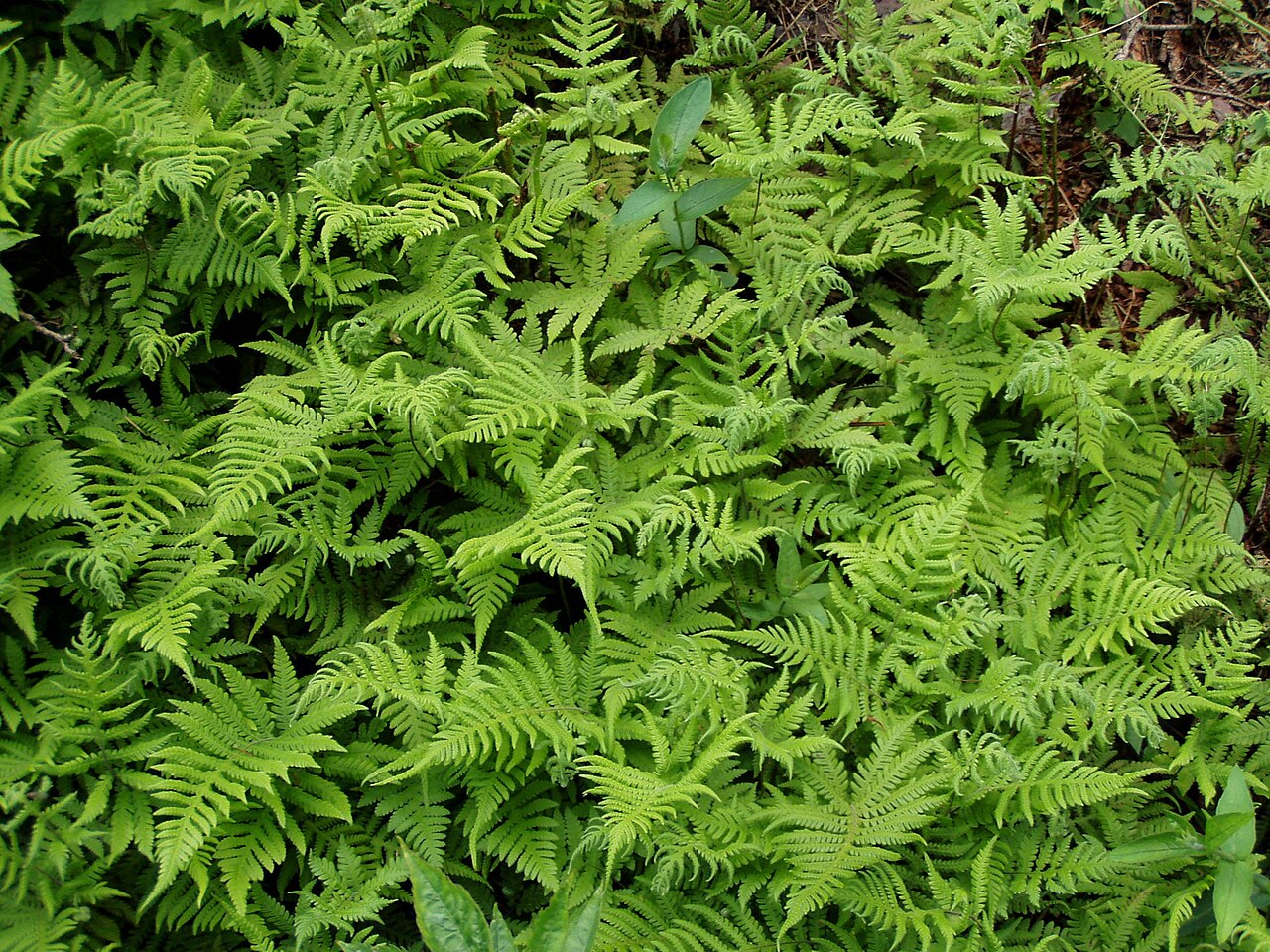
The blade is triangular and generally longer than it is wide. Each side is divided into deeply cut leaflets, called pinnae. The lowest pair is conspicuous because it spreads outward or reflexes slightly away from the tip. Above that pair, narrow green tissue connects much of the leaflet bases along the central axis. Look at a complete mature frond rather than a cropped photograph, because the blade base provides some of the most useful identification clues.
Texture & Underside
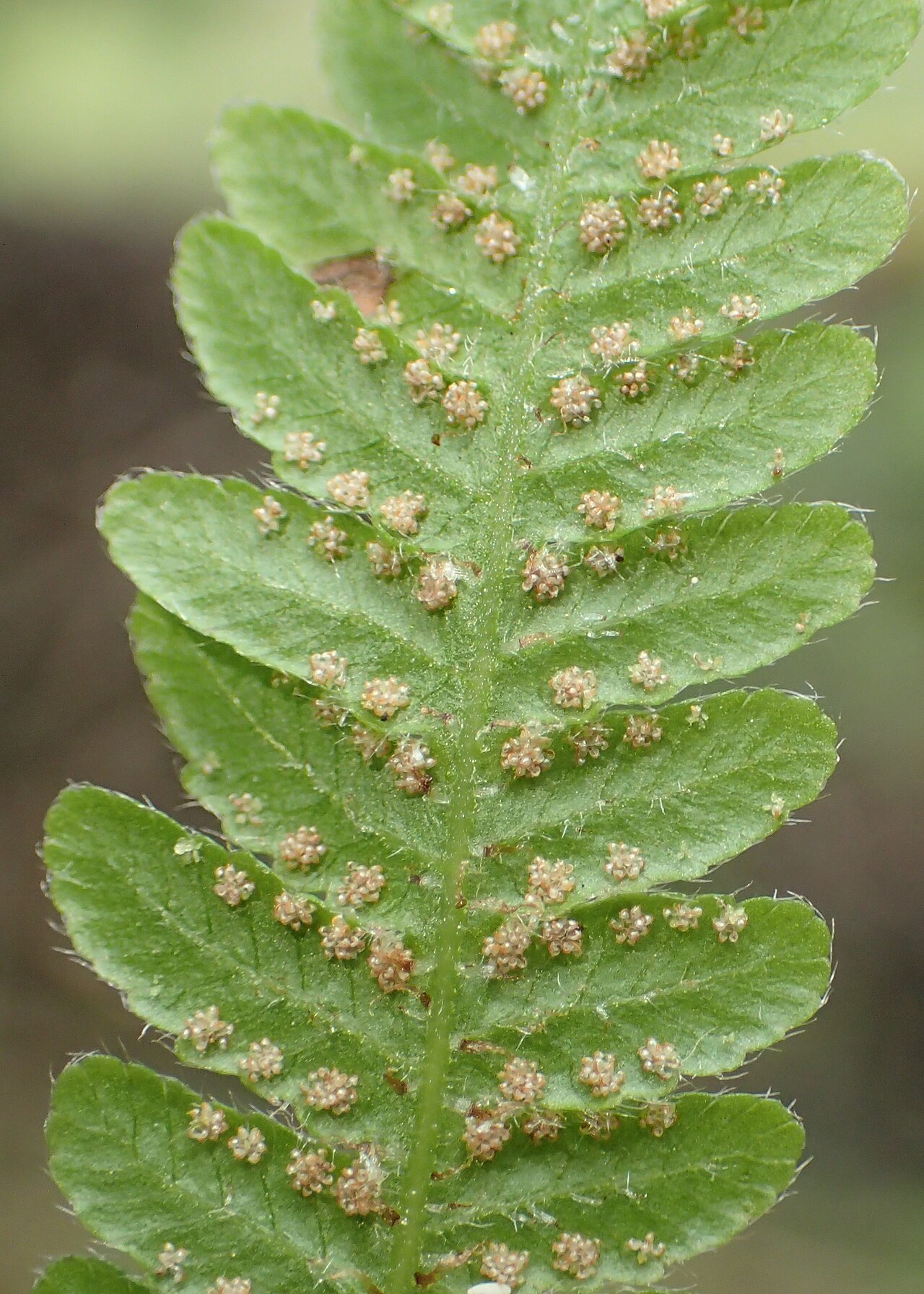
The lower surface carries fine hairs, with small scales along portions of the supporting veins. A hand lens makes these features easier to see without removing the frond. Leaf color alone is not reliable: light, age, moisture, and camera settings can all change its appearance. Healthy fronds are usually green during the growing season, and the deciduous foliage can yellow as autumn advances. Brown tissue in midsummer deserves a closer check of root moisture and exposure.
Sori Instead of Flowers
Small rounded clusters of spore cases develop underneath fertile fronds, toward the ends of the veins. These sori are normal reproductive structures, not insect eggs or a disease that needs spraying. Ferns do not produce petals, pollen, berries, or true seeds. The photographed underside shows why an inspection of the back of a frond can be useful, while leaving the plant in place preserves its reproductive capacity.
Separating Similar Ferns
Broad beech fern, Phegopteris hexagonoptera, is a related but different species; its blade is proportionally broader and the basal leaflet connections differ. Oak ferns and other triangular woodland ferns also need comparison with a regional key. When the lowest leaflets, blade proportions, or connecting wings are unclear, ask a knowledgeable local botanist to examine photographs of both surfaces and the complete blade. Do not identify a plant solely from a nursery common name.
Quick Facts
| Scientific Name | Phegopteris connectilis (Michx.) Watt |
| Family | Thelypteridaceae in Flora of North America |
| Plant Type | Deciduous, rhizomatous woodland fern |
| Mature Height | Fronds approximately 6–24 inches; site and age affect size |
| Mature Spread | Gradually expanding colony rather than a fixed crown width |
| Growth Rate | Slow to establish, then slowly spreading |
| Sun Exposure | Part shade to shade |
| Water Needs | Average to consistently moist soil; avoid prolonged drought |
| Soil Type | Humus-rich loam or suitably moist shaded rock crevices |
| Soil pH | Moderately to strongly acidic in natural habitats |
| Bloom Time | Not applicable; a fern, not a flowering plant |
| Flower Color | No flowers |
| Fall Color | May turn yellow before winter dieback |
| Fruit | No fruit; produces spores beneath fertile fronds |
| Deer Resistant | Often resistant according to Native Plant Trust; not immune to damage |
| USDA Hardiness Zones | Match local provenance to climate; no single verified zone range adopted here |
Native Range
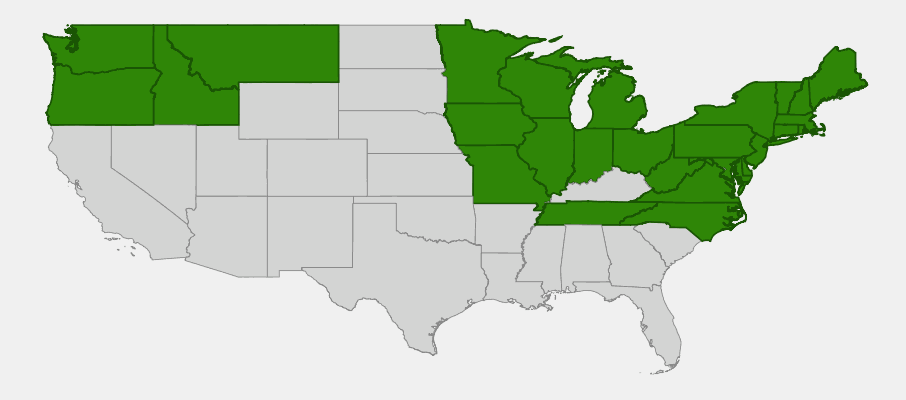
Long beech fern has a broad northern distribution, including North America and Eurasia. In North America it occurs across much of Canada and Alaska, through the northern United States, and southward in scattered eastern and western mountain or woodland populations. All six New England states are included in Flora of North America, making this a useful regional native where the actual site is suitably cool and moist.
The map follows the state list in Flora of North America rather than treating every observation record as evidence of nativity. That flora includes several southern or inland occurrences that are small or localized. Newer distribution references differ at some edges of the range, and a shaded state is not a promise that the fern is widespread there. Consult the local flora or conservation agency before using it in restoration outside the well-established regional range.
Natural habitats include moist acidic woodland soils and shaded rock crevices. These settings provide shelter from rapid drying, but they are not equivalent to permanent standing water. At a garden scale, aspect, tree cover, drainage, and the amount of leaf-derived organic matter can matter more than the broad climate zone. The USDA link provides a route to finer-scale records; confirm the scientific name when following older synonyms.
📋 Regional plant list: New England
Growing & Care Guide
Choose a Stable Shaded Site
Start with part shade or shade where the soil stays reasonably cool. Morning light or filtered sunlight is often easier to accommodate than hot afternoon exposure. A wall, path, or tree canopy can change the root environment substantially over a short distance, so assess the proposed planting spot rather than relying only on a yard-wide description. If a nearby fern planting repeatedly scorches or dries out, correct the site problem before adding this species.
Soil & Drainage
A loose, humus-rich soil that retains moisture while allowing excess water to drain is the main objective. Leaf mold can improve the surface environment of a woodland bed, but do not bury existing tree roots beneath a deep new layer of material. Avoid creating a small pocket of rich compost inside compacted soil that holds water like a basin. Where drainage is poor, use a different location or a plant suited to that hydrology rather than assuming every fern is a swamp plant.
Planting & Establishment
Install a nursery-grown plant at approximately the depth at which it grew in the container, keeping the rhizome and emerging growth from being buried too deeply. Water the root ball and surrounding soil after planting. Mark the location discreetly so a slow-emerging fern is not accidentally dug up or mistaken for an empty space. Native Plant Trust notes that establishment can be slow; leaving a healthy plant undisturbed gives it time to build the underground system that supports a colony.
Water Through Dry Periods
During establishment, check the soil beneath the litter rather than judging only the surface. A bed may look damp after a brief shower while the root ball remains dry. Water gently enough to moisten the root zone without washing soil away from the rhizome, and allow excess water to drain. Established colonies still need attention in prolonged dry weather. The average-moisture table code is not a drought-tolerance claim, particularly when the fern grows near thirsty tree roots.
Mulch & Seasonal Cleanup
Keep a light, loose layer of fallen leaves or leaf mold around the planting. Clear thick mats that physically block emerging fronds, but do not rake aggressively through the rhizomes. Deciduous fronds naturally decline in autumn, and dead foliage can usually remain until a gentle seasonal cleanup is convenient. Avoid a deep mound of wood chips over the growing points. A woodland-looking bed can be tidy at its edges while still retaining the litter that protects its plants.
Fertilizer & Soil Amendments
Do not use strong fertilizer to force a recently planted fern into rapid growth. First check moisture, light, drainage, and physical disturbance. In a suitable woodland soil, maintaining organic matter is generally more useful than repeated feeding. If growth remains poor and a nutrient problem is suspected, obtain a soil test before applying corrective material. Never add lime automatically to this acid-associated fern merely because it is a standard treatment elsewhere in the garden.
Division & Propagation
A well-established colony can be divided with a generous portion of rhizome and roots attached. Early spring before the fronds unfold is the timing described by Native Plant Trust. Keep divisions moist, replant promptly, and avoid repeatedly taking material from a small young colony. Fern spore propagation is a separate, more exacting process than sowing flower seeds; it requires appropriate clean growing conditions and patience. For most gardeners, a responsibly propagated nursery plant or an established garden division is the practical route.
Problems & Monitoring
When fronds brown early, inspect soil moisture, heat exposure, and recent digging before assuming a contagious disease. Slugs or browsing animals may cause localized damage, but identify the actual cause before treating. Normal sori on the underside must not be confused with pests. If a colony expands beyond its allotted space, remove small edge portions carefully rather than disturbing the entire planting. Keep a record of planting date and seasonal emergence to distinguish slow establishment from a genuine decline.
Landscape Uses
- A gradually spreading ground layer beside a shaded woodland path.
- A textural companion to spring-flowering native woodland herbs.
- Small masses in moist acidic shade where a lawn is poorly suited.
- A close-view fern planting where the triangular blades and lowest leaflet pair can be appreciated.
Wildlife & Ecological Value
Shelter Rather Than Nectar
Because it has no flowers, long beech fern is not a nectar or pollen plant. Its value is different: a low colony contributes cover and a sheltered near-ground environment within a diverse planting. Native Plant Trust identifies shelter for small amphibians and rodents among its benefits. Keep flowering natives elsewhere in the same garden if pollinator forage is an objective, rather than expecting a fern-only planting to supply it.
Woodland Structure
The rhizomes and recurring foliage help occupy the shaded soil surface, while fallen fronds participate in the normal woodland litter cycle. This can complement mosses, herbs, and woody plants without requiring a uniform carpet. Allow a colony to develop around compatible companions, but watch that small, slow-growing neighbors retain space. The plant can contribute to garden soil cover; it should not be presented as a replacement for professional erosion-control design on an unstable slope.
Protect Natural Populations
A common-looking fern patch may be slow to re-establish after disturbance, especially when rooted among rocks. Buy propagated plants rather than removing wild colonies. Keep feet, equipment, and repeated digging away from a natural fern habitat. A broad continental range does not mean every local occurrence is secure, and some states have rare or historical populations that deserve particular care. Regional conservation guidance should take priority over a generic garden description.
Cultural & Historical Uses
The names long beech fern, narrow beech fern, and northern beech fern refer to the same species in this guide. Older references may list it under Thelypteris phegopteris or other combinations. Comparing synonyms is important when reading older regional lists, because a change of genus does not create a second species that needs a duplicate garden entry.
The scientific name connectilis is associated with the joined portions of the frond, an apt reminder to examine leaflet connections when learning this fern. Its ornamental interest comes from architecture and texture rather than a brief floral display. A gardener who follows the unfolding fronds, mature sori, and autumn dieback sees several distinct stages in a plant that can otherwise be overlooked as simply green background.
No medicinal or edible use is recommended here. Fern identification can be difficult, and the word fiddlehead describes a growth stage, not a guarantee of food safety. The appropriate modern use of long beech fern is as a responsibly sourced native woodland plant in the parts of North America where it belongs, with careful attention to the cool, moist conditions that sustain it.
Frequently Asked Questions
Does long beech fern have flowers?
No. It is a fern and reproduces with spores, not flowers or seeds. Small sori on the undersides of fertile fronds are normal.
Why has my new plant not spread yet?
This species can be slow to establish. Check its moisture and shade, keep it undisturbed, and allow time for the rhizome to develop before expecting a colony.
Is six inches its maximum height?
No. Flora of North America gives a frond range up to about two feet. The regional table now shows six to twenty-four inches rather than treating a small specimen as the mature maximum.
Can it grow in standing water?
Do not assume so. Its typical garden need is evenly moist, drained woodland soil, and natural occurrences also include shaded rock crevices. Choose a true wetland fern for persistent inundation.
Is the lowest leaflet pair an identification clue?
Yes. The lowest pair often spreads outward or backward, while upper leaflet bases are connected along the axis. Confirm with a complete frond and a regional key because other triangular ferns can look similar.
Should I remove brown dots from the fronds?
Not if they are the normal spore-bearing sori on the underside. Compare the pattern and inspect carefully before treating anything as a pest or disease.
Sources & Further Reading
- Flora of North America: Phegopteris connectilis
- Native Plant Trust Garden Plant Finder: long beech fern
- Go Botany: Phegopteris connectilis
- USDA PLANTS: Phegopteris connectilis
Find Native Plants
Ask growers about nursery propagation and regional provenance. Browse our Maine native plant nurseries, New Hampshire native plant nurseries, Vermont native plant nurseries, Connecticut native plant nurseries directory for suppliers.