
Loulu (Pritchardia glabrata)
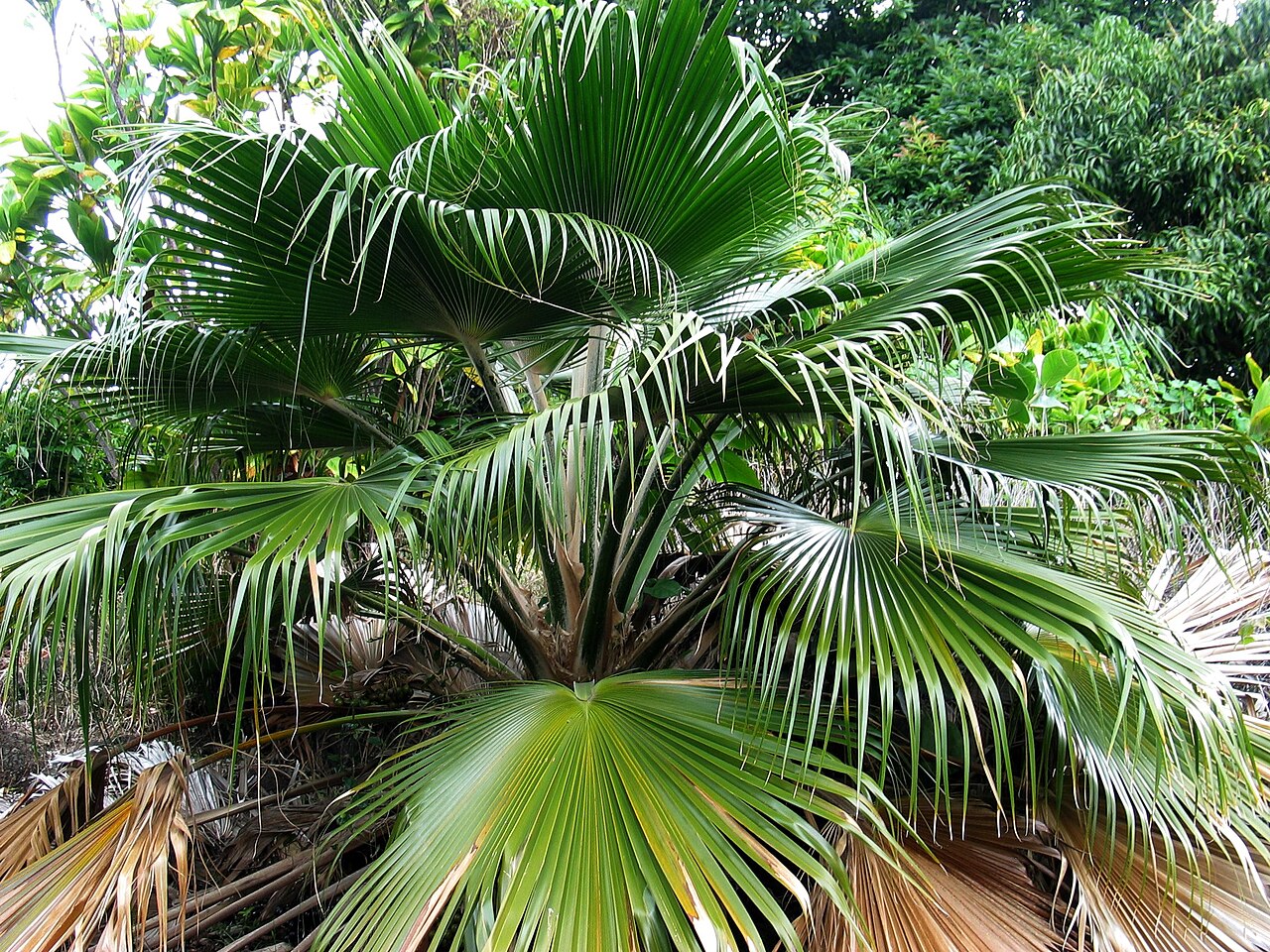
Pritchardia glabrata is one of the native Hawaiian fan palms that Hawaiians call loulu. In English it is sometimes called the Lānaʻi pritchardia or Maui loulu. It is one of the smaller loulu: a single slender trunk, usually under about 17 feet tall (occasionally taller), topped by a rounded crown of stiff, fan-shaped leaves that are smooth and green on both sides.
This loulu is endemic to Hawaiʻi and grows wild only on West Maui and Lānaʻi, where it clings to steep, near-vertical valley walls and ridges at roughly 1,000 to 3,000 feet. Plants once described as Pritchardia lanaiensis and P. elliptica are now included in this species. NatureServe ranks it critically imperiled. It is not listed under the federal Endangered Species Act (the U.S. Fish and Wildlife Service reviewed it and closed it as a resolved taxon), but its wild populations are small and threatened by rats, goats, deer and invasive plants.
Like other loulu, it makes a fine, slow-growing palm for Hawaiian gardens. Buy only nursery-propagated plants grown from cultivated seed, and never collect seeds or seedlings from the wild. This guide covers how to identify it, where it grows, how to grow it, and the place of loulu in Hawaiian culture.
Identification
All Hawaiian loulu share the same basic look: an unbranched trunk, a crown of large fan leaves with no spines on the stalks, and clusters of round fruits. Pritchardia glabrata stands out for its small size, slender trunk and leaves that lack the felty hairs found on the undersides of many other loulu.
Trunk & Growth Habit
A single-trunked palm with a slim, gray, faintly ringed trunk, usually a few inches to under a foot thick. Wild trees on cliffs are often short and leaning; most stay below about 17 feet, though USDA PLANTS gives a maximum of about 30 feet. Old dead leaves may hang below the crown.
Leaves
The leaves are palmate (fan-shaped), roughly 2 to 3 feet across, on long, unarmed stalks. The blade is divided part way into many stiff segments with slightly drooping tips. The name glabrata means “smooth”: the leaf surfaces are green and largely hairless on both sides, while many loulu have a pale, felt-like coating beneath. Young leaf bases carry some woolly fibers.
Flowers
Small, fragrant, pale yellow to whitish flowers are packed on branched flower stalks that grow from among the leaf bases. In Hawaiʻi flowering is mostly in the cooler months, roughly September through February.
Fruit
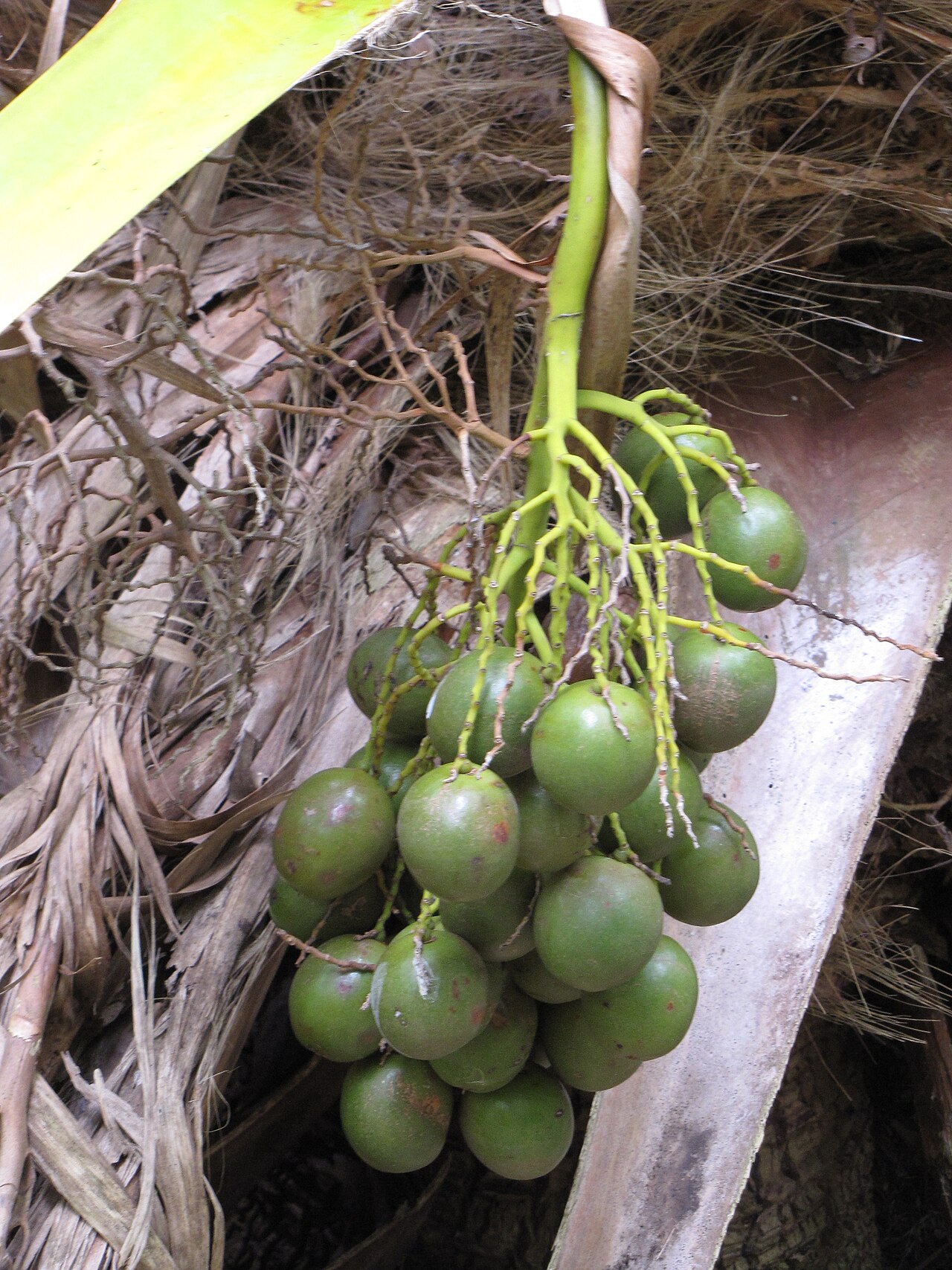
The fruits are round to slightly oval, a little under an inch across, green when young and ripening to dark brown or black. Each holds a single hard seed. They hang in heavy clusters within the crown.
Similar Species
Other Hawaiian loulu, such as Pritchardia kaalae, loulu lelo (P. hillebrandii) and P. martii, are told apart by leaf hairs, flower stalk length and fruit size, and by which island they come from. The widely planted Fiji fan palm (Pritchardia pacifica) is not native to Hawaiʻi and has broader, flatter, glossy leaves on a stouter trunk.
Quick Facts
| Scientific Name | Pritchardia glabrata Becc. & Rock |
| Family | Arecaceae (palm family) |
| Plant Type | Evergreen single-trunked fan palm; Hawaiian endemic |
| Mature Height | 10–20 ft (rarely to 30 ft) |
| Mature Spread | 6–10 ft |
| Growth Rate | Slow |
| Sun Exposure | Full sun to partial shade |
| Water Needs | Moderate; even moisture, good drainage |
| Soil Type | Well-drained rocky, volcanic or loamy soil |
| Soil pH | About 6.0–7.0 |
| Bloom Time | Mostly September–February |
| Flower Color | Pale yellow to whitish |
| Fall Color | None (evergreen) |
| Fruit | Round, dark brown to black, under 1 in, single-seeded |
| Deer Resistant | No; axis deer, goats and pigs damage seedlings |
| USDA Hardiness Zones | 10–12 |
Native Range
Pritchardia glabrata is endemic to the Hawaiian Islands, and USDA PLANTS lists it as native only in Hawaiʻi. It grows wild on West Maui, in places such as the steep walls of ʻĪao and Waikapū valleys, and on Lānaʻi, where a few trees survive on Lānaʻihale, the island’s summit ridge. Botanists have treated the Maui and Lānaʻi palms in different ways over the years, and older names such as P. lanaiensis refer to the Lānaʻi trees.
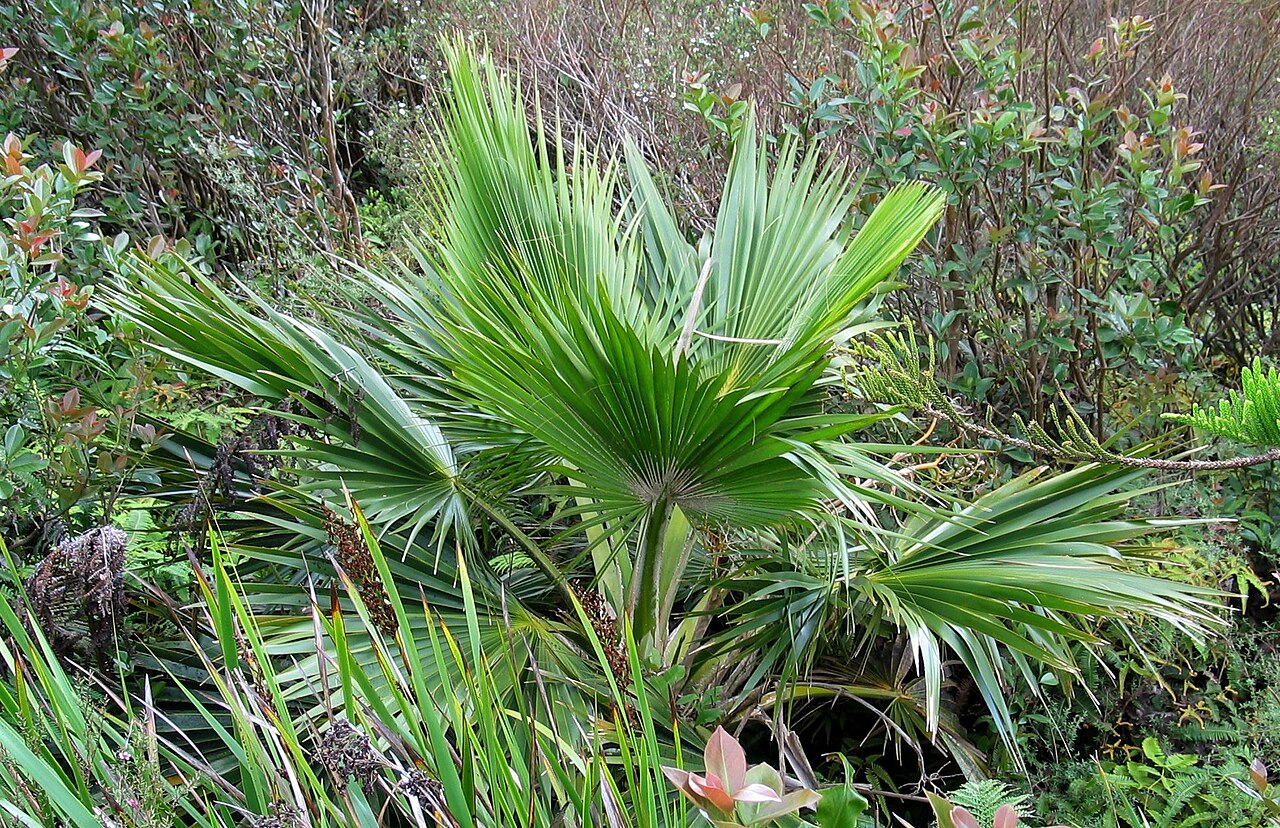
Its habitat is scrubby forest and grassland on near-vertical slopes and ridges, from about 1,000 to 3,000 feet, in places that range from fairly dry to moist and often cloudy. These cliffs are among the few places where feral goats, axis deer and pigs cannot easily reach, which is likely why the palm has survived there.
Introduced rats eat many of the fruits and seeds, so wild trees produce few seedlings. Invasive plants, landslides and the small size of each population add to the risk. Fencing, rat control, seed banking and outplanting by conservation programs and botanical gardens help protect it. Garden trees elsewhere in Hawaiʻi come from cultivated seed and do not change its native range.
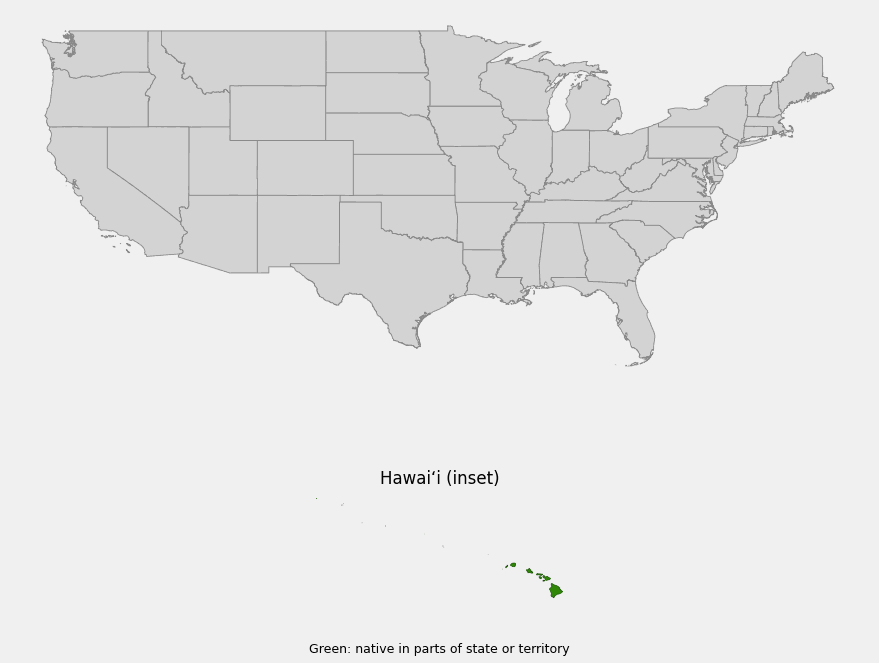
📋 Regional plant lists featuring Loulu: Hawaii
Growing & Care Guide
This small loulu is a good palm for Hawaiian gardens with limited space, and growing it from cultivated seed helps keep the species alive. Buy only plants that a reputable Hawaiʻi native plant nursery has raised from cultivated trees, and never collect seeds or seedlings from wild palms. Hawaiʻi restricts bringing plants in from other states, and palms are a particular concern because of pests such as the coconut rhinoceros beetle, so source loulu from nurseries in the islands and follow current rules before moving plants between islands. Outside Hawaiʻi it suits only frost-free climates (about zones 10–12) or a large, bright greenhouse.
Light
Full sun to partial shade. Young plants do best with some shade; established palms grow more compactly and flower better in sun. In hot, dry leeward lowlands, give young plants afternoon shade.
Soil & Water
Plant in well-drained soil; rocky, cinder-based or loamy soils all work. Water regularly while it establishes, and keep the soil evenly moist during long dry spells, since it comes from moister cliffs than the dry-land loulu. Avoid soggy or compacted soil, which can rot the roots.
Planting Tips
Choose a spot sheltered from strong, salty wind, with room for a crown 6 to 10 feet wide. Its slow growth and slim trunk suit courtyards, entryways and small native gardens. Plant at the same depth as in the container. In pots, use a coarse, fast-draining palm mix.
Pruning & Maintenance
Remove only fully dead leaves; green and yellowing leaves still feed the palm. Never cut into the trunk. A slow-release palm fertilizer with potassium and magnesium helps prevent yellowing of older leaves. Watch for scale insects and for the caterpillars of the native palm leaf moth, which rarely harm healthy plants.
Propagation
Propagation is by seed only, since the palm does not branch or sucker. Fresh, cleaned seed from cultivated trees germinates in a few months in a warm, moist, well-drained mix. Seedlings grow slowly and take several years to form a trunk. Collecting seed from wild trees requires permits and takes seed that wild populations need.
Landscape Uses
- Hawaiian native gardens: a small, slender native palm for sunny to partly shaded gardens
- Small gardens and courtyards: slow growth and modest size suit tight spaces
- Container specimen: young plants grow well in large pots on a lanai
- Conservation plantings: cultivated trees help preserve a critically imperiled palm
Wildlife & Ecological Value
Loulu palms were once widespread in Hawaiian lowland and mid-elevation forests. Wild trees of this species are now too few to play a large ecological role, but they still support native insects and anchor cliffside plant communities.
For Pollinators
The fragrant flowers produce pollen and nectar and are visited by many insects, including native insects and introduced honeybees.
For Birds
The fruits were probably eaten and dispersed by native birds, including species now extinct or rare. Today few native birds feed on them.
For Mammals
Hawaiʻi’s only native land mammal, the Hawaiian hoary bat (ʻōpeʻapeʻa), does not depend on loulu. Introduced mammals are the main threat: rats eat fruits and seeds, and goats, axis deer and pigs eat or trample seedlings.
Ecosystem Role
Loulu are host plants for the native palm leaf moth (Omiodes blackburni). On steep valley walls, the palms and the shrubs around them help hold thin soils on slopes prone to landslides.
Cultural & Historical Uses
The genus Pritchardia honors William Thomas Pritchard, a 19th-century British consul in Fiji, where the first species of the genus was collected. Pritchardia glabrata was described by the Italian palm expert Odoardo Beccari together with Joseph F. Rock, who explored Hawaiian forests in the early 20th century.
Hawaiians call all native fan palms loulu. The leaves were used for thatching and for plaiting hats (pāpale), fans and other goods, and the name is often linked to the word for umbrella, since a large leaf could be held overhead for shade or rain. The young, soft seeds, called hāwane or wāhane, were eaten.
Hawaiian loulu are now popular landscape palms across the islands, and botanical gardens keep living collections of the rarer species. Conservation staff on Maui and Lānaʻi fence wild trees, control rats and goats, bank seed and grow plants for reintroduction.
Frequently Asked Questions
Is Pritchardia glabrata endangered?
It is ranked critically imperiled by NatureServe and has very small wild populations, but it is not listed under the federal Endangered Species Act.
Where does this loulu grow wild?
Only on West Maui and Lānaʻi, on steep valley walls and ridges at about 1,000 to 3,000 feet.
How tall does it get?
It is one of the smaller loulu, usually under about 17 feet tall with a slender trunk, though USDA PLANTS lists a maximum of about 30 feet.
Can I grow it in my garden?
Yes, in Hawaiʻi and other frost-free climates. Buy only nursery-grown plants from cultivated seed, plant in well-drained soil, and water regularly until established.
Can I bring a loulu into Hawaii from the mainland?
Hawaiʻi restricts plant imports from other states, and palms carry particular pest risks. Buy from Hawaiʻi native plant nurseries instead.

Looking for a nursery that carries Loulu?
Browse our native plant nursery directory: Hawaii

