
Native Crabapples (Malus)
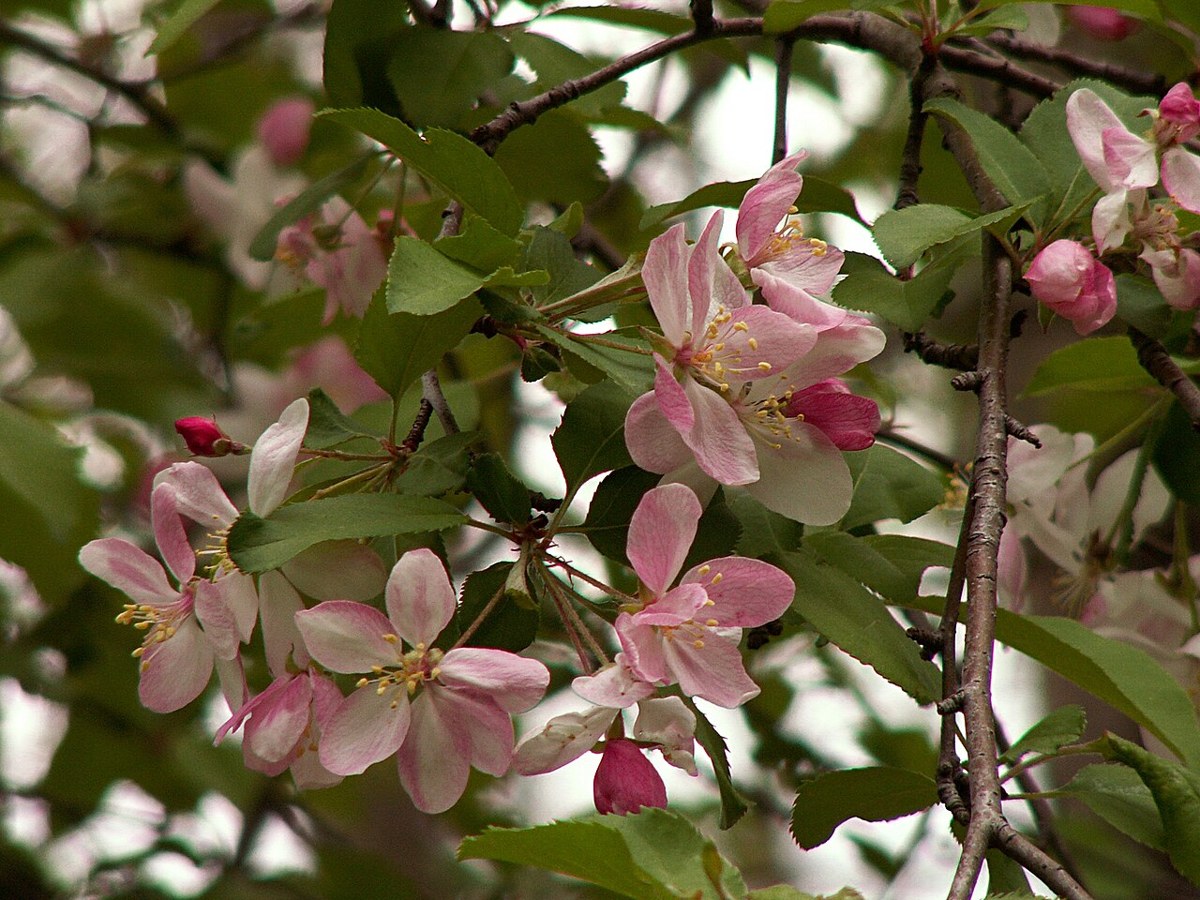
Crabapples are small apple trees in the genus Malus (rose family, Rosaceae), grown for their clouds of spring blossoms and small fruit. Almost all of the flowering crabapples sold at garden centers, including popular varieties such as ‘Prairifire’, ‘Snowdrift’, ‘Harvest Gold’ and ‘Sugar Tyme’, are hybrids bred mostly from Asian species. The familiar orchard apple (Malus domestica) is also an import, descended from wild apples of Central Asia.
North America has its own crabapples, and four of them are native to the United States: sweet crabapple (Malus coronaria) of the Great Lakes, Ohio Valley and Appalachians, prairie crabapple (Malus ioensis) of the Midwest and southern Plains, southern crabapple (Malus angustifolia) of the Southeast, and Oregon crab apple (Malus fusca) of the Pacific coast from Alaska to northern California. They are tough, long-lived small trees with intensely fragrant pink-and-white flowers, and they are some of the best wildlife trees a gardener can plant.
Native crabapples are less showy than the modern hybrids: they bloom a little later, the flowers are paler, and the fruit is green or yellow instead of bright red. But their scent is famous, they support far more native insects, and they belong in the landscapes where they grow. This guide shows where each species is native, how to tell native crabs from Asian hybrids and feral orchard apples, and how to grow them. If you came here from one of our ornamental-tree guides, the regional notes below will tell you whether a native crabapple fits your state.
Identification
All crabapples are small trees with alternate, simple leaves, five-petaled, apple-blossom flowers in clusters, and small apples (pomes) with a core of seeds. These clues separate the natives from the ornamental hybrids.
Bark & Branches
Native crabapples are small trees, usually 15 to 30 feet tall, often with a short, crooked trunk and a broad, irregular crown. Many sucker from the roots and form small thickets. The bark is gray-brown and becomes scaly with age. Short, stiff side twigs (spur shoots) often end in a sharp point, so wild crabs can be distinctly thorny, unlike most garden crabapples.
Leaves
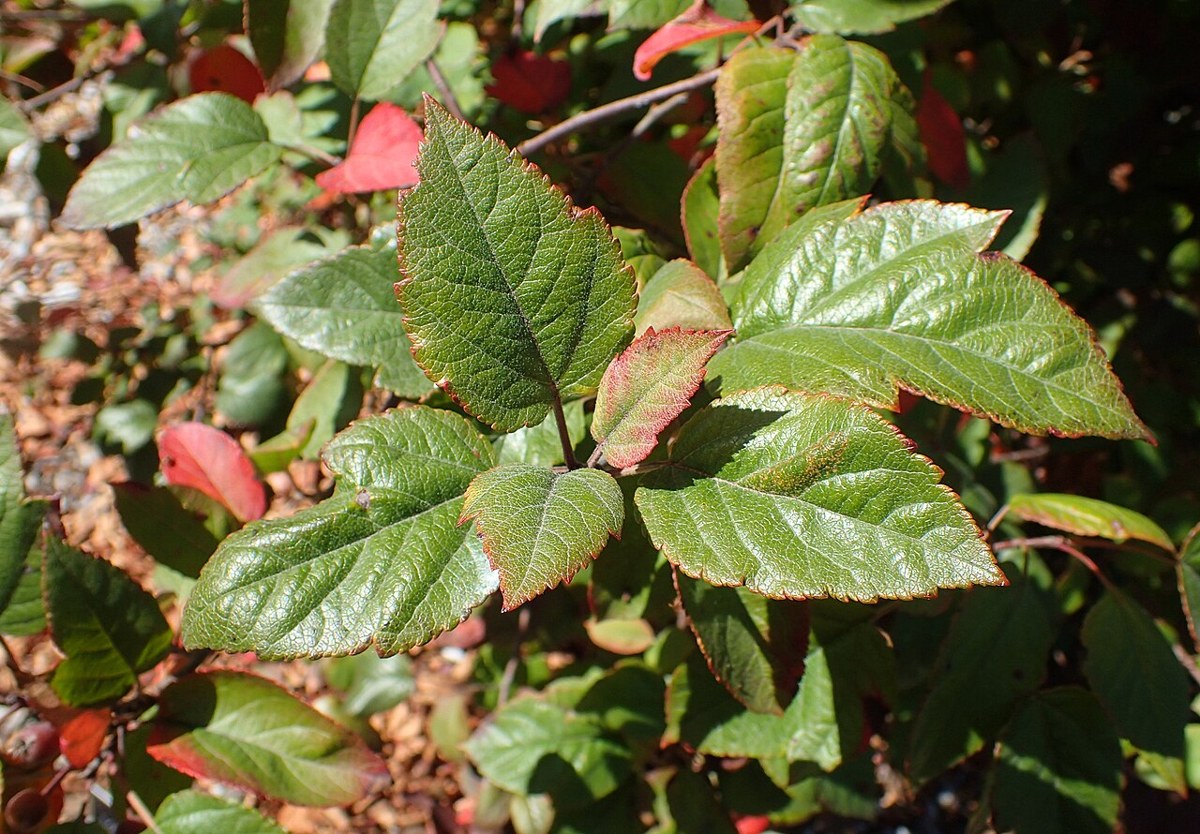
Leaves of the eastern natives are 2 to 4 inches long, often coarsely toothed, and on vigorous shoots commonly have a few shallow lobes near the base. Sweet crabapple has broad, triangular to oval leaves that are smooth underneath; prairie crabapple’s leaves stay woolly or hairy underneath; southern crabapple has narrower, oblong leaves with blunt tips that hold on late into fall in the South. Oregon crab apple has oval leaves, frequently with one or two lobes, that turn orange to red in autumn.
Flowers
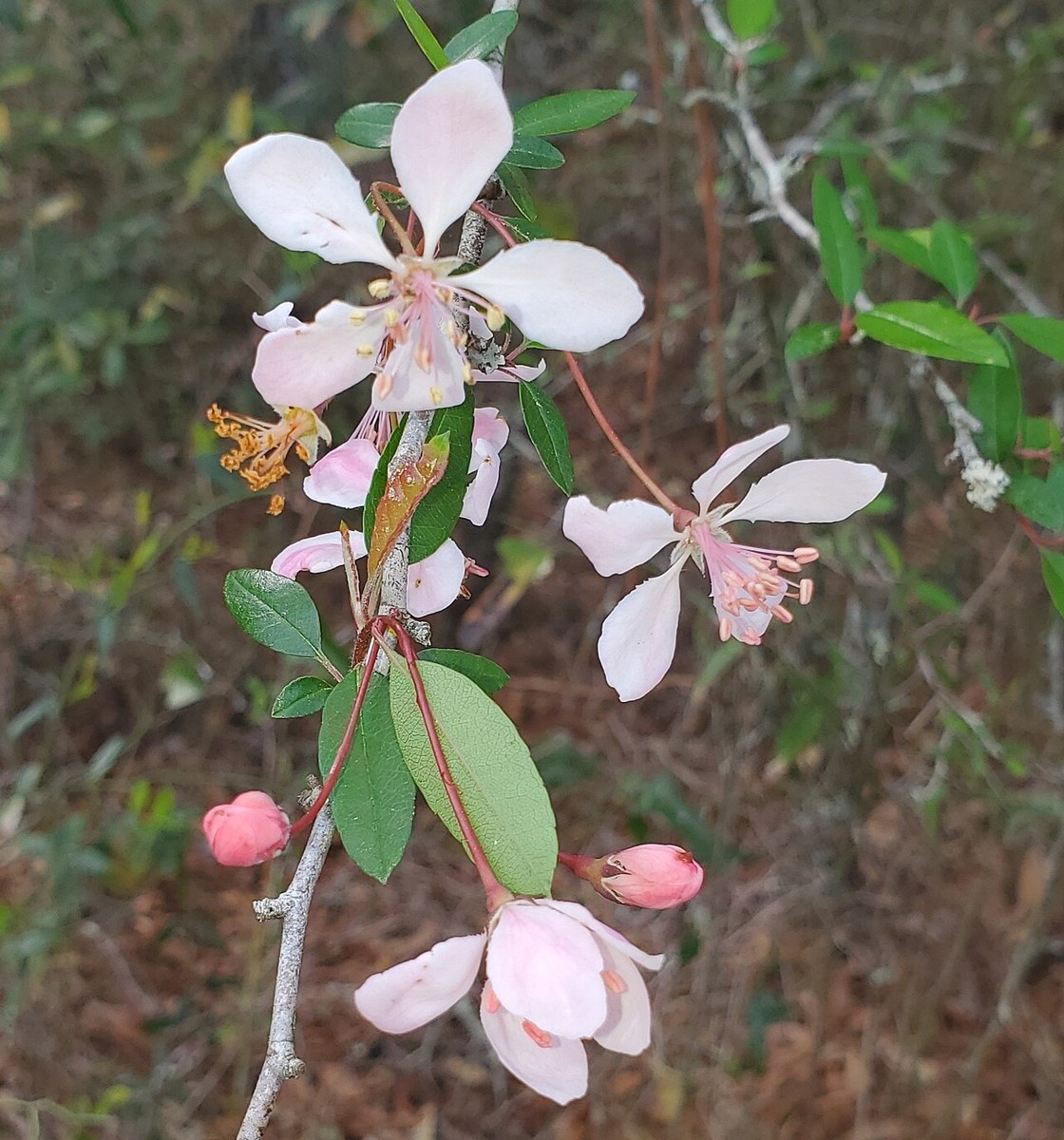
Native crabapples flower in mid to late spring, usually about one to two weeks after most ornamental crabapples and after the leaves have begun to unfold. Buds are deep pink to rose, opening to pale pink or white flowers about 1 to 1.5 inches across with a strong, sweet fragrance often compared to violets. Oregon crab apple has smaller white to pinkish flowers in flat clusters. Hybrids range from white to deep magenta and often bloom on bare branches.
Fruit
Fruit is the easiest clue. The three eastern natives have hard, greenish to yellow-green apples about 1 to 1.5 inches across, waxy and very sour, ripening in fall and often lingering on the ground into winter. Oregon crab apple has small, egg-shaped fruit, about half an inch long, that ripens yellow to red in drooping clusters. Ornamental hybrids usually have smaller (under 3/4 inch), glossy red, orange or gold fruit that hangs on the branches into winter; orchard apples have larger fruit, usually over 2 inches.
Quick Facts
| Scientific Name | Malus (genus) |
| Family | Rosaceae (Rose) |
| U.S. Native Species | 4: M. coronaria, M. ioensis, M. angustifolia, M. fusca |
| Plant Type | Small deciduous trees or thicket-forming large shrubs |
| Mature Height | 15–30 ft (Oregon crab apple occasionally to 40 ft) |
| Mature Spread | 15–30 ft |
| Growth Rate | Moderate |
| Sun Exposure | Full sun to part shade (best flowering in full sun) |
| Water Needs | Average; prairie and southern crabs tolerate dry spells, Oregon crab apple tolerates wet soils |
| Soil Type | Adaptable: clay, loam or sandy soils with reasonable drainage |
| Bloom Time | Mid to late spring, after leaves begin to emerge |
| Flower Color | Deep pink buds opening pale pink to white; very fragrant |
| Fall Color | Yellow to orange; Oregon crab apple often red |
| Fruit | Hard, sour green-yellow apples 1–1.5 in (eastern species); small yellow-red fruit (Oregon) |
| Wildlife Value | Very high: bees, hundreds of caterpillar species, birds and mammals |
| USDA Hardiness Zones | 3–9, depending on species |
Native Range
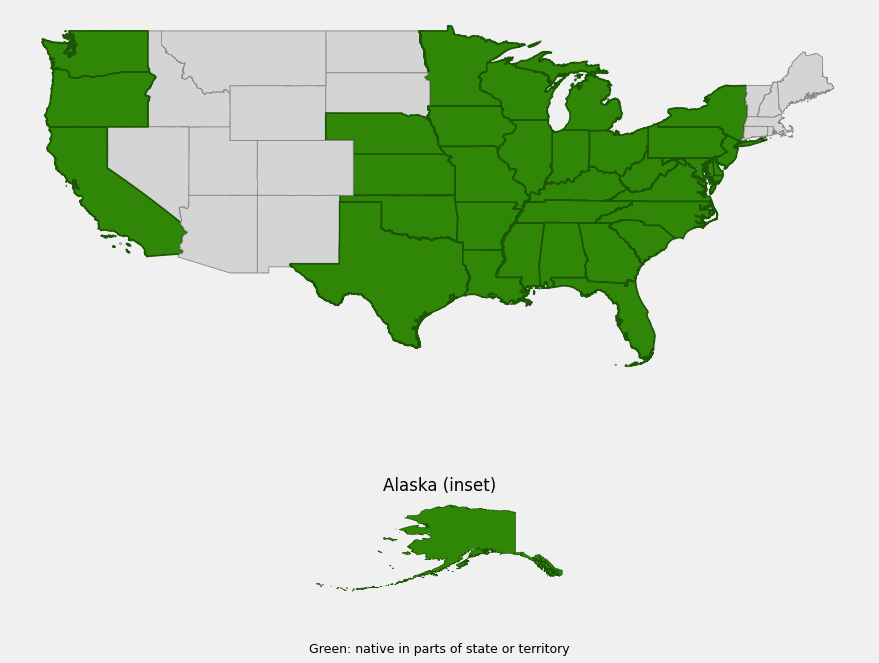
The four native crabapples divide the country among them. sweet crabapple is the crab of the Great Lakes and the Ohio and upper Tennessee valleys, from New York, Pennsylvania and New Jersey west through Ohio, Michigan, Indiana and Illinois to Wisconsin and Missouri, and south in the Appalachians to North Carolina, Tennessee and northern Georgia and Alabama. prairie crabapple replaces it on the prairies and prairie edges of the Midwest, from Minnesota and Wisconsin south through Iowa, Illinois, Missouri, Nebraska and Kansas to Oklahoma, Arkansas, Louisiana and Texas.
southern crabapple grows in the Coastal Plain and Piedmont from southern New Jersey and Delaware through Maryland and Virginia to northern Florida, and west across the Gulf states to Texas and Arkansas, with outlying populations north to Kentucky, southern Illinois and Ohio. On the West Coast, Oregon crab apple grows along streams, bogs, estuaries and forest edges from southern Alaska through western British Columbia, Washington and Oregon to northern California.
No crabapple is native to New England, the northern Plains, the Rocky Mountains, the Great Basin or the desert Southwest. In Colorado, Utah or Montana, any crabapple you see is planted. Wild-looking apple trees along roadsides and in old fields across the country are often feral orchard apples grown from discarded cores, not native crabs. Gardeners in states without a native crab can choose other native small flowering trees, such as serviceberry, chokecherry, wild plum or a native hawthorn.
📋 Regional plant lists covering native crabapple ranges: New York, Pennsylvania & Northern New Jersey · Delaware, Southern New Jersey & Long Island · Maryland, Virginia & West Virginia · North Carolina & South Carolina · Georgia, Alabama & Mississippi · Kentucky & Tennessee · Ohio & Indiana · Illinois, Iowa & Missouri · Michigan, Wisconsin & Eastern Minnesota · Nebraska, Kansas & Eastern Colorado · Arkansas, Louisiana, Eastern Oklahoma & Eastern Texas · Western Oregon & Washington · California & Nevada · Alaska
Native Species
Sweet Crabapple (Malus coronaria)
Native to: the Great Lakes, Ohio Valley and Appalachian states, from New York and New Jersey to Wisconsin and Missouri, south to the Carolinas, Georgia and Alabama. Also called garland crab or wild sweet crabapple. A 20- to 30-foot tree with broad, often lobed leaves, deep pink buds and pale pink, very fragrant flowers, followed by greenish, 1- to 1.5-inch sour apples. The double-flowered ‘Charlottae’ is an old selection. The best native crabapple for New York, Pennsylvania, Ohio, Indiana, Illinois and Michigan.
Prairie Crabapple (Malus ioensis)
Native to: the Midwest and southern Plains, from Minnesota and Wisconsin to Kansas, Nebraska, Oklahoma, Texas and Louisiana. Also called Iowa crabapple. Similar to sweet crabapple but with leaves that stay hairy underneath and a tendency to form thickets at prairie edges. Very cold hardy and drought tolerant. Bechtel’s crab (‘Plena’), a double-flowered, intensely fragrant form found in Illinois in the 1800s, is a classic old garden tree.
Southern Crabapple (Malus angustifolia)
Native to: the Southeast, from New Jersey and Delaware to Florida and west to Texas, Arkansas and southern Illinois. A smaller tree, often 15 to 25 feet, with narrow, oblong, blunt-tipped leaves and pink, fragrant flowers in early to mid spring. Its yellow-green fruit is about an inch across. Well suited to the heat and humidity of the South, where the other native crabs struggle.
Oregon Crab Apple (Malus fusca)
Native to: the Pacific coast from southern Alaska to northern California, mostly west of the Cascades. Also called Pacific crabapple. A thicket-forming small tree, up to about 40 feet, of streambanks, wetlands and estuary edges, with often-lobed leaves, clusters of small white to pink flowers and small, oblong, yellow to red fruit that hangs in clusters. Tolerates wet soils and is the only native crabapple for gardens in the Pacific Northwest.
Natural hybrids between native crabs and orchard apples also occur in the Midwest. Soulard crab (Malus × soulardii), a cross of prairie crabapple and orchard apple, has larger fruit than the wild species.
Non-Native Look-Alikes
Most crabapples planted in American yards, parks and parking lots are not native. They are bred from Asian species such as Japanese flowering crabapple (Malus floribunda), Siberian crabapple (Malus baccata), Sargent crabapple (Malus sargentii) and toringo crabapple (Malus toringo), and from orchard apple.
Ornamental hybrid crabapples (‘Prairifire’, ‘Snowdrift’, ‘Harvest Gold’, ‘Sugar Tyme’ and others)
These are the crabapples described in most ornamental-tree guides. ‘Prairifire’ has deep pinkish-red flowers, purplish new leaves and small dark red fruit; ‘Snowdrift’ and ‘Sugar Tyme’ have white flowers and small red to orange-red fruit; ‘Harvest Gold’ has white flowers and small golden fruit. They are bred for disease resistance and persistent, colorful fruit, and they are good garden trees, but none of them is a native species. You can recognize hybrids by their small (usually under 3/4 inch), glossy, brightly colored fruit, earlier bloom on bare or barely leafed branches, and lack of thorns. Some Asian crabapples, including Siberian and toringo crabapple, occasionally seed into woodlands and old fields, so they are worth watching near natural areas.
Orchard apple (Malus domestica)
The common apple descends from wild apples of Central Asia and has been planted across North America since colonial times. Birds, deer and people spread its seeds, so feral apple trees are common along roads, fencerows and woodland edges in every region. They differ from native crabs in having larger fruit (usually over 2 inches), leaves that are not lobed, and white or blush-white flowers. They are not considered invasive, but they are not native either.
Growing & Care Guide
Native crabapples are easy, long-lived trees for sunny sites. They are not fussy about soil, but they do have one important weakness that every gardener should plan for: rust diseases.
Light
Plant in full sun for the heaviest bloom and best fruit. Native crabs grow in part shade at woodland edges, but they flower less and become more open and leggy in shade.
Soil & Water
All four species tolerate a wide range of soils, from clay to sandy loam, as long as water does not stand around the roots for long periods (Oregon crab apple is the exception and handles wet ground). Water young trees during dry spells for the first two or three years; after that, prairie and southern crabapple in particular are quite drought tolerant.
Planting Tips
Plant nursery-grown trees in spring or fall, setting the root flare at soil level. Native crabapples are hard to find compared with hybrids, so look for them at native-plant nurseries and check the scientific name on the label. Because wild crabs sucker and can become thicket-forming, give them room, or plan to mow or cut suckers around a single-trunk tree.
Pruning & Maintenance
Prune in late winter, removing dead, crossing and inward-growing branches and any root suckers. The main problem for eastern native crabs is cedar-apple rust, a fungus that alternates between crabapples and eastern red cedar. It causes bright orange leaf spots and early leaf drop on susceptible crabs, especially sweet and prairie crabapple, in years with wet springs. It rarely kills trees but can make them unsightly by late summer. Planting away from red cedars helps, and the damage is mostly cosmetic. Scab and fire blight can also affect native crabs.
Propagation
Collect fruit in fall, mash it and clean out the seeds, then sow them outdoors in fall or give them 60 to 90 days of cold, moist stratification before spring sowing. Seedlings of native crabs are generally true to their species, although hybrids with nearby orchard apples are possible. Root suckers can also be dug and transplanted in early spring.
Landscape Uses
- Specimen flowering trees for fragrance near patios, paths and windows
- Wildlife hedgerows and thickets with wild plum, cockspur hawthorn and downy serviceberry
- Prairie edges and savanna plantings (prairie crabapple) in the Midwest
- Spring-flowering combinations with eastern redbud
- Wet-site and streambank plantings in the Pacific Northwest (Oregon crab apple) with Douglas hawthorn
Wildlife & Ecological Value
Few small trees do more for wildlife than native crabapples. They feed pollinators in spring, caterpillars and the birds that eat them in summer, and mammals and birds through fall and winter.
For Pollinators
The fragrant flowers are visited by bumble bees, mason bees, mining bees, sweat bees and many flies and butterflies. Because native crabs bloom a little after the main fruit-tree bloom, they extend the spring nectar season.
For Caterpillars
The genus Malus ranks among the top woody plant genera in North America for supporting caterpillars, hosting hundreds of species of moths and butterflies, including cecropia moths, hairstreaks and many inchworms and other moths. These caterpillars are essential food for nesting songbirds.
For Birds & Mammals
The hard fruit softens after frost and is eaten by white-tailed deer, foxes, raccoons, opossums and squirrels, as well as by wild turkeys, grouse, cedar waxwings, robins and other birds over the winter. Thorny thickets of wild crabs give birds safe nesting sites and protect rabbits and other small mammals.
Ecosystem Role
Native crabapples are pioneers of woodland edges, old fields and prairie borders, often growing in clonal thickets that slowly fill gaps between grassland and forest. In the Pacific Northwest, Oregon crab apple helps stabilize streambanks and estuary margins.
Cultural & Historical Uses
Native crabapples were a traditional food in many parts of North America. Indigenous peoples of the Pacific Northwest gathered Oregon crab apples, often storing them to soften, and the wood, which is very hard, was used for tools. Settlers in the East and Midwest cooked the sour fruit of sweet and prairie crabs into jelly, preserves and cider, since the fruit is high in pectin and too tart to eat raw.
If you try the fruit, cook it and do not eat the seeds: like orchard apple seeds, crabapple seeds contain compounds that release cyanide when chewed, and leaves and twigs contain similar compounds. Eating a few whole fruits is not a concern, but seeds should not be eaten in quantity, and the wilted leaves can be harmful to livestock.
The fragrance of native crabs made them early favorites in American gardens. Bechtel’s crab, a double-flowered prairie crabapple found in the wild in Illinois, was widely planted in the late 1800s and early 1900s for its scent, before disease-resistant Asian hybrids took over the nursery trade.
Frequently Asked Questions
Are crabapples native to the United States?
Four crabapples are native: sweet crabapple, prairie crabapple, southern crabapple and Oregon crab apple. Most crabapples sold at nurseries, including ‘Prairifire’, ‘Snowdrift’, ‘Harvest Gold’ and ‘Sugar Tyme’, are hybrids of Asian species, and the orchard apple is also non-native.
Is there a crabapple native to Colorado?
No. No crabapple is native to Colorado, Utah or the rest of the Rocky Mountains; crabapples there are planted ornamentals. For a native small tree with white spring flowers in Colorado, consider serviceberry, chokecherry or wild plum.
Which native crabapple is best for New York or Illinois?
Sweet crabapple is native to both states and is the classic choice. In Illinois you can also grow prairie crabapple, which is native across the state and especially tough on dry, open sites.
Are native crabapple fruits edible?
Yes, the fruit of native crabapples is edible when cooked and has long been used for jelly, preserves and cider, though it is far too sour to enjoy raw. Do not eat the seeds, which contain cyanide-producing compounds, as do the leaves and twigs.
Why do my crabapple leaves have orange spots?
Orange spots on crabapple leaves are usually cedar-apple rust, a fungus that also needs eastern red cedar to complete its life cycle. Native sweet and prairie crabapples are susceptible. The disease is mostly cosmetic; rake up fallen leaves and avoid planting crabs right next to red cedars.

Looking for a nursery that carries Native Crabapples?
Browse our native plant nursery directory: Alaska, Arkansas & Alabama · California · Georgia, Florida & Delaware · Kansas, Iowa, Illinois & Indiana · Minnesota, Missouri, Louisiana, Michigan, Kentucky, Mississippi & Maryland · Nebraska, Oklahoma, Ohio, North Carolina, New Jersey & New York · Oregon · Texas, Tennessee, South Carolina, Virginia & Pennsylvania · Washington · Wisconsin & West Virginia

