
Northern Blue Monkshood (Aconitum noveboracense)
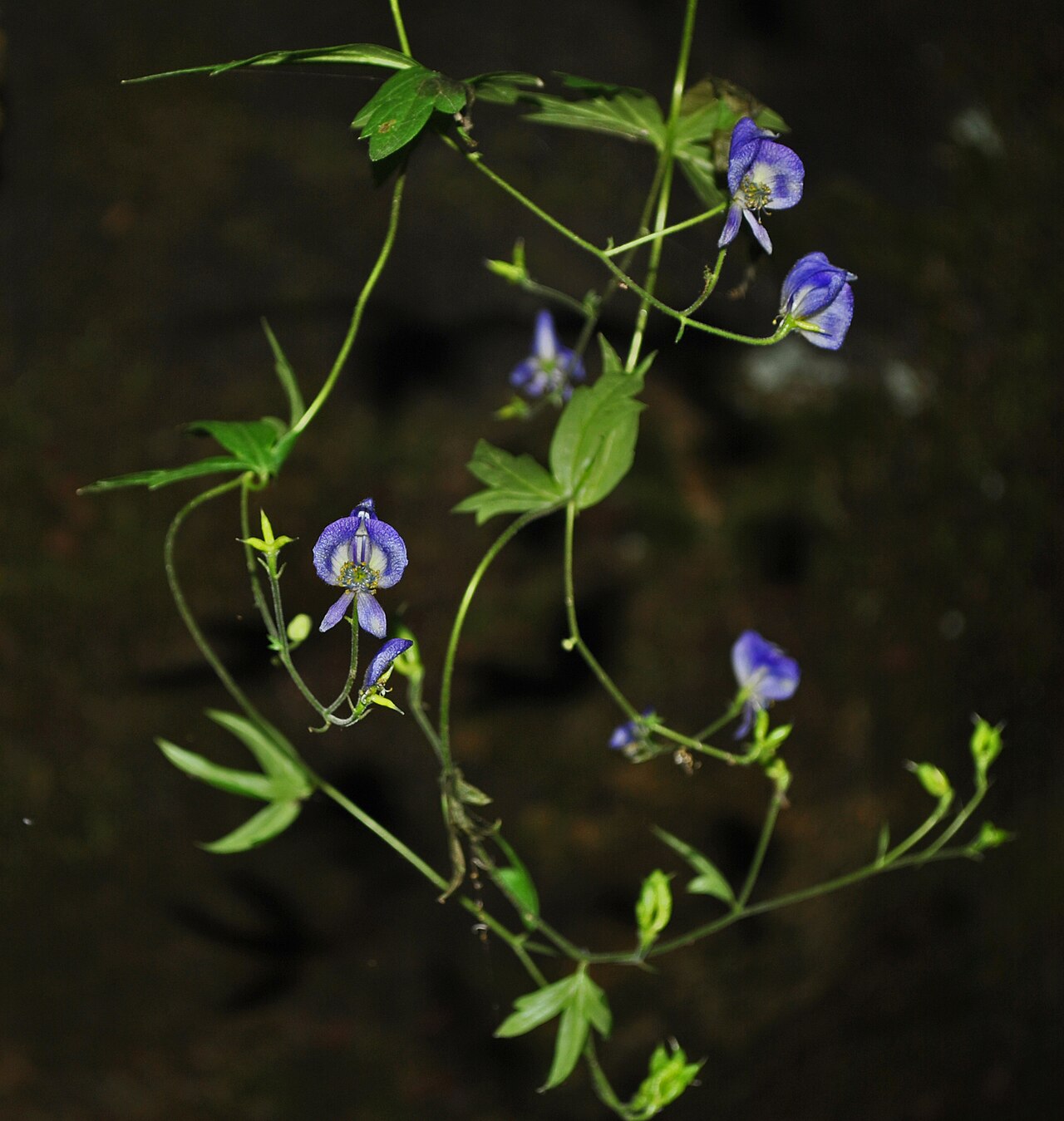
Aconitum noveboracense, known as Northern Blue Monkshood (USDA: northern blue monkshood; also called northern monkshood), is a rare perennial wildflower in the buttercup family (Ranunculaceae). It grows 1 to 4 feet tall from a tuberous root, with deeply lobed, maple-like leaves and, in late summer, loose clusters of hooded, blue-violet flowers.
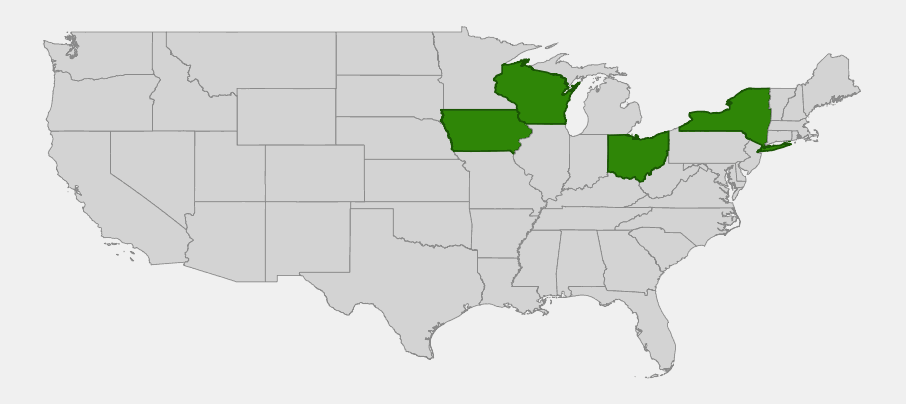
It is listed as threatened under the federal Endangered Species Act (since 1978) and is known only from scattered sites in four states: Iowa and Wisconsin in the Driftless Area, northeastern Ohio, and the Catskill region of New York. It survives in unusually cool, moist, shaded spots, such as cold-air talus slopes, sandstone gorges and stream headwaters, that are thought to be leftover pockets of the cooler climate of the Ice Age.
Safety note: like all monkshoods, every part of this plant is highly poisonous. It is a protected species: never dig, pick or collect wild plants or seed. This page is a guide to identifying and appreciating it in the wild.
Identification
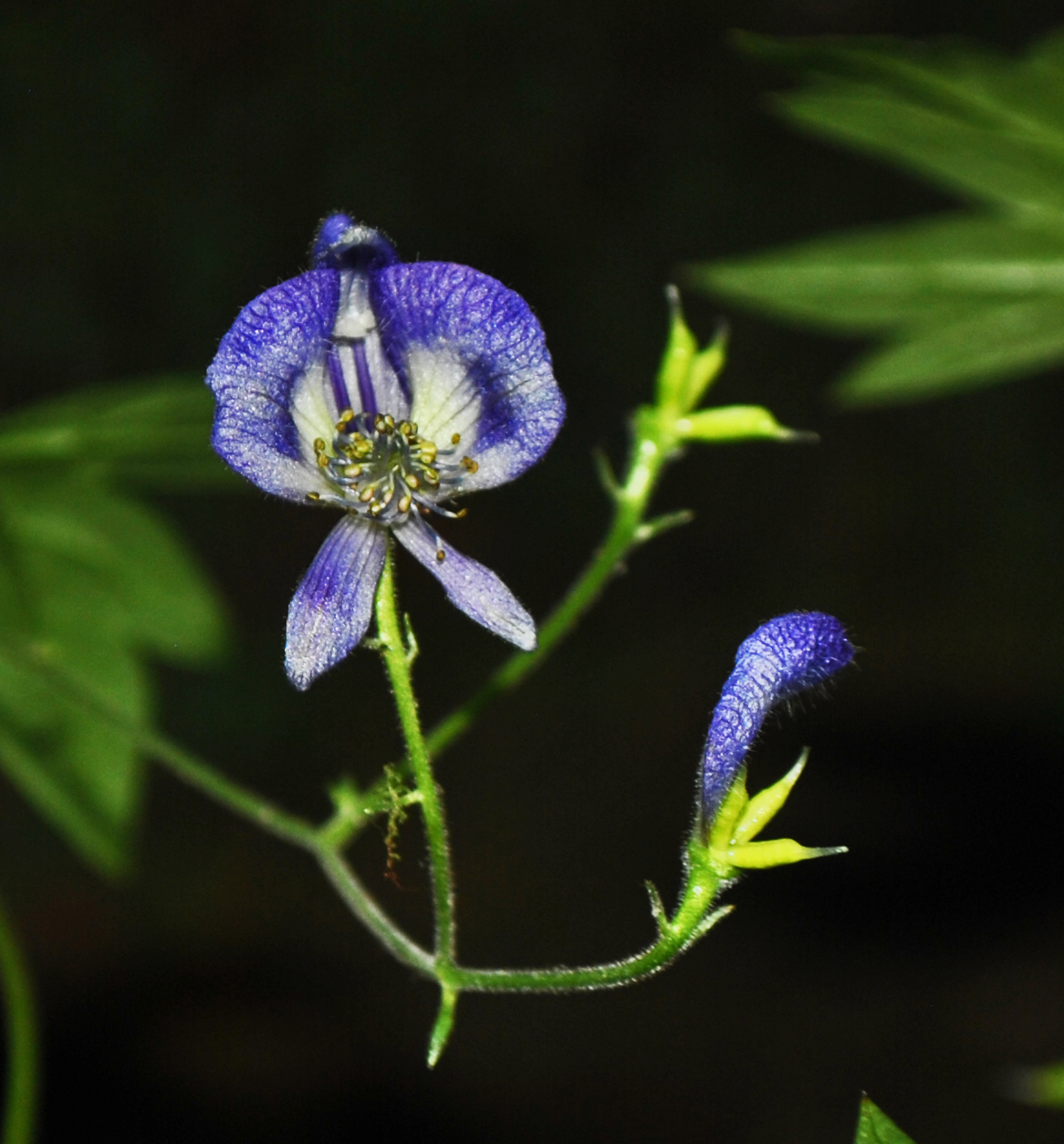
Northern blue monkshood is easiest to recognize in flower. No other native wildflower in its eastern range has blue-violet flowers with a tall, helmet-shaped hood.
Growth Habit & Stems
A perennial that grows from a small tuberous root, usually 1 to 4 feet tall. The stems are slender and often weak, so plants lean or sprawl over rocks and neighboring plants. Daughter tubers form each year, and the old tuber dies, so a plant slowly “moves” through the soil.
Leaves
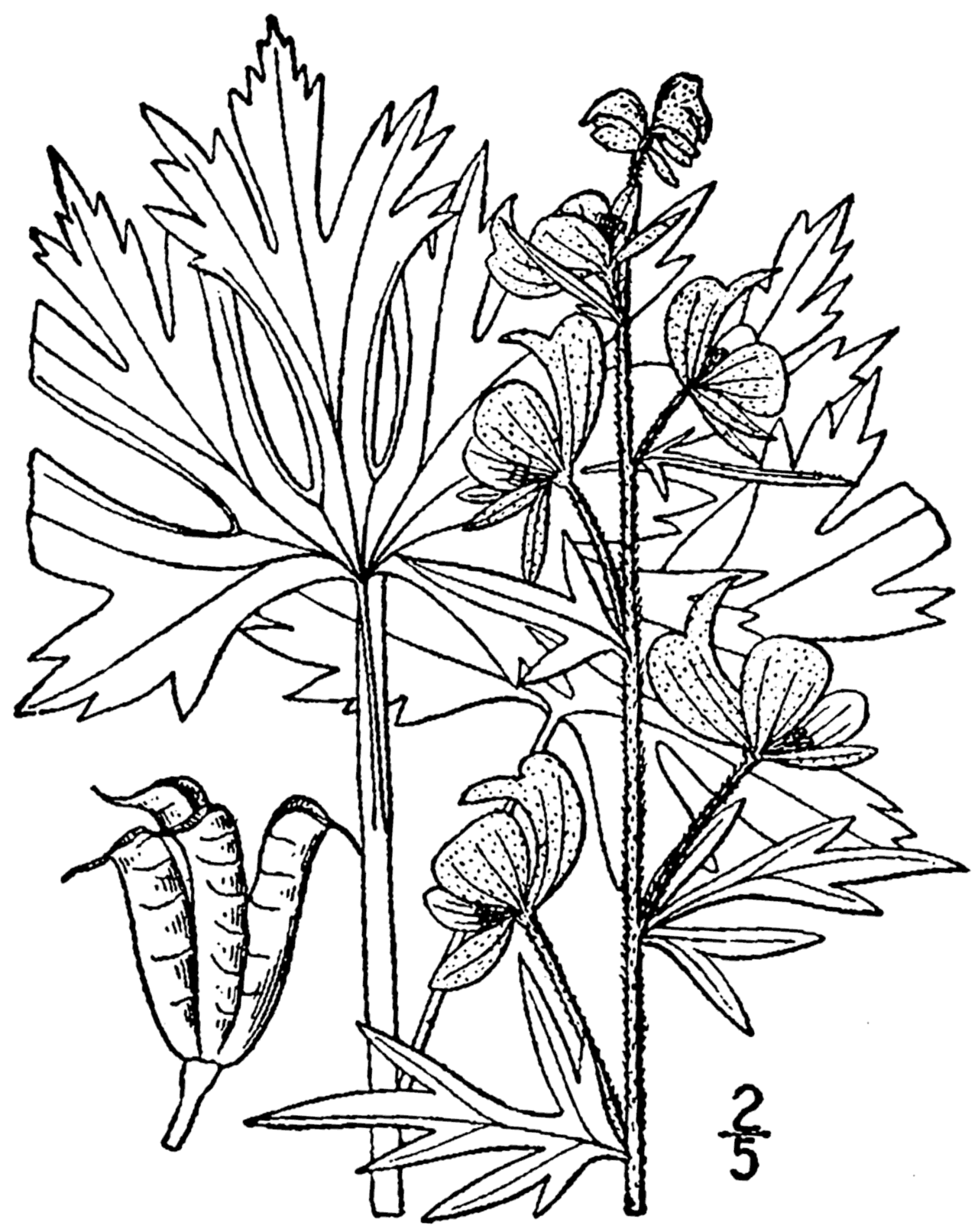
The leaves are alternate, palmately divided into 3 to 7 deeply toothed lobes, and broadly maple-like in outline, 2 to 8 inches wide. Lower leaves have long stalks; upper leaves are smaller. Before it flowers, the plant is easy to overlook or mistake for a buttercup or geranium.
Flowers
Flowers appear from about late June to September in loose, open clusters at the top of the stem. Each flower is about 1 inch long and blue-violet (rarely paler), with five petal-like sepals. The upper sepal forms a tall, rounded hood or helmet over two small, nectar-bearing petals and a cluster of stamens.
Fruit
Each flower produces a cluster of three (sometimes more) narrow, dry pods (follicles) about 1/2 inch long that split open along one side in fall, releasing small, winged seeds.
Look-alikes
Its closest relative, Columbian Monkshood (Aconitum columbianum), grows in the western mountains, and some botanists treat the eastern plants as a disjunct form of that species. Southern monkshood (A. uncinatum) grows farther south in the Appalachians and has a lower, broader hood and weaker, vining stems. Garden monkshoods (A. napellus and hybrids) have dense, upright spikes. For an overview of all our species see Native Monkshoods.
Safety
All parts of monkshood, especially the roots and seeds, contain aconitine and related alkaloids, among the most potent plant toxins known. Eating even a small amount can cause numbness and tingling of the mouth, vomiting, a slowed or irregular heartbeat and death. The toxins can also be absorbed through broken skin. Never taste or handle the plant, keep children and pets away, and seek emergency care (in the U.S., Poison Control at 1-800-222-1222) after any exposure.
Quick Facts
| Scientific Name | Aconitum noveboracense A. Gray ex Coville |
| Family | Ranunculaceae (buttercup family) |
| Plant Type | Herbaceous perennial from a tuberous root |
| Mature Height | 1–4 ft |
| Mature Spread | 1–2 ft |
| Growth Rate | Slow |
| Sun Exposure | Partial to full shade |
| Water Needs | Constantly cool and moist |
| Soil Type | Moist, rocky or loamy soil over limestone, dolomite or sandstone |
| Soil pH | About 5.5–7.5 |
| Bloom Time | Late June–September |
| Flower Color | Blue-violet |
| Fall Color | Not significant |
| Fruit | Cluster of dry pods (follicles) with small winged seeds |
| Deer Resistant | Yes (toxic), though deer and livestock occasionally trample sites |
| USDA Hardiness Zones | Not grown in gardens; native to zones 4–5 |
Native Range
Northern blue monkshood has one of the most unusual ranges of any eastern wildflower. USDA PLANTS lists it as native in just four states: Iowa, Wisconsin, Ohio and New York. Most known populations are in the Driftless Area of northeastern Iowa and southwestern Wisconsin, with a few in northeastern Ohio and in the Catskill Mountains region of southeastern New York.
In the Driftless Area it grows mainly on algific (“cold-air”) talus slopes, where cold air from ice caves deep in the rock flows out through openings and keeps the slope cool and moist all summer. In Ohio it grows in cool, shaded sandstone gorges, and in New York along cold headwater streams and seeps. These habitats are thought to be refuges where plants of a once-cooler Ice Age climate have survived for more than 10,000 years.
Because the populations are small, scattered and tied to rare microhabitats, it was listed as threatened under the Endangered Species Act in 1978. Threats include quarrying, logging, road building, trampling, grazing, changes to water flow and a warming climate.
📋 Regional plant lists featuring Northern Blue Monkshood: Illinois, Iowa & Missouri · Michigan, Wisconsin & Eastern Minnesota · Ohio & Indiana · New York, Pennsylvania & Northern New Jersey · Delaware, Southern New Jersey & Long Island
Can You Grow It?
Northern blue monkshood is not a garden plant. It is a federally threatened species that depends on cold, moist microhabitats that cannot be reproduced in a yard, it is not sold by native plant nurseries, and taking plants or seed from the wild harms the few remaining populations and may be illegal. Here is what it needs in the wild, and how people help it survive.
Light
In the wild it grows in partial to full shade on north- and east-facing slopes, cliffs and gorges, where it rarely receives hot afternoon sun.
Soil & Water
It needs soil that stays cool and moist all summer: talus slopes chilled by cold air from underground ice, seepy cliff bases and the banks of cold streams. Warm, dry summer conditions quickly kill it.
Planting Tips
Reintroduction and population boosting are done only by agencies and conservation partners under permit. Gardeners who want native blue flowers in shade can grow common woodland plants instead, such as Bishop’s Cap for texture or great blue lobelia for late-summer blue. Garden monkshoods sold in nurseries are non-native and just as poisonous.
Pruning & Maintenance
Wild sites are protected through fencing out livestock, keeping trails away from slopes, preventing quarrying and logging on or above algific slopes, and protecting the groundwater and cold-air flow that keep the habitat cool.
Propagation
In the wild it reproduces by seed and by small daughter tubers. Conservation programs at botanic gardens hold seed and plants as a safeguard against extinction.
Where to See It
- Parfrey’s Glen State Natural Area, Wisconsin: a cool sandstone gorge in Sauk County with a protected population; view from the trail
- Driftless Area preserves, Iowa: several algific talus slopes are protected as preserves and state areas, some with restricted access
- Bloom season: look for flowers from about late June to September
- Respectful viewing: stay on trails, do not climb on talus slopes, and never pick or collect plants or seed
- Support conservation: state natural areas programs and land trusts that protect cold-air slopes and gorges
Wildlife & Ecological Value
Northern blue monkshood belongs to one of North America’s rarest plant communities, the algific talus slope, which also shelters relict snails and other cold-loving species.
For Pollinators
Monkshood flowers are built for bumble bees, which are strong enough to push under the hood and long-tongued enough to reach the nectar. Bumble bees are its main pollinators; some short-tongued insects rob nectar by biting holes in the hood.
For Birds
Birds do not eat the toxic seeds or foliage. The cool, forested gorges and slopes where it grows provide breeding habitat for northern warblers and other songbirds at the southern edge of their range.
For Mammals
The plant’s toxins protect it from most browsing, though deer and livestock can trample small populations. Fencing out cattle has been an important conservation step at some sites.
Ecosystem Role
It shares Driftless Area algific slopes with the federally endangered Iowa Pleistocene snail and other ice-age relicts, so protecting one protects the whole community. The plants are indicators of the cold, moist conditions that make these habitats unique.
Cultural & Historical Uses
The species name noveboracense means “of New York” (from Novum Eboracum, the Latin name for New York), because the species was first described from plants collected in New York. The name was coined by Asa Gray and formally published by Frederick Coville in the late 1800s.
Its populations in Iowa, Wisconsin, Ohio and New York are separated by hundreds of miles, a pattern that botanists explain as the remains of a much wider range during the colder climate at the end of the last Ice Age. It is a classic example of a relict plant.
The genus name Aconitum is an ancient Greek name for these plants, and monkshoods (also called wolfsbane) have a long history as arrow and bait poisons. The common name refers to the hooded sepal, which looks like the cowl of a monk’s robe.
Frequently Asked Questions
Is northern blue monkshood endangered?
It is listed as threatened under the federal Endangered Species Act, and it is protected by state law in the states where it grows.
Where does northern blue monkshood grow?
Only in Iowa, Wisconsin, Ohio and New York, mostly on cold-air (algific) talus slopes in the Driftless Area and in cool, shaded gorges and headwater streams.
Is northern blue monkshood poisonous?
Yes. All parts, especially the roots and seeds, contain aconitine, one of the most toxic plant compounds known. Never taste or handle it.
Can I grow northern blue monkshood?
No. It is a protected species that is not sold by nurseries and needs cold, moist microhabitats that gardens cannot provide. Never collect plants or seed from the wild.
How is it different from Columbian monkshood?
Columbian monkshood grows in the western mountains, from the Rockies to the Cascades and Sierra Nevada. The two are very similar, and some botanists consider the eastern plants a disjunct form of Columbian monkshood, but the federal government and USDA treat northern blue monkshood as its own species.

Looking for a nursery that carries Northern Blue Monkshood?
Browse our native plant nursery directory: Iowa · New York & Ohio · Wisconsin

